One Knight in Product
by One Knight in Product
Is this your podcast?Insights from recent episode analysis
Audience Interest
Podcast Focus
Publishing Consistency
Platform Reach
Insights are generated by CastFox AI using publicly available data, episode content, and proprietary models.
Most discussed topics
Brands & references
Total monthly reach
Estimated from 1 chart position in 1 market.
By chart position
- 🇳🇬NG · Business#179500 to 3K
- Per-Episode Audience
Est. listeners per new episode within ~30 days
250 to 1.5K🎙 ~2x weekly·270 episodes·Last published 5d ago - Monthly Reach
Unique listeners across all episodes (30 days)
500 to 3K🇳🇬100% - Active Followers
Loyal subscribers who consistently listen
150 to 900
Market Insights
Platform Distribution
Reach across major podcast platforms, updated hourly
Total Followers
—
Total Plays
—
Total Reviews
—
* Data sourced directly from platform APIs and aggregated hourly across all major podcast directories.
On the show
From 11 epsHosts
Recent guests
Recent episodes
Eric Ries: From Corrupted to Incorruptible - How to Build Mission-First Companies That Last
Aug 28, 2026
1h 05m 45s
Barry O'Reilly - How to Keep the Humanity in Artificial Organizations
Aug 18, 2026
1h 06m 44s
Pavel Samsonov - AI Can Build the Solution... You Still Have to Design the Problem
Jul 25, 2026
1h 09m 03s
Be Kaler Pilgrim - Where Does Product Go Wrong in PE-Backed Firms?
Jul 2, 2026
57m 16s
Petra Wille - Strong Product Leadership in the Age of AI
May 19, 2026
1h 05m 09s
Social Links & Contact
Official channels & resources
Official Website
Login
RSS Feed
Login
| Date | Episode | Topics | Guests | Brands | Places | Keywords | Sponsor | Length | |
|---|---|---|---|---|---|---|---|---|---|
| 8/28/26 |  Eric Ries: From Corrupted to Incorruptible - How to Build Mission-First Companies That Last | On this episode, I speak to Eric Ries, entrepreneur, multiple-time founder and bestselling author of The Lean Startup. Eric has spent years working with founders, leaders and organisations on how companies are built, scaled and governed, and later founded the Long-Term Stock Exchange to explore how businesses can pursue long-term profit and purpose. He's back with his new book, Incorruptible: Why Good Companies Go Bad and How Great Companies Stay Great, just about to celebrate its UK launch. In it, he examines why good companies lose their way, how incentives and governance drive that corruption, and how leaders can build organisations that stay true to their mission as they grow. Episode Highlights We cover a lot, including: Good companies can be corrupted by their own success - Growth, outside capital, new ownership and leadership transitions can introduce forces that pull a company away from the purpose and behaviours that made it valuable in the first place. It's always too early until it's too late - Leaders are often told that governance protections, mission locks or structural safeguards can wait. The problem is that by the time the threat becomes obvious, the organisation may no longer have the power to put them in place. Your mission statement might be a lie - If the company publicly claims to serve employees, customers or a wider purpose, but its actual governance ultimately prioritises shareholder returns above everything else, there is a fundamental contradiction between what it says and how it is built. Shareholder primacy is a choice, not a law of nature - The idea that companies exist primarily to maximise shareholder returns is relatively recent. "Mission primacy" offers an alternative: financial performance in service of a durable purpose, rather than as the purpose itself. Some corporate "failures" are successful for the people causing them - A takeover, restructuring or strategic decision can destroy customer value and weaken the company while still enriching the executives, advisers or investors involved. If behaviour looks irrational, follow the incentives. Trust is valuable enough to steal - Companies build trust with customers, employees and communities over years, but that accumulated goodwill can become something for new owners or decision-makers to extract. Leaders need structures that actively protect it. You cannot command an organisation to have better character - Companies behave more like living systems than machines. Qualities such as integrity, innovation, ownership and long-term thinking have to be cultivated through incentives, structures and repeated behaviour rather than announced by leadership. Transformation fails when leaders don't treat it seriously enough - If innovation, ethics or organisational change matters, it needs the same rigour, resources and accountability that companies already apply to finance or compliance. A speech and a workshop are not a transformation strategy. The mission has to survive the founder - Succession exposes whether a company truly has an institutional purpose or merely reflects the personality of the person who created it. Durable companies encode their principles into structures that can survive changes in leadership. Mission-first does not mean anti-profit - Companies built around long-term stewardship and human flourishing can create more durable economic value, not less. The alternative to extraction is not charity; it is designing the organisation to create more value than it captures. About Incorruptible Incorruptible: Why Good Companies Go Bad and How Great Companies Stay Great explores how companies can protect their mission as they grow, raise capital, change leadership and face pressure from investors, acquirers and other stakeholders. Learn more about the book and related work: Incorruptible - https://www.incorruptible.co/ How Is Incorruptible Going? - https://howisincorruptiblegoing.com/ Escape Velocity - http | 1h 05m 45s | ||||||
| 8/18/26 |  Barry O'Reilly - How to Keep the Humanity in Artificial Organizations | On this episode, I speak to Barry O'Reilly, entrepreneur, executive adviser and author of Lean Enterprise, Unlearn and his latest book, Artificial Organizations. Barry works with senior leaders around the world to improve how their organisations make decisions and perform, and has also spent recent years building and advising AI-enabled companies through Nobody Studios. We discuss what AI changes about leadership when the goal is not simply to produce more output, but to make better decisions. Barry argues that the real opportunity is to use AI to reduce cognitive and administrative load, strengthen judgement, improve organisational context and create more space for thoughtful, high-quality work - without outsourcing the thinking itself. Episode highlights AI should increase thinking capacity, not just output - The most valuable gain is not producing 10 or 100 times more work, but reducing administrative load so people have more time for creative problem solving, reflection and consequential decisions. Start with how you work, not with the tools - Rather than adopting AI because a particular tool is fashionable, identify where you create the most value, how you naturally work best and which tasks get in the way. Technology should support that operating model rather than dictate it. Judgement is the capability leaders need to protect - AI is strong at capturing, synthesising and interrogating large amounts of information, but leaders still need to own the decision. Using AI to pressure-test thinking is fundamentally different from asking it to make the judgement for you. Treat conversations as organisational data - Meetings, decisions and working sessions can become reusable context rather than disposable moments. Capturing and synthesising them can improve preparation, continuity, follow-through and the quality of future decisions. Use AI as a thinking partner, not an answer machine - One of the highest-value uses is to challenge assumptions, find blind spots, generate alternative scenarios and simulate the questions a sceptical stakeholder might ask before a high-stakes conversation. Leaders need to role-model experimentation - AI adoption is unlikely to succeed through licences, mandates or transformation programmes alone. Leaders can create safer and more useful experimentation by visibly trying new approaches, sharing what worked and what failed, and learning alongside their teams. AI-generated output can simply move work downstream - Producing a polished 20-page document in minutes is not valuable if somebody else must spend an hour working out whether it says anything useful. Good AI-enabled work should reduce the processing burden on colleagues rather than transfer it to them. Organisations may need an explicit 'slop policy' - Teams should establish expectations that people do the synthesis and thinking before asking others for feedback. A good recommendation should show the options considered, relevant evidence, trade-offs and a proposed decision rather than handing raw AI output to someone else. Fresh organisational context is a competitive advantage - Generic models produce generic answers. The organisations that benefit most will be those that can maintain useful context about customers, strategy, decisions, work and relationships, and make that information available at the point where decisions are being made. Start AI adoption with one real decision - Instead of trying to redesign an entire operating model at once, take an upcoming decision, write down how you would normally make it, then use AI to challenge that process: what assumptions are missing, what evidence matters, and how could the decision framework be made more robust? About Artificial Organizations Artificial Organizations explores how leaders can combine human judgement with machine intelligence to improve decision-making, organisational performance and the way work gets done. Learn more about the book: https://artif | 1h 06m 44s | ||||||
| 7/25/26 |  Pavel Samsonov - AI Can Build the Solution... You Still Have to Design the Problem | On this episode, I speak to Pavel Samsonov, Principal UX Designer at Justworks and author of The Product Picnic newsletter. Pavel has spent his career working across UX, service design and product management, including roles at Amazon and Bloomberg, helping organisations design better products by understanding the systems, processes and people behind them. We explore why great products start with better problem definition, how organisational silos undermine customer experience, why AI is making it easier to build the wrong things faster, and why genuine user understanding remains a uniquely human advantage. Episode Highlights Design for understanding, not simplicity - Complex B2B products don't need to hide complexity; they need to present it in a way that users can understand, navigate and act upon confidently. Customer journeys don't follow organisational charts - Teams optimise their own domains, but customers experience the whole service. The biggest opportunities often lie in fixing the gaps between teams rather than improving individual features. Problem design matters more than solution design - Before discussing features or interfaces, ask whether you're solving the right problem, why it exists, and whether it's important enough for customers to actually care. Actionable beats visible - Dashboards, analytics and metrics only create value when they help someone make a better decision. Data without action is little more than decoration. Optimising your work can create someone else's workload - Shipping work isn't the same as completing work. Teams should think about who consumes their outputs and whether they're genuinely fit for purpose. AI accelerates production, not learning - AI makes it dramatically faster to generate prototypes and features, but it doesn't shorten the time required to validate ideas, learn from customers or understand real-world usage. High-fidelity prototypes can create false confidence - Just because AI can generate something that looks finished doesn't mean the difficult work of alignment, prioritisation, research and iteration has been done. Synthetic users aren't a substitute for real customers - Large language models can reproduce existing knowledge but can't uncover the tacit insights, unmet needs and market opportunities that come from talking to real people. Good product decisions require shared language - Cross-functional collaboration improves when teams focus on the decisions they're trying to make rather than debating ambiguous labels like "prototype", "MVP" or "research". Ask better questions before building faster - AI has made building dramatically cheaper, increasing the importance of asking why something should exist in the first place. Better problem framing remains one of the highest-leverage skills in product development. Connect with Pavel Newsletter: https://productpicnic.beehiiv.com/ LinkedIn: https://www.linkedin.com/in/pavel-samsonov-44ba2833/ | 1h 09m 03s | ||||||
| 7/2/26 | product leadershipPE-backed firms+3 | Be Kaler Pilgrim | Smithfield SearchFutureheads Recruitment | — | product managementleadership+3 | — | 57m 16s | ||
| 5/19/26 | product leadershipAI in product management+3 | Petra Wille | Product at HeartStrong Product People | — | product leadershipAI+5 | — | 1h 05m 09s | ||
| 4/17/26 | product positioningmarketing strategy+3 | April Dunford | Obviously AwesomeSales Pitch | — | positioningproduct strategy+3 | — | 1h 13m 43s | ||
| 4/2/26 | B2B Product ManagementProduct Strategy+4 | Saeed Khan | ProdPadMind the Product | — | B2BProduct Management+5 | — | 1h 06m 37s | ||
| 3/26/26 | digitizing sportsproduct innovation+4 | Nick Kenn | WinmauBetfair+1 | — | dartsdigital experience+5 | — | 55m 12s | ||
| 3/5/26 | vibe codingproduct management+4 | Dan Olsen | The Lean Product Playbook | — | vibe codingproduct management+4 | — | 1h 08m 04s | ||
| 2/21/26 | synthetic usersgenerative AI+4 | Hugo Alves | Synthetic Users | — | synthetic usersgenerative AI+5 | — | 1h 04m 19s | ||
Want analysis for the episodes below?Free for Pro Submit a request, we'll have your selected episodes analyzed within an hour. Free, at no cost to you, for Pro users. | |||||||||
| 1/27/26 | product managementthree-sided marketplace+3 | Jessica Hall | Just Eat TakeawayTesco+2 | UKCanada | CPOJust Eat Takeaway+5 | — | 48m 09s | ||
| 12/30/25 | user researchAI in product management+4 | Michele Hansen | GeocodioDeploy Empathy | — | AIcustomer research+5 | — | 56m 58s | ||
| 12/5/25 | product managementOKRs+3 | Tim Herbig | StepStoneChrono24+3 | — | alibi progressreal progress+4 | — | 55m 54s | ||
| 11/10/25 | product managementportfolio management+3 | Sean O'Neill | SyncronAmazon+2 | — | product leadershipcapital allocation+3 | — | 50m 35s | ||
| 10/22/25 |  CPO Stories: Georgie Smallwood - Moonpig | On this episode, I speak to Georgie Smallwood. Georgie is Chief Product, Technology & Data Officer at Moonpig - the UK's best-known online gifting and greeting card platform. Georgie has built a global career leading product and technology teams at companies like N26, Xero, and Tier Mobility, before joining Moonpig to help transform a 25-year-old household brand into a modern, tech-driven organisation. In this interview, she talks about what it means to create "moments that matter", how Moonpig balances emotional connection with innovation, and how to lead when you're responsible for product, tech and data all at once. We cover a lot, including: Making technology more human: Georgie believes technology should make the world smaller, not bigger - by connecting people, not distancing them. At Moonpig, the goal isn't just to sell cards or gifts, but to help people express love and connection through meaningful gestures. Product with purpose: Moonpig's mission is to be “the world's greatest gifting companion.” Every card printed represents a moment of love, humour, or memory between people. Georgie sees product management at Moonpig as building moments that matter, not just features. Balancing connection and innovation: Moonpig has embraced AI and personalisation, but Georgie cautions against rushing ahead for technology's sake. Instead, the team focuses on introducing innovation in a way that feels natural and accessible to mass-market users. Leading product, technology, and data together: As CPTDO, Georgie bridges three major domains. She admits she's not a data scientist or engineer, but focuses on seeking to understand - asking open questions, learning continuously, and leading through consistency rather than control. On empowerment and leadership: While she values empowered teams, Georgie is pragmatic about balancing autonomy with business realities. She also believes true innovation needs governance, not chaos. Check out Moonpig Check out Moonpig's website: http://moonpig.com/, or their careers page: https://www.moonpig.group/careers/. Connect with Georgie You can connect with Georgie on LinkedIn: https://www.linkedin.com/in/georginasmallwood/. | 53m 06s | ||||||
| 9/23/25 |  Nesrine Changuel - We Should All Prioritise Product Delight! (with Nesrine Changuel, Product Coach & Author of “Product Delight“) | On this episode, I speak to my friend Nesrine Changuel, product coach and author of the new book "Product Delight". Nesrine started her career at Bell Labs as a research engineer before moving into product management at Microsoft, Spotify, and Google, where she even held the title "PM for Delight" on Google Meet. Her work focuses on how products can go beyond functionality to create genuine emotional connections with users. Episode highlights: Why Product Delight is more than just a “nice to have”, and isn't just confetti on your boring app The three pillars of Product Delight: reducing friction, anticipating needs, and exceeding expectations The difference between surface delight (like balloons on your Apple Watch) and deep delight (features that serve emotional and functional needs together) Why delight matters just as much in B2B products as in consumer apps, and why everything is B2H How to get buy-in from leaders and stakeholders by linking emotional connection to revenue, retention, and referrals The Delight Grid and Nesrine's four-step model for embedding delight into your product process The risks of chasing the wrong kind of delight (like Deliveroo's failed Mother's Day campaign or Apple's awkward gesture fireworks) ... And much more. Buy the book You can grab a copy of Product Delight here: Nesrine's site: https://nesrine-changuel.com/product-delight-book/ Amazon UK: https://a.co/d/1J7JLZZ Contact Nesrine Website: https://www.nesrine-changuel.com LinkedIn: https://www.linkedin.com/in/nesrinechanguel Newsletter: https://nesrinechanguel.substack.com | 1h 06m 10s | ||||||
| 9/8/25 |  CPO Stories: Katya Denike - Holland & Barrett | In this episode, I speak with Katya Denike, Chief Product Officer at Holland & Barrett, the 150-year-old health and wellness retailer that has become a household name on the UK high street. Having previously worked at McKinsey, Yandex, Ozon, and Beyond 100, she now leads Holland & Barrett's ambitious digital transformation - helping the company evolve from a traditional retailer into a global wellness ecosystem. We cover a lot, including: Transforming a heritage retailer: Holland & Barrett is delivering double-digit growth through a sweeping digital and cultural transformation, investing in everything from supply chain systems to customer-facing apps. Global vs local: The company builds strong global digital capabilities (like search and e-commerce infrastructure) while tailoring ~20% of the experience for each market to meet regulatory and customer needs. High street resilience: Despite doom-and-gloom headlines, Holland & Barrett is thriving by focusing on product-market fit, preventative healthcare, and efficient tech-enabled operations. The app transformation: Taking the mobile app in-house turned it from a struggling third-party product (<5% of digital revenue, 3-star rating) into a core strategic channel (>30% revenue share, 4.5+ rating). Internal product management is sexy too: Katya insists that logistics, pricing systems, and data management are some of the most rewarding areas for product managers, enabling everything else to work. Team structure: Around 100 people in product, design, and research, split between "firm foundations" (core systems) and "omnichannel customer experience", plus a small but mighty product ops team. Leadership leap: Moving into her first CPO role was daunting, but support from her manager pushed her to take the leap and build a truly independent product function inside the company. Skills for success: Katya highlights high agency, emotional intelligence, and the ability to navigate crucial conversations as must-haves for product leaders. Check out Holland & Barrett Check out Holland & Barrett's website: https://www.hollandandbarrett.com/, or their careers page: https://apply.hollandandbarrettjobs.com/jobs/vacancy/find/results/. Connect with Katya You can connect with Katya on LinkedIn: https://www.linkedin.com/in/denikekatya/. You can also check out Katya's podcast, Rocking Cribs & Careers. here! https://open.spotify.com/show/3rheb2Q1YuUvdmeYS8ngqA. | 48m 04s | ||||||
| 8/17/25 |  CPO Stories: Jamie Mercer - TrustedHousesitters | In this episode, I speak with Jamie Mercer, Chief Product Officer at Trusted Housesitters, the global pet care and travel marketplace disrupting two industries at once. Jamie has previously held senior product roles at VoucherCodes, Skyscanner, Student Beans and IVC Evidensia, and now leads product at a scale-up known for putting trust at the heart of its community-driven business. We cover a lot, including: TrustedHousesitters' unique proposition - a two-sided marketplace mixing travel and pet sitting, where both pet owners and sitters pay a subscription to help create mutual trust and respect. Scaling through word of mouth - 70-75% of members join via a friend, and how the team are working to amplify that growth while keeping trust at the centre. Balancing marketplace dynamics - keeping supply and demand in sync, supporting new sitters with no ratings, and using AI and personalisation to build confidence. Using AI responsibly - from accelerating customer insight analysis to improving customer support, AI speeds up decision-making but always in service of company strategy. Building empowered product teams - why Jamie invested early in product ops and product marketing instead of hierarchy, and how she's now preparing to scale with Product Directors. Commercial product management - the importance of PMs with business acumen who can link solving customer problems with driving commercial outcomes. Executive alignment as the hardest (and most valuable) job - why alignment across the C-suite is the best air cover a leader can provide for their teams. Lessons from leadership - why some of the hardest decisions are killing months of work, the surprise of soft skills dominating the CPO role, and why leadership still matters in the AI era. Check out Trusted Housesitters Check out Trusted Housesitters' website: https://trustedhousesitters.com/, or their careers page: https://www.trustedhousesitters.com/careers/. Connect with Jamie You can connect with Jamie on LinkedIn: https://www.linkedin.com/in/jamiemercer/. | 48m 12s | ||||||
| 8/11/25 |  CPO Stories: Shiri Mosenzon Erez - commercetools | In this episode, I speak with Shiri Mosenzon Erez, Chief Product Officer at commercetools, a global leader in enterprise composable commerce that supports thousands of retailers in hundreds of countries, enabling tens of billions of dollars in revenue annually. Shiri's career journey has taken her from consulting into her first product role at Tesco, through product leadership at Ocado, and now leading at a scale-up with a global enterprise footprint. We cover a lot, including: What commercetools does: An API-first, composable commerce engine powering online trade for major global enterprises and manufacturers, enabling flexibility, resilience, and constant uptime for B2C and B2B commerce. Composable commerce explained: Allowing customers to mix and match best-of-breed components across the commerce value stream or opting for "pre-composed" solutions built on the same composable foundation. Strategic focus in a flexible platform: How the team decides where to build, buy, or partner, using value stream mapping to prioritise and avoid being pulled in too many directions. AI and agents in commerce: From data tagging to conversational assistants and dynamic pricing, Shiri shares early enterprise adoption patterns and the role of commercetools' MCP layer in letting customers plug in the agents they trust. Product team structure: A 55-person product org spanning UX, product management, and close engineering partnerships, with domain-focused teams and a strong CPO–CTO pairing model. Balancing explore vs exploit: Encouraging teams to pivot to higher-value domains when propositions mature, and celebrating decisions to stop work that’s no longer impactful. Customer-led vs strategy-led delivery: Using proactive roadmap communication to align big customer requests with company strategy and KPIs, turning reactive asks into collaborative problem-solving. Technical and business balance in PMs: Moving from a largely technical PM base toward a mix of skills, with growing focus on business value and direct engagement with business stakeholders. Leadership approach: Shiri's focus on connecting product strategy to company strategy, advocating at the executive level, and ensuring her teams feel purpose, autonomy, and mastery in their work. Check out commercetools Check out commercetools's website: https://commercetools.com/, or their careers page: https://commercetools.com/careers/jobs. Connect with Shiri You can connect with Shiri on LinkedIn: https://www.linkedin.com/in/shiri-mosenzon/. | 46m 47s | ||||||
| 8/4/25 |  CPO Stories: Hannah Kershaw - Domestic and General | In this episode, I speak with Hannah Kershaw, Chief Product Officer at Domestic and General, a company that you might not have heard of but absolutely need in your corner the next time your dishwasher breaks. Hannah's journey took her from marketing to e-commerce, into product leadership at GoCompare, and now to transforming Product at a billion-pound growth organisation. We cover a lot, including: What Domestic and General actually does: A century-old, billion-pound business with 6.5 million subscribers across 12 markets, providing repair and replacement services for household appliances through service plans and insurance products. A behind-the-scenes powerhouse: Domestic and General powers customer journeys via major retail and manufacturer partnerships (e.g. Argos, AO, Hotpoint), often handling registration, support, and repair logistics under their partners' brands. Product complexity in a partner-led model: Coordinating customer experience, retailer requirements, manufacturer constraints, and service delivery logistics - without directly employing a single repair technician. Building product from scratch: How Hannah established a product function at Domestic and General, moving from a traditional delivery model to domain-based product teams focused on growth and customer retention. Evolving team structures: Starting with customer and partner-aligned squads before transitioning to domain-oriented teams, reflecting shifts in strategic focus and incorporating feedback from engineering and delivery teams. Product vs Proposition: Domestic and General brings together digital product managers and proposition managers - handling platforms and customer experiences on one side, and the commercial performance of insurance offerings on the other. Philosophy of simplification and belief: Encouraging resilience and optimism, Hannah champions a mindset that anything is possible - helping teams cut through complexity and deliver tangible outcomes. Pragmatism over product purism: While Domestic and General aspires to be product-led, the focus is on real-world delivery - balancing best practice with the pace and realities of a high-growth, partner-centric business. Executive-level impact: Demonstrating the value of Product by delivering outcomes. Early wins - such as improving online claims and conversion rates - helped build credibility and demand for product ways of working. Check out Domestic and General Check out Domestic and General's website: https://www.domesticandgeneral.com/, or their careers page: https://careers.domesticandgeneral.com/. Connect with Hannah You can connect with Hannah on LinkedIn: https://www.linkedin.com/in/hannah-kershaw-421b7b25/. | 44m 13s | ||||||
| 7/20/25 |  CPO Stories: Simon Cross - Native Instruments | In this episode, I speak with Simon Cross, Chief Product Officer - now Chief Product & Technology Officer (congrats, Simon!) - at Native Instruments, a company at the heart of global music production. Music lover Simon's journey spans broadcast engineering at Global Radio, product roles at the BBC, product leadership at Meta, and now, shaping the future of audio tools for creators worldwide. We cover a lot, including: What Native Instruments actually does: From DJ hardware to post-production tools for Netflix and the BBC, plus powering other companies' products via their platform. The intersection of creativity and technology: How Native Instruments empowers artists with tactile, high-fidelity tools, and why they're a side-gig for superstar DJs on staff. AI in music creation: Where it fits, where it doesn't, and the ethical principles Native Instruments uses to ensure artists retain full creative control. Product in a hybrid model: Balancing perpetual licences and growing subscription models, and how business models shape product release strategies. Pragmatism over idealism: Why product managers must adapt frameworks to the business "physics" of their company, especially in an era of tighter budgets. A unique form of product management: Building physical hardware, mission-critical desktop software, and cloud services... all under one roof. Team structure and specialisms: How PMs, designers, engineers, QA, and unique "sound designers" collaborate to shape sonic outcomes. Why legacy is both a strength and a constraint: Navigating customer expectations, technical debt, and platform longevity. Why big-shot product leaders from established big tech companies need to take a pause and not just try to install something that worked before in a company with a very different context. Check out Native Instruments Check out Native Instruments' website: https://www.native-instruments.com/, or their careers page: https://www.native-instruments.com/en/careers/. Connect with Simon You can connect with Simon on LinkedIn: https://www.linkedin.com/in/sicross/. | 55m 04s | ||||||
| 7/11/25 |  Benji Portwin's Hot Take - ADHD Can Be A Product Management Superpower (with Benji Portwin, Founder @ People Building Products) | Benji Portwin has a CV stuffed with recognisable names, from Spotify to Monzo bank, alongside product leadership roles at accuRx and New Look. These days, he's running an agency dedicated to helping organisations learn how to design and build awesome products. Benji's hot take? Having been diagnosed with ADHD relatively recently, he's come to regard ADHD as somewhat of a superpower for product managers, and something that enables him and others to be more effective at their jobs rather than being something to be suffered from. Find Benji on LinkedIn: https://www.linkedin.com/in/benjiportwin. Or check out People Building Products: https://pbp.team/ | 25m 04s | ||||||
| 6/27/25 | 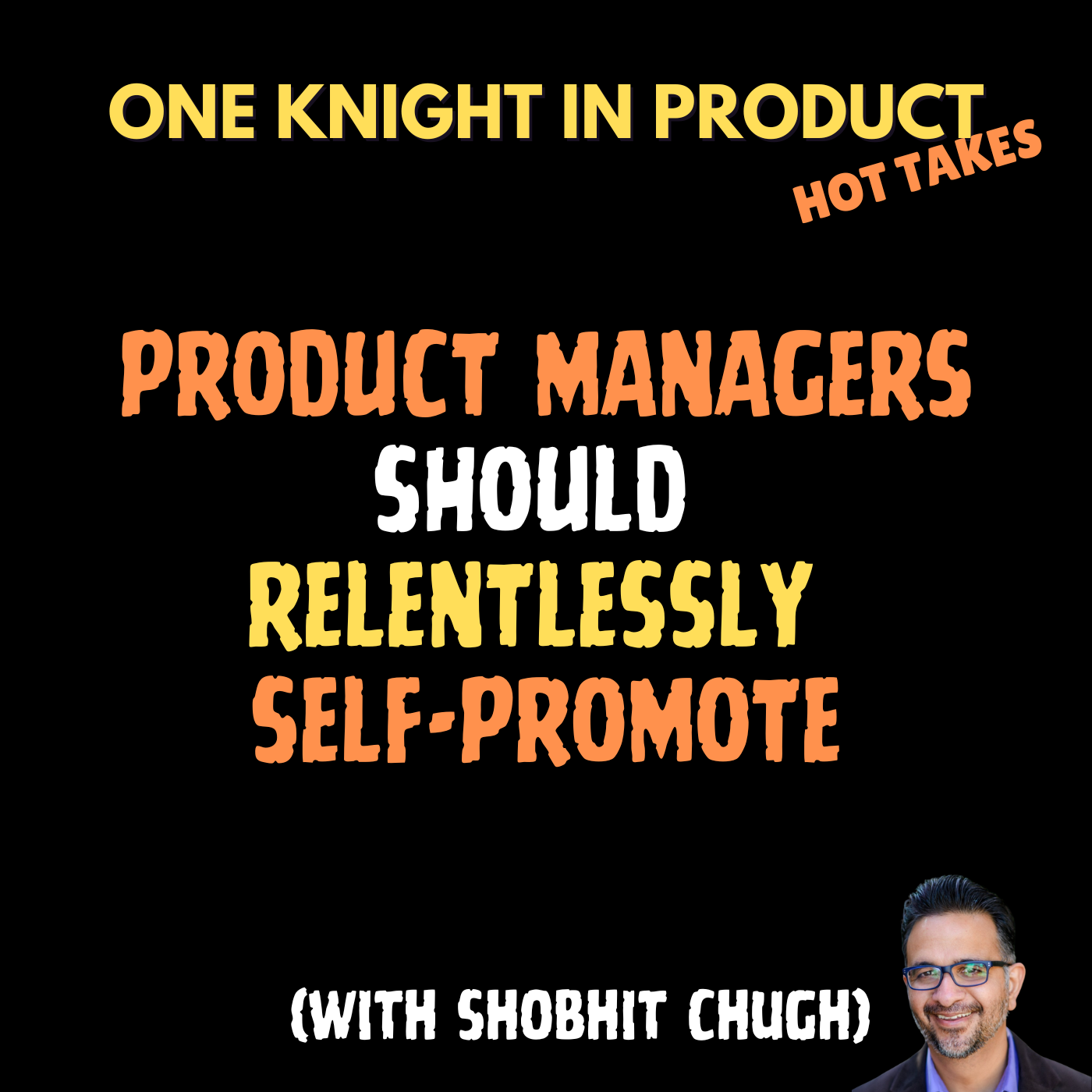 Shobhit Chugh's Hot Take - Product Managers Should Relentlessly Self-Promote (with Shobhit Chugh, CEO @ Intentional Product Manager) | Shobhit Chugh is a former Google PM who now helps product managers build their own brand, habits, confidence and career with Intentional Product Manager, and he also runs his own podcast of the same name. Shobhit's hot take? That too many product managers think that their work will speak for itself but, if they want to get ahead, they should start relentlessly promoting themselves; both inside and outside of the company they work for. Find Shobhit on LinkedIn: https://www.linkedin.com/in/shobhitchugh/. Check out Intentional Product Manager: https://www.intentionalproductmanager.com/ Check out my appearance on The Intentional Product Manager podcast: https://www.buzzsprout.com/2399157/episodes/16218073-fractional-product-management-with-jason-knight | 21m 46s | ||||||
| 6/22/25 |  Valeria Stromtsova's Hot Take - Product Managers Must Take The Lead in Designing Sustainable Solutions (with Valeria Stromtsova, Product Manager @ Treeapp) | Valeria Stromtsova is a Product Manager who traded fintech for sustainability and now works at Treeapp, helping plant trees where they're needed the most. Valeria's hot take? That product managers need to take the lead in creating a sustainable future, making sure they make a difference by considering the impact of their product decisions on their users, their stakeholders... and the planet we live on. Find Valeria on LinkedIn: https://www.linkedin.com/in/lerastromtsova/. | 23m 04s | ||||||
| 6/9/25 |  CPO Stories: Bhavesh Vaghela - London Marathon Events | Welcome to CPO Stories! In this new "podcast within a podcast", I'll be speaking to executive product leaders from the UK's biggest companies as well as up-and-coming stars of the future. I'll be digging into how they approach product management within their organisations, how they approached the leap into executive product leadership and trying to get some deep insights into how they view product management practices and culture. If you're a CPO and would like to come on, drop me a line! Or, forward this episode to your CPO and tell them you want them to come on 🙂 About this Episode In this episode, I speak with Bhavesh Vaghela, Chief Product & Technology Officer at London Marathon Events. Bhavesh started out working as an engineer at HP before a rich career journey through Barclays, TSB, Callsign and Collinson, before moving into the CPTO role at London Marathon Events. We cover a lot, including: What London Marathon Events actually does beyond race day, and how it drives physical activity across society How London Marathon Events approaches Product in a hybrid digital/physical world, and why product goes far beyond apps and websites Balancing a seamless B2C customer experience with the hard technical demands of world-class live events What it means for Product and Technology planning when the date can't slip, and getting it wrong could ruin a world record attempt Balancing the CPO and CTO hats: how combining Product and Technology under one role can drive alignment and delivery in the right type of organisation Product Management at London Marathon Events: a small team of unflappable, smart people driving high impact with strong purpose Why domain expertise matters, but curiosity matters more, and what to do when everyone has an opinion about your product The importance of building a culture of learning through experimentation, humility, air cover and making it ok to fail Why now is a brilliant time to join London Marathon Events: purpose, opportunity, and the irresistible rise of running Check out London Marathon Events Check out London Marathon Events' website: https://www.londonmarathonevents.co.uk/, or their careers page: https://www.londonmarathonevents.co.uk/london-marathon-events/careers. Connect with Bhavesh You can connect with Bhavesh on LinkedIn: https://www.linkedin.com/in/bhaveshvaghela/. | 52m 36s | ||||||


Showing 25 of 275
Pitch Fit is a Pro feature
See how bookable this show is for guests, which brands already advertise, the per-episode ad value, and the best-fit guest and sponsor profile. The numbers are blurred on the free plan.
How readily this show books outside guests like you.
How proven this show is for host-read sponsorships.
For Guests
ProFor Advertisers
ProUpgrade to Pro to unlock guest cadence, sponsor categories, fit scores, and per-episode ad value for this show.
Chart history for One Knight in Product
Peaked at #179 in NG, currently #179 in NG.
| Market | Genre | Peak | Current | Trend |
|---|---|---|---|---|
| NG | — | #179 | #179 | — |
Chart Positions
1 placement across 1 market.
Chart Positions
1 placement across 1 market.