Optimized Entrepreneur / Jeremy Hanson
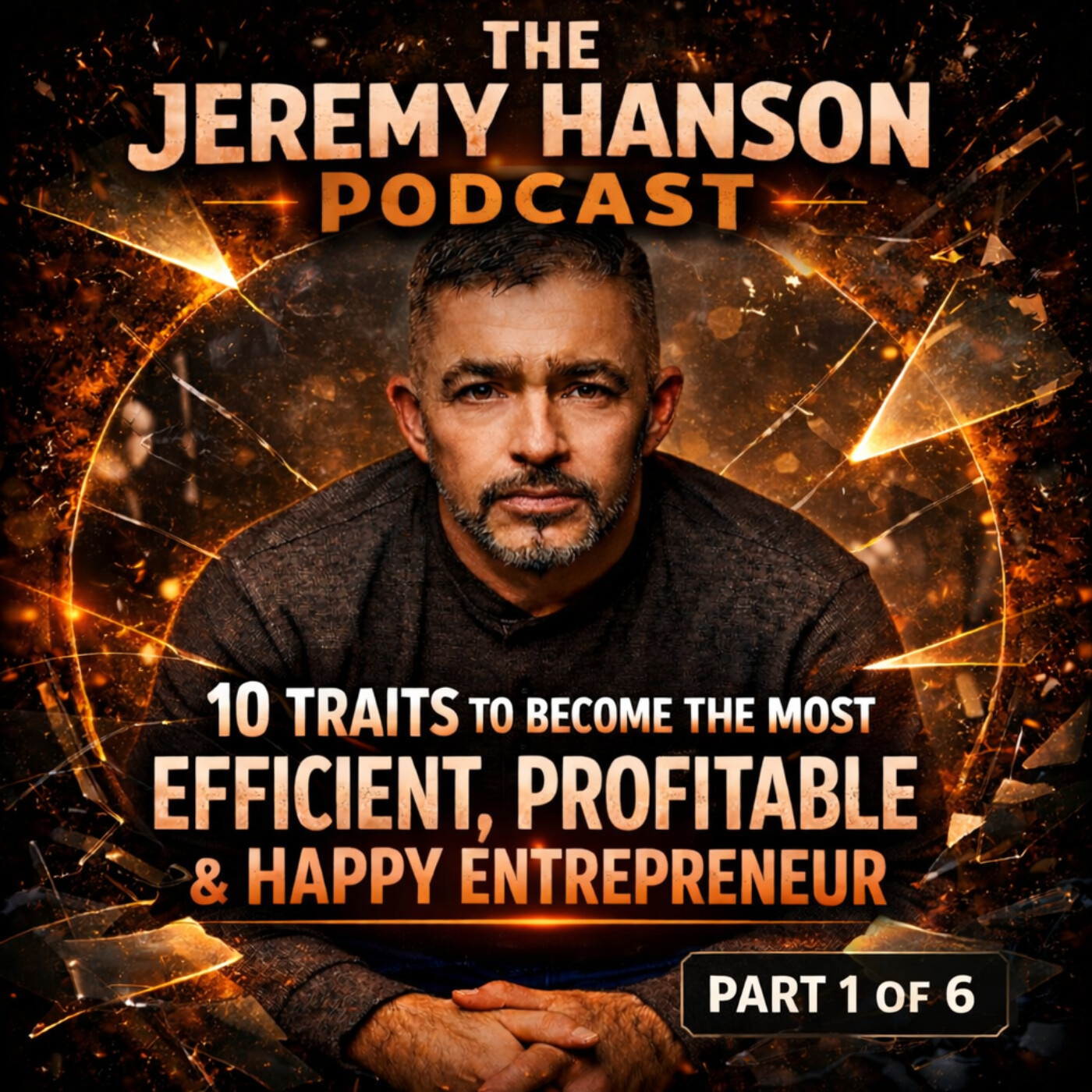
Optimized Entrepreneur with Jeremy Hanson is an entrepreneurship podcast for small business owners and service business owners who refuse to sacrifice marriage, family, health, or peace of mind just to grow a company. Yo...
AI overview.Jeremy Hanson is a small business expert and growth coach known for his practical approach to entrepreneurship. With a focus on real-world strategies, he has es…
Insights from recent episode analysis
On the show
- Jeremy Hanson29 eps
- Jeremy9 eps
- JEREMY HANSON1 ep
Audience Interest
Podcast Focus
Publishing Consistency
Insights are generated by CastFox AI using publicly available data, episode content, and proprietary models.
Most discussed topics
Brands & references
Total monthly reach
Based on 2 signals.
Built from
By chart position
- 🇺🇸United States · EntrepreneurshipHOME#1421.9K to 9.9K
- Per-Episode Audience
Est. listeners per new episode within ~30 days
1.9K to 9.9K🎙 Daily cadence·200 episodes·Last published 1w ago - Monthly Reach
Unique listeners across all episodes (30 days)
6.2K to 33K🇺🇸100% - Active Followers
Loyal subscribers who consistently listen
3.4K to 18K33 real followers tracked across platforms
Market Insights
Platform Distribution
Reach across major podcast platforms, updated hourly
Total Followers
—
Total Plays
—
Total Reviews
—
* Data sourced directly from platform APIs and aggregated hourly across all major podcast directories.
| Date | Episode | Topics | Guests | Brands | Places | Keywords | Sponsor | Length | |
|---|---|---|---|---|---|---|---|---|---|
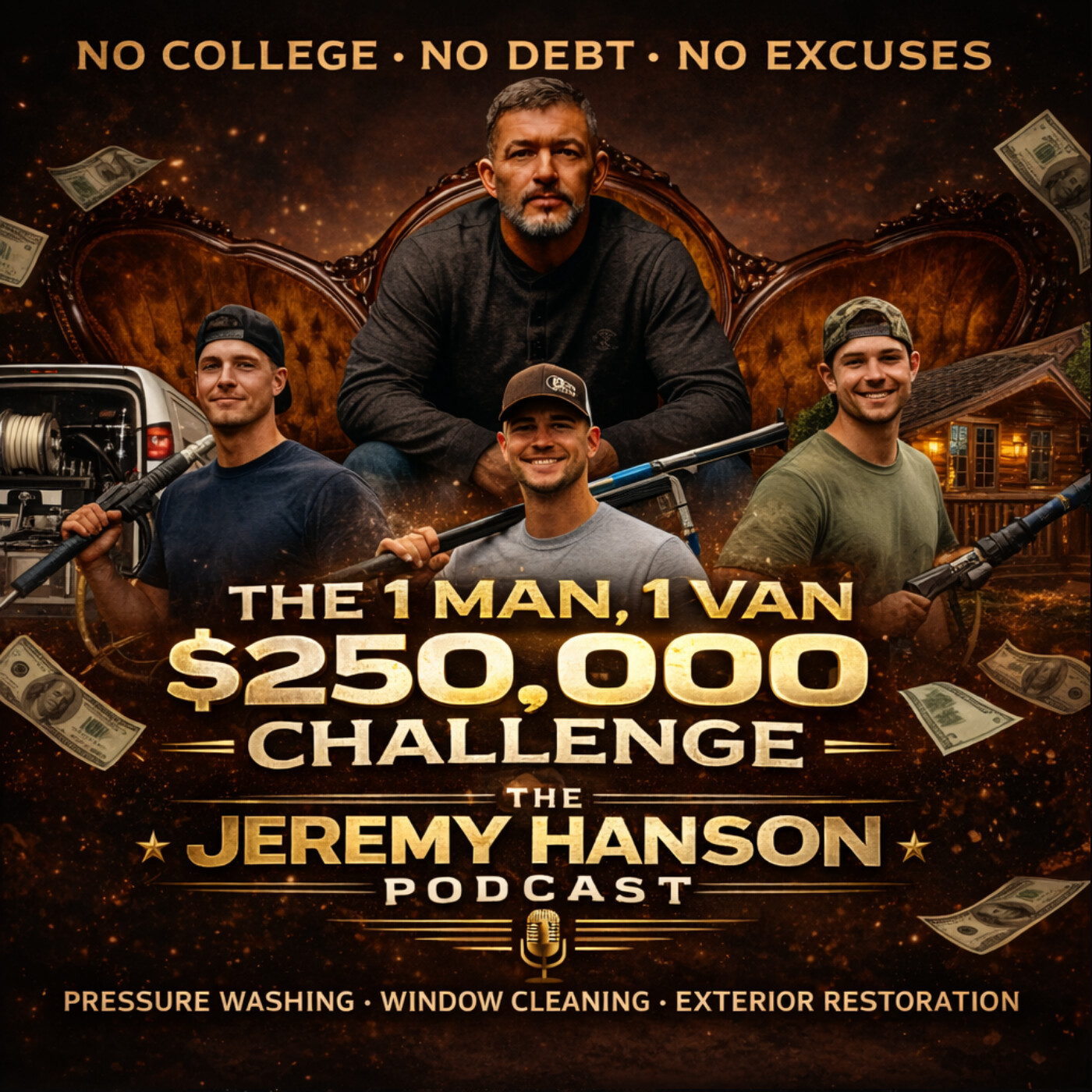
| 10/13/26 |  Frozen Fingers: What Are You Willing to Do to Win | Before the podcast network, before the businesses, Jeremy Hanson drove a truck-washing route through the Wisconsin winter. Twenty hour days in snow and single digit temperatures, pressure washer lines freezing solid, soaked gloves, and semi after semi coated in road salt. On this episode of Optimized Entrepreneur with Jeremy Hanson, he takes listeners back to one three a.m. moment in a frozen truck lot and uses it to unpack the question every entrepreneur eventually faces: what are you actually willing to do to be successful, and is your reason strong enough to carry you through it? Jeremy breaks down the hidden price of success that never shows up in highlight reels, including comfort, ego, being misunderstood, and being a beginner in public. He explains why willingness is the scarcest competitive advantage an early stage founder has, why a real why has to outweigh the pain rather than erase it, and how to tell healthy sacrifice from self-destruction. The episode closes with a practical six-part framework for getting through your own frozen fingers season without losing your health, your integrity, or the people you are building for.This episode is supported by Perplexity Computer, and it is a sponsor that fits the conversation. Every hard season goes easier when you stop wasting hours pulling information together. Perplexity Computer connects to the tools you already use, builds a morning command center for your business, and goes beyond answering questions to take on full projects, from rebuilding an email flow to drafting your next ad campaign. Instead of locking you into one AI model, it sends each step of the work to the right model for the job. Start your free trial of Perplexity Computer today at https://pplx.ai/hanson and experience the next phase of AI. | 45m 12s | ||||||
| 10/6/26 |  Optimized Entrepreneur "Only Ten Extra Minutes" | "It'll only take an extra ten minutes." Jeremy Hanson shows how that one sentence can cost a 22-technician company $154,440 to $228,800 a year and up to $1.14 million over five.Sponsored by Hostinger. Build a professional website with no coder, designer or developer: describe it, and Hostinger's AI builds the first version in minutes. Domain, website, email and marketing in one account, plans from $3 a month. Go to https://hostinger.com/HANSON and use code HANSON for 10% off.After two complaints about sagging fiber, a fiber-to-the-home manager ordered fasteners every ten inches instead of every twenty-four on every install. Jeremy, consulting in the room, ran the numbers. At six to eight installs per tech per day, ten minutes becomes 22 to 29 extra labor hours daily and 5,720 to 7,627 hours a year, three to four full-time employees of payroll with no added customers. He walks it year by year to as many as 38,000 hours, then measures the loss against what a technician produces, $187.50 to $250 an hour against a $27 to $30 wage: roughly $1.07 million to $1.9 million a year in production capacity. He explains why good managers make this mistake, why a training problem should never be solved with labor, and gives a five-question test for pricing any rule before you make it. | 47m 30s | ||||||
| 9/29/26 |  What to do when customers quit spending money | When business slows down, most owners assume their customers are out of money. Jeremy Hanson argues that in most downturns the money is still there, but customers have grown far more selective about where it goes, and that is a problem an entrepreneur can solve. In this episode of Optimized Entrepreneur with Jeremy Hanson, Jeremy walks through how to keep a business busy when inflation, layoffs, high interest rates, and rising household costs squeeze your customers. He explains how to reposition a service from a want to a need by selling the result it protects, using an exterior cleaning business as the working example. He lays out the good, better, best pricing structure, explains why panic price cuts destroy margins, and makes the case for getting smaller before getting cheaper. From there the episode moves into finding the categories where money is still moving, turning a customer list into targeted campaigns, building recurring revenue, responding to leads quickly, running a structured follow-up system, taking market share while competitors retreat, building referral partnerships, removing friction from the buying process, staying visible, and using a slow season to fix the business from the inside. The takeaway: hard times do not erase opportunity, they move it, and the owner who adapts fastest finds it first.QUESTIONS THIS EPISODE ANSWERSHow do you keep a small business busy during an economic slowdown? Jeremy Hanson recommends repositioning offers around the results customers need, creating tiered pricing, working your existing customer list, building recurring revenue, following up consistently, and staying visible while competitors pull back. Do customers really stop spending during a recession? In most slowdowns they keep spending but become more selective, moving money toward needs, maintenance, urgent problems, and convenience. Should a business lower its prices when sales drop? Jeremy argues against automatic price cuts because costs such as insurance, fuel, rent, and payroll do not fall with revenue; he recommends smaller, lower-priced offers that still protect margin. What is good, better, best pricing? It replaces a single yes-or-no price with three tiers, shifting the customer's decision from whether to buy to which option fits. What does get smaller before you get cheaper mean? It means shrinking the scope of an offer, such as a shorter engagement or a single-service maintenance visit, rather than discounting the full product. Why is a customer database valuable in a slowdown? Past buyers, unclosed estimates, and lapsed customers can be reached with targeted campaigns at a fraction of the cost of acquiring new customers. How should a business follow up on estimates? Use a helpful sequence at roughly day one, three, seven, fourteen, and thirty, varying the format and giving the customer useful information each time.CHAPTERS | 43m 11s | ||||||
| 9/24/26 |  OPTIMIZED ENTREPRENEUR WHEN IT'S TIME TO CUT PEOPLE OUT OF YOUR LIFE | Every entrepreneur has a version of the eleven-forty phone call. The name that appears on the screen before you look at it. The crisis you didn't cause and are expected to solve. The spouse who stopped commenting on it two years ago. In this episode of Optimized Entrepreneur, Jeremy Hanson takes on the subject most people avoid entirely: the point at which a relationship stops being a hard season somebody is moving through and becomes a permanent pattern of destruction you are financing with your own life.The episode draws a hard line early. Disagreement is not toxicity. Criticism is not toxicity. A friend willing to tell you that you're making a mistake may be the most valuable person in your circle, and depression, grief, anxiety or financial trouble do not make somebody a destructive presence. What the episode addresses is the repeated pattern: manipulation, dishonesty, sabotage, relentless blame, guilt used as leverage, boundaries violated on schedule, and a quiet resentment of every good thing that happens to you.From there it gets practical. Jeremy walks through an audit of the ten people with the most access to your time and attention, and why the call log rarely matches the list. He covers the crab bucket and why the people most uncomfortable with the new version of you are frequently the ones who benefited most from the old one. He examines the specific entrepreneurial cost of a hostile environment, the trap of becoming the family bank, why a productive but destructive employee can be the most expensive person on the payroll, and how to document and handle that situation without creating a legal problem. Partnerships get their own chapter, including why buy-sell provisions and valuation methodology should be negotiated while everybody still likes each other.The second half turns toward the decision itself. How to tell a pattern from a bad week. Why boundaries come before banishment, and what somebody's reaction to a reasonable limit reveals. How to actually conduct the conversation, with specific behavior, two or three examples, and a decided response to each possible outcome. Why forgiveness and reconciliation are not the same transaction. What makes family harder, and where protecting your household outranks preserving appearances. Then the part nobody warns you about: the grief that follows a clean subtraction, the opinions of people who take sides, and how to deliberately choose what fills the space afterward.The episode closes where optimization actually begins. Your life runs on limited time, limited energy and limited attention. The people surrounding you are not background characters. Sometimes growth is addition. Sometimes growth is subtraction. And sometimes the most valuable thing you will ever remove is the person who spent years convincing you that you were never capable of growing at all. | 46m 20s | ||||||
| 9/22/26 |  BUILD IT TO SELL IT Why the Three-Year Service Business May Be One of the Best Investments You're Overlooking | Most entrepreneurs build a business they intend to keep forever, and a surprising number of them end up owning a job with a logo painted on the side of a truck. In this episode of Optimized Entrepreneur, Jeremy Hanson lays out a completely different model: choosing an unglamorous service industry on purpose, building the company as an asset from the first day of operation, and preparing it for a sale that may happen in thirty-six months. Pressure washing, HVAC, plumbing, landscaping, pest control, commercial cleaning, roofing, pool service, junk removal, property maintenance. Industries nobody writes articles about, fragmented across every market in the country, full of skilled technicians who never built an actual company. That gap is the opportunity.Jeremy walks through the full three-year build. Year one proves the machine: choosing the market, the service line and the customer type, learning real customer acquisition, and documenting every process before volume arrives to hide the answers. Year two removes the owner from the center of the business, which is uncomfortable for the ego and excellent for the valuation, and includes the thirty-day disappearance test that exposes exactly how fragile a company really is. Year three polishes the asset and builds the diligence file a buyer will demand: clean financials, documented equipment, written standard operating procedures, customer acquisition data, retention numbers, revenue by service and by customer, and an honest measurement of concentration risk.Along the way the episode covers why not all dollars of profit carry the same value, how recurring revenue and route density convert transactions into predictability, why the customer database is an asset most owners never organize, what buyers actually mean when they ask where your leads come from, and how these transactions get structured in the real world through cash at close, seller notes, earnouts, equity rollovers and transition periods. It closes with the question every owner should be able to answer on demand: if somebody walked in tomorrow and offered to buy this business, what exactly would they be buying?Whether you intend to sell in three years or hold for thirty, the argument holds. Everything that makes a company attractive to a buyer makes it a better company to own right now. More predictable. More profitable. Less dependent on you. And more valuable every quarter you keep it.Check out todays sponsor, so your ready to stay on top of business anywhere you are!!! saily.com/jeremyhanson.Get an exclusive 15% discount on Saily data plans! Use code jeremyhanson at checkout. Download Saily app or go to saily.com/jeremyhanson. | 46m 26s | ||||||
| 9/17/26 |  OPTIMIZED ENTREPRENEUR SUMMER IS OVER — TIME TO GET OPTIMIZED | Everything between the markers goes into the RSS.com notes editor as written. Plain text. No bold, no headings, no manual hyperlinks. Type the URLs raw and let the apps linkify them, because every anchor tag you add eats forty or more hidden characters out of your 4,000.--- BEGIN NOTES ---Summer is over. The kids are back in school, football is back, and somewhere in corporate America somebody has already put Christmas decorations on a shelf. For entrepreneurs, that means playtime is over too.January is optimism. September is information. You have enough year behind you to know what actually worked, and enough year in front of you to change how it ends. In this episode, Jeremy Hanson walks through the full fall reset: your business, your money, your time, your body, your family, and your mind.Inside: the September Audit and how to run it in an afternoon using ninety days of bank statements. Why optimization never means doing more. How to find the bottleneck that is setting the pace for your entire operation, and what to do when the bottleneck turns out to be you. The people audit nobody wants to run, and the employee who stepped up this year that you have not said a word to. The twenty phone calls that will find revenue you already own. Why you should pick three priorities and let everything else be secondary. And the math that changes the whole quarter: from mid-September to December 31st you do not have three and a half months, you have roughly fifty real working days.Then the personal side. Lifestyle creep. Fourth-quarter tax planning while your accountant is still an advisor instead of a historian. Getting your body back into operating condition, because every bad decision has a tired version of you behind it. Protecting the fall calendar before it fills itself. And taking your attention back from the slot machine in your pocket.Do not wait for January. January 1st has no magical powers. The calendar does not care. You need a decision.CHAPTERS00:00 Summer is over [TC] Summer wrecks your rhythm [TC] You still have time [TC] Start with the business [TC] Sponsor [TC] The September Audit [TC] Optimization isn't doing more [TC] Find the bottleneck [TC] The people audit [TC] The customer you already have [TC] Cut something [TC] Pick three [TC] Count the actual days [TC] Get your money optimized [TC] Get your body back [TC] Get your house optimized [TC] Your phone is stealing your life [TC] The 100-day mentality [TC] Don't wait for January [TC] Fall is built for work [TC] The fall reset [TC] How do you want 2026 to end?Today's episode is brought to you by Perplexity Computer. Start your free trial of Perplexity Computer today at https://pplx.ai/hanson and experience the next phase of AI. #adOptimized Entrepreneur is at optimized1.com. Get the newsletter, Built Different, for the strategy behind episodes like this one. New episodes every Tuesday and Thursday.Keywords: fourth quarter business plan, fall reset, September audit, small business numbers, cut expenses, find the bottleneck, delegation, Q4 goals, lifestyle creep, tax planning, work life balance, screen time, 100 days, Jeremy Hanson, Optimized Entrepreneur | 44m 58s | ||||||
| 9/15/26 |  OPTIMIZED ENTREPRENEUR WHAT IS THE BEST VERSION OF YOU?✨ | self-measuremententrepreneurship+3 | — | — | — | personal growthentrepreneur+3 | — | 51m 01s | |
| 9/10/26 | work ethicresponsibility+4 | — | — | — | work ethicresponsibility+6 | — | 38m 49s | ||
| 9/3/26 | entrepreneurshipbusiness principles+3 | — | Yellow Pages | — | entrepreneurshipbusiness principles+3 | — | 45m 40s | ||
| 9/1/26 | infrastructurecapital spending+3 | — | Federal ReserveMcKinsey | U.S. | infrastructure boomcapital spending+3 | — | 51m 15s | ||
Want analysis for the episodes below?Free for Pro Submit a request, we'll have your selected episodes analyzed within an hour. Free, at no cost to you, for Pro users. | |||||||||
| 9/1/26 | AI in marketinghuman relationships+3 | — | A Fuzzy Life Entertainment Production | — | AI marketinghuman connection+3 | — | 49m 28s | ||
| 8/27/26 | work-life balanceentrepreneurship+4 | — | — | — | work-life balanceentrepreneurship+6 | — | 47m 39s | ||
| 8/25/26 | business managemententrepreneurship+3 | — | — | — | business ownerrevenue+6 | — | 44m 32s | ||
| 8/18/26 | living in the momententrepreneurship+4 | — | — | — | lifemoments+5 | — | 52m 17s | ||
| 8/18/26 | entrepreneurshipbusiness management+3 | — | — | — | business weaknessentrepreneur challenges+3 | — | 58m 18s | ||
| 8/11/26 | expertiseself-education+3 | — | manufacturerconsultant+3 | Missouri | expertiseentrepreneurship+4 | — | 56m 42s | ||
| 8/4/26 |  The Jeremy Hanson Podcast Choices finish_mixdown | Life almost never asks you to choose between something obviously right and something obviously wrong. The decisions that actually shape a business, a marriage, a bank account, and a legacy are the ones where both doors cost you something you don't want to give up. In this solo episode, Jeremy Hanson opens at a kitchen table at four-thirty in the morning with a legal pad and two columns drawn down the middle, and both columns bad, and builds out a complete framework for making hard decisions when none of the options look good.Jeremy starts with the reframe that changes everything: there are no perfect decisions, only prices you're willing to pay. Growing a business costs time. Not growing it costs opportunity. Financial discipline costs today's comfort. Skipping it costs tomorrow's freedom. The work is never finding the option with no bill attached. The work is deciding which bill you can live with, and then writing that cost down in specific language instead of vague language, because vague costs are terrifying and specific costs are just math.From there he takes on the most expensive lie in business: I don't have a choice. Most of the time that sentence isn't true. You have choices. You just don't like the options. Waiting is a choice. Ignoring a problem is a choice. Avoiding a conflict is a choice. And when you refuse to decide, life decides for you, and life is a worse decision-maker than you are because it doesn't know your values, your family, or the thing you were trying to build.Chapter four delivers the single most useful piece of advice Jeremy has ever been handed, and the one he has used more than almost anything else he's been told. If you don't have a good option, you do the next best thing. It sounds simple, and it does something powerful: it takes perfect off the table. Once you accept there is no good option, you stop hunting for one, and the question gets smaller and far more answerable. You're no longer asking what's right. You're asking what's next best. And you can almost always answer that. A lot of people are frozen right now not because they don't know what the next best thing is, but because they're still holding out for a best thing that was never on the menu.Jeremy then walks through the two lenses he runs every difficult decision through before he commits. Perspective, which is simply where you're standing when you look at the thing, and the honest question of whether you're seeing this through fear or through faith. And a fresh point of view, which is not the same thing, because sometimes you don't need different choices, you need different eyes. He shares the test he uses to catch fear wearing his gut's clothes, and four practical ways to manufacture a new point of view on purpose instead of waiting around for one to show up, including the handwriting exercise that has talked him out of two significant mistakes.The heart of the episode is the three guides. Your gut, which means quiet conviction built over years and not the loud emotion that shows up at eleven at night. Your mentors, who are not there to make your decision but to expand your perspective, and the one question to ask them that gets gold every time. And new eyes, which sometimes means stepping away, talking honestly with your spouse, or praying for wisdom instead of praying for an outcome. Jeremy makes the case that most people who stay stuck are using one of the three, and lays out the specific failure mode of each.The back half turns to consequences. Every yes automatically creates a thousand no's, which sounds like restriction and is actually the opposite, because freedom isn't having unlimited choices, freedom is making the right choices consistently. And then the quiet mechanism underneath every life that gets built or lost: nobody becomes successful because of one decision, and nobody wrecks their life in an afternoon. Tiny choices become habits, habits become character, and character becomes destiny. Compounding is boring right u | 56m 28s | ||||||
| 7/21/26 | businessentrepreneurship+3 | — | — | — | business podcastentrepreneur+3 | — | 48m 25s | ||
| 7/21/26 |  OPTIMIZED ENTREPRENEUR The Entrepreneur's Guide to Anxiety: Recognize It Before It Runs Your Life | Entrepreneurs wear stress like a badge of honor. We joke about living on coffee, we brag about eighty hour weeks, and we keep telling ourselves we will rest after the next client, the next hire, the next milestone. But somewhere in that cycle, a lot of business owners cross a line they never notice, and the thing they have been calling drive quietly stops being drive. In this episode of Optimized Entrepreneur, Jeremy Hanson takes on one of the most under discussed problems in small business ownership: chronic anxiety, and why so many high functioning owners fail to recognize it in themselves. The premise is simple and uncomfortable. Anxiety in entrepreneurs almost never announces itself as fear. It shows up in side doors. It shows up as irritability over small things, as snapping at a spouse or a child, as checking a bank balance six times before lunch when nothing has changed. It shows up as brain fog, avoided conversations, guilt about resting, a jaw clenched in sleep, and waking at three in the morning to solve problems that cannot be solved until sunrise. Most owners call all of that the grind. Sometimes it is the grind. Sometimes it is something else entirely, and the difference matters enormously. Jeremy draws a clear working line between stress and anxiety. Stress has a source and a name, and when the problem resolves, the pressure comes down. Anxiety does not need a source, or it borrows one as a cover story and keeps running long after the original problem is gone. He explains why entrepreneurs are structurally more vulnerable to this, without ever framing the pressure as imagined or as a mindset failure. No guaranteed paycheck, employees and customers and family depending on your decisions, relentless decision fatigue, and no one above you to escalate to. High responsibility, low certainty, nowhere to hand it off. He also shares what he got wrong personally over a long stretch of running a service company, building a media network, and raising a large family, including the quiet moment from his wife that finally got his attention. From there the episode turns entirely practical. Get every open loop out of your head and onto paper. Separate fact from assumption and put catastrophic thoughts on trial with real evidence on both sides. Move your body for twenty minutes because anxiety is partly a physical state that needs somewhere to go. Protect sleep with the same seriousness you protect cash flow. Cut deliberate limits on intake and doom scrolling. Stop carrying the real numbers alone, especially from your spouse. Focus energy on what is genuinely controllable. Jeremy then lays out a four question daily reset built to survive an actual owner schedule, and closes with a direct and necessary conversation about when the load is bigger than any podcast can address, and why bringing in professional help is the same category of decision as hiring an accountant or an attorney. This is not an episode about eliminating stress. Stress is part of business, part of marriage, part of parenting, part of life. It is an episode about recognizing when stress has become something else, and doing something ordinary about it before it starts running your business, your family, and your life. Because the business you build will never be healthier than the person building it. QUESTIONS THIS EPISODE ANSWERS Listeners often ask what the actual difference is between stress and anxiety, and this episode gives a working answer a business owner can use immediately: stress has an identifiable source and it decreases when that source is resolved, while anxiety persists regardless of resolution and reliably attaches itself to a new concern. Another common question is why anxiety is so hard for entrepreneurs to spot in themselves, and the answer is that they are looking for fear. High functioning owners rarely feel afraid, so they conclude they are fine, when the real symptoms are irritability, short temper with family, brain fog, disrupted sleep, | 52m 53s | ||||||
| 7/14/26 | customer engagementword-of-mouth marketing+3 | — | — | — | sales teamcustomer ambassadors+3 | — | 48m 37s | ||
| 7/14/26 |  Optimized Entrepreneur Why Date Night Matters More for Entrepreneurs | It sounds soft for a business show, but Jeremy Hanson argues that date night is one of the highest-leverage things an entrepreneur can put on the calendar — for the business, the health, and the future. This episode of Optimized Entrepreneur opens with the quiet way most marriages get into trouble. Not fighting, not slammed doors, but silence: two people who love each other reduced to logistics at the kitchen table, running a household like efficient business partners, until one day they realize the best friends they used to be have become polite roommates. Nobody chose it. It happened one busy week at a time. Jeremy gets honest about living this himself, including the night his wife told him she felt like she was dating his business — not angry, just resigned, which was worse. From there he builds the case that entrepreneurs need date night more than almost anyone, because a relationship is one of the biggest performance multipliers there is. When home is strong, you show up with more focus, patience, and resilience; when it's strained, it leaks into every decision, and the multiplier runs in reverse, taxing every hour you work. The episode turns practical. Why you'll never "find" the time and have to protect it like a major client meeting. The simple rules that keep date night from becoming just dinner — no phones, no kid-talk for the first thirty minutes, no business problem-solving, and regular novelty. How to shrink date night in brutal seasons rather than cancel it, because a thin thread can be rebuilt but a broken one is hard to tie back together. Jeremy also reframes your spouse as the best board member you'll ever have — fully invested, willing to tell you the truth — and shares the deal his wife's quiet questions once talked him out of, saving him a year and a pile of money. He closes with a direct challenge: schedule the next date night now, tell your partner it's a priority, and run a ninety-day experiment protecting the time while watching what it does to your energy, focus, and business. And for anyone in a different season, the principle still holds — protect intentional time with the people who fill your tank, because isolation is one of the worst things for long-term entrepreneurial success. You can have a thriving business and a thriving relationship, but it never happens by accident. It happens by design. QUESTIONS THIS EPISODE ANSWERS Why does date night matter for entrepreneurs specifically? According to Optimized Entrepreneur, a relationship is one of the biggest performance multipliers you have. A strong home life makes you more focused, patient, and resilient at work, while a strained one leaks into every decision — so date night is maintenance on the most important system in your life. How does a marriage quietly erode during the hustle? It rarely happens through conflict. It happens through silence and logistics — "just one more late night," milestones that never stop coming, and connection fading a little at a time until two best friends become roommates without ever deciding to. How do you actually protect date night when you're busy? Treat it like a major client meeting, make it recurring, and defend it. You'll never simply find the time, so it has to be scheduled and protected. In brutal seasons, shrink it rather than cancel it — even an hour of intentional, phone-free time keeps the thread from breaking. What are the rules for a good date night? No phones at the table, no talking about the kids for the first thirty minutes, no business problem-solving (vision talk is fine), and regular novelty. It doesn't have to be expensive — it has to be consistent and intentional. Why is your spouse a strategic asset? Your partner sees things in you and the business that you're too close to notice, and they'll tell you the truth to protect your future, not your ego. Jeremy calls this the best board member most entrepreneurs have and waste — and date night is when you convene that board. What if I'm | 48m 02s | ||||||
| 7/7/26 |  Lifestyle Inflation — The Silent Killer (New Money Requires New Discipline) | Lifestyle inflation has quietly wrecked more wealth than bad investments, market crashes, and failed businesses combined — and almost nobody sees it coming, because it doesn't look like a threat. It looks like success. In this episode of Optimized Entrepreneur, Jeremy Hanson opens with the story of a man who had everything on paper — the big house, the trucks, the boat, the country club, the private school — and confessed he hadn't slept well in two years, because his entire beautiful life was balanced on a business that had to perform at its peak forever. Nothing had gone wrong. He'd done everything right by every measure the world uses, and quietly built himself an expensive prison, one reasonable purchase at a time. From there, Jeremy takes apart the psychology and the math of why more money so often creates more stress instead of less. He explains why success doesn't automatically make you rich, why raising your income without raising your discipline just pours more water into a leakier bucket, and why the single most important phrase an entrepreneur can internalize is this: new money requires new discipline. He shows exactly where wealth is actually created — not in revenue or sales or your paycheck, but in the gap between what you make and what you spend — and puts real numbers on what protecting that gap can build over a decade. Jeremy digs into the hedonic treadmill and why every upgrade fades back to baseline, why entrepreneurs are especially vulnerable when momentum makes the good times feel permanent, and how businesses die not from making too much money but from ramping up expenses faster than wisdom. He shares an honest confession about his own temptation in a truck dealership, contrasts the trapped friend with another entrepreneur who looked ordinary and lived completely free, and lays out a practical framework: don't reward yourself into poverty, reward the person and not the image, build assets before luxuries and let the assets buy the luxuries, and protect your freedom — because real wealth is the ability to say no. He closes with two tools you can use immediately: finding your true freedom number, and running every major purchase through five hard questions before you buy. This is a direct, honest conversation about money, freedom, family, health, and the difference between looking successful and becoming free — because on Optimized Entrepreneur, the goal was never just to get rich. The goal is to get free. QUESTIONS THIS EPISODE ANSWERS What is lifestyle inflation and why is it dangerous? According to Optimized Entrepreneur, lifestyle inflation is the habit of matching every raise or profit jump with higher spending. It's dangerous because it arrives quietly, one reasonable purchase at a time, doubling your obligations while your actual happiness barely moves, until an impressive lifestyle becomes a financial anchor. Why does making more money often increase stress instead of reducing it? Because most people raise their obligations along with their income — bigger mortgage, bigger payments, higher fixed costs — so the business must perform at a higher level every month just to stay afloat. They set out to buy freedom and accidentally bought more pressure. Where is wealth actually built? Jeremy explains that wealth is created in the gap between what you make and what you spend, not in revenue or your paycheck. Income impresses people, but margins build freedom, and a modest earner with a big gap can reach independence faster than a high earner with none. What is the hedonic treadmill? It's the psychological tendency to drift back to a baseline level of happiness after positive changes like a raise or a new car. Purchases thrill briefly, then become normal, so people chase the next thing — feeding adaptation rather than buying lasting happiness. How can entrepreneurs avoid lifestyle inflation? Build assets before luxuries and let the assets pay for the lifestyle, know your true freedom number, reward | 41m 21s | ||||||
| 7/7/26 | business successcustomer experience+4 | — | — | — | nuancecustomer experience+5 | — | 47m 10s | ||
| 6/30/26 |  Build a Business That Funds Your Marriage — Not One That Bankrupts It | Every entrepreneur quietly wrestles with the same question: how do you build a company that demands everything from you while building a marriage that deserves your absolute best? In this episode of Optimized Entrepreneur, Jeremy Hanson skips the recycled "schedule a date night" advice and goes straight at the real problem — marriages rarely die from one big event. They starve, slowly, from a lack of intentional investment. Jeremy lays out ten pillars for building a marriage with deep reserves: the emotional profit margin, leading instead of managing your spouse, micro-moments over grand gestures, dreaming together monthly, protecting your home from becoming a corporate office, staying students of each other, building shared experiences, becoming each other's safe place, celebrating ordinary wins, and treating a strong marriage as your single biggest competitive advantage. Along the way he gets honest about the things most operators won't say out loud — why the bedroom is the last place trouble shows up, and why you can never stop being the person they married. It closes with a gut-check: one day someone else will own your company. Who's still sitting across the table from you when that day comes? Brought to you by Proraso. (00:00) Cold Open — The question every entrepreneur asks but never says Premise — Marriages don't explode; they starve Pillar 1 — Build an emotional profit margin Pillar 2 — Stop treating your spouse like an employee Pillar 3 — Create micro-moments instead of waiting for vacations Pillar 4 — Dream together every month Pillar 5 — Protect your home from becoming a corporate office Pillar 6 — Become students of each other again Never Stop Being the Person They Married Sponsor — Proraso Pillar 7 — Build shared experiences at home Pillar 8 — Become each other's safe place Pillar 9 — Celebrate the ordinary wins The Bedroom Doesn't Usually Go Cold First Pillar 10 — Build a marriage that makes the business better Closing Thought — Who's sitting across the table? entrepreneur marriage, work-life balance founders, marriage and business, husband owner, business owner marriage advice, emotional bank account marriage, micro-moments relationships, bids for connection, marriage vision planning, protect home from work, intimacy in marriage, never stop pursuing spouse, marriage as competitive advantage, entrepreneur burnout marriage, Jeremy Hanson, Optimized Entrepreneur, Fuzzy Life Entertainment, Built Different, entrepreneurship podcast, mindset podcast, build a marriage that lasts, success and family, legacy over exit Q: Why do entrepreneurs' marriages fail? A: They rarely fail from one dramatic event. They starve slowly from a lack of intentional investment — missed conversations, carried-home stress, and neglect that no one flags as a crisis until the couple has drifted into living separate emotional lives. Q: What is an emotional profit margin in marriage? A: It's a reserve of goodwill built through appreciation, affection, encouragement, laughter, and reliability. Like cash reserves in business, it lets a couple absorb a hard season and bend instead of break. Q: How do you stay connected without expensive vacations? A: Through micro-moments — enthusiastic greetings, shared coffee, a real six-second kiss, holding hands, sitting together after dinner. Research shows couples who consistently respond to each other's small bids for attention build the strongest relationships. Q: Is a lack of physical intimacy the real problem in a marriage? A: Usually it's a symptom, not the root. The bedroom is typically the last place trouble appears, after working late, missed conversations, and accumulated stress have already created distance. Q: Does a strong marriage help or hurt a business? A: It helps. A healthy marriage improves decision-making, confidence, creativity, stress tolerance, and leadership — increasing an entrepreneur's capacity rather than competing with the | 58m 18s | ||||||
| 6/30/26 | sustainable successbusiness growth+3 | — | Fuzzy Life Entertainment | — | sustainable successbusiness+5 | QuoHANSON | 53m 08s | ||
| 6/23/26 | attitudeentrepreneurship+3 | — | PrincetonPwC+2 | — | attitudesmile+5 | — | 51m 04s | ||
| 6/16/26 | power of wordscommunication+4 | — | — | — | wordscommunication+5 | — | 57m 06s | ||
| 6/2/26 | Gen Z entrepreneurshipcareer paths+3 | — | — | AmericaGen Z | Gen Zentrepreneurship+6 | — | 53m 27s | ||
| 5/26/26 | recession-proof business strategieselite companies+4 | — | Built DifferentJeremyHanson.pro | — | economic uncertaintybusiness strategies+5 | — | 47m 21s | ||
| 5/19/26 | 80/20 rulePareto Principle+4 | — | The Jeremy Hanson PodcastThe 80/20 Business Blueprint: Why 20% of Your Work Creates 80% of Your Profit | — | 80/20 rulePareto Principle+7 | — | 44m 31s | ||
| 5/12/26 | time ownershiptime slavery+4 | — | — | — | entrepreneurtime management+5 | — | 56m 33s | ||
| 5/5/26 | executionentrepreneurship+4 | — | — | — | executionentrepreneur+5 | — | 52m 36s | ||
| 4/28/26 | success hangoverentrepreneurship+3 | — | — | — | successentrepreneur+5 | — | 54m 14s | ||
| 4/21/26 | workday structureproductivity+2 | — | OneSkinIntuit+5 | — | 6-hour workday12-hour grind+2 | — | 54m 11s | ||
| 4/14/26 | sleeprecovery+2 | — | The Jeremy Hanson PodcastUniversity of Rochester+7 | U.S. | sleep disorderscortisol+5 | — | 49m 20s | ||
| 4/7/26 | marketing strategyservice business+2 | — | Google Business ProfileFacebook+2 | — | door knockingcommunity engagement+2 | — | 47m 21s | ||
| 3/31/26 | entrepreneurshippersonal development+1 | — | The Jeremy Hanson Podcastthe Review of Economics and Statistics | Florida | money managementcharacter development+1 | — | 54m 31s | ||
| 3/24/26 | entrepreneurshipbusiness efficiency+3 | — | YouTubeOptimized Entrepreneur+2 | — | traitsentrepreneur+3 | — | 53m 35s | ||
| 3/17/26 | financial freedomentrepreneurship+3 | — | pressure washing equipmentwindow cleaning tools+6 | America | business challengerevenue generation+1 | — | 48m 57s | ||
| 3/10/26 | focuscommunication+2 | — | the Complete Instruction FrameworkZapier+3 | — | distraction economycognitive recovery+1 | — | 51m 35s | ||
| 3/3/26 | AdaptabilityPersonal Accountability+2 | — | the Ownership AuditOwnership Audit+1 | — | 10 TraitsOwnership Audit+3 | — | 43m 24s | ||
| 2/24/26 | EntrepreneurshipDecision Making+3 | — | Right Side UpTempo | — | 70% Decision RuleReversible Decisions+3 | — | 45m 35s | ||
| 2/17/26 | EntrepreneurshipBusiness Success+3 | — | QuickBooksIntuit QuickBooks+1 | California | successful entrepreneursinternal capacity+3 | — | 51m 25s | ||






Showing 43 of 200
Pitch Fit is a Pro feature
See how bookable this show is for guests, which brands already advertise, the per-episode ad value, and the best-fit guest and sponsor profile. The numbers are blurred on the free plan.
How readily this show books outside guests like you.
How proven this show is for host-read sponsorships.
For Guests
ProFor Advertisers
ProUpgrade to Pro to unlock guest cadence, sponsor categories, fit scores, and per-episode ad value for this show.
Similar Audience Demographics
Podcasts that attract a similar listener profile

We are the Hanson's / Family Life
Fuzzy Life Entertainment

Optimized Entrepreneur
Fuzzy Life Studios

Among Monsters
Fuzzy Life Studios

The DORK Side
Spreely Media

Talking with Thompson Square
Spreely Media

The WWE Podcast
The (Unofficial) WWE Podcast

Four Finger Discount (Simpsons Podcast)
The Four Finger Discount Network.
Distribution & Reach
About the show, platforms, and key insights.
Distribution & Reach
About the show, platforms, and key insights.
Jeremy Hanson is a small business expert and growth coach known for his practical approach to entrepreneurship. With a focus on real-world strategies, he has established himself as a credible voice in the business community, helping entrepreneurs navigate the complexities of small business ownership and personal development. The Jeremy Hanson Podcast, also known as Optimized Entrepreneur, distinguishes itself by providing tangible insights rather than motivational fluff. Over its 149 episodes, the show delves into topics such as entrepreneurship, leadership, financial independence, and personal growth, exploring the intricate connections between life and business through a straightforward format that resonates with listeners. The podcast attracts over 250,001 listeners, primarily entrepreneurs and small business owners seeking actionable advice and strategies. Listeners value the show's emphasis on practical insights that can be directly applied to their business ventures, making it a trusted resource for those looking to achieve sustained growth and success.
By the numbers
- Total followers: 47
- Total plays: 816
- Total reviews: 2
Platforms
TuneIn
- Followers: 12
Castbox
- Followers: 17
- Plays: 686
- Reviews: 2
YouTube
- Subscribers: 14
- Views: 130
- Videos: 21
Podcast Republic
- Followers: 4
Find them online
Audience
adults
Chart history for Optimized Entrepreneur / Jeremy Hanson
Peaked at #142 in United States, currently #142 in United States.
| Market | Genre | Peak | Current | Trend |
|---|---|---|---|---|
| United States | — | #142 | #142 | — |
Chart Positions
1 placement across 1 market.
Chart Positions
1 placement across 1 market.