
Original Jurisdiction
Original Jurisdiction, a podcast about law and the legal profession, features host David Lat interviewing some of the most interesting, influential, and important people in the world of law. It's the companion podcast to...
Insights from recent episode analysis
On the show
- Halimah DeLaine Prado1 ep
- Molly Abraham1 ep
- Eva Cole1 ep
Also: Evan Meyerson, Avi Weitzman, Benjamin Gruenstein, Zachary Baron Shemtob, Abhishek Kambli, Kannon Shanmugam, Jessie Liu, Rob Bonta, Sabastian Niles
Audience Interest
Podcast Focus
Publishing Consistency
Insights are generated by CastFox AI using publicly available data, episode content, and proprietary models.
Most discussed topics
Brands & references
Total monthly reach
Based on 1 signal.
Built from
By chart position
- 🇺🇸United States · News CommentaryHOME#1595.9K to 31K
- 🇦🇺Australia · News Commentary#109481 to 2.5K
- 🇵🇱PL · News Commentary#115123 to 649
- 🇭🇰HK · News Commentary#8982 to 435
- 🇰🇷South Korea · News Commentary#19268 to 362
- Per-Episode Audience
Est. listeners per new episode within ~30 days
6.8K to 36K🎙 Biweekly cadence·104 episodes·Last published 1w ago - Monthly Reach
Unique listeners across all episodes (30 days)
9.7K to 52K🇺🇸86%🇦🇺7%🇵🇱2%+6 more - Active Followers
Loyal subscribers who consistently listen
3.9K to 21K
Market Insights
Platform Distribution
Reach across major podcast platforms, updated hourly
Total Followers
—
Total Plays
—
Total Reviews
—
* Data sourced directly from platform APIs and aggregated hourly across all major podcast directories.
| Date | Episode | Topics | Guests | Brands | Places | Keywords | Sponsor | Length | |
|---|---|---|---|---|---|---|---|---|---|
| 10/15/26 | 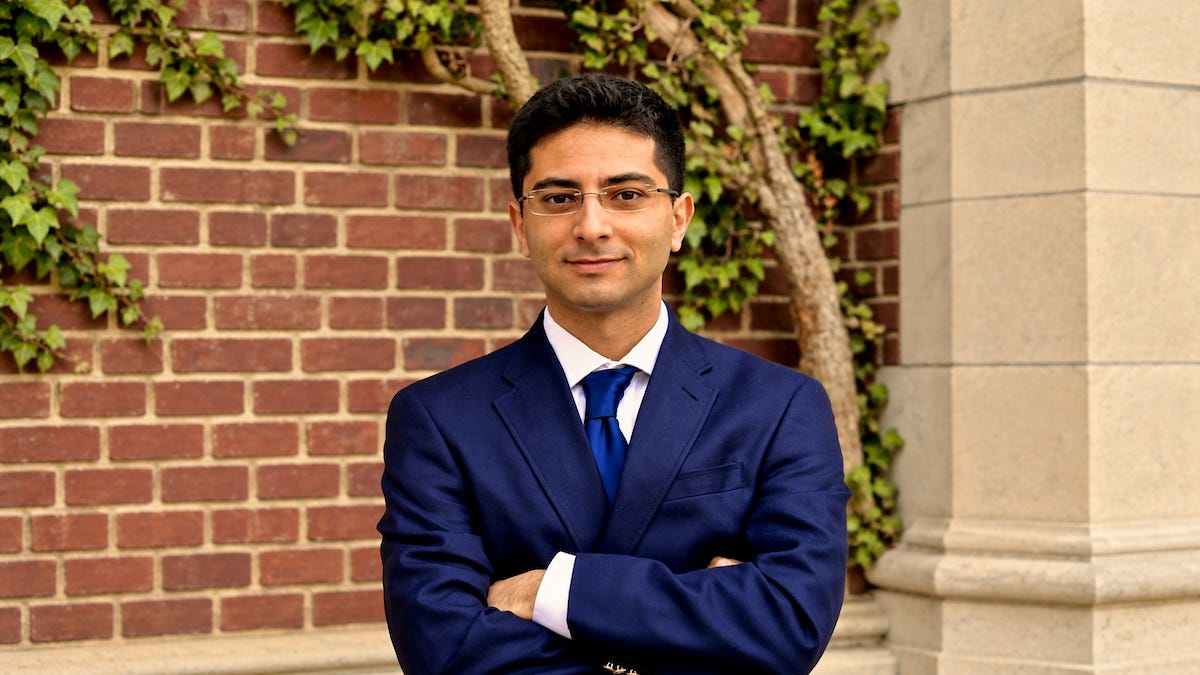 The Disappointed Originalist: Sherif Girgis | Within the world of legal nerds, there has been a lot of buzz lately about originalism, the theory of constitutional interpretation that calls for interpreting the Constitution based on the original public meaning of its provisions. Some of this might be due to the start of the latest Term of the U.S. Supreme Court, and some of this might be connected to the publication of Justice Samuel Alito’s new book, So Ordered: An Originalist’s View of the Constitution, the Court, and Our Country.In light of this, I was delighted to speak with Professor Sherif Girgis of Notre Dame Law School, a leading scholar of originalism and a former law clerk to Justice Alito. In our conversation, Sherif and I covered what he views as the best argument in support of originalism, as well as the particular type of originalism he espouses (because originalism is not a monolith). We also discussed the current Supreme Court, including what grade he would give it; the chances that the justices will overrule Obergefell v. Hodges, which recognized the constitutional right to same-sex marriage; and the past, present, and future of the First Amendment.Thanks to Sherif for joining me—and congratulations to him on his upcoming move to Harvard Law School.Show notes:* Sherif Girgis bio, The University of Notre Dame Law School* What Is Originalism? | Interview: Sherif Girgis, by Sarah Isgur and David French for Advisory Opinions* Sherif Girgis joins the Harvard Law faculty, by Harvard Law News StaffSponsored by:NexFirm helps Biglaw attorneys become founding partners. To learn more about how NexFirm can help you launch your firm, call 212-292-1000 or email [email protected]. This is a public episode. If you'd like to discuss this with other subscribers or get access to bonus episodes, visit davidlat.substack.com/subscribe | 48m 28s | ||||||
| 9/30/26 | 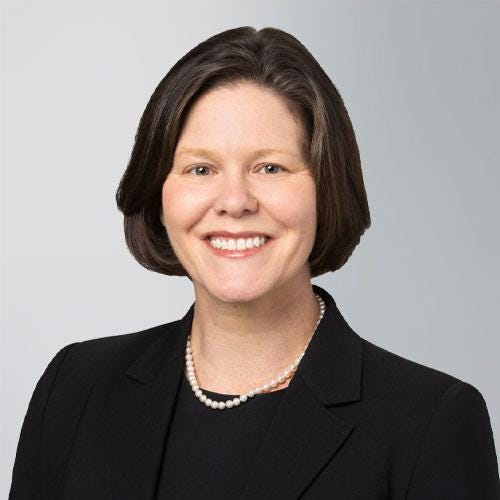 ‘There’s Always A Way’: Jaime Santos | Earlier this month, Jaime Santos joined Proskauer Rose, making her the latest in a series of appellate advocates to switch firms in 2026. She came from Goodwin, where she practiced for more than a dozen years and served as co-head of the Supreme Court and appellate practice.What led Jaime to make the move, and what does she think is driving all the lateral hiring in the space? With a new Supreme Court Term starting this coming Monday, which cases is she watching? And as the first ERISA and employee-benefits lawyer I’ve had on the podcast (after more than 100 episodes), what does she see as the key emerging issues in the field?Thanks to Jaime for such an interesting and inspiring conversation, and congratulations to her on joining Proskauer.Show notes:* Jaime Santos bio, Proskauer Rose LLP* Goodwin Supreme Court Group Chief Santos Bolts for Proskauer, by Meghan Tribe and Jacklyn Wille for Bloomberg Law* Proskauer Hires Goodwin Procter’s Supreme Court Co-Head, by Kevin Penton for Law360Sponsored by:NexFirm helps Biglaw attorneys become founding partners. To learn more about how NexFirm can help you launch your firm, call 212-292-1000 or email [email protected]. This is a public episode. If you'd like to discuss this with other subscribers or get access to bonus episodes, visit davidlat.substack.com/subscribe | 49m 34s | ||||||
| 9/17/26 | 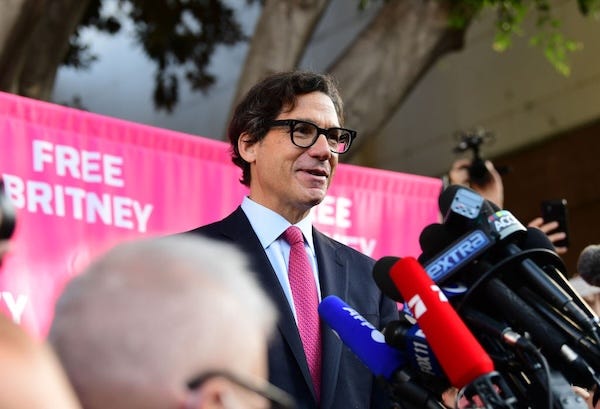 The Making Of A Celebrity Litigator: Mathew Rosengart | Five years ago this fall, Mathew Rosengart made international headlines when he secured the termination of the 13-year conservatorship of pop icon Britney Spears. But while he might be most famous for how he helped #FreeBritney, Rosengart has litigated many major matters over the years, representing clients ranging from Hollywood celebrities like Sean Penn and Selena Gomez to multinational corporations like Meta and Verizon.How did Mathew, co-chair of the media and entertainment litigation group at Greenberg Traurig, get to where he is today? Last week, I had the pleasure of interviewing him about his remarkable career. We discussed his clerkship with David Souter, then a justice of the New Hampshire Supreme Court; his service as a federal prosecutor, where he handled several high-profile cases; and his current practice at the highest levels of entertainment law and litigation.Thanks to Mathew for joining me on this must-listen episode of the Original Jurisdiction podcast.Show notes:* Mathew S. Rosengart bio, Greenberg Traurig* Mathew Rosengart, Hollywood’s King of Litigators, Talks Britney Spears Conservatorship, Early Legal Influences and Standing Up Against Bullies, by Malina Saval for Variety* The Man of Steel, by Elizabeth Gehrman for BC Law School Magazine* Justice Souter’s book list, by Mathew Rosengart for SCOTUSblogSponsored by:NexFirm helps Biglaw attorneys become founding partners. To learn more about how NexFirm can help you launch your firm, call 212-292-1000 or email careerdevelopment at nexfirm.com. This is a public episode. If you'd like to discuss this with other subscribers or get access to bonus episodes, visit davidlat.substack.com/subscribe | 1h 05m 06s | ||||||
| 9/9/26 | Legal AIGoogle+4 | Halimah DeLaine Prado | Gemini Enterprise for LegalGoogle+4 | — | Legal AIGoogle+5 | NexFirmCODE | 42m 35s | ||
| 8/19/26 | cryptocurrencyregulation+4 | Molly Abraham | CoinbaseWachtell Lipton+3 | — | cryptocurrencyCoinbase+6 | NexFirm | 50m 46s | ||
| 8/5/26 | contingency litigationBiglaw+4 | Eva ColeEvan Meyerson+1 | Winston TaylorPaul Hastings | — | Biglawcontingency+5 | Burford Capital | 45m 32s | ||
| 7/22/26 | law practice transformationpartner turnover+3 | Benjamin Gruenstein | Cravath Swaine & MooreGruenstein Law+4 | — | Cravathboutique law firm+5 | NexFirm | 53m 14s | ||
| 7/8/26 | Supreme Courtlegal commentary+4 | Zachary Baron Shemtob | SCOTUSblog | — | Supreme CourtZachary Shemtob+6 | NexFirm | 44m 48s | ||
| 6/24/26 | Trump administrationlegal challenges+4 | Abhishek Kambli | U.S. Department of JusticeHoltzman Vogel | — | Trump administrationAbhishek Kambli+5 | NexFirmCODE | 44m 00s | ||
| 6/10/26 | Supreme Courtappellate practice+4 | Kannon Shanmugam | CooleyGibson Dunn+4 | — | Supreme Courtappellate lawyers+5 | — | 49m 40s | ||
Want analysis for the episodes below?Free for Pro Submit a request, we'll have your selected episodes analyzed within an hour. Free, at no cost to you, for Pro users. | |||||||||
| 5/27/26 | legal industrylitigation+3 | Jessie Liu | Liu Shur KravisSkadden Arps+1 | Washington, D.C.Texas | Jessie LiuLiu Shur Kravis+5 | NexFirm | 44m 58s | ||
| 5/13/26 | state attorneys generalAmerican law+4 | Rob Bonta | California State AssemblySan Francisco City Attorney’s Office+1 | CaliforniaNew Jersey | Rob BontaCalifornia Attorney General+5 | — | 40m 16s | ||
| 4/29/26 | artificial intelligencelaw firms+4 | Sabastian Niles | SalesforceHow Law Firms Can Lead the Agentic AI Era—And What Clients Now Expect | — | AIlaw+5 | NexFirm | 31m 32s | ||
| 4/15/26 |  Last Branch Standing: Sarah Isgur | Sarah Isgur is one of the busiest people in legal media. She hosts the delightful Advisory Opinions podcast (on which I sometimes appear); serves as an editor of SCOTUSblog, the leading online outlet covering the Supreme Court; and appears regularly on ABC’s This Week with George Stephanopoulos. And now, as of yesterday, she’s a first-time author.The thesis of Sarah’s new book—Last Branch Standing: A Potentially Surprising, Occasionally Witty Journey Inside Today's Supreme Court—is deceptively simple: almost everything the media tells you about SCOTUS is wrong. The conventional 6-3 framing obscures far more than it reveals. And compared to Congress and the presidency, the Court is genuinely trying to do its job.In our wide-ranging conversation, we covered Sarah's unconventional path to legal media (she was inspired by Legally Blonde to apply to Harvard Law School, and was fired from the DOJ and CNN before reinventing herself at The Dispatch); her book’s core argument, which will be controversial in some quarters; Justice Sotomayor’s recent, pointed criticism of Justice Kavanaugh; and possible picks for the next Supreme Court justice and attorney general. Thanks to Sarah for joining me, and congratulations to her on the publication of Last Branch Standing—a must-read for anyone interested in the U.S. Supreme Court. This is a public episode. If you'd like to discuss this with other subscribers or get access to bonus episodes, visit davidlat.substack.com/subscribe | 44m 44s | ||||||
| 4/8/26 |  Winning For Workers Before A Conservative Court: Jennifer Bennett | My latest guest is an acclaimed appellate and Supreme Court advocate, Jennifer Bennett of Gupta Wessler. To introduce her, I’m going to turn over the floor to a former podcast guest: Judge Vince Chhabria (N.D. Cal.), for whom Bennett clerked. When I mentioned to Judge Chhabria that I was going to be interviewing Jennifer, he immediately moved into testimonial mode:"Funny, I was going to email you to suggest that you interview her! She is truly one of one. She recently won her fourth Supreme Court case, GEO Group v. Menocal. Despite representing workers in all four of her cases (the first three on arbitration), she has won all four of them, and each one of them has been unanimous. In other words, this lawyer for working people has never lost a vote in her four cases on behalf of working people at the current Supreme Court!She also just argued her fifth case at the Court, Flowers Foods, Inc. v. Brock—the arbitration case about ‘last-mile’ drivers. It seems like she might win that one, too.Jenn was my very first law clerk—I refer to her as Chhabria Clerk Zero. For around three months, before the other law clerks started, it was just me and her in chambers, sifting through our new cases and figuring out how to handle them.Steve Berzon came to my informal swearing-in, I was lamenting not having immediate law clerk help, and he mentioned that this person who clerked for [Judges] Marsha [Berzon] and Jesse [Furman] had about six months to kill before starting a fellowship at Public Justice and might be interested. I was so lucky to have Jenn. Given how amazing she is and given her experience in Jesse’s chambers, she was able to get me up and running in a way that would have been impossible otherwise. She played a big role in teaching me how to be a good district judge."Thanks to Judge Chhabria for the intro, and thanks to Jenn for joining me.Show Notes:* Jennifer Bennett bio, Gupta Wessler LLP* High Court Bar’s Future: Gupta Wessler’s Jennifer Bennett, by Jeff Overley for Law360* US Supreme Court weighs bid to narrow worker arbitration exemption, by Daniel Wiessner for ReutersPrefer reading to listening? For paid subscribers, a transcript of the entire episode appears below.Sponsored by:NexFirm helps Biglaw attorneys become founding partners. To learn more about how NexFirm can help you launch your firm, call 212-292-1000 or email [email protected]. This is a public episode. If you'd like to discuss this with other subscribers or get access to bonus episodes, visit davidlat.substack.com/subscribe | 45m 53s | ||||||
| 3/18/26 |  Building A Law Firm, Five Years In: Jed Bergman | I’ve interviewed many law firm leaders on this podcast, usually from one of two extremes: brand-new boutiques or long-established Biglaw institutions. But the most interesting moment in a firm’s history may be the middle—when the early bets have paid off, but the long-term trajectory is still unfolding.That’s where Glenn Agre Bergman & Fuentes is today. Founded in February 2021, in the depths of the pandemic, the firm is now one of the nation’s leading boutiques—and recently marked its fifth anniversary with a celebration at The Pool, a fabulous venue inside the landmark Seagram Building.I was there at the invitation of my longtime friend Jed Bergman—a former Wachtell Lipton colleague and co-founder of Glenn Agre, where he recently became the chair of litigation. After catching up at the party, I invited Jed to join me on the podcast to talk about what it’s like to be five years into building a firm.Five years is a revealing moment: long enough to have learned lessons, but early enough that the future remains wide open. Jed and I discussed why he and his partners launched Glenn Agre, what he knows now that he didn’t then, where the firm is headed—and why he thinks AI could give boutiques a competitive edge over Biglaw.Congratulations to Jed and his partners on the milestone—and best of luck in the years ahead.Show Notes:* Jed I. Bergman bio, Glenn Agre Bergman & Fuentes LLP* Jed Bergman profile, Legal 500* Jed I. Bergman Appointed Chair of Litigation Department at Glenn Agre Bergman & Fuentes LLP, PR NewswirePrefer reading to listening? For paid subscribers, a transcript of the entire episode appears below.Sponsored by:NexFirm helps Biglaw attorneys become founding partners. To learn more about how NexFirm can help you launch your firm, call 212-292-1000 or email [email protected]. This is a public episode. If you'd like to discuss this with other subscribers or get access to bonus episodes, visit davidlat.substack.com/subscribe | 44m 39s | ||||||
| 3/4/26 |  The Very Model Of A Modern Attorney General: Matt Platkin | Over the three decades that I’ve been in and around the legal profession, one of the most interesting developments has been the rise of what I’d call “The Modern Attorney General.”Years ago, the typical state attorney general had a fairly sleepy role. Much of the job was reactive—enforcing criminal laws or defending state statutes in court—and focused on in-state developments.Today, the office looks very different. State attorneys general have harnessed their powers to pursue aggressive affirmative agendas, from policing entire industries to serving as a check on the federal government. Many AGs are now national figures who play a major role in shaping law and policy—whether it’s red-state AGs suing the Biden administration or blue-state AGs suing the Trump administration.As a proud resident of the Garden State, I’m especially interested in the New Jersey Attorney General’s office—one of the most powerful in the country. So I was delighted to interview Matthew Platkin, New Jersey’s 62nd attorney general. During his four years in office, which ended in January, Matt handled dozens of high-profile cases, including multiple matters that reached the U.S. Supreme Court.Last month, Matt returned to the private sector and launched Platkin LLP, a mission-driven firm he co-founded with former colleagues from the New Jersey AG’s office. In Matt’s words, the firm will “hold the world’s most powerful corporations and institutions accountable when they break the law and harm the public.”Thanks to Matt for his service as New Jersey AG—not without controversies, some of which we discussed—and for joining me on the podcast.Show Notes:* Matt Platkin bio, Platkin LLP* Platkin: ‘I said from day one that I was going to pursue justice,’ by Briana Vannozzi for NJ Spotlight News* Former New Jersey attorney general launches new law firm, by David Thomas for ReutersPrefer reading to listening? For paid subscribers, a transcript of the entire episode appears below.Sponsored by:NexFirm helps Biglaw attorneys become founding partners. To learn more about how NexFirm can help you launch your firm, call 212-292-1000 or email [email protected]. This is a public episode. If you'd like to discuss this with other subscribers or get access to bonus episodes, visit davidlat.substack.com/subscribe | 43m 51s | ||||||
| 2/18/26 |  Build Windmills, Not Walls: Michael Gerstenzang | Last month, Michael Gerstenzang concluded a nine-year run as managing partner of Cleary Gottlieb, one of the world’s leading law firms. During his tenure, he guided the firm through the Covid-19 pandemic, geopolitical turbulence, and the early stages of the AI transformation—an area where Cleary has emerged as an industry leader, reflected in its development of ClearyX and acquisition of Springbok AI.In this episode, Michael shares insights on firm leadership, the increasingly active lateral market, and how AI is already transforming—and will continue to transform—the hiring, training, and day-to-day work of lawyers. I learned a tremendous amount from our conversation, and I’m grateful to Michael for his thoughtful perspectives.Show Notes:* Michael A. Gerstenzang bio, Cleary Gottlieb Steen & Hamilton LLP* Thoughts on Managing the AI Transformation, by Michael A. Gerstenzang for Cleary Gottlieb* Cleary Makes Generative AI Play With Springbok Legal Tech Buy, by Roy Strom for Bloomberg LawPrefer reading to listening? For paid subscribers, a transcript of the entire episode appears below.Sponsored by:NexFirm helps Biglaw attorneys become founding partners. To learn more about how NexFirm can help you launch your firm, call 212-292-1000 or email [email protected]. This is a public episode. If you'd like to discuss this with other subscribers or get access to bonus episodes, visit davidlat.substack.com/subscribe | 47m 14s | ||||||
| 2/4/26 | 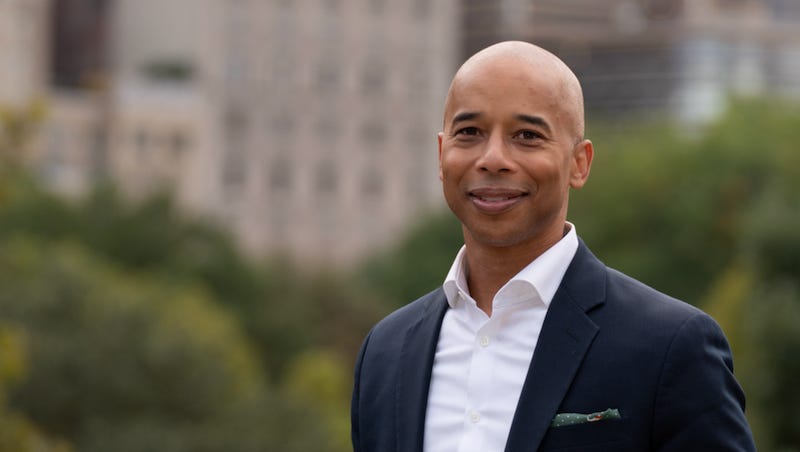 On Vigilantism And Violence: Elliot Williams | This is a free preview of a paid episode. To hear more, visit davidlat.substack.comIf you’re my age, you’ll recall the story of Bernhard Goetz. On a New York City subway car on December 22, 1984, Goetz shot four Black teenagers from the Bronx at point-blank range. Accused of attempted murder, Goetz went to trial—and was acquitted on the most serious charges, after claiming he acted in self-defense.Goetz became internationally famous—or infamous, as the case may be—and folks who were around in the ‘80s will surely be interested in looking back on his case, seeing where he is now, and the like. But even if you’re not familiar with Bernie Goetz, the issues his actions raised remain very relevant to our current moment.If you’re interested in exploring these important subjects, I have a reading recommendation for you: Five Bullets: The Story of Bernie Goetz, New York’s Explosive ‘80s, and the Subway Vigilante Trial That Divided the Nation, by Elliot Williams. A former prosecutor turned CNN legal analyst, Williams is perfectly positioned to delve into the Goetz case—and connect it to current controversies.Thanks to Elliot for writing Five Bullets. And thanks to him for joining me—for a wide-ranging discussion covering his fascinating career as a lawyer turned journalist, his compelling new book, the Goetz case, and what’s going on right now in Minnesota (Elliot is a former senior official at ICE)—on the Original Jurisdiction podcast.Show Notes:* Elliot Williams bio, Penguin Random House* Five Bullets: The Story of Bernie Goetz, New York’s Explosive ‘80s, and the Subway Vigilante Trial That Divided the Nation, Amazon* The Subway Vigilante Who Never Left Is Back (gift link), by David Segal for The New York TimesPrefer reading to listening? For paid subscribers, a transcript of the entire episode appears below.Sponsored by:NexFirm helps Biglaw attorneys become founding partners. To learn more about how NexFirm can help you launch your firm, call 212-292-1000 or email [email protected]. | 52m 41s | ||||||
| 1/21/26 | 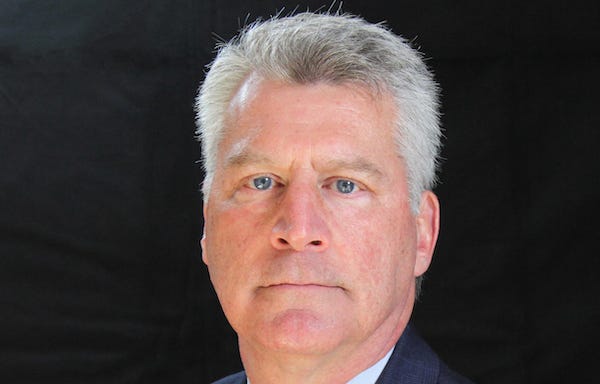 Launching A Boutique In Turbulent Times: Timothy Heaphy | This is a free preview of a paid episode. To hear more, visit davidlat.substack.comHow would you react if you saw Jack Smith, the former special counsel who prosecuted Donald Trump, at Costco?It might just happen. Last week, Jack Smith launched his own litigation boutique, along with three other former federal prosecutors: Timothy Heaphy, David Harbach, and Thomas Windom. A new law firm is like a startup, where the founders have to do many things themselves—so on Tuesday of last week, Tim Heaphy and two of his partners went to Costco to buy paper towels. Jack Smith didn’t join them—he was busy preparing for his testimony before the House Judiciary Committee, taking place tomorrow—but according to Heaphy, Smith’s on deck for the next Costco run.This was one of several fun tidbits that Tim Heaphy (pronounced HAY-fee) shared with me in the latest episode of the OJ podcast. We covered a number of interesting subjects, including Heaphy’s service as both a U.S. attorney (W.D. Va.) and as chief investigative counsel to the House Select Committee to Investigate the January 6th Attack; what Heaphy, a former partner at Willkie Farr, thought about the firm’s settlement with the Trump administration; and what the mysterious Jack Smith is like as a person.This is an episode you won’t want to miss—especially if you’re interested in the intersection of law and politics during the second Trump administration.Show Notes:* Timothy J. Heaphy bio, Heaphy, Smith, Harbach & Windom LLP* Jack Smith’s New Venture Shuns Label as Anti-Trump Attack Dog, by Justin Henry for Bloomberg Law* Jack Smith’s New Law Firm Opens Its Doors, by Abigail Adcox for Law.comPrefer reading to listening? For paid subscribers, a transcript of the entire episode appears below.Sponsored by:NexFirm helps Biglaw attorneys become founding partners. To learn more about how NexFirm can help you launch your firm, call 212-292-1000 or email [email protected]. | 51m 26s | ||||||
| 1/14/26 | 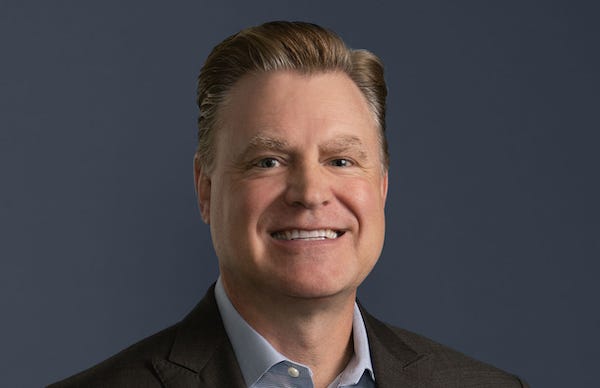 Running A Global Law Firm In 2026: Jon Van Gorp | This is a free preview of a paid episode. To hear more, visit davidlat.substack.comWelcome to the first Original Jurisdiction podcast episode of the new year, an opportune time to both reflect on 2025 and look ahead to 2026. To kick things off, I decided I wanted to interview a Biglaw leader, to get a sense of both the challenges and opportunities facing large law firms today.I was delighted to be joined by Jon Van Gorp, who has served as the chair of Mayer Brown since 2021. A member of both the Am Law 100 and the Vault 100, Mayer Brown has around 2,000 lawyers, $2 billion in revenue, and 150 years of history. As for Jon, he’s a Chambers-ranked, leading practitioner in structured finance—and we began our conversation by discussing his distinguished career in practice.We then moved on to discuss his leadership of Mayer Brown, which Jon views as a way of giving back to an institution that has given so much to him. We covered his approach to leadership, the firm’s strategic plan, and its approach to AI adoption.But Jon was also willing to tackle topics that other Biglaw leaders have been avoiding, such as partner pay and the (rather fraught) relationship between the Trump administration and large law firms. Thanks to Jon for his time, insight, and willingness to discuss delicate—but incredibly important—issues.Show Notes:* Jon D. Van Gorp bio, Mayer Brown LLP* Beyond cold hard cash, warm fuzzies are the way to a lawyer’s heart, firm chair says, by Jenna Greene for Reuters* Mayer Brown Chair On Why Law Leaders Need To Listen More, by Kevin Penton for Law360Prefer reading to listening? For paid subscribers, a transcript of the entire episode appears below.Sponsored by:NexFirm helps Biglaw attorneys become founding partners. To learn more about how NexFirm can help you launch your firm, call 212-292-1000 or email [email protected]. | 51m 05s | ||||||
| 12/11/25 | 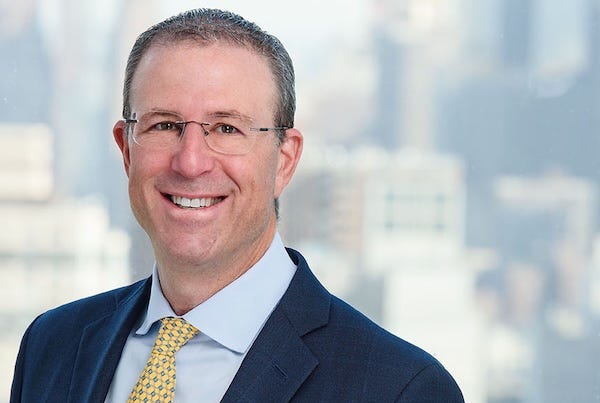 AI Data Center Dealmaking: Steven Messina | This is a free preview of a paid episode. To hear more, visit davidlat.substack.comEvery time you ask a question of your AI assistant, it gets sent to a data center, where the response is generated before getting sent back to you. These data centers are critical to the AI revolution. The biggest data-center campuses occupy dozens of acres, span millions of square feet, and cost billions of dollars.And they wouldn’t exist without the work of lawyers. For insight into the complex transactions that bring these data centers into existence, I interviewed Steven Messina, a longtime partner at Skadden Arps and global head of the firm’s banking group (soon to be renamed the finance group, reflecting the evolution of the sector beyond commercial banks).In our conversation, Steve and I discussed how these billion-dollar data centers get financed. But we covered a number of other topics as well, including the evolution of both the finance industry and Biglaw over the past three decades. If you’re interested in technology, business, or law, this is an episode you won’t want to miss.Show Notes:* Steven Messina bio, Skadden, Arps, Slate, Meagher & Flom LLP* Hyperscaler Data Centers: Financing Solutions for Large-Scale Projects, by Steven Messina, Aryan Moniri, David L. Nagler, and Jared S. DubPrefer reading to listening? For paid subscribers, a transcript of the entire episode appears below.Sponsored by:NexFirm helps Biglaw attorneys become founding partners. To learn more about how NexFirm can help you launch your firm, call 212-292-1000 or email [email protected]. | 43m 53s | ||||||
| 12/3/25 | 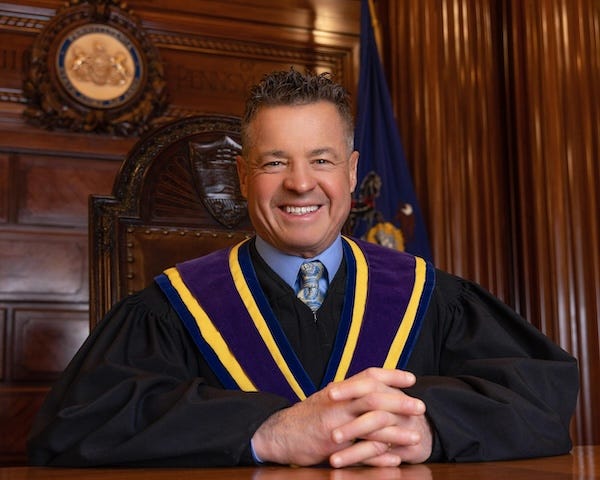 Serving On A State High Court: Justice David Wecht | This is a free preview of a paid episode. To hear more, visit davidlat.substack.comDuring the three-plus years that I’ve been hosting this podcast, I’ve welcomed a diverse range of guests. They’ve exhibited demographic diversity, of course, but also other forms of diversity—including diversity of opinion and experience.So I was embarrassed when I recently noticed that although I’ve interviewed more than a dozen current and former judges, only two have sat on state courts (and by the time I interviewed them, those judges—Rolando Acosta and Debra Wong Yang—had left the bench). Put another way, I have not, until today, hosted a sitting state-court judge—a considerable omission, considering the significance of state courts. As noted by the National Center for State Courts, “State courts play a critical role in our democracy, handling about 96 percent of all legal cases in the United States.”I set out to remedy this gap—and was delighted when Justice David Wecht, a longtime friend, agreed to join me. He’s a timely guest: last month, he and two of his colleagues were reelected to the Pennsylvania Supreme Court, for which I named them Judges of the Week. Why? Their court is one of the most important state courts in the country—for reasons I discussed with Justice Wecht on the episode.In our conversation, we also covered the justice’s interesting path to the Pennsylvania high court; why he believes young (and not-so-young) lawyers should get involved with their communities; certain unique features of the Pennsylvania Constitution, as well as its relationship to the U.S. Constitution; and, of course, his recent reelection to the Pennsylvania Supreme Court.Congratulations to Justice Wecht on his reelection—and thanks to him for joining me.Show Notes:* Justice David N. Wecht bio, The Unified Judicial System of Pennsylvania* Approach The Bench: Justice Wecht On Judicial Campaigns, by Cara Bayles and Steven Trader for Law360* Law Day Shabbat: Address by Justice David Wecht, Temple Israel, Wilkes-BarrePrefer reading to listening? For paid subscribers, a transcript of the entire episode appears below.Sponsored by:NexFirm helps Biglaw attorneys become founding partners. To learn more about how NexFirm can help you launch your firm, call 212-292-1000 or email [email protected]. | 43m 22s | ||||||
| 11/12/25 | 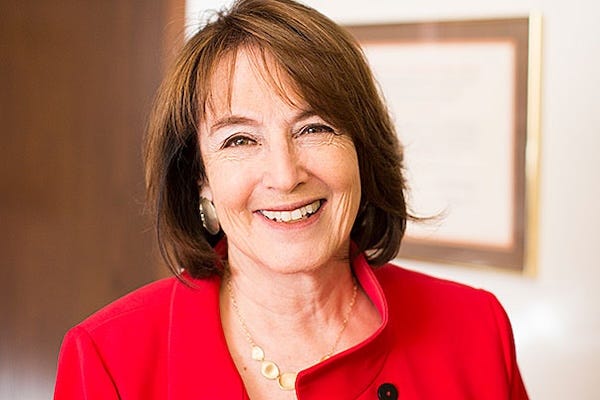 Judging The Justice System In The Age Of Trump: Nancy Gertner | This is a free preview of a paid episode. To hear more, visit davidlat.substack.comWelcome to Original Jurisdiction, the latest legal publication by me, David Lat. You can learn more about Original Jurisdiction by reading its About page, and you can email me at [email protected]. This is a reader-supported publication; you can subscribe by clicking here.How are the federal courts faring during these tumultuous times? I thought it would be worthwhile to discuss this important subject with a former federal judge: someone who understands the judicial role well but could speak more freely than a sitting judge, liberated from the strictures of the bench.Meet Judge Nancy Gertner (Ret.), who served as a U.S. District Judge for the District of Massachusetts from 1994 until 2011. I knew that Judge Gertner would be a lively and insightful interviewee—based not only on her extensive commentary on recent events, reflected in media interviews and op-eds, but on my personal experience. During law school, I took a year-long course on federal sentencing with her, and she was one of my favorite professors.When I was her student, we disagreed on a lot: I was severely conservative back then, and Judge Gertner was, well, not. But I always appreciated and enjoyed hearing her views—so it was a pleasure hearing them once again, some 25 years later, in what turned out to be an excellent conversation.Show Notes:* Nancy Gertner, author website* Nancy Gertner bio, Harvard Law School* In Defense of Women: Memoirs of an Unrepentant Advocate, AmazonPrefer reading to listening? For paid subscribers, a transcript of the entire episode appears below.Sponsored by:NexFirm helps Biglaw attorneys become founding partners. To learn more about how NexFirm can help you launch your firm, call 212-292-1000 or email [email protected]. | 51m 44s | ||||||
| 10/30/25 | 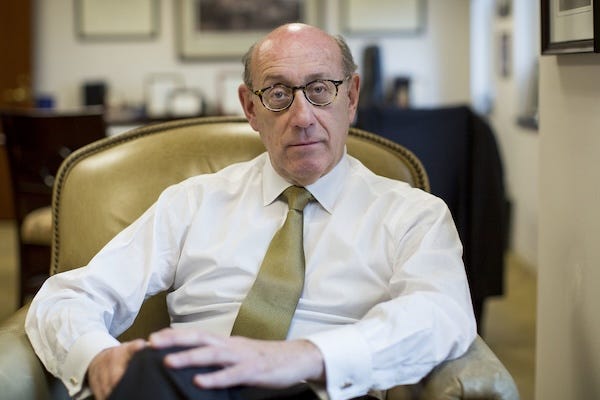 Resolving The Unresolvable: Kenneth Feinberg | This is a free preview of a paid episode. To hear more, visit davidlat.substack.comWelcome to Original Jurisdiction, the latest legal publication by me, David Lat. You can learn more about Original Jurisdiction by reading its About page, and you can email me at [email protected]. This is a reader-supported publication; you can subscribe by clicking here.Yesterday, Southern California Edison (SCE), the utility whose power lines may have started the devastating Eaton Fire, announced its Wildfire Recovery Compensation Program. Under the program, people affected by the fire can receive hundreds of thousands or even millions of dollars in compensation, in a matter of months rather than years—but in exchange, they must give up their right to sue.It should come as no surprise that SCE, in designing the program, sought the help of Kenneth Feinberg. For more than 40 years, often in the wake of tragedy or disaster, Feinberg has helped mediate and resolve seemingly intractable crises. He’s most well-known for how he and his colleague Camille Biros designed and administered the September 11th Victim Compensation Fund. But he has worked on many other headline-making matters over the years, including the Agent Orange product liability litigation, the Deepwater Horizon Oil Spill Trust, the multidistrict litigation involving Monsanto’s Roundup weed killer—and now, of course, the Eaton Fire.How did Ken develop such a fascinating and unique practice? What is the most difficult aspect of administering these giant compensation funds? Do these funds represent the wave of the future, as an alternative to (increasingly expensive) litigation? Having just turned 80, does he have any plans to retire?Last week, I had the pleasure of interviewing Ken—the day after his 80th birthday—and we covered all these topics. The result is what I found to be one of the most moving conversations I’ve ever had on this podcast.Thanks to Ken Feinberg for joining me—and, of course, for his many years of service as America’s go-to mediator in times of crisis.Show Notes:* Kenneth Feinberg bio, Wikipedia* Kenneth Feinberg profile, Chambers and Partners* L.A. Fire Victims Face a Choice, by Jill Cowan for The New York TimesPrefer reading to listening? For paid subscribers, a transcript of the entire episode appears below.Sponsored by:NexFirm helps Biglaw attorneys become founding partners. To learn more about how NexFirm can help you launch your firm, call 212-292-1000 or email [email protected]. | 54m 23s | ||||||


Showing 25 of 104
Pitch Fit is a Pro feature
See how bookable this show is for guests, which brands already advertise, the per-episode ad value, and the best-fit guest and sponsor profile. The numbers are blurred on the free plan.
How readily this show books outside guests like you.
How proven this show is for host-read sponsorships.
For Guests
ProFor Advertisers
ProUpgrade to Pro to unlock guest cadence, sponsor categories, fit scores, and per-episode ad value for this show.
Chart history for Original Jurisdiction
Peaked at #89 in HK, currently #89 in HK.
| Market | Genre | Peak | Current | Trend |
|---|---|---|---|---|
| HK | — | #89 | #89 | — |
| Australia | — | #109 | #109 | — |
| PL | — | #115 | #115 | — |
| IL | — | #144 | #144 | — |
| VN | — | #148 | #148 | — |
| United States | — | #159 | #159 | — |
| AR | — | #159 | #159 | — |
| PH | — | #168 | #168 | — |
| South Korea | — | #192 | #192 | — |
Chart Positions
9 placements across 9 markets.
Chart Positions
9 placements across 9 markets.