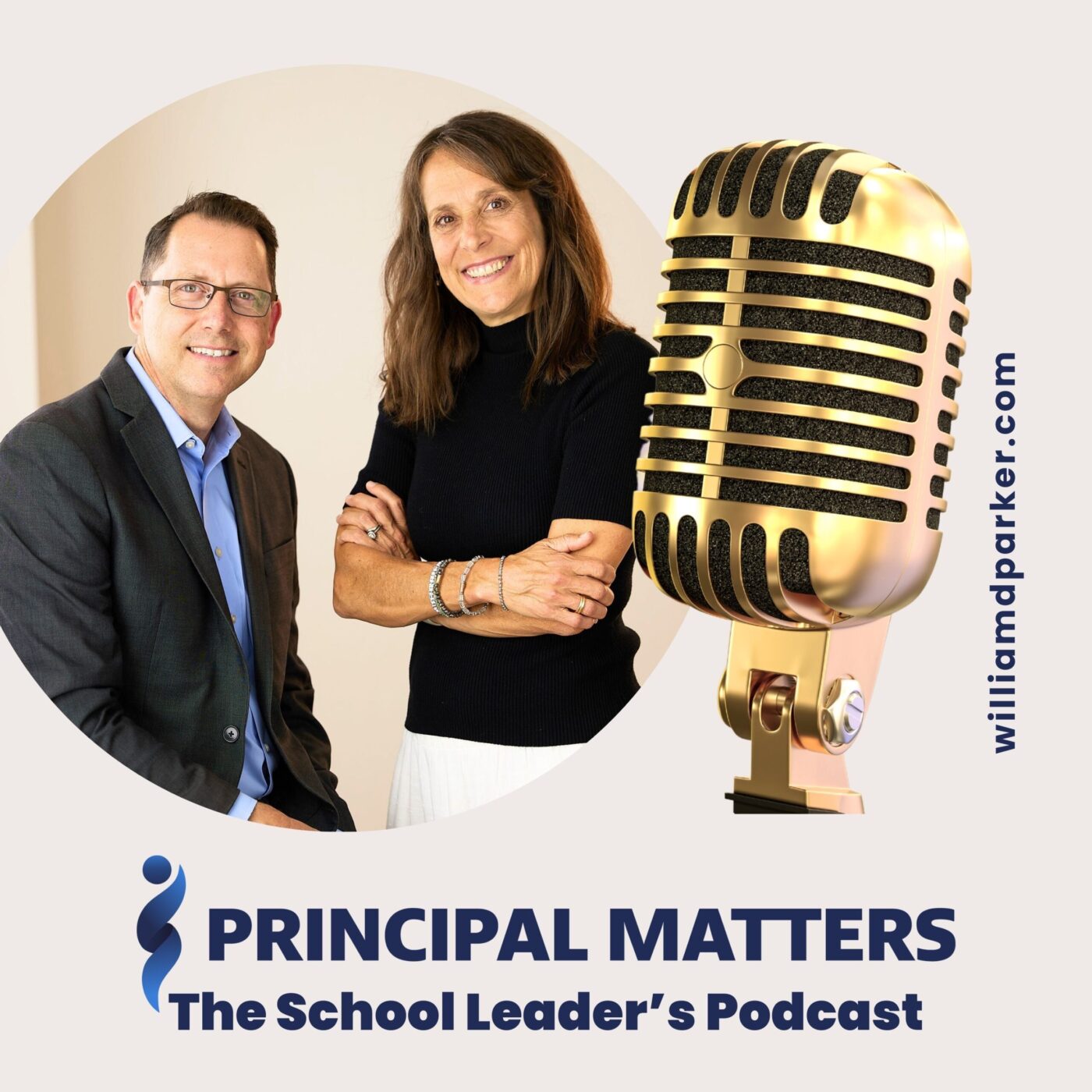
Principal Matters: The School Leader's Podcast with William D. Parker
by Principal Matters: The School Leader's Podcast with William D. Parker
Is this your podcast?Insights from recent episode analysis
Audience Interest
Podcast Focus
Publishing Consistency
Platform Reach
Insights are generated by CastFox AI using publicly available data, episode content, and proprietary models.
Most discussed topics
Brands & references
Total monthly reach
Estimated from 1 chart position in 1 market.
By chart position
- 🇿🇦ZA · Self-Improvement#135500 to 3K
- Per-Episode Audience
Est. listeners per new episode within ~30 days
150 to 900🎙 Daily cadence·500 episodes·Last published today - Monthly Reach
Unique listeners across all episodes (30 days)
500 to 3K🇿🇦100% - Active Followers
Loyal subscribers who consistently listen
150 to 900
Market Insights
Platform Distribution
Reach across major podcast platforms, updated hourly
Total Followers
—
Total Plays
—
Total Reviews
—
* Data sourced directly from platform APIs and aggregated hourly across all major podcast directories.
On the show
From 33 epsHosts
Recent guests
Recent episodes
Rooted Leadership in a Mobile World with Dr. Tyler Watkins – PMP516
Sep 2, 2026
Unknown duration
MONDAY MATTERS with Jen Schwanke and Will Parker – A Positive Start to the School Year
Aug 31, 2026
Unknown duration
Collaborative Team Meetings: The Missing Piece with Kurtis Hewson – PMP515
Aug 26, 2026
Unknown duration
MONDAY MATTERS with Jen Schwanke and Will Parker – Examine Your Influence
Aug 24, 2026
Unknown duration
Lessons from Beekeeping with Dr. Fernando Branch – PMP514
Aug 19, 2026
Unknown duration
Social Links & Contact
Official channels & resources
Official Website
Login
RSS Feed
Login
| Date | Episode | Topics | Guests | Brands | Places | Keywords | Sponsor | Length | |
|---|---|---|---|---|---|---|---|---|---|
| 9/2/26 | Rooted Leadership in a Mobile World with Dr. Tyler Watkins – PMP516 | A Quick Note to Listeners: Before each week’s interview, Will Parker and Jen Schwanke spend some time answering a listener question. This week’s question is: What advice would a teacher want to give to a new principal? Listen in to hear their response! Meet Tyler Watkins: Tyler Watkins, Ed.D., is the principal of Petal High School, one of Mississippi’s top-rated high schools and a 2022 National Blue Ribbon School. He began his career in 2011 as a teacher and baseball coach before moving into school leadership. His work centers on building belonging, creating predictable systems, and leading through stability. Dr. Watkins earned his doctorate in Educational Leadership from William Carey University, where his research focused on the academic effects of student transiency. He lives in Petal, Mississippi, with his wife, Katie, and their children, Lowe and Cohen. He is the author of Rooted Leadership in a Mobile World: Belonging, Predictability, and Purpose When Students Come and Go, scheduled for release in Fall 2026. Why This Work Matters: Dr. Watkins’ passion for this topic didn’t begin with theory. It began with what he was seeing every day. Students were constantly entering and leaving his school, and even in a high performing system, each new student was starting over. That led him to ask a deeper question, what are we doing to make students feel rooted, even when their lives are not. In today’s landscape of school choice and increased mobility, this isn’t a niche issue. It is everywhere. Whether a school is high performing or struggling, students are navigating transitions, and schools must be ready to respond. It’s Not Just Academic, It’s Human: One of the biggest shifts Dr. Watkins describes is recognizing that student mobility is not just an academic issue, it is a human one. New students are not simply catching up on content. They are trying to understand new teachers, new systems, and new social environments, often while carrying emotional weight from their transitions. Too often, schools focus first on academics. But Dr. Watkins emphasizes that stability has to be intentionally designed, not assumed. Start with the First 10 Days: At its most practical level, Dr. Watkins encourages leaders to focus on the first 10 days of a student’s experience. Every new student should have a clear plan, not just a schedule. That plan should include intentional check ins, clear expectations, and a structured way to help them navigate the building. Without this, students are often left to figure things out on their own, which increases stress and disconnect. Every Student Needs an Adult Connection: Along with a clear plan, every student needs an immediate connection with a trusted adult. At Petal High School, Dr. Watkins and his team assign students to an administrator and counselor by alphabet, and they meet them right away. It is simple, but it matters. Students need to know someone knows their name, where to find them, and how to reach out when they need help. That connection is often the difference between feeling lost and feeling grounded. Consistency Reduces Stress: Another key insight Dr. Watkins shares is the importance of consistency across classrooms. It is overwhelming for students, especially new ones, to relearn expectations from class to class. Schools must align expectations so students can focus on learning rather than constantly adjusting to different systems. Clarity and consistency do not just support behavior, they create stability. Communicate Early with Families: Dr. Watkins also highlights the power of early communication with families. A simple message home letting a parent know their child had a great day can immediately build trust and connection. These small moments send a clear message, your child matters here, and we are paying attention. High Expectations with High Support: A common misconception is that schools must choose between being welcoming and maintaining high expectations. Dr. Watkins challenges that thinking. You do not lower expectations for new students, you increase support. You teach the systems, clarify confusion quickly, and give students the tools they need to succeed. Confusion should not be punished, it should be addressed with clarity. Leadership Sets the Tone: This work does not happen by accident. It is a leadership responsibility. Dr. Watkins emphasizes that leaders must design systems that create predictability and ensure consistency across the school. Teacher attitudes toward new students are critical. When staff see new students as opportunities instead of interruptions, it changes everything. Leaders set that tone through clarity, communication, and example. From Classroom to Campus Leadership: Reflecting on his own journey, Dr. Watkins describes a shift many leaders experience. As a teacher, the focus is on running a great classroom. As a principal, the focus becomes building a school where every classroom reflects that same level of excellence. For new leaders, he offers practical advice. Set clear expectations, follow through consistently, protect instructional time, and keep systems stable. These foundational practices create the environment where both students and staff can thrive. Belonging, Predictability, and Purpose: At the heart of this conversation are three essential elements, belonging, predictability, and purpose. Dr. Watkins emphasizes that students need to feel known. They need systems they can rely on. And they need to understand that what they are doing matters. When those elements are in place, students can succeed, even in the middle of constant change. What Students Need to Succeed: Drawing from Ruby Payne’s research on under resourced learners, there are key resources every student needs in order to thrive in school. Financial resources Emotional stability and self regulation Mental and academic skills A sense of purpose or direction Physical health Support systems such as family, friends, and trusted adults Motivation, persistence, and grit Knowledge of hidden rules, expectations, and social cues within a school For students who are constantly moving, many of these supports are disrupted. That is why schools must intentionally step in to provide them. Final Thoughts: Dr. Watkins leaves us with a reminder that is both simple and powerful. Students do not need perfect schools, they need stable ones. And that is something every leader can influence. Below are some ways to stay connected to Dr. Watkins: Tyler’s new website: https://www.rootedleadership.io School website: https://www.petalschools.com/ Tylers’ email: [email protected] The post Rooted Leadership in a Mobile World with Dr. Tyler Watkins – PMP516 appeared first on Principal Matters. | — | ||||||
| 8/31/26 | MONDAY MATTERS with Jen Schwanke and Will Parker – A Positive Start to the School Year | Welcome back to another episode of Monday Matters! This week, Jen Schwanke and I are discussing ways that school leaders can influence a positive start to the school year with a few shout-outs to school leaders we’ve admired. Below is a brief overview of our conversation: Set the tone with staff and students Enjoy teamwork and camaraderie with staff as you set the tone for the school year. Hard work can be accomplished in a way that is lighthearted and fun for staff and students. Model expectations Start out the school year by creating an environment that feels like home for students. Foster a sense of community so that students feel they are a part of something bigger than themselves. Schedule in advance what’s most important Ensure that teachers know, in advance, important dates that are happening throughout the school year. Allow them to plan around the schedule so no one feels rushed or out of the loop when it comes to PD days or other important events. Identify key responsibility areas and support new staff The beginning of a new school year can be overwhelming for new staff and admins. Key responsibility areas can help the start of the year run smoothly for these individuals and diminish feelings of overwhelm. Expect the unexpected No matter how much you plan, you can’t plan for everything. By shifting your mindset to expect the unexpected, you can handle anything the school year throws at you. Stay calm Everything feels like an emergency in schools, but very rarely is something truly an emergency. Be the calmest person in the room when you can, and that will set the tone for the rest of the room. Now It’s Your Turn: What are some methods that you used to influence a positive start to the school year at your school? Are they similar to what we discussed in the episode, or are they different? Think about what worked and what didn’t. Listen to the episode to hear all of our takeaways! We hope your school year started on a positive note, and, as always, thank you for doing what matters! The post MONDAY MATTERS with Jen Schwanke and Will Parker – A Positive Start to the School Year appeared first on Principal Matters. | — | ||||||
| 8/26/26 | Collaborative Team Meetings: The Missing Piece with Kurtis Hewson – PMP515 | A Quick Note to Listeners: Before each week’s interview, Will Parker and Jen Schwanke take some time to answer a listener question. This week’s question is: I’m new to my role as a principal after years as an AP, and I’ve set my calendar for what I believe are the most important priorities. How do I prepare for the unknowns — those responsibilities or expectations I won’t be aware of until they happen for the first time? Listen in to hear their response! Meet Kurtis Hewson: Kurtis Hewson is an award-winning educator, former teacher and administrator, and a respected post-secondary instructor. He is the co-founder of Jigsaw Learning and works with schools and districts across North America and internationally to design and implement Collaborative Response frameworks that improve outcomes for all learners. Known for his practical, systems-level approach, Kurtis supports thousands of educators each year in strengthening collaboration, assessment, and responsive instruction. He and his wife, Lorna Hewson, have an upcoming book, Collaborative Team Meetings: The Piece Connecting PLCs and MTSS, focused on helping schools build powerful collaborative team meetings—an essential structure within the Collaborative Response framework that empowers educators and directly impacts student success. Joining us from Lacombe, Alberta, Canada, Kurtis brings both classroom experience and leadership insight to help schools create systems that truly support every learner. He previously joined me on Principal Matters in 2024. You can listen to that episode here. Moving from Groups to Teams: One of the most powerful themes from our conversation was the distinction between working in groups and working as a team. Kurtis reflected on lessons learned from Richard DuFour and explained that many schools operate as collegial groups where people enjoy one another, share ideas, and support each other. While those qualities are valuable, true collaboration requires something deeper. Teams are willing to challenge assumptions, examine practices openly, and engage in conversations that can sometimes feel uncomfortable because they are focused on growth rather than simply maintaining harmony. The schools that make the greatest progress are not necessarily the schools with the most programs. They are the schools that intentionally build trust, safety, and structures that allow adults to learn together. As Kurtis put it, collaboration often means becoming comfortable being uncomfortable because meaningful learning happens when we invite others into our thinking and practice. The Four Layers of Collaboration: Kurtis described four layers of collaboration that exist in effective schools. He emphasized that these layers apply whether a school has five staff members or 150. Each serves a distinct purpose, but together they create a connected system of support. The first layer is Collaborative Planning, where teams focus on curriculum, standards, assessments, and instructional planning. This is where traditional PLC work often lives. The second layer is Collaborative Team Meetings, which Kurtis describes as the missing piece. These meetings focus on instructional challenges, shared problem-solving, and expanding the collective capacity of teachers before concerns escalate to formal intervention processes. The third layer is the School Support Team, which coordinates additional interventions, services, and supports for students who need more than classroom-level responses. The fourth layer is Case Consult, where teams focus on individual students or families whose situations require highly personalized attention and, in some cases, support from outside agencies. What struck me most was Kurtis’s observation that many schools have the first, third, and fourth layers in place but often overlook the second. Without that bridge, teachers can quickly move from classroom concerns to formal referrals without fully leveraging the collective expertise already present within the building. What Makes Collaborative Team Meetings Different?: Traditional meetings often begin with a student. Collaborative team meetings begin with a challenge. Instead of launching into a lengthy discussion about a particular child, the teacher identifies a key issue such as reading comprehension, task completion, classroom engagement, or on-task stamina. The conversation then focuses on strategies rather than stories. This subtle shift changes everything. When teachers discuss the challenge first, they quickly discover that others are experiencing similar issues. The conversation becomes less about diagnosing a single student and more about expanding the team’s toolbox of responses. The result is a culture where educators learn from one another and leave meetings with practical ideas they can implement immediately. A Meeting Structure That Builds Collective Efficacy: One of the most practical parts of our conversation was Kurtis’s explanation of what these meetings actually look like. Several elements are consistently present in effective collaborative team meetings: Begin with celebrations and successes. Ask what contributed to those successes. Identify a specific instructional challenge. Invite colleagues to share strategies and ideas. Commit to one action step before leaving the meeting. Rather than treating success as something to acknowledge briefly before moving on, Kurtis encourages teams to examine it closely. Asking, “What did you do that contributed to that success?” helps educators identify effective practices and share them with colleagues. Over time, this creates stronger collective efficacy because teachers begin to see the impact of their actions more clearly. Why This Matters for School Leaders: I was particularly struck by Kurtis’s observation that collaborative team meetings are not ultimately about meetings at all. They are about creating habits of thinking. The real evidence of success is when teachers begin asking one another for ideas, experimenting with new approaches, and seeking solutions together long after the meeting has ended.As we wrapped up, Kurtis challenged us to think beyond immediate solutions and instead create structures that empower others to respond effectively. Sustainable improvement happens when systems, not just individuals, become stronger. Now It’s Your Turn: As you prepare for a new school year, consider where collaboration is strongest in your school and where it may be breaking down. Are your meetings creating new learning, or are they simply sharing information? Are teachers leaving with practical next steps, or are conversations ending without action? Most importantly, are your systems helping adults learn from one another in ways that ultimately benefit students? Those questions may reveal the next leadership move your school needs to make. You can connect with Kurtis Hewson via his website, and view his Collaborative meeting Starter Kit here. Or find his new book, Collaborative Team Meetings: The Piece Connecting PLCs and MTSS here. Thank you for listening to Principal Matters, and thank you for doing what matters! The post Collaborative Team Meetings: The Missing Piece with Kurtis Hewson – PMP515 appeared first on Principal Matters. | — | ||||||
| 8/24/26 | MONDAY MATTERS with Jen Schwanke and Will Parker – Examine Your Influence | Welcome back to another episode of Monday Matters! This week, Will Parker and Jen Schwanke reflect with listeners about the importance of examining your influence. Your influence matters. Every day, the way you interact with students, teachers, colleagues, and families contributes to the emotional and cultural atmosphere around you. Are you helping others breathe healthy air, or are you contributing to an environment that feels toxic? In this episode, we examine five practical ways you can positively influence others: Be a mentor. You need input and encouragement, but so do educators with less experience than you. Look for opportunities to pass along what you’re learning. Be a servant leader. Stay willing to jump in and help when needed—even if that means serving in the cafeteria line, picking up trash, or taking on an unexpected task. Lead by example. Don’t simply tell others where to go. Be willing to go first and invite them to follow. Keep teaching. Whether you’re working with students, teachers, parents, or colleagues, look for opportunities to instruct, model, encourage, and help others grow. Build platforms. Use the opportunities available to you to share what you’re learning and to broadcast, amplify, and celebrate the successes of students and educators. Finally, remember the author Jon Gordon’s warning about becoming an “energy vampire.” Instead, choose to be an energy builder—someone whose presence helps others breathe a little easier. Now It’s Your Turn: What kind of atmosphere are you creating for the people around you? Where could you be more intentional this week about mentoring, serving, leading, teaching, or sharing? Listen in for the full conversation. As always, thank you for doing what matters! The post MONDAY MATTERS with Jen Schwanke and Will Parker – Examine Your Influence appeared first on Principal Matters. | — | ||||||
| 8/19/26 | Lessons from Beekeeping with Dr. Fernando Branch – PMP514 | A Quick Note to Listeners: Before this week’s interview, Will Parker and Jen Schwanke take some time to answer a listener question. This week’s question is: I’ve joined a new team and I want to build trust without coming across as too eager to be accepted, if that makes sense. What’s the balanced way to do this? Listen in to hear their response! Meet Dr. Fernando Branch: Dr. Fernando Branch is the principal of Robert F. Smith STEAM Academy in Denver, Colorado, where he leads innovative work focused on culture, instruction, and college- and career-ready pathways. With more than 25 years in education, he is a nationally recognized turnaround leader who has helped transform schools across multiple states by rebuilding systems and strengthening school culture. His work emphasizes social-emotional learning, trauma-informed practices, and a whole child to whole family approach to education. In addition to his leadership in schools, Fernando is an author, consultant, and passionate beekeeper, often drawing powerful leadership lessons from the work of building and sustaining thriving hives. Leadership Begins with Mindset and People: Dr. Branch explains that meaningful change begins with the right mindset and people. He emphasizes servant leadership as a foundation, where educators see their work as a mission rather than a job. Alongside this is a commitment to relentless relationship-building, which he describes as essential for trust, collaboration, and long-term success. He also highlights the importance of team design, describing his staff as a puzzle of diverse strengths that, when aligned, create a powerful and unified force for student success. Vision and Conviction Drive Change: At the core of turnaround leadership, Dr. Branch stresses the importance of clarity and conviction. Leaders must establish a clear and compelling vision, communicate it consistently, and take full ownership of outcomes. Most importantly, they must hold unwavering expectations. As he puts it, “The bar is the bar.” He challenges leaders to reject limiting beliefs and instead operate with the mindset that every student is capable of excellence, reminding us that “There are footprints on the moon—who are we to limit what students can achieve?” From Whole Child to Whole Family: One of the most impactful shifts in his work has been moving from a focus on the whole child to a broader whole family model. Dr. Branch explains that many students are not dealing with isolated trauma, but rather ongoing and generational challenges. Because of this, schools must extend their reach beyond the classroom by building partnerships with community organizations and offering supports such as financial literacy workshops, mental health resources, and career exposure opportunities. This approach strengthens not only students but entire families and communities. Expanding Perspective Through Global Experiences: A bold and innovative part of his leadership includes ensuring students gain global exposure. Dr. Branch has made it a priority for students to obtain passports and travel internationally, believing that exposure builds perspective and possibility. These experiences help students see themselves as global citizens and reshape how they view their futures. The impact has extended beyond students, as families themselves have begun engaging in travel and new opportunities as a result. Trauma-Informed Leadership Must Be Intentional: He also challenges traditional approaches to social-emotional learning, emphasizing that trauma-informed leadership must be intentional and ongoing. One-time professional development is not enough; schools must build consistent systems that support both students and educators. Dr. Branch reminds listeners that trauma affects entire communities, and effective leadership requires a commitment to both teaching and healing. Beekeeping and Leadership Lessons: Drawing from his experience as a beekeeper, Dr. Branch offers a powerful metaphor for leadership. A hive thrives only when conditions are carefully monitored, threats are addressed, and every part of the system works together. The beekeeper must be observant, patient, and intentional. In the same way, school leaders must nurture environments where people can succeed. As he explains, “If the hive isn’t functioning… it won’t produce a good harvest.” This analogy highlights the importance of protecting and cultivating the systems that drive success. The Power of Time and Purpose: He closes with a reflection on time and purpose, sharing a quote that has guided him since he was 18. “Every moment matters, and leadership is ultimately about how we choose to use the time we’re given.” By showing up fully for students, staff, and communities, leaders have the power to change lives in meaningful and lasting ways. Staying Connected: If you would like to learn more about Dr. Fernando Branch, you can email him or visit any of the channels listed below: LinkedIn: linkedin.com/in/dr-fernando-branch-5763928 Nonprofit: https://www.cmocc.org/about-us.html Email: [email protected] CMOCC email: [email protected] The post Lessons from Beekeeping with Dr. Fernando Branch – PMP514 appeared first on Principal Matters. | — | ||||||
| 8/17/26 | MONDAY MATTERS with Jen Schwanke and Will Parker – Weather vs. Climate | This week on Monday Matters, Will Parker and Jen Schwanke discuss a recent newsletter from Jen, “Weather vs. Climate”. Jen starts out the episode recounting a time that she got caught in an unexpected storm while on a run. She then goes on to talk about how sometimes unexpected storms pop up in leadership. Leaders don’t always know when people are going to push back against a decision, or when there’s going to be a lot of deep emotions. When this happens, it’s like a storm flaring up out of nowhere, but a storm is not indicative of the overall climate of a school. Climate is what happens regularly at a school, it’s persistent and systematic. Shaping a school climate so that it can weather a storm is important, but we often rob our climates of the thing that is going to protect them during severe weather. Will asks listeners: “If we know crazy weather is going to happen eventually, how do we shape our climate to lower the stress of intense storms?”. Jen also shares four questions to ask yourselves when a storm rolls into a school: Is this pushback a sign that the work is wrong or is this just a natural symptom of change? If I adjust this strategy, am I doing it because I want to improve its impact, or am I just trying to avoid the storm? Six months from now, will I even remember this storm? Six months from now, if I hold this line, will I see a lasting, positive impact for our students? Listen in for more takeaways! And, as always, thank you for doing what matters! The post MONDAY MATTERS with Jen Schwanke and Will Parker – Weather vs. Climate appeared first on Principal Matters. | — | ||||||
| 8/12/26 | Cornerstones of Effective Schools with Dr. Darin Thompson – PMP513 | A Quick Note to Listeners: Before this week’s interview, Will Parker and Jen Schwanke take some time to answer a listener question. This week’s question is: I’m wanting to intentionally develop leaders on my team. Ideas or suggestions? Listen in to hear their repsonse! Meet Dr. Darin Thompson: Darin A. Thompson, PhD, is a veteran K–12 leader from Fairfax, Virginia, with nearly 20 years of experience and the founder of Pivotal Leaders Group. A two-time Outstanding Principal of the Year semi-finalist within his region, Dr. Thompson has led transformative school improvement efforts across multiple school divisions, resulting in double-digit gains in student outcomes and significant reductions in achievement gaps for historically underserved populations. A regular presenter at conferences such as NAESP/NASSP’s United Conference, Making Schools Work, and the Virginia Alliance of Black School Educators, Dr. Thompson has contributed to Education Week, the Journal of Urban Learning, Teaching, and Research, and other publications. He is the author of The Four Cornerstones of Effective Schools, published by Solution Tree, and a proud member of Kappa Alpha Psi Fraternity, Inc. Effective Schools & the Four Cornerstones: Dr. Thompson’s framework centers on the belief that effective schools are built through intentional systems, not isolated initiatives. In The Four Cornerstones of Effective Schools, he outlines how culture, collaboration, and aligned structures work together to support improvement. Rather than chasing new programs, leaders are encouraged to focus on building systems that consistently reinforce high-quality teaching and learning. Dr. Thompson’s Educational Journey: Dr. Thompson shares that his path into education was anything but traditional. Initially interested in careers in law and financial planning, he discovered his passion for teaching and was later encouraged by a principal to step into leadership. That encouragement set him on a path that would eventually lead to the principalship and beyond, shaping his belief that leadership development often begins with someone recognizing potential in others. The Pivotal Leader Mindset: A key takeaway from the conversation is the importance of developing a “pivotal leader mindset.” Dr. Thompson explains that school improvement begins with how leaders think. Growth-oriented beliefs, combined with a willingness to examine one’s own assumptions, allow leaders to better navigate complex challenges. Without this mindset, even the best strategies can fall short. Limiting Beliefs in Leadership: As the discussion continues, Dr. Thompson highlights how limiting beliefs can quietly undermine progress. Under pressure, leaders may begin to question their own effectiveness or doubt the capabilities of their staff. He emphasizes the importance of confronting these beliefs with evidence and shifting the focus toward building skills and capacity. When leaders change how they think, they change how they lead. School Culture & Staff Support: The conversation reinforces that strong culture is foundational to any improvement effort. Dr. Thompson describes common barriers such as complacency, isolation, and command-and-control leadership, all of which can limit progress. He stresses that support must come before accountability—teachers need clarity, resources, and encouragement before they can be expected to perform at high levels. Diagnosing the Cultural Landscape: Before implementing change, Dr. Thompson encourages leaders to pause and assess their current environment. He introduces three essential elements for a culture of support: clarity, trust, and readiness. Clarity ensures everyone understands the vision, trust builds confidence in leadership, and readiness equips staff with the skills needed to succeed. Skipping this diagnostic step often leads to frustration and failed initiatives. Building Instructional Capacity: Improving instruction requires more than one-time professional development. Dr. Thompson shares strategies for building capacity over time, including job-embedded learning, teacher-led sessions, and consistent feedback. He describes practical approaches like teacher-led “egg camps,” where educators share effective practices based on real classroom data, creating relevance and ownership in the learning process. PLCs & Collaboration: Professional Learning Communities play a critical role in sustaining improvement. Dr. Thompson explains that effective PLCs go beyond logistics and focus on meaningful collaboration around instruction and student outcomes. While resistance is common at first, establishing clear expectations and purpose helps shift teams toward deeper engagement and shared responsibility. Systems for Sustainable Improvement: Throughout the conversation, Dr. Thompson returns to the importance of systems. Strong systems act as guardrails, helping leaders stay focused on priorities and avoid reactive decision-making. By aligning systems with the school’s vision, leaders create consistency and momentum, allowing improvement efforts to take root and grow over time. Leadership & Well-Being: The episode concludes with an encouraging message for leaders. Dr. Thompson reminds listeners that meaningful school improvement is possible without burnout. By focusing on systems, maintaining clarity, and prioritizing the right work, leaders can create lasting impact while also sustaining their own well-being. His message is both practical and hopeful—offering a clear path forward for those committed to leading effective schools. Staying Connected: You can stay connected with Dr. Thompson’s work via the following channels: LinkedIn: https://www.linkedin.com/in/drdarinthompson/ Solution Tree contact: https://www.solutiontree.com/darin-a-thompson.html Visit Darin’s website, www.DrDarinThompson.com Follow Darin on Youtube @drdarinthompson Follow Darin on Instagram @drdarinthompson Find Dr. Thompson’s new book, The Four Cornerstones of Effective Schools, here: https://www.solutiontree.com/four-cornerstones-of-effective-schools.html The post Cornerstones of Effective Schools with Dr. Darin Thompson – PMP513 appeared first on Principal Matters. | — | ||||||
| 8/10/26 | MONDAY MATTERS with Jen Schwanke and Will Parker – What Kind of Day is It? | This week on Monday Matters, Jen Schwanke and I take some time to talk about decision making. Inspired by a newsletter Jen recently wrote, we talk about how it’s important to make decisions on an average day, not a really good day or a really bad one. School leaders make a lot of decisions each day, and sometimes it’s easy to let emotion drive your decision making. Even if you don’t realize it, the kind of day you are having can significantly impact your decisions. Taking the time to make sure that you are in the right mindset to make important decisions is the key to fair decision making. There’s no shame in taking a break and coming back to make your decision at a later time. Listen to the full conversation to hear all of our takeaways! We hope this conversation serves as a reminder to leaders to remain thoughtful and grounded in their decision making process, especially as you step into the new school year. As always, thank you for doing what matters! The post MONDAY MATTERS with Jen Schwanke and Will Parker – What Kind of Day is It? appeared first on Principal Matters. | — | ||||||
| 8/5/26 | PMP512: Forgiveness Looking Like Nachos with Dr. Will Darter | A Quick Note to Listeners: Before this week’s interview, Will Parker and Jen Schwanke take some time to answer a listener question. This week’s question is: How can I set the tone on Day #1? Listen in to hear their response! Meet Will Darter: Dr. Will Darter is a rural school superintendent, author, presenter, speaker, and national advocate for small school leadership. He is the host of the Rural Education Leaders Podcast that elevates and celebrates rural voices and focuses on impact for leaders. Will is the author of The Empowered Rural Education Leader, where he champions the belief that big things come from small schools. Will’s transformative leadership and service have had him recognized as the Emerging Superintendent by the Southwest Missouri Association of School Administrators, a Leader of Impact in Small Schools by the National Association of School Superintendents, and a member of the Springfield Business Journal’s 2026 40 Under 40 Class for his leadership, service, and impact in education. Will is passionate about equipping leaders with practical systems, clear vision, and a deep commitment to service. Through his writing, speaking, and podcasting, he empowers educators to build strong cultures, steward resources wisely, and create lasting impact in the communities they serve. Let’s Get Into the Episode: In this episode, hosted by Dr. Jen Schwanke, we challenge the “bigger is better” narrative that often dominates educational conversations. While urban and suburban districts frequently capture the national spotlight, the heart of American education beats strongly in its rural communities. My guest today, Dr. Will Darter, joins us to share his unique journey from a childhood in Orange County, California, to the rural heartland of Missouri, where he now serves as a dedicated administrator and advocate for small schools. We discuss the challenges and value of tight-knit communities, the shift from a “scarcity mindset” to one of stewardship, and why the most impactful leadership isn’t about a ladder of status, but about climbing a “wall of significance.” Significance Over Status: Rural leadership offers a unique level of visibility and impact. In a small district, leaders can’t hide; success is measured not by “flashy” facilities, but by the faithfulness of service and the depth of connection to every student and staff member. The “Speedboat” Analogy: Unlike large “cruise ship” districts that take a long time to turn, small schools function like speedboats. With a clear, written plan and a driven team, rural leaders can implement change and see the direct impact of their vision almost immediately. Stewardship vs. Scarcity: Rather than focusing on what they lack compared to suburban and urban districts, rural leaders are best served by focusing on the resources they do have. This includes building local partnerships where the community and students work together to improve their own schools. Connection as the Antidote to Burnout: Rural administration can feel like an island, but isolation is often self-imposed. Dr. Darter emphasizes that “connection beats burnout” and advocates for maintaining a tight inner circle of mentors and peers to sustain long-term passion for the work. Staying Connected: If you would like to learn more about Will Darter, follow any of these links below: LinkedIn: https://www.linkedin.com/in/will-darter/ Website: www.ruraleducationleaders.com Podcast: https://open.spotify.com/show/7ujMABwGv0f1wWphLlBpVj YouTube: https://youtu.be/8UDuM-eKFAo Book: https://a.co/d/0dn7kAZD The post PMP512: Forgiveness Looking Like Nachos with Dr. Will Darter appeared first on Principal Matters. | — | ||||||
| 8/3/26 | MONDAY MATTERS with Jen Schwanke and Will Parker – First Day of School Reminders | First Days of School Reminders William D. Parker This post is reprinted from an archived one we shared in 2019. Jenny is a returning student at her high school. She has a part-time job, which keeps her up late most nights. When she arrives late to school, she has already missed breakfast, and she’s tardy. She stands in a long line at the counseling office until she is given her class schedule. She reads it quickly: First hour, Mr. Samuels, room 125, Algebra II. She doesn’t recognize the name. Maybe he’s one of the new teachers. She heads down the hall. She’s flush with frustration but holds her head high, turns the corner, and steps into the classroom. She finds an open seat in the back of the room. As she glances around the room, she does not see the teacher’s name anywhere. By this time, she’s too embarrassed to ask, and the teacher is so involved in his first-day-of-school speech that he hasn’t paused to ask Jenny for her name or schedule or given her any other leads. As he talks on, she realizes this is Language Arts, not a math class. She must have entered the wrong room or misread her schedule. Jenny endures the discomfort for the remaining minutes. Then she rushes from the class as quickly as possible, frustrated and hoping the rest of her first day of school is not this confusing. Keeping Students in Mind As important as it is to keep your responsibilities in mind as you start a new school year, it is even more important to keep the end goal in mind: serving students. You have students returning from all kinds of backgrounds and experiences. You also serve teachers, staff, and parents with questions and concerns. How can you be ready for all of them? Questions Every Student Is Asking on the First Day As you know, how we prepare for students can either help or hurt their first-day experiences. Harry Wong, author of The First Days of School: How to Be an Effective Teacher, reminds us of seven questions every student asks about his or her teachers: Am I in the right room? Where am I supposed to sit? Who is the teacher as a person? Will the teacher treat me as a human being? What are the rules in this classroom? What will I be doing this year? How will I be graded? Questions Every Teacher and Staff Person Asks on the First Day But students aren’t the only ones who need clarity. Your teachers and staff also want answers to some questions that only school leaders can answer. So, I’ve rewritten Harry Wong’s questions to reflect what your teachers and staff will be asking: What is my schedule? What extra duties, assignments, or activities might I expect? Who is my administrator as a person? Will he or she treat me as a human being? What are the expectations, procedures, and policies in our school? What am I expected to accomplish this year? How will I be evaluated, mentored, graded, or coached? Tips for School Leaders Preparing for School With those thoughts in mind, in this week’s Principal Matters podcast, co-host Jen Schwanke and I share six ideas to keep in mind when preparing for the start of school. Listen to the podcast version for even more stories and takeaways. 1. Build and Rebuild Relationships As teachers, staff, or parents return to your building, how are you reconnecting with them? Whether it’s hearing about summer trips, family updates, or meaningful moments in their lives, these conversations are important for building trust. They also open questions your teammates may have that are important for you to answer before school begins. 2. Use Technology and Social Media Jen likes to schedule several reminders to her community through social media that she posts throughout the summer. Whether you are using your school website, school-wide communication apps, or social media, share important announcements and reminders several times throughout the summer to set expectations for the new school year. 3. Organize and Manage—Remember Everything! Obviously, no system is perfect, but as you move into a school year, it is important to keep a list of to-dos for your team and yourself. One way to do this is to maintain a list as you start the year that you can use again the following year or years. Go through last year’s calendar to see if you’re missing anything. Rely on a team—secretaries, assistants, and lead teachers—who can help you stay on track. 4. Define Responsibilities Sometimes principals have well-defined expectations for teachers but forget about non-instructional staff. Consider working with each staff member on well-defined key responsibility areas. You can learn more and see samples in previous posts. With teachers and staff, don’t be afraid to say what is expected and provide it in writing. 5. Manage High Anxiety Everyone is anxious, in good or bad ways, about the start of school. They are looking to the principal to set the tone. Manage the high anxiety by demonstrating a sense of calm and reassurance. One way to do this is by including celebration in your welcome back. Provide lunch, give them a gift, communicate positivity, and reassure them again and again that it will be a great year and all will be well. 6. Host Orientation Meetings New teachers, returning teachers, new students, returning students, and new parents—you will have several groups who need to be welcomed in orientation meetings. Each group will have different needs, but the goals are the same: communicate expectations, be positive, and be available to answer questions. Additional Checklists for the School Leader’s First Days of School Here are some additional questions to ask as you start the school year: Have you posted “Welcome Back” signage? Have you included maps of your school for new students? Is signage clear and visible throughout the building? Have you shared master schedules in advance with teachers? What are your established arrival and departure routines? Did you update and plan for consistently implemented policies and procedures? Have parents and students been invited to an orientation or open house before school? Is your school website updated with current calendars, a welcome-back message for parents, and key information they should know? Have you updated and shared duty rosters, activities, and/or game calendars for teachers? Does your own calendar include dates for state reports, observations, evaluations, and team meetings? Let’s Wrap This Up Think through your school-wide processes from the fresh perspective of a student, parent, or teacher, and then decide what steps to take moving forward so that everyone in your school or organization has clarity on what to expect. Most importantly, remember that creating the best “first days” for students and staff also means realizing your school members need many of these questions answered every day. The post MONDAY MATTERS with Jen Schwanke and Will Parker – First Day of School Reminders appeared first on Principal Matters. | — | ||||||
Want analysis for the episodes below?Free for Pro Submit a request, we'll have your selected episodes analyzed within an hour. Free, at no cost to you, for Pro users. | |||||||||
| 7/29/26 | PMP511: Creating a Greenhouse Culture with Mike Hayes & Ashley Pacholewski | A Quick Note to Listeners: Before this week’s interview, Will Parker takes some time to ask Jen Schwanke about recording an audio book version of her book, You’re the Principal Now What? Here is a link to purchase the book! https://www.echopointbooks.com/cart/add/?id=45972673560749&quantity=1 Use code PRINCIPAL30 for a 30% discount! Follow this 30-second demo to learn how to use the code. Bulk pricing is available too! Contact [email protected] for special bulk pricing to gift this resource to your entire team! Meet Mike Hayes & Ashley Pacholewski: Mike Hayes serves as Assistant Superintendent of Aurora City School District in Northeast Ohio. Previously, he was principal of Aurora High School—known as “The Greenhouse”—and earlier served as an assistant principal and administrator in the Cincinnati/Dayton area. He began his career as a secondary language arts teacher. An Aurora resident, Mike holds a leadership certificate from Harvard University, an M.Ed. from Xavier University, and a B.A. from The Ohio State University. He is currently pursuing a Ph.D. in Educational Leadership at University of Dayton. Mike is passionate about growth, optimism, and courageous leadership. He believes in dreaming boldly, embracing vulnerability, and choosing to see the best in others while fully engaging in the life right in front of us. Dr. Ashley Pacholewski (Pach) serves as Principal of Aurora High School, “The Greenhouse,” in the Aurora City School District. Previously, she was an assistant principal at Ashland Middle School and began her career teaching English language arts and serving as an instructional coach at Brunswick High School. She earned her undergraduate degree from Bowling Green State University, her M.Ed. and reading certification from Cleveland State University, and her Ed.D. from Ashland University. Ashley is passionate about creating a culture of curiosity, connection, and joy—empowering teams to take risks, collaborate meaningfully, and support students as whole learners. Creating a Greenhouse Culture: In this week’s episode of Principal Matters, Dr. Jen Schwanke hosts a “full circle” conversation with Ashley Pacholewski, the first female principal in the history of Aurora High School, and Mike Hayes, Assistant Superintendent of Aurora City Schools. The discussion centers on the “Greenhouse” culture of their district—a nickname for their school, but also a metaphor for the school’s nurturing environment where leadership is shared and growth is continuous. Mike describes the intentionality behind the transition to Ashley’s leadership, which was designed to ensure that the new leader wasn’t just a fit for the existing culture but had the authenticity to make it even better. Ashley reflects on her first year, emphasizing the profound impact of being given permission to enjoy her first year. She describes a leadership style rooted in authenticity and gratitude, where she brings her whole self to the job—symbolized by the mason jar bouquets from her own garden that she leaves for staff. The support between Mike and Ashley serves as a model for effective mentorship; it is built on scheduled bi-weekly check-ins, generous assumptions of positive intent, and a lack of ego, allowing Ashley the space to lead without the weight of top level pressure. The Power of Permission: A successful transition starts when veteran leadership gives the new leader explicit permission to enjoy the role and focus on relationship-building rather than just immediate data or achievement. It also involves staff in reflecting on how they can support the incoming leader, creating a sense of shared ownership in the new principal’s success. Professional respect: Shift leadership vocabulary from “top-down” praise to “side-by-side” validation. Using language that honors the person (e.g., “You are inspiring”) rather than the leader’s reaction to them (e.g., “I am inspired by you”) fosters true professional respect. Stress is Good: Growth requires a certain amount of stress. Effective leaders don’t just clear the path; they provide the support systems that allow individuals to develop the strength to handle challenges. Cultural Gratitude: Small, authentic gestures are not “extras”; they are essential seeds of trust that define the building’s climate. The interview concludes with a powerful outlook on the future of school leadership as an infinite game. Mike shares a poignant analogy about the importance of wind in a biodome, noting that leaders should not seek to remove all obstacles, but rather help staff and students grow the resilience needed to withstand them. By focusing on intentional language and prioritizing collaborative learning over mandates, the Aurora team demonstrates how a heart-centered, value-driven approach creates a thriving educational ecosystem. The post PMP511: Creating a Greenhouse Culture with Mike Hayes & Ashley Pacholewski appeared first on Principal Matters. | — | ||||||
| 7/27/26 | MONDAY MATTERS with Jen Schwanke and Will Parker – Book Talk | In this week’s Monday Matters episode, Jen and I grabbed four of the last books we’ve read, and shared a few takeaways from each for listeners looking for good reads this summer: Will’s List: The Lion Women of Tehran by Marjan KamaliA compelling novel tracing the history of Iran from the 1970s through the Revolution and into modern times through the lives of two lifelong friends. A Very Small Farm by William Paul WinchesterOne of my favorite winter reads when I’m longing to be in the garden. It’s a thoughtful memoir about restoring a small homestead and finding joy in simple living. Into the Wild by Jon KrakauerThe first time I’d read it. Equal parts wanderlust and cautionary tale, with Krakauer telling the tragic story Christopher Johnson while weaving in his own stories of nearly dying in the wilderness. Playground by Richard PowersPowers has a remarkable way of writing epic novels that make you care deeply about the natural world. This one will leave you thinking about the oceans long after you’ve finished it. Jen’s List: This Is Not About Running by Mary CainA powerful memoir from the former elite runner about identity, resilience, and reclaiming her life after experiencing abuse within professional athletics. Paper Girl by Beth MacyA memoir highlighting the value and importance of education in rural communities, told through the eyes of an award-winning journalist. If you enjoy it, also check out Dopesick. Still Writing by Dani ShapiroAn inspiring reflection on the creative life and the importance of continuing to make art, even through uncertainty. Awake by Jen HatmakerA thoughtful memoir about rebuilding a life, embracing change, and discovering that it’s okay to change your mind. Joyride by Susan OrleanA collection of essays that reminds us no story is ever as simple as it first appears. Reading it led me to Saturday Night, The Orchid Thief, and Rin Tin Tin. Now It’s Your Turn: What books are you reading? We’d love to add them to our own lists! The post MONDAY MATTERS with Jen Schwanke and Will Parker – Book Talk appeared first on Principal Matters. | — | ||||||
| 7/22/26 | PMP510: Redefining Leadership Through Relational Intelligence with Brad Johnson and Rachel Edoho-Eket | A Quick Note to Listners: Before this week’s interview, Will Parker and Jen Schwanke take some time to answer a listener question. This week’s question is: I’m thinking about retiring in a year, but I want to do something part time. What are some options you’ve learned about consulting that I might be able to develop for me? Listen in to hear their response! Meet Brad Johnson and Rachel Edoho-Eket: In this episode of Principal Matters, Dr. Schwanke is joined by two heavy hitters in the education world: Dr. Brad Johnson, author of over 20 books including the newly released Coffee with the Custodian, and Dr. Rachel Edoho-Eket, a Blue Ribbon school principal, TEDx speaker, and President of the Maryland Association of Elementary School Principals. Together, we dive into the core philosophy of their co-authored book, Relational Intelligence. We challenge the outdated “command and control” model of leadership, shifting the focus from technical systems to the human systems that actually drive school success. As we discuss, while strategy is important, it simply doesn’t move the needle if the foundational relationships aren’t in place. Emotional Intelligence and Relational Intelligence: In our conversation, we explore the critical distinction between Emotional Intelligence (EQ) and Relational Intelligence (RQ). While EQ helps a leader understand themselves, RQ is what allows them to effectively lead others by navigating the complex web of stakeholders—from students and staff to parents and the central office. Brad and Rachel share practical advice on how busy administrators can prioritize “connection over compliance.” We talk about making “relational deposits,” the power of being vulnerable enough to admit when we don’t have all the answers, and why research shows that RQ is actually a better predictor of leadership success than IQ. The Million Dollar Questions: Finally, we tackle the “million-dollar questions” of school leadership: handling toxic staff members and preventing burnout. Dr. Johnson shares his “HOPE” framework—focusing on Help, Opportunity, Praise, and Encouragement—to flip the script on our natural tendency toward negativity. We wrap up with a look at his narrative approach to leadership in his new book, reminding us that the best insights often come from the most “invisible” people in our buildings. This conversation is a powerful reminder that while your title gives you your position, your relationships are what truly define your impact. Staying Connected: If you wish to stay connected with the work of Dr. Brad Johnson or Dr. Rachel Edoho-Eket, you can learn about them via the following channels: Dr. Johnson: Facebook: https://www.facebook.com/drbradjohnson Twitter: https://twitter.com/DrBradJohnson Website: www.DoctorBradJohnson.com Dr. Edoho-Eket: Website: www.racheledohoeket.com Instagram: https://www.instagram.com/racheledohoeket/ Linkedin: Dr. Rachel Edoho-Eket | LinkedIn Twitter: Dr. Rachel Edoho-Eket (@RachelEdohoEket) / X Youtube: https://www.youtube.com/@racheledoho-eket Amazon: https://www.amazon.com/author/dr.edoho-eket Thanks for doing what matters! The post PMP510: Redefining Leadership Through Relational Intelligence with Brad Johnson and Rachel Edoho-Eket appeared first on Principal Matters. | — | ||||||
| 7/20/26 | leadershipsailing+3 | Jen Schwanke | MONDAY MATTERS | Chesapeake BayKent Island+1 | leadershipsailing+5 | — | 15m 15s | ||
| 7/15/26 | complainingmindset+3 | Will Bowen | Complaint Free® MovementOprah+3 | — | complaint freepositivity+3 | — | 43m 58s | ||
| 7/13/26 | leadershipgrowth+3 | Jen Schwanke | — | — | certaintyleadership+3 | — | 16m 42s | ||
| 7/8/26 | educational leadershipteacher development+3 | Dina LangstonStacey James | Armwood High School | Hillsborough County | educational leadershipteacher's work languages+3 | — | 43m 12s | ||
| 7/6/26 | vacationmental health+3 | Jen Schwanke | — | — | vacationmental break+3 | — | 15m 02s | ||
| 7/1/26 | leadershipeducation+3 | Paden Morris | West Virginia School Counselors Association | Tyler CountyTyler Consolidated High School | steady leadershipeducation journey+3 | — | 47m 02s | ||
| 6/29/26 | leadershippersonal growth+5 | Jen Schwanke | — | — | leadership growthcuriosity+8 | — | 16m 34s | ||
| 6/24/26 | hopeeducation+3 | Jamie Meade | Ohio Department of EducationBattelle for Kids | — | hopeeducation+5 | — | 57m 35s | ||
| 6/22/26 | leadershipemotional intelligence+3 | Jen Schwanke | Principal Matters | — | let them theoryschool leaders+3 | — | 19m 13s | ||
| 6/17/26 | tough conversationseducational leadership+3 | Erika BareTiffany Burns | Connecting Through Conversation: A Playbook for Talking with StudentsA School Leader’s Playbook for Tough Conversations | — | school leadershipcommunication+3 | — | 44m 33s | ||
| 6/15/26 | MONDAY MATTERS with Jen Schwanke and Will Parker – Learning From Asparagus | This week on Monday Matters, Will Parker and Jen Schwanke reflect on a story that Jen recently shared in her newsletter. She shares the story of watching the asparagus her father planted to see if it would grow, only for it to grow when she wasn’t watching it. Will and Jen take some time to apply this story to schools and talk about how change and growth happen over time, even when we’re not watching. So often, school leaders will want to see change happen immediately, and will get frustrated when it doesn’t. In these moments, it is important to remember how change happens gradually, over time, even when we’re not looking for it. Don’t fixate on the immediate; focus on the long-term. Listen in to hear the full conversation! The post MONDAY MATTERS with Jen Schwanke and Will Parker – Learning From Asparagus appeared first on Principal Matters. | — | ||||||
| 6/10/26 | leadershipartificial intelligence+4 | Dr. Kip Glazer | Mountain View High SchoolDA Magazine+4 | — | leadershipAI+5 | — | 44m 15s | ||
Showing 25 of 500
Pitch Fit is a Pro feature
See how bookable this show is for guests, which brands already advertise, the per-episode ad value, and the best-fit guest and sponsor profile. The numbers are blurred on the free plan.
How readily this show books outside guests like you.
How proven this show is for host-read sponsorships.
For Guests
ProFor Advertisers
ProUpgrade to Pro to unlock guest cadence, sponsor categories, fit scores, and per-episode ad value for this show.
Similar Audience Demographics
Podcasts that attract a similar listener profile

The Better Leaders Better Schools Podcast | The #1 Downloaded School Leadership Show
Daniel Bauer Loves School Leadership

The Assistant Principal Podcast
Frederick Buskey

Transformative Principal
Jethro Jones

The Cult of Pedagogy Podcast
Jennifer Gonzalez

The Jefferson Fisher Podcast
Civility Media

The Mel Robbins Podcast
Mel Robbins

The Modern Principal Podcast
themodernprincipal
Chart history for Principal Matters: The School Leader's Podcast with William D. Parker
Peaked at #135 in South Africa, currently #135 in South Africa.
| Market | Genre | Peak | Current | Trend |
|---|---|---|---|---|
| South Africa | — | #135 | #135 | — |
Chart Positions
1 placement across 1 market.
Chart Positions
1 placement across 1 market.