
On the show
From 27 epsHost
Recent guests
Recent episodes
Debanking and Bitcoin Business Accounts in the EU | Prashanth Chandrashekar SLP782
Oct 19, 2026
37m 39s
Seed Phrases vs Key Sharding: Multisig's UX Trade-offs | Setzeus SLP781
Oct 8, 2026
43m 19s
Smarter Web's Capital Structure and MORE Preferred | Andrew Webley SLP780
Oct 5, 2026
44m 39s
Lightning in x402 and Agent Payments | Ben Carman SLP779
Oct 3, 2026
45m 28s
Why Bitkey Ditched Seed Phrases | Clay Garrett SLP778
Oct 1, 2026
59m 48s
Insights from recent episode analysis
Audience Interest
Podcast Focus
Publishing Consistency
Platform Reach
Insights are generated by CastFox AI using publicly available data, episode content, and proprietary models.
Most discussed topics
Brands & references
Total monthly reach
Based on the show's feed history.
Built from
By chart position
- 🇸🇬SG · Technology#15512K to 145K
- 🇮🇸Iceland · Technology#1344.1K to 51K
- Per-Episode Audience
Est. listeners per new episode within ~30 days
16K to 196K🎙 ~2x weekly·770 episodes·Last published today - Monthly Reach
Unique listeners across all episodes (30 days)
32K to 392K🇺🇸71%🇸🇬21%🇮🇸7% - Active Followers
Loyal subscribers who consistently listen
18K to 216K
Market Insights
Platform Distribution
Reach across major podcast platforms, updated hourly
Total Followers
—
Total Plays
—
Total Reviews
—
* Data sourced directly from platform APIs and aggregated hourly across all major podcast directories.
Social Links & Contact
Official channels & resources
Official Website
Login
RSS Feed
Login
| Date | Episode | Topics | Guests | Brands | Places | Keywords | Sponsor | Length | |
|---|---|---|---|---|---|---|---|---|---|
| 10/19/26 |  Debanking and Bitcoin Business Accounts in the EU | Prashanth Chandrashekar SLP782 | Prashanth Chandrashekar argues that much of Europe's debanking comes down to how banks score transfers. Money arriving from a crypto exchange's account is treated as a higher-risk third-party payment, while a transfer between two accounts in your own name passes with far fewer flags. Bringin's answer is a named virtual IBAN for each customer, which he says lowers the risk of being debanked rather than removing it.Prashanth, who is from India, started Bringin after moving to Estonia holding Bitcoin and finding he couldn't easily spend it. He now runs the company's consumer app and its new business accounts.They cover MiCA's licensing reset, which by his figures left only about 30% of earlier firms licensed but lets the survivors passport across the EU; accounts closed without explanation under tipping-off rules; and how named IBANs differ from the deposit IBANs exchanges hand out. On the consumer wallet, built on Spark, he is direct about the trade-offs: operators are mostly centralized and can see payments, though they cannot move funds alone.On Bringin for Business, he describes pilot users such as mining-rig sellers paying suppliers abroad, plus stablecoin support and accounting exports. The custody model differs from the consumer app: keys sit in a hosted Turnkey enclave with spending policies, Bringin holds an extra key in multi-director setups, seed export is discouraged, and ownership changes run through Bringin's backend. Third-party euro payments were promised within days of recording, and corporate cards are not yet available.Disclosure: Stephan is a small investor in and advisor to Bringin.Timestamps:00:00 — Intro00:37 — MiCA: Costly but Passportable03:28 — Debanking: Why Banks Block Exchange Flows07:04 — Named vIBANs vs Exchange Deposit IBANs11:25 — Spark Self-Custody and Its Trust Trade-offs13:03 — Why Banks Are Harder on Businesses15:22 — Who Joined the Business Pilot18:08 — Beyond Debanking: Accounting Headaches20:31 — Business Keys in Turnkey Enclaves24:53 — Key Rotation Runs Through Bringin's Backend26:24 — Roadmap: Third-Party Payments, No Cards Yet30:45 — Next Customers: Stablecoins and Agents33:31 — Regulation Outlook: DAC8 and Data Risk34:39 — AI Agents, MCP, and PaymentsLinks: https://x.com/prashanthc123https://x.com/bringinxyzhttps://bringin.app/businessStephan Livera links:Follow me on X: @stephanliveraSubscribe to the podcastSubscribe to Substack | 37m 39s | ||||||
| 10/8/26 | Seed Phrases vs Key Sharding: Multisig's UX Trade-offs | Setzeus SLP781 | Setzeus argues that 90% of people will never properly use seed phrases and hardware wallets, and that services like Privy and Turnkey, which split a key behind an email or phone login, are a good-enough floor for self-custody. Stephan pushes back on what that gives up: verifiability, portability across devices, and a degree of vendor lock-in.Setzeus (Jesus Najera) runs SetDev, a Bitcoin L2 and metaprotocol engineering and security shop whose biggest client has been Stacks. He built BitScript and founded Cofund, a cross-chain multisig web app aimed at families, fiduciaries, and founders.The conversation opens on the recent run of hacks, including the Coldcard incident, and his view that the cryptography is not broken but AI has made attacks on everything around it cheaper. They cover Justin Drake's "bunker mode" post, why Bitcoin builders get nerd-sniped by technology over product, why multisig adoption remains small, and whether ETFs are better than nothing for people who won't self-custody.On Cofund itself, Setzeus explains spending policies built from signer sets, thresholds, and rules on Taproot script paths. He is plain about the limits: on Bitcoin only the signer set is enforced on-chain, spend caps rely on the client without covenants, rotating a signer means moving funds to a new set, and the free tier charges a 1% transaction fee.Timestamps:00:00 — Intro00:37 — From SetDev's L2 Work to Multisig03:20 — After the Coldcard Hack: Why Self-Custody?07:56 — Justin Drake's Bunker Mode and ECDSA10:13 — Are Bitcoiners Bad at Building Products?15:59 — Seed Phrases vs Privy-Style Key Sharding20:25 — Trade-offs: Verifiability and Lock-In25:35 — Recommending Self-Custody After Hacks30:40 — Families, Fiduciaries, and Founders34:25 — Spending Policies via Taproot Script Paths37:24 — Limit: Bitcoin Spend Caps Not On-Chain39:59 — Key Rotation Means Moving Funds41:11 — Cofund Pricing and Fees42:03 — Thesis: Multisig Becomes Joint AccountsLinks: https://x.com/getcofundhttps://x.com/setzeushttps://getcofund.com/Stephan Livera links:Follow me on X: @stephanliveraSubscribe to the podcastSubscribe to Substack | 43m 19s | ||||||
| 10/5/26 | Smarter Web's Capital Structure and MORE Preferred | Andrew Webley SLP780 | Andrew Webley walks through Smarter Web's capital structure—ordinary shares as growth equity, a repaid short convert, Coinbase credit, and MORE as the income preferred.Webley is CEO of The Smarter Web Company (LSE: SWC), the UK's largest publicly traded Bitcoin treasury. He traces the path from Hargreaves Lansdown to listing on Aquis, then the LSE Main Market, while building toward roughly 2,747 BTC on the balance sheet.The conversation covers ordinary shares versus preferred equity, why SWC repaid its short convert, how the Coinbase credit facility fits a "buy leverage when cheap" playbook, and the launch of MORE—an income preferred designed alongside SWC growth equity. Webley contrasts treasury companies with ETFs and spot Bitcoin, stressing Bitcoin-per-share growth, liquidity for institutions, and GBP denomination without US dividend withholding.He also flags the downsides: treasury structures amplify Bitcoin volatility, management can mess up capital allocation, and in a drawdown there is no guarantee that equity, credit, or preferreds will be available.Timestamps:00:00 — Intro00:25 — Hargreaves Lansdown to Smarter Web02:09 — Saylor Pivot Was His Bitcoin Moment04:00 — Listing the UK Treasury Play08:44 — Clean Balance Sheet Structure11:25 — Coinbase Credit at the Bottom14:32 — Debt vs NAV Reporting19:45 — Bitcoin-per-Share vs Total Return21:32 — How Institutions Actually Buy25:02 — Treasury Co vs ETF vs Bitcoin28:12 — MORE Preferred Equity Explained30:17 — Amplification Cap at 35%33:11 — Sterling Preferred Advantage37:49 — Downside Risks: Volatility and Execution40:27 — Drawdowns and Uncertain Capital AccessLinks: https://x.com/asjwebleyhttps://x.com/smarterwebukhttps://www.smarterwebcompany.co.uk/Stephan Livera links:Follow me on X: @stephanliveraSubscribe to the podcastSubscribe to Substack | 44m 39s | ||||||
| 10/3/26 | Lightning in x402 and Agent Payments | Ben Carman SLP779 | Bitcoiners built L402 for a Lightning-native web. Crypto built x402 for agents — and early volume is mostly stables. Ben Carman helped get Lightning into the x402 standard, and argues the pragmatic move is to meet that stack in the middle rather than wait for L402 alone.Ben Carman of Spiral rejoin me to unpack HTTP 402 Payment Required, facilitators versus Coinbase Commerce, why agentic payments are still near zero today, and why AI agents may adopt Bitcoin faster than humans — because models already know sats, invoices, and QR codes.Timestamps:00:00 — Intro00:50 — L402, x402, and MPP01:09 — What HTTP 402 Actually Is02:41 — Meet x402 in the Middle03:44 — Facilitators and Coinbase Default06:06 — x402 Standard vs Coinbase Commerce07:26 — Stables Dominate Early Volume08:03 — Agentic Payments Still Near Zero08:55 — Agents Already Know Bitcoin12:05 — Personal Agents vs B2B Agents13:03 — Pay-Per-Query Agent Wallets16:14 — Businesses on Bitcoin Are Easier16:39 — AI Climb and Builder Craft22:29 — Won't Fund OpenAI — Still Uses Them25:38 — Cost Deflation = Human Freedom28:57 — Best AI tools as of Oct 231:16 — Terminal Bench and Real Evals32:25 — Bench Maxing vs Real Feel34:59 — Four Years From ChatGPT36:56 — Quantization Without the LARPs39:51 — Mesh Alliance and Mesh LLM42:37 — Goose, LDK, Think BigLinks: https://x.com/benthecarmanhttps://x.com/spiral_xyzStephan Livera links:Follow me on X: @stephanliveraSubscribe to the podcastSubscribe to Substack | 45m 28s | ||||||
| 10/1/26 | Why Bitkey Ditched Seed Phrases | Clay Garrett SLP778 | Bitkey ditched seed phrases for a recovery-focused 2-of-3 design: an app key, hardware key, and Block server key that use phones, hardware, and cloud access to help people retain control of their funds.Clay Garrett, Bitkey lead at Block, joins Stephan Livera to explain the design trade-offs: safety as security plus recoverability, cloud backup that needs your hardware to decrypt, and why Bitkey does not treat vendor lock-in as its ethos.They dig into recovery paths, multi-vendor trade-offs, transfer-without-hardware limits, Recovery Contacts and inheritance, a working FROST prototype, what covenants could move on-chain, chain code delegation, and privacy-conscious Electrum options.Timestamps:00:00 — Intro00:19 — Clay Garrett Joins — Bitkey at Block00:56 — Bitkey V2 and the 2-of-3 Model03:03 — Safety Means Access and Recoverability04:11 — App+Hardware Spends Without Block07:09 — Cloud Backup and Instant Phone Swap09:27 — Lost Hardware and the 7-Day Delay12:14 — Vendor Lock Is Temporary, Not Ethos15:44 — Multi-Vendor After Coldcard21:20 — Which Wallet Fits Your Threat Model?26:49 — $5 Wrench and Transfer Without Hardware30:04 — Recovery Contacts and Inheritance36:06 — FROST Prototype Already in the Repo38:04 — On-Chain Looks Like Single-Sig39:34 — Covenants Could Move Policy On-Chain42:09 — Chain Code Delegation — BIP 8946:10 — Electrum, Mempool, and Custom Servers52:08 — Industry After Coldcard Changed55:21 — Wallet Plus Free-for-Life Co-SigningLinks: https://x.com/clay_garretthttps://bitkey.world/Stephan Livera links:Follow me on X: @stephanliveraSubscribe to the podcastSubscribe to Substack | 59m 48s | ||||||
| 9/29/26 | Bitcoin Savings vs Casino Exchanges | Julian Liniger SLP777 | Most crypto exchanges are built like casinos: they chase the next hot token, prediction market, or trading product. Relai is building a different category—a savings brand for people who want to accumulate Bitcoin, hold it in self-custody, and build wealth over the long run. Julian Liniger explains why serving patient savers requires a different product, message, and business model.The conversation also explores why rising living costs are pushing Europeans to rethink ordinary savings, and why the temptation to get rich quickly can drive people toward momentum trading and leverage. Julian makes the case for a longer time horizon: Bitcoin savings is less about chasing the next move and more about consistently building a position through changing market conditions.Supporting context includes Relai's MiCA compliance journey, where regulatory overhead is costly but can also raise the bar for smaller competitors. Julian also discusses the company's self-custody model and reports more than 100,000 users holding over 20,000 BTC in their own wallets—not under Relai management. The episode covers how a Bitcoin-only company can earn revenue through services around long-term ownership while keeping the savings proposition at the center.Timestamps:00:01 — Europe's Cost of Living Squeeze03:11 — Why Europeans Still Don't Get Bitcoin07:37 — High Time Preference & Get-Rich-Quick10:31 — Bitcoin Needs Patience Again10:54 — AI Hype vs Bitcoin as Savings14:58 — Bitcoin Is Where You Keep Your Winnings21:42 — Leverage, Treasury Cos & Risk23:46 — Relai Private Loans in Europe29:03 — MiCA: Overhead and Moat33:11 — Bitcoin Savings vs Casino Exchanges35:26 — 100k Users, 20k+ BTC Self-Custody37:49 — Retail App vs Relai Private40:00 — Self-Custody Phone Wallet42:58 — Seven-Figure Raise in a Bear Market45:12 — AI for Building and Securing Relai50:00 — Living Costs Drive Bitcoin SearchLinks: https://x.com/julian_linigerhttps://x.com/relai_appStephan Livera links:Follow me on X: @stephanliveraSubscribe to the podcastSubscribe to Substack | 51m 13s | ||||||
| 9/24/26 | Bitcoin PIPEs v2 | Misha Komarov SLP776 | Bitcoin soft-fork debates around CTV, CSFS, OP_CAT, and OP_VAULT keep stalling — and Misha Komarov of Allocinit argues you can emulate much of that covenant behavior with cryptography instead of changing consensus.Misha joins Stephan to unpack Bitcoin PIPEs v2: a Witness Encryption design that locks a signing key under an NP statement so a valid zero-knowledge proof decrypts the key and produces an ordinary Schnorr spend. Bitcoin L1 only checks a normal signature.They compare PIPEs v1 (Functional Encryption / richer post-covenants) with v2 (Witness Encryption / binary pre-covenants), ciphertext sizes from ~300 TB toward single-digit terabytes, DKG and 1-of-n setup assumptions, non-custodial vault and shared-pool use cases, contrasts with cosigner models like Sigbash, and how Allocinit’s Shielded Bitcoin design differs from Shielded CSV’s client-side validation approach — plus open cryptanalysis challenges and a path toward implementable code.Timestamps:00:00 — Intro: Misha & Bitcoin PIPEs v200:27 — Background: BitMessage to =nil;01:31 — Soft-Fork Fatigue & Nice-to-Haves03:24 — Emulate Opcodes Without Soft Forks04:54 — Witness Encryption Unlocks Keys06:01 — Witness Encryption vs Bitcoin Witness09:00 — PIPEs v1 vs v2: FE to WE11:39 — Ciphertext Size & Cost Trade-offs15:28 — Vaults as the Unhappy Path16:23 — PIPEs vs Sigbash Cosigner18:05 — DKG Setup & 1-of-n Trust21:11 — Shared Vaults & Lending Use Cases23:24 — Beyond Canonical OP_VAULT26:35 — Shielded Bitcoin vs Shielded CSV32:17 — Self-Custody Peg-In and Peg-Out37:14 — On-Chain Footprint Walkthrough39:42 — Security Challenges & Code RoadmapLinks: https://x.com/nemothenoonehttps://x.com/allocinitxyzStephan Livera links:Follow me on X: @stephanliveraSubscribe to the podcastSubscribe to Substack | 42m 47s | ||||||
| 9/24/26 | rbitcoin: Bitcoin Full Node With Zero Human Code | reardencode SLP775 | Almost every public Bitcoin node still runs Bitcoin Core. Brandon Black argues that client monoculture is a systemic risk — and that automation plus AI now make independent consensus implementations more realistic than skeptics assume.Brandon (aka reardencode) returns to Stephan Livera Podcast for the first episode in a mini-series on non-Core Bitcoin implementations. He is shipping rbitcoin, a Rust full node aimed at server-side wallet and Lightning backends, with Electrum served in-process.They dig into why rbitcoin has no UTXO set and no Core-style dbcache, how build-time differential testing differs from satd’s in-process libbitcoinconsensus dual-eval, BIP324 v2-only P2P, archival storage tradeoffs, LibreRelay-inspired policy, and what “production-ready™” means when every first-party line was written by AI under his prompting.Brandon is blunt about maturity: the project is still early, contributors are welcome at rbitcoin.org, and listeners should treat alt clients as high-scrutiny infrastructure — not a drop-in replacement for Core tomorrow.Timestamps:00:00 — Intro: Brandon Black & rbitcoin00:34 — Why Build rbitcoin03:46 — Alt Clients Mini-Series04:39 — Consensus Divergence Risk05:53 — satd vs rbitcoin Paths06:51 — Automation Makes Diversity Possible08:29 — Build-Time Differential Testing09:20 — Why Consensus Bugs Matter10:55 — Lessons from btcd Divergences13:35 — Target User: Wallet Backends15:29 — Miners Leave the Non-Goal List16:47 — Kill the dbcache Model20:50 — Electrum In-Process22:23 — Silent Payments & Tor23:01 — BIP324 v2-Only P2P23:46 — AI-Coded: Zero Human Lines25:04 — Grok Plus Multi-Model Review27:01 — DoS Rules & LibreRelay28:34 — Upgrade Hooks29:34 — Archive-Only, No 'UTXO Set'31:50 — AI as the New Compiler33:52 — Context Limits & Dependencies38:06 — rust-bitcoin Relationship39:08 — Wallet Infra Opportunity40:00 — Still 10% a Joke41:35 — Future of Client Diversity44:50 — Outro: rbitcoin.orgLinks: https://x.com/reardencodehttps://rbitcoin.org/Stephan Livera links:Follow me on X: @stephanliveraSubscribe to the podcastSubscribe to Substack | 45m 25s | ||||||
| 9/22/26 | Bitcoin Accelerator on Mirissa Beach | James of Ârc SLP774 | Most Asian markets still make buying and saving Bitcoin painfully hard. James of Ârc argues the fix is not another protocol breakthrough — it is local founders shipping simple DCA and savings products market by market.James joins me from Mirissa Beach, Sri Lanka, where Arc is partnering with Fulgur Ventures on a continuous Bitcoin accelerator. He is a former EY advisor and Playfair Capital investor who previously built with Alexander Mann (now Fulgur GP) and later sold Consequence, an early LLM-on-databases company.The conversation covers why the program is continuous rather than a six- or twelve-week cohort, how to apply at arc.lk/Fulgur, why Sri Lanka ranks among his top-three country bets, the South Coast talent melting pot, funding DCA apps across Asia even where operators already exist, AI agents as Bitcoin users, and why Strike expanding should not scare local founders.Timestamps:00:00 — Intro: James of Ârc00:35 — From Accenture to Venture Capital02:13 — Building With Alex Singh03:21 — Fed Up With Monkey JPEGs05:10 — Ârc Fulgur Bitcoin Accelerator06:35 — Continuous Program at Mirissa07:34 — Two Paths Into Ârc Fulgur10:13 — Why Sri Lanka?12:02 — Top-Three Country Bet12:23 — Whales, Leopards, Beach Hub15:00 — South Coast Talent Melting Pot18:36 — 34 Local Founders Already In21:39 — Fund DCA Apps Across Asia25:23 — AI Agents Will Use Bitcoin28:18 — Room for Many Asian Operators32:23 — Just Focus on Your Customer32:39 — Apply NowLinks: https://x.com/James_of_Archttps://x.com/FulgurVentureshttps://arc.lk/Stephan Livera links:Follow me on X: @stephanliveraSubscribe to the podcastSubscribe to Substack | 36m 12s | ||||||
| 9/16/26 | Institutional Custody, Multisig & the War on Cash | Mike Belshe SLP773 | Mike Belshe, co-founder and CEO of BitGo, walks through how institutional Bitcoin custody actually works in 2026: qualified custody, self-custody co-signing, and why BitGo still centers a 2-of-3 model after pioneering P2SH multisig in 2013.BitGo now operates as a US-regulated qualified custodian and public company, while still offering the same wallet stack individuals can run in self-custody mode. The conversation covers what “institutional security” means in practice — HSM-backed co-signing, open-source recovery paths, multi-jurisdictional key storage (including how BitGo moved WBTC when US regulation looked hostile), and why on-chain multisig still beats vendor-locked MPC for cold ops.They also dig into the political and operational risks around large Bitcoin holdings: KYC and PII as honeypots, France tying names to amounts, the war on cash reaching Bitcoin, and whether an EO 6102-style confiscation risk still belongs in the threat model. On the institutional side, Belshe pushes back on multi-custodian setups that add failure modes, explains insurance limits versus the size of the Bitcoin market, and why splitting wallets matters after events like Bybit.Timestamps00:00 — Intro: Mike Belshe of BitGo00:59 — Don't Lose Self-Custody's Power05:41 — Retail Deserves Institutional Security07:16 — Humans Are Terrible at OpSec09:56 — 2-of-3 Protects Theft and Loss14:35 — Retail Pays 160 Basis Points19:22 — Why People Drift Toward Banks20:35 — Self-Custody Is Never Trustless23:39 — Why BitGo Sticks to 2-of-330:31 — A Public CEO Holds Zero at Home31:27 — KYC Leaks Are Government Honeypots39:28 — France Doxed Bitcoin Holdings41:30 — War on Cash Reaches Bitcoin43:45 — Multi-Jurisdictional Key Storage45:29 — Executive Order 6102 Could Return47:43 — Quantum-Resistant Wallets Today49:27 — Multisig Beats MPC53:33 — Splitting Custodians Adds Failures58:29 — 2-of-2 MPC Can't Recover Loss01:00:57 — $5–7B Insurance vs $1.6T Bitcoin01:03:35 — Bybit Lost 10x by Not Splitting01:05:21 — Multi-Institution vs Qualified CustodyLinks: https://x.com/mikebelshehttps://x.com/bitgoStephan Livera links:Follow me on X: @stephanliveraSubscribe to the podcastSubscribe to Substack | 1h 07m 00s | ||||||
Want analysis for the episodes below?Free for Pro Submit a request, we'll have your selected episodes analyzed within an hour. Free, at no cost to you, for Pro users. | |||||||||
| 9/15/26 |  Trustless Swaps Across Bitcoin Layers | Walter Maffione SLP772 | Walter Maffione, CEO and co-founder of KaleidoSwap, join me to explain how the project grew from an RGB Lightning DEX into a broader swap engine and LSP stack — Lightning as rails between Liquid, Arkade, Taproot Assets, Spark, and RGB — plus KaleidoSDK, desktop app, and browser Extension.We dig into web app and SDK integrations for merchants and unified-balance wallets, how HTLC atomicity works across layers, BOLT 12 multi-asset offers and Nostr discovery for competing providers, Bitcoin-only scope with Flashnet and Utexo bridges for external stables, and a product lineup of desktop app, browser extension, and dual SDKs.Walter also covers agentic payments via MCP plugins, self-sovereign local models with Tether’s QVAC, fee ranges around 0.5–1%, and a one-to-three-month mainnet launch path for the extension, swap provider, and web app.Timestamp:00:00 — Intro: Walter & KaleidoSwap00:50 — From RGB to Multi-Layer Swaps02:14 — LSP Plus Swap Provider Stack03:42 — Merchants, Stables, Unified Balance05:38 — Why Swap UX Took Over Wallets06:42 — Liquidity Ops and Mainnet Path07:58 — AI Attacks After Boltz Shutdown10:23 — Defending Non-Custodial Swaps12:18 — How Atomic Swaps Actually Work13:36 — RGB, Liquid, Arkade, Spark 14:36 — Open Spec, BOLT 12, Nostr Discovery18:23 — Pay Anything via the SDK19:34 — Bitcoin Layers Only + Bridges22:05 — Desktop, Extension, Dual SDKs25:05 — UX That Adapts to the User26:32 — Agentic Payments and QVAC33:22 — MCP Plugins, Keep Your Own AI35:11 — Fees Around 0.5–1%35:57 — Launch Timeline: Next 1–3 Months37:05 — Find KaleidoSwap OnlineLinks: https://x.com/bit_walthttps://x.com/kaleidoswaphttps://docs.kaleidoswap.com/whats-kaleidoswap/introductionStephan Livera links:Follow me on X: @stephanliveraSubscribe to the podcastSubscribe to Substack | 37m 31s | ||||||
| 9/10/26 |  Bitcoiners Must Remove Single Points of Failure | Dhruv Bansal SLP771 | Recent attacks exposed how even large, educated Bitcoin holders remained exposed through single-vendor setups. The core lesson is that self-custody alone does not remove single points of failure; deliberate design is required.Dhruv Bansal, co-founder and CISO of Unchained, joins to examine these incidents and the practical barriers that keep most hardware wallet users on single sig despite years of warnings.The conversation covers the gap between theoretical multisig knowledge and actual adoption, the trade-offs between anonymity and regulated inheritance paths, why newer layers attract attacks first, and the need for human review of AI-generated code at Bitcoin firms.Bansal argues that cryptographic hardware will become ordinary infrastructure for everyone in an AI-driven internet, not a niche Bitcoin tool, and that mature risk systems rely on fractal networks rather than centralized controls.Timestamps:01:42 — No Single Points of Failure Allowed05:34 — Even Large Holders Skip Multisig?09:14 — You Could Be Your Own Failure Point13:35 — Anonymity vs KYC16:27 — Don't Half-Ass Your Bitcoin Security21:23 — One Wallet, True Multi-Vendor Security24:24 — Single Sig Can Still Lose Everything30:26 — Why Everyone Will Need Hardware Wallets32:06 — Why Attackers Hit Bitcoin L2s First36:32 — Bitcoin Firms Must Human-Review AI Code40:05 — Bitcoin as Humanity's AI Defense System42:59 — Remove Single Points of Failure Forever45:25 — Hardware Wallets at Every Gas Station47:34 — Bitcoiners and Key EntropyLinks: https://x.com/dhruvbansalhttps://x.com/unchainedhttps://www.unchained.com/Stephan Livera links:Follow me on X: @stephanliveraSubscribe to the podcastSubscribe to Substack | 49m 10s | ||||||
| 9/3/26 |  Interviews at Origin Seoul 2026 | SLP770 | 00:00 - Interview with Gabriele Vernetti of Stratum V2 @gitgab1915:38 - Interview with Jimmy Kostro @jimmykostro29:30 - Interview with James Check of checkonchainLinks: https://x.com/gitgab19https://x.com/jimmykostrohttps://x.com/_checkonchainhttps://x.com/_checkmatey_https://x.com/stratumv2Bitcoinchiangmai.org | 41m 30s | ||||||
| 8/31/26 |  Bitcoin Asia (HK) 2026 Day 2 Interviews | SLP769 | Interviews at Bitcoin Asia 2026 Day 200:00 - Piriya Sambandaraksa05:14 - Alexander Mann11:04 - Shone Anstey of LQWD17:03 -Liam Eagen from Ideal GroupLinks: https://x.com/piriyahttps://x.com/idealgrouphttps://x.com/liameagenhttps://x.com/LQWDTechhttps://x.com/shoneansteyhttps://x.com/alex_singh_mannStephan Livera links:Follow me on X: @stephanliveraSubscribe to the podcastSubscribe to Substack | 27m 05s | ||||||
| 8/29/26 |  Bitcoin Asia (HK) 2026 Day 1 Interviews | SLP768 | In this episode, I interviewed several people at Bitcoin Asia 2026.Timestamps:00:00 - Interview with Adam Poulton06:28 Interview with Giovanni Santostasi15:18 Interview Jeff Walton of Strive34:11 Interview with Alex B from ArkLabsLinks: http://x.com/Giovann35084111http://x.com/adampoultonhttp://x.com/bergealex4http://x.com/arklabshqhttp://x.com/punterjeffhttp://x.com/striveStephan Livera links:Follow me on X: @stephanliveraSubscribe to the podcastSubscribe to Substack | 40m 16s | ||||||
| 8/25/26 | 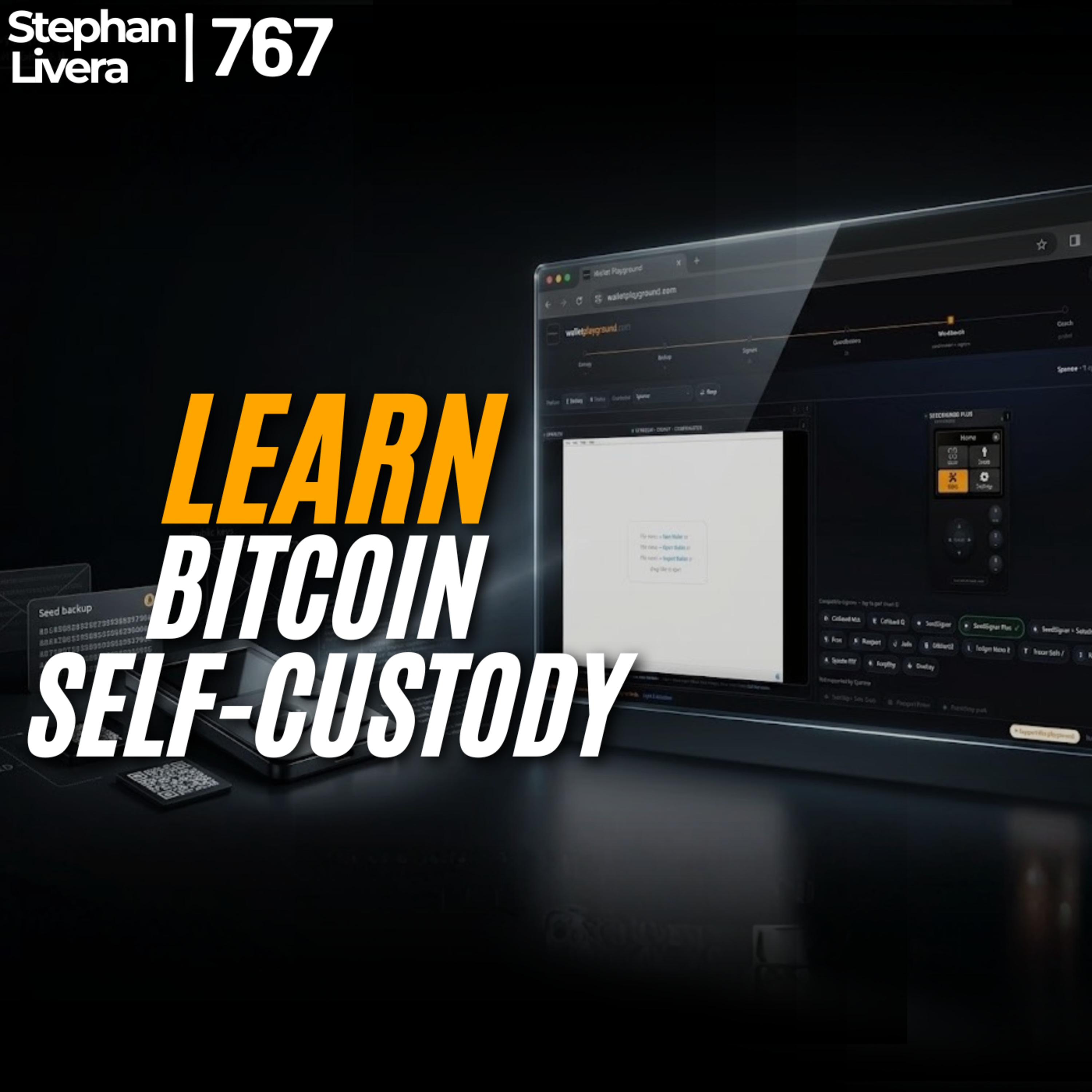 Wallet Playground for learning Bitcoin self custody with Piers Macrae | SLP767 | In this episode, Piers Macrae demonstrates Wallet Playground and explains why hardware wallets are signing devices, not wallets.Timestamps:01:10 — Teach Me vs Do It For Me03:23 — Test Any Wallet Free in Browser09:09 — Coldcard Drama Forced Early Release14:03 — Generate Seeds Using Your Webcam17:52 — Hardware Wallets Aren't Real Wallets21:52 — Only 1% Use Multisig for Life Savings25:33 — Self-Custody Like Firearms Drilling?27:30 — Only Tiny Percentage Will Self-CustodyLinks: X: @mineracks — https://x.com/mineracksWallet Playground: https://walletplayground.com/mineracks: https://www.mineracks.com/Stephan Livera links:Follow me on X: @stephanliveraSubscribe to the podcastSubscribe to Substack | 29m 31s | ||||||
| 8/22/26 | 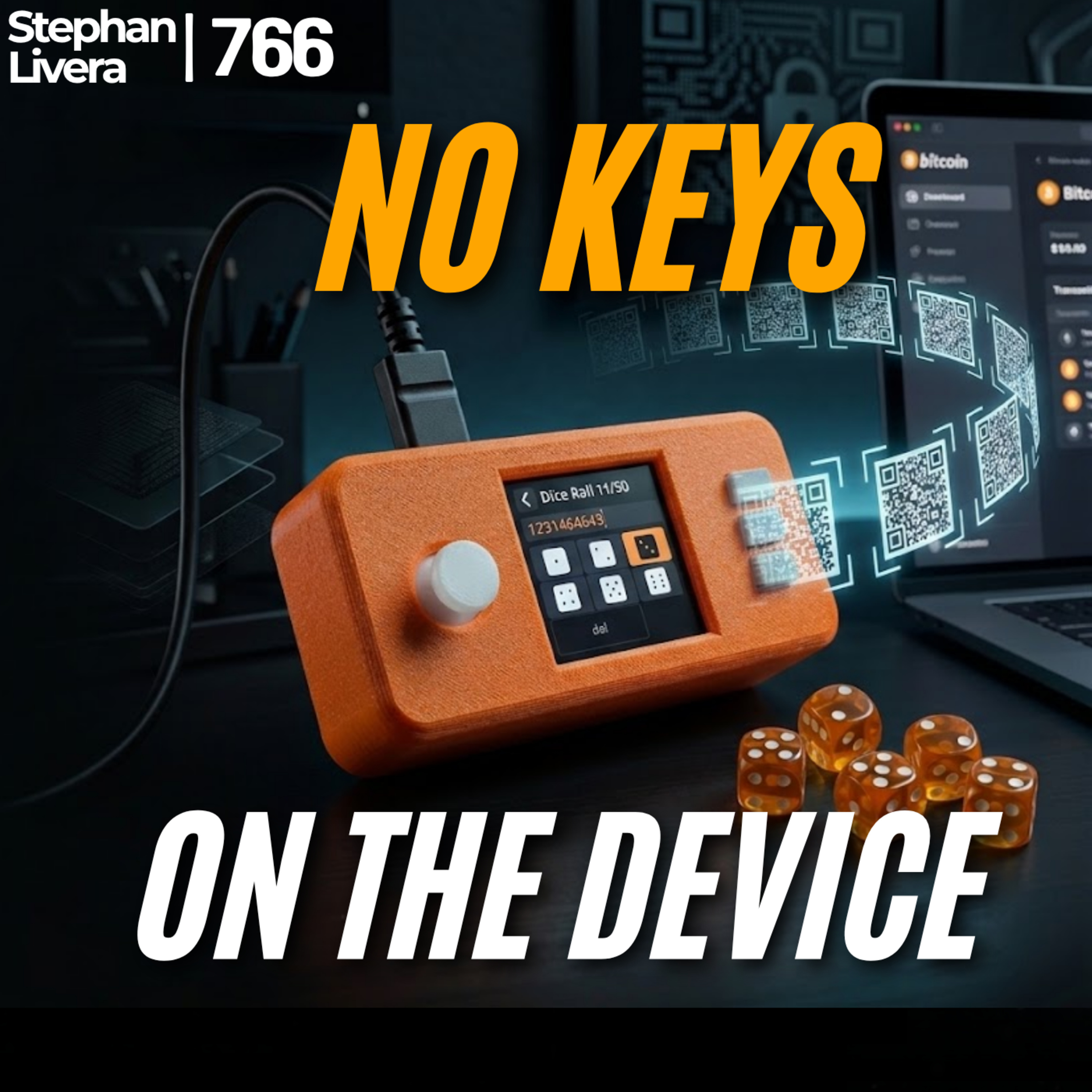 Dice Rolls, Entropy, and SeedSigner | Keith Mukai SLP766 | In this episode, Keith Mukai of SeedSigner joins to explain why 1.4 percent variance in cheap dice still delivers full 128-bit entropy and how to verify rolls across devices.Timestamps:03:10 — Cheap Dice Only 1.4% Unfair?06:29 — Shake Multiple Dice in a Box08:26 — Verify Dice Rolls Across Devices11:02 — Verify Dice Seeds With Fake Rolls13:50 — Multiple Test Rounds Foil Attackers16:36 — 90% Users Choose Easy RNG Mode19:08 — Jade's D&D Dice Method?21:53 — Build Your Own: Avoid Mailing List Leak24:48 — Stateless Device: Evil Maid Gets Nothing26:45 — Hand-Drawn SeedQR: Skip Typing 24 Words29:02 — SeedSigner: Built for Long-Term Cold Storage31:30 — Evil Maid SD Card Swap Destroys Security35:27 — Why Multisig Beats Single-Sig + Passphrase37:14 — Scan Sparrow PDF QR to Load Multisig42:16 — No One-Size-Fits-All Security46:41 — Understand Dice Rolls Yourself49:13 — Take Baby Steps to MultisigLinks: https://seedsigner.com/https://x.com/keithmukaihttps://x.com/SeedSignerStephan Livera links:Follow me on X: @stephanliveraSubscribe to the podcastSubscribe to Substack | 52m 08s | ||||||
| 8/19/26 | 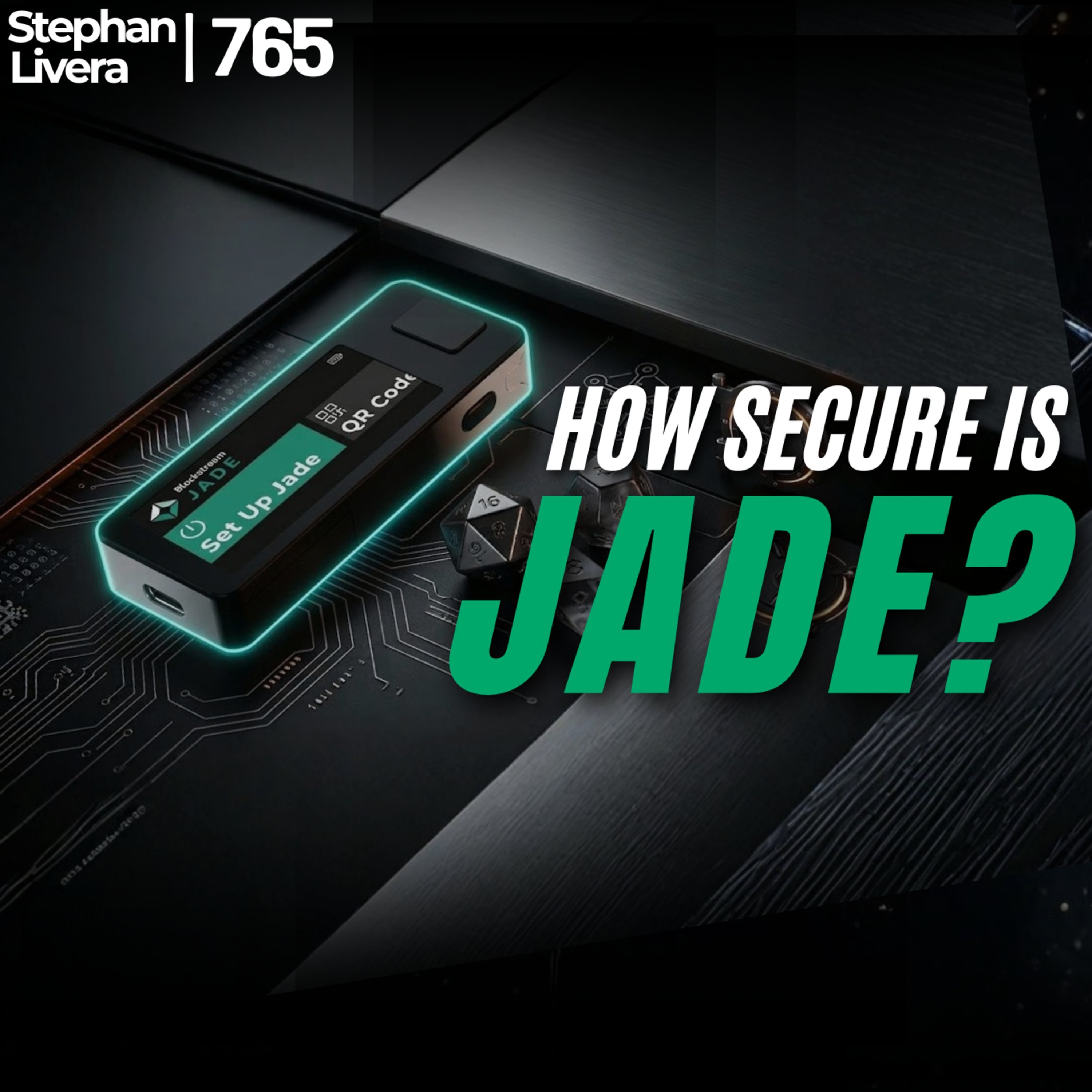 Jade for Single-Sig or Multisig | Rich SLP765 | In this episode, Rich from the team at Blockstream explains Jade, offline dice entropy, blind oracle protection, multisig descriptor recovery and the new Blockstream Swaps beta.Timestamps:00:45 — AI Scans & Audits Secure Jade03:21 — Jade Core $99, Plus Up to $16905:51 — Roll Dice for Offline Seed Entropy08:23 — Blind Oracle: Remote Secure Element Explained11:15 — Seed QR: Hand-Draw Your Recovery Phrase15:24 — Jade Sends Back Lost Multisig Descriptor19:40 — People Choosing Multisig Over ETFs25:03 — Blockstream Swaps Beta: Lightning to LiquidLinks: blockstream.com/jade https://x.com/blockstreamhttps://x.com/blockstreamjadeStephan Livera links:Follow me on X: @stephanliveraSubscribe to the podcastSubscribe to Substack | 27m 51s | ||||||
| 8/14/26 |  Wavelength Delivers Ark-Based Lightning Without Node Overhead | Roasbeef & Michael Levin SLP764 | Lightning Labs built Wavelength to deliver self-custodial Lightning payments without forcing users to run nodes, manage channels, or handle liquidity.Olaoluwa Osuntokun, CTO and co-founder of Lightning Labs, and Michael Levin, VP of Product, join me to detail the design choices behind their Ark implementation.They explain why Ark was selected, how hop hints let every payment use ordinary Lightning invoices, and why the four-endpoint SDK targets AI agents and vibe coders. The conversation covers sub-dust vouchers, unilateral exits, offline payment delivery, and one-basis-point alpha pricing.Wavelength shows that self-custodial Lightning can match the integration ease of custodial services while preserving Bitcoin sovereignty.Timestamps01:28 — Why Wavelength: Lightning Without Node Pain03:00 — Why Ark? 05:28 — No New Addresses: Just Lightning Invoices08:40 — Targeting Vibe Coders & AI Agents13:06 — Lightning Beats Credit for LLM APIs17:51 — Receive Sub-1k Sat Vouchers Seamlessly19:32 — Normal User Spins Up Ark Wallet Fast23:02 — Build Wallets with Just 4 Endpoints24:46 — Telegram Self-Custodial Wallets Already Live26:21 — Offline Payments Still Arrive Automatically29:17 — Drop-In SDK for iOS and Android31:26 — Can Servers Steal Your Funds?33:36 — Wavelength Alpha: Just 1 Bip Fees37:57 — AI Attacks Targeting Bitcoin Services?44:05 — Bug Bounties Shift to Token Spending48:36 — Self-Custody as Easy as CustodialLinks: https://x.com/roasbeehttps://x.com/MichaelLevinWavelength Announcement: https://x.com/lightning/status/2079620936567779707Stephan Livera links:Follow me on X: @stephanliveraSubscribe to the podcastSubscribe to Substack | 50m 19s | ||||||
| 8/13/26 |  Bitcoin Custody Rules Have Changed | Michael Tanguma SLP763 | Old self-custody approaches collapse once Bitcoin reaches six figures, physical threats rise, and AI tools proliferate. Single hardware wallets and mattress myths no longer match the scale or risks that large holders now face.Michael Tanguma, CEO and co-founder of Onramp, returns to examine how custody must adapt to family obligations, mortality, and market structure that turns concentrated holdings into targets.The discussion covers why repeated exchange failures keep Bitcoin looking speculative to outsiders, how multi-institution setups reduce scam ROI, and the limits of adding more dice or vendors in an AI era. It also addresses custody pricing models and the practical question of whether any current setup survives a tenfold price increase.Game theory now requires diversified institutional layers rather than pure self-reliance for serious stacks.Timestamp:03:43 — Bitcoin Custody Won't Work Like 201205:49 — Self-Custody Rules Changed With Your Life07:19 — Why Bitcoiners Must Stop the Mattress Myth09:01 — Bitcoin's Asset Layer Makes It Unstoppable11:22 — Private Keys Are Like Firearms15:40 — Custody Losses Keep Bitcoin Speculative18:56 — AI Just Changed Self-Custody Forever21:41 — Why Bitcoin Robberies Are Skyrocketing25:41 — Multi-Institution Custody Kills Pig Butchering27:57 — Bitcoin at $650K: Security Nightmare?29:30 — Game Theory Demands Multi-Custody Bitcoin32:03 — Centralized Custody: The Honeypot Risk37:56 — Why Custody Fees Should Be Zero39:51 — Full Bitcoin Custody for $100/Month42:51 — Would Your Setup Survive 10x Bitcoin?Links:https://x.com/mtangumahttps://x.com/OnrampBitcoinStephan Livera links:Follow me on X: @stephanliveraSubscribe to the podcastSubscribe to Substack#Bitcoin #SelfCustody #Custody #OnrampBitcoin #StephanLivera #StephanLiveraPodcast #BitcoinSecurity #MultiSig | 44m 43s | ||||||
| 8/12/26 |  Breez Ships Glow — A Super Simple Bitcoin Wallet | Roy Sheinfeld SLP762 | Roy Sheinfeld of Breez returns to walk through Glow, the team's new reference wallet built using Spark. It’s designed so non-custodial Bitcoin feels simple: send, receive, and go.Glow uses passkey onboarding (no seed phrase to write down), automatic backup via the passkey provider, and a single-balance UX so users can pay Lightning, on-chain, and stablecoin destinations without wrestling settings.They also cover client-side swaps (Flashnet, multi-vendor architecture after Boltz), AI-driven attacks on swap providers, where Lightning volume actually comes from, Spark unilateral exits, and how AI plus the Breez SDK lets non-developers ship Bitcoin apps from a prompt.Timestamps04:21 — Bitcoin Wallet Onboard with One Passkey08:05 — Stables on Lightning: Overhyped?09:59 — Swaps Needed Even With Lightning Stables11:48 — AI Attacks: Cheaper to Attack Than Defend15:07 — Why Small Teams Get Hacked First17:15 — Swaps Going Private to Survive?19:17 — Backends Drive Most Lightning Volume21:32 — 80/20 Rule: B2B Drives Lightning Volume25:13 — Making Unilateral Exit Economically Viable29:48 — Spark Public Mode31:38 — One Prompt Builds a Bitcoin App33:13 — Non-Technical Users Now Ship Bitcoin AppsLinks: https://x.com/roy_breezhttps://x.com/breez_techhttps://breez.technology/glow/Stephan Livera links:Follow me on X: @stephanliveraSubscribe to the podcastSubscribe to Substack | 34m 13s | ||||||
| 8/7/26 |  Bitcoin Multi Sig vs Secure Single Sig with Nick Neuman | SLP761 | In this episode, Nick Neuman of Casa argues that it’s not the end of self-custody. Instead, it highlights why multisig with multiple vendors provides stronger protection without the hidden complexity of passphrases or dice rolling for single sig setups.Timestamps:03:12 — Not the End of Self-Custody06:14 — Single Sig Is Actually More Complex08:45 — Multisig Simpler Than Secure Single Sig15:37 — $1K Single Sig, $10K Multisig?17:32 — Casa's $250 2-of-3 Multisig Plan20:01 — Private Clients Get Dedicated Advisors22:21 — Bitkey vs Casa27:36 — Going Closed Source Versus AI Attacks30:23 — AI Code Audits Now Cost $1K33:04 — Auto-Rejecting Unknown Callers Saves You34:35 — Guardian Mode Requires Video VerificationLinks: https://x.com/Nneumanhttps://x.com/CasaHODLhttps://casa.io/Stephan Livera links:Follow me on X: @stephanliveraSubscribe to the podcastSubscribe to Substack | 36m 03s | ||||||
| 8/6/26 |  Kruw on Wasabi 2.8 and Upcoming Forks | SLP760 | Kruw (@kruwed) runs one of the highest-volume WabiSabi coordinators, giving him direct insight into how the protocol handles liquidity, Sybil resistance, and real-world usage.Timestamps:00:42 — Wasabi 2.8 Privacy Features 02:45 — Taproot As Wasabi's Default Address07:25 — Pay Inside CoinJoin Saves 40 Minutes10:26 — Auto CoinJoin 12:21 — WabiSabi Blocks Whale Sybil Attacks14:31 — Payjoins16:37 — ClusterMempool Wins for CoinJoins20:00 — Upcoming forks21:14 — CoinJoin: Free Replay Protection Hack22:53 — CoinJoin Ban Myth Debunked25:41 — Black Hole: Earn While MixingLinks: https://x.com/wasabiwallethttps://x.com/Kruwedhttps://wasabiwallet.io/Stephan Livera links:Follow me on X: @stephanliveraSubscribe to the podcastSubscribe to Substack | 28m 11s | ||||||
| 7/28/26 | 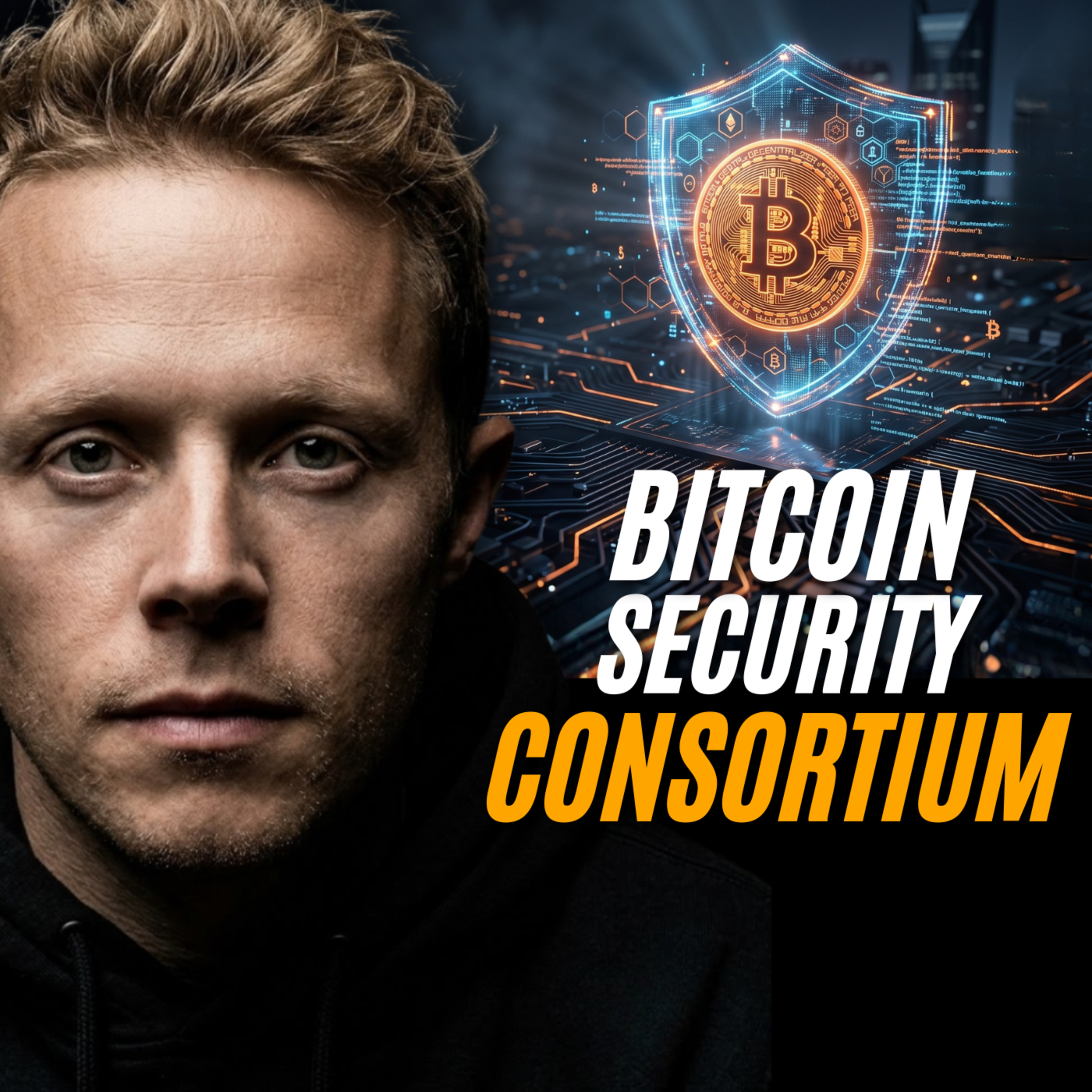 Bitcoin Security Consortium with Mike Schmidt | SLP759 | In this episode, Mike Schmidt executive director of Brink, and volunteer coordinator for the consortium, explains how the group formed, autonomy over funding, and how it plans to avoid repeating earlier centralized roadmap fights.Timestamps:00:55 — Quantum Risk and the Consortium Pledge03:10 — The Nine Consortium Members11:40 — Publishing Quantum Research Publicly13:39 — Brink Role and Funding Concerns16:20 — Defining Early Success Metrics19:00 — Informing the Public on Quantum Progress21:17 — Institutional Influence and Protocol Concerns25:13 — Research First on Quantum Signatures29:25 — Expanding Quantum Expertise33:14 — Scope Beyond Quantum Security35:31 — Why Quantum Motivates Corporate Involvement37:43 — Debates Over Development Funding40:30 — No Protocol Roadmap From the Consortium42:57 — Three-Year Goal: Mature ProposalsLinks: Press release: https://www.strategy.com/press/leading-financial-institutions-bitcoin-companies-launch-the-bitcoin-security-consortium_07-23-2026Mike’s thread: https://x.com/bitschmidty/status/2080263159152091455Consortium X: https://x.com/BTCconsortium Stephan Livera links:Follow me on X: @stephanliveraSubscribe to the podcastSubscribe to Substack | 45m 48s | ||||||
| 7/23/26 | Daniel Buchner: Why BIP 110 Cannot Stop Bitcoin Spam | SLP758 | Buchner, known for his work on decentralized identity at Proof, brings a technical and game-theoretic lens to the debate over Bitcoin's monetary focus versus attempts to restrict arbitrary data.The conversation covers narrative shifts driving spam to Bitcoin, the limits of relay policy versus consensus rules, why the house analogy fails, economic node power over basement operators, and the lack of miner or buyer support that dooms the proposal.Timestamps:01:31 — Locusts Flock to Bitcoin's Last Pasture03:32 — Core Policy Tweaks Aren't Consensus Rules08:44 — Spam Hides in Any Public Key or Hash11:12 — Spammers Adapt in a Day, Consensus Can't14:59 — BIP110 Debate Exposes Major Inconsistency20:44 — Why the House Analogy Totally Fails25:25 — Nodes Get Cheaper Even With Max Spam28:08 — Set Tolerances Assuming Worst Case30:35 — No Legal Liability for Bad Chain Data33:04 — Filter Regime Creates Government Backdoor35:13 — BIP 110 Risks Centralizing Devs Around Luke37:33 — Economic Incentives Trump 'Good Guy' Miners39:03 — Economic Nodes Outweigh Basement Node Runners43:49 — BIP 110 Has Near-Zero Economic Support48:43 — Why Game Theory Kills BIP 11055:52 — BIP 110 Fork Dies With a WhimperLinks: https://x.com/csuwildcatStephan Livera links:Follow me on X: @stephanliveraSubscribe to the podcastSubscribe to Substack | 57m 02s | ||||||
| 7/17/26 | Bitcoin sentimentmarket analysis+4 | Michael Sullivan | Bitcoin Sentiment WeeklySubstack+1 | — | Bitcoinsentiment analysis+5 | — | 43m 54s | ||
| 7/10/26 | Bitcoin market analysison-chain data+4 | James Check | Checkonchain.comMicroStrategy+2 | — | Bitcoinbear market+6 | — | 54m 52s | ||
| 7/9/26 | Bitcoin paymentsSignal messaging+4 | Seth for Privacy | RadarSignal+1 | — | BitcoinSignal+6 | — | 26m 44s | ||
| 7/7/26 | Payjointransaction batching+5 | Dan Gould | Bull BitcoinCake Wallet+2 | — | PayjoinDevKit+5 | — | 18m 23s | ||
| 7/3/26 | circular economyeCash+5 | HermannJoshi | FedimintStart9+3 | South Africaemerging markets | FediminteCash+7 | — | 36m 42s | ||
| 6/30/26 | Bitcoin self-custodyhardware wallets+5 | NVK | Sparrow WalletColdcard MK5+7 | — | self-custodyhardware wallets+7 | — | 50m 04s | ||
| 6/29/26 | Bitcoin miningStratum V2+3 | Alejandro De La Torre | DMND_Sv2DMND Pool | — | Stratum V2Bitcoin mining+3 | — | 15m 32s | ||
| 6/29/26 | Bitcoin Treasury CompaniesmNAV+4 | Adrian Morris | MSTRSTRC+3 | — | Bitcoin TreasurymNAV premiums+5 | — | 1h 06m 57s | ||
| 6/26/26 | Silent PaymentsBitcoin Wallets+4 | Craig Raw | SparrowFrigate+3 | — | Silent PaymentsBitcoin+6 | — | 1h 16m 40s | ||
| 6/25/26 | Lightning-native DEXtrading+4 | Jesse Schrader | RailsXUSDT+4 | — | RailsXLightning DEX+6 | — | 16m 43s | ||
| 6/12/26 | Bitcoin treasury strategiesLightning Network innovations+5 | Freddie NewNick Farrow+3 | BHODLFrost Snap+3 | — | Bitcointreasury strategies+5 | — | 50m 15s | ||
| 6/7/26 | Lightning Network economicsyield opportunities+4 | Chris Ritter | Lightning NetworkBitcoin+2 | — | Lightning NetworkBitcoin+5 | — | 41m 50s | ||
| 6/5/26 | Bitcoin security challengesself-custody risks+5 | PakoVM | LinuxArk+4 | — | Bitcoinscams+5 | — | 1h 09m 42s | ||
| 5/23/26 | Bitcoin covenantsself-custody+5 | Arbedout | SigbashBitcoin+2 | — | covenantsvaults+5 | — | 35m 23s | ||
| 5/18/26 | Bitcoin exposurereal estate+4 | Sanjay MavinkurveChase Palmieri | SovanaTradFi+4 | — | Bitcoinreal estate equity+5 | — | 49m 59s | ||
| 5/6/26 | Bitcoin securityColdcard Mk5+4 | NVK | Coldcard Mk5COLDCARDwallet+4 | — | BitcoinColdcard+8 | — | 53m 49s | ||
| 5/2/26 | open source fundingBitcoin ecosystem+4 | Pavlenex | MARA FoundationStratum V2+2 | — | open sourceBitcoin+5 | — | 52m 05s | ||
| 4/3/26 | Bitcoin conferenceAI and Bitcoin+5 | Matyas Kuchar | BTC PragueAI+1 | EuropePrague | BitcoinBTC Prague+6 | — | 42m 02s | ||
| 3/27/26 | Bitcoinpower law analysis+3 | Giovanni Santostasi | The Physics of Bitcoin | — | Bitcoinpower law+5 | — | 59m 12s | ||
| 3/17/26 | Bitcoinbear markets+4 | James Van Straten | CoinDesk | — | Bitcoinbear market+5 | — | 42m 24s | ||
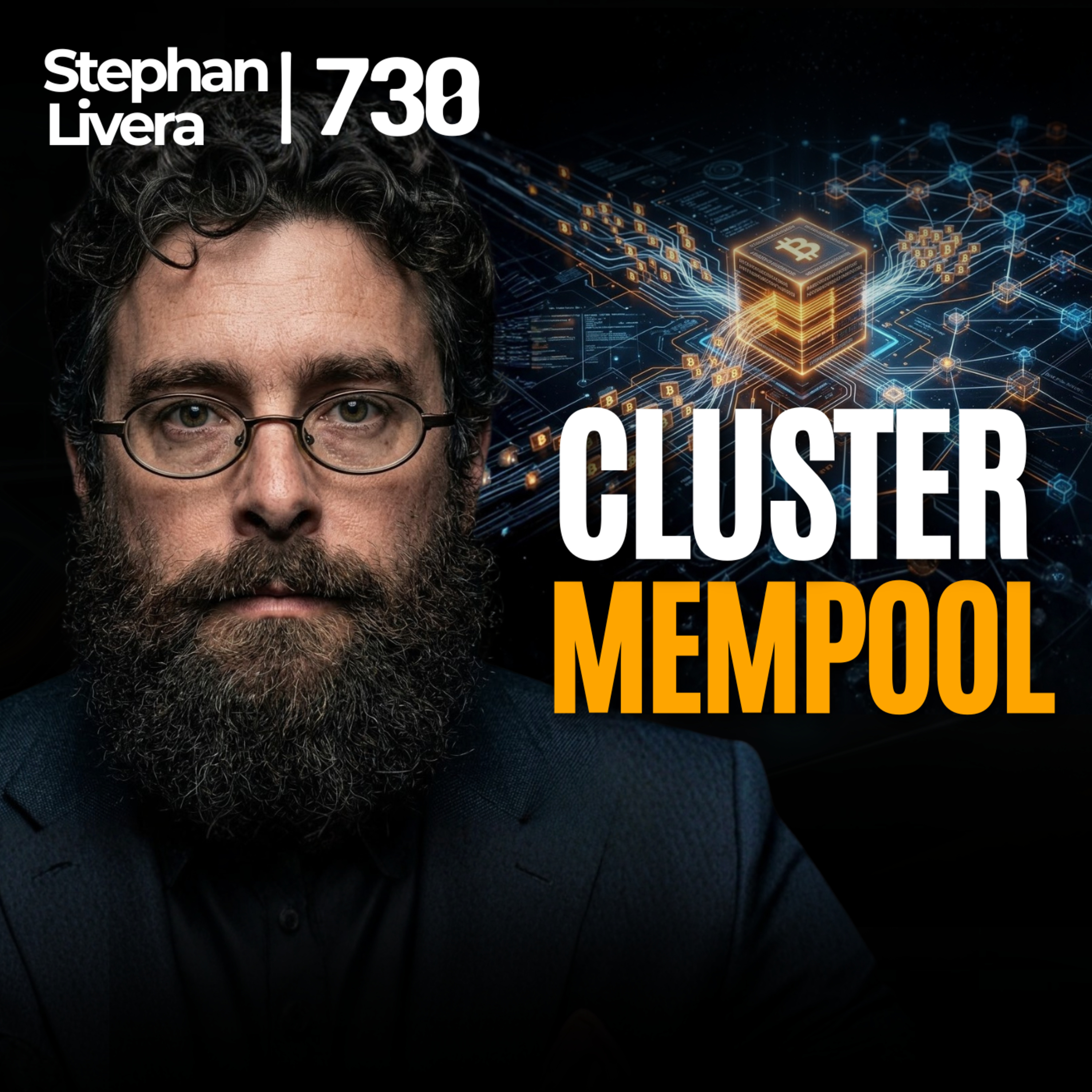
| 3/12/26 | Cluster MempoolBitcoin+4 | Pieter Wuille | Bitcoin CoreBitcoin Magazine+1 | — | Cluster MempoolBitcoin Core+4 | — | 52m 51s | ||
| 3/11/26 | Bitcoin transactionsdata storage+4 | Martin Habovstiak | KnotsliesBitcoin+1 | — | Bitcointransactions+5 | — | 58m 29s | ||
| 3/10/26 | Bitcoin payment solutionsopen-source technology+5 | Calle | NumopayCashu+3 | — | NumopayBitcoin+8 | — | 44m 00s | ||
| 3/6/26 | BitcoinFinancial Independence+4 | Trey Sellers | BitcoinFIRE BTC Compass+3 | — | BitcoinFIRE+5 | — | 47m 56s | ||
| 2/25/26 | stablecoinsBitcoin adoption+4 | Gareth Grobler | Layerz WalletBitcoin+2 | — | stablecoinsBitcoin+5 | — | 42m 44s | ||
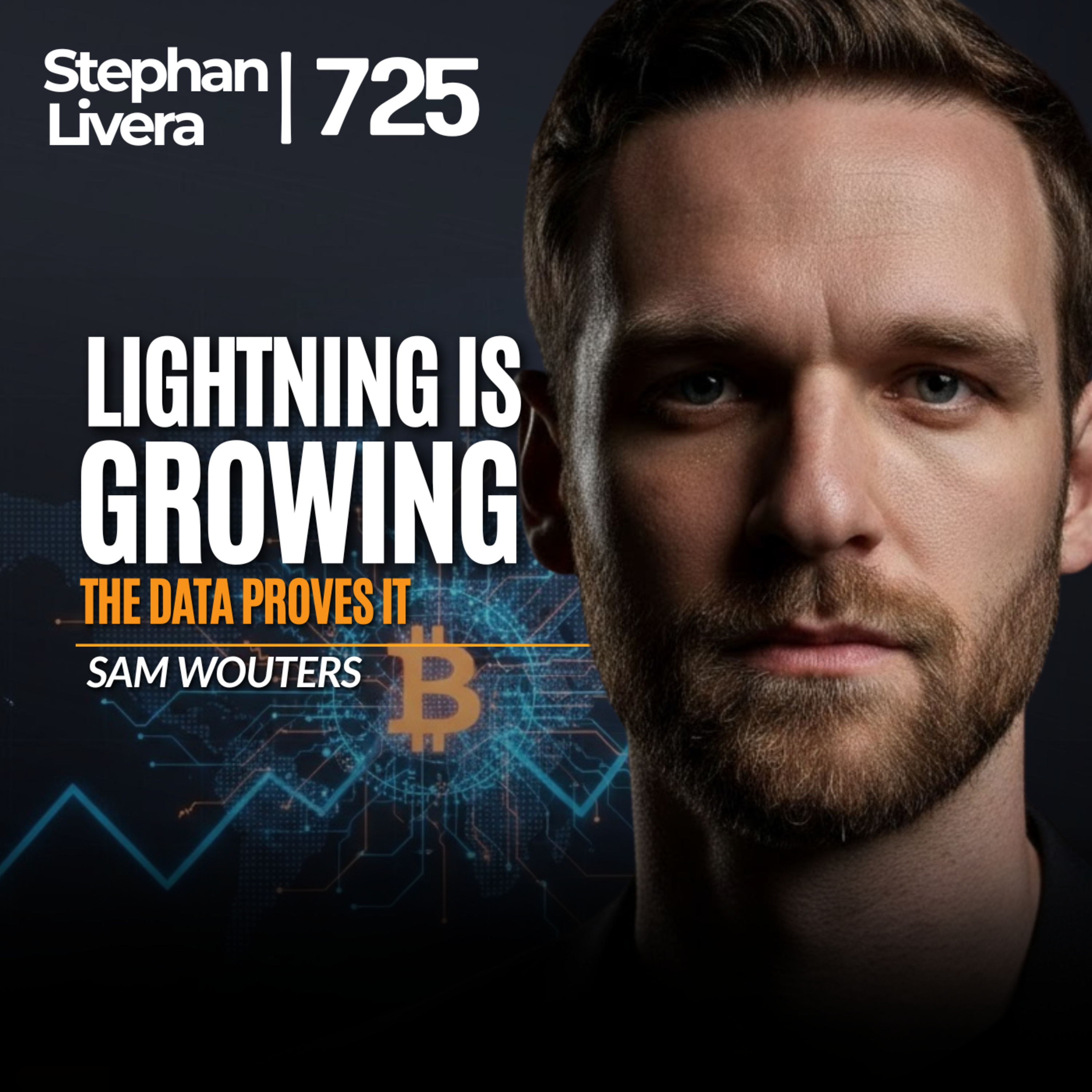
| 2/23/26 | Bitcoin adoptionLightning Network+4 | Sam Wouters | BitcoinLightning Network+1 | — | Lightning NetworkBitcoin+5 | — | 53m 54s | ||
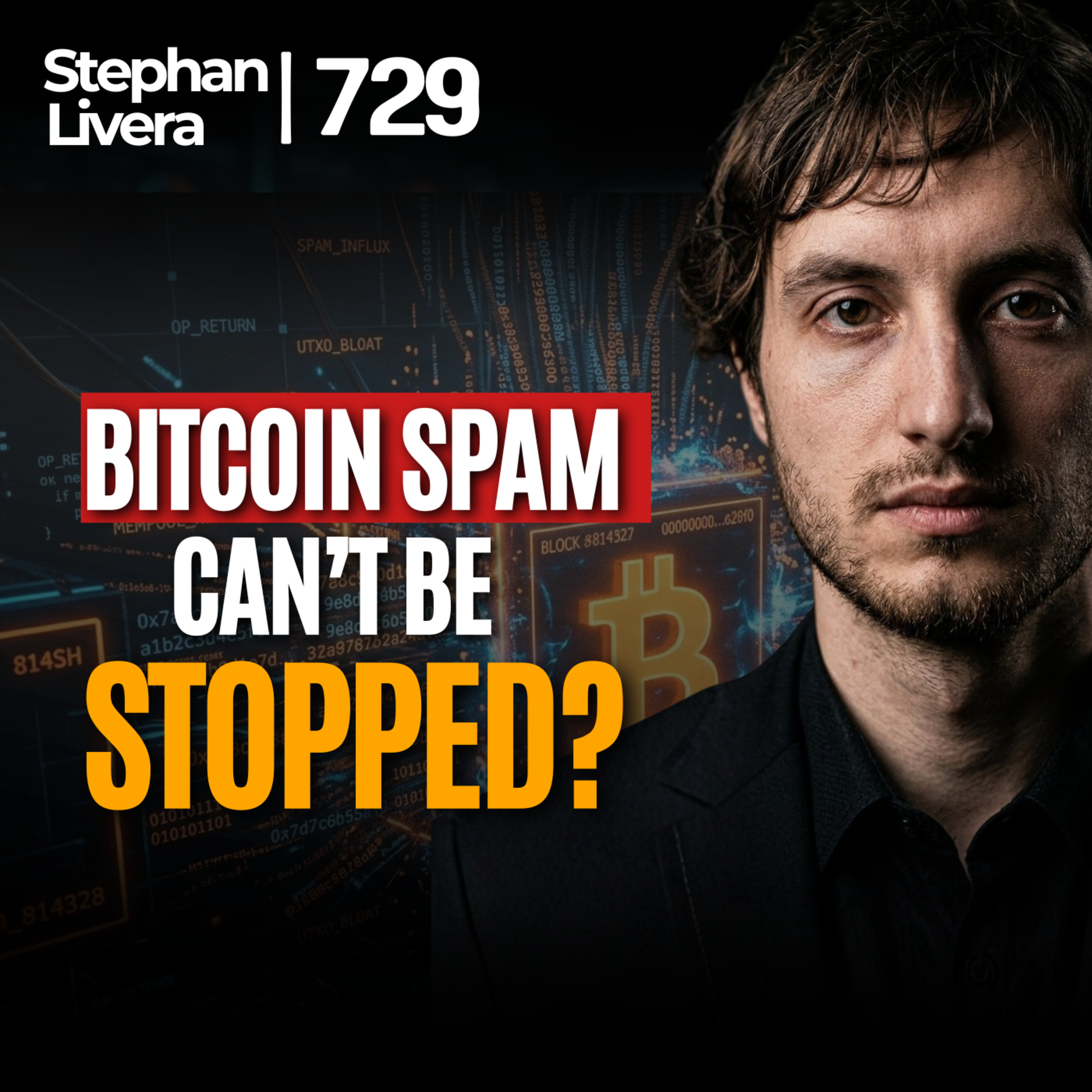
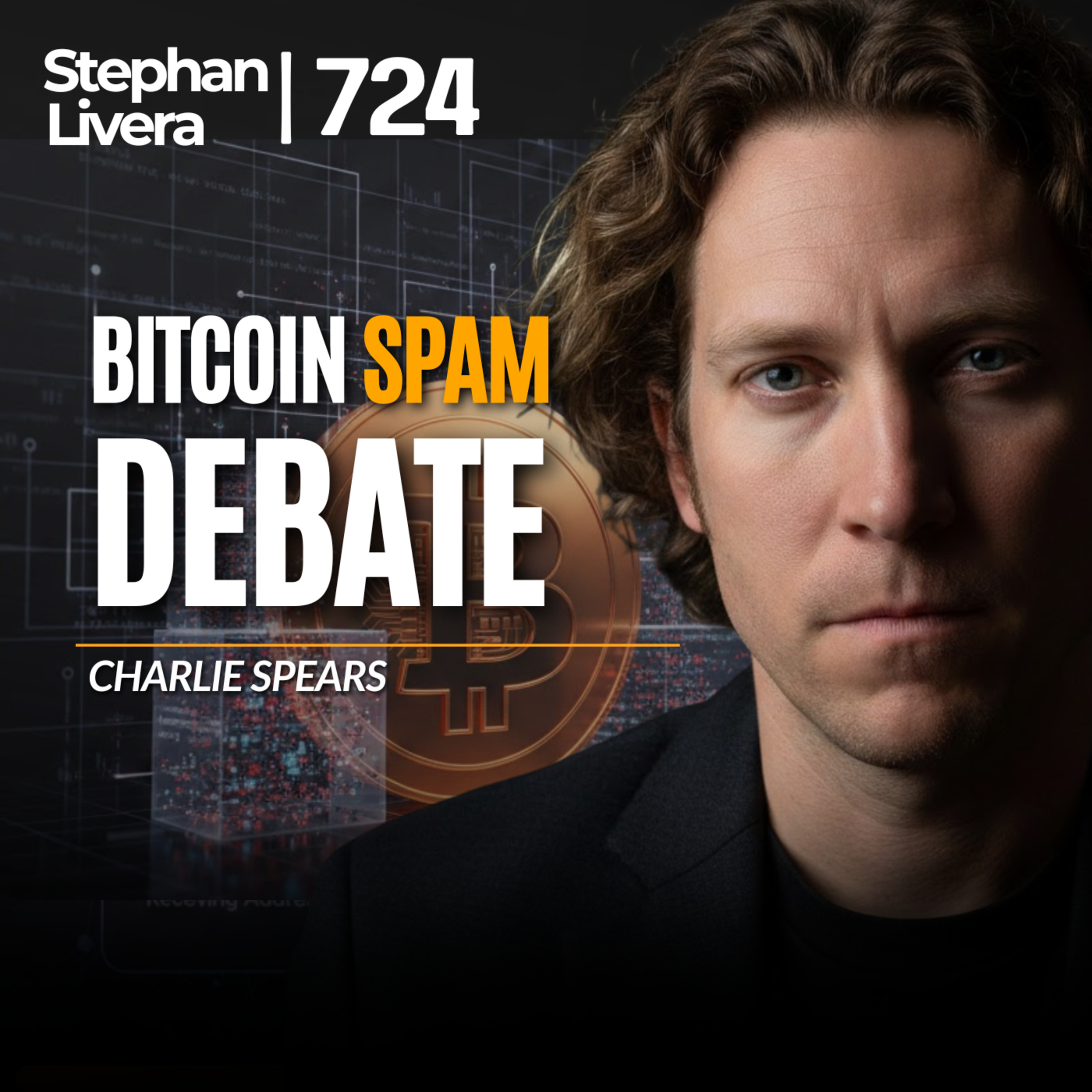
| 2/21/26 | Bitcoin spam debatesprotocol upgrades+5 | Charlie Spears | BlockspaceBIP 110+1 | — | Bitcoinspam+7 | — | 54m 58s | ||





Showing 52 of 770
Pitch Fit is a Pro feature
See how bookable this show is for guests, which brands already advertise, the per-episode ad value, and the best-fit guest and sponsor profile. The numbers are blurred on the free plan.
How readily this show books outside guests like you.
How proven this show is for host-read sponsorships.
For Guests
ProFor Advertisers
ProUpgrade to Pro to unlock guest cadence, sponsor categories, fit scores, and per-episode ad value for this show.
Chart history for Stephan Livera Podcast
Peaked at #134 in IS, currently #134 in IS.
| Market | Genre | Peak | Current | Trend |
|---|---|---|---|---|
| IS | — | #134 | #134 | — |
| SG | — | #155 | #155 | — |
Chart Positions
2 placements across 2 markets.
Chart Positions
2 placements across 2 markets.