
The Building Culture Podcast
by Austin Tunnell
Is this your podcast?On the show
Recent episodes
#50: Alexandra Vondeling: The Neighborhood IS the amenity
Jul 23, 2026
Unknown duration
#49 Alicia Pederson: How We Designed Families Out of the City
May 26, 2026
Unknown duration
#48 Mike Hathorne: The Great Housing Reversal - It's not a housing shortage, but a mismatch.
May 5, 2026
Unknown duration
#47 Apollo Workspace: There's a Better Way to Work
Apr 10, 2026
Unknown duration
#46 Jan Sramek: California Forever - Building the Next Great American City
Jan 13, 2026
Unknown duration
Insights from recent episode analysis
Audience Interest
Podcast Focus
Publishing Consistency
Platform Reach
Insights are generated by CastFox AI using publicly available data, episode content, and proprietary models.
Back-catalog monthly reach
Based on 1 signal · back-catalog reach only (show is inactive).
Built from
By chart position
- 🇺🇸United States · DesignHOME#1961.3K to 6.8K
- 🇬🇷GR · Design#17326 to 1.7K
- 🇬🇧United Kingdom · Design#20085 to 451
- 🇨🇦Canada · Design#18964 to 341
- 🇦🇹AT · Design#12226 to 137
- Per-Episode Audience
No new episodes in 90+ days
—🎙 Sporadic cadence·47 episodes·Last published 2mo ago - Monthly Reach
Unique listeners across all episodes (30 days)
1.8K to 9.5K🇺🇸72%🇬🇷18%🇬🇧5%+2 more - Active Followers
Loyal subscribers who consistently listen
358 to 1.9K
Market Insights
Platform Distribution
Reach across major podcast platforms, updated hourly
Total Followers
—
Total Plays
—
Total Reviews
—
* Data sourced directly from platform APIs and aggregated hourly across all major podcast directories.
Social Links & Contact
Official channels & resources
Official Website
Login
RSS Feed
Login
| Date | Episode | Description | Length | ||||||
|---|---|---|---|---|---|---|---|---|---|
| 7/23/26 | #50: Alexandra Vondeling: The Neighborhood IS the amenity | Alex Vondeling has spent her career digging into the part of the problem most people skip past. Not whether we need more housing, we clearly do, but what kind, at what scale, and arranged in what way. She is a principal at Opticos Design, the Berkeley firm that coined the term missing middle housing more than a decade ago, and she has become one of the clearest voices in the country on how to actually build it.What I appreciate about Alex, and about Opticos, is that they are not content to only name a problem. They work tirelessly on the solution. In this conversation we get into the important difference between a fourplex that looks like a house and a fourplex surrounded by parking, why the streetscape decides whether urbanism works at all, and the struggle between how a city can adopt a beautiful comprehensive plan while its own engineers have rules in place that make it impossible to build.We also get into my own work and projects and why the neighborhood, not just the gym within it, is the amenity. If you build places for a living, or you just want to understand why the good ones feel good, this one is worth your time.0:00 Intro1:27 How Alex Found the Missing Middle4:11 What Opticos Actually Does6:14 Build-to-Rent, Reclaimed7:50 Missing Middle Housing, Defined10:11 Making It Work in the Real World13:16 One Ingredient in a Whole Neighborhood15:38 Engaging a City19:19 The Recommendations That Repeat23:14 How Developers Find Opticos28:15 The Real Constraints41:35 The Neighborhood Is the Amenity46:33 Entitlements and the Advocate You Need55:03 Live/Work, Boutique Office, and What's NextCONNECT WITH THE ALEXANDRAAlexandra Vondeling on LinkedIn: www.linkedin.com/in/alexandra-vondeling-6a36571aOpticos Design: opticosdesign.comOpticos on Instagram: www.instagram.com/opticosdesignIn the episode, Alex said an email to Opticos's info inbox always reaches the right person in the firm. The contact form and email live on their site. She also noted Opticos is active on LinkedIn, YouTube, and Substack, and the best time to reach out is early, while the site plan is still flexible.CONNECT WITH AUSTIN TUNNELLNewsletter: https://playbook.buildingculture.com/ / austintunnell / austin-tunnell-2a41894a / austintunnell CONNECT WITH BUILDING CULTUREhttps://www.buildingculture.com/ / buildingculture / build_culture / buildculture | — | ||||||
| 5/26/26 | 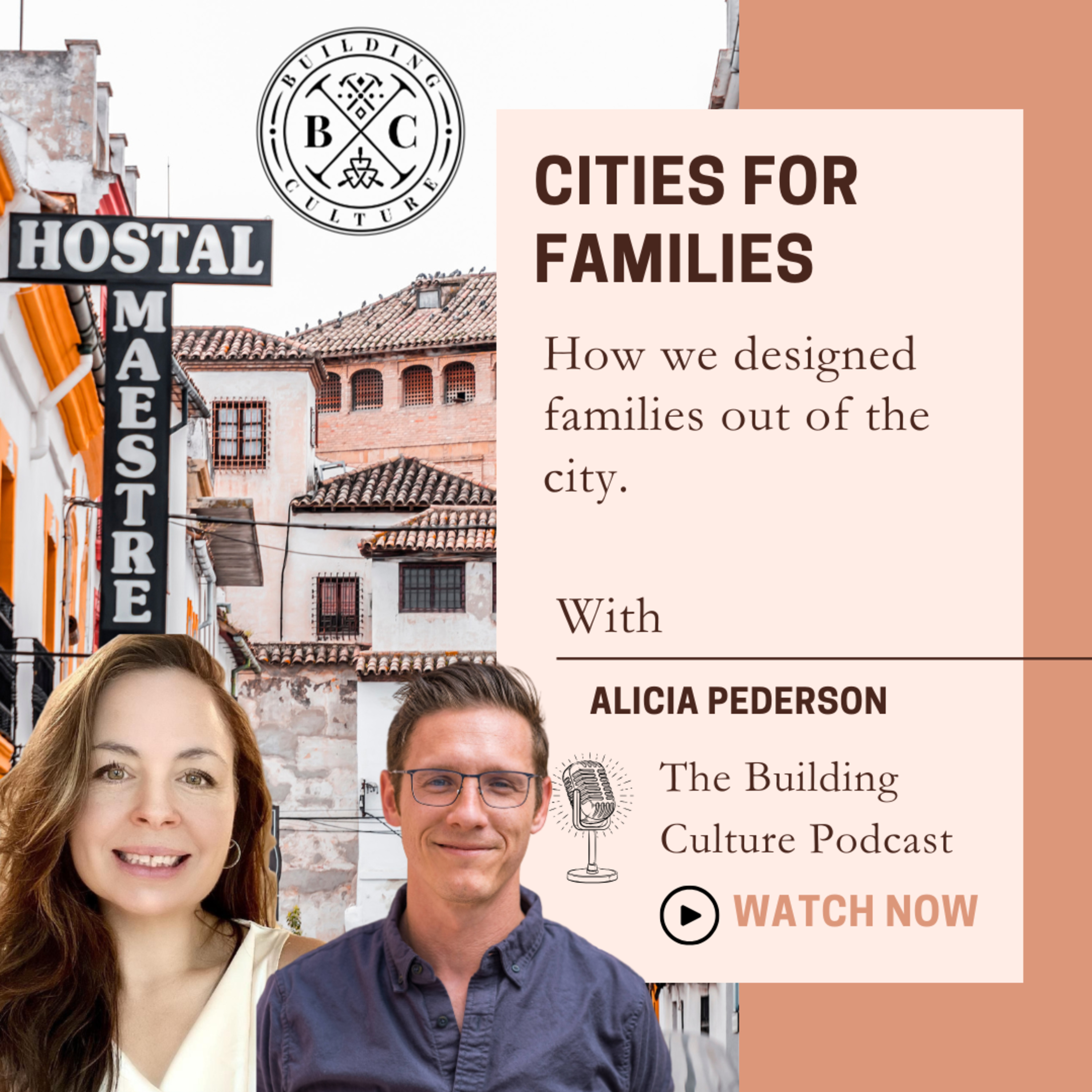 #49 Alicia Pederson: How We Designed Families Out of the City | Alicia Pederson spent her twenties living in a 16th-century palazzo in Florence, and it changed everything about how she sees cities, density, and what American urbanism has quietly abandoned. She's the founder of Courtyard Urbanist and holds a PhD in English from Northwestern with a specialty in Renaissance pastoral literature, which turns out to be less of a detour and more of a throughline to everything she now advocates for.In this conversation we cover the history of the courtyard block, why American apartments have failed families for decades, the relationship between lot geometry and livability, why wood-frame construction is a systemic problem, and what it would actually take to build the kind of urban housing that allows families to put down real roots. We also talk about what's happening in my own neighborhood at Wheeler — and why watching my sister, my parents, and my business partners all move within two blocks of each other has made the mission feel more personal than ever.Alicia is working with architects and developers right now to bring this typology back to American cities. We are excited to see the movement on these projects.I think you're going to love this one.0:00 Introduction1:06 Pastoral Literature and the City — from Shakespeare to Santo Spirito6:35 Two Years in a Florentine Palazzo — the experience that changed everything10:41 Wheeler District — what it actually feels like to live near family13:35 What the Courtyard Block Is and Why It Works16:44 How American Cities Became Hostile to Families20:34 The Outdoor Space Problem — what parents of young kids actually need22:56 Why Missing Middle Housing Hasn't Taken Off31:36 Lot Geometry — why European apartments are better to live in38:05 Interblock Urbanism — how Building Culture is solving the same problem39:42 The Case for Masonry — stone, brick, and why it matters47:30 Complex and Vulnerable vs. Dumb and Durable50:15 Energy Efficiency as Greenwashing53:06 Where the Work Is Now — investors, architects, real projects57:03 How to Follow Alicia's WorkLINKS & RESOURCESCourtyard Urbanist Substack: courtyardurbanist.comAlicia on X/Twitter: @UrbanCourtyardCONNECT WITH AUSTIN TUNNELLNewsletter: https://playbook.buildingculture.com/ / austintunnell / austin-tunnell-2a41894a / austintunnell CONNECT WITH BUILDING CULTUREhttps://www.buildingculture.com/ / buildingculture / build_culture / buildculture | — | ||||||
| 5/5/26 | 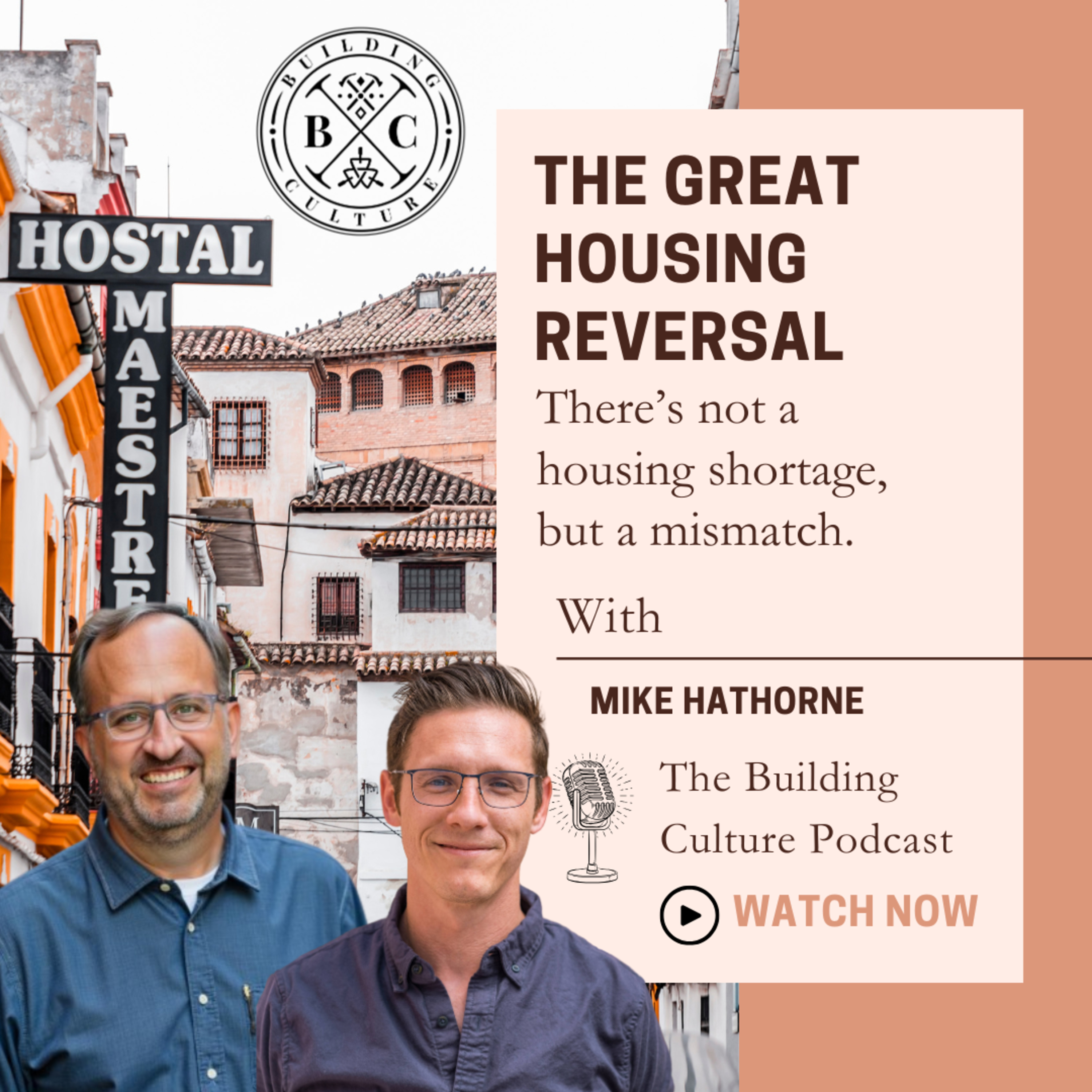 #48 Mike Hathorne: The Great Housing Reversal - It's not a housing shortage, but a mismatch. | Mike Hathorne spent 30 years in real estate and development trying to understand why the industry keeps building the wrong thing. His answer is in his book, The Great Housing Reversal.It's not a housing shortage. It's a housing mismatch. 64% of American households are one or two people. Over half the housing stock has three or more bedrooms. Mike walks through the three simultaneous trends reshaping who needs a home in America, why the development industry hasn't caught up, and what the neighborhoods people actually want look like.We also talk about the LDS ward study that revealed what happens to communities built on monolithic housing over time, the Harvard research showing that access across socioeconomic lines raises lifetime earnings by 20%, and what it looks like when a developer finally builds the kind of place the data has been pointing toward for decades.Mike recently relocated to Northwest Arkansas to join High Street, a traditional neighborhood development firm. He's also one of the clearest thinkers I've met on the relationship between how we build neighborhoods and how we live in them.Chapters00:00 Introduction00:44 Mike's background: 30 years in development and the path that led to the book03:10 Housing mismatch, not shortage05:00 The numbers: 64% of households are 1-2 people vs. 54% of homes with 3+ bedrooms07:33 Three simultaneous disruptors: fertility rates, marriage rates, and an aging population14:43 Zoning: 75% of residential land locked into single-family20:07 The comps problem: why real estate financing runs backwards from innovation27:29 Placemaking takes longer: lessons from Wheeler District32:28 What supply that matches the market actually looks like36:35 Connectedness is the new luxury42:45 The LDS ward study: why diverse housing makes resilient neighborhoods49:00 When communities can't support themselves, government fills the gap53:47 Personal stories: when mixed neighborhoods change lives57:18 Finding your tribe: Mike's move to Northwest Arkansas and CNU 34CONNECT WITH MIKE HATHORNEhttps://www.amazon.com/Great-Housing-Reversal-American-Dream/dp/B0G1FG4PXN greathousingreversal.substack.com linkedin.com/in/hathorneCNU 34, Northwest Arkansas (May 12-16): cnu.org/cnu-34CONNECT WITH AUSTIN TUNNELLNewsletter: https://playbook.buildingculture.com/ / austintunnell / austin-tunnell-2a41894a / austintunnell CONNECT WITH BUILDING CULTUREhttps://www.buildingculture.com/ / buildingculture / build_culture / buildculture | — | ||||||
| 4/10/26 | #47 Apollo Workspace: There's a Better Way to Work | This episode is a personal one. I sat down with Sarah — my wife, my partner in all of this — to talk about Apollo Workspace: what it is, why we’re building it, and what it means within our larger project, Townsend, in downtown Edmond.We met in the Peace Corps in Uganda, got married after a five-week engagement, and moved to the middle of Oklahoma so I could learn structural masonry from a master mason. Building Culture started around the same time as our marriage, and a decade later, we’re building something that I think pulls together everything we’ve learned — about craft, about community, about what it actually means to make a place where people can do their best work.Apollo is a professional workspace for small teams and solo entrepreneurs — not coworking in the way most people think of it. We’re talking about private offices with real windows, structural brick masonry walls that are 16 inches thick, timber ceilings, and outdoor courtyards with a sauna and cold plunges. The whole thing is embedded in a walkable downtown district with 35+ restaurants and a park across the street.I talk about why we named it Apollo — the Greek god of light, creativity, and knowledge. Why the building materials matter and what people feel when they walk into structural masonry. Why we chose downtown Edmond and how we see it becoming one of the most walkable places in the OKC metro over the next decade.We get into the business case: if you come to Apollo and you don’t make more money than your rent, we’ve failed. This space should pay for itself through better focus, better client impressions, a built-in referral network of 30–40 other small business owners, and the kind of problem-solving community that’s hard to find when you’re running a business alone.We also talk about the Founding Member program — the first people to commit get their name carved in stone on the building. Not a plaque. In the masonry. Because the story of how something begins matters, and the people who take a chance early deserve to be part of that story permanently.If any of this resonates, go to apolloworkspace.com or email [email protected]. We’re signing LOIs with refundable deposits now — no risk to lock in your space but a great time to get in early. 0:00 Open0:28 Intro & Welcome2:52 The Origin Story — Peace Corps to Oklahoma5:12 Why Build a Workspace?7:37 The Name: Why Apollo?10:00 Workspace, Humanized — What That Means12:15 The Power of Small Business Community14:34 AI, Rapid Change & Learning Together16:51 Structural Masonry: Why the Building Matters19:15 Design with Soul20:14 Mid-Episode Break20:34 Sauna & Cold Plunge at the Office24:06 Why Downtown Edmond?26:33 Apollo at Townsend: The Full Picture28:57 Who Is Apollo For?31:25 Home Office vs. Apollo33:27 Not Networking — Problem Solving37:55 Founding Members Program39:38 How to Get Involved42:13 The Vision: A Thursday Morning at Apollo45:06 Closing & Masonry Event PreviewCONNECT WITH APOLLO WORKSPACEhttps://apolloworkspace.com/https://www.instagram.com/https://www.linkedin.com/company/apolloworkspace/[email protected] CONNECT WITH AUSTIN TUNNELLNewsletter: https://playbook.buildingculture.com/https://www.instagram.com/austintunnell/https://www.linkedin.com/in/austin-tunnell-2a41894a/https://twitter.com/AustinTunnellCONNECT WITH BUILDING CULTUREhttps://www.buildingculture.com/https://www.instagram.com/buildingculture/https://twitter.com/build_culturehttps://www.facebook.com/BuildCulture/ | — | ||||||
| 1/13/26 | #46 Jan Sramek: California Forever - Building the Next Great American City | In this episode, I sit down with Jan Sramek, Founder and CEO of California Forever, to talk about one of the most ambitious development efforts in the country: they're building the next great American city. Chapters0:00 — Why This Conversation Matters02:05 — Meeting Jan and the Origins of California Forever06:45 — Growing Up in the Czech Republic and Coming to America12:10 — What California Forever Is Actually Trying to Build17:55 — The Housing Crisis and Why Incremental Fixes Aren’t Enough23:40 — Walkability, Safety, and Designing for Families30:15 — Why Cities Should Work for Kids and the Elderly Alike35:50 — The Reality of Building a New City in California41:30 — Regulation, Risk, and the Cost of Not Building47:20 — Reviving American Manufacturing and Shipbuilding53:10 — Master Planning, Density, and Mixed-Use Neighborhoods59:00 — Learning from Traditional Urban Design1:04:45 — Community, Belonging, and Social Trust1:10:30 — What Success Would Actually Look Like1:15:40 — Long-Term Vision and Final ReflectionsCONNECT WITH JAN SRAMEKCalifornia Forever - Building the next great American cityJan Sramek | LinkedInhttps://x.com/jansramek?s=11CONNECT WITH AUSTIN TUNNELLNewsletter: https://playbook.buildingculture.com/https://www.instagram.com/austintunnell/https://www.linkedin.com/in/austin-tunnell-2a41894a/https://twitter.com/AustinTunnellCONNECT WITH BUILDING CULTUREhttps://www.buildingculture.com/https://www.instagram.com/buildingculture/https://twitter.com/build_culturehttps://www.facebook.com/BuildCulture/ | — | ||||||
| 9/11/25 |  #45 Aleksandr Gampel: Reinventing Homebuilding with Mobile Micro-Factories and Cuby Technologies | What if the future of affordable housing doesn’t come from prefab or 3D printing, but from building vertically integrated factories that travel to where homes are needed most?In this episode, I sit down with Aleksandr Gampel, co-founder and COO of Cuby Technologies, to talk about their radical approach: Mobile Micro-Factories. Instead of shipping oversized boxes across the country, they bring a full factory on-site – producing windows, panels, framing, and even helical piers locally, then assembling homes with unskilled labor.We get into why housing costs have exploded (up 40–50% since pre-COVID), how Cuby’s system cuts hard costs by reducing skilled labor, and why most prefab and modular ventures have failed. Aleks explains how their vertically integrated model works, why they’re targeting small-to-mid-sized builders instead of one-off homeowners, and what it will mean when dozens, or even hundreds, of mobile microfactories are running across the U.S.We also dive into design: steel tube framing, magnetic facades, and the surprisingly elegant logic behind Toyota’s production system applied to housing. If you’ve ever wondered how we might actually build cost-effective, durable homes at scale – without sacrificing beauty or quality – this episode is worth your time.CHAPTERS:00:00 Introduction to Housing Challenges02:53 The Concept of Mobile Micro Factories05:35 Manufacturing Process and Product Offerings08:24 Building Systems and Structural Integrity11:17 Cost Management and Market Strategy14:05 Design Flexibility and Market Demand17:07 Community Development and Housing Affordability19:53 Operational Dynamics of Mobile Micro Factories24:43 Building Efficient Factories with Unskilled Labor27:30 The Role of Automation in Construction28:54 Phased Business Plan for Housing Production30:34 Funding and Capital Efficiency in Startups32:33 Design Versatility and Limitations in Home Building34:10 Long-Term Vision and Growth Strategy35:15 Innovative Problem Solving in Construction39:13 Challenges of Prefabrication in the Housing Market41:33 Material Science Innovations for Housing43:11 The Journey of Co-Founding a Startup44:33 Connecting with Cuby TechnologiesCONNECT WITH ALEKSANDR GAMPELLinkedIn: https://www.linkedin.com/in/iamaleksandrgampel/ Twitter/X: https://x.com/agampel1 Cuby Technologies: https://www.cubytechnologies.com/ CONNECT WITH AUSTIN TUNNELLNewsletter: https://playbook.buildingculture.com/ https://www.instagram.com/austintunnell/ https://www.linkedin.com/in/austin-tunnell-2a41894a/ https://twitter.com/AustinTunnellCONNECT WITH BUILDING CULTUREhttps://www.buildingculture.com/ https://www.instagram.com/buildingculture/ https://twitter.com/build_culture https://www.facebook.com/BuildCulture/ SPONSORSThank you so much to the sponsors of The Building Culture Podcast!Sierra Pacific Windows: https://www.sierrapacificwindows.com/ One Source Windows: https://onesourcewindows.com/ | — | ||||||
| 6/26/25 |  #44 Ann Sussman and Kelsey Bradley: Cognitive Architecture – Stone Age Brains In A Modern World: What Neuroscience Can Teach Us About Making Places People Love | What if the key to designing better cities wasn’t just in concrete, code, or cost, but in understanding how our brains actually work?In this episode, I talk with Ann Sussman and Kelsey Bradley of the Human Architecture and Planning Institute (HAPI) about a subject that’s as profound as it is underdiscussed: how our unconscious biology reacts to the built environment – and how that should change everything about how we design.Ann, architect and author of Cognitive Architecture and Kelsey, founder of Design Cause Inc., now Executive Director at HAPI, walk us through the neuroscience of placemaking. We talk eye tracking. Skin conductivity. Heart rate variability. And how our “Stone Age brains” are still calibrated for the Savannah, even when we’re stuck in a strip mall.This episode will validate what many of us feel but can’t quite explain why some places energize us, and others quietly drain us. The answers aren’t just aesthetic. They’re evolutionary.CHAPTERS:00:00 The Car-Free City: Oslo's Urban Transformation03:43 Human Architecture: Merging Biology and Design08:03 Understanding Human Experience: The Emotional Brain11:24 The Impact of Environment on Human Behavior18:37 The Influence of Modernism on Architecture23:28 The Threatening Nature of Suburban Design26:47 Measuring Human Responses: Biometrics in Architecture31:25 The Science of Emotions in Design33:52 The Power of Empathy in Leadership36:57 Designing for Human Flourishing40:07 The Impact of Built Environments on Mental Health45:35 Understanding Human Perception in Urban Design49:13 The Need for Beautiful and Functional Spaces53:00 The Future of Urban Planning and Community Well-beingMENTIONED RESOURCESBook: Cognitive Architecture: Designing for how we respond to the built environmentBook: Urban Experience & Designhttps://thehapi.org/Free course on "The Genetics of Design" – HAPI.org Courses Design Cause Inc. – Kelsey’s nonprofit building schools in AfricaCONNECT WITH ANN SUSSMANLinkedIn: https://www.linkedin.com/in/ann-sussman-a1a34a14/X: https://www.linkedin.com/in/ann-sussman-a1a34a14/ Ann’s Blog: https://annsussman.com/ The Genetics of Design: https://geneticsofdesign.com/about CONNECT WITH KELSEY BRADLEYLinkedIn: https://www.linkedin.com/in/kelseybradley/Instagram: https://www.instagram.com/kelseydeebradley/ CONNECT WITH AUSTIN TUNNELLNewsletter: https://playbook.buildingculture.com/ https://www.instagram.com/austintunnell/ https://www.linkedin.com/in/austin-tunnell-2a41894a/ https://twitter.com/AustinTunnellCONNECT WITH BUILDING CULTUREhttps://www.buildingculture.com/ https://www.instagram.com/buildingculture/ https://twitter.com/build_culture https://www.facebook.com/BuildCulture/ SPONSORSThank you so much to the sponsors of The Building Culture Podcast!Sierra Pacific Windows: https://www.sierrapacificwindows.com/ One Source Windows: https://onesourcewindows.com/ | — | ||||||
| 6/12/25 |  #43 Isaac French: You Can Just Do Things – How a First-Time Developer Built One Of The Most Beloved Retreat Brands In The Country | In this episode, I talk with Isaac French, founder of Live Oak Lake and one of the most thoughtful voices I’ve come across in the world of experiential real estate. Isaac’s story reads like an adventure novel: raised with eight siblings on a Texas farm, homeschooled, steeped in grit. Well before turning 30, he walked five acres of tangled brush – no money, just a vision – and figured out how to design and build a seven-cabin, Nordic-inspired retreat that went viral, grossed over $1M in bookings, and sold for $7M. All in under two years. And plenty went wrong along the way.He’s basically a case study in the idea: you can just do things.We talk about how Isaac blends hardware – design, layout, light – with software – hospitality, scent, story – to create spaces that are both deeply personal and universally resonant. He shares how a glitch in the Airbnb matrix led him to build a direct-to-consumer brand from scratch, and how beauty often begins by submitting to constraint, whether it’s the land, the budget, or your own limits.If you’ve ever wondered what it would mean to build with your soul, not just your spreadsheet, this one’s for you.CHAPTERS:00:00 Creating Community Through Built Environments03:48 The Journey of Live Oak Lake17:54 The Art of Hospitality and Experience27:40 Exploring New Urbanism and Placemaking36:54 The Power of Saying No39:02 Exploring Sacred Geometry and Beauty44:16 Biophilic Design and Human Connection49:45 The Role of Humans in Environmental Stewardship54:43 Navigating Success and Humility01:00:19 Future Visions and Community BuildingMENTIONED RESOURCES:Live Oak Lake | Modern Cabins in Waco, TexasCONNECT WITH ISAAC FRENCHEmail: [email protected]: https://www.isaacjfrench.com/ Twitter: https://x.com/isaacfrench_Instagram: https://www.instagram.com/isaacfrench_LinkedIn:https://www.linkedin.com/in/isaacjfrench/Youtube:https://www.youtube.com/c/IsaacFrench CONNECT WITH AUSTIN TUNNELLNewsletter: https://playbook.buildingculture.com/ https://www.instagram.com/austintunnell/ https://www.linkedin.com/in/austin-tunnell-2a41894a/ https://twitter.com/AustinTunnellCONNECT WITH BUILDING CULTUREhttps://www.buildingculture.com/ https://www.instagram.com/buildingculture/ https://twitter.com/build_culture https://www.facebook.com/BuildCulture/ SPONSORSThank you so much to the sponsors of The Building Culture Podcast!Sierra Pacific Windows: https://www.sierrapacificwindows.com/ One Source Windows: https://onesourcewindows.com/ | — | ||||||
| 5/29/25 |  #42 Charles Duff: North Atlantic Cities - The Forgotten Blueprint for the Future | New episode out now with Charles Duff, author of The North Atlantic Cities. This is one I’ve wanted to record for years, ever since I read his book. Charles lays out a vision of city building that’s neither skyscraper-packed Manhattan nor endless suburban sprawl, but something in between. Something tested, timeless, and deeply human.We talk about what makes cities like Amsterdam, London, and Boston so livable-and why they offer a roadmap for places like Oklahoma City and the Sunbelt. It’s not about replicating Parisian density or banning cars. It’s about building places where families can live in row houses, walk to a corner store, catch a train, and still have a backyard, space and privacy. It’s about recognizing that the built environment is one of our biggest levers for addressing the environment, culture, economics, and quality of life–all at once.Charles explains how a bunch of brick houses built by 17th-century merchants ended up creating one of the most resilient, beautiful, and efficient urban forms the world has ever seen. And he makes a compelling case that we don’t need to invent a new future, we just need to remember what already works.This one’s for anyone who cares about the intersection of beauty, density, and sanity in our cities. Hope you enjoy it–and if you do, go read the book. It’s changed the way I think about building.CHAPTERS:00:00 The Hidden Way of Building Cities05:08 Understanding North Atlantic Cities12:27 The Importance of Urban Density21:01 The North Atlantic Way of Building26:10 Lessons from North Atlantic Cities36:11 Living Conditions in 1600s Europe39:42 The Rise of the Dutch Middle Class43:35 Architectural Innovations in the Netherlands46:27 Contrasting Urban Developments: Paris vs. London48:50 The Modern Row House and Urban Density55:52 The Importance of Aesthetic in Urban Design01:01:46 Integrating Density with Community Needs01:05:45 Final Thoughts on Urban DevelopmentMENTIONED RESOURCES:Charles’ book- The North Atlantic Cities: https://lute-grasshopper-4hhr.squarespace.com/ CONNECT WITH CHARLES DUFFLinkedIn: https://www.linkedin.com/in/charles-duff-8a2486237/ Website: https://lute-grasshopper-4hhr.squarespace.com/ CONNECT WITH AUSTIN TUNNELLNewsletter: https://playbook.buildingculture.com/ https://www.instagram.com/austintunnell/ https://www.linkedin.com/in/austin-tunnell-2a41894a/ https://twitter.com/AustinTunnellCONNECT WITH BUILDING CULTUREhttps://www.buildingculture.com/ https://www.instagram.com/buildingculture/ https://twitter.com/build_culture https://www.facebook.com/BuildCulture/ SPONSORSThank you so much to the sponsors of The Building Culture Podcast!Sierra Pacific Windows: https://www.sierrapacificwindows.com/ One Source Windows: https://onesourcewindows.com/ | — | ||||||
| 5/15/25 |  #41 Joachim Tantau: Sacred Geometry, Beauty, and the Universal Language of Nature | In this episode, I sit down with Joachim Tantau–a cabinetmaker, artist, teacher, and occasional architect to explore the quiet power of sacred geometry. Joachim works at the intersection of tradition, craftsmanship, and cosmic math. His approach to design isn’t just about aesthetics, it’s about uncovering the fundamental order embedded in nature, music, architecture, and even the movements of planets.We talk about how flowers, planets, and buildings all share hidden proportional systems; why the Golden Ratio keeps showing up in history and design; and how ancient builders created structures more efficient-and more awe-inspiring-than much of what we build today. We also dig into why beauty is not just a luxury, but a basic human need.If you’ve ever felt like modern buildings don’t quite “speak” to you, this might explain why.CHAPTERS00:00 The Role of Sacred Geometry in Design03:12 Exploring Sacred Geometry08:30 Understanding Sacred Geometry13:27 The Intersection of Geometry and Music17:03 Sacred Geometry in Architecture27:16 The Importance of Beauty in Design39:01 Geometry in Modern Engineering48:53 Rediscovering Wonder in the Modern World54:09 The Distinction Between Pleasure and Enjoyment01:00:17 Connecting Architecture with Nature and Geometry01:06:04 Ancient Architecture and Cosmic Proportions01:11:10 Teaching Sacred Geometry in Design01:17:26 Practical Applications of Sacred Geometry in ArchitectureCONNECT WITH JOACHIM:Instagram: https://www.instagram.com/joachimtantau/Facebook: https://www.facebook.com/JoachimTantauLinkedIn: https://www.linkedin.com/in/joachim-tantau-53849055Website: https://www.joachimtantau.com/home.html MENTIONED RESOURCES:The Hidden Geometry of Flowers: Living Rhythms, Form and Number by Keith Critchlow: https://www.goodreads.com/book/show/12293965-the-hidden-geometry-of-flowers The Dimensions of Paradise: Sacred Geometry, Ancient Science, and the Heavenly Order on Earth by John Michell : https://www.goodreads.com/book/show/1443804.The_Dimensions_of_Paradise Sacred Art in East and West by Titus Burckhardt: https://www.goodreads.com/en/book/show/371784.Sacred_Art_in_East_and_West_1st_Edition CONNECT WITH AUSTIN TUNNELLNewsletter: https://playbook.buildingculture.com/ https://www.instagram.com/austintunnell/ https://www.linkedin.com/in/austin-tunnell-2a41894a/ https://twitter.com/AustinTunnellCONNECT WITH BUILDING CULTUREhttps://www.buildingculture.com/ https://www.instagram.com/buildingculture/ https://twitter.com/build_culture https://www.facebook.com/BuildCulture/ SPONSORSThank you so much to the sponsors of The Building Culture Podcast!Sierra Pacific Windows: https://www.sierrapacificwindows.com/ One Source Windows: https://onesourcewindows.com/ | — | ||||||
Want analysis for the episodes below?Free for Pro Submit a request, we'll have your selected episodes analyzed within an hour. Free, at no cost to you, for Pro users. | |||||||||
| 5/1/25 |  #40 Inflation, Architecture, and the Death of Beautiful Buildings - a Yoeman Podcast Guest Episode | A hundred years ago, people in small towns were building things that still stop us in our tracks. Two-story brick shops on the corner of Main and Commerce. Sturdy. Modest. Enduring. And beautiful.So the question is: what changed?I joined Geoff Graham on his Yeoman podcast, alongside Jaime Izurieta and Saifedean Ammous (author of The Bitcoin Standard), to try and unpack that question.We talk about why the small towns of the early 1900s could build beautiful things without credentialed architects, starchitects, or REIT funding... and why today, with all our global supply chains and five-star consultants, we mostly build disposable boxes.Turns out, there’s a connection between money, time preference, and architecture. And when the money got funny, everything else started to crack too – our neighborhoods, our supply chains, even our standards for beauty.It’s a wide-ranging conversation that touches on architecture, monetary policy, code creep, and how the over-financialization of everything is eroding our ability to build for the long haul.Take a listen if you’ve ever wondered why your grandparents' post office looks better than your city’s new civic center.CHAPTERS00:00 The Changing Landscape of Building and Time Preference02:51 Exploring the Intersection of Money and Architecture05:57 Historical Context: Building in Early 20th Century America09:01 The Role of Local Materials and Community in Architecture11:54 Understanding Time Preference and Its Impact on Building15:09 The Influence of Monetary Policy on Architectural Beauty17:50 The Shift from Hard Money to Inflationary Currency21:03 Regulatory Challenges and Their Impact on Construction23:57 The Disparity Between Wealth and Money26:56 The Future of Architecture in an Inflationary Economy40:47 Innovative Window Design and Egress Solutions41:32 The Rising Cost of Housing and Inflation's Impact42:32 Housing as a Store of Value45:18 The Competition for Homeownership47:26 Regulatory Challenges in Housing Production50:47 The Complexity of Modern Building Standards52:43 Energy Efficiency and Building Costs53:43 Inflation and Environmental Concerns56:29 The Future of Energy Production01:01:20 The Role of Nuclear Energy01:03:03 The Case for Sound Money and Bitcoin01:12:14 The Path to a Low Time Preference WorldCONNECT WITH THE GUESTSGeoff Graham: Host of the Yeoman Podcast, real estate developerYeoman Podcast Website: https://graham.dev/yeoman/Jaime Izurieta Varela: Architect, developer, urbanistwww.storefrontmastery.com https://x.com/izurietavarea https://www.linkedin.com/in/izurietavarea/ https://www.instagram.com/storefrontmastery/ https://www.facebook.com/public/Jaime-Izurieta/ Book: Mainstreet Mavericks Saifedean Ammous: Economist, Bitcoin advocate, authorWebsite: https://saifedean.com/Twitter (X): @saifedeanInstagram: @saifedeanPodcast: saifedean.com/podcastCourses: saifedean.com/coursesMENTIONED RESOURCESThe Bitcoin Standard: The Decentralized Alternative to Central Banking https://saifedean.com/the-bitcoin-standardThe Fiat Standard: The Debt Slavery Alternative to Human Civilization https://saifedean.com/the-fiat-standardCONNECT WITH AUSTIN TUNNELLNewsletter: https://playbook.buildingculture.com/ https://www.instagram.com/austintunnell/ https://www.linkedin.com/in/austin-tunnell-2a41894a/ https://twitter.com/AustinTunnellCONNECT WITH BUILDING CULTUREhttps://www.buildingculture.com/ https://www.instagram.com/buildingculture/ https://twitter.com/build_culture https://www.facebook.com/BuildCulture/ SPONSORSThank you so much to the sponsors of The Building Culture Podcast!Sierra Pacific Windows: https://www.sierrapacificwindows.com/ One Source Windows: https://onesourcewindows.com/ | — | ||||||
| 4/17/25 |  #39 Alli Thurmond Quinlan - The Field-Tested Guide to Terraforming Your City | You’re not supposed to be good at everything. But somehow, Alli is.Architect, landscape architect, developer, GC, policy reformer, zoning translator, builder of teams, builder of trust, builder of actual buildings-it’s no wonder we spent the first five minutes of this episode just trying to list all the roles she plays.In this conversation, Alli joins me to talk about what it means to be a true generalist in an era obsessed with specialization. We cover her journey from flipping houses as a teenager to running a growing team at Flintlock Lab, directing the Incremental Development Alliance, and quietly (or not so quietly) reshaping how development works across the country-starting in her hometown of Fayetteville, Arkansas.We dig into building science, incremental housing, the limits of Revit, and why being a builder makes you a better architect (and vice versa). But we also get into the harder stuff-like learning to lead, facing city bureaucracy, and what to do when the guy reviewing your permit might genuinely want to run you over with his truck.This one’s as practical as it is philosophical, and it left me feeling more hopeful-and a little more fired up-about what’s still possible if we’re willing to roll up our sleeves and terraform our own backyards.CHAPTERS00:00 Community Engagement and Local Impact02:51 The Multifaceted Career of Ali05:51 Navigating Development and Housing Challenges09:09 The Unique Economy of Fayetteville11:56 Balancing Growth and Community Needs14:57 Career Trajectory and Intentionality18:06 Building Science and Sustainable Practices20:49 Design-Build Workflow and Efficiency24:07 Entrepreneurial Spirit in Development31:57 The Design-Build Approach: Learning Through Doing34:51 Scaling Up: The Challenges of Growth39:10 Understanding the Market: Design Meets Demand41:55 Terraforming Communities: The Role of Local Investment44:11 Building a Culture of Collaboration: The Fayetteville Experience49:50 Changing the Narrative: Zoning and Community Engagement57:04 Navigating Conflict: Building Relationships with City Staff01:08:20 Building Relationships in Local Governance01:15:06 Navigating Conflict with City Staff01:20:01 Growing a Business: Challenges and Changes01:26:09 Tools and Software for Efficiency01:34:00 Learning from Failures and GrowthCONNECT WITH AlliFlintlock Lab: flintlocklab.comIncremental Development Alliance: incrementaldevelopment.orgInstagram: @flintlocklabLinkedIn: Alli’s ProfileCONNECT WITH AUSTIN TUNNELLNewsletter: https://playbook.buildingculture.com/ https://www.instagram.com/austintunnell/ https://www.linkedin.com/in/austin-tunnell-2a41894a/ https://twitter.com/AustinTunnellCONNECT WITH BUILDING CULTUREhttps://www.buildingculture.com/ https://www.instagram.com/buildingculture/ https://twitter.com/build_culture https://www.facebook.com/BuildCulture/ SPONSORSThank you so much to the sponsors of The Building Culture Podcast!Sierra Pacific Windows: https://www.sierrapacificwindows.com/ One Source Windows: https://onesourcewindows.com/ | — | ||||||
| 4/3/25 |  #38 Jeral Poskey: Urban Transportation of the Future? Retrofitting Suburbia with Swyft Cities. | In this episode, I talk with Jeral Poskey, former project executive at Google, and current Founder and CEO of Swyft Cities, about a radically different approach to urban transportation that’s fast, flexible, and surprisingly affordable. Spoiler: it's not autonomous or flying cars.When I first heard about Swyft’s solution, I was skeptical. But I’m increasingly excited about the possibilities, and how it could unlock walkable districts and neighborhoods within the suburban sprawl context (so basically everywhere). We get into how Jeral’s experience inside Google’s real estate division led to the birth of Project Swyft, why traditional mass-transit infrastructure isn’t feasible (at least on its own), and how Swyft’s solution solves for the last few miles, weaves between buildings, and adapts to cities as they grow.If you're into urbanism, real estate, autonomous vehicles, or just want to understand what could actually make our cities function better (without waiting 20 years and wasting billions of dollars for a new train–looking at you, California), this one’s worth your time. And excitingly, Swyft has numerous projects underway around the world beginning in 2026.CHAPTERS00:00 Introduction to Project Switch and Urban Transportation01:48 The Origins of Swyft Cities05:08 Innovative Transportation Solutions10:31 Skepticism to Curiosity14:09 The Last Mile Connection and Urban Challenges17:34 Economic Models and Urban Growth19:23 Modularity and Network Effects in Urban Transit21:16 AI and Efficiency in Transportation Systems23:40 Cost Comparisons and Infrastructure Decisions24:15 Understanding the Station Design and Functionality26:22 Infrastructure Flexibility and Cost Efficiency29:09 The Competition: Self-Driving Cars and Urban Mobility32:52 Private vs. Public Sector Transportation Solutions35:16 Real-World Applications and Case Studies40:01 Overcoming Skepticism and Educating Stakeholders43:45 Induced Demand: A Positive Perspective on Urban Transportation48:13 Future Vision: Scaling and Real Estate IntegrationWebsite: https://swyftcities.com/Newsletter: https://swyftcities.us10.list-manage.com/subscribe?u=04dae35275c37b51b049b89c9&id=349fe9a899Twitter: https://x.com/jeralpo Twitter: https://x.com/swyftcitiesLinkedIn: https://www.linkedin.com/in/jposkey/CONNECT WITH AUSTIN TUNNELL:Newsletter: https://playbook.buildingculture.com/ https://www.instagram.com/austintunnell/ https://www.linkedin.com/in/austin-tunnell-2a41894a/ https://twitter.com/AustinTunnellhttps://www.buildingculture.com/ https://www.instagram.com/buildingculture/ https://twitter.com/build_culture https://www.facebook.com/BuildCulture/ SPONSORS:Thank you so much to the sponsors of The Building Culture Podcast!Sierra Pacific Windows: https://www.sierrapacificwindows.com/ One Source Windows: https://onesourcewindows.com/ | — | ||||||
| 3/20/25 |  #37 Ryan Johnson: Culdesac - Building America’s First Car-Free Neighborhood From Scratch | In this episode, I talk with Ryan Johnson, co-founder and CEO of Culdesac, about building the United States’ first car-free neighborhood from scratch. We discuss everything from winning over the fire department with foldable ladders to building hundreds of units without building a single parking garage. Ryan also opens up about how designing for people—rather than cars—has paid off big time for both residents and local retailers, and why he believes autonomous vehicles, ride-sharing, and a passion for walkability will reshape cities nationwide.TAKEAWAYSWalkability Isn’t a Niche Luxury—It’s a Mass Market Demand. The majority of Americans would pay more to live in a walkable neighborhood, and 92% of Gen Z is on board. This isn’t just a trend—it’s a tidal wave.Car-Free Living Works—Even in Phoenix. If a walkable neighborhood can thrive in a sprawling, car-centric city like Phoenix, it can work anywhere. The key? Thoughtful design, mixed-use spaces, and actual community-building.Parking Garages Are the Next Real Estate Mistake. Developers still pouring millions into structured parking are setting themselves up for regret. AV ride-hailing, changing transportation habits, and shifting zoning laws are making them obsolete faster than people realize.Retail Thrives When It’s a Destination, Not an Afterthought. Culdesac started with six planned retail spaces—now they have 21, and local businesses are thriving. Why? Because people actually want to be there.Building for Humans, Not Traffic Engineers, Changes Everything. The way we build cities has quietly been making us more isolated, unhealthy, and unhappy. Culdesac’s design flips that script—prioritizing gathering spaces, green areas, and human-scale density.CHAPTERS00:00 The Need for Change in Urban Design02:57 Introducing Cul-de-Sac: A New Vision for Neighborhoods06:12 Designing Walkable Communities: The Cul-de-Sac Approach08:54 Innovative Infrastructure: Rethinking Parking and Access11:50 Financing the Future: Capital Strategies for New Developments15:04 Community and Belonging: The Heart of Urban Living18:07 Navigating Challenges: Working with City Regulations21:07 Phased Development: Learning and Adapting in Real Time24:00 The Impact of COVID-19 on Construction and Costs26:58 Market Dynamics: Setting Rents in a Changing Landscape29:43 The Evolution of Walkable Neighborhoods32:03 Creating Community Through Intentional Design34:48 Retail and Community Engagement37:59 The Role of Local Businesses in Urban Development40:50 Innovative Urban Design and Architecture43:54 Challenges and Surprises in Development45:41 The Future of Walkable Communities50:18 Leadership and Vision in Development55:41 Advice for Aspiring DevelopersCONNECT WITH RYANCuldesac: https://culdesac.comLinkedIn:https://www.linkedin.com/in/ryanjohnsonazInstagram: https://www.instagram.com/liveculdesac/Twitter: https://x.com/ryanmjohnson?ref_src=twsrc%5Egoogle%7Ctwcamp%5Eserp%7Ctwgr%5EauthorCONNECT WITH AUSTIN TUNNELLNewsletter: https://playbook.buildingculture.com/https://www.instagram.com/austintunnell/https://www.linkedin.com/in/austin-tunnell-2a41894a/https://twitter.com/AustinTunnellCONNECT WITH BUILDING CULTUREhttps://www.buildingculture.com/https://www.instagram.com/buildingculture/https://twitter.com/build_culturehttps://www.facebook.com/BuildCulture/SPONSORSThank you so much to the sponsors of The Building Culture Podcast!Sierra Pacific Windows: https://www.sierrapacificwindows.com/One Source Windows: https://onesourcewindows.com/ | — | ||||||
| 3/6/25 |  #36 Stephen Smith: Safety vs. Sanity: The Surprising Cost of Over-Regulating Our Built World | In this episode, I sit down with Stephen Smith, founder of the Center for Building, to uncover the labyrinthine world of building codes—how they’re made, who really influences them, and why they end up stifling the very innovation and affordability we need. From the peculiarities of elevator requirements to the often overlooked role of local politics and special interests, we unpack how these complex rules shape our homes, buildings, and cities more than we might realize.TAKEAWAYSWhy Building Codes Matter: Even if you’re not a builder or developer, codes dictate your home’s layout, the price of housing, and whether your favorite small condo project can even get off the ground.The ICC (International Code Council) Isn’t Really “International”: You’ll learn how this non-governmental body, which writes most U.S. building codes, can be both extremely influential and surprisingly insular.Over-Regulation’s Real-World Costs: We break down how elevator mandates, fire codes, and accessibility requirements—though well-intended—sometimes create perverse incentives that drive up costs or discourage better solutions.Local Politics & Hidden Interests: Discover how “government members” and private manufacturers shape these codes, and why your mayor or city council may have little say in regulations that affect everyone.A Path Forward: Stephen shares practical ways policymakers and citizens can get involved in reforming the system, focusing on a more human-centered approach that balances safety, cost, and beautyCHAPTERS00:00 The Challenge of Building Codes in the U.S.03:06 The Role of Building Codes in Urban Development05:46 Understanding the American Way of Building09:09 The Impact of Building Codes on Housing Costs12:09 Elevator Regulations and Their Consequences14:52 Harmonization of Codes and Standards18:11 Over-Dimensioning in American Construction21:05 Labor Issues in the Construction Industry23:57 The Need for Code Review and Justification26:49 The Tyranny of Bureaucracy in Building Codes38:49 The Grenfell Fire and Its Aftermath45:05 Design Innovations in Building Codes48:25 Understanding the ICC and Code Writing58:09 The Revolving Door: Industry and Regulation01:07:26 The Role of Government in Building Codes01:15:20 Getting Involved: Supporting Change in Building CodesCONNECT WITH STEPHENCenter for Building https://www.centerforbuilding.org/BlueSky: https://bsky.app/profile/stephenjacobsmith.com Email: [email protected] RESOURCESElevator research: https://admin.centerforbuilding.org/wp-content/uploads/2024/12/Elevators.pdf CONNECT WITH AUSTIN TUNNELLNewsletter: https://playbook.buildingculture.com/https://www.instagram.com/austintunnell/https://www.linkedin.com/in/austin-tunnell-2a41894a/https://twitter.com/AustinTunnellCONNECT WITH BUILDING CULTUREhttps://www.buildingculture.com/https://www.instagram.com/buildingculture/https://twitter.com/build_culturehttps://www.facebook.com/BuildCulture/SPONSORSThank you so much to the sponsors of The Building Culture Podcast!Sierra Pacific Windows: https://www.sierrapacificwindows.com/One Source Windows: https://onesourcewindows.com/ | — | ||||||
| 2/20/25 |  #35 Moses Kagan: Building Generational Wealth with Generational Assets - "Indefinite Holds" in Real Estate | Moses Kagan has a unique take on real estate development and investing – and he’s influenced my thinking substantially over the past couple of years.He is a highly successful syndicator, investor and developer with over $200 million in assets under management. He runs Adaptive Realty, having renovated over 100 multi-family buildings in Los Angeles, managing them in-house while specializing in the "indefinite hold” strategy for long-term wealth building.He is the Co-Founder of ReSeed, a platform offering long-term GP and LP capital, along with mentorship for emerging real estate operators nationwide. He also hosts Reconvene, a highly regarded annual “unconference” for real estate operators and passive investors to connect and share knowledge. I attended last year, and it was awesome!And lastly, he is a Twitter personality and avid blogger, sharing valuable insights on real estate and business. I highly recommend you follow him.This is an excellent conversation about practical investment and real estate development philosophy, and I hope this conversation has as big of an impact on you as meeting Moses has on me!TAKEAWAYSHolding real estate indefinitely often leads to better investment outcomes than IRR-driven flipping.Traditional real estate models incentivize risky short-term decisions, while sustainable strategies benefit both investors and communities.Investors should focus on post-tax returns rather than pre-tax IRR, as tax considerations play a crucial role in long-term profitability.Wealthy families and patient capital partners are more aligned with indefinite hold strategies than institutional investors.Unlevered yield on cost and all-in price per square foot are key financial indicators for long-term real estate success.Building direct relationships and trust at scale is essential for securing capital, especially for indefinite hold investments.CHAPTERS00:00 Introduction to Real Estate Development Philosophy06:06 Understanding IRR and Its Implications11:55 The Importance of Long-Term Thinking in Real Estate17:59 Finding the Right Investors for Long-Term Strategies25:50 Investing with Wealthy Families and Professional Money Managers40:20 Understanding Capitalization and Investor Liquidity46:11 Building Trust and Relationships in Real Estate Investment55:41 Building Trust at Scale in Real Estate58:01 The Democratization of Capital Raising01:04:29 New Urbanism and Walkable Neighborhoods01:06:00 Challenges of Ground-Up Development01:09:03 Zoning and Building Code Challenges01:11:57 The Impact of Bureaucracy on Development01:14:07 Introducing ReSeed: Supporting Emerging Operators01:17:08 The Importance of Community in Real EstateCONNECT WITH MOSESX:https://x.com/moseskagan?ref_src=twsrc%5Egoogle%7Ctwcamp%5Eserp%7Ctwgr%5EauthorLinkedIn: https://www.linkedin.com/in/moses-kagan-2638ab2/Adaptive Realty: https://www.adaptiverealty.com/ ReSeed: https://reseedpartners.com/Moses Newsletter: https://kagansblog.com/blog/MENTIONED RESOURCESThe Fort Podcast Interview on ReSeed: https://www.thefortpod.com/videos/moses-kagan-rhett-bennett-co-founders-of-reseed-partners-the-y-combinator-for-re-operators/CONNECT WITH AUSTIN TUNNELLNewsletter:https://playbook.buildingculture.com/https://www.instagram.com/austintunnell/https://www.linkedin.com/in/austin-tunnell-2a41894a/https://twitter.com/AustinTunnellCONNECT WITH BUILDING CULTUREhttps://www.buildingculture.com/https://www.instagram.com/buildingculture/https://twitter.com/build_culturehttps://www.facebook.com/BuildCulture/SPONSORSThank you so much to the sponsors of The Building Culture Podcast!Sierra Pacific Windows: https://www.sierrapacificwindows.com/One Source Windows: https://onesourcewindows.com/ | — | ||||||
| 2/6/25 |  #34 Coby Lefkowitz: Building Optimism - Rethinking Cities, Architecture, and the Future of Urban Design | What if our cities weren’t just places we lived, but places that made us feel alive? In this episode, we welcome back Coby, an urban planner, developer, and author of Building Optimism, to talk about how we can move beyond pessimism and reclaim the built environment. We dive into the philosophy of traditional urbanism versus traditional architecture, how to balance art and economics in development, and why optimism in city building isn’t just wishful thinking—it’s already happening.Coby shares how his latest project integrates affordability, beauty, and human-scale design, and why zoning reform is beginning to shift the landscape of American cities. We discuss why preservation alone isn't enough, how small developers can create lasting impact, and why the best cities aren’t built overnight—they evolve, adapt, and improve over time. If you’ve ever wondered why some places feel right and others don’t, or how we can design spaces that actually serve human beings, this episode is for you.TAKEAWAYSGreat places aren’t about height or style but about how spaces are formed. Streets, plazas, and courtyards dictate how we experience a city more than the aesthetics of individual buildings.Traditional architecture isn’t about copying the past; it’s about principles that create beauty, durability, and livability across cultures and time periods.Keeping historic buildings is important, but we should also be building new ones that are worthy of being preserved in the future. Fear of losing the past shouldn’t stop us from creating great new places.The best cities have a mix of housing that allows people of different income levels to live side by side. Segregating wealth or poverty harms economic mobility and community vitality.The hardest part of building great places isn’t the architecture—it’s getting the financing. Small-scale, human-centered development struggles to compete with big box projects, but that can change with the right approach.Building better cities isn’t a fantasy—it’s already happening in pockets across North America. The real challenge is scaling those successes and proving that beautiful, walkable, thriving communities can be the norm, not the exception.CHAPTERS00:00 Exploring Urban Beauty: A Vision for Cities01:32 The Intersection of Urban Planning and Development03:58 The Journey to Writing 'Building Optimism'10:02 The Current State of Urbanism: A Turning Point18:41 Traditional Urbanism vs. Architecture: Finding Balance22:59 The Role of Preservation in Modern Urbanism38:20 Creating a Living Tradition in Architecture44:06 Exploring Kingston's Urban Fabric51:04 Innovative Infill Housing Solutions58:13 The Importance of Diverse Housing Options01:06:56 Creating Integrated Communities01:12:12 The Role of Capital in Urban DevelopmentCONNECT WITH COBYX: https://x.com/Cobylefko?ref_src=twsrc%5Egoogle%7Ctwcamp%5Eserp%7Ctwgr%5Eauthor Website: https://cobylefkowitz.comSubstack: https://ourbuiltenvironment.substack.com/p/a-call-to-build-a-better-worldMENTIONED RESOURCESCoby’s Book:https://www.amazon.com/Building-Optimism-World-Looks-Better/dp/B0DJV2WLXR/?_encoding=UTF8&pd_rd_w=Q3Patrick Sharkey’s Trapped in Place: https://www.amazon.com/Stuck-Place-Neighborhoods-Progress-Equality/dp/0226924254 Samuel Hughes’ Article: Making Architecture Easy: https://worksinprogress.co/issue/making-architecture-easy/CONNECT WITH AUSTIN TUNNELLNewsletter:https://playbook.buildingculture.com/https://www.instagram.com/austintunnell/https://www.linkedin.com/in/austin-tunnell-2a41894a/https://twitter.com/AustinTunnellCONNECT WITH BUILDING CULTUREhttps://www.buildingculture.com/https://www.instagram.com/buildingculture/https://twitter.com/build_culturehttps://www.facebook.com/BuildCulture/SPONSORSThank you so much to the sponsors of The Building Culture Podcast!Sierra Pacific Windows: https://www.sierrapacificwindows.com/One Source Windows: https://onesourcewindows.com/ | — | ||||||
| 1/23/25 |  #33 Matthew Plechan: How to Paint Masonry. The Durable, Breathable Beauty of Mineral Stains. | Most Americans think painting brick is as simple as grabbing a bucket of latex or oil-based paint, but this common approach can wreak havoc on your home–and is uglier to boot. In this episode, I sit down with Matt Plechan, the founder of Mineral Stains. We dive deep into the art and science of finishing brick with mineral stains like limewash, potassium silicate and sol silicate. These centuries-old techniques are not only more durable and beautiful but also allow your brick to breathe, preventing costly damage. I talk to many people who go to Europe, see a beautiful color, and try to color match it at home on stucco or masonry. It doesn’t turn out the same. Why? It’s not the same paint! But it can be. If you are thinking about painting masonry, listen to this episode! And while there are other US based suppliers, Matt at Mineral Stains is an excellent source who manufactures in the US and will help you find the right product for your project! TAKEAWAYS Latex acrylic paints are unsuitable for masonry, while mineral stains bond with masonry for enhanced durability and a natural aesthetic. Potassium silicate offers better longevity than lime wash, while sole silicate works effectively on previously painted or coated surfaces. Mineral stains are eco-friendly, made from natural pigments, and provide vibrant, non-toxic finishes with a timeless, breathable quality. CHAPTERS 00:00 Introduction to Masonry Painting Challenges 02:49 Understanding Mineral Stains vs. Traditional Paints 06:30 Exploring Types of Mineral Stains 10:56 Comparing Lime Wash and Potassium Silicate 18:30 Application Techniques for Mineral Stains 32:28 Best Practices for Exterior Application 35:37 The Importance of Primer in Painting 40:49 Cleaning and Preparing Surfaces for Painting 45:33 Best Practices for New Construction Painting 52:35 Application Techniques: Spraying vs. Rolling 57:49 Interior Painting: Natural Finishes and Techniques CONTACT MATTHEW PLECHAN AND MINERAL STAINS Website: https://mineralstains.com/ Instagram: https://www.instagram.com/mattplechan/ Facebook: https://www.facebook.com/mineralstains1 Matt’s Linkedin: https://www.linkedin.com/in/matt-plechan-94a18172 MENTIONED RESOURCES https://masonrymagazine.com/Default?pageID=2362 https://voyagejacksonville.com/?post_type=interview&p=91151 https://www.fosterandpartners.com/projects/global-home-of-the-pga-tour https://youtu.be/OIWKKjPj5PI https://youtu.be/cojGgH-79u4 CONNECT WITH AUSTIN TUNNELL Newsletter: https://playbook.buildingculture.com/ https://www.instagram.com/austintunnell/ https://www.linkedin.com/in/austin-tunnell-2a41894a/ https://twitter.com/AustinTunnell CONNECT WITH BUILDING CULTURE https://www.buildingculture.com/ https://www.instagram.com/buildingculture/ https://twitter.com/build_culture https://www.facebook.com/BuildCulture/ SPONSORS Thank you so much to the sponsors of The Building Culture Podcast! Sierra Pacific Windows: https://www.sierrapacificwindows.com/ One Source Windows: https://onesourcewindows.com/ | — | ||||||
| 1/9/25 |  #32 Citymakers Collective: Empowering the Next Generation of Architects, Developers and Builders | I’m excited to share this conversation with Will McCollum and Matthew Marshall, the passionate minds behind Citymakers Collective. This summer, they’re hosting a transformative two-week program in Charleston, featuring some of the top practitioners in the New Urbanism and human-centered design movements. Their approach is holistic, hands-on, and experiential, with a mission to equip the next generation of city makers to design and build places that are resilient, beautiful, and centered on people. In this episode, we delve into the challenges of traditional education, what’s missing, and why they felt compelled to create this innovative summer program. If you’re a young professional or student working in the built environment—whether you’re an architect, planner, builder, developer, engineer or something else—I highly encourage you to check it out and consider applying. Learn more at: citymakerscollective.org TAKEAWAYS The City Makers Collective program teaches principles that make cities more livable, sustainable, and people-focused. Participants engage with Charleston’s urban fabric through walking tours, real-world case studies, and collaborative studio projects. The program blends timeless design principles with modern needs to create places that work for today’s challenges. Architects, planners, developers, and more come together to foster holistic learning and solutions. Students learn how to navigate market realities, collaborate effectively, and implement sustainable practices in urban design. Instructors include top practitioners like Lou Oliver and Maria Sanchez (Estudio Urbano), offering a wealth of knowledge and diverse perspectives. The program addresses the lack of foundational training in urbanism and traditional design in most architecture schools. Participants gain access to a powerful network of professionals, creating lasting connections for their careers. The program offers scholarships and affordable housing options to ensure a wide range of students can participate. The City Makers Collective aims to grow beyond this summer, offering ongoing programs to shape the future of urbanism and architecture. CHAPTERS: 00:00 Designing Cities for People 08:10 Bridging the Education Gap in Urbanism 14:00 The Importance of Tradition in Architecture 20:42 Integrating Disciplines for Holistic City Building 27:59 Understanding Market Realities in Education 29:50 Creating a Shared Vision for Communities 30:47 Building the Human Habitat 32:11 The Dual Nature of Humanity: Creation and Destruction 33:38 The Responsibility of Architects 34:41 Learning from Past Mistakes in Architecture 36:35 Integrating Tradition with Modernity 37:34 Hands-On Learning in Architecture Education 40:26 The Importance of Networking in Architecture 41:5 Introducing the Fellowship Program 43:24 Funding and Support for Citymakers Collective 45:06 Future Programs and Workshops 46:30 Cognitive Architecture and Human Experience 49:22 Backgrounds and Inspirations of the Founders 52:20 The Journey of Citymakers Collective 53:16 Application Process and Accessibility CONTACT MATT, WILL & CITYMAKERS COLLECTIVE Summer Studio Website: https://citymakerscollective.org/summer-2025 Will's email: [email protected] Matthew's email: [email protected] Citymakers Collective Website: https://citymakerscollective.org/ Newstory Website: https://www.newstoryhomes.org/ Matthew’s Twitter: https://twitter.com/Matth3wMarshall/ Matthew’s Linkedin: https://www.linkedin.com/in/jamesmatthewmarshall/ Will’s LinkedIn: https://www.linkedin.com/in/will-mccollum-6965a066 CONNECT WITH AUSTIN TUNNELL Newsletter: https://playbook.buildingculture.com/ https://www.instagram.com/austintunnell/ https://www.linkedin.com/in/austin-tunnell-2a41894a/ https://twitter.com/AustinTunnell CONNECT WITH BUILDING CULTURE https://www.buildingculture.com/ https://www.instagram.com/buildingculture/ https://twitter.com/build_culture https://www.facebook.com/BuildCulture/ SPONSORS Thank you so much to the sponsors of The Building Culture Podcast! Sierra Pacific Windows: https://www.sierrapacificwindows.com/ One Source Windows: https://onesourcewindows.com/ | — | ||||||
| 12/19/24 |  #31 Wrapping Up the Year: Building a Business, Management, Branding & Vision, Tech Stack, Resources, Updated Thinking, and a Merry Christmas from Building Culture | Hi everyone! I’m excited to share our final episode of the year, marking one full year of the Building Culture Podcast! This episode is a solo reflection—something new for me—where I dive into the evolution of our brand, key business learnings, our tech stack, updated thinking, and personal growth. I explore how Building Culture has grown from focusing on structural masonry to a broader mission of creating durable, human-centered architecture and thriving communities. Adapting to challenges like rising costs and supply chain disruptions, I reflect on how staying versatile has helped us remain true to our mission of fostering human flourishing through the built environment. This episode also includes lessons learned from raising capital, building a team, and refining processes with tools like Superhuman and AppFolio. I share how inspiring books, podcasts, and thinkers—like Make Something Wonderful and Andrew Huberman’s work—have shaped my perspective. On a personal note, I open up about recovering from a life-changing injury, the importance of pursuing meaningful goals, and how embracing life’s challenges has brought deeper fulfillment. I’ve found that happiness is fleeting, but meaning endures. I hope this episode inspires you to reflect on your own journey and take away something valuable for your life or business. Thank you for an incredible year, and here’s to building a thriving future together! CHAPTERS 00:00 Navigating Real Estate Syndication and Fundraising 33:41 Indefinite Hold Strategy in Real Estate Investment 39:45 Understanding Dopamine and Motivation 45:35 The Importance of Free Speech in Society 54:00 The Importance of Free Speech 01:00:05 The Case for Masonry in Modern Construction 01:07:01 Personal Development and New Ventures 01:14:28 Creating Your Own Heaven or Hell TAKEAWAYS Building Culture has shifted from a focus on structural masonry to creating human-centered architecture and thriving communities. Regular feedback, delegation, and alignment have strengthened team culture and efficiency. Viewing architecture as a human habitat highlights its role in fostering well-being and community. Adapting to rising costs and personal setbacks underscores the value of flexibility in pursuing long-term goals. Pursuing meaningful, challenging goals leads to deeper fulfillment and personal growth. Austin shares aspirations for Building Culture’s role in creating resilient, human-centered communities. CONNECT WITH AUSTIN TUNNELL Newsletter: https://playbook.buildingculture.com/ https://www.instagram.com/austintunnell/ https://www.linkedin.com/in/austin-tunnell-2a41894a/ https://twitter.com/AustinTunnell CONNECT WITH BUILDING CULTURE https://www.buildingculture.com/ https://www.instagram.com/buildingculture/ https://twitter.com/build_culture https://www.facebook.com/BuildCulture/ SPONSORS Thank you so much to the sponsors of The Building Culture Podcast! Sierra Pacific Windows: https://www.sierrapacificwindows.com/ One Source Windows: https://onesourcewindows.com/ | — | ||||||
| 12/12/24 |  #30: Sarah Campbell: All About Windows for Design Nerds | In this episode, I chat with Sarah Campbell, an architectural consultant at Sierra Pacific, to explore the key details that matter when selecting one of the most significant investments in any building: windows. Whether you're an architect, developer, builder, or planning a home renovation or new construction, this episode is packed with valuable insights just for you. CHAPTERS 00:00The Importance of Quality Windows 02:14Introduction to Window Technology 07:43The Evolution of Windows Through History 11:53Understanding Glass Technology 18:04Modern Window Design and Energy Efficiency 24:06The Longevity and Maintenance of Windows 31:37The Importance of Educated Consumers 38:34Craftsmanship and Quality in Window Manufacturing 45:29The Future of Window Manufacturing: Technology and Innovation 50:08Exploring Advanced Glass Technologies 54:23Understanding the Cost of Specialty Windows 56:36Custom Solutions and the Role of Contractors CONTACT SARAH & SIERRA PACIFIC WINDOWS Website: https://www.sierrapacificwindows.com/ Instagram:https://www.instagram.com/sierrapacificwindows/?hl=en Facebook: https://www.facebook.com/SierraPacificWindows/ Sarah’s Linkedin: https://www.linkedin.com/in/campbell-sarah/ Sierra Pacific Linkedin: https://www.linkedin.com/company/sierra-pacific-windows/ CONNECT WITH AUSTIN TUNNELL Newsletter: https://playbook.buildingculture.com/ https://www.instagram.com/austintunnell/ https://www.linkedin.com/in/austin-tunnell-2a41894a/ https://twitter.com/AustinTunnell CONNECT WITH BUILDING CULTURE https://www.buildingculture.com/ https://www.instagram.com/buildingculture/ https://twitter.com/build_culture https://www.facebook.com/BuildCulture/ SPONSORS Thank you so much to the sponsors of The Building Culture Podcast! Sierra Pacific Windows: https://www.sierrapacificwindows.com/ One Source Windows: https://onesourcewindows.com/ | — | ||||||
| 11/26/24 |  #29 DEBATE: Chuck Marohn & Nolan Gray - Strong Towns & YIMBY Approach to the Housing Crisis | In this episode, I sit down with Chuck Marohn from Strong Towns and Nolan Gray from California YIMBY to tackle one of the most pressing issues of our time: the housing crisis in America. It started with an exchange on X (Twitter) where I saw Nolan and Chuck disagreeing. Surprised, I asked them on the podcast to discuss areas of overlap and disagreement between the YIMBY movement and Strong Towns. They were kind enough to agree. In this episode we discuss the complex web of factors driving housing unaffordability, from financialization and zoning laws to the ripple effects of inflation and outdated building codes. We dive into the historical context of these challenges and debate the influence of investors, policymakers, and local governments in shaping the future of housing. Along the way, we uncover where the Strong Towns and YIMBY movements align—and where they diverge—especially on the role of financialization in housing supply. TAKEAWAYS Financialization of housing has created a feedback loop driving up prices, turning homes into investment assets rather than places to live. Zoning and building codes play a critical role in either enabling or hindering the ability to increase housing supply. There is significant overlap between Strong Towns and YIMBY movements, particularly in their shared focus on practical, community-oriented solutions to housing challenges. Local governments can play a crucial role in financing housing development and supporting small builders to create a more diverse housing market. Accessory dwelling units (ADUs) offer quick, scalable housing solutions that align with incremental development strategies. Policy changes are essential to create a more flexible and affordable housing market that meets the needs of diverse communities. CHAPTERS 00:00 Understanding Housing Affordability and Supply Chain Dynamics 02:46 Introduction to the Debate: Strong Towns vs. YIMBY 06:29 Exploring the Financialization of Housing 12:32 The Role of Financialization in Housing Crisis 19:11 Historical Context: Financialization and Housing Policy 24:07 The Impact of Institutional Investors on Housing 29:15 Navigating the Future of Housing Affordability 31:03 The Impact of Financialization on Housing Supply 34:46 Addressing the Affordability Crisis 39:57 The Role of Local Governments in Housing Development 43:42 Zoning, Financing, and the Housing Market 50:56 Inflation and Its Effects on Construction Costs 57:51 Balancing Incremental Development with Market Needs 01:02:36 Addressing the Affordable Housing Crisis 01:11:01 The Role of Incremental Change in Housing 01:19:19 Financing Solutions for Accessory Dwelling Units 01:27:40 Debating Tax Increment Financing (TIF) Strategies 01:30:17 The Future of Housing Movements CONTACT NOLAN & MENTIONED RESOURCES: X: https://x.com/mnolangray?lang=en Instagram:https://www.instagram.com/mnolangray/?hl=en Website YIMBY:https://cayimby.org/author/nolangray/ LinkedIn: https://www.linkedin.com/in/mnolangray Book:https://islandpress.org/books/arbitrary-lines#desc CONTACT CHUCK & MENTIONED RESOURCES: Instagram: https://www.instagram.com/charlesmarohn/?hl=en Strong Towns Website:https://www.strongtowns.org/ LinkedIn: https://www.linkedin.com/in/charlesmarohn Books:https://www.strongtowns.org/book Facebook:https://www.facebook.com/marohn/ Strong Towns Instagram: https://www.instagram.com/strong_towns/?hl=en CONNECT WITH AUSTIN TUNNELL Newsletter: https://playbook.buildingculture.com/ https://www.instagram.com/austintunnell/ https://www.linkedin.com/in/austin-tunnell-2a41894a/ https://twitter.com/AustinTunnell CONNECT WITH BUILDING CULTURE https://www.buildingculture.com/ https://www.instagram.com/buildingculture/ https://twitter.com/build_culture https://www.facebook.com/BuildCulture/ SPONSORS Thank you so much to the sponsors of The Building Culture Podcast! Sierra Pacific Windows: https://www.sierrapacificwindows.com/ One Source Windows: https://onesourcewindows.com/ | — | ||||||
| 11/14/24 |  #28 Jen Griffin: Fast-Tracking Affordable Housing: How Pre-Approved Building Plans Are Enabling Infill & Changing Communities | In this episode, I sat down with architect and advocate Jennifer Griffin to delve into real-life examples of missing-middle, pre-approved plan programs and their potential to transform local development. While fixing zoning laws is essential, it’s not enough to significantly increase missing middle and infill housing—a reality I understand firsthand as a small developer and builder. Pre-approved plan programs aim to fast-track infill projects by providing community-vetted, permit-ready plans with associated budget estimates, giving small developers a clearer idea of construction costs. While these estimates may vary over time and with specific project details, having a ballpark figure helps developers make informed decisions quickly. This approach is a significant win for communities struggling with housing shortages. We discussed case studies from South Bend and Kalamazoo, where these initiatives have been tested, and highlighted the real challenges and successes associated with implementing them. A key takeaway from our conversation was the importance of community involvement. Successful programs require more than just plan approval; cities must also invest in infrastructure to support these developments, making it easier for local developers to participate. Financing the first project is often the hardest step, but pre-approved plans can mitigate some of the risk for builders. We also explored how city collaboration with lending institutions can further enhance these programs' success. Combining pre-approved plans with incremental zoning changes can lead to long-term benefits for both the community and developers. For cities looking to adopt these programs and for architects, developers, and advocates seeking to get their local governments on board, Jennifer provided valuable resources and insights to help kickstart the process. TAKEAWAYS Pre-approved building programs speed up infill development, tackling housing challenges head-on. Local developers benefit by reducing risks and securing easier project financing. Community involvement and city investment in infrastructure are essential for success. Incremental zoning changes can make a big impact on housing diversity and neighborhood character. CHAPTERS 00:00 Introduction to Pre-Approved Plans 02:54 Understanding Pre-Approved Building Programs 05:58 Benefits of Pre-Approved Plans for Communities 08:49 Empowering Local Developers and Builders 11:58 Case Studies: South Bend and Kalamazoo 15:03 Challenges in Infill Development 18:04 Resources and Next Steps for Cities 20:55 Conclusion and Future Outlook CONTACT JENNIFER & MENTIONED RESOURCES: Jen’s Email: [email protected] Liberty House Plans: https://libertyhouseplans.com/ South Bend Pre Approved Plans: https://southbendin.gov/bsb/preapprovedplans/ Kalamazoo Pre Approved Plans: https://issuu.com/kalamazoocity/docs/preapproved_plans_comp CONNECT WITH AUSTIN TUNNELL Newsletter: https://playbook.buildingculture.com/ https://www.instagram.com/austintunnell/ https://www.linkedin.com/in/austin-tunnell-2a41894a/ https://twitter.com/AustinTunnell CONNECT WITH BUILDING CULTURE https://www.buildingculture.com/ https://www.instagram.com/buildingculture/ https://twitter.com/build_culture https://www.facebook.com/BuildCulture/ SPONSORS Thank you so much to the sponsors of The Building Culture Podcast! Sierra Pacific Windows: https://www.sierrapacificwindows.com/ One Source Windows: https://onesourcewindows.com/ | — | ||||||
| 10/31/24 | #27 Steve Mouzon: Catching Up with an OG in the New Urbanist Movement | In this episode, I sit down with OG Steve Mouzon, a well-known architect, designer and instigator of the New Urbanist movement, to explore the art of building places that truly matter. Steve shares compelling stories from his journey in urbanism, including projects like Mahogany Bay Village and Providence in Huntsville, Alabama, where he brought local materials and craftsmanship to life in unique, resilient ways. Steve makes a bold case for why "impossible" projects bring out the best in urban design, inspiring us to rethink what’s achievable. We discuss how generalist thinking, leadership, and a willingness to challenge outdated regulations are essential to creating sustainable, beautiful spaces. This conversation goes beyond theory, offering real insights on creativity, humility, and the power of community involvement in transforming our cities.TAKEAWAYS:Preserve Land Character Through Simplicity and Local Craftsmanship: Beautiful, sustainable spaces are achieved by honoring the land’s character and using regional materials and crafts.Embrace a Generalist Approach for Holistic Solutions: Urbanists should adopt a broad, adaptable mindset, enabling them to see connections and address complex urban challenges creatively.Challenge the Status Quo to Drive Innovation: Innovative urban solutions emerge when architects and planners push beyond conventional practices and embrace fresh perspectives.Community Involvement and Intergenerational Exchange Lead to Thriving Spaces: Engaging with the community and drawing on insights across generations helps foster urban environments that truly serve their residents.Simplicity Over Complexity in Sustainable Design: Simple, resilient designs often outperform complex systems, enhancing sustainability and adaptability in a way that prioritizes human flourishing.CHAPTERS:00:00 Preserving Land Character and Urbanism02:48 Steve's Journey in Architecture08:00 Innovative Projects and Community Building24:06 Barriers to Building Better Places41:15 Leadership and Overcoming Challenges45:12 Exploring Local Patterns and Historical Insights51:01 Building Codes and Egress Regulations57:31 The Complexity of Urban Planning and Building Standards01:03:27 The Importance of Generalist Thinking in Urbanism01:10:54 The Fragility of Modern Construction Methods01:19:21 Simplicity vs. Complexity in Sustainable Building Practices01:30:05 The Vision of Adaptability and Simplicity01:31:30 Competing Visions in Sustainability01:33:54 Foundations of Sustainable Places01:37:48 Intergenerational Exchange in Urbanism01:40:29 Innovative Developments in Urban Design01:47:31 Common Threads of Successful Projects01:52:11 The Importance of Generosity and Humility01:57:26 Lessons from Pain and InnovationSTEVE’S RECOMMENDED PLACES TO VISITProvidenceMahogany BayCarlon LandingWheelerSouth Main, COSeaside, FLRosemary, FLI'onHabershamNW ArkansasCONTACT STEVE:LinkedIn: https://www.linkedin.com/in/stevemouzon/X: https://x.com/stevemouzon?lang=enInstagram: https://www.instagram.com/the.originalgreen?utm_source=ig_web_button_share_sheet&igsh=ZDNlZDc0MzIxNw==Book: The Original GreenWebsites: newurbanguild.com (New Urban Guild)originalgreen.org (Original Green)katrinacottages.com (Katrina Cottages)CONNECT WITH AUSTIN TUNNELLNewsletter: https://playbook.buildingculture.com/https://www.instagram.com/austintunnell/https://www.linkedin.com/in/austin-tunnell-2a41894a/https://twitter.com/AustinTunnellCONNECT WITH BUILDING CULTUREhttps://www.buildingculture.com/https://www.instagram.com/buildingculture/https://twitter.com/build_culturehttps://www.facebook.com/BuildCulture/SPONSORSThank you so much to the sponsors of The Building Culture Podcast!Sierra Pacific Windows: https://www.sierrapacificwindows.com/One Source Windows: https://onesourcewindows.com/ | — | ||||||
| 10/10/24 | #26 Daniel Herriges: The Strong Towns Approach to the Housing Crisis | In this episode I sit down with Daniel Herriges, the new Policy Director for Parking Reform, and co-author of The Housing Trap, a book he wrote alongside Strong Towns' Chuck Marohn. We delve into the complex issue of housing affordability, discussing how it goes far beyond the usual culprits of capitalism or zoning. Daniel provides great insights into the financial, legal, and cultural forces that have shaped our current housing crisis. We discuss how housing has become a financial product intertwined with national economic stability, and explore how the suburban experiment, government mortgage programs, and zoning laws have locked many communities into unsustainable patterns of development. Daniel also shared a compelling vision for moving forward, advocating for more incremental and local solutions that empower individuals to take small steps towards improving their communities. TAKEAWAYS 1. Housing Affordability is Complex: The housing crisis can't be blamed solely on capitalism or zoning—it's the result of a mix of financial, legal, and cultural factors that have developed over decades. 2. Housing as a Financial Product: Housing in the U.S. has evolved into a financial asset tied to the national economy, creating a system where prices must remain high to avoid financial collapse, even if that means homes are unaffordable. 3. The Suburban Experiment's Impact: Post-WWII suburban development, backed by government mortgage policies, has locked us into a system where housing is separated by strict zoning laws, limiting organic neighborhood growth and adaptability. 4. Zoning Laws as a Barrier: Outdated zoning regulations make it nearly impossible to build affordable housing in many desirable areas, restricting supply and pushing up prices. 5. The Need for Incremental Development: Instead of massive top-down solutions, Daniel advocates for smaller, local infill projects like backyard cottages or duplexes that can quickly and affordably add housing in existing neighborhoods. 6. Cultural Shift is Key: Beyond policy changes, there must be a cultural shift where communities accept neighborhood evolution and recognize the value in incremental, human-scale development over rigid, large-scale planning. CHAPTERS 00:00 Understanding the Housing Crisis 04:10 Historical Context of Housing Affordability 09:14 The Complexity of Housing Affordability 11:07 The Suburban Experiment and Its Impact 17:50 The Financialization of Housing 33:30 Legal and Regulatory Challenges in Housing 34:00 Cultural Shifts in Housing Perception 44:26 Planning for Permanence in Neighborhoods 45:55 The Impact of Zoning and Redlining 49:41 The Decline of Affordable Housing Strategies 51:34 Understanding the Role of Capitalism in Housing 52:53 The Future of Suburban Developments 56:05 The Importance of Incremental Development 01:00:20 Building Culture and Community Engagement 01:06:12 Escaping the Housing Trap: A Cultural Shift 01:17:03 The Future of Housing Policy and Community Development CONTACT DANIEL housingtrap.org Email: [email protected] Book: Escaping the Housing Trap Parking Reform: https://parkingreform.org/2024/04/03/meet-our-new-policy-director/ https://x.com/dpherriges https://www.linkedin.com/in/dherriges/ CONNECT WITH AUSTIN TUNNELL Newsletter: https://playbook.buildingculture.com/ https://www.instagram.com/austintunnell/ https://www.linkedin.com/in/austin-tunnell-2a41894a/ https://twitter.com/AustinTunnell CONNECT WITH BUILDING CULTURE https://www.buildingculture.com/ https://www.instagram.com/buildingculture/ https://twitter.com/build_culture https://www.facebook.com/BuildCulture/ SPONSORS Thank you so much to the sponsors of The Building Culture Podcast! Sierra Pacific Windows: https://www.sierrapacificwindows.com/ One Source Windows: https://onesourcewindows.com/ | — | ||||||
Showing 25 of 51
Pitch Fit is a Pro feature
See how bookable this show is for guests, which brands already advertise, the per-episode ad value, and the best-fit guest and sponsor profile. The numbers are blurred on the free plan.
How readily this show books outside guests like you.
How proven this show is for host-read sponsorships.
For Guests
ProFor Advertisers
ProUpgrade to Pro to unlock guest cadence, sponsor categories, fit scores, and per-episode ad value for this show.
Similar Audience Demographics
Podcasts that attract a similar listener profile





Chart history for The Building Culture Podcast
Peaked at #17 in GR, currently #17 in GR.
| Market | Genre | Peak | Current | Trend |
|---|---|---|---|---|
| GR | — | #17 | #17 | — |
| AT | — | #122 | #122 | — |
| Canada | — | #189 | #189 | — |
| United States | — | #196 | #196 | — |
| United Kingdom | — | #200 | #200 | — |
Chart Positions
5 placements across 5 markets.
Chart Positions
5 placements across 5 markets.