DataFramed
by DataCamp
Is this your podcast?On the show
From 29 epsHosts
Recent guests
Recent episodes
#383 How to Coordinate Intelligence Across Teams & Agents | Vijoy Pandey, SVP of Outshift at Cisco
Oct 19, 2026
1h 05m 29s
#382 What DataCamp's Learner Data Says About Learning | Pieter Moors, Lead Data Scientist at DataCamp
Oct 15, 2026
31m 39s
#381 Escaping the AI Hiring Doom Loop with Daniel Chait, CEO & Ophir Samson, Head of Voice AI at Greenhouse
Oct 12, 2026
50m 36s
#380 The Best Moments from RADAR 11x: AI, Jobs, Agents and Skills
Oct 7, 2026
48m 13s
#379 The Secrets of Deploying AI in Production | Sumti Jairath, Chief Architect at SambaNova
Sep 28, 2026
47m 56s
Insights from recent episode analysis
Audience Interest
Podcast Focus
Publishing Consistency
Platform Reach
Insights are generated by CastFox AI using publicly available data, episode content, and proprietary models.
Most discussed topics
Brands & references
Total monthly reach
Based on the show's feed history.
Built from
By chart position
- 🇸🇦SA · Technology#206.8K to 83K
- 🇬🇧United Kingdom · Technology#1302.7K to 34K
- 🇨🇴CO · Technology#472.1K to 25K
- 🇮🇳India · Technology#1541.3K to 16K
- 🇧🇪BE · Technology#701.0K to 12K
- Per-Episode Audience
Est. listeners per new episode within ~30 days
16K to 196K🎙 ~2x weekly·300 episodes·Last published today - Monthly Reach
Unique listeners across all episodes (30 days)
32K to 392K🇺🇸71%🇸🇦12%🇬🇧5%+6 more - Active Followers
Loyal subscribers who consistently listen
18K to 216K
Market Insights
Platform Distribution
Reach across major podcast platforms, updated hourly
Total Followers
—
Total Plays
—
Total Reviews
—
* Data sourced directly from platform APIs and aggregated hourly across all major podcast directories.
Social Links & Contact
Official channels & resources
Official Website
Login
RSS Feed
Login
| Date | Episode | Topics | Guests | Brands | Places | Keywords | Sponsor | Length | |
|---|---|---|---|---|---|---|---|---|---|
| 10/19/26 |  #383 How to Coordinate Intelligence Across Teams & Agents | Vijoy Pandey, SVP of Outshift at Cisco | AI agents are getting easier to build and connect. Open standards now let them discover each other, pass messages and use shared tools. But connecting agents is not the same as getting them to work toward the same goal, and research on multi-agent systems shows that misalignment grows with every agent you add. For professionals deploying agents, this shows up as handoffs that fail and results that don’t add up, even when each agent is right on its own. How do agents agree on what a task means? What does a team need in place before adding more agents? And how do you know the combined result is better?Vijoy Pandey is SVP and GM of Outshift by Cisco, the company’s incubation engine for emerging technologies such as agentic AI and quantum networking. He has spent about three decades building distributed infrastructure at Google, IBM and startups, holds a PhD in Computer Science from UC Davis, and has filed more than 80 patents.In the episode, Richie and Vijoy explore the cognitive revolution and what it means for agents, the Internet of Cognition, coordination failures in multi-agent systems, agent protocols and guardrails, task-based access control, tiny teams with tokens (T3), organizational memory and context leaders, measuring whether agents are actually better, emergent collective intelligence, and much more.Links Mentioned in the Show:AGNTCY: open-source agent connectivity projectModel Context Protocol (MCP) and Agent2Agent protocol (A2A)Outshift: Internet of CognitionCoherent Cognition, Vijoy’s SubstackMichael Tomasello: A Natural History of Human ThinkingMichael Levin: talks and interviewsConnect with VijoyAI-Native Course: Intro to AI for WorkRelated Episode: AI Agents Are the New Shadow IT (And Your Governance Isn’t Ready) with Stijn Christiaens, CEO at CollibraNew to DataCamp?Learn on the go using the DataCamp mobile appEmpower your business with world-class data and AI skills with DataCamp for business | 1h 05m 29s | ||||||
| 10/15/26 |  #382 What DataCamp's Learner Data Says About Learning | Pieter Moors, Lead Data Scientist at DataCamp | Career goals in data have shifted quickly. Data scientist was long the default target, but AI engineer has appeared from almost nowhere, and companies are moving training toward AI literacy, agents, and prompt engineering. Certifications are becoming a common way to prove these skills, while many people wonder whether learning to code still matters when AI can write it for them. What are people choosing to learn right now? Which fundamentals still hold up? How do you prepare for a certification exam? And is the fear of AI replacing technical roles showing up in what people actually study?Pieter Moors is the Lead Data Scientist at DataCamp, where he works with the company's learner data to understand how people learn and how that behavior changes over time. He is part of DataCamp's new Data Insights program, which shares findings from that data with the world every couple of weeks.In the episode, Richie and Pieter explore what DataCamp's own learner data reveals, when enterprise and individual learners study, how the World Cup disrupted study time, why short regular sessions and streaks build habits, how AI tutors relate to certification pass rates, the shift from data scientist to AI engineer, and much more.Links Mentioned in the Show:Connect with PieterDataCamp AI TutorDataCamp CertificationsIntroduction to Python courseDataCamp AI AssistantDataCamp mobile appDataCamp subredditAI-Native Course: Intro to AI for WorkRelated Episode: The Best Moments from RADAR 11x: AI, Jobs, Agents and SkillsNew to DataCamp?Learn on the go using the DataCamp mobile appEmpower your business with world-class data and AI skills with DataCamp for business | 31m 39s | ||||||
| 10/12/26 |  #381 Escaping the AI Hiring Doom Loop with Daniel Chait, CEO & Ophir Samson, Head of Voice AI at Greenhouse | Most hiring decisions still come down to gut feel, and gut feel is full of blind spots — a favorite school, a firm handshake, the type of coffee someone carries into the room. As AI reshapes recruiting, the industry is being forced to ask whether decisions can be made on evidence instead of instinct. That means defining what actually predicts success in a role, testing every candidate against the same criteria, and being able to show the reasoning behind a hiring call rather than just a hunch. For anyone building a team, the question isn't whether bias exists — it's whether your process is built to catch it before it shapes who gets hired.Daniel Chait is the co-founder and CEO of Greenhouse, the hiring software used by tens of thousands of companies to run structured, data-driven hiring processes. Ophir Samson is Greenhouse's Head of Voice AI, leading the team following Greenhouse's acquisition of Ezra AI Labs, the voice AI interviewing company he founded.In the episode, Richie, Daniel, and Ophir explore the flood of AI-generated resumes drowning both job seekers and recruiters, how Voice AI interviews let candidates showcase themselves beyond a resume, structured hiring and scorecards for fairer decisions, bias audits and anti-cheat safeguards, EU AI Act compliance, and measuring success through pass-through rates and time savings, and much more.Links Mentioned in the Show:• Zapier <> Greenhouse: Conversational Application Voice AI• Paradigm Strategy• Anthropic• Pipecat on GitHub• Daily• Are Emily and Greg More Employable Than Lakisha and Jamal? (AEA)• Connect with Daniel: LinkedIn• Connect with Ophir: LinkedIn• AI-Native Course: Intro to AI for Work• Related Episode: How to Have a Machine Learning Career in 2026New to DataCamp?Learn on the go using the DataCamp mobile appEmpower your business with world-class data and AI skills with DataCamp for business | 50m 36s | ||||||
| 10/7/26 |  #380 The Best Moments from RADAR 11x: AI, Jobs, Agents and Skills | A job title can stay the same while the work underneath it changes completely. That idea ran through RADAR 11x, our online conference, and this recap keeps the best moments from four of the day's eight sessions. You will hear how to sort your tasks between you and AI, which durable skills hold their value, why pilots stall before production, and how software teams work with coding agents. Missed RADAR? Start here. Which tasks should AI take over? Which skills deserve your next hour of learning?Featured in this recap: Ben Zweig, CEO at Revelio Labs; Nicole Immorlica, Professor at Yale University and Senior Principal Researcher at Microsoft; Margaret Beier, Professor at Rice University; Matt Jones, EVP of Strategy at Cielo Talent; Krishnan Hariharan, CTO and VP of Engineering for Forge at Honeywell; Satesh Sonti, Principal Specialist Solutions Architect at AWS; Laurent Gil, President and co-founder at Cast AI; Joao Moura, CEO at CrewAI; Ali Arsanjani, Senior Director of Applied AI Engineering at Google; and DataCamp co-founders Jonathan Cornelissen (CEO) and Martijn Theuwissen (COO).In the episode, Richie rounds up the best moments from RADAR 11x, exploring whether AI will take your job, the durable skills worth building, why AI pilots stall, cutting token costs, how software teams work with agents, the future of the data analyst role, and much more.Links Mentioned in the Show:• We Are Not Machines (Sarah O'Connor)• Jevons paradox• AI-Driven Development Life Cycle (AI-DLC) (AWS)• The State of AI Careers 2026 (DataCamp)• Watch on demand: Humans On The Loop• Watch on demand: Don't Waste Your Time on AI Pilots• Watch on demand: The New Developer Workflow• Watch on demand: Closing and AMA• RADAR 11x event page• AI-Native Course: Intro to AI for Work• Related Episode: Data-Driven Workforce Analytics with Ben Zweig, CEO at Revelio LabsNew to DataCamp? Learn on the go using the DataCamp mobile app Empower your business with world-class data and AI skills with DataCamp for business | 48m 13s | ||||||
| 9/28/26 | 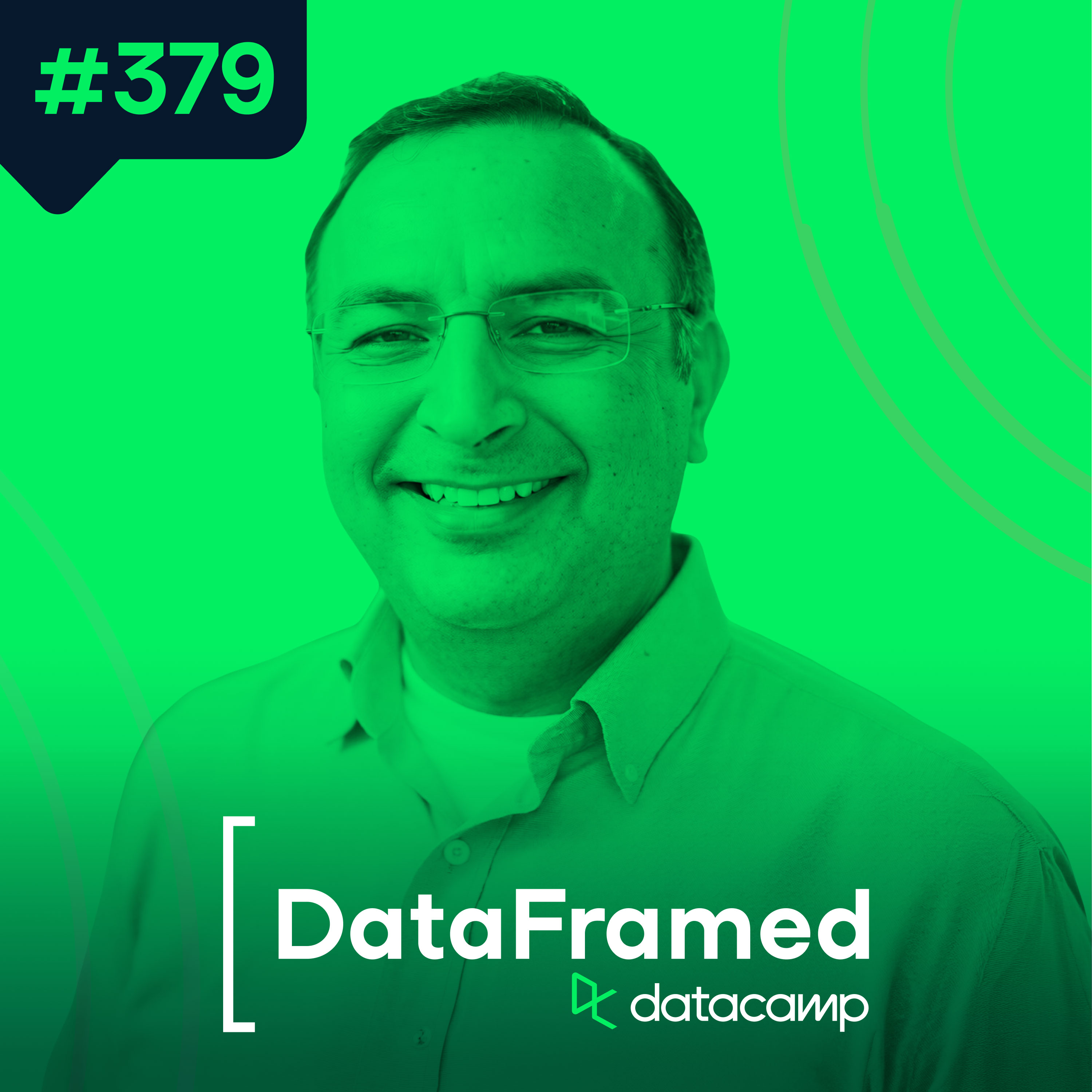 #379 The Secrets of Deploying AI in Production | Sumti Jairath, Chief Architect at SambaNova | AI agents are moving from demos into production, but many teams run into the same wall: responses that take too long and cost too much. As models grow bigger and reason through more steps before answering, every chained agent adds delay, and that adds up fast at scale. For data and AI professionals, this raises a practical question: how do you pick a model and an inference platform that keeps a multi-agent workflow fast without blowing the budget? And underneath that choice sits a bigger one — how much of the AI stack, from chips to software, should a company actually control?Sumti Jairath is Chief Architect at SambaNova Systems, where he's focused on machine learning, big data analytics, and software-defined hardware since 2017. Before that, he spent close to eight years as a Senior Hardware Architect at Oracle working on hardware acceleration for machine learning and data analytics, and earlier held processor and server design roles at Hewlett Packard and Sun Microsystems. He holds a B.Tech in Electronics and Communication Engineering from the National Institute of Technology, Kurukshetra.In the episode, Richie and Sumti explore why AI agents are slow and expensive, the architecture behind faster inference, choosing the right model and platform for a task, open-source models and sovereign AI, the full AI infrastructure stack, power efficiency, the AI data center debate, career paths in AI infrastructure, and much more.Links Mentioned in the Show:• NVIDIA's Groq acquisition, announced around GTC• Chris Olah, Anthropic• Anthropic and OpenAI's coding-agent-driven revenue growth• Ollama• Apple Mac mini• SambaNova careers• Connect with Sumti• AI-Native Course: Intro to AI for Work• Related Episode: From City Sewers to Sovereign AI with Russ Wilcox, CEO at ArtifexAINew to DataCamp? Learn on the go using the DataCamp mobile appEmpower your business with world-class data and AI skills with DataCamp for business | 47m 56s | ||||||
| 9/21/26 | 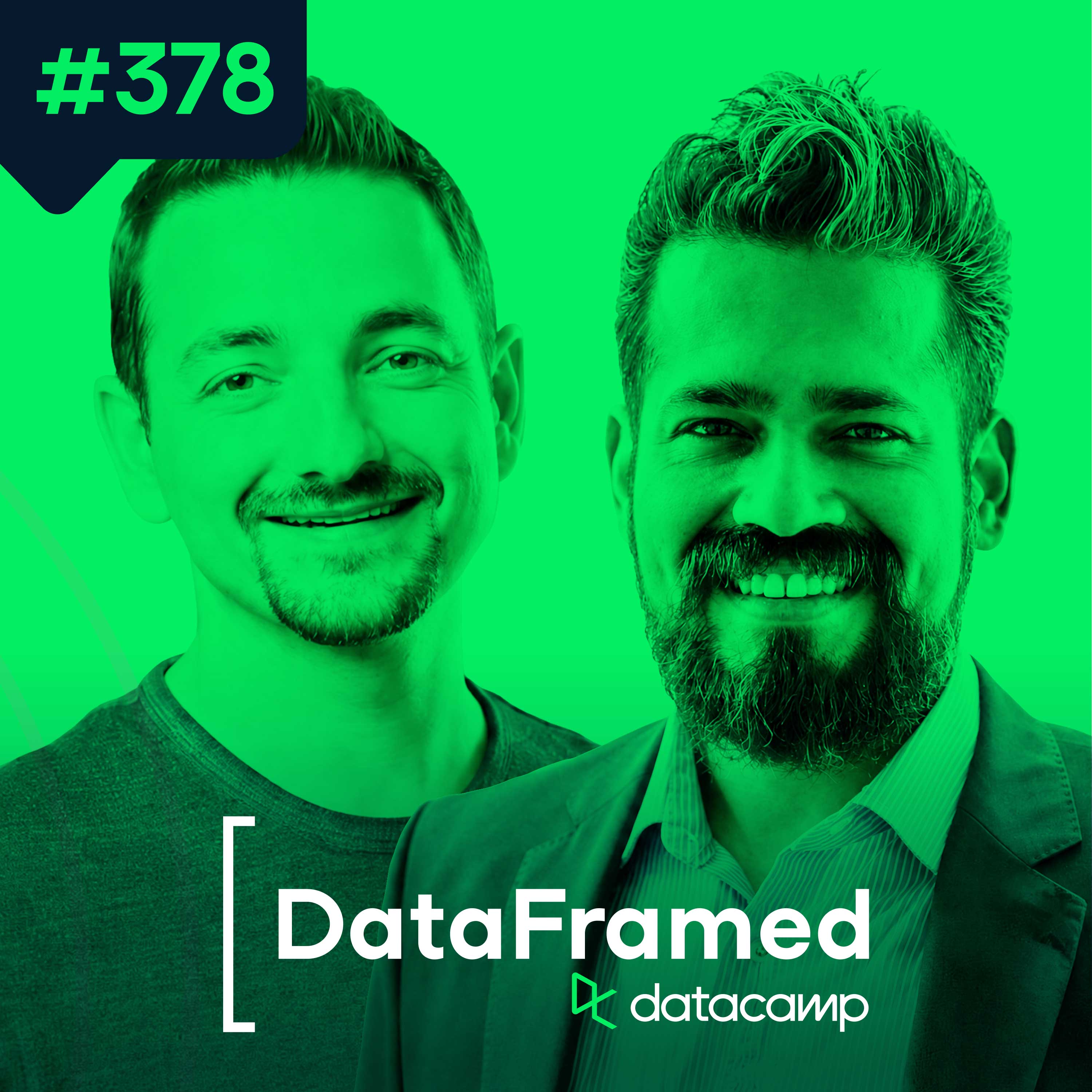 #378 The Data Engine for AI with Ledion Bitincka, CTO at Cribl & Nikhil Mungel, Head of AI R&D at Cribl | As agents take over more of the actual coding, the nature of technical work is shifting from producing software to judging it. Engineers increasingly spend their time specifying what should be built and then checking whether an agent's output actually solved the problem, rather than writing every line themselves. That changes what skills matter for a career in data and software: problem-solving and evaluation start to outweigh knowing today's specific tools or syntax. It also raises a harder question for teams — if agents can generate work this fast, how do you know which of it is actually worth shipping?Ledion Bitincka is Co-Founder and CTO of Cribl, where he leads the engineering organization with a first-principles approach to product delivery. Before Cribl, he was an Advanced Development Architect at Splunk, where he worked on Search-Time Schema, Hunk, and SmartStore, and before that founded Triangulus Communications. Nikhil Mungel is Head of AI R&D at Cribl, based in San Francisco, with over 15 years building distributed systems and AI teams at companies including Substack, Splunk, and ThoughtWorks — he now leads teams building LLM-powered systems for IT and security data.In the episode, Richie, Ledion, and Nikhil explore AI agent disasters and cost shocks, software telemetry fundamentals, using agents to analyze telemetry, AI-powered software factories, the shift from knowledge work to judgment work, skills for the agentic era, avoiding runaway AI spend, and measuring product value through growth metrics, and much more.Links Mentioned in the Show:• Jocko Willink's book, Leadership Strategy and Tactics: A Field Manual• Cribl• Cribl AI (Copilot)• Claude Code• AWS Graviton• NVIDIA• Connect with Ledion: LinkedIn• Connect with Nikhil: LinkedIn• AI-Native Course: Intro to AI for Work• Related Episode: AI Agents at Work: What Actually Breaks (and How to Fix It)New to DataCamp?Learn on the go using the DataCamp mobile appEmpower your business with world-class data and AI skills with DataCamp for business | 50m 42s | ||||||
| 9/14/26 | 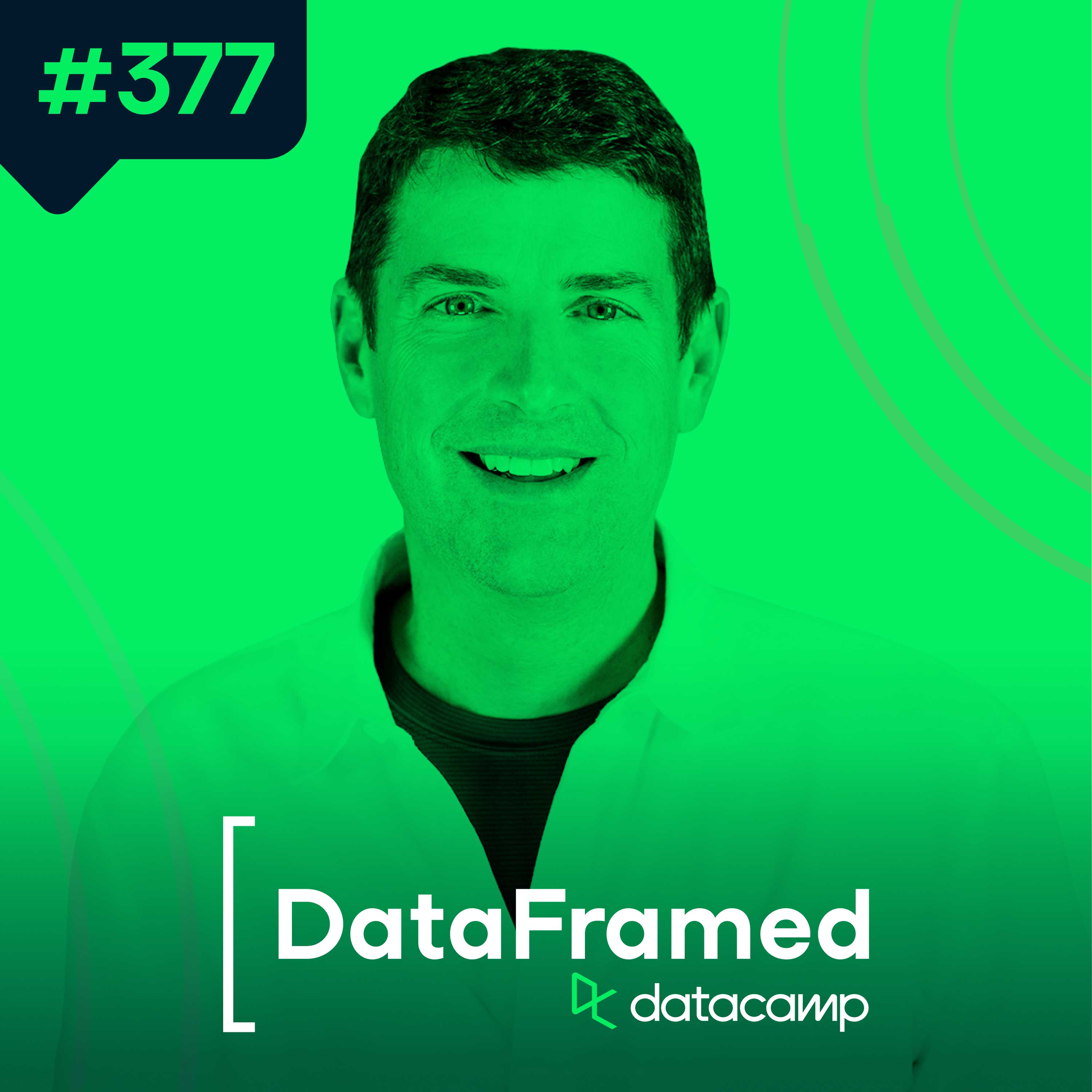 #377 The Algorithm for Hypergrowth with Jon McNeill, CEO at DVx Ventures & Former President at Tesla | Hypergrowth companies rarely scale on strategy alone — they scale on how fast decisions get made and how much risk employees feel safe taking. A recurring idea in high-growth environments is treating decisions differently depending on whether they're reversible, and rewarding people for making an impact rather than simply avoiding mistakes. For managers and individual contributors alike, that shift changes what "good work" looks like day to day. Which of your team's decisions actually need a leader's sign-off, and which ones would move faster if people just tried something and adjusted?Jon McNeill is CEO and co-founder of DVx Ventures, a venture studio that has launched 12 companies. He previously served as President at Tesla, where revenue grew from $2B to $20B in 30 months, and as COO at Lyft through its IPO. A serial entrepreneur, he's founded and sold six companies, sits on the boards of Lululemon and Asurion, and wrote The Algorithm: The Hypergrowth Formula that Transformed Tesla, Lululemon, General Motors and SpaceX.In the episode, Richie and Jon explore the algorithm behind Tesla's 10X hypergrowth, why automation should always come last, how to find and delete unnecessary process steps, building a culture of curiosity and urgency, one-way vs. two-way door decisions, small-team organizational design, changing the currency of promotion, and running effective meetings, and much more.Links Mentioned in the Show:• The Algorithm: The Hypergrowth Formula that Transformed Tesla, Lululemon, General Motors and SpaceX by Jon McNeill• Incorruptible by Eric Ries• Unreasonable Hospitality by Will Guidara• Eleven Madison Park• Jensen Huang on LinkedIn• Karim Bousta on LinkedIn• Connect with Jon• AI-Native Course: Intro to AI for Work• Related Episode: How to Thrive in a World of Continuous TransformationNew to DataCamp?Learn on the go using the DataCamp mobile appEmpower your business with world-class data and AI skills with DataCamp for business | 38m 06s | ||||||
| 9/7/26 | data stackAI+5 | Tristan Handy | Fivetrandbt Labs+6 | — | data infrastructureAI-ready data+5 | — | 42m 08s | ||
| 8/31/26 | AI in mathematicsmathematical superintelligence+4 | Tudor Achim | HarmonicQuora+3 | — | AImathematics+5 | — | 47m 28s | ||
| 8/24/26 | AI transformationorganizational change+3 | Phil Le BrunJana Werner | AWSMcDonald's Corporation+4 | — | AItransformation+5 | — | 45m 41s | ||
| 8/17/26 | AI transformationinstitutional knowledge+4 | Jennifer Smith | ScribeGreylock Partners+2 | HarvardPrinceton | AIinstitutional knowledge+6 | — | 52m 22s | ||
| 8/10/26 | data sciencesoftware development+4 | Srini Raghavan | FreshworksRingCentral+2 | — | data sciencesoftware+6 | — | 48m 55s | ||
| 8/3/26 | product developmentAI in software+5 | Todd Olson | FinAmazon+10 | — | feedback loopAI coding tools+5 | — | 39m 45s | ||
| 7/27/26 | career developmentAI and automation+5 | Todd Dewett | DataCampAndersen Consulting+3 | Texas A&M | AIcommunication+5 | — | 44m 03s | ||
| 7/20/26 | business intelligencedata analytics+4 | Helen Wall | Helen Data DesignMicrosoft+1 | University of Washington | business intelligencedata models+6 | — | 49m 21s | ||
| 7/13/26 | AI agentsdatabase architecture+5 | Reynold Xin | DatabricksApache Spark+2 | — | AI agentsdatabase activity+8 | — | 50m 46s | ||
| 7/6/26 | AI reliabilityhallucinations in AI+4 | Dan Klein | Scaled CognitionUC Berkeley+3 | — | AIreliability+4 | — | 51m 42s | ||
| 6/29/26 | AI agentsdata science+4 | James Zou | Stanford UniversityTogether AI+1 | — | AI agentsdata science+5 | — | 48m 46s | ||
| 6/22/26 | AI strategybusiness planning+4 | Charlene Li | Altimeter GroupFortune 100+4 | New York | AI successbusiness strategy+5 | — | 53m 25s | ||
| 6/15/26 | agentic commerceAI agents+5 | Nell Thomas | ShopifyFacebook+3 | Harvard UniversityUniversity of Pennsylvania | AIdata infrastructure+5 | — | 43m 53s | ||
| 6/8/26 | personal brandingAI fluency+4 | Dorie Clark | Columbia Business SchoolWall Street Journal+8 | — | personal brandAI skills+5 | — | 53m 39s | ||
| 6/1/26 | machine learningAI+4 | Marina Wyss | TwitchAmazon+2 | — | machine learning careerAI engineer+3 | — | 47m 51s | ||
| 5/25/26 | AI in datadata careers+3 | Veronika Durgin | SnowflakeSaks+2 | — | AIdata strategy+4 | — | 48m 33s | ||
| 5/18/26 | AI ethicsethical risks+4 | Reid Blackman | Virtue ConsultantsAmazon+11 | — | AI ethicsethical nightmares+5 | — | 57m 11s | ||
| 5/12/26 | AI and friendshipethics of AI+5 | Valerie Tiberius | University of MinnesotaHard Fork podcast+6 | — | AIfriendship+5 | — | 43m 51s | ||
| 5/4/26 | AI agentsdeep learning+4 | Ruslan Salakhutdinov | Carnegie Mellon UniversityApple+5 | — | AI agentsreliability+5 | — | 58m 18s | ||
| 4/27/26 | workforce analyticsdata science+4 | Ben Zweig | Revelio LabsIBM+2 | CUNY Graduate Center | data-driven workforceautomation+5 | — | 58m 06s | ||
| 4/20/26 | time series forecastingstatistical modeling+4 | Rami Krispin | AppleNixtla+3 | University of Michigan | time series dataforecasting models+5 | — | 53m 33s | ||
| 4/13/26 | AI impact on databasescloud data platforms+4 | Shireesh Thota | MicrosoftSingleStore+4 | CloudSQL Server+2 | AIdatabases+6 | — | 52m 37s | ||
| 4/6/26 | Decision IntelligenceGraphs+4 | Jamie Hutton | Quantexa | — | Decision IntelligenceGraphs+5 | — | 46m 24s | ||
| 3/30/26 | AIanalytics+3 | Ketan Karkhanis | ThoughtSpotSalesforce+2 | — | data analyticsAI agents+3 | — | 49m 46s | ||
| 3/23/26 | AI agentsdata privacy+4 | Danielle Crop | AI-Native Course: Intro to AI for WorkWNS+4 | — | AI agentsdata governance+5 | — | 56m 08s | ||
| 3/16/26 | world modelsartificial general intelligence+5 | Eric Xing | Mohamed bin Zayed University of Artificial IntelligenceCarnegie Mellon University+6 | — | world modelsAGI+5 | — | 1h 03m 32s | ||
| 3/9/26 | AI ethicshard choices+5 | Atay Kozlovski | LavenderUniversity of Zurich+1 | IsraelZurich+2 | AIethics+6 | — | 1h 10m 26s | ||
| 3/5/26 | AI governancedata governance+4 | Stijn Christiaens | AI-Native Course: Intro to AI for WorkCollibra+2 | — | AI governancedata governance+7 | — | 52m 56s | ||
| 3/2/26 | AI agentssecurity risks+4 | Jeremy Epling | VantaGitHub+1 | — | AI agentssecurity+5 | — | 44m 22s | ||

Showing 36 of 300
Pitch Fit is a Pro feature
See how bookable this show is for guests, which brands already advertise, the per-episode ad value, and the best-fit guest and sponsor profile. The numbers are blurred on the free plan.
How readily this show books outside guests like you.
How proven this show is for host-read sponsorships.
For Guests
ProFor Advertisers
ProUpgrade to Pro to unlock guest cadence, sponsor categories, fit scores, and per-episode ad value for this show.
Similar Audience Demographics
Podcasts that attract a similar listener profile

Super Data Science: ML & AI Podcast with Jon Krohn
Jon Krohn

Practical AI
Daniel Whitenack and Chris Benson

Talk Python To Me
Michael Kennedy

The TWIML AI Podcast (formerly This Week in Machine Learning & Artificial Intelligence)
Sam Charrington

Last Week in AI
Skynet Today
The AI Daily Brief: Artificial Intelligence News and Analysis
Nathaniel Whittemore

Training Data
Sequoia Capital
Chart history for DataFramed
Peaked at #20 in SA, currently #20 in SA.
| Market | Genre | Peak | Current | Trend |
|---|---|---|---|---|
| SA | — | #20 | #20 | — |
| CO | — | #47 | #47 | — |
| BE | — | #70 | #70 | — |
| MY | — | #98 | #98 | — |
| VN | — | #100 | #100 | — |
| AT | — | #104 | #104 | — |
| CZ | — | #125 | #125 | — |
| United Kingdom | — | #130 | #130 | — |
| AE | — | #131 | #131 | — |
| KE | — | #134 | #134 | — |
| HU | — | #139 | #139 | — |
| India | — | #154 | #154 | — |
| RO | — | #157 | #157 | — |
| NG | — | #160 | #160 | — |
| IS | — | #172 | #172 | — |
| CL | — | #192 | #192 | — |
| Norway | — | #200 | #200 | — |
Chart Positions
17 placements across 17 markets.
Chart Positions
17 placements across 17 markets.