Energy Empire
by Energy Empire
Is this your podcast?On the show
Recent episodes
A Third of Australian Homes Have Solar. Why Is the U.S. So Far Behind? | Energy on the Ballot
Oct 19, 2026
26m 04s
The Utility CEO Who Wants to Cut Your Bill | Recorded Live at Future Currence
Oct 18, 2026
42m 07s
Semafor’s Tim McDonnell on Covering Russia’s Energy War From Kyiv
Oct 15, 2026
36m 36s
Gov. Spanberger on Making Data Centers Pay Their Fair Share | Energy on the Ballot
Oct 12, 2026
49m 57s
Voltus Just Raised $225 Million to Pay You to Use Less Electricity
Oct 8, 2026
48m 54s
Insights from recent episode analysis
Audience Interest
Podcast Focus
Publishing Consistency
Platform Reach
Insights are generated by CastFox AI using publicly available data, episode content, and proprietary models.
Total monthly reach
Based on 1 signal.
Built from
By chart position
- 🇺🇸United States · EntrepreneurshipHOME#9618K to 94K
- 🇧🇷Brazil · Entrepreneurship#105893 to 4.7K
- 🇰🇷South Korea · Entrepreneurship#63788 to 4.2K
- 🇿🇦ZA · Entrepreneurship#32679 to 3.6K
- 🇮🇳India · Entrepreneurship#148358 to 1.9K
- Per-Episode Audience
Est. listeners per new episode within ~30 days
21K to 112K🎙 Weekly cadence·43 episodes·Last published today - Monthly Reach
Unique listeners across all episodes (30 days)
42K to 223K🇺🇸84%🇧🇷4%🇰🇷4%+4 more - Active Followers
Loyal subscribers who consistently listen
23K to 123K
Market Insights
Platform Distribution
Reach across major podcast platforms, updated hourly
Total Followers
—
Total Plays
—
Total Reviews
—
* Data sourced directly from platform APIs and aggregated hourly across all major podcast directories.
Social Links & Contact
Official channels & resources
Official Website
Login
RSS Feed
Login
| Date | Episode | Description | Length | ||||||
|---|---|---|---|---|---|---|---|---|---|
| 10/19/26 |  A Third of Australian Homes Have Solar. Why Is the U.S. So Far Behind? | Energy on the Ballot | About one in three homes and businesses in Australia have solar on the roof. The state governments there made it simple, with incentives, certified installers, and quick approvals. In the U.S., permits and inspections can add weeks or months before a system is switched on.This episode’s guest, Audrey Zibelman, has held top energy jobs in both countries. She chaired New York’s Public Service Commission, then ran Australia’s power grid as CEO of the Australian Energy Market Operator.Now she’s back in New York as its energy czar, chairing the board of NYSERDA, the state energy authority. The job comes with some of the highest home electricity prices in the country and a freeze on the biggest new data centers.In this episode:The conservative prime minister who backed Australia’s grid plan with three words: “Electrons don’t vote”How Australia got homeowners to trust a government website to find a solar installerThe adoption rate at which Australia’s government could stop pushing solarWhat Texas figured out about grid connections while other states keep running pilotsWhy utilities build the grid around its 25 worst hours a yearThe case for data centers small enough to fit on the gridLinks:Our website: https://www.energyempire.fmPew’s distributed energy playbook: https://www.pew.org/-/media/assets/2026/04/distributed-energy-can-unleash-the-resilient-affordable-grid-of-the-future.pdfNew York’s data center Community Investment Framework: https://www.governor.ny.gov/news/governor-hochul-announces-strongest-community-investment-framework-nation-protect-communitiesGov. Spanberger on Making Data Centers Pay Their Fair Share: https://www.energyempire.fm/episodes/gov-spanberger-on-making-data-centers-pay-their-fair-share-energy-on-the-ballotBalcony Solar Costs $285. Why Is It Still So Hard to Get?: https://www.energyempire.fm/episodes/balcony-solar-costs-285-why-is-it-still-so-hard-to-get | 26m 04s | ||||||
| 10/18/26 |  The Utility CEO Who Wants to Cut Your Bill | Recorded Live at Future Currence | Demand on ComEd’s grid barely moved from 2009 to 2022. Now the utility expects about 10 gigawatts of data centers to connect by around 2030, against an all-time peak of 23 gigawatts.ComEd’s CEO, Gil Quiniones, wants to connect those data centers without raising everyone else’s bills. Rooftop solar and batteries, which many utilities have fought, are part of his plan.Gil spent 16 years at Con Edison and more than a decade running the New York Power Authority. While he ran the Power Authority, he and Jigar worked on the state’s push to build the grid around energy that customers make and store at home.In Chicago, he’s starting with the families who can least afford their bills. A pilot this winter will put solar and batteries in about 50 of their homes with no money down.Gil thinks the setup could take about $70 off a monthly bill that typically runs $100 to $120.Recorded live at Future Currence during Climate Week NYC.In this episode:How deposits and letters of credit shrank ComEd’s list of serious data center requests from about 18 gigawatts to 10Why Jigar says a data center’s voluntary promise to power down in an emergency isn’t good enoughWhat ComEd has to prove to regulators before it can build a new substationThe 100 hours a year the grid is built for, and what using the rest of the year could do for billsWhether other utilities need a new state law to do what ComEd is doingLinks:Future Currence: https://future.currence.aiComEd: https://www.comed.comThe Untapped Grid (Brattle Group): https://www.brattle.com/the-untapped-grid/Illinois Clean and Reliable Grid Affordability Act: https://gov-pritzker-newsroom.prezly.com/gov-pritzker-signs-historic-clean-and-reliable-grid-affordability-actMore from Energy Empire:The Cheapest Grid Is the One We Already Paid For: https://www.energyempire.fm/episodes/the-cheapest-grid-is-the-one-we-already-paid-forInside California’s Plan to Fix the Utility Business Model with Senator Josh Becker: https://www.energyempire.fm/episodes/inside-california-s-plan-to-fix-the-utility-business-model-with-senator-josh-beckerNVIDIA on Whether AI Can Fix Its Own Power Problem: https://www.energyempire.fm/episodes/nvidia-on-whether-ai-can-fix-its-own-power-problem-recorded-live-at-climate-week-nycOur merch store: https://energy-empire.bonfire.com/collection/all-products | 42m 07s | ||||||
| 10/15/26 |  Semafor’s Tim McDonnell on Covering Russia’s Energy War From Kyiv | Ukraine has learned how to keep a power grid running while someone is trying to destroy it. Every country that imports oil now needs the same lessons.Last winter Russia blew up power plants and substations, and Kyiv lost power every day. The fixes were concrete bunkers that let a substation take a direct hit, home batteries, a nuclear fleet kept running, and new wind and solar built in the middle of a war.The Iran war has since shown every oil importer the same vulnerability. Countries won’t go back to sleep after this, and the map of who buys energy from whom is being redrawn.Tim McDonnell is Semafor’s climate and energy editor and writes Semafor Energy, its twice-weekly newsletter. He lives in Kyiv, where the sirens go off all the time and some nights are spent in the metro. Getting out to report starts with an overnight train to Poland, because Ukraine still has no working airport.The interview was recorded at Climate Week NYC on September 21. The intro and outro were recorded before the energy ceasefire Trump announced on October 11.In this episode:The sirens, the metro at night, and why the air war over Kyiv is back to early-2022 levelsHow a substation wrapped in concrete takes a cruise missile and keeps workingWhy the free flow of oil through Hormuz that existed before February is probably gone for goodThe case that oil importers won’t “go back to sleep” once the Iran war endsEgypt’s six-month sprint into wind and solar after Iran sent gas prices upThe “tourists” arriving in cleantech funding rounds, and whether that’s a bubbleSubmit a question to Ask Jigar: https://octopusenergy.com/ask-jigarS2G Investments: https://www.s2ginvestments.com/insights/report-illusion-of-crowdsOctopus Energy: https://octopusenergy.com/faasOur merch store: https://energy-empire.bonfire.com/collection/all-products | 36m 36s | ||||||
| 10/12/26 |  Gov. Spanberger on Making Data Centers Pay Their Fair Share | Energy on the Ballot | Northern Virginia is the biggest data center market in the world, and pushback is growing.So are power bills. A typical Dominion bill is now about $180 a month, $20 more than a year ago.Rising bills put energy on the ballot in Virginia’s 2025 governor’s race. Abigail Spanberger won it by 15 points, and now she wants data centers to pay for the grid built to serve them.Recorded live at the Virginia Clean Energy Summit in Richmond for Energy on the Ballot, our series on energy and the midterms.In this episode:The breakfast in Norton, Virginia, where nearly everyone in the room wanted to talk about their power billWhy Virginia’s new energy plan puts a price on asthma and rising seasA proposal to make new data centers in Virginia face a local voteHow everyone’s bill changes when data centers choose batteries over gas generatorsVirginia’s first-of-its-kind tax on data center electricity, and the case for the industry’s sales tax breakWhat candidates should run on this November, and why state and federal races need different answersLinks:https://energy.virginia.gov/connect/www.energyempire.fm | 49m 57s | ||||||
| 10/8/26 |  Voltus Just Raised $225 Million to Pay You to Use Less Electricity | When a warehouse turns its freezers down for two hours, it looks to the grid like a power plant switching on. Voltus pays thousands of businesses to do exactly that, every day of the year.Voltus, the largest demand-flexibility company in North America, just announced a $225 million Series D led by Al Gore's Generation Investment Management. Today's guest, co-founder and CEO Dana Guernsey, plans to use it to grow from 8.5 gigawatts of flexible capacity to 20 by 2030, a quarter of the Department of Energy's target for the whole country.Google is already a customer, paying Voltus to line up as much as 100 megawatts of that flexibility in PJM, the grid that runs from Illinois to Virginia, so its data centers can connect faster. It's the first deal of its kind, and Dana's argument is that "do no harm" is too low a bar for a company with Google's balance sheet; a data center can leave the grid better than it found it.In this episode:What a Walmart, a winery, a glass factory, and a sewage plant each do when Voltus callsThe church that stayed open and the factory that kept a whole shift, both because of Voltus checksFrom $25 a year for a thermostat to $11 million for a data center, who gets paid what for turning things downHow 50,000 homes become 100 megawatts, and the PJM rule that kept them out until AugustThe year governors and the White House learned what PJM isWhy Google is paying its neighbors to flex instead of building a gas plant that runs 25 hours a yearSubmit a question to Ask Jigar: https://octopusenergy.com/ask-jigarS2G Investments: https://www.s2ginvestments.com/insights/report-illusion-of-crowdsOctopus Energy: https://octopusenergy.com/faasOur merch store: https://energy-empire.bonfire.com/collection/all-products | 48m 54s | ||||||
| 10/5/26 |  Senator Whitehouse on Why Democrats Need a Climate Villain | Energy on the Ballot | "Little Red Riding Hood is kind of a dumb story without the wolf."That's how Senator Sheldon Whitehouse thinks Democrats have been telling the climate story. His wolf is the fossil fuel industry, and it shows up on your electric bill.When the Trump administration blocks cheap clean power, the grid falls back on pricier fossil plants and families pay the difference. He calls it a "ginormous money pump."Whitehouse represents Rhode Island and is the top Democrat on the Senate Environment and Public Works Committee. He is also one of four senators behind the bipartisan permitting bill released shortly after this conversation was recorded.Part of Energy on the Ballot, our series on energy and the 2026 midterms.In this episode:The half-price offshore wind power for Rhode Island that drew two federal stop-work orders"Have you ever seen anything go from zero to everybody hates you faster than data centers?"Why he hates, loathes, and despises one stage of federal review, and his fix for itWhat a plumber in Orlando loses when nobody will insure their homeRussia as "a gas station run by gangsters who have an army," and the sanctions law he wants the president to useThe dark money bill he wants Democrats to pass and dare the president to vetoLearn more at energyempire.fm | 24m 09s | ||||||
| 10/2/26 |  NVIDIA on Whether AI Can Fix Its Own Power Problem | Recorded Live at Climate Week NYC | AI data centers are straining the grid. NVIDIA and Phaidra say part of the fix is more AI: software that runs the cooling, data centers that ease off when demand peaks, and chips that do more with every watt.This episode was recorded live at The Nest Campus during Climate Week NYC. Jigar and Jamie talk with Josh Parker, head of sustainability at NVIDIA, and Jim Gao, co-founder and CEO of NVIDIA-backed Phaidra.In this episode:An AI agent that predicts heat spikes on CoreWeave's NVIDIA chips and stops them before they hitWhy NVIDIA is cooling its chips with 113°F coolant to cut water useWhether AI needs gigawatt-scale data centers, or GPUs on the side of a houseHow half a percent of flexibility could free up about 100 gigawatts on the US gridThe cost of adding 12 hours of battery backup to a $125 million data centerWhat it would take for a data center to lower its neighbors' power billsLearn more at energyempire.fm | 31m 59s | ||||||
| 9/30/26 |  The Permitting Bill Is Out. Senator Heinrich Walks Us Through It. | Four senators introduced the Bipartisan American Affordability and Jobs Act on September 30. One of them recorded this episode with Jigar the day before.The bill puts deadlines on federal environmental reviews, gives opponents 150 days to sue instead of five years, hands the federal government a backstop for interstate transmission, and, as Heinrich describes it, bars utilities from putting a data center's grid costs on anyone else's bill.Martin Heinrich is the top Democrat on the Senate Energy and Natural Resources Committee and negotiated the deal with Senator Sheldon Whitehouse and Republican chairs Shelley Moore Capito and Mike Lee. In this episode:Why Heinrich didn't wait for a Democratic Senate: "why don't you just wait until you have the gavel?"The difference between a "sternly worded letter" and a law when a hyperscaler wants to plug inThe one-year clock a state gets before a transmission route goes to FERCWhy a geothermal well is harder to permit than an oil well on the same acre of federal landWhat got "a little rocky" with the White House the week before the deal"If you're calling people ratepayers, you're probably making some mistakes"Submit a question to Ask Jigar: https://octopusenergy.com/ask-jigarS2G Investments: https://www.s2ginvestments.com/insights/report-illusion-of-crowdsOctopus Energy: https://octopusenergy.com/faasOur merch store: https://energy-empire.bonfire.com/collection/all-products | 31m 43s | ||||||
| 9/28/26 |  Energy on the Ballot: Who Do You Blame for Your Electric Bill? | Electricity bills are rising across America, and for the first time in years, they're a campaign issue. Candidates on the left and the right are promising to cut your power bill. But are they even the ones in charge? What gets decided in Washington, and what gets decided in your state capital? And how do you tell a real promise from an empty one?Those questions are what Energy on the Ballot is for: a new series from Energy Empire, released every Monday until Election Day.To kick it off, Jigar and Jamie sit down with Arnab Pal, co-founder and executive director of Deploy Action, who spends his days in state capitals pushing laws that make utilities use the grid they already have before they build more and bill you for it.Together they walk through the basics: what really makes a power bill go up, who signs off on it, and which of this year's promises to lower it can be kept. Recorded in person at the new Energy Empire studio in New York.In this episode:Why the backlash against data centers is really a backlash against AI, and why the tech companies didn't see it comingThe extra $5.77 a month on Arkansas power bills after the local utility refused to let Google pay for its own grid upgradesPromises made: Trump's pledge to halve energy bills in 12 months, New Jersey Governor Mikie Sherrill's rate freeze that became a $25 credit, and a Big Tech pledge nobody can point a dollar toPaying people to use less power at peak times is 80% cheaper than building a new gas plant, so why aren't more utilities offering it?Why your state legislator matters more than your member of Congress when it comes to your power billLearn more at energyempire.fm | 37m 14s | ||||||
| 9/24/26 | 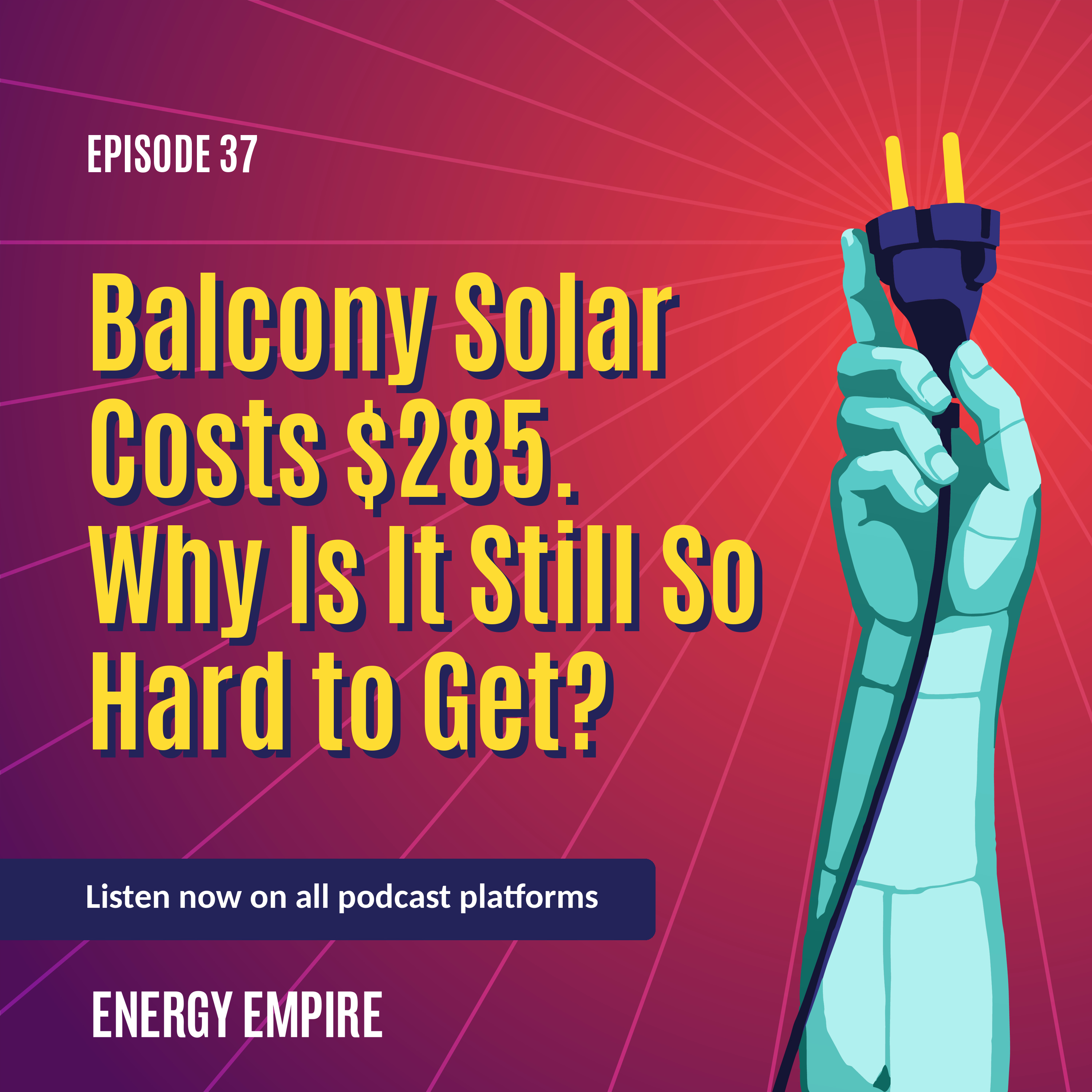 Balcony Solar Costs $285. Why Is It Still So Hard to Get? | In Germany you pick up a solar panel at IKEA or the grocery store and plug it in at home.Here you order online, the cheapest kits can take four months to arrive, and in most states you still technically need your utility's permission to install it.Cora Stryker co-founded Bright Saver, a nonprofit that sells the kits at cost, $285 for a 180 watt system. They helped draft Utah's balcony solar bill, the first in the country, and have since worked with legislators in 35 states and DC. Nine have passed laws so far.In this episode:Why some states make you hire an electrician to plug in an applianceWhat a $285 panel takes off a monthly bill, and how fast it pays for itselfThe emails from PG&E that killed Bright Saver's first business modelThe for-profit company that rewrote one state's bill so only its own product would be legalWhy balcony solar has bipartisan supportWhen Cora thinks you'll be able to buy one at WalmartSubmit a question to Ask Jigar: https://octopusenergy.com/ask-jigarS2G Investments: https://www.s2ginvestments.com/insights/report-illusion-of-crowdsOctopus Energy: https://octopusenergy.com/faasOur merch store: https://energy-empire.bonfire.com/collection/all-products | 51m 41s | ||||||
Want analysis for the episodes below?Free for Pro Submit a request, we'll have your selected episodes analyzed within an hour. Free, at no cost to you, for Pro users. | |||||||||
| 9/17/26 | 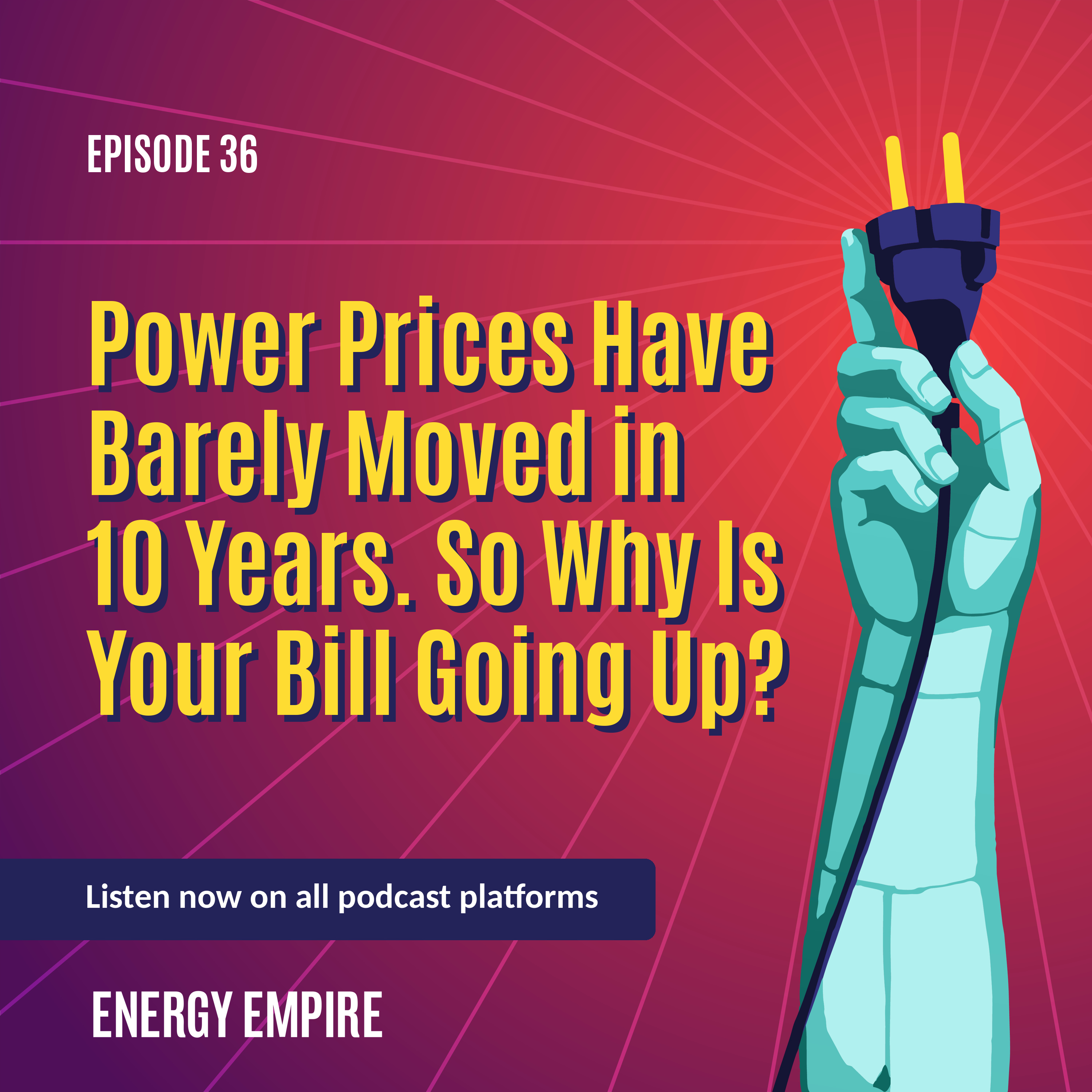 Power Prices Have Barely Moved in 10 Years. So Why Is Your Bill Going Up? | In most of America, the cost of generating electricity has barely moved since 2015. But, over the same 10 years, residential rates are up 37% (EIA).Lee Taylor has spent 13 years pricing power in every corner of the country. He joins Energy Empire to explain what you're actually paying for, and why a windy day in Oklahoma never shows up on your bill.Lee is the co-founder and CEO of Resurety. He funded the company in 2013 by selling shares in his own future income. Last year he got federal approval for CleanTrade, the first regulated exchange for wind and solar power, which now has 60 participants and $50 billion in bids.In this episode:The three buckets on your bill, and why the one that keeps growing has nothing to do with generating powerOklahoma gets 45% of its power from wind and prices haven't moved in a decade. West Virginia has almost none, and prices are up 50%California has some of the cheapest electricity in the country and the most expensive bills. Both are trueThe $5,000 electricity bills from the Texas freeze, and why cheap power always comes with a catchA 1,000-page application, DOGE, and 4 of 5 commissioners gone: getting a first-of-its-kind market through Washington"Tax credits were always a really blunt force way to get around the fact that we don't actually charge for carbon"Submit a question to Ask Jigar: https://octopusenergy.com/ask-jigarS2G Investments: https://www.s2ginvestments.com/insights/report-illusion-of-crowdsOctopus Energy: https://octopusenergy.com/faasOur merch store: https://energy-empire.bonfire.com/collection/all-products | 49m 43s | ||||||
| 9/10/26 |  Will Sustainable Aviation Fuel Ever Take Off? | The jet fuel that could replace kerosene is made from used cooking oil. It costs two to six times more, and there isn't enough of it.This week's guest is Lauren Riley, Chief Sustainability Officer at United Airlines, which buys more sustainable aviation fuel than any other airline in America and still only gets 0.7% of its fuel that way.She calls that a pacing problem: we know how to make the fuel, the money and the policy just move too slowly. The harder limit is the cooking oil itself. The world is not going to fry more food to fill jet tanks, and the three other ways of making the fuel are years from scale.The policy is not helping either. America cut its credit just as producers needed certainty, Europe mandated the fuel without doing anything to make more of it, and the banks Riley talks to want ten years of durability and are being offered two.So the question in the title stays open. Riley expects the economics to arrive eventually. Jigar is putting his chips on hybrid planes instead.In this episode:The four ways to make jet fuel without oilWhy a refinery that could make this fuel today makes diesel insteadWhat the banks told Lauren they need before they will finance a plant, and why nobody is offering itEurope's rule where you miss the blend, pay the fine, and still owe the fuelOscar the Grouch, United's first Chief Trash Officer, has retiredJigar's case for skipping ahead to hybrid planesSubmit a question to Ask Jigar: https://octopusenergy.com/ask-jigarS2G Investments: https://www.s2ginvestments.com/insights/report-illusion-of-crowdsOctopus Energy: https://octopusenergy.com/faasOur merch store: https://energy-empire.bonfire.com/collection/all-products | 54m 36s | ||||||
| 9/3/26 | 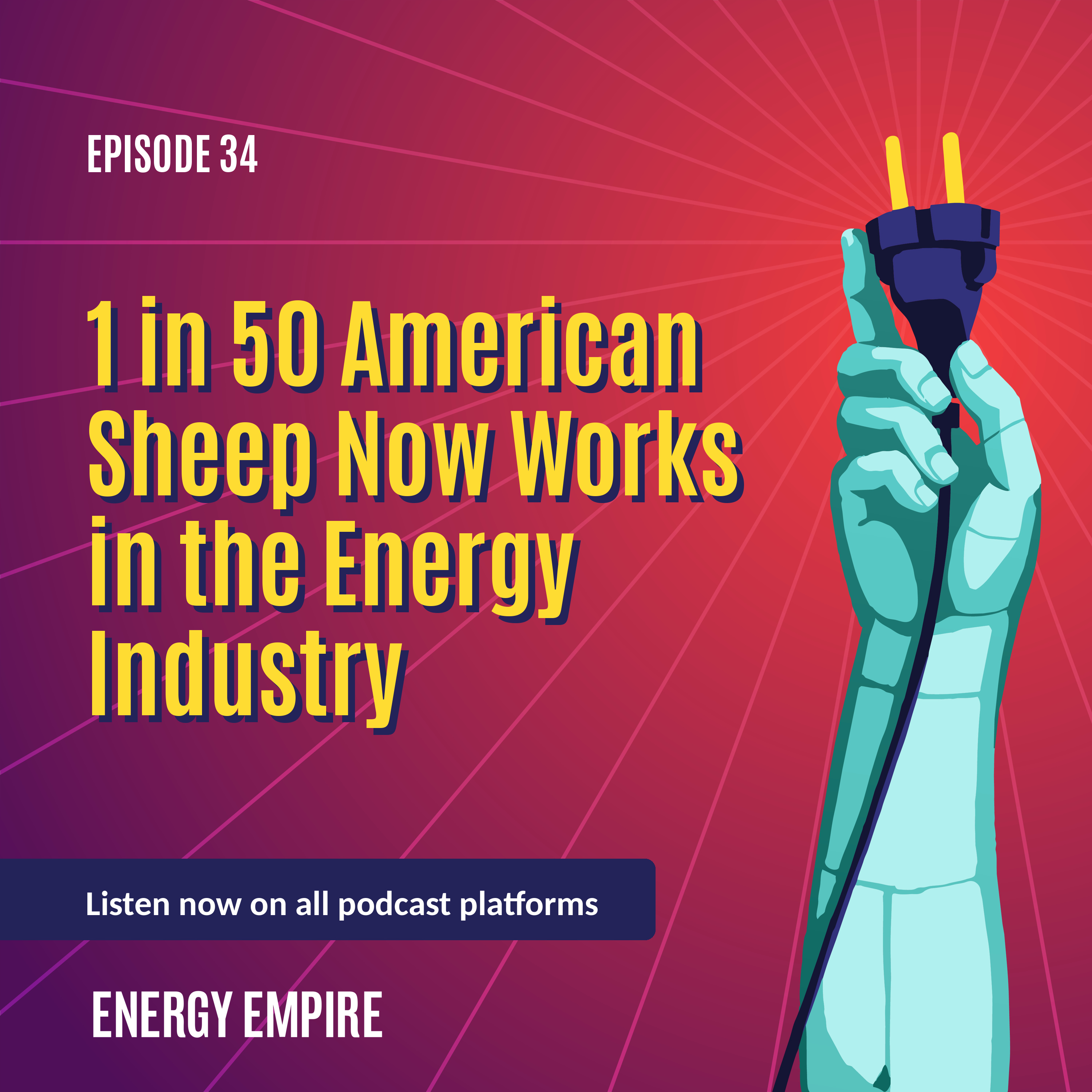 1 in 50 American Sheep Now Works in the Energy Industry | Sheep are replacing lawnmowers on solar farms across America. They're quieter, cleaner, and in many cases cheaper.More than 113,000 of them now graze over 500 US solar sites — and for the farmers who run the flocks, the contracts are a new income that keeps their land and their business in agriculture.Today's guest is Rebekah Pierce, who runs a 300-sheep flock on 9 solar sites across upstate New York. Rebekah is a first-generation farmer, solar grazier, and author of Agri-Energy: Growing Power, Growing Food (Island Press).With Jigar on vacation, Jamie is joined by guest co-host Lauren Glickman, VP of policy and communications at solar developer Encore Renewable Energy and a lifelong solar and agriculture enthusiast.In this episode:Why Encore ditched its diesel mowing crews and committed its entire portfolio to grazingThe business model almost nobody knows exists, and how it turned a money-losing hobby farm into a real livestock operationThe two stubborn brothers who sold Rebekah her hay, leased their land for solar, and changed her family's lifeThe prime-farmland myth: "Farmland isn't really useful if there's nobody who can afford to cultivate it"Why tomatoes, of all things, might grow better inside a solar arraySubmit a question to Ask Jigar: https://octopusenergy.com/ask-jigarS2G Investments: https://www.s2ginvestments.com/insights/report-illusion-of-crowdsOctopus Energy: https://octopusenergy.com/faasOur merch store: https://energy-empire.bonfire.com/collection/all-products | 54m 03s | ||||||
| 8/27/26 | 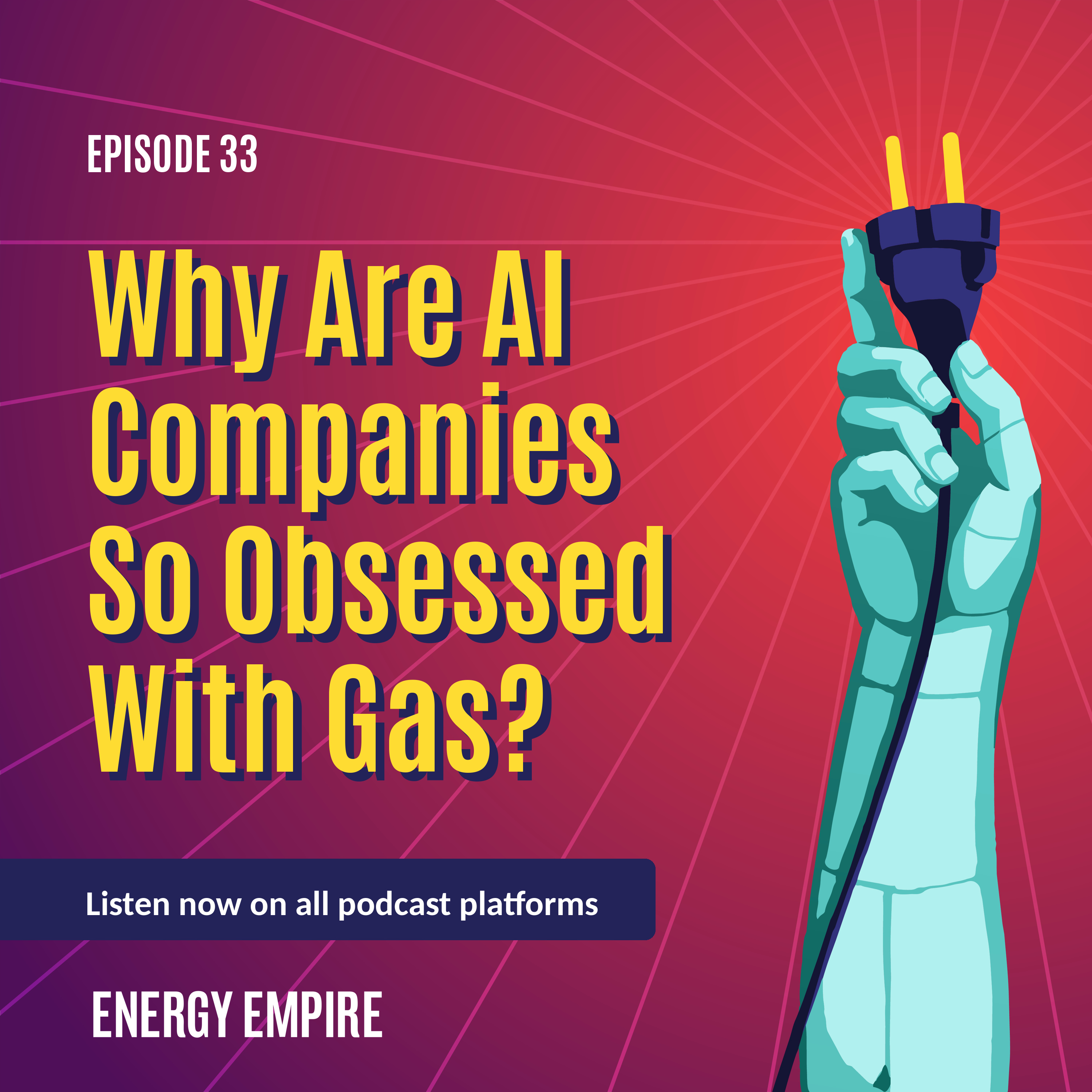 Why Are AI Companies So Obsessed With Gas? | Amazon is building a 7.65 gigawatt gas plant in the West Texas desert. Microsoft just signed a 20-year gas deal with Chevron, 30 miles away, and Meta, OpenAI, and xAI are all doing versions of the same thing. The case for going off-grid is speed and control: an AI data center takes 18 months to build, a grid connection can take seven years, and Texas just froze new hookups altogether.But turbines are sold out into 2029, the power costs roughly three times what flexible alternatives do, and of the 90 gigawatts of do-it-yourself power plants announced, almost none has actually been built.Nobody has better visibility into this race than Michael Thomas of Cleanview, who tracks every data center in the country, and who recently broke the news that Amazon is behind that desert project. He joins the show to walk through what he's found, and where the gas rush goes from here.Jigar is on vacation this week, so Jamie is joined by "mini-Jigar" and friend of the pod, Tim Hade.In this episode:- Why Elon Musk's Colossus, the most famous off-grid data center, lasted barely ten weeks off the grid- What happens when an off-grid turbine breaks and there are no spares- What batteries and demand flexibility could do instead, and why companies keep saying no- Michael's forecast for how much actually gets built by 2027- "There is no off-grid data center, only an off-electric-grid data center."- Fermi America's "world's largest data center," whose site sat empty on satellite imagesSubmit a question to Ask Jigar: https://octopusenergy.com/ask-jigarS2G Investments: https://www.s2ginvestments.com/insights/report-illusion-of-crowdsOctopus Energy: https://octopusenergy.com/faasOur merch store: https://energy-empire.bonfire.com/collection/all-products | 1h 03m 20s | ||||||
| 8/20/26 |  Who Is Jigar Shah? (Part 3): Taking Over the Office He Called "Irredeemable" | On a podcast in 2020, Jigar called the Department of Energy's Loan Programs Office "irredeemable" and said it could never be trusted again. A few weeks later, the Biden transition team called, asking him to become the next Director of that exact office.The chair of his board at Generate Capital didn't want him to take the job, so he wrote a memo laying out the conditions that had to change for him to accept, thinking they'd never agree. To his surprise, they accepted all of his demands. A couple of months later, Energy Secretary Jennifer Granholm appointed him Director of the Loan Programs Office. During his tenure, the office's lending authority would grow from $40 billion to $400 billion, making it what Jigar calls the largest provider of energy credit in the world.To help tell the story of the first two years at LPO, Jigar and Jamie are joined by Chris Creed, who left Goldman Sachs Asset Management, where he co-ran a $75 billion mortgage-backed securities team, to rebuild LPO's underwriting.In this episode:Day 1: headquarters closed for Covid, and nobody at the Department of Energy knew he was startingThe ethics fight over his solar portfolio: "I could be a slumlord, but you won't let me own solar projects""What is a Jigar Shah?" — the question Chris asked his headhunter before taking the callHe called 300 CEOs asking them to apply for a loan. 7 said yes.The Covid backyard parties in Bethesda where Congress learned that $1 billion of loan authority costs the Treasury only about $10 million"I was not leaving 2021 without a deal"How Jamie got journalists to stop defining the office by its scandal, one breadcrumb at a timeLinks: Submit a question to Ask Jigar: https://octopusenergy.com/ask-jigarS2G Investments: https://www.s2ginvestments.com/insights/report-illusion-of-crowdsOctopus Energy: https://octopusenergy.com/faasOur merch store: https://energy-empire.bonfire.com/collection/all-products | 1h 23m 30s | ||||||
| 8/20/26 |  Ask Jigar: Is a $20,000 used EV the cheapest home battery you can buy? | A used EV costs $200 a kilowatt hour. A Powerwall costs $900. In this episode:Unsubsidized rooftop solar at $2,100 a kilowatt, and why Australia does it for half that470,000 megawatts of data center requests on a grid with a 91,000 megawatt peak: "It's crazy town"Why buying a $20,000 used EV means "you're getting the car for free just by buying the battery"Everything else on the grid just makes steam. Solar doesn't.Send in your question, and if Jigar answers it on the show, you get an Energy Empire hat: https://octopusenergy.com/ask-jigar | 8m 50s | ||||||
| 8/13/26 |  Five Months Into the Iran War, China Is Saving Its Oil for the Next One | Five months into the Iran war, the largest supply shock in oil market history has been managed into a strange calm. Exxon just made $14.5 billion in a quarter, gas is over $4 a gallon, and Washington is quietly running its oil reserve the way the Federal Reserve runs interest rates.James Gutman is the co-author of The New Joule Order, and the newly launched Substack Arcs & Angles. This is his fifth time on Energy Empire and his darkest and sharpest appearance yet.In this episode:"Nobody actually puts crude oil into their car": the widest refining margins ever recorded, and why they, not the price of oil, set what you pay at the pumpThe Justice Department is investigating price gouging. What James would say under subpoena."You can't print molecules": America's central bank of oil, and the catch when the vault runs lowChina cut imports by 5.5 million barrels a day without touching its strategic reserveEurope's rearmament bill runs as high as €14 trillion, and "the best friend for Team Green is the guy in the uniform"The question nobody asked in four previous episodes: what does James Gutman get wrong?Plus Ask Jigar: the solar super PAC that just beat a Trump endorsement, and the cleaner backup power hiding inside every hospital's budget.Submit a question to Ask Jigar: https://octopusenergy.com/ask-jigarS2G Investments: https://www.s2ginvestments.com/insights/report-illusion-of-crowdsOctopus Energy: https://octopusenergy.com/faasJames Gutman's Substack: https://jgutman.substack.com/Our merch store: https://energy-empire.bonfire.com/collection/all-products | 1h 07m 35s | ||||||
| 8/11/26 |  Introducing Grid 2.0, the Open Protocol for the American Grid (Bonus episode) | This is a special bonus episode where Jigar sits down with Chris Shelton to launch Grid 2.0. If this gets adopted, it changes how every new data center and battery in America gets onto the grid.Grid 2.0 is a voluntary open protocol standard for how new electricity resources connect. It is modeled on TCP/IP, the shared rules that let the internet scale for decades without anyone approving each new connection. New digital load checks available capacity before activating. If capacity is available, load runs normally. If the grid is constrained, load queues proportionally and automatically, with no phone calls and no administrative intervention.For the vast majority of hours nothing changes. The protocol only matters during peak. And a data center already runs sophisticated workload schedulers, so adding grid capacity as one more input is a software integration.The playbook is the one that built the battery storage industry. Find a market that wants lower rates and keep proving it works until the naysayers stop arguing. Phase 0 is shadow mode: run the protocol, track what would have happened, prove the value while changing nothing. Five early adopters is enough to shift the conversation from whether it works to how fast to scale it.This is G2TF Request for Comments #1, in the literal spirit of the Internet Engineering Task Force that built the internet.Read the full paper at g2tf.org. Comment on it and share it with one person who should hear it. | 49m 02s | ||||||
| 8/6/26 |  AI Is Breaking the Grid. A Flywheel Could Fix It. | AI data centers make power demand jump in milliseconds. The grid can't keep up, and ratepayers get the bill.Nate Walkingshaw, founder and CEO of Torus, has a fix already spinning: a multi-ton steel flywheel in a vacuum, one of TIME's Best Inventions of 2024, now part of a 500-megawatt agreement with PacifiCorp.Nate was a paramedic making $7.14 an hour when he started inventing. Stryker bought his company when he was 29. Then came the Pluralsight IPO, a Christmas tree farm that could make its own power but couldn't store it, and a flywheel equation his sons worked out at home.In this episode:The argument with a utility CEO that redirected the company: "You have no idea what you have."Why a GPU load looks like an EKG, and why a power plant 300 miles away can't keep up with itFrom 33 dispatches a year to 500: how one utility went from teacher to biggest customerThe 33 gigawatts Nate says we could free up tomorrow, without building a single power plantInside GigaOne, where new hires go from $22 an hour to six-figure programming jobs"We're the Sudafed of the grid"Submit a question to Ask Jigar: https://octopusenergy.com/ask-jigarS2G Investments: https://www.s2ginvestments.com/insights/report-illusion-of-crowdsOctopus Energy: https://octopusenergy.com/faasEnergy Empire Merch: https://energy-empire.bonfire.com/collection/all-products | 1h 18m 30s | ||||||
| 7/30/26 |  A Decade as Clean Energy's Republican Whisperer with Heather Reams | For nearly a decade, Heather Reams had one of the toughest jobs in Washington: selling Republicans on clean energy. As president of Citizens for Responsible Energy Solutions, she built the right's most prominent clean energy advocacy group, launched National Clean Energy Week, and got 21 House Republicans on record defending the clean energy tax credits. In June, she and CRES parted ways.Jigar and Jamie talk with Heather about what it actually takes to move a Republican member of Congress, why permitting reform still isn't law, why the tech giants building data centers keep losing to the utilities in Washington despite dwarfing them in market cap, and the bipartisan venture she wants to build next.Along the way: why the repealed credits "were never theirs to begin with," how Chip Roy killed the compromise, the shot clock on utility political power, and the least productive Congress in history.Plus: Jigar and Jamie spend an hour trying to get past a decade of media training and extract the real tea on why she left. Judge for yourself whether they succeed.Submit a question to Ask Jigar: https://octopusenergy.com/ask-jigarS2G Investments: https://www.s2ginvestments.com/insights/report-illusion-of-crowdsOctopus Energy: https://octopusenergy.com/faasEnergy Empire merch: https://energy-empire.bonfire.com/collection/all-products | 1h 15m 06s | ||||||
| 7/23/26 |  Adam Met on Permitting Reform, Building Clean Energy Superfans, and Selling Out Madison Square Garden | Sting has the rainforest. Pierce Brosnan has the whales. Adam Met has permitting reform.The AJR pop star, who has more than 5 billion streams on Spotify and a PhD in sustainable development, joins Jigar and Jamie to make the case that permitting reform is energy's rare bipartisan opening.His answer is the Co-Location Energy Act: a bill that clears the way for solar and wind on top of 18 million acres of existing oil and gas leases, land that's already disturbed, already roaded, already wired.They get into why he sold the same bill as "all of the above energy" to Republicans and carbon reduction to Democrats, what the music industry knows about building superfans that clean energy still doesn't, and why he ran the same play on state land in case Washington stalls.Along the way: buying strangers beers in Colorado bars, 1,000 petition signatures at a 109-degree Phoenix show, and a secret plan Adam asks the hosts not to repeat.Plus: the case that the climate movement shouldn't exist, and a guest appearance from Jamie's daughter.Submit a question to Ask Jigar: https://octopusenergy.com/ask-jigarS2G Investments: https://www.s2ginvestments.com/insights/podcast-global-energy-orderOctopus Energy: https://octopusenergy.com/faasOur merch store: https://energy-empire.bonfire.com/collection/all-products | 1h 01m 04s | ||||||
| 7/20/26 |  Crossover with Volts: Data Centers Could Win Over Neighbors for Pennies. They'd Rather Fight | Dave Roberts spent years covering energy for Grist and Vox before building Volts into one of the most influential independent energy podcasts in the country. His last conversation with Jigar, on Volts, was about doing data centers the dumb way. The comments haven't stopped since.For this crossover, Jigar and Deploy Action's Arnab Pal talk with Dave (Jamie listened in and weighs in on the debrief) about why the data center backlash is a trust problem, not a PR problem, and why $130 billion in projects sits blocked when the community benefits that would unblock them cost a rounding error.Along the way: a rare NERC grid alert, the case that "everything is batteries," why gas gets called firm while solar gets called feminine, and what 36 governors' races this fall mean for anyone building anything on the grid.Plus: why Texas gets 19% of its peak from batteries while PJM sits at 0.2%.Submit a question to Ask Jigar: https://octopusenergy.com/ask-jigarS2G Investments: https://www.s2ginvestments.com/insights/podcast-global-energy-orderOctopus Energy: https://octopusenergy.com/faasCheck out our merch store: https://energy-empire.bonfire.com/collection/all-products | 1h 09m 48s | ||||||
| 7/16/26 |  The Nurse Who Built a $400 Million Generator Company | Every construction site, concert, film set, and hurricane recovery runs on temporary power. So does the Super Bowl, and so do data centers that can't wait years for a grid connection. Most people use it every day and never see it.Alicia Waineo became a registered nurse at 19, ran and sold a home healthcare company, then co-founded ANA in 2017. Today the company does roughly $400 million in revenue while cutting its customers' diesel use, and the emissions that come with it, by up to 80%. The solution is simple. Instead of replacing the entire diesel generator with batteries, they added one: the battery carries the whole load, and the engine's only job is recharging it.Jigar and Jamie talk with Alicia about how that idea is spreading through America's rental fleets, why data centers that can't wait for the grid are renting power instead, and how ANA got here on $700,000 of founder cash, reinvested profits, and exactly one outside check, for $50 million.Along the way: 160,000 diesel generators, bridge power that customers want "loudly," and powering the Super Bowl without getting free tickets.Submit a question to Ask Jigar: https://octopusenergy.com/ask-jigarS2G Investments: https://www.s2ginvestments.com/insights/podcast-global-energy-orderOctopus Energy: https://octopusenergy.com/faasGet your merch: https://energy-empire.bonfire.com/collection/all-products | 43m 54s | ||||||
| 7/9/26 |  Sheldon Kimber on Why Google Paid $4.75 Billion for His Power Company | In March, Google paid $4.75 billion to buy Intersect — the first time a Big Tech giant has bought a clean energy developer.Jigar and Jamie talk with Sheldon about why Google decided it had to own a power company, how the race to build data centers is reshaping the American grid, and what it actually takes to build gigawatt-scale energy next door to small Texas towns.Along the way: why he says his power plants are more stabilizing than a nuclear reactor, the on-air rematch of the LinkedIn argument where Jigar and Sheldon go at it over off-grid data centers, and a rare, candid turn on mental health, leadership, and the strange grief of selling the company he built.Links:Submit a question to Ask Jigar: https://octopusenergy.com/ask-jigarS2G Investments: https://www.s2ginvestments.com/insights/podcast-global-energy-orderOctopus Energy: https://octopusenergy.com/faasMerch store: https://energy-empire.bonfire.com/collection/all-products | 1h 16m 06s | ||||||
| 7/2/26 |  How to Add 300 Gigawatts to the Grid Without Building a Single Power Plant | The hyperscalers are racing to secure power, pouring billions into new plants, nuclear, even fusion. But interconnection queues still run for years. This week's guest can cut that wait to six to twelve months without building a single transmission line or power plant.Amit Narayan is the founder and CEO of GridCARE. His thesis: America doesn't have a power shortage, it has a visibility problem. The grid runs at only about a third of its capacity, and GridCARE uses AI to scan it the way an MRI scans a body, finding power utilities simply cannot see with planning tools built decades ago. The company has unlocked more than a gigawatt in the last six months and is actively analyzing over ten. Narayan's bet: 300 gigawatts are reachable on existing infrastructure within three to five years.Jigar Shah and Jamie Nolan dig into why the grid sits so underused, and the detail that captures the whole problem: hyperscalers are so power-starved they're eyeing data centers in space, when the power they need is already on the grid at home.Links:Get Energy Empire merch: https://energy-empire.bonfire.com/Submit a question to Ask Jigar: https://octopusenergy.com/ask-jigarS2G Investments: https://www.s2ginvestments.com/insights/podcast-global-energy-orderOctopus Energy: https://octopusenergy.com/faas | 56m 41s | ||||||
Showing 25 of 43
Pitch Fit is a Pro feature
See how bookable this show is for guests, which brands already advertise, the per-episode ad value, and the best-fit guest and sponsor profile. The numbers are blurred on the free plan.
How readily this show books outside guests like you.
How proven this show is for host-read sponsorships.
For Guests
ProFor Advertisers
ProUpgrade to Pro to unlock guest cadence, sponsor categories, fit scores, and per-episode ad value for this show.
Similar Audience Demographics
Podcasts that attract a similar listener profile





Chart history for Energy Empire
Peaked at #32 in South Africa, currently #32 in South Africa.
| Market | Genre | Peak | Current | Trend |
|---|---|---|---|---|
| South Africa | — | #32 | #32 | — |
| South Korea | — | #63 | #63 | — |
| United States | — | #96 | #96 | — |
| Brazil | — | #105 | #105 | — |
| CH | — | #108 | #108 | — |
| Sweden | — | #109 | #109 | — |
| SG | — | #130 | #130 | — |
| Denmark | — | #134 | #134 | — |
| India | — | #148 | #148 | — |
| IL | — | #153 | #153 | — |
| PL | — | #159 | #159 | — |
| Italy | — | #165 | #165 | — |
| South Africa | — | #168 | #168 | — |
| AT | — | #179 | #179 | — |
Chart Positions
14 placements across 13 markets.
Chart Positions
14 placements across 13 markets.