
Volts
by David Roberts
Is this your podcast?David Roberts is an independent podcast creator known for his extensive knowledge and reporting on clean energy and climate issues. With nearly two decades of experience, he engages with a diverse range of guests, including politicians, ana…
On the show
From 38 epsHost
Recent guests
Recent episodes
What’s up with Denmark?
Oct 16, 2026
1h 03m 29s
Checking back in with Greenlight America
Oct 14, 2026
1h 07m 02s
What’s up with the new federal permitting reform bill?
Oct 9, 2026
2h 21m 06s
The grueling fight to pass the Inflation Reduction Act
Oct 7, 2026
1h 04m 34s
Best of September 2026
Oct 2, 2026
13m 35s
Insights from recent episode analysis
Audience Interest
- clean energy advancements
- fossil fuel alternatives
Podcast Focus
- clean energy discussions
- interviews with experts
Publishing Consistency
- weekly episodes
- active for five years
Platform Reach
- website available
- subscriber-supported model
Insights are generated by CastFox AI using publicly available data, episode content, and proprietary models.
Most discussed topics
Brands & references
Total monthly reach
Based on 3 signals.
Built from
By chart position
- 🇺🇸United States · PoliticsHOME#1146.7K to 36K
- 🇧🇷Brazil · Politics#284.4K to 23K
- 🇲🇾MY · Politics#16795 to 4.2K
- 🇭🇰HK · Politics#27308 to 1.6K
- 🇦🇺Australia · Politics#120211 to 1.1K
- Per-Episode Audience
Est. listeners per new episode within ~30 days
13K to 70K🎙 Daily cadence·448 episodes·Last published 3d ago - Monthly Reach
Unique listeners across all episodes (30 days)
44K to 234K🇺🇸51%🇧🇷33%🇲🇾6%+6 more - Active Followers
Loyal subscribers who consistently listen
24K to 129K2.2K real followers tracked across platforms
Market Insights
Platform Distribution
Reach across major podcast platforms, updated hourly
Total Followers
—
Total Plays
—
Total Reviews
—
* Data sourced directly from platform APIs and aggregated hourly across all major podcast directories.
Social Links & Contact
Official channels & resources
Official Website
Login
RSS Feed
Login
| Date | Episode | Topics | Guests | Brands | Places | Keywords | Sponsor | Length | |
|---|---|---|---|---|---|---|---|---|---|
| 10/16/26 |  What’s up with Denmark? | This is a public episode. If you'd like to discuss this with other subscribers or get access to bonus episodes, visit www.volts.wtf/subscribeDenmark gets a large share of its power from wind and other renewables and has cut its emissions roughly in half since 1990, but independent analysts doubt it will hit its 70 percent target for 2030. Kristian Jensen, CEO of Green Power Denmark and a former Danish minister of taxation, foreign affairs, and finance, argues the next stage is electrifying how Denmark uses energy: heat, transport, and industry. I talk with him about district heating and heat pumps, EVs and vehicle-to-grid, municipally owned grid companies and hourly power prices, biomass, carbon capture, power-to-X, solar’s “fields of iron” backlash, a grid oversubscribed with data center requests (an October 1 agreement has since put most data centers at the back of the queue), and whether the country’s political consensus will hold.Chapters00:00 – Introduction: Denmark and industrial symbiosis02:44 – Is the 70% target for 2030 out of reach?06:24 – Carbon capture and storage, and the peatlands lag09:57 – Why electrification has lagged: biomass and wood pellets14:45 – Few batteries, many interconnectors16:48 – Data centers and the grid-connection prioritization bill21:34 – Municipally owned grid companies24:32 – Smart meters, hourly prices, and thermal batteries28:40 – The solar backlash and local ownership35:04 – Agrivoltaics and biodiversity37:24 – District heating: heat pumps, geothermal, and finance43:24 – The EV transition and vehicle-to-grid47:45 – Road pricing and fiscal room50:07 – Power-to-X and eSAF54:21 – Can Denmark build enough clean power?57:12 – Will the political consensus hold? | 1h 03m 29s | ||||||
| 10/14/26 |  Checking back in with Greenlight America | This is a public episode. If you'd like to discuss this with other subscribers or get access to bonus episodes, visit www.volts.wtf/subscribeOn this episode, recorded live at Climate Week NYC, I talk with Matt Traldi. He’s the founder and CEO of Greenlight America, which finds the local meetings where clean energy’s fate is being decided and recruits supporters to attend. Traldi argues that siting and permitting approvals turn on who shows up, and that local partners, conservative groups included, outperform outside advocates. We discuss how to measure impact, recent wins and losses, blue-state resistance, data center backlash, and Greenlight’s growth.Chapters:00:00 – Introduction02:09 – What Greenlight does and why Matt started it04:41 – How Greenlight finds the decisions that matter07:27 – Growth, and the tax credit deadline sprint13:38 – Who shows up to local hearings19:39 – Winning in conservative communities22:35 – Bodies in the room, measuring impact, and win rates27:46 – Losses, wins, and “there is no bag”32:44 – Blue-state obstacles and organized opposition36:31 – When data center backlash spills over onto clean energy42:31 – Which projects Greenlight won’t back45:38 – Lessons from housing and growing an organization50:17 – Audience Q&A: disinformation and state permitting reform54:39 – Audience Q&A: developers and elections59:30 – Audience Q&A: funding local groups and designing community input | 1h 07m 02s | ||||||
| 10/9/26 |  What’s up with the new federal permitting reform bill? | This is a public episode. If you'd like to discuss this with other subscribers or get access to bonus episodes, visit www.volts.wtf/subscribeThe proposed bipartisan federal permitting bill is 417 pages filled with extremely consequential provisions that have left the climate community some mix of excited, infuriated, and confused. In an attempt to bring some clarity, I asked Daniel Palken of Arnold Ventures, a veteran of Senate permitting fights, to walk through what’s in it. We cover the blockbuster transmission reforms, the rule making data centers pay more than their share of grid costs, the wins for geothermal, and the fossil carve-outs. Then we get into NEPA reforms that render the act toothless, limits on state water permits, and the permit-certainty sections that have lawyers worried about “forever permits.” And finally: whether it restrains Trump, why Democrats shouldn’t wait for a better deal, what the modeling says about emissions impacts, and Daniel’s odds of passage. This is a long one, folks. Buckle up.Chapters:00:00 – Intro: the bipartisan permitting bill04:15 – Why permitting reform matters12:23 – Agency staffing and capacity16:59 – Past permitting attempts20:26 – Transmission 1: planning and federal backstop28:28 – Transmission 2: who pays and grid upgrades38:17 – Data centers 1: paying more for grid access43:20 – Distributed energy and geothermal49:06 – Oil, gas, and mining provisions57:06 – Data centers 2: will they go off-grid?1:00:19 – NEPA 1: courts can’t halt projects1:08:57 – NEPA 2: the main objections1:17:10 – State water permits1:23:35 – Endangered species1:27:37 – Permit certainty 1: limits on revoking permits1:36:43 – Permit certainty 2: lawsuits and damages1:48:12 – Politics 1: Trump’s wind blockades1:52:57 – Politics 2: why not wait for a better deal?1:58:33 – Politics 3: elections, courts, and modeling2:10:57 – Politics 4: next steps and odds of passage | 2h 21m 06s | ||||||
| 10/7/26 |  The grueling fight to pass the Inflation Reduction Act | This is a public episode. If you'd like to discuss this with other subscribers or get access to bonus episodes, visit www.volts.wtf/subscribeOn September 14, I sat down with Leah Stokes in front of a live audience at Seattle’s Town Hall to talk about her new book, The Carbon Wave. It’s an insider account of how the Inflation Reduction Act got made, braided with the story of the high-risk twin pregnancy she went through while helping to make it. We get into why electrification is the heart of decarbonization, the enduring mystery of what’s going on in Joe Manchin’s head, what it means to trade your carbon footprint for a carbon wave, and how much of the IRA survives. It was followed by questions from the audience.Chapters:00:00 – Welcome and housekeeping03:05 – The twins, the NICU, and writing the book08:51 – Carbon footprint vs. carbon wave13:39 – Sam Ricketts and 100% clean electricity18:13 – Why electricity is the core of the solution23:28 – Utilities and the politics of change26:18 – Tech companies and data centers29:11 – Inside the Manchin negotiations33:57 – Why Manchin got to yes38:46 – Trump, setbacks, and where things stand42:55 – Clean energy politics and the global shift46:25 – Audience Q&A: the transmission gridlock48:59 – Institutions, speed, and structural reform53:27 – If Democrats win the House, what next55:43 – Permitting reform59:06 – State utilities, coal, and getting involved | 1h 04m 34s | ||||||
| 10/2/26 |  Best of September 2026 | This is a free preview of a paid episode. To hear more, visit www.volts.wtfVolts published seven conversations in September, which is a lot for anyone to listen to. We’ve rounded up the highlights into less than an hour. Enjoy! | 13m 35s | ||||||
| 9/30/26 | 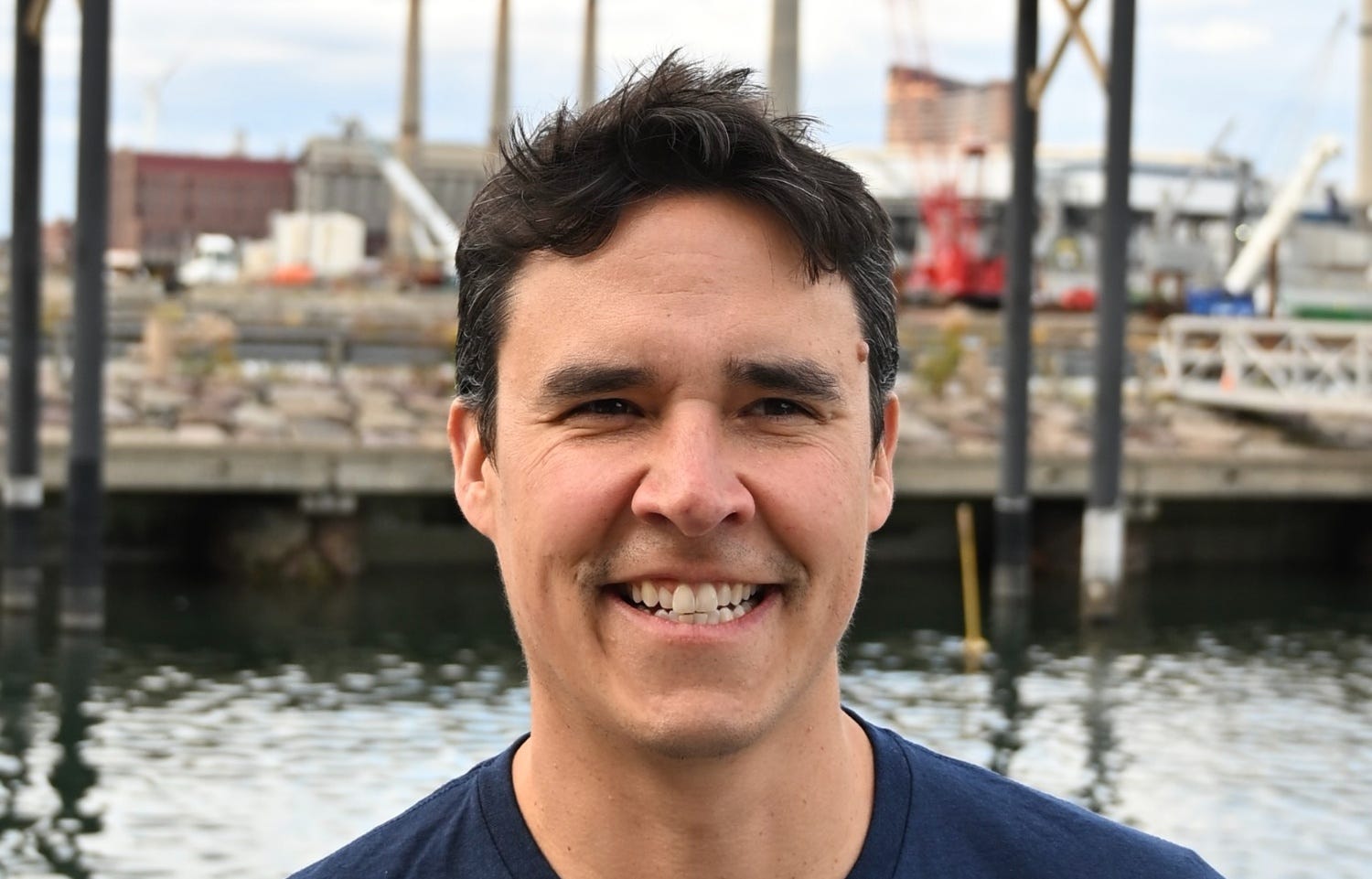 What’s up with heat-pump water heaters? | This is a public episode. If you'd like to discuss this with other subscribers or get access to bonus episodes, visit www.volts.wtf/subscribeHeat pump water heaters use a fraction of the energy of conventional electric resistance heaters — which use more electricity in a year than an EV — but they're only 2 percent of the market, mainly because they tend to cost more, be slow and loud, and require a plumber and an electrician. Reservoir is a Boston company trying to fix all that, with a smarter, quieter machine and its own plumbers. I talk with CEO Luke Winston-Almanzar about how it works, what it costs, and its potential role in demand response programs.Chapters:00:00 – Introduction03:06 – Why water heaters06:34 – How gas, resistance, and heat pump water heaters work09:33 – Size and slow recovery: predictive heating and party mode15:31 – Installation and vertical integration22:19 – Cutting electric resistance backup20:31 – What Reservoir builds and what it sources23:41 – Tankless gas, virtual capacity, and the booster heater27:11 – Recirculation, freeze protection, leak detection, and Legionella32:03 – What it costs and what it saves36:01 – Placement: small rooms, basements, and cold climates42:37 – Noise and durability48:19 – Demand response and virtual power plants53:22 – A. O. Smith’s CO2 split system and Reservoir’s moat55:54 – Policy headwinds after the IRA59:29 – What’s next for Reservoir | 1h 04m 53s | ||||||
| 9/23/26 |  Do small residential batteries make sense? | This is a public episode. If you'd like to discuss this with other subscribers or get access to bonus episodes, visit www.volts.wtf/subscribeHome batteries like the Tesla Powerwall are nice, but what about people who can’t afford them, or renters who aren’t allowed to install them, or people who just don’t want the hassle of dealing with a permit and an electrician? A company called Pila is selling small (1.6 kWh) batteries that simply plug into a normal electrical socket. They can serve as backup for a refrigerator or other appliance in the event of a blackout, but they can also “mesh” with one another to form a network, pair with rooftop solar, or participate in VPP programs. CEO Cole Ashman explains the value proposition.Chapters:00:00 Introduction02:26 Lessons from Powerwall and Span05:33 What Pila is and how it works07:14 How long a fridge runs on one battery09:28 Fire risk, LFP chemistry, and New York City16:02 Why the price went up, and cost per kilowatt hour19:55 Who is actually buying Pila23:00 Financing models and free batteries27:04 Do the bill savings add up?32:05 Why utilities want small batteries in VPPs36:58 Pilots with Holy Cross Energy and Brooklyn SolarWorks41:09 Solar pairing and the Pila mesh network47:14 Camping batteries and built-in storage54:19 Utilities and visibility at the grid edge55:58 Bidirectional outlets and the next five years1:00:10 Clean energy as invisible infrastructure | 1h 05m 43s | ||||||
| 9/18/26 |  How energy politics work inside DC | This is a free preview of a paid episode. To hear more, visit www.volts.wtfBack in 2011, I wrote that fossil fuel interests had a much better media game than clean energy. My example was Frank Maisano, a media relations guy for coal utilities and the natural gas industry. Thirty years on, he’s still at it — still writing his newsletter, still connecting reporters to sources, still better at it than anyone on the clean side (sigh). So I’m finally talking to him about it: clean energy trade groups nobody in Washington fears, Trump’s daft efforts to kill renewables, the PAC picking off dirty-energy Republicans, permitting and data center fights, and the climate denial shop he worked for in the ‘90s. Spoiler: he regrets nothing.Chapters:00:00 – Introduction03:46 – What a DC media strategist actually does09:50 – Republicans, Trump, and a narrow House majority15:29 – Why tax cuts beat energy in the OBBBA fight18:54 – Competing with China on AI without the electric stack21:15 – Paying $4 billion to hand back offshore wind leases28:07 – Red-state wind and the orders keeping coal plants open32:52 – Clean energy trade groups and the building trades38:41 – Gas as a bridge, and what longer term means44:55 – Whether a half-gas trade group can serve clean energy48:43 – A coherent clean vision against an incoherent coalition51:14 – Do the green groups still scare anyone55:18 – Permitting reform and the Whitehouse-Capito path59:46 – Data centers, animal spirits, and the midterms1:06:48 – The revenge PAC, and whether it is working1:12:31 – Congress, the courts, and what Democrats could do1:18:53 – COP, climate change, and the client he would turn down | 14m 41s | ||||||
| 9/16/26 |  How to build a more flexible, quieter, less obnoxious data center | This is a public episode. If you'd like to discuss this with other subscribers or get access to bonus episodes, visit www.volts.wtf/subscribeVerrus is building data centers designed to address every objection the public has raised: they use batteries instead of diesel generators, which makes them grid assets that help hold down power prices; they use closed-loop cooling, which uses a tiny fraction of the water; their equipment is quieter; and as a bonus, they squeeze more servers into the same grid connection. Yet both of Verrus’s proposed sites, in Michigan and Oregon, are mired in fierce local opposition. In this episode, CEO Nelson Abramson walks through the engineering — and the politics that the engineering hasn’t quite solved.Chapters:00:00 – Introduction02:43 – Three decades in data centers05:05 – What a Verrus data center looks like07:39 – The medium voltage power plane12:13 – UPS batteries vs. the big LFP battery17:27 – Priority aware capping and provisioned utility capacity22:31 – Why not buy the pieces off the shelf?25:42 – Duration: what happens when four hours runs out34:28 – Diesel backup and what customers ask for37:15 – How flexible is compute, really?42:37 – Noise, fans, and the sound studies48:42 – Water use and the 12 million gallon question52:19 – Industrial land and by-right zoning56:07 – Public opposition, recall petitions, and community benefits1:00:07 – Oregon, Salem, and the moratorium1:03:56 – Ride-through, NERC, and losing the moat1:07:11 – What V2 looks like | 1h 14m 47s | ||||||
| 9/11/26 |  Building a big, abundant, clean grid | This is a public episode. If you'd like to discuss this with other subscribers or get access to bonus episodes, visit www.volts.wtf/subscribeJane Flegal has worked inside philanthropy at the Hewlett Foundation, industrial emissions policy at the Biden White House, and carbon-removal market development at Frontier; she's now a senior fellow at the Searchlight Institute, writing some of the smartest climate policy analysis around. We cover a lot of ground: industrial policy versus market approaches, what the IRA got right and wrong, philanthropy's proper role, data centers and the case for an infrastructure fund, and behind-the-meter gas, among other things. This is a long one, and spicy!Chapters:00:00 – Introduction03:11 – Flegal's thesis: building a clean grid fast enough to power growth06:29 – Why she rejects degrowth09:27 – The Roosevelt essay: climate as more than a market failure13:30 – Why clean energy underuses its political muscle15:24 – Industrial policy and the green spiral theory of change20:40 – Was IRA the right approach?22:12 – Lily Bermel's paper and the fight over what survived23:21 – What she would have done differently under IRA30:11 – Philanthropy, Silicon Valley, and what government is for33:29 – The epistemic crisis inside environmental NGOs39:09 – The abundance movement and what each faction misses44:16 – What establishment Democrats get wrong on climate46:06 – Why issue polling misleads50:34 – Republicans and the Cold War analogy52:47 – Data centers and the American Grid Infrastructure Fund59:13 – Affordability politics and who pays for the grid1:08:14 – Emissions, behind-the-meter gas, and flexible load1:13:57 – The clean firm debate: storage plus transmission?1:20:14 – Capacity markets, ERCOT, and the case for planning1:24:32 – Utility incentives, public power, and affordability fixes1:35:55 – Permitting reform and the land footprint asymmetry1:41:05 – NEPA reform and the political window1:48:21 – Where fresh policy thinking comes from | 2h 00m 45s | ||||||
Want analysis for the episodes below?Free for Pro Submit a request, we'll have your selected episodes analyzed within an hour. Free, at no cost to you, for Pro users. | |||||||||
| 9/9/26 | geothermal energyAI in exploration+3 | Carl HoilandJoel Edwards | ZanskarNV Energy | Nevada | geothermalAI+5 | — | 1h 04m 30s | ||
| 9/4/26 | energy transitioncybersecurity+4 | Saleem ChapmanPatrick Miller+7 | Volts | IdahoUruguay | energy transitioncybersecurity+6 | — | 45m 12s | ||
| 9/2/26 | disinformationclean energy+4 | Leah Qusba | GoodPowerAction for the Climate Emergency+1 | — | disinformationclean energy+5 | — | 1h 11m 49s | ||
| 8/28/26 | green policyeconomic statecraft+4 | Todd Tucker | Roosevelt InstituteU.S. Steel+1 | — | Trumpgreen policy+6 | — | 1h 08m 44s | ||
| 8/26/26 | data centersgrid flexibility+3 | Varun Sivaram | Emerald AIPJM+1 | — | data centersflexibility+5 | — | 53m 24s | ||
| 8/21/26 | utility innovationgrid technologies+4 | Quinn NakayamaHanna Grene | PG&EMicrosoft | — | utilitiesinnovation+5 | — | 1h 11m 59s | ||
| 8/19/26 | decarbonizationenergy policy+5 | Ramón Méndez Galain | Voltswww.volts.wtf | UruguayColombia+1 | decarbonizationUruguay+5 | — | 1h 02m 13s | ||
| 8/14/26 | public EV chargingreliability+3 | Seth Cutler | IONNATesla+1 | U.S. | EV chargersIONNA+5 | — | 1h 01m 56s | ||
| 8/12/26 | bipartisan housing legislationIdaho housing+3 | Ben ToewsMegan Egbert | Volts | IdahoMontana | Idahohousing legislation+5 | — | 1h 01m 48s | ||
| 8/7/26 | grid cybersecuritycyber risk+5 | Patrick Miller | Volt TyphoonSalt Typhoon+3 | UkrainePoland+2 | cybersecurityUS grid+6 | — | 1h 12m 23s | ||
| 8/5/26 |  What should state policymakers do about data centers? | This is a public episode. If you'd like to discuss this with other subscribers or get access to bonus episodes, visit www.volts.wtf/subscribeState legislatures are writing data center rules faster than they can verify the demand forecasts underneath them. Fifteen states accounted for 80 percent of data center electricity demand in 2023, a single hyperscale campus can arrive as 15 to 20 percent of a utility's demand, and the transmission to serve it takes five to 15 years to build. On this episode of Volts, David Roberts works through Climate Cabinet's Taming Data Center Turmoil series with Saleem Chapman, who leads the group's electricity affordability policy work, on why Georgia's regulated utility, PJM's capacity market, and ERCOT's competitive market each left ratepayers holding the risk, and what a state can require before it approves a project, while the facility operates, and after the deal is done.Chapters:00:00 – Introduction02:49 – How Climate Cabinet came to the data center fight03:58 – Three things that make hyperscalers unlike past industrial loads07:51 – Warning signals: forecast opacity, gas dependency, unconditional subsidies13:44 – Siting near overburdened communities and the Memphis case15:34 – State preemption versus local control18:31 – The same failure pattern in Georgia, PJM, and ERCOT23:52 – Why not just ban data centers outright28:07 – The framework, and what to require before approval34:54 – While operating: real cost pricing and on-call load flexibility37:39 – Scenario-based planning and the utility incentive problem39:37 – After the deal: new and matched clean energy43:48 – Siting standards and performance-tied incentives50:27 – Existing facilities and the threat to build elsewhere55:41 – Which states are ahead, and step one for lawmakers | 1h 03m 26s | ||||||
| 8/2/26 |  Best of July 2026 | Volts published eight conversations in July on subjects with nothing obvious in common: an Arizona utility board election, Minnesota smart meters, land value taxes in Spokane, silicon battery anodes. Yet six of them arrived at the same constraint. What stops energy infrastructure from getting built in the United States is more often written into law than into physics. On this episode, David Roberts pulls one stretch from each July conversation into a single hour, with two Minnesota utility regulators, a Spokane city council member, a Hawaii state senator, a co-founder of a battery materials company, and more.Chapters:00:00 Introduction: a new format for Volts01:22 Arizona: winning the utility elections nobody watches07:04 Minnesota: the smart meter data nobody uses12:40 Spokane: how property taxes reward empty lots17:31 Hawaii: the education gap in state energy policy22:13 The data center backlash is a politics story27:41 Why America can't build transit: procurement32:41 Clean energy after the IRA: the glass debate38:26 Silicon anodes: the other half of the battery44:47 Closing: tell me if this worked This is a public episode. If you'd like to discuss this with other subscribers or get access to bonus episodes, visit www.volts.wtf/subscribe | 45m 46s | ||||||
| 7/31/26 |  Silicon anodes for batteries unlock greater energy density and faster charging times | This is a public episode. If you'd like to discuss this with other subscribers or get access to bonus episodes, visit www.volts.wtf/subscribeMaterials in lithium-ion battery cathodes have continuously evolved since the 1990s, but anodes have stubbornly remained graphite. Now, finally, there’s some innovation on that side: silicon anodes, which engineers have struggled to master for a decade, are finally coming into wide commercialization. They enable up to five times the energy density of graphite anodes, charge many times faster, and are poised to revolutionize the battery market. In this episode, I talk with Rick Costantino, co-founder and CTO of Group14, which is selling a silicon-carbon composite material for anodes. They’re already selling to dozens of large battery manufacturers and expect silicon anodes to completely take over the market by 2030.Chapters:00:00 – Introduction and the graphite anode problem01:54 – Why silicon, and why it kept failing06:26 – From pharma to batteries: Rick's path09:24 – How SCC55 works: silicon in a carbon scaffold14:38 – The payoff: energy density and charge speed18:59 – A drop-in material, and scaling in South Korea21:11 – Where the batteries go: phones, EVs, drones24:29 – Cost versus graphite26:20 – Cycle life, calendar life, and safety31:26 – Supply chain and the silane bottleneck36:26 – Pairing with LFP, DOE support, and phones40:30 – Bringing the cost down, and competitors43:27 – The five-year outlook | 45m 50s | ||||||
| 7/29/26 |  Should we feel good about the trajectory of clean energy post-Trump? | This is a public episode. If you'd like to discuss this with other subscribers or get access to bonus episodes, visit www.volts.wtf/subscribeThe Inflation Reduction Act (IRA) established substantial tax credits for wind and solar power. Trump’s One Big Beautiful Bill Act (OBBBA) eliminated those tax credits. How much damage did that do to the overall trajectory of clean energy in the post-Trump world? A new research commentary argues that the damage was less than many had feared and that the road forward for clean energy is less about restoring those credits than about easing the permitting and interconnection constraints inhibiting renewable energy. Today I talk with author Lily Bermel about the modeling her commentary is based on and the somewhat controversial conclusions she draws from it.Chapters:00:00 The IRA, the OBBBA, and the case for optimism03:25 OBBBA - Why Bermel ran the analysis05:50 The headline numbers: 74, 71, 6708:07 Decomposing clean: solar and batteries hold, wind takes the hit12:14 The lag analysis, and the 'glass half full' perspective15:27 2.8 gigatons, and losses you can't get back18:01 The third scenario, and Trump I versus Trump II21:49 What the model leaves out: manufacturing, LPO, loans23:07 Interior's permitting campaign against wind and solar27:22 The demand surge and behind-the-meter gas32:15 Nuclear restarts, geothermal, and clean firm35:31 Booms, busts, and the electrification wave42:22Transmission, interconnection, and the ceiling46:41 Tax credits versus permitting reform51:46 Durability, polarization, and preemptive surrender60:01 Can enough storage make renewables firm?66:48 Grid utilization versus building new grid70:52 Final reflections: 2021, and what Bermel would do with a trifecta | 1h 27m 50s | ||||||
| 7/22/26 |  The US is terrible at building public transit. Here's how to get better. | This is a public episode. If you'd like to discuss this with other subscribers or get access to bonus episodes, visit www.volts.wtf/subscribeAmerica once led the world in building transit and now leads the world in what transit costs, roughly three times the international average per mile, measured not against authoritarian megaprojects but against Italy, Spain, and Japan. On this episode of Volts, David Roberts talks with Will Poff-Webster of the Institute for Progress, who put together the new Transit Abundance Playbook, and Stephanie Pollack, former head of the Massachusetts Department of Transportation and former acting administrator of the Federal Highway Administration. Their argument is that the costs are a policy choice: federal funding rules teach transit agencies to plan on a napkin and do the real work years later, to hire the lowest bidder over the one they know will deliver, and to defer to anyone holding a veto, while highways operate under looser versions of the same rules. As Pollack puts it, "if you hate transit, you should spend less on it." A surface transportation reauthorization bill is coming, and two of the playbook's proposals have already reached the House version.Chapters:00:00 Introduction: why cars work against cities03:25 Agency culture or federal law: where does the fix come from11:31 Planning: how federal funding enforces bad habits20:10 Overdesign: the Green Line stations and the frequency-first test23:40 Buses: why every agency orders a custom fleet26:53 Procurement: lowest bid versus best value32:56 Veto points and Italy’s conference of services39:56 Permitting: environmental review as a NIMBY tool45:28 State capacity: why consultant brain took over51:46 Labor costs, automation, and Section 13(c)56:19 Is any of this politically achievable?1:03:28 Final question: one reform each | 1h 07m 41s | ||||||
| 7/20/26 | data centerspublic opposition+4 | Jigar ShahJamie Nolan+1 | GallupDeploy Action+1 | — | data center backlashsocial trust+4 | — | 1h 00m 38s | ||
| 7/15/26 | electrificationenergy policy+3 | Chris Lee | Electric Innovation Initiative | HawaiiAmerica | electrificationenergy budgets+3 | — | 1h 03m 05s | ||
| 7/10/26 | land value taxurban infill+4 | Greg MillerKitty Klitzke | Center for Land economics | SpokanePennsylvania+5 | land value taxproperty taxes+5 | — | 1h 09m 56s | ||
| 7/8/26 | utility distribution spendingregulation+4 | Sydnie LiebPete Wyckoff | Minnesota PUCXcel+1 | — | distribution-system spendingcapital budgets+5 | — | 1h 08m 14s | ||
| 7/1/26 | clean energypolitics+4 | Charlie FisherNing Mosberger-Tang | Arizona utility boardutility commission | Arizona | clean energyArizona+4 | — | 55m 04s | ||
| 6/24/26 | climate changecooling technologies+3 | Ankit Kalanki | RMI | — | coolingclimate challenge+4 | — | 1h 05m 51s | ||
| 6/19/26 | home energy marketbidirectional EV charging+3 | Aseem Kapur | General MotorsGM Energy | — | General Motorshome energy management+3 | — | 55m 55s | ||
| 6/17/26 | climate changeUK politics+3 | Katie White | Climate Change Committee | UKLabour | UK climate planscarbon budget+3 | — | 1h 01m 36s | ||
| 6/10/26 | data centerselectric reliability+4 | Colin McCormickDoug Bryan | North American Electric Reliability Corporation | — | NERCdata centers+5 | — | 1h 13m 39s | ||
| 6/5/26 | fossil fuel crisiselectrification+3 | Tim SahayKate Mackenzie | Polycrisis | — | fossil fuelelectrification+3 | — | 25m 40s | ||
| 6/3/26 | clean energyplug-in DERs+3 | James McGinniss | David Energy | US | plug-in DERsclean energy+4 | — | 1h 13m 47s | ||
| 5/29/26 | clean electricitypolitical influence+4 | Steve McBee | Amped | — | clean electrificationpolitical voice+5 | — | 1h 41m 15s | ||
| 5/27/26 | Biden administrationindustrial policy+4 | Betony Jones | DOE | — | Bidenindustrial policy+5 | — | 1h 08m 02s | ||
| 5/22/26 | residential gas phase-outheat pumps+3 | Kristin George BagdanovPanama Bartholomy | Building Decarbonization Coalition | — | residential gasheat pumps+3 | — | 1h 07m 45s | ||
| 5/20/26 | electricitypower grid+4 | Pier LaFarge | SparkfundXcel Energy | MinnesotaUS | electricitybatteries+5 | — | 1h 45m 39s | ||
| 5/15/26 | US electricity gridhistory+4 | Ben EidelsonAnay Shah | StepchangeTelling the story of the grid | — | electricity gridhistory+4 | — | 33m 30s | ||
| 5/13/26 | industrial heat pumpselectrification+3 | Addison Stark | AtmosZero | — | industrial processesenergy efficiency+3 | — | 1h 04m 26s | ||
| 5/8/26 | distributed energyretail prices+3 | Bruce Nordman | Voltswww.volts.wtf | — | distributed energy resourcesdynamic pricing+3 | — | 1h 30m 12s | ||
| 4/29/26 | renewable energyinvestment+3 | Mike Silvestrini | Energea | — | renewable energyinvestment+3 | — | 1h 05m 23s | ||
| 4/27/26 | climate policyCalifornia politics+3 | Tom Steyer | investor-owned utilitiesVolts | California | Tom SteyerCalifornia governor+3 | — | 54m 51s | ||
| 4/22/26 | electricitysolar deployment+4 | Nicolas FulghumKostantsa Rangelova | Ember | IndiaChina | electricitysolar+5 | — | 1h 07m 18s | ||
| 4/20/26 | clean energy journalismnews landscape+4 | Robinson Meyer | MicrosoftIRA | Iran | clean energyjournalism+4 | — | 20m 14s | ||
| 4/17/26 | climate financeclean energy policy+3 | Beth Bafford | Climate UnitedGreenhouse Gas Reduction Fund | — | climate financeGreenhouse Gas Reduction Fund+5 | — | 59m 34s | ||
| 4/15/26 | data centerselectricity demand+3 | Jigar Shah | tech companies | — | data centerselectricity demand+3 | — | 1h 30m 57s | ||
| 4/10/26 | solar powernanogrids+3 | Lauren Flanagan | Sesame Solar | — | solar PVbatteries+3 | — | 52m 06s | ||
| 4/8/26 | climate fundinghousing policy+3 | Ben HollandCaroline Spears | climate foundationsVolts | — | climate fundershousing policy+3 | — | 1h 06m 20s | ||
| 4/3/26 | climate policyregulation+4 | Hannah SaffordLoren Schulman | Federation of American ScientistsCenter for Regulatory Ingenuity+1 | — | climate regulationfederal policy+3 | — | 1h 20m 50s | ||
| 4/1/26 | power gridinfrastructure+3 | Ian Magruder | Utilize Coalition | US | power gridcapacity+4 | — | 1h 05m 20s | ||





































Showing 53 of 448
Pitch Fit is a Pro feature
See how bookable this show is for guests, which brands already advertise, the per-episode ad value, and the best-fit guest and sponsor profile. The numbers are blurred on the free plan.
How readily this show books outside guests like you.
How proven this show is for host-read sponsorships.
For Guests
ProFor Advertisers
ProUpgrade to Pro to unlock guest cadence, sponsor categories, fit scores, and per-episode ad value for this show.
Similar Audience Demographics
Podcasts that attract a similar listener profile



Distribution & Reach
About the show, platforms, and key insights.
Distribution & Reach
About the show, platforms, and key insights.
David Roberts is an independent podcast creator known for his extensive knowledge and reporting on clean energy and climate issues. With nearly two decades of experience, he engages with a diverse range of guests, including politicians, analysts, innovators, and activists, to discuss the critical transition away from fossil fuels. "Volts" stands out for its in-depth exploration of clean energy topics, focusing on the latest advancements and challenges in the fight against climate change. The podcast's format combines insightful interviews and discussions, making complex subjects accessible and engaging for listeners. The show attracts an audience of environmentally conscious individuals, policymakers, and industry professionals who seek to understand the intricacies of the clean energy transition. By providing expert insights and fostering meaningful conversations, "Volts" delivers valuable knowledge that empowers listeners to engage in the critical dialogue surrounding sustainable energy solutions.
By the numbers
- Total followers: 2.8K
- Total plays: 99K
- Total reviews: 617
Platforms
TuneIn
- Followers: 5
Castbox
- Followers: 960
- Plays: 86K
- Reviews: 5
YouTube
- Subscribers: 664
- Views: 13K
- Videos: 142
Podcast App
- Followers: 638
- Reviews: 609
Podcast Republic
- Followers: 553
- Reviews: 3
Find them online
Audience
general
Key insights
What the show covers
- clean energy discussions
- interviews with experts
- political analysis
- activism in energy transition
Audience interests
- clean energy advancements
- fossil fuel alternatives
- political climate actions
- sustainability innovations
Platform reach
- website available
- subscriber-supported model
- no platforms detected
- unknown follower count
Publishing consistency
- weekly episodes
- active for five years
- over 400 episodes
- reliable content schedule
Chart history for Volts
Peaked at #16 in MY, currently #16 in MY.
| Market | Genre | Peak | Current | Trend |
|---|---|---|---|---|
| MY | — | #16 | #16 | — |
| HK | — | #27 | #27 | — |
| Brazil | — | #28 | #28 | — |
| NG | — | #52 | #52 | — |
| KE | — | #81 | #81 | — |
| CL | — | #85 | #85 | — |
| VN | — | #86 | #86 | — |
| Finland | — | #93 | #93 | — |
| Denmark | — | #98 | #98 | — |
| United States | — | #114 | #114 | — |
| MY | — | #116 | #116 | — |
| Australia | — | #120 | #120 | — |
| PE | — | #123 | #123 | — |
| HK | — | #133 | #133 | — |
| Brazil | — | #139 | #139 | — |
| Ireland | — | #145 | #145 | — |
| SG | — | #168 | #168 | — |
| India | — | #169 | #169 | — |
| IS | — | #170 | #170 | — |
| TW | — | #170 | #170 | — |
Chart Positions
25 placements across 22 markets.
Chart Positions
25 placements across 22 markets.