
Scalability School
Scalability School is your cheat code for building a more profitable DTC brand or agency. We break down tactical strategies, real-time wins, and tough lessons from three powerful perspectives: operator, agency, and commu...
Insights from recent episode analysis
Audience Interest
Podcast Focus
Publishing Consistency
Platform Reach
Insights are generated by CastFox AI using publicly available data, episode content, and proprietary models.
Total monthly reach
Based on the show's feed history.
Built from
By chart position
- 🇮🇹Italy · Marketing#9245 to 2.2K
- 🇭🇰HK · Marketing#752 to 20
- 🇰🇷South Korea · Marketing#1841 to 13
- 🇵🇹Portugal · Marketing#1491 to 7
- Per-Episode Audience
Est. listeners per new episode within ~30 days
250 to 2.3K🎙 Weekly cadence·40 episodes·Last published 6d ago - Monthly Reach
Unique listeners across all episodes (30 days)
500 to 4.5K🇺🇸71%🇮🇹28% - Active Followers
Loyal subscribers who consistently listen
275 to 2.5K
Market Insights
Platform Distribution
Reach across major podcast platforms, updated hourly
Total Followers
—
Total Plays
—
Total Reviews
—
* Data sourced directly from platform APIs and aggregated hourly across all major podcast directories.
| Date | Episode | Description | Length | ||||||
|---|---|---|---|---|---|---|---|---|---|
| 10/22/26 |  How to Use Category Entry Points to Scale Your Meta Ads | Tyson Drake | Question: What are category entry points, and how do you use them in Meta ads?Direct answer: Category entry points are the buying situations that make someone think of a category, like standing front row at a concert or lying awake next to a snoring partner, and the more of them a brand is linked to, the larger its share of mind and its share of sales. To use them, map situations across the whole category with the 7 W's rather than relying on your own customer surveys, score each one on size, frequency and brand fit, then launch ads that call out and show the situation. Tyson Drake recommends that situation-led ads carry more than half of ad account spend, ideally 60 to 80 percent, with roughly 80 percent of creative effort going into proven entry points and 20 percent into new ones.Category entry points are the buying situations that make someone think of yourcategory, and the more of them your brand owns in a customer's head, the more ofthe category's sales you take. Brad Ploch sits down with Tyson Drake, former CMOof The Oodie and now a fractional CMO for eight and nine figure DTC brands, toturn the Ehrenberg-Bass research into a tactical playbook for Meta ads. You'lllearn how to find category entry points with the 7 W's, how to prioritize themby size, frequency and brand fit, and how to launch, tag and scale the creative.We discuss:- What a category entry point is, and why nobody wakes up thinking "I need testosterone"- How mental availability works, and why brands thought of in more buying situations sell more- Category entry point examples, from front row at a Metallica show to a snoring partner- The difference between a persona and a category entry point- Why your own post-purchase surveys bias the research, and where to look instead- The 7 W's framework for mapping buying situations- How to prioritize entry points with ICE scoring, search data and frequency- Why situation-led ads should carry more than half of your ad spend- Statics vs video, and the naming conventions that make entry points trackable- The 80/20 explore vs exploit split, and how Loop grew beyond festivalsThis episode of the Scalability School podcast is sponsored by NorthBeam and they just launched Northbeam Incrementality. Northbeam Incrementality gives you easy, automated, self-service incrementality tests, while protecting you from the major mistakes so many people make while running incrementality tests. Your MTA handles the daily tactics, your MMM guides the long-term planning, and Incrementality provides the causal truth. It’s a closed loop that allows you to scale what works and cut what doesn't. Right now when you head over to www.northbeam.io/incrementality, they’re offering Scalability School listeners 50% off unlimited tests for a year when you join. Just tell them we sent you!Follow Tyson Drake on X: https://x.com/tysondrakeGet the newsletter: https://www.scalabilityschool.com/scalability-newsletterLearn more: https://www.scalabilityschool.comScalability School is a weekly show from Andrew Foxwell, Brad Ploch, and ZachStuck about what is actually working right now in DTC growth. No theory, norecycled LinkedIn takes, just the numbers and decisions behind real brands andreal ad accounts.Chapters01:25 How Tyson Drake scaled The Oodie and taught himself marketing08:05 Mental availability: the research behind category entry points11:23 Category entry point examples: concerts, flights, snoring partners17:01 Category entry points vs personas: what's the difference?19:17 How to find category entry points with the 7 W's28:56 How to prioritize category entry points: ICE, size and frequency33:47 Why mental market share predicts sales market share38:36 How to launch entry point ads: statics, video and naming conventions47:07 Explore vs exploit: how to scale a winning entry point (01:25) - How Tyson Drake scaled The Oodie and taught himself marketing (08:05) - Mental availability: the research behind category entry points (11:23) - Category entry point examples: concerts, flights, snoring partners (17:01) - Category entry points vs personas: what's the difference? (19:17) - How to find category entry points with the 7 W's (28:56) - How to prioritize category entry points: ICE, size and frequency (33:47) - Why mental market share predicts sales market share (38:36) - How to launch entry point ads: statics, video and naming conventions (47:07) - Explore vs exploit: how to scale a winning entry point | 55m 48s | ||||||
| 10/8/26 |  Ecommerce A/B Tests That Won (and the Best Practices That Lost) | EP 40 | What should DTC brands A/B test to increase revenue per visitor?Test the variables that change how the offer is perceived before you test reassurance. In Brad Ploch's recent split tests, cutting a $279 product's sale price from $229 to $199 lifted revenue per visitor 44%, adding six problem-focused questions to a quiz doubled it, and swapping the post-purchase offer took upsell revenue per visitor from about $2 to $10. Trust signals went the other way: a bolder warranty line cut conversion 7.5%, full reviews lost 10% of profit per session to an AI summary, and USP blocks at checkout changed nothing.The ecommerce A/B tests that paid off this season all changed how the offer is framed: the price point, how long a quiz lets shoppers sit in their problem, how plainly a headline states the USP, and where Meta sends the traffic. The "trust signal" best practices most brands assume are safe (a louder warranty, more reviews, reassurance at checkout) lost or did nothing. Andrew Foxwell and Brad Ploch walk through more than a dozen real split tests from DTC brands, with the numbers behind the winners and the losers.We discuss:- Why dropping a $279 product from $229 to $199 lifted revenue per visitor 44% and more than covered the margin hit- The six extra quiz questions that doubled revenue per visitor, and the switcher review that cost 8%- Why these "trust" signals ultimately backfired- How a plain USP headline beat ALL of the clever ones during a collection page headline test on $2M in revenue- Why USP and review blocks at checkout changed nothing- One ad, five landing pages, one CBO: how weekly spend doubled & efficiency improved- The post-purchase offer swap that took upsell revenue per visitor from about $2 to $10- Longer product pages for premium products, and preorder vs. sold outSubscribe to never miss an episode.Get the newsletter: https://www.scalabilityschool.com/scalability-newsletterThis episode of the Scalability School podcast is sponsored by NorthBeam and they just launched Northbeam Incrementality. Northbeam Incrementality gives you easy, automated, self-service incrementality tests, while protecting you from the major mistakes so many people make while running incrementality tests. Your MTA handles the daily tactics, your MMM guides the long-term planning, and Incrementality provides the causal truth. It’s a closed loop that allows you to scale what works and cut what doesn't. Right now when you head over to www.northbeam.io/incrementality, they’re offering Scalability School listeners 50% off unlimited tests for a year when you join. Just tell them we sent you!To connect with Andrew Foxwell send an email [email protected] connect with Brad Ploch send him a DM at https://x.com/brad_plochTo connect with Zach Stuck send him a DM at https://x.com/zachmstuckScalability School is a weekly show from Andrew Foxwell, Brad Ploch, and ZachStuck about what is actually working right now in DTC growth. No theory, norecycled LinkedIn takes, just the numbers and decisions behind real brands andreal ad accounts.Chapters00:00 Ecommerce A/B tests: what won, what lost, and why02:06 Price testing: why $199 beat $229 by 44% revenue per visitor07:08 How to build a quiz funnel in Claude, and the button that added 20%12:04 "Sit in the problem longer": the quiz change that doubled revenue22:30 Why more trust signals lowered conversion: warranty, reviews, AI summaries33:53 Clear beats clever: a collection page headline test on $2M in revenue38:18 Do USP and review blocks at checkout lift conversion?41:55 One ad, five landing pages: how weekly spend doubled47:41 How to audit your post-purchase upsell50:54 Longer product pages for premium products, plus preorder vs. sold out (00:00) - Ecommerce A/B tests: what won, what lost, and why (02:06) - Price testing: why $199 beat $229 by 44% revenue per visitor (07:08) - How to build a quiz funnel in Claude, and the button that added 20% (12:04) - "Sit in the problem longer": the quiz change that doubled revenue (22:30) - Why more trust signals lowered conversion: warranty, reviews, AI summaries (33:53) - Clear beats clever: a collection page headline test on $2M in revenue (38:18) - Do USP and review blocks at checkout lift conversion? (41:55) - One ad, five landing pages: how weekly spend doubled (47:41) - How to audit your post-purchase upsell (50:54) - Longer product pages for premium products, plus preorder vs. sold out | 58m 05s | ||||||
| 9/24/26 |  DTC Offer Strategy: Raising Your Price Without Losing Conversions | Brian Ng | How do you build a DTC offer that raises profit without hurting conversion rate? Simplify the offer so a shopper understands it in seconds, then raise MSRP so you can show a bigger discount at a higher final price. The offers scaling DTC brands run today are buy more save more, a discounted first subscription order, or tiered dollar-off bundles. Brian Ng of Digital Ride raised one brand's MSRP to $74.95 behind a 50% discount and saw conversion rate hold steady while the brand moved from a monthly loss to profit. In this episode, Andrew Foxwell, Brad Ploch and Zach Stuck talk DTC offer strategy with Brian Ng of Digital Ride, covering how to raise prices without losing conversions, the three offers scaling brands run right now, and how a $10M a month brand manages creative with outside agencies. You'll learn why raising MSRP behind a bigger discount can lift profit at the same conversion rate, how to test a new offer with a single URL parameter, and why more creative volume often makes performance worse. We discuss: What a bad DTC offer looks like, and why confusing offer pages lose the sale The three offer structures scaling DTC brands use: buy more save more, subscription-first, and tiered bundles How Brian raised MSRP to $74.95 behind a 50% discount and turned a monthly loss into profit How to test offers with Convert or Intelligems experiments versus sending ads to a new landing page How to forecast ecommerce revenue year over year and why you shouldn't scale before new customer ROAS is there Running a $10M a month brand's creative through three agencies with no in-house strategists Pricing psychology: why $39.99 beats $35.99, and a $30 price change that lifted profit per session 40% Get the newsletter: https://www.scalabilityschool.com/scalability-newsletter Learn more: https://www.scalabilityschool.com This episode of the Scalability School podcast is sponsored by NorthBeam and they just launched Northbeam Incrementality. Northbeam Incrementality gives you easy, automated, self-service incrementality tests, while protecting you from the major mistakes so many people make while running incrementality tests. Your MTA handles the daily tactics, your MMM guides the long-term planning, and Incrementality provides the causal truth. It's a closed loop that allows you to scale what works and cut what doesn't. Right now when you head over to www.northbeam.io/incrementality, they're offering Scalability School listeners 50% off unlimited tests for a year when you join. Just tell them we sent you! To connect with Brian Ng: https://x.com/briannjho To connect with Andrew Foxwell send an email [email protected] To connect with Brad Ploch send him a DM at https://x.com/brad_ploch To connect with Zach Stuck send him a DM at https://x.com/zachmstuck Learn more about the Foxwell Founders Community at https://foxwellfounders.com Learn more about the The Hive Haus Creators Community at http://HiveHausUGC.com Scalability School is the podcast for media buyers, agency owners and DTC operators who want to grow without guessing, hosted by Andrew Foxwell, Brad Ploch and Zach Stuck. Chapters 00:00 DTC offer strategy: why $39.99 beats $35.99 02:35 How Digital Ride grows DTC brands as a growth partner 05:27 How to forecast ecommerce revenue year over year 08:56 Can creative agencies replace an in-house creative team? 14:26 How much creative a $10M/month brand launches 22:29 The 3 offers scaling DTC brands run right now 23:55 How to test a new offer: Convert experiments vs new landing pages 25:29 How raising MSRP turned a monthly loss into profit 30:25 Pricing psychology: the $30 price change that lifted profit 40% | 36m 18s | ||||||
| 9/9/26 |  How to Scale a Subscription App to $25K/Day on Meta Ads | How do you scale a subscription app with Meta ads? Start with an offer whose value is obviously outsized for the price, then test the packaging rather than the product. Format Finder moved from a single $97 plan to $29, $59, and $97 tiers, and the single change that moved AOV the most was toggling annual billing on by default. Free trials failed outright because the cost to acquire a trial on Meta never backed out. Target customers with a need rather than a want, since need-driven buyers churn less and complain less, and turn your best users into your ad creators by paying them a percentage of the spend their ads carry. Scaling a subscription app with Meta ads comes down to the offer, the pricing packaging, and where the creative comes from. Brad Ploch and Zach Stuck sit down with Naveed, who went from affiliate marketing to a 45-person performance agency to an ecommerce brand to Format Finder, the app he built in three weeks and now runs at $20,000 to $25,000 a day in Meta ad spend. You'll learn how he builds an offer, the pricing tests that worked and the one that failed, the campaign structure behind the spend, and the creator flywheel that turns his own users into his best-performing ads. We discuss: - How to tell whether an offer is worth running before you spend a dollar - Why problem-solution fit matters more than unit economics at the start - The move from a single $97 plan to $29, $59, and $97 tiers, and why the free trial never backed out on Meta - The pricing change that moved AOV the most, and it was not the price - Why customers with a need churn less than customers with a want, and how a realtor funnel tested that theory - Why he runs one CBO split by geo, no ABO testing, and no interest targeting - The creator flywheel: users who hit a million views make his ads and take 5% of the spend those ads carry - What a one-click AI video editor actually costs to run, and how SaaS margins survive per-user API fees - How he runs the ad account, customer service, and product development through AI agents in Telegram and Slack - Why the harness around the model matters more than the model Subscribe for a new episode every week. Get the newsletter: https://www.scalabilityschool.com/scalability-newsletter Learn more: https://www.scalabilityschool.com Connect with Naveed https://x.com/navuud To connect with Andrew Foxwell send an email [email protected] To connect with Brad Ploch send him a DM at https://x.com/brad_ploch To connect with Zach Stuck send him a DM at https://x.com/zachmstuck Learn more about the Foxwell Founders Community at https://foxwellfounders.com Learn more about the The Hive Haus Creators Community at http://HiveHausUGC.com Scalability School is a weekly show from Andrew Foxwell, Brad Ploch, and Zach Stuck about what is actually working right now in DTC growth. No theory, no recycled LinkedIn takes, just the numbers and decisions behind real brands and real ad accounts. Chapters 00:00 How to scale a subscription app with Meta ads 00:29 Meet Naveed: Switch Research to Format Finder 02:45 From affiliate marketing to a 45-person performance agency 04:06 Getting banned by Meta and what it exposed 05:45 Why the ecommerce inventory cycle burned him out 08:10 How One Peak turned viral videos into a course business 10:10 Building Format Finder in three weeks with AI 11:50 What the app does, from format quiz to finished cut 13:15 Why the offer is the biggest lever nobody talks about 16:18 How to price a subscription without killing conversion 19:15 The pricing change that moved AOV the most 19:55 Why customers with a need beat customers with a want 22:05 A word from Northbeam 23:20 Why your ad does the targeting, not your audience settings 24:45 Ad account structure: one CBO, no ABO testing 25:31 The creator flywheel: paying users 5% of ad spend 28:35 How the video editor cut churn and unlocked scale 29:35 SaaS margins when every user burns API tokens 32:50 Why the TAM for creator tools is enormous 37:50 Running ads, support, and dev through AI agents 42:00 Where to find Naveed | 43m 53s | ||||||
| 8/27/26 |  What You Should Pay a DTC Agency in 2026: Real Pricing Benchmarks | EP 37 | How much should you pay a DTC agency in 2026? For Meta ads management on its own, the market has settled between $2,500 and $5,000 a month, and paying above $5,000 only makes sense when the brand spends six figures a month or the scope adds creative, forecasting, and CRO. Creative is the one line item worth paying at the top of the market, because a single breakout ad can add $20,000 to $50,000 a month in profitable spend. Percentage-of-spend deals are fair when they carry a hard cap and a CPA or ROAS target attached, and they should never be charged against branded search. DTC agency pricing is all over the map, so Andrew Foxwell, Brad Ploch, and Zach Stuck break down what you should actually pay in 2026 using a Foxwell Founders survey of 200+ agencies. You'll learn the real retainer ranges for Meta ads management, when percentage of spend is fair and when it is a red flag, what a media buyer should be doing to earn the fee, and what creative, email, SMS, landing pages, and CRO cost right now. We discuss: What 200+ agencies reported charging, and why 4 out of 5 quote a flat retainer or a retainer plus a percentage of spend Why $2,500 to $5,000 a month has become the market rate for Meta ads management with no creative attached When to keep an agency, bring it in-house, or pay up for one exceptional freelancer Why percentage of spend only works with a hard cap and a CPA or ROAS target At what monthly spend incrementality testing starts to matter Why nobody should charge a percentage of spend on branded search Why creative is the one agency worth paying the most for What to pay content creators directly, with and without whitelisting Email and SMS pricing, and the attribution model that gets brands fleeced Landing page and CRO pricing per page and per month, plus five fixes that work on almost every store Get the newsletter: https://www.scalabilityschool.com/scalability-newsletter Full Episode and transcript: https://www.scalabilityschool.com/scalability-school-podcast/what-you-should-pay-a-dtc-agency-in-2026Learn more: https://www.scalabilityschool.com This episode of the Scalability School podcast is sponsored by NorthBeam and they just launched Northbeam Incrementality. Northbeam Incrementality gives you easy, automated, self-service incrementality tests, while protecting you from the major mistakes so many people make while running incrementality tests. Your MTA handles the daily tactics, your MMM guides the long-term planning, and Incrementality provides the causal truth. It's a closed loop that allows you to scale what works and cut what doesn't. Right now when you head over to www.northbeam.io/incrementality, they're offering Scalability School listeners 50% off unlimited tests for a year when you join. Just tell them we sent you! To connect with Andrew Foxwell send an email [email protected] To connect with Brad Ploch send him a DM at https://x.com/brad_ploch To connect with Zach Stuck send him a DM at https://x.com/zachmstuck Learn more about the Foxwell Founders Community at https://foxwellfounders.com Learn more about the The Hive Haus Creators Community at http://HiveHausUGC.com Scalability School is a weekly show from Andrew Foxwell, Brad Ploch, and Zach Stuck about what is actually working right now in DTC growth. No theory, no recycled LinkedIn takes, just the numbers and decisions behind real brands and real ad accounts. Chapters 00:00 What you should pay a DTC agency in 2026 01:58 What 200+ agencies told us about how they price 02:45 Meta ads management pricing: the floor, the market rate, the ceiling 04:42 Should the fee be flat, or tied to performance? 05:13 Why $3K to $5K became the market rate for ad management 07:36 When to use an agency, go in-house, or hire a freelancer 10:20 Why percentage of spend works when you cap it 11:01 What a media buyer should actually do to earn the fee 16:52 The gap between pressing buttons and real media buying 19:17 At what monthly spend does incrementality actually matter? 22:42 Google Ads agency pricing and the branded search problem 28:45 Creative agency pricing and why it is worth paying the most for 31:45 What to pay content creators directly 35:58 Email and SMS agency pricing without getting fleeced 39:42 Onshore vs offshore teams and what actually changes 43:20 Landing page and CRO pricing, per page and per month 48:15 How fast a landing page should go from idea to live 50:03 Five CRO fixes that work on almost every store | 53m 37s | ||||||
| 8/13/26 |  How to Build a 9-Figure Performance Creative Team | Joanna Wallace | How do you build a performance creative team for a DTC brand? Start with the most experienced hire you can afford, a director-level player-coach for nine-figure brands, a senior agency-trained strategist for smaller ones, and let them build the team top-down, using freelancers to fill gaps while full-time roles get approved. Match output goals to headcount, because ad volume is determined by team size, and vet every candidate with a paid assessment that tests both craft and how they use AI. Building a performance creative team starts with hiring the most experienced brain you can afford, a director-level player-coach, then filling in strategists, editors, designers, and a creator manager around them. In this episode, Andrew Foxwell and Brad Ploch sit down with Joanna Wallace, who founded the creative department at HexClad and served as VP of Creative Strategy at Birddogs, to map out exactly who to hire, in what order, what they cost, and how to test them before you commit millions in ad spend to their strategy. We discuss: Why going cheap on your first creative hire is the most expensive mistake in DTC What a creative strategy director actually costs in 2026 (It's not what you think) and why Why your ad volume is determined by your team size, full stop Why agency experience beats brand-side experience for strategist hires How to run paid assessments that expose AI-generated word salad The coordinator role: the smartest entry point into creative strategy Join The Scalability School Newsletter: https://www.scalabilityschool.com/scalability-newsletter Connect with Joanna Wallace: https://www.linkedin.com/in/joannasloamewallace/ Joanna's creative strategist evaluation template: To connect with Andrew Foxwell send an email [email protected] To connect with Brad Ploch send him a DM at https://x.com/brad_ploch To connect with Zach Stuck send him a DM at https://x.com/zachmstuck Learn more about the Foxwell Founders Community at https://foxwellfounders.com Learn more about the The Hive Haus Creators Community at http://HiveHausUGC.com. This episode of the Scalability School podcast is sponsored by NorthBeam and they just launched Northbeam Incrementality. Northbeam Incrementality gives you easy, automated, self-service incrementality tests, while protecting you from the major mistakes so many people make while running incrementality tests. Your MTA handles the daily tactics, your MMM guides the long-term planning, and Incrementality provides the causal truth. It's a closed loop that allows you to scale what works and cut what doesn't. Right now when you head over to www.northbeam.io/incrementality, they're offering Scalability School listeners 50% off unlimited tests for a year when you join. Just tell them we sent you! Scalability School is the podcast for DTC media buyers and e-commerce operators who want to scale profitably — hosted by Andrew Foxwell, Brad Ploch, and Zach Stuck. Chapters 00:00 How to build a performance creative team for a DTC brand 02:02 The #1 hiring mistake: going cheap on your first creative hire 03:04 What a creative strategy director costs in 2026 05:06 Player-coach: what the director does in the first six months 09:10 Why ad volume is determined by team size 13:13 The hiring order for seven-figure brands 18:18 Why agency experience beats brand-side experience 21:21 What nine-figure creative teams do differently 25:24 Sharing creative learnings across the whole company 31:27 Where to find great creative strategists 37:36 How to evaluate candidates with paid assessments 41:38 How to break into creative strategy (the coordinator route) 47:43 How to keep a creative team from burning out | 56m 23s | ||||||
| 7/30/26 |  Why AI Is Making Creative Strategists Lazy (And How to Fix It) | Hannah Houg & Matthew Gattozzi | In this episode, Andrew Foxwell and Brad Ploch sit down with Hannah Houg and Matthew Gattozzi to answer the question every team is quietly avoiding: how do you use AI for creative strategy without losing the judgment that makes ads work? The short answer is that you bring AI a hypothesis instead of asking it for one. You'll learn which four parts of the process to protect from AI entirely, why the briefing stage is where ad quality actually degrades, and how to give your strategists room to think without torching your output. Hannah has built ads and campaigns for 300+ DTC brands. Matthew's studio has driven $100M+ in client revenue. Both use AI daily. Both have watched it quietly weaken the same muscle they get paid for. We discuss: Why every creative brief in the space suddenly looks the same The difference between AI helping your research and AI writing your hypothesis Why AI is good at following rules and bad at breaking them, and why that matters for scale How Hannah lost the ability to write a script after a few months of AI-first drafting What a genuinely good AI input looks like (and why it's built before you open the tool) The one-sentence goal every brief needs before anyone writes a word Why building 7 personas on a $10k/month budget is a math problem, not a strategy What "deep context" actually means, and why most teams don't have it Why the efficiency-vs-quality fight is a leadership conversation, not a tools conversation Join The Scalability School Newsletter: https://www.scalabilityschool.com/scalability-newsletter This episode is sponsored by Proppel, the hiring agency that has placed more than 75 employees for Foxwell Founders members. Get 10% off your first hire when you mention the Scalability School Podcast: https://www.weareproppel.com/foxwell-founders-proppel This episode of the Scalability School podcast is sponsored by NorthBeam and they just launched Northbeam Incrementality. Northbeam Incrementality gives you easy, automated, self-service incrementality tests, while protecting you from the major mistakes so many people make while running incrementality tests. Your MTA handles the daily tactics, your MMM guides the long-term planning, and Incrementality provides the causal truth. It's a closed loop that allows you to scale what works and cut what doesn't. Right now when you head over to www.northbeam.io/incrementality, they're offering Scalability School listeners 50% off unlimited tests for a year when you join. Just tell them we sent you! To connect with Hannah Houg send a DM at: https://x.com/hannahhoug To connect with Matthew Gattozzi send a DM at: https://x.com/MatthewGattozzi To connect with Andrew Foxwell send an email [email protected] To connect with Brad Ploch send him a DM at https://x.com/brad_ploch To connect with Zach Stuck send him a DM at https://x.com/zachmstuck Learn more about the Foxwell Founders Community at https://foxwellfounders.com Learn more about the The Hive Haus Creators Community at http://HiveHausUGC.com. Chapters 00:00 Intro: why AI creative strategy is producing the same ads everywhere 04:08 Why every creative brief suddenly looks the same 07:18 What makes a great ad, and why AI can't break rules 10:22 Is research or briefing where AI actually hurts ad quality? 12:26 Why AI can't come up with the big idea 14:33 The danger of letting AI write your hypothesis 16:39 How AI quietly degrades your copywriting muscle 19:45 How to find an insight before you open AI 25:55 Why hyper-specific creative is winning on Meta right now 29:57 Why your team needs space to think, not more output 30:58 Has any LLM actually cracked ad copywriting? 33:00 Why creator talent match beats a perfect script 37:07 What a good AI input actually looks like 40:10 The one-sentence goal every creative brief needs 44:14 The persona trap that sinks small ad budgets 47:21 What "deep context" actually means 50:24 Why strategists want to slow down while owners push efficiency 53:27 Why this is a leadership problem, not a tools problem 56:32 Break your margins today for performance later 57:32 Bonus: the Michigan method | 59m 25s | ||||||
| 7/16/26 |  Meta Is Reading Your Landing Page (Most Media Buyers Have No Idea) | Brad and Zach go deep on the single biggest scaling lever most media buyers are ignoring: the landing page. The spine of the episode is a mindset shift, meaning you can scale spend without new creative, new offers, or more discounting. You scale with pages. They open with creative-to-lander congruency: the ad makes a promise and the page has to keep it. Zach shares how MarsMen now runs 33 active landing pages organized by roughly 10 messaging pillars (aging, cortisol, energy, weight loss, GLP-1, TRT vs. natural), and the company has a hard rule that no ad launches without a congruent page behind it. The reason goes beyond conversion rate: Meta's Andromeda algorithm is reading the landing page itself. Page copy is a targeting signal, not just a destination. Brad backs this with a case study: a client sending all traffic to a PDP ($41K in spend) duplicated the exact same creative to a "5 Reasons Why" page. Same spend level, substantially better ROAS, lower CPMR, and the age breakdown showed 45+ ripping harder than ever. Same ad, new audience, unlocked entirely by the page. From there they cover the format progression (listicle → advertorial → dynamic hybrid page → quiz), the specific page elements that matter (comparison charts, clear single CTA, social proof, FAQ, shoppable PDP sections injected below listicles), how to structure tests inside the ad account, kill criteria (48 hours at MarsMen's spend level, plus a "graveyard campaign" with cost controls to separate creative problems from page problems), what "winning" actually means (net new spend volume added to the account, not just beating the PDP head-to-head), and reporting (spend velocity as the success metric, heat maps, and session recordings, including one recording session that led to a single button change worth +20% revenue per session). The episode closes with the getting-started playbook: don't reinvent the template. Go pull the landers from the biggest spenders in Motion or any ad-tracking tool and copy the structure, because they all run nearly the same one. The real bottleneck is copywriting, which is much harder than people think (raw AI output without heavy pre-prompting gets you "shit copy with a bunch of em dashes"), and perfectionism: your landing pages can be uglier than your website, and your ads can be uglier than your landing pages. Use your brand font and colors, but if it's not perfect, get started. Key Takeaways Did you know Meta's Andromeda algorithm is reading your landing page copy, not just your ad, and using it to decide who sees your ads? How one brand took the exact same ad, swaped the PDP for a "5 Reasons Why" page, and matched $41K in spend at a substantially better ROAS while unlocking an entirely new age demo. What if you could scale spend without a single new creative, new offer, or deeper discount, using only landing pages? Why "my lander beat the PDP" is the wrong definition of a winning landing page test. What watching just 20 session recordings revealed that a single button change fixed. Why MarsMen refuses to launch any ad that doesn't have a congruent landing page behind it, and how they actively enforce it with 33 live landing pages. Why nearly ALL nine-figure brands run the same landing page template, and why this one thing (and not design) is the real reason your pages take forever to ship. This episode of the Scalability School podcast is sponsored by NorthBeam and they just launched Northbeam Incrementality. Northbeam Incrementality gives you easy, automated, self-service incrementality tests, while protecting you from the major mistakes so many people make while running incrementality tests. Your MTA handles the daily tactics, your MMM guides the long-term planning, and Incrementality provides the causal truth. It's a closed loop that allows you to scale what works and cut what doesn't. Right now when you head over to www.northbeam.io/incrementality, they're offering Scalability School listeners 50% off unlimited tests for a year when you join. Just tell them we sent you! Chapters 00:00 – Intro 02:42 – Creative and lander congruency: the ad makes a promise, the page has to keep it 04:20 – Mars's 33 landing pages and the "no ad without a congruent page" rule 06:48 – Organizing pages by pillar and how wide to go 09:04 – Case study: same creative, $41K PDP vs. 5 Reasons Why page (and the 45+ audience unlock) 11:27 – "Andromeda is reading the page, not just the ad" 12:52 – What CPMR is and why it's debatable as a metric 13:54 – The landing page format progression: listicle → advertorial → dynamic page → quiz 16:51 – The elements that actually move the needle on a listicle | 46m 15s | ||||||
| 7/2/26 |  We Tested Meta's Incremental Attribution on $200K/Month: Here's Why We Turned It Off. | This episode is a tactical deep dive into two of the biggest measurement questions in DTC right now, capped off with Zach Stuck joining to break down how MarsMen sets ad budgets off forecasted recurring revenue. The first half is a real client case study on Meta's Incremental Attribution (IA). Brad walks us through an apparel brand, with an AOV just over $100, strong organic and influencer traffic, and $150-200K per month in spend. A conversion lift study at the start of the year showed their one-day click ROAS almost perfectly matched their true incremental number, so 1DC became the account's benchmark. When they tested IA head-to-head against one-day click (each with its own holdout), IA looked terrible in week one, then dramatically better in weeks two and three, and the lift study combined with Triple Whale MTA data validated the win. Then Meta changed its click attribution definition in March (only outbound clicks now count as clicks, with profile clicks and comments moved to "engaged"), and IA performance deviated hard from one-day click, Triple Whale, and product-level MER. IA also stopped responding to bid adjustments. The takeaway: they reverted to one-day click, with a plan to retest IA in three to six months as Meta feeds the model more conversion lift data. The second segment covers creative cohort spend analysis: breaking down each month's spend by the month the ads were launched. If most of May's spend is running through ads launched last year, your new creative isn't earning spend and something is broken in the pipeline. If nearly all spend is from ads launched in the last 30 days, you are over-reliant on a few recent outliers. Splitting the view by evergreen versus promo ads shows whether new creative is compounding month over month, which is what actually earns the right to scale spend. Zach adds Homestead's layer on top: tracking "breakthrough" ads ($2K spend in 7 days at target) versus scaled ads every month. The final segment is Zach on how MarsMen scales: if you can forecast next month's recurring revenue, you can spend into that full amount, as long as your blended MER covers OPEX and your new-customer ROAS holds at target. He walks through the cash-flow traps (90-day subscriptions deferring revenue, promos shifting cohort behavior), MarsMen's rebuilt forecast model that applies retention curves at the individual customer level, daily new-customer targets by channel, and a reactivation play: offering discounted one-time purchases to list subscribers who never converted because they didn't want a subscription, which he estimates is worth hundreds of thousands per month. Key Takeaways Why Meta's Incremental Attribution passed a conversion lift test, only to then fall apart three weeks later. How you can REALLY spend 100% of next month's forecasted MRR on ads this month, and when that math breaks. The one thing that might be the real reason as to to why your account performance suddenly shifted after March 2026. The percentage of this month's ad spend that should come from ads you launched this month, and what it means if the answer is almost none. Is your "dead" email list quietly hiding hundreds of thousands in monthly revenue? Why one-day click beats seven-day click for brands with heavy organic traffic, and how to know which one your account should trust. What a "breakthrough ad" actually is and why your creative team should be measured on them every month. Caution: How adding a 90-day subscription offer can put your cash flow at risk 60 days later. Should subscription brands hold email, SMS, and organic to daily new-customer quotas the same way they do paid? Is the creative volume game dead, or are the people abandoning it just measuring hit rates wrong? Chapters 02:32 — Should you test Meta's Incremental Attribution in your account? 07:30 — How do you design a fair test of one-day click vs. Incremental Attribution? 11:32 — What did Meta's new click attribution definition change, and why did it break results? 14:02 — When should you turn Incremental Attribution off and go back to one-day click? 26:30 — How do you run a creative cohort analysis to see if your new ads are earning spend? 35:31 — How does a subscription brand use next month's MRR to set this month's ad budget? 46:02 — How do you turn a "dead" email list into six figures of monthly revenue? This episode of the Scalability School podcast is sponsored by NorthBeam and they just launched Northbeam Incrementality. Northbeam Incrementality gives you easy, automated, self-service incrementality tests, while protecting you from the major mistakes so many people make while running incrementality tests. Your MTA handles the daily tactics, your MMM guides the long-term planning, and Incrementality provides the causal truth. It's a closed loop that allows you to scale what works and cut what doesn't. Right now when you head over to www.northbeam.io/incrementality, they're offering Scalability School listeners 50% off unlimited tests for a year when you join. Just tell them we sent you! To connect with Andrew Foxwell send an email [email protected] To con... | 51m 13s | ||||||
| 6/18/26 |  Stop Making More Ads — Fix THIS Instead | In the words of Andrew Foxwell, "It's just the guys" and they framed this episode around one big shift: 2025 was the year of creative diversity and raw ad volume, and 2026 is the year that questions, "what is all this volume actually pointing at?" Call it a return to intentionality, and the part of the funnel many brands have been ignoring while chasing creative volume: the landing page. Brad opens by reacting to a Twitter conversation where operators sounded burnt out on the volume game, then reframes the discussion around what you can improve outside of ad creative. The crew works through Cherene's "marketing tornado" idea: If the same person sees your brand 15+ different ways, and the job is consistency of message across all of them, then it's important to arm Meta with creative, landing pages, and offers so its AI (Andromeda) can deliver the right message to the right person at the right time. The heart of the episode is landing page strategy. Zach speed-runs the page-type hierarchy, then both hosts hammer funnel congruency, the ad-to-lander-to-PDP message match they admit was a big driver of their Feb/March scaling. Brad shares a beauty-brand example where simply turning a winning founder video's transcript into a congruent listicle scaled spend 60% month-over-month (twice) with zero new ads. The short: stop hunting for the one winning page, run many congruent pages live at once, and let Meta allocate spend across them. Key Takeaways Why ad-to-landing-page-to-PDP "funnel congruency" is the piece most operators are still leaving on the table in 2026. How one brand scaled spend 60% month-over-month (twice) with zero new ads. Why you need to stop hunting for the single "winning" landing page and instead run many congruent pages live at once. What it actually means to "sell one product 50 different ways," and why your angle TAM is more important than your category TAM. Why the volume game is finally dead, and what the 2026 shift from "make more" to "what is this volume pointing at" means for your testing budget. Why a "marketing tornado," is your best bet to keep message consistency when one buyer sees your brand 15+ different ways. When it actually pays to set different CPA/ROAS targets by funnel stage and product. Why a congruent landing page will lower your CPM, CPMR and earn you a "back tap" from the Meta auction. The order you should be building and testing your landing pages. This episode of the Scalability School podcast is sponsored by NorthBeam and they just launched Northbeam Incrementality. Northbeam Incrementality gives you easy, automated, self-service incrementality tests, while protecting you from the major mistakes so many people make while running incrementality tests. Your MTA handles the daily tactics, your MMM guides the long-term planning, and Incrementality provides the causal truth. It's a closed loop that allows you to scale what works and cut what doesn't. Right now when you head over to www.northbeam.io/incrementality, they're offering Scalability School listeners 50% off unlimited tests for a year when you join. Just tell them we sent you! To connect with Andrew Foxwell send an email [email protected] To connect with Brad Ploch send him a DM at https://x.com/brad_ploch To connect with Zach Stuck send him a DM at https://x.com/zachmstuck Learn more about the Foxwell Founders Community at https://foxwellfounders.com Learn more about the The Hive Haus Creators Community at http://HiveHausUGC.com | 50m 52s | ||||||
Want analysis for the episodes below?Free for Pro Submit a request, we'll have your selected episodes analyzed within an hour. Free, at no cost to you, for Pro users. | |||||||||
| 6/4/26 |  How To Make Ads That Spend 10K Day With Harry Delmege | Harry Delmege, co-founder of Roly Poly Digital, joins Scalability School for a tactical conversation about what actually separates an ad spending $500 a day from one spending $10K a day. Harry's agency, named by Andrew's daughter Nora, has rapidly become one of the most respected creative shops in DTC by pushing back on a lot of what the industry is currently selling: high-volume AI-generated workflows, format obsession, and the relentless push to do more without slowing down to do it well. The conversation digs into Harry's creative philosophy, which he distills into three things he checks every ad against: promise, proof, and (workshopped live on the episode) puzzling (big thanks to Brad). They cover his preference for long-form "yapper" ads, why he insists on manual research over AI-assisted research, how he hires creative strategists from non-media-buying backgrounds, and why he thinks the closest thing to a real "hack" in the current environment is just relentlessly studying organic content and ripping off what's already working. Harry also shares his real take on the volume-versus-quality debate, including a pointed observation that brand-side complaints about agency performance have spiked at exactly the same time the industry adopted AI and started preaching volume. Key Takeaways What actually separates an ad that spends $500 a day from one that spends $10k a day How AI-assisted creative research is actually hurting your hit rate What is a "yapper ad" and why are most agencies/ brands not running them? Why Harry believes a U-turn on creative volume is on the horizon Where true creative innovation actually comes from and is it what you actually need for success. Why "open loops" is the most misunderstood term in creative strategy This 1 thing is the entire secret of high-performing creative. This episode of the Scalability School podcast is sponsored by NorthBeam and they just launched Northbeam Incrementality. Northbeam Incrementality gives you easy, automated, self-service incrementality tests, while protecting you from the major mistakes so many people make while running incrementality tests. Your MTA handles the daily tactics, your MMM guides the long-term planning, and Incrementality provides the causal truth. It's a closed loop that allows you to scale what works and cut what doesn't. Right now when you head over to www.northbeam.io/incrementality, they're offering Scalability School listeners 50% off unlimited tests for a year when you join. Just tell them we sent you! To connect with Harry Delmege, send him a DM at https://x.com/harrydelmege_ To connect with Andrew Foxwell send an email [email protected] To connect with Brad Ploch send him a DM at https://x.com/brad_ploch To connect with Zach Stuck send him a DM at https://x.com/zachmstuck Learn more about the Foxwell Founders Community at https://foxwellfounders.com Learn more about the The Hive Haus Creators Community at http://HiveHausUGC.com | 52m 12s | ||||||
| 5/21/26 | 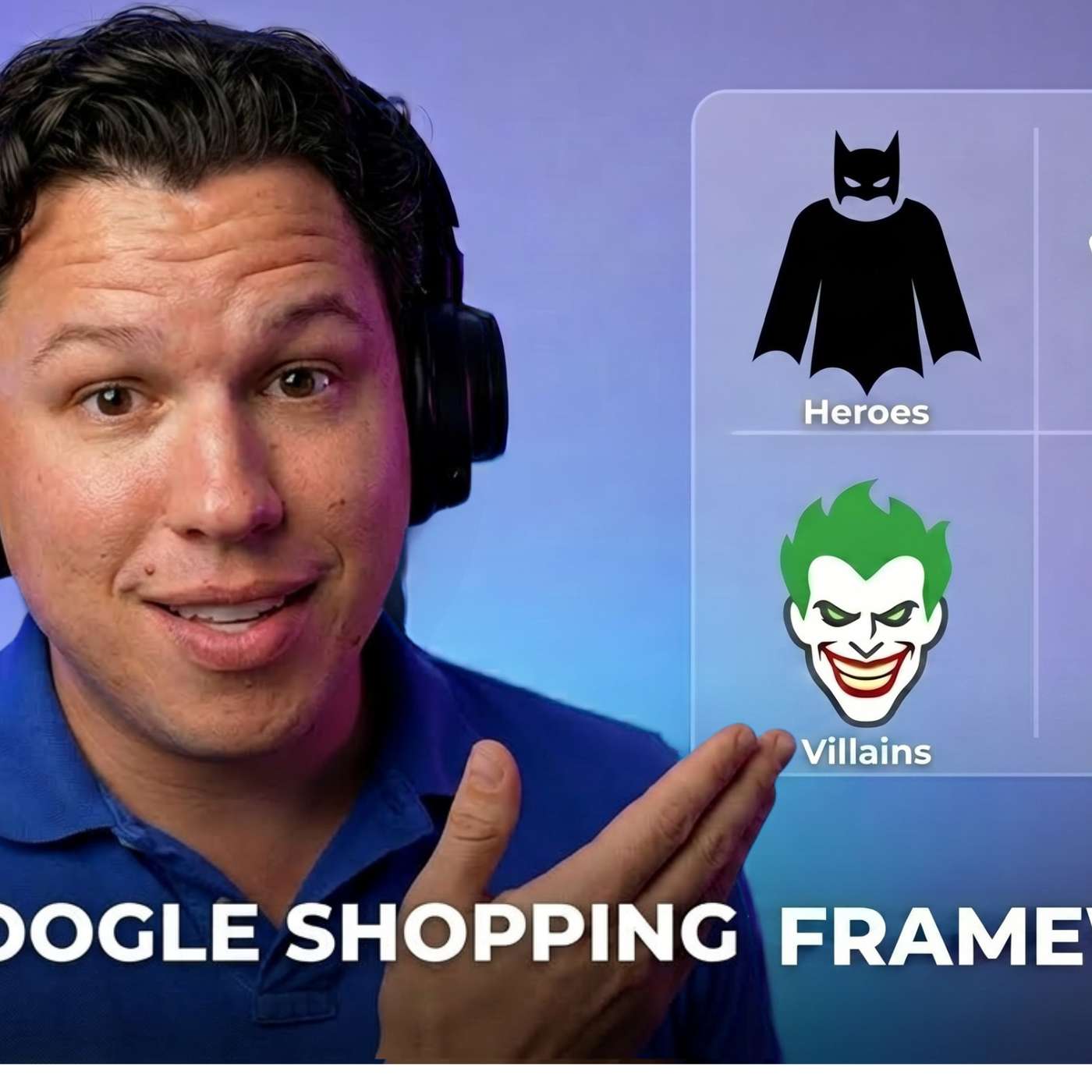 Heroes, Sidekicks, Villains & Zombies: Collin Slattery on Google Shopping | Collin Slattery (Taikun Digital) joins Brad and Andrew for a no-fluff breakdown of why Google Ads breaks the brain of most DTC operators who cut their teeth on Meta. The core argument lands early and lands hard: your relationship with Google is structurally adversarial in a way your relationship with Meta isn't, because Google can't manufacture more search inventory the way Meta manufactures more feed inventory. The only lever they have to grow revenue is extracting more from advertisers, which means every default setting, every recommendation, and every "AI enhancement" is built to serve them first. From that foundation, Collin walks through the operational stack that actually works: ruthlessly segmenting brand from non-brand across both search and shopping, building a real product feed instead of plugging Shopify into Merchant Center and calling it done, structuring shopping into heroes, sidekicks, villains, and zombies, and treating YouTube Shorts as the only YouTube placement worth touching unless you're running holdout tests. Along the way he drops a study Tyken ran across roughly $20M in spend showing that hidden search terms cost advertisers about $0.85 of efficiency per dollar spent, the case for YouTube being the single most incremental channel in digital (87% net-new traffic for one of his nine-figure clients, plus 34 million Americans reachable nowhere else), and a hard truth that Google scaling is brick-by-brick, never one banger creative away. If you've ever wondered why your Google account "kind of works but never really scales," this is the episode that explains exactly why and exactly what to do about it. Key Takeaways How your "5x Google ROAS" is actually just brand search dragging a broken non-brand campaign across the finish line. How much of your Google spend is being skimmed by search terms Google won't let you see. Why your relationship with Google is fundamentally adversarial. How to reach 34 million potential customers that literally cannot be reached on Meta or TikTok. If you're not running holdout tests, 90% of your YouTube dollars are likely going to the wrong placement. The four shopping campaign buckets every brand over $1M should be using, and the one that is silently eating 80% of your budget. Could this one setting be making your entire Google account non-incremental without you knowing? Why Google scaling looks nothing like Meta scaling and what it actually means for your monthly growth curve. The $50/month tool that fixes the feed quality issue almost every Shopify brand is silently losing money on. When paying for brand search actually makes sense This episode of the Scalability School podcast is sponsored by NorthBeam and they just launched Northbeam Incrementality. Northbeam Incrementality gives you easy, automated, self-service incrementality tests, while protecting you from the major mistakes so many people make while running incrementality tests. Your MTA handles the daily tactics, your MMM guides the long-term planning, and Incrementality provides the causal truth. It's a closed loop that allows you to scale what works and cut what doesn't. Right now when you head over to www.northbeam.io/incrementality, they're offering Scalability School listeners 50% off unlimited tests for a year when you join. Just tell them we sent you! To connect with Collin, send him a DM at https://x.com/CJSlattery or at: https://taikundigital.com/ To connect with Andrew Foxwell send an email [email protected] To connect with Brad Ploch send him a DM at https://x.com/brad_ploch To connect with Zach Stuck send him a DM at https://x.com/zachmstuck Learn More about the Foxwell Founders Community at https://foxwellfounders.com/ Learn More about the The Hive Haus Creators Community at http://HiveHausUGC.com | 52m 35s | ||||||
| 5/7/26 |  How Marin Scales Brands to 9 Figures | Marin Istvanic joins Scalability School for a deep tactical session on what it actually takes to scale e-commerce brands to nine figures with paid media on Meta. Marin is one of the most hands-on media buyers in the DTC space, managing upwards of 5 to 7 million dollars a month in ad spend across his agency clients and his own internal brand (and this episode reflects that). The conversation launches right into the hard hitting questions with the debate around ABO versus CBO and when each actually makes sense. Marin's full whitelisting flywheel (300+ influencer profiles, authority pages, dark posts running through multiple handles in the same session), cost cap weekend scaling and what he calls the "gladiators arena" ad set, how he uses different attribution settings as a signal to Meta that a campaign is structurally different, and why he still manually picks every thumbnail across all his accounts. He also shares how he used AI to synthesize his full YouTube library into a 50-page media buying philosophy document and then how he fed his top-spending ads into a landing page template that outperformed the control by 10%. Key Takeaways ABO vs. CBO - is the debate actually settled, or does the right answer depend on something most people never measure? Is whitelisting dead - or are you just running it wrong? What does a "cost cap weekend scaling" actually look like in practice — and how to spend $25K on a Saturday without blowing up your CPA? How changing this window actually tells Meta this is a different campaign. Why Marin still manually picks every thumbnail - If the "hacks" everyone is chasing are mostly noise, this is what actually moves the needle at scale. This episode of the Scalability School podcast is sponsored by NorthBeam and they just launched Northbeam Incrementality. Northbeam Incrementality gives you easy, automated, self-service incrementality tests, while protecting you from the major mistakes so many people make while running incrementality tests. Your MTA handles the daily tactics, your MMM guides the long-term planning, and Incrementality provides the causal truth. It's a closed loop that allows you to scale what works and cut what doesn't. Right now when you head over to www.northbeam.io/incrementality, they're offering Scalability School listeners 50% off unlimited tests for a year when you join. Just tell them we sent you! To connect with Marin, send him a DM at https://x.com/IstvanicMarin To connect with Andrew Foxwell send an email [email protected] To connect with Brad Ploch send him a DM at https://x.com/brad_ploch To connect with Zach Stuck send him a DM at https://x.com/zachmstuck Learn More about the Foxwell Founders Community at https://foxwellfounders.com/ Learn More about the The Hive Haus Creators Community at http://HiveHausUGC.com | 43m 14s | ||||||
| 4/23/26 |  The M&A Episode With Zach Stuck | The Zach Stuck returns to Scalability School for one of the most packed episodes to date. Coming off a massive run of activity: selling his agency, Homestead to Verndale, co-founding MarsMen and closing a $27.5M Series A with L Catterton (ofcourse lets not forget becoming a new dad, too). Zach walks through what actually happened, what it took, and what he'd do differently. The conversation covers three major arcs. First, the sale of Homestead: how it grew from Zach posting case studies on Twitter to an 85-person agency specializing in paid acquisition and email/SMS retention, why they decided to go to market when they did, and what the M&A process actually feels like when you're in the middle of it for the first time. Second, MarsMen: the origin story of the brand, the subscription-first bet that changed everything, and what it means to go from six figures a month to a nine-figure run rate by obsessing over every detail, from landing page, CRO tests, to cohort metrics. Third, the bigger picture: where agencies are headed as AI compresses margins, why surrounding yourself with people ahead of where you want to be is non-negotiable, and what it means to finally be doing the thing you always actually wanted to do. Key Takeaways What it actually feels like to sell your agency and what they never tell you before the deal closes Why media buying-only Agencies likely only have 18 months left to survive How Mars Men went from six figures to a $100M run rate in under 18 months (without raising a single dollar until it was already printing money) Knowing when the right time to raise money is for your brand (Hint: It's not when you need it the most) The one thing most agency owners never do that would make their business 10x more sellable Why Zach went from agency life to brand building and how it actually feels to be on the other side What happens when you hire for vibes and smarts over credentials This episode of the Scalability School podcast is sponsored by NorthBeam and they just launched Northbeam Incrementality. Northbeam Incrementality gives you easy, automated, self-service incrementality tests, while protecting you from the major mistakes so many people make while running incrementality tests. Your MTA handles the daily tactics, your MMM guides the long-term planning, and Incrementality provides the causal truth. It's a closed loop that allows you to scale what works and cut what doesn't. Right now when you head over to www.northbeam.io/incrementality , they're offering Scalability School listeners 50% off unlimited tests for a year when you join. Just tell them we sent you! To connect with Andrew Foxwell send an email [email protected] To connect with Brad Ploch send him a DM at https://x.com/brad_ploch To connect with Zach Stuck send him a DM at https://x.com/zachmstuck Learn More about the Foxwell Founders Community at https://foxwellfounders.com/ Learn More about the The Hive Haus Creators Community at http://HiveHausUGC.com | 55m 55s | ||||||
| 4/9/26 | 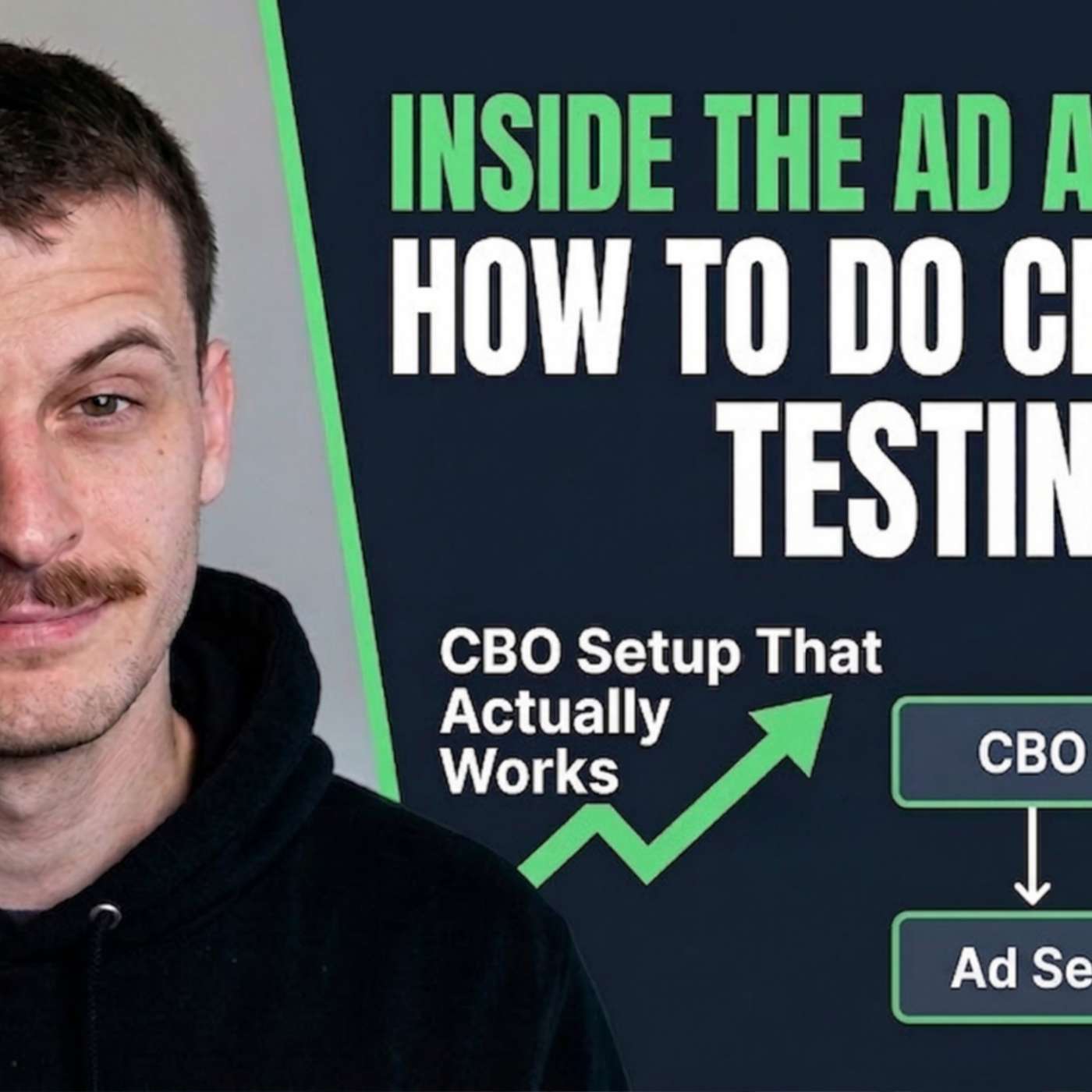 Inside The Ad Account: How To Do Creative Testing In 2026 | Host Brad flies solo to walk through exactly how his team structures Meta creative testing across eight figures a year in ad spend. The episode is a tactical follow-up to a previous episode with Phil, prompted by a viral Twitter thread Brad posted on the same topic. The core philosophy: stop trying to outthink Meta's algorithm on budget allocation. Instead, run a single CBO campaign per product or offer, treat ad sets as simple folders (not audience segments), and let Meta decide where the money goes. Brad backs this up with real ad account screenshots, shows why a higher-spending campaign with a lower ROAS can actually be healthier than it looks, and closes out with answers to the most common follow-up questions he received from the community. Key Takeaways Why Meta's algorithm is smarter than you at deciding which of your ads deserves more budget and what that means for how you should structure your campaigns. The single reason you need to stop creating more ad sets and start stacking all your ads in one. Your top-spending ad set has a lower ROAS than the one barely getting any spend, does that mean you're burning money, or is Meta showing you something you're missing? The truth behind what actually happens when you pull it into an ABO to force-test it. How do you build a creative testing system that generates consistent weekly output without needing a huge production budget or team. What "spend is a signal" actually means for your creatives and how you should decide when to turn an ad off (You might actually be turning them off too early) Is splitting your account into a testing campaign and a scaling campaign helping you, or just adding complexity that slows down Meta's learning? How new visitor percentage and frequency metrics should change the way you interpret your campaign's ROAS. The actual risk of running ads to two completely different customer personas inside the same ad set on broad targeting. How to tell when it's time to question your creative quality versus just staying patient with your launch cadence. This episode of the Scalability School podcast is sponsored by NorthBeam and they just launched Northbeam Incrementality. Northbeam Incrementality gives you easy, automated, self-service incrementality tests, while protecting you from the major mistakes so many people make while running incrementality tests. Your MTA handles the daily tactics, your MMM guides the long-term planning, and Incrementality provides the causal truth. It's a closed loop that allows you to scale what works and cut what doesn't. Right now when you head over to www.northbeam.io/incrementality , they're offering Scalability School listeners 50% off unlimited tests for a year when you join. Just tell them we sent you! To connect with Andrew Foxwell send an email [email protected] To connect with Brad Ploch send him a DM at https://x.com/brad_ploch To connect with Zach Stuck send him a DM at https://x.com/zachmstuck Learn More about the Foxwell Founders Community at https://foxwellfounders.com/ Learn More about the The Hive Haus Creators Community at http://HiveHausUGC.com | 35m 21s | ||||||
| 3/26/26 |  The Evolution of Creative Strategy With Sarah Levinger | In this episode of Scalability School, Andrew Foxwell is joined by Sarah Levenger and special guest host Will Sartoris for a deep conversation on what separates average creative strategy from high-performing creative strategy in 2026. The core theme is that winning creative is not just about producing more ads or testing more formats. It is about understanding people better. Sarah breaks down how the best creative strategists build repeatable systems for ideation, stay close to the customer experience, and work backward from business goals instead of defaulting to ad format first. From there, the episode gets tactical with a breakdown of behavioral-science principles like loss aversion, anchoring, framing effects, social proof, bandwagon effect, and System 1 vs. System 2 thinking. The big takeaway is that most brands are still overusing urgency, surface-level psychology, and creative trend chasing. The better path is sharper positioning, better message framing, more respect for the customer, and creative diversity rooted in psychology, not just format. Key takeaways Are the best creative strategists winning because they make better ads, or because they build better systems for ideas? Are you still choosing ad format first over business objective and customer type? Have you already burned through your early adopters without realizing your message needs to evolve? Are your ads accidentally disrespecting your potential customers? Should your brand be using supportive or guilt-based messaging to convert? Is plain old social proof losing power? Does your internal team believe the same thing about the brand that your customers do? Is AI helping your team think more clearly, or just helping you make more of the same content faster? This episode of the Scalability School podcast is sponsored by NorthBeam and they just launched Northbeam Incrementality. Northbeam Incrementality gives you easy, automated, self-service incrementality tests, while protecting you from the major mistakes so many people make while running incrementality tests. Your MTA handles the daily tactics, your MMM guides the long-term planning, and Incrementality provides the causal truth. It's a closed loop that allows you to scale what works and cut what doesn't. Right now when you head over to www.northbeam.io/incrementality , they're offering Scalability School listeners 50% off unlimited tests for a year when you join. Just tell them we sent you! To learn more about Sarah Levinger, you can follow her here: https://x.com/SarahLevinger To connect with Andrew Foxwell send an email [email protected] To connect with Brad Ploch send him a DM at https://x.com/brad_ploch To connect with Zach Stuck send him a DM at https://x.com/zachmstuck Learn More about the Foxwell Founders Community at https://foxwellfounders.com/ Learn More about the The Hive Haus Creators Community at http://HiveHausUGC.com | 55m 53s | ||||||
| 3/20/26 |  Uncovering Agency Trends From The Foxwell Founders 2026 Agency Report with Andrew Faris | Andrew Foxwell (Foxwell Founders / Scalability School) sits down with Andrew Faris (AJF Growth / The Andrew Faris Podcast) for a joint co-release episode to break down the findings from the Foxwell Founders x Motion 2026 State of Agencies Report. A data-rich survey of hundreds of agency owners and in-house operators across 30 countries. The conversation covers AI's dual role as the #1 growth opportunity and the #1 threat for agencies, why only 11% of agencies have produced clear top-performing AI-generated ad winners, the reality behind agency margins (42% running net margins above 30% while many founders still struggle), why in-housing is the #1 reason agencies lose clients — and why it usually backfires — and the uncomfortable truth that many agency founders grow for ego rather than strategy. Along the way, Faris offers a sharp framework on how brands should think about paying their agencies, and Foxwell shares candid coaching insights on what separates agencies that thrive from those that stall out. Key Takeaways: Why 26% of agencies say AI-powered services are their biggest growth opportunity — yet privately admit they're terrified of it? Is AI actually working for creatives or is just generating slop? (Only 11% of agencies have produced a clear top-performing AI-generated ad winner.) 42% of agencies report net margins above 30%. So why are so many agency founders telling Andrew Foxwell they're broke? Is in-housing the worst move most brands make? The gross margin range your agency should be sitting between. Are agency founders growing because they have a strategy or because they want to sit at the big [kid] agency table? When the average tenure of an in-house growth director might only be ~18 months, is there a fundamental misalignment between founders and the people they hire? If AI amplifies slop just as well as it amplifies great ideas, why do so many agencies think volume is the play? Should more brands be firing their CRO agency and building more with Claude Code? This episode of the Scalability School podcast is sponsored by NorthBeam and they just launched Northbeam Incrementality. Northbeam Incrementality gives you easy, automated, self-service incrementality tests, while protecting you from the major mistakes so many people make while running incrementality tests. Your MTA handles the daily tactics, your MMM guides the long-term planning, and Incrementality provides the causal truth. It's a closed loop that allows you to scale what works and cut what doesn't. Right now when you head over to www.northbeam.io/incrementality, they're offering Scalability School listeners 50% off unlimited tests for a year when you join. Just tell them we sent you! To learn more about Andrew Faris, The Andrew Faris Podcast and AJF Growth you can follow him on X: https://x.com/andrewjfaris Youtube: https://www.youtube.com/@andrewfarispodcast Email: [email protected] Work With AJF Growth: https://ajfgrowth.com To connect with Andrew Foxwell send an email [email protected] To connect with Brad Ploch send him a DM at https://x.com/brad_ploch To connect with Zach Stuck send him a DM at https://x.com/zachmstuck Learn More about the Foxwell Founders Community at https://foxwellfounders.com/ Learn More about the The Hive Haus Creators Community at http://HiveHausUGC.com | 52m 35s | ||||||
| 3/12/26 |  How AI Is Rebuilding Every DTC Creative Team | In this episode of the Scalability School podcast, hosts Andrew Foxwell and Brad Ploch sit down with Reza, co-founder of Motion, for a deep dive into how AI is fundamentally reshaping the way DTC creative teams operate. Reza shares his perspective on the widening gap between data-driven media buyers and creative producers, and why the most valuable professionals in the space are the ones who can bridge both worlds. The conversation covers the evolution of the creative strategist role from simple brief-writing to a full-stack function that blends paid social performance analysis, creative concepting, and now AI-powered agent workflows. Reza introduces a powerful mental model: every knowledge worker should think of themselves as an allocator of AI tokens, and the goal is to push agents to work for longer and longer stretches autonomously. The episode also explores practical use cases for AI agents in creative strategy, including analyzing thousands of agent conversations using swarms of AI workers, iterating on top-performing ads using existing footage, and how Motion's AI agent (Runneth) is processing and categorizing every ad creative to surface actionable insights. Reza drops a provocative prediction: in the near future, the only job left will be allocating AI tokens, and if you're not building that muscle now, you're falling behind. Our new "After Hours" segment dives into hooks as the DNA of creative performance, why brand teams are increasingly disconnected from the direct response engine that actually drives revenue, and how creative strategists are becoming the real mini-CMOs of DTC companies. KEY TAKEAWAYS: What if your only job is being an allocator of AI tokens? Are you still thinking of AI as a chatbot instead of a workforce? Is your creative strategist actually a mini-CMO? Why hooks are the DNA of your entire creative system. Is your brand team holding back your direct response engine? What would you do if you had to spend $2,000 in AI credits this week? Can two minutes of footage actually produce 50 unique ads? Is this the year under-hyped AI products of 2025 actually work? This episode of the Scalability School podcast is sponsored by NorthBeam and they just launched Northbeam Incrementality. Northbeam Incrementality gives you easy, automated, self-service incrementality tests, while protecting you from the major mistakes so many people make while running incrementality tests. Your MTA handles the daily tactics, your MMM guides the long-term planning, and Incrementality provides the causal truth. It's a closed loop that allows you to scale what works and cut what doesn't. Right now when you head over to northbeam.io/incrementality, they're offering Scalability School listeners 50% off unlimited tests for a year when you join. Just tell them we sent you! To learn more about Rezza and Motion you can follow him on https://x.com/rezakhadjavi, https://x.com/motionapp_ or head to https://motionapp.com/ To connect with Andrew Foxwell send an email [email protected] To connect with Brad Ploch send him a DM at https://x.com/brad_ploch To connect with Zach Stuck send him a DM at https://x.com/zachmstuck Learn More about the Foxwell Founders Community at https://foxwellfounders.com/ Learn More about the The Hive Haus Creators Community at http://HiveHausUGC.com | 55m 41s | ||||||
| 2/26/26 |  How To Test Creative On Meta In 2026 | In this episode of Scalability School, host Andrew Foxwell is joined by Phil Kiel of Taikun Digital and co-host Brad Ploch to tackle the single most-asked question in the Foxwell Founders community: how do you actually test creative on Meta in 2026? The question was asked over 160 times in just 45 days, making it the undisputed #1 topic among media buyers and brand operators in the community. The conversation digs into two distinct camps of creative testing, forced spend (ABO) versus letting ads earn spend (CBO) and unpacks the real-world pros, cons, and trade-offs of each. Phil, who runs accounts at significant scale, makes a compelling case for the CBO-first, content-centric approach, arguing that the role of Meta's algorithm is to allocate spend to the best creative, not for buyers to manually dictate it. The episode also confronts the volume trap: the pressure media buyers feel to launch massive quantities of ads every month. Phil's take is refreshing and practical, 8 to 10 solid concepts per month (roughly 40–50 assets) is a solid starting point for most brands, built around strong creative briefs rather than raw volume. The hosts challenge the Twitter/X culture of flex-posting ad launch numbers, arguing the real metric that matters is creative quality and concept diversity. Key Takeaways: Are you forcing spend into creative tests and accidentally funding your worst ads? Is the ad set structure in your Meta account actually doing anything, or is it just an expensive folder? How many new creative concepts should you be launching per month? CBO vs. ABO for creative testing: which one is actually right for your account right now? Why launching too many ads may be training your account to spend on losers. What does it actually mean to 'let ads earn spend' and how to know when a creative concept has really failed versus just not getting a fair shot. Why creative volume is the wrong metric to optimize and what you should be tracking instead. What's the difference between a creative concept and an ad asset? The one thing you should do today if you're a brand owner paralyzed by creative output pressure. This episode of the Scalability School podcast is sponsored by NorthBeam and they just launched Northbeam Incrementality. Northbeam Incrementality gives you easy, automated, self-service incrementality tests, while protecting you from the major mistakes so many people make while running incrementality tests. Your MTA handles the daily tactics, your MMM guides the long-term planning, and Incrementality provides the causal truth. It's a closed loop that allows you to scale what works and cut what doesn't. Right now when you head over to northbeam.io/incrementality, they're offering Scalability School listeners 50% off unlimited tests for a year when you join. Just tell them we sent you! To learn more about Phil Kiel and the Taikun Digital team you can follow him on X https://x.com/PhilKiel or head to https://www.taikundigital.com/ To connect with Andrew Foxwell send an email [email protected] To connect with Brad Ploch send him a DM at https://x.com/brad_ploch To connect with Zach Stuck send him a DM at https://x.com/zachmstuck Learn More about the Foxwell Founders Community at https://foxwellfounders.com/ Learn More about the The Hive Haus Creators Community at http://HiveHausUGC.com | 56m 28s | ||||||
| 2/12/26 |  Rolling Reach And Other Metrics For Scaling | This episode is like a Meta scaling "early warning system" masterclass. Andrew, Brad, and guest Kurt Bullock break down why so many media buyers hit a plateau (even when ROAS looks "fine") and how to diagnose it before performance rolls over. The core idea: Understanding CPMR to give you a clearer view of whether you're actually expanding into new pockets of the market or just recycling the same people harder and harder. They walk through how Meta's rolling reach report works, a sliding-window version that's more useful for ongoing decision-making, how to interpret overlap, and what to do when the numbers signal saturation (creative diversity, different angles/personas, bidding/exclusions tests, quiz-style funnels, etc.).Kurt also shares on the tool he's developed with the Foxwell Founders Community that automates these reports. Key takeaways - What's actually happing if your scaling spend while your rolling reach is flat. What comes next when ROAS looks stable… but your net new reach % is dropping The difference between rolling reach vs net new reach… and which one will predict your ad fatigue. How tracking this metric will help you spot when delivery is getting expensive due to audience fatigue. Are your "winning" campaigns winning because they're good… or because they're overlapping like crazy with what's already working? The overlap % is the "uh oh" zone of death for reaching Net New Customers How you might be leaning too hard on one motivator/angle and keeping Meta from finding new pockets even when launching fresh ads. Why whitelisting is known for lowering CPMR and unlocking different ad distribution. - Why testing with exclusions is still a good practice for your campaigns. If you had one report to tell you "you're fine today, but cooked next month," would you be running it weekly? To Get the Net New Reach Reporting Tool, head to https://tools.producedept.co/ This episode of the Scalability School podcast is sponsored by NorthBeam and they just launched Northbeam Incrementality. Northbeam Incrementality gives you easy, automated, self-service incrementality tests, while protecting you from the major mistakes so many people make while running incrementality tests. Your MTA handles the daily tactics, your MMM guides the long-term planning, and Incrementality provides the causal truth. It's a closed loop that allows you to scale what works and cut what doesn't. Right now when you head over to https://northbeam.io/incrementality, they're offering Scalability School listeners 50% off unlimited tests for a year when you join. Just tell them we sent you! To learn more about Kurt Bullock, you can follow him on X https://x.com/KurtBullock To connect with Andrew Foxwell send an email [email protected] To connect with Brad Ploch send him a DM at https://x.com/brad_ploch To connect with Zach Stuck send him a DM at https://x.com/zachmstuck Learn More about the Foxwell Founders Community at https://foxwellfounders.com/ Learn More about the The Hive Haus Creators Community at http://HiveHausUGC.com | 48m 07s | ||||||
| 1/29/26 |  The One About Meta's Andromeda | In this episode of Scalability School, Andrew and Brad are joined by Daniel Okon, CEO of ACTIV, a growing digital first agency that has also moved to incubating/growing multiple 7 figure brands in the health & wellness space, to decode Meta's "Andromeda" update. Andromeda has created a huge shift in the ad ecosystem where the algorithm (via systems like GEM and Lattice) now aggressively favor true creative diversity over simple iterations. Daniel breaks down why old scaling methods like duplicating winners or making minor tweaks are yielding diminishing returns. Instead, he introduces a research heavy framework focused on identifying "sub-avatars" (specific customer behaviors or pain points, like "bloating after pizza") rather than broad demographics. The conversation covers the tactical "pull forward" method for extending winning angles into new formats, how to conduct manual research that AI can't replicate, and why your creator briefs should focus on trust and niche authority over brand aesthetics. If you've been stumped by Andromeda, Daniel and the Scalability team do a great job sucinctly explaining the changes and what advertisers need to do to be successful on the platform once again. Key Takeaways: Is your ad account suffering because you're confusing "creative volume" with actual "creative diversity"? Why Meta's new "GEM" system penalizes ads that look different but mean the same thing. How most advertisers are capping their own scale by targeting broad demographics over specific "sub-avatars". How the "Spray and Pray" testing method has all but ran out of ink and the "Exploration vs. Expansion" framework that is replacing it? How a simple "Q&A" static image can easily outperform a high-production video ad in the new world of Andromeda. This episode of the Scalability School podcast is sponsored by NorthBeam and they just launched Northbeam Incrementality. Northbeam Incrementality gives you easy, automated, self-service incrementality tests, while protecting you from the major mistakes so many people make while running incrementality tests. Your MTA handles the daily tactics, your MMM guides the long-term planning, and Incrementality provides the causal truth. It's a closed loop that allows you to scale what works and cut what doesn't. Right now when you head over to northbeam.io/incrementality, they're offering Scalability School listeners 50% off unlimited tests for a year when you join. Just tell them we sent you! To learn more about Daniel Okon and his team you can follow him on X https://x.com/thedanielokon or head to www.weareactiv.com To connect with Andrew Foxwell send an email [email protected] To connect with Brad Ploch send him a DM at https://x.com/brad_ploch To connect with Zach Stuck send him a DM at https://x.com/zachmstuck Learn More about the Foxwell Founders Community at https://foxwellfounders.com/ Learn More about the The Hive Haus Creators Community at http://HiveHausUGC.com | 49m 39s | ||||||
| 1/15/26 |  Building a Bulletproof Plan for Growth in 2026 | This episode is a practical walk-through of forecasting for e-commerce growth, specifically how media buyers and operators should think about revenue targets, paid spend, CAC/ROAS degradation, contribution margin, fixed costs, and cash flow without building a fantasy plan that assumes everything stays perfectly flat. Abir (outsourced CMO/operator for multiple e-comm brands) and owner of UpCounting.com breaks down a simple-but-real framework: start with the story in the historical data to build a forecast that's honest about constraints (marketing efficiency, supply/inventory, staffing, cash conversion cycle). Then, turn the forecast into an ongoing operating rhythm where you review monthly performance vs plan, diagnose why you landed where you did, and update assumptions instead of "hoping next month works." A big theme: most brands hit a "terminal velocity" with their current offer/creative/channel mix. From there you either (1) increase the value you get from customers (LTV/retention, bundles, new products, adjacent audiences) or (2) improve business efficiency so you can reinvest profit to raise your ad spend ceiling—aka the "two machines" model: ads machine + ops/profit machine. Key Takeaways: Using more than just "vibes" to justify perfomance when CAC stays flat while spend goes up. How to forecast using your actual "terminal velocity" instead of your dream scenario. The difference of forecasting from a revenue goal → spend/CAC → contribution margin, Vs. just backfilling numbers to match a target. Knowing where your business actually breaks first (marketing efficiency, inventory, cash conversion cycle, headcount, or fixed costs)? The fastest way to spot whether growth is coming from new customers vs returning customers and why this changes the whole model. How to properly plan for CAC degradation when you begin to SCALE. Why tracking this one metric can confirm if extra spend is actively hurting your brand. Moving away from just looking at ROAS and moving on to a monthly system for forecast vs actual + "why did this happen?" How to know you're investing cash in the right lever and helping raise your ceiling faster. How to run the numbers to insure you're holding your internal team to an ROI standard and not just giving the team a free pass. OpEx bloat (tools, subscriptions, extra layers of people) and how it is quietly eating your ability to reinvest in growth. To connect with Abir, you can follow her on x at https://x.com/Abir_CFOofEcom or at https://go.upcounting.com/ To connect with Andrew Foxwell send an email [email protected] To connect with Brad Ploch send him a DM at https://x.com/brad_ploch To connect with Zach Stuck send him a DM at https://x.com/zachmstuck Learn More about the Foxwell Founders Community at https://foxwellfounders.com/ | 50m 29s | ||||||
| 1/1/26 |  New Year New Ad Platform: A Look At AppLovin | This episode is a tactical breakdown of AppLovin as a scaled acquisition channel—what's actually different vs Meta, what you should change in creative + campaign structure, and how to think about incrementality + reporting so you don't judge it with the wrong yardstick. Miranda Pettinger, Performance Marketing Manager at 365 Holdings explains how they onboarded to the platform when Meta was underperforming and AppLovin started popping off in buyer circles. They used a Triple Whale onboarding credit to test with low risk, and at the time it wasn't even self-serve (you had to Slack the rep for changes). The short on "why AppLovin works" is AppLovin's rewarded inventory creates an opt-in attention trade ("watch this 30s ad, get coins"), which changes the psychology from "I'm annoyed by ads" to "I'm choosing to watch this." That makes the creative game feel closer to a 30-second TV spot: you've got time to explain, objection-handle, and sell in one sitting. From there it turns into a playbook with these Keytakeaways: 18:30 Bidding / structure: ROAS vs cost-per-purchase, why value doesn't work for some catalogs and how to structure campaigns 19:40 DPAs + catalog control: Why DPAs can help if you've got lots of variants and the importance of controlling what products show up. 25:50 Measurement reality: AppLovin tends to under-report purchases, especially at scale, so you want to validate with post-purchase survey, MER/traffic lift and/or a 3rd party data tool. 29:30 Incrementality / overlap: The Meta+AppLovin overlap and how Meta+Google overlap is likely way bigger. 33:55 Creative testing: unlike Meta where "testing vs scaling" can feel walled off, AppLovin can allow new winners to climb fast inside the same campaign, without dumping spend on junk. 38:30 End cards: offers matter a lot. How animation helps, and showing variants (colors/metal types) can lift clicks To connect with Miranda, you can follow her on x at https://x.com/mirandpettinger To connect with Andrew Foxwell send an email [email protected] To connect with Brad Ploch send him a DM at https://x.com/brad_ploch To connect with Zach Stuck send him a DM at https://x.com/zachmstuck Learn More about the Foxwell Founders Community at https://foxwellfounders.com/ | 49m 05s | ||||||
| 12/18/25 |  How to Use AI to Win in Marketing | This episode is basically a tactical hands-on walkthrough for using AI in creative, without turning your ad account into generic "AI slop." Will Sartourious, owner of Selfmade.co, an agency that focuses on AI personas and AI performance creatives, joins us to lead us through his AI creative process and the importance of AI adoption in the social creative space. He primarily lumps current AI creative usage into two buckets: Type 1: "Clone this ad for me." Fast volume, but you drift into sameness. Type 2: Use AI to do the thinking work (research, synthesis, structure), then let humans do the "mushy middle" that differentiates. He's big on building PAM clusters (Persona–Angle–Motivation) so strategists aren't winging it and you can see where your creative gaps are before you ship more ads. From here we get into the nitty gritty of his current workflows: Static → GIF/video: why GIFs often beat statics in clean A/Bs, and how to generate animated variants fast. Tool split: Will uses Claude for more "creative" thinking, but uses ChatGPT specifically because it reads on-ad copy more reliably critical when your prompt needs to include every word that appears on the creative. Prompt iteration loop: generate → inspect output → feed output back in → ask for prompt correction (ex: "the copy disappears—fix it so it stays on screen"). Midjourney reality check: great for vibes/backdrops and motion experiments, but "sucks at product rendering," so you generate the scene and then swap in the real product using other tools. We also dive into these Key takeaways How to find the missing creative angles in your account before spending another dollar. Cut out the Middle man: How you can stop using stock photos entirely with AI, without the brand even noticing. The fastest way to turn a winning static into a GIF without opening any editing software. Why including every word of on-ad copy in the prompt matters more than being a "prompt genius". Why this AI tool is a secret weapon for AI creativity (It's literally 10X better than ChatGPT). The feedback-loop method to improve prompts without manually tweaking yourself into madness (we've all been here). The 1 tip that will make your AI people look less "plastic" and more realistic (texture/pores/realism) How Will used Sore to close a client live mid-call and how you can too. Grab Will's notes and see the final products produced during the episode, here. This episode is sponsored by Northbeam, the marketing attribution platform that we love here at Scalability School. If you're ready to cut through the noise, stop guessing, and actually see which ads are driving your business, book a demo at www.northbeam.io/demo, and tell them Scalability School sent you. Join the club. To connect with Will Sartorious, you can follow him on x at https://x.com/will_sartorius or www.Selfmade.co To connect with Andrew Foxwell send an email [email protected] To connect with Brad Ploch send him a DM at https://x.com/brad_ploch To connect with Zach Stuck send him a DM at https://x.com/zachmstuck Learn More about the Foxwell Founders Community at https://foxwellfounders.com/ | 58m 52s | ||||||
| 12/11/25 |  BFCM Recap & Tactics To Pull Forward | *]:pointer-events-auto [content-visibility:auto] supports-[content-visibility:auto]:[contain-intrinsic-size:auto_100lvh] scroll-mt-[calc(var(--header-height)+min(200px,max(70px,20svh)))]" dir="auto" tabindex="-1" data-turn-id= "039e736c-4eb5-4502-a0c0-eae8ef56dab4" data-testid= "conversation-turn-4" data-scroll-anchor="true" data-turn= "assistant"> This bonus BFCM episode is a full debrief on what actually worked over Black Friday/Cyber Monday with real numbers, not theory. Zach Stuck comes out of paternity leave to break down his most recent Twitter "Beef" on why most Google agencies have their incentives completely misaligned (especially when they're charging % of spend on branded search). He also goes over how his team engineered a BFCM weekend that drove huge revenue without torching margin. We walk through this offer that took hourly revenue from ~$50k to $142k and then again to $172k while still holding around 9x MER. We cover the exact structure of the offer, how it affected AOV, and why time-boxing the offer beat running a gift-with-purchase the entire weekend. You'll also hear how they built daily and hourly pacing models out of Shopify and ad platform data so they knew by midday whether they were ahead, behind, or needed to push harder. From there, we get into the channel and creative side: how much budget actually went into BFCM-specific ads vs evergreen, the retention structure that printed 10x+ ROAS and the specific ad concepts that spent over Black Friday and held strong through Cyber Monday. We even talk about total amount of emails and sms messages that went out on Black Friday alone, and why the list didn't revolt. If you're a media buyer or e-com operator looking to turn BFCM from "hope and vibes" into a repeatable system, this episode is basically the playbook you'd normally only get inside a private Slack group (like the Foxwell Founders Community). Key Takeaways: What actually happens when you time-box an offer to a single hour on Black Friday. How many emails and texts you can really send on Black Friday before you burn your list The importance of building a BFCM pacing sheet to know if you're behind and need to push. How much budget actually went into BFCM-specific creative vs evergreen ads. What a "creative diversity" roadmap for BFCM actually looks like in practice. How you can structure a Meta retention campaign that prints a 10x+ ROAS without lying to yourself (or clients) about incrementality. How to let creative do the targeting and still keep accounts manageable through the BFCM chaos The specific BFCM ad concepts that actually spent $90k+ and worked. To connect with Andrew Foxwell send an email [email protected] To connect with Brad Ploch send him a DM at https://x.com/brad_ploch To connect with Zach Stuck send him a DM at https://x.com/zachmstuck Learn More about the Foxwell Founders Community at https://foxwellfounders.com/ Learn more about Andromeda and GEM as Andrew breaks them down on the Perpetual Traffic Podcast. https://www.foxwelldigital.com/blog/the-new-meta-gem-era-how-andromeda-creative-diversification-amp-organic-signals-are-reshaping-performance-marketing | 45m 59s | ||||||
Showing 25 of 40
Pitch Fit is a Pro feature
See how bookable this show is for guests, which brands already advertise, the per-episode ad value, and the best-fit guest and sponsor profile. The numbers are blurred on the free plan.
How readily this show books outside guests like you.
How proven this show is for host-read sponsorships.
For Guests
ProFor Advertisers
ProUpgrade to Pro to unlock guest cadence, sponsor categories, fit scores, and per-episode ad value for this show.
Similar Audience Demographics
Podcasts that attract a similar listener profile

Operators
Sean Frank, Mike Beckham, Matt Bertulli, and Jason Panzer

The Andrew Faris Podcast
Andrew Faris

Marketing Operators
Cody Plofker, Connor MacDonald, and Connor Rolain

Ecommerce Playbook: Numbers, Struggles & Growth
Common Thread Collective

Tactical & Practical
Nate Lagos

The Game with Alex Hormozi
Alex Hormozi

My First Million
Hubspot Media
Chart history for Scalability School
Peaked at #9 in Italy, top 10 in 1 of 5 tracked markets, currently #9 in Italy.
| Market | Genre | Peak | Current | Trend |
|---|---|---|---|---|
| Italy | — | #9 | #9 | — |
| HK | — | #75 | #75 | — |
| Italy | — | #100 | #100 | — |
| PT | — | #149 | #149 | — |
| South Korea | — | #184 | #184 | — |
Chart Positions
5 placements across 4 markets.
Chart Positions
5 placements across 4 markets.