
We Fixed It, You're Welcome
Armchair quarterbacking isn’t just for sports anymore. We’re taking the same approach to companies: what would you do in their shoes? Each episode, our lively panel will debate a new issue ripped from the headlines invol...
AI overview.The podcast "We Fixed It. You're Welcome." is hosted by an independent podcast creator known for engaging discussions on business and management topics. The hos…
Insights from recent episode analysis
On the show
- Rene Huey-Lipton2 eps
- Ron Hetrick2 eps
- Brad Reese2 eps
Also: Steve Ferman, Leo Battersby, Christopher Hearsey, Melissa Eaton, Mark Moeller, Todd M. Schoenberger, Seth Schachner, Kirsten K. Harris, Talia Solomon, Andrew Lebbos, Chino, Zach Wichter, Lisa W. Miller, Perry Headrick, Rob Walch, Pearl Servat, Allen Nejah
Audience Interest
- business strategies and solutions
- management challenges and insights
Podcast Focus
- debating company issues
- self-critique of solutions
Publishing Consistency
- 71 episodes released
- active for 1 year
Insights are generated by CastFox AI using publicly available data, episode content, and proprietary models.
Most discussed topics
Brands & references
Total monthly reach
Based on 3 signals.
Built from
By chart position
- 🇺🇸United States · ManagementHOME#1304K to 1.6M
- 🇨🇦Canada · Management#53.8K to 20K
- 🇳🇴NO · Management#11.8K to 9.7K
- 🇬🇧United Kingdom · Management#191.1K to 6.0K
- 🇩🇪Germany · Management#45247 to 1.3K
- Per-Episode Audience
Est. listeners per new episode within ~30 days
311K to 1.6M🎙 ~2x weekly·91 episodes·Last published yesterday - Monthly Reach
Unique listeners across all episodes (30 days)
623K to 3.3M🇺🇸98%🇨🇦1%🇳🇴1% - Active Followers
Loyal subscribers who consistently listen
342K to 1.8M153 real followers tracked across platforms
Market Insights
Platform Distribution
Reach across major podcast platforms, updated hourly
Total Followers
—
Total Plays
—
Total Reviews
—
* Data sourced directly from platform APIs and aggregated hourly across all major podcast directories.
| Date | Episode | Topics | Guests | Brands | Places | Keywords | Sponsor | Length | |
|---|---|---|---|---|---|---|---|---|---|
| 10/27/26 |  Nepo Babies, Inc. | A famous last name can get you the meeting, the press coverage and the first check. It can't answer your support tickets, fix your fulfillment or make the unit economics work. So when a last opens every door, how can we tell whether the business behind it is actually any good? Join Chino Nnadi, Aaron Wolpoff and Melissa Eaton to unpack the world of "nepo babies" in business, which we agree is a loaded term. Using Phoebe Gates' AI shopping assistant Phia, Hailey Bieber's Rhode, David Ellison's Skydance, the Kardashian brand empire and Stella McCartney as examples, the panel breaks down what a famous name really buys: the removal of doubt, faster access to investors, and a financial safety net most bootstrapped founders never get. They also look at who's really behind many celebrity "co-founder" brands, and why the Theranos board is a warning about trusting big names over real expertise. The conversation lands on a simple test: strip away the story, look at who's actually running the company, and judge it on retention, not reach. A head start isn't the problem. Pretending it doesn't exist is. Panelists: Chino Nnadi – https://www.linkedin.com/in/chino-talentstrategist/ Melissa Eaton – https://www.linkedin.com/in/mseaton/ Aaron Wolpoff – https://www.linkedin.com/in/marketingaaron/ Connect With the Show Subscribe for more deep dives where we fix big business problems with fresh perspectives. • Website – www.wefixeditpod.com • Follow us on: Instagram – https://www.instagram.com/wefixeditpod LinkedIn – https://www.linkedin.com/company/wefixeditpod YouTube – https://www.youtube.com/@WeFixedItPod If you liked this episode, don’t forget to subscribe, leave a review, and share it with your friends! Keep listening to find out how we fix companies and put them back better than we found them. Disclaimer A quick disclaimer. We are going into this somewhat cold and nothing we say should be construed as legal advice, financial advice or anything that would get us in trouble. These are our views and opinions. We’re here to ask the kinds of questions everyone’s thinking, have an engaging conversation and maybe come to some conclusions that we feel are worth exploring. By the end, if we fixed it, you’re welcome. All trademarks, IP and brand elements discussed are property of their respective owners. | 46m 24s | ||||||
| 10/20/26 |  Middle Managers Are Back?! | Middle managers were supposed to be one of the layers companies could do without. Organizations flattened their org charts, invested heavily in AI, and removed roles in the name of efficiency. Now the question is whether they also removed the people who help teams think, learn, and work effectively. Abhijit Bhaduri joins Aaron Wolpoff and Melissa Eaton to unpack the management reset happening in an AI-enabled workplace. Drawing on his experience in talent management and global learning and development, he explains why efficiency and effectiveness are not the same, how repeated restructures erode trust, and why employees need enough security to learn new skills. The conversation explores the future of middle management, the entry-level talent pipeline, the human cost of treating employees as interchangeable line items, and why AI needs thoughtful human escalation when systems fail. The answer is not to stop using AI. It is to redesign work so technology and people can make each other more effective. In this episode: Why companies are reconsidering middle management Efficiency versus effectiveness How layoffs and reversals damage trust Why fear makes learning harder The role of managers in coaching, culture, and escalation What happens when entry-level jobs disappear Why AI needs human judgment and customer-service escalation How employers can invest in employees’ next roles Connect with Abhijit Bhaduri: LinkedIn: https://www.linkedin.com/in/abhijitbhaduri/ Connect With the Show Subscribe for more deep dives where we fix big business problems with fresh perspectives. • Website – www.wefixeditpod.com • Follow us on: Instagram – https://www.instagram.com/wefixeditpod LinkedIn – https://www.linkedin.com/company/wefixeditpod YouTube – https://www.youtube.com/@WeFixedItPod If you liked this episode, don’t forget to subscribe, leave a review, and share it with your friends! Keep listening to find out how we fix companies and put them back better than we found them. Disclaimer A quick disclaimer. We are going into this somewhat cold and nothing we say should be construed as legal advice, financial advice or anything that would get us in trouble. These are our views and opinions. We’re here to ask the kinds of questions everyone’s thinking, have an engaging conversation and maybe come to some conclusions that we feel are worth exploring. By the end, if we fixed it, you’re welcome. All trademarks, IP and brand elements discussed are property of their respective owners. | 57m 18s | ||||||
| 10/13/26 |  Advertising Week 2027: Imagining What's Possible | Advertising Week and the future of industry conferences get a full rebuild on We Fixed It You're Welcome, recorded live in New York with Erica Boeke, CEO of XP Land. Aaron sits down with Erica in NYC while Melissa and Chino join remotely to ask why Advertising Week New York now runs out of an old Herald Square mall, why event sponsorship budgets are shrinking, and why the best conference networking happens at fringe events. Erica, who spent years creating brand experiences for Condé Nast titles, lays out an experiential marketing and event marketing strategy playbook for Advertising Week 2027 built around the attendee experience. In this episode: - Why Erica last spoke at Advertising Week in a former JC Penney boys department - The dirty little secret: why she hasn't bought a badge for SXSW, AWNY or Cannes in years - How 86 devices for the 86th Oscars beat a $250,000 logo-on-a-napkin package - Why Canva, Sephora and Target no longer need conferences to reach their fans - The fixes: make New York the campus, program downtime, design moments of awe What you will learn Why Advertising Week moved from Broadway theaters to a Herald Square mall, where Erica last spoke inside the old JC Penney boys department The dirty little secret of big conferences: why Erica hasn't bought a badge for SXSW, AWNY or Cannes in years, and why that should worry organizers How Erica got Samsung to deliver 86 devices for the 86th Oscars green room, and why that story beats a $250,000 logo-on-a-napkin sponsorship Why one major insurance tech conference's sponsor list shrank to roughly half of what it was three years ago How Canva, Sephora and Target built audiences big enough that conferences now need them more than they need conferences Why the best feedback from a Fast Company Innovation Festival survey was about networking on the shuttle buses The 2027 fixes: audit the attendee journey, make New York the campus, get out of the mall, program downtime and design moments of awe About the guest Erica Boeke started her career as a journalist before moving to the brand side at Condé Nast, where she created experiences for titles including GQ, Teen Vogue, Wired and Architectural Digest. Her work includes the Oscars green room with designer David Rockwell. Today she runs XP Land, which hosts experiential events alongside Advertising Week and is launching its first experience upfront next year. Connect with Erica Boeke: LinkedIn: https://www.linkedin.com/in/erica-boeke/ Connect With the Show Subscribe for more deep dives where we fix big business problems with fresh perspectives. • Website – www.wefixeditpod.com • Follow us on: Instagram – https://www.instagram.com/wefixeditpod LinkedIn – https://www.linkedin.com/company/wefixeditpod YouTube – https://www.youtube.com/@WeFixedItPod If you liked this episode, don’t forget to subscribe, leave a review, and share it with your friends! Keep listening to find out how we fix companies and put them back better than we found them. Disclaimer A quick disclaimer. We are going into this somewhat cold and nothing we say should be construed as legal advice, financial advice or anything that would get us in trouble. These are our views and opinions. We’re here to ask the kinds of questions everyone’s thinking, have an engaging conversation and maybe come to some conclusions that we feel are worth exploring. By the end, if we fixed it, you’re welcome. All trademarks, IP and brand elements discussed are property of their respective owners. | 57m 03s | ||||||
| 10/6/26 | 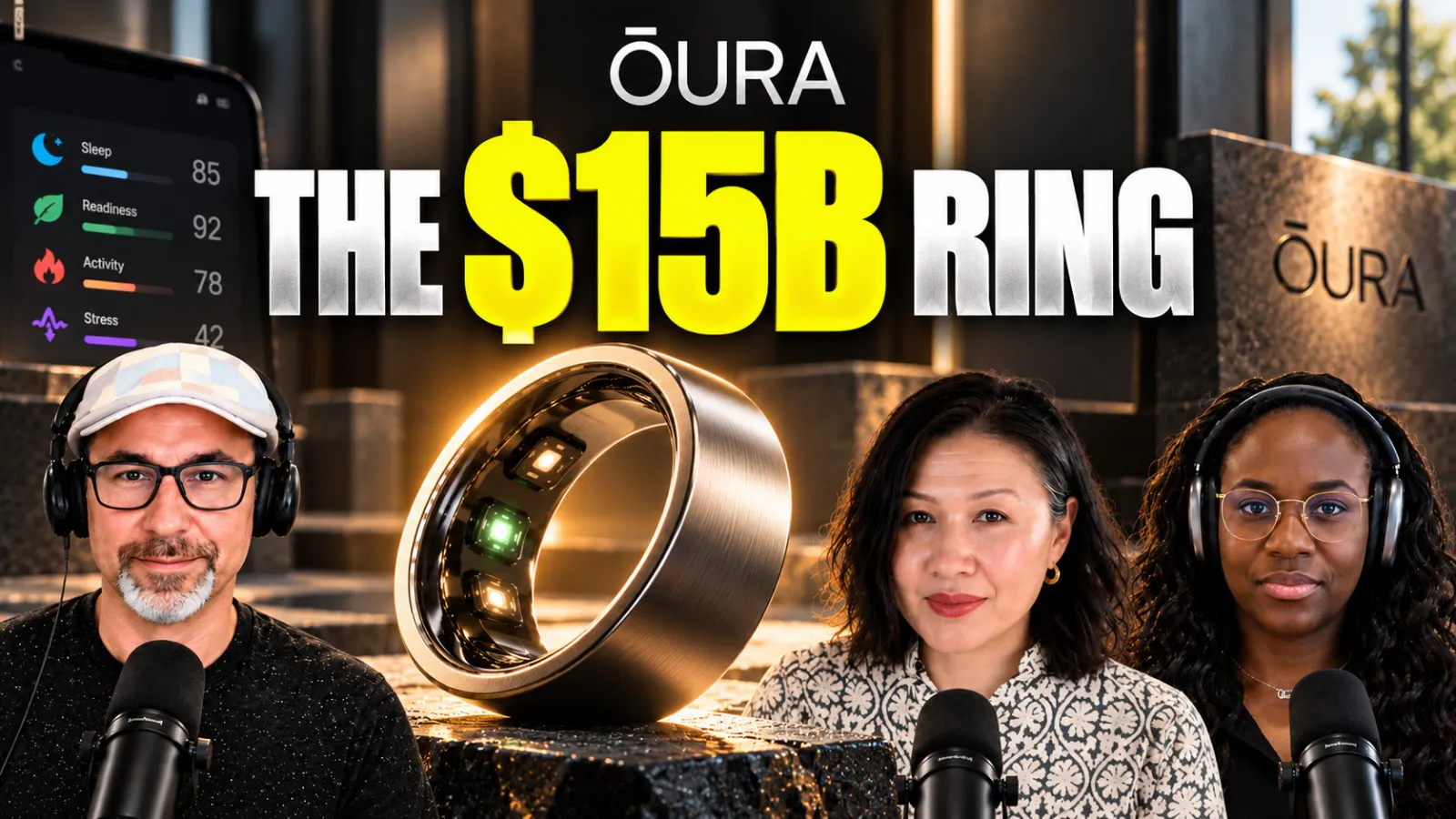 Sizing Up Oura | Oura has sold millions of rings, generated significant revenue from both hardware and memberships, and pursued a company valuation of more than $15 billion. It was supposed to go IPO…and then it didn’t. The ring itself? It tracks your sleep, stress, recovery and activity. It’s a major business. But the ring may be the least interesting part of this story. In this episode of We Fixed It, You’re Welcome, our panelists Aaron, Melissa and Chino break down the business behind Oura, from its hardware-plus-subscription model to its growing customer base, brand awareness, and health-data strategy and challenge each other about whether an IPO was ever the right move to begin with. The conversation explores why Oura has succeeded in a crowded wearable market, how it can continue growing, and what happens when a company becomes responsible for an increasingly valuable collection of deeply personal health data. The central question is: With all eyes on this company, how does Oura move on from here? What You Will Learn Why Oura is more than a ring How Oura's hardware-plus-subscription business works Why the subscription model is both an opportunity and a challenge How Oura can expand its audience Why Oura's screenless experience is an important differentiator Why retention does not necessarily mean genuine customer engagement How raw health data can be turned into actionable guidance Why customers may want different levels of health information The discussion around Oura's sleep-data accuracy Why customer consent matters when collecting health data How AI could increase the value of biometric information Why health-data privacy could become increasingly important What a customer-controlled data permission center could look like Why longitudinal health data could become a valuable asset The tension between shareholder expectations and customer privacy Whether Oura should monetize its data Whether Oura should introduce additional products Whether Oura should increase subscription prices Connect With the Show Subscribe for more deep dives where we fix big business problems with fresh perspectives. • Website – www.wefixeditpod.com • Follow us on: Instagram – https://www.instagram.com/wefixeditpod LinkedIn – https://www.linkedin.com/company/wefixeditpod YouTube – https://www.youtube.com/@WeFixedItPod If you liked this episode, don’t forget to subscribe, leave a review, and share it with your friends! Keep listening to find out how we fix companies and put them back better than we found them. Disclaimer A quick disclaimer. We are going into this somewhat cold and nothing we say should be construed as legal advice, financial advice or anything that would get us in trouble. These are our views and opinions. We’re here to ask the kinds of questions everyone’s thinking, have an engaging conversation and maybe come to some conclusions that we feel are worth exploring. By the end, if we fixed it, you’re welcome. All trademarks, IP and brand elements discussed are property of their respective owners. | 53m 00s | ||||||
| 9/29/26 |  Paper or Plastic? | It feels like one of those environmental debates we settled a long time ago. Paper comes from trees, breaks down, and feels natural. Plastic comes from fossil fuels and represents pollution. So if we're trying to make the environmentally responsible choice, paper seems like the obvious answer. Except the closer you look, the less obvious it gets. Depending on the conditions, paper can require more material, water, and energy to produce than plastic. Plastic can perform better in some lifecycle assessments, while also creating challenges around recycling, microplastics, and environmental impact. In this episode of We Fixed It, Christine Yeager joins the conversation to unpack the complicated reality behind one of the most familiar sustainability questions. Christine spent more than 11 years at Coca-Cola, eventually leading its North American Sustainability Project Management Office. She also worked with Circular Action Alliance to help move Extended Producer Responsibility programs from policy into implementation. Today, she helps producers and service providers navigate EPR. The conversation explores packaging choices, lifecycle assessments, recycling infrastructure, consumer behavior, corporate sustainability, and the economics behind Extended Producer Responsibility. Because the real question isn't simply paper or plastic? It's: What happens to that material across its entire lifecycle? What You Will Learn Why paper isn't automatically more sustainable than plastic Why plastic can perform better in some lifecycle assessments How lifecycle assessments influence packaging decisions Why packaging weight matters How energy sources can change the environmental impact of paper Why recyclability doesn't guarantee actual recycling What Extended Producer Responsibility means How EPR changes the economics of packaging Why EPR primarily incentivizes recyclability Why recycling is heavily influenced by geography Why the same packaging can have different outcomes in different locations Why local infrastructure matters Why consumers respond strongly to “recyclable” and “compostable” Why compostable packaging can still create infrastructure challenges What companies can learn from McDonald's paper straw experience What Coca-Cola learned from changing Sprite's packaging Why some sustainability work is invisible to consumers Why recycling needs functioning end markets Why recycled material can be more expensive than virgin material How EPR could change corporate packaging decisions About the Guest Christine Yeager is an environmental sustainability professional, consultant, and founder of CSY Impact Consulting. Christine spent more than 11 years at Coca-Cola and eventually led its North American Sustainability Project Management Office. She later worked with Circular Action Alliance, helping move Extended Producer Responsibility programs from policy toward implementation. Today, Christine helps producers and service providers navigate EPR and sustainability challenges, with a focus on the systems, economics, and practical realities behind environmental impact. Christine also hosts the Change Cycle podcast. Connect with Christine Yeager LinkedIn - https://www.linkedin.com/in/christinesyeager/ Website - https://www.csyimpact.com Change Cycle podcast - https://www.csyimpact.com/podcast Connect With the Show Subscribe for more deep dives where we fix big business problems with fresh perspectives. Website:www.wefixeditpod.com Follow us on: Instagram:https://www.instagram.com/wefixeditpod LinkedIn:https://www.linkedin.com/company/wefixeditpod YouTube:https://www.youtube.com/@WeFixedItPod If you liked this episode, don’t forget to subscribe, leave a review, and share it with your friends! Keep listening to find out how we fix companies and put them back better than we found them. Disclaimer A quick disclaimer. We are going into this somewhat cold and nothing we say should be construed as legal advice, financial advice or anything that would get us in trouble. These are our views and opinions. We’re here to ask the kinds of questions everyone’s thinking, have an engaging conversation and maybe come to some conclusions that we feel are worth exploring. By the end, if we fixed it, you’re welcome. All trademarks, IP and brand elements discussed are property of their respective owners. | 44m 18s | ||||||
| 9/22/26 |  Tackling Sports Streaming: The Hidden Cost of Watching Sports | Watching your favorite team used to be simple. Turn on the television, find the channel, and watch the game. Today, following one team can mean navigating multiple streaming platforms, subscriptions, blackout restrictions, premium tiers, and constantly changing media-rights deals. In this episode of We Fixed It, Renee Washington joins the conversation to unpack the rapidly changing business of sports media and what it means for the people who actually watch the games. Renee brings experience from across sports broadcasting, including work with ESPN, FIFA, NBC Sports and other major sports platforms, along with her background as a former professional soccer player and three-time All-American. The conversation explores why sports leagues are increasingly prioritizing global audiences, how enormous media-rights deals are reshaping distribution, why local broadcasters and communities still matter, and why athletes themselves are becoming increasingly powerful brands. For decades, sports broadcasting was built around a relatively simple relationship between fans, teams and television. That relationship has changed dramatically. Today, leagues are negotiating enormous media-rights agreements with traditional networks and streaming platforms. A single sport can appear across multiple services, forcing fans to figure out where individual games are being broadcast. Renee Washington explains that the driving force behind much of this change is money. Sports media rights represent enormous revenue opportunities, while streaming platforms see live sports as a way to attract audiences, collect viewing data, build habits and introduce viewers to their broader entertainment ecosystems. But the financial opportunity comes with a cost: complexity. Fans can find themselves juggling multiple subscriptions simply to follow one team. Local broadcasts have also become less prominent in some markets, while national and global programming has become increasingly important. What You Will Learn • Why watching sports has become increasingly complicated • How the battle for sports media rights is reshaping broadcasting • Why streaming platforms are aggressively pursuing live sports • How multiple subscriptions affect the fan experience • Why sports leagues are increasingly focused on global audiences • What local broadcasters bring to a team's relationship with its community • Why some sports broadcasts are produced away from the actual venue • How athlete-driven fandom is changing traditional team loyalty • Why players can now build audiences that transcend teams and countries • How soccer's global model has influenced American sports • Why the NFL's predictable broadcast structure works differently from other sports • Why baseball, basketball and other leagues face different streaming challenges • How exclusive media-rights agreements affect where fans can watch games • Why streaming platforms care about more than the game itself • How sports broadcasts can become gateways into movies, shows and other programming • Why audience data has become such an important part of sports media • Whether a single team-based login could simplify sports streaming • Why leagues and networks may resist simplifying access • How sports could preserve local communities while expanding globally • Why more in-person experiences could become important in the future Connect With Renee Washington Website: www.reneepwashington.com Renee Washington can also be found across social platforms under Renee Washington, with her X account using @ReneePwash Connect With the Show Subscribe for more deep dives where we fix big business problems with fresh perspectives. Website: www.wefixeditpod.com Follow us on: Instagram: @wefixeditpod LinkedIn: @wefixeditpod YouTube: @wefixeditpod Disclaimer If you liked this episode, don’t forget to subscribe, leave a review, and share it with your friends! Keep listening to find out how we fix companies and put them back better than we found them. A quick disclaimer. We are going into this somewhat cold and nothing we say should be construed as legal advice, financial advice or anything that would get us in trouble. These are our views and opinions. We’re here to ask the kinds of questions everyone’s thinking, have an engaging conversation and maybe come to some conclusions that we feel are worth exploring. By the end, if we fixed it, you’re welcome. All trademarks, IP and brand elements discussed are property of their respective owners. | 1h 06m 14s | ||||||
| 9/16/26 |  Can UPS Still Deliver? | UPS has spent 119 years building one of the world's most disciplined operating systems. But now the company is changing that machine from the inside: consolidating responsibility, restructuring operations, reducing costs, closing facilities and moving away from Amazon volume that no longer fits the economics of the business. Noel Massie knows what that machine looks like from the inside. He spent 42 years at UPS, beginning as a college student loading trucks in 1977 and eventually becoming a president of five business units and Vice President of U.S. Delivery Operations. He describes a company where managers were given real ownership, frontline employees were trusted to make decisions, and culture was treated as an operating system rather than a poster on the wall. Aaron Wolpoff, Chino Nnadi and Melissa Eaton use Noel's experience to examine a much bigger business question: Can a company become more standardized and efficient without becoming too rigid to respond when reality gets messy? The conversation goes deep into UPS's long-running transformation, its volatile relationship with Amazon, the economics of unpredictable volume, the difference between standardizing guardrails and localizing judgment, and why Noel believes the company's biggest competitive advantage is ultimately its culture of ownership. About the guest Noel Massie is a former UPS executive with more than four decades of experience in operations, logistics and leadership. He began working for UPS in 1977 while attending San Jose State University, initially taking a night-loading job to pay for college. He expected to leave UPS after graduation for a position at Hewlett-Packard, but the company convinced him to stay and promoted him into management. Over the course of his UPS career, Massie became a manager, mid-level leader, president of multiple business units and ultimately Vice President of U.S. Delivery Operations. In his final role, he supported the company's domestic presidents and provided perspective on last-mile delivery, P&L, service levels and succession planning. Today, he works as an author, executive coach and leadership consultant. His LinkedIn profile identifies his specialties as executive leadership, operations management, and supply chain & logistics. What you will learn Why UPS's latest restructuring is not actually as sudden as it looks from the outside, and how its current transformation has been developing for years. How UPS went from 76 domestic business-unit presidents to 17, and what that consolidation says about the company's changing operating model. Why Noel believes ownership—not just stock ownership, but decision-making authority—is central to UPS's culture. The hidden cost of having one enormous customer: how Amazon's explosive growth created capacity, staffing and aircraft-planning problems for UPS. Why Amazon's growth eventually forced UPS to rethink the relationship—and why more volume does not automatically mean better business. The operational reality behind Amazon's unpredictable volume, including one period when Noel says UPS needed seven additional aircraft in a single day. Why "UPS doesn't need no supply chain company freight or otherwise [give] free shipping" became an important part of the Amazon conversation. Why the best operating model may be to standardize the guardrails while localizing the judgment. Why Noel describes UPS's culture as a "Yoda culture"—where experienced leaders invest in younger people before expecting results from them. Why companies going through massive change need to make employees feel that they matter more, not less. The leadership blueprint the panel believes other companies can take from UPS: invest in people, expect change, protect autonomy and build ownership. Connect with Noel Massie: LinkedIn - https://www.linkedin.com/in/noelmassie/ Website - https://noelmassie.com/ Connect With the Show: We Fixed It, You're Welcome Instagram - https://www.instagram.com/wefixeditpod/ LinkedIn - linkedin.com/company/wefixeditpod/ If you enjoyed this episode, don't forget to Like, Subscribe, and leave a review. Share it with someone who loves business strategy, operations, leadership, branding, or marketing. Disclaimer A quick disclaimer. We are going into this somewhat cold, and nothing we say should be construed as legal advice, financial advice, or anything that would get us in trouble. These are simply our views and opinions. We're here to ask the kinds of questions everyone is thinking, have engaging conversations, and explore ideas worth discussing. If, by the end, we fixed it... you're welcome. All trademarks, intellectual property, and brand elements discussed remain the property of their respective owners. | 43m 30s | ||||||
| 9/8/26 | corporate innovationpatent litigation+3 | Allen Nejah | SunMan EngineeringErnst and Young | — | innovationpatents+4 | — | 42m 28s | ||
| 9/1/26 | Apple's leadership transitioncompany culture+4 | Chris Deaver | AppleDisney+1 | — | AppleJohn Ternus+7 | — | 1h 01m 44s | ||
| 8/25/26 | acquisitionsnack brands+4 | Rebeca Johnson | TwinkiesHo Hos+5 | — | Smucker'sHostess+6 | — | 54m 31s | ||
| 8/18/26 | automation ironyAI strategy+3 | Steve Ferman | 4pillarcoach.com | — | automationAI+5 | — | 1h 02m 40s | ||
| 8/11/26 | cultural differencesbrand loyalty+3 | — | Subway | CanadaUSA+1 | CanadaUSA+7 | — | 48m 42s | ||
| 8/4/26 | managementleadership+3 | Ron Hetrick | LightcastU.S. Bureau | — | managersleadership roles+3 | — | 53m 31s | ||
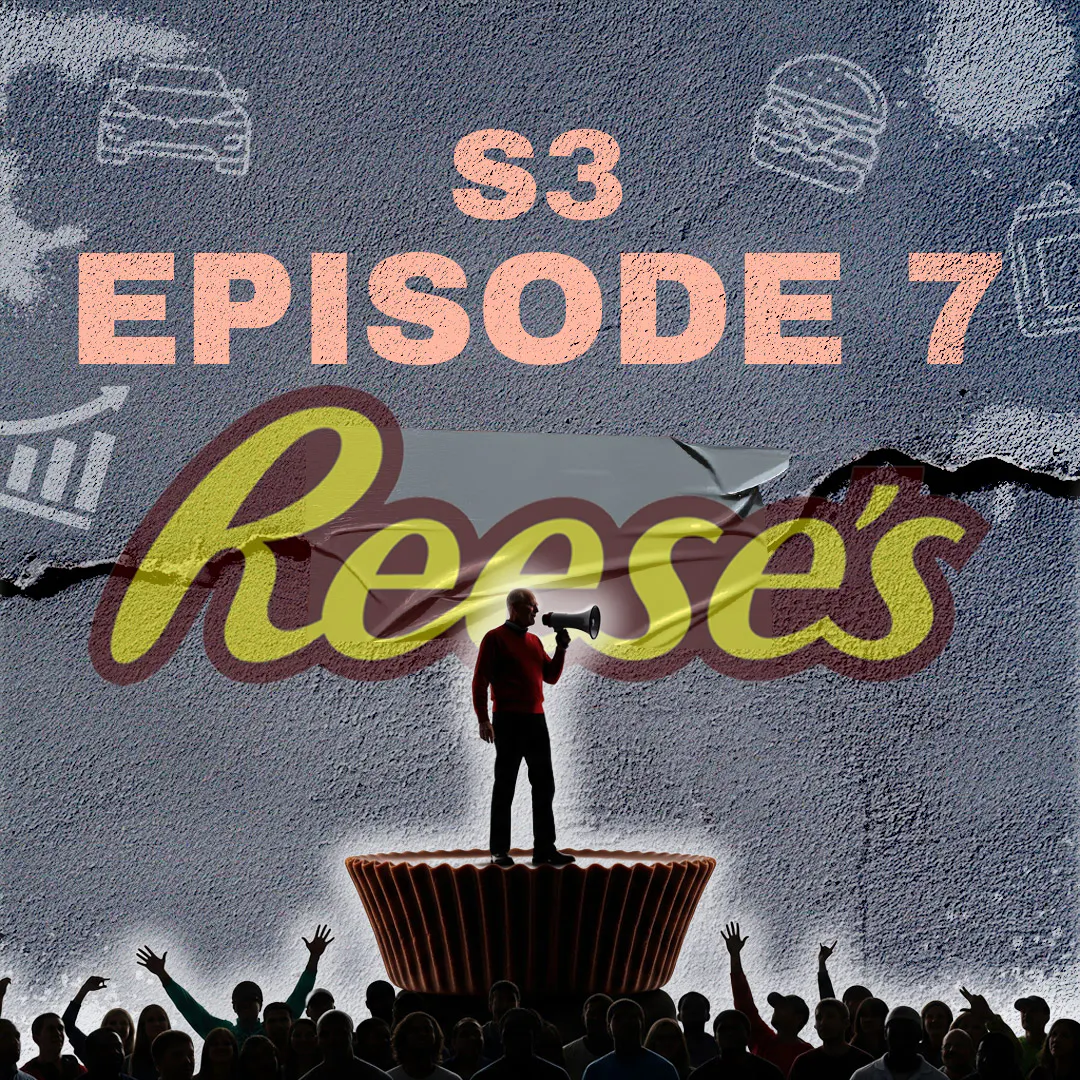
| 7/28/26 | candy controversybrand integrity+4 | Brad Reese | Reese’s Peanut Butter CupFeastibles+2 | — | Reese’sHershey’s+6 | — | 1h 12m 30s | ||
| 7/21/26 | season finaleproblem-solving+3 | — | egg salad sandwichMcDonald's+1 | — | hiringbranding+3 | — | 56m 12s | ||
| 7/16/26 | GLP-1 medicationsconsumer behavior+5 | Lisa W. Miller | Ozempic®Wegovy®+1 | — | GLP-1 economyconsumer spending+5 | — | 1h 03m 30s | ||
| 7/10/26 | AI trustbranding+4 | Perry Headrick | OpenAIAnthropic+6 | — | ChatGPTClaude+6 | — | 57m 58s | ||
| 6/30/26 | AI in podcastingpodcast industry+3 | Rob Walch | SpotifyWe Fixed It | — | podcastAI+5 | — | 58m 05s | ||
| 6/23/26 | Prime Dayconsumer behavior+3 | Pearl Servat | AmazonVerizon+1 | — | Prime Dayconsumer spending+5 | — | 58m 39s | ||
| 6/16/26 | brand collaborationsmarketing strategies+4 | — | SwatchAP+10 | — | brand collabsSwatch x AP+6 | — | 55m 08s | ||
| 6/9/26 | luxury fashionsustainability+5 | Kirsten K. Harris | LVMHNordstrom+3 | — | luxury brandsfashion industry+8 | — | 58m 44s | ||
| 6/3/26 | food trendsbusiness strategy+3 | Talia Solomon | The Brand EconomistPizza Hut+8 | — | food fadsbusiness strategy+3 | — | 53m 15s | ||
| 5/26/26 | prediction marketsfinance+4 | Andrew Lebbos | BenzingaKalshi | — | prediction marketsKalshi+5 | — | 1h 00m 02s | ||
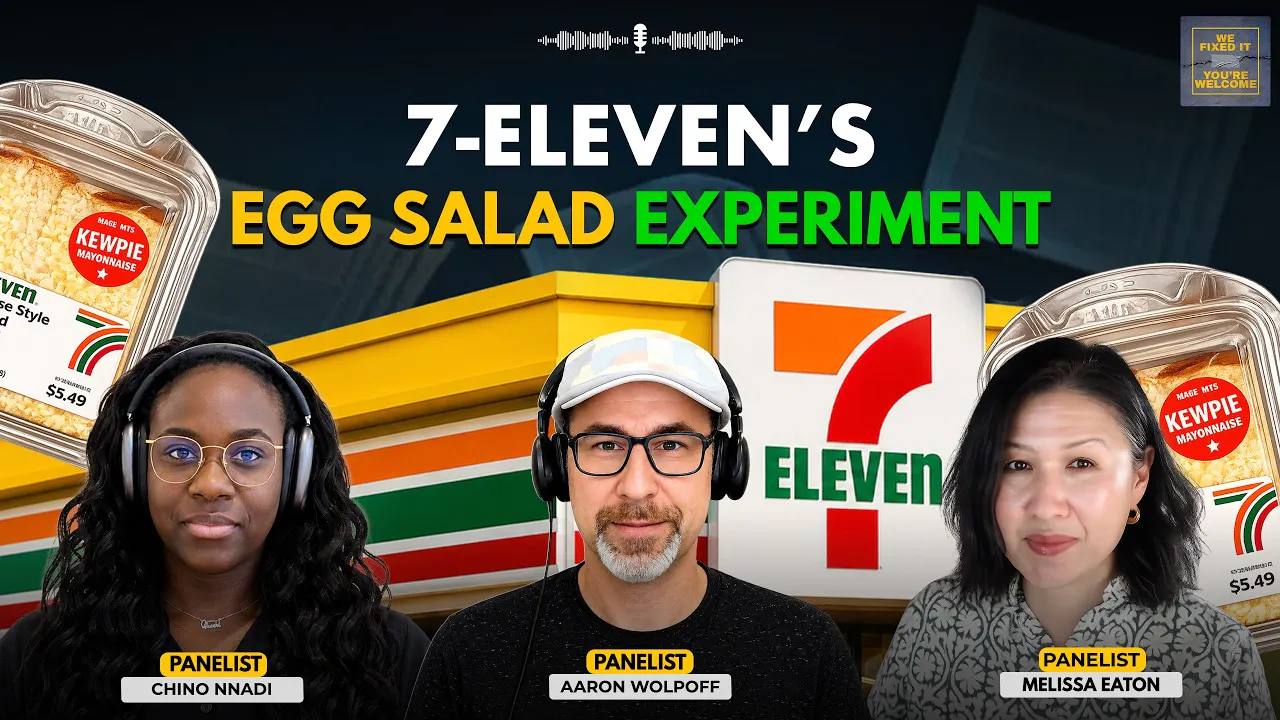
| 5/19/26 | convenience store culturecustomer behavior+4 | Chino | egg salad sandwichesiced coffee+2 | JapanUnited States | 7-Elevenegg salad+6 | — | 49m 34s | ||
| 5/12/26 | airline collapsebudget air travel+4 | Zach Wichter | Spirit AirlinesUSA Today+3 | — | Spirit Airlinesairline collapse+6 | — | 53m 54s | ||
| 5/7/26 | AI pivotcorporate strategy+4 | Todd M. Schoenberger | Allbirds | — | AllbirdsAI infrastructure+5 | — | 1h 04m 50s | ||
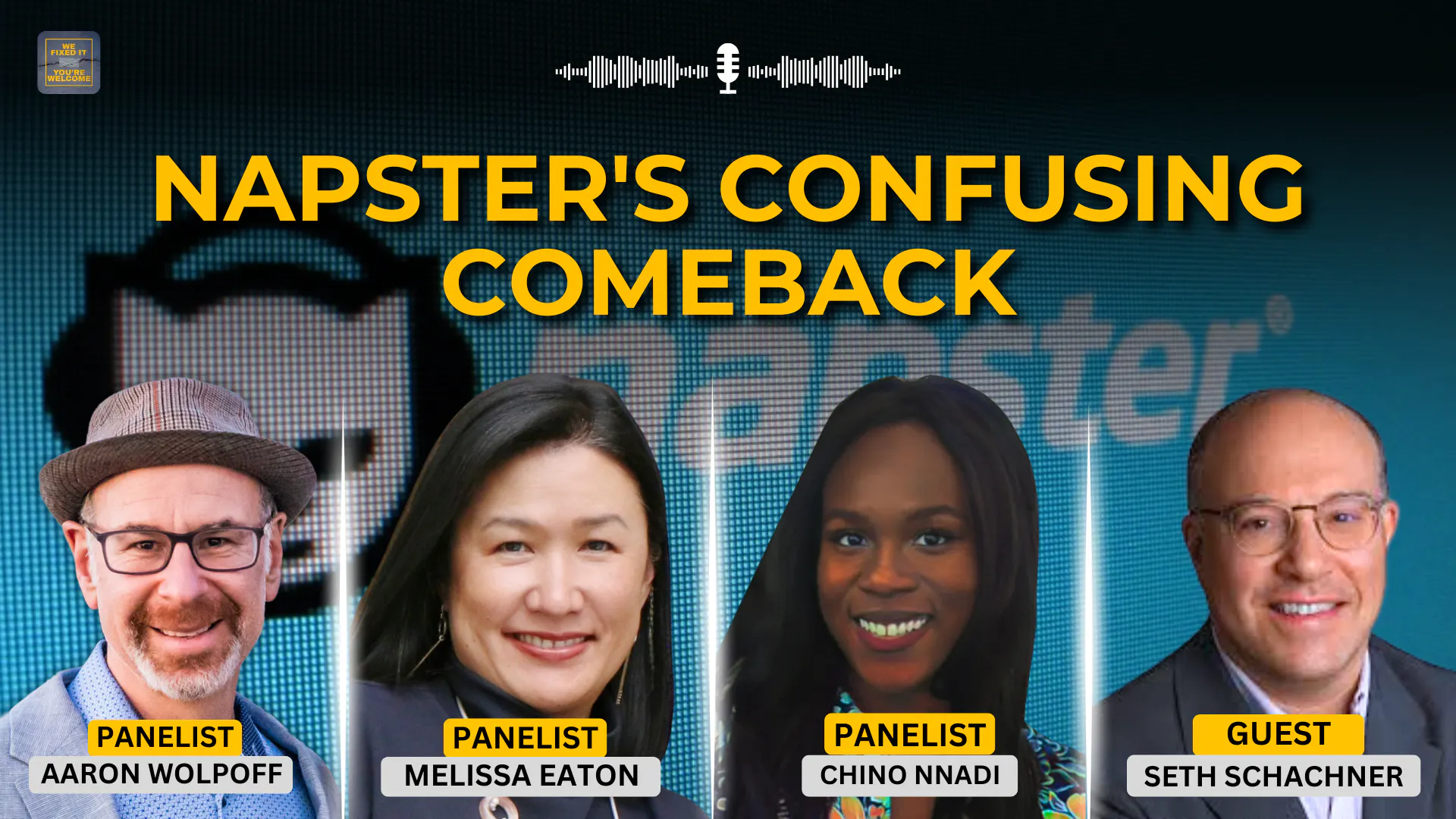
| 5/7/26 | music industryAI music platforms+5 | Seth Schachner | NapsterSony Music+5 | — | NapsterAI music+7 | — | 51m 32s | ||
| 4/21/26 | LEGO brand evolutionadult collectors+4 | Leo Battersby | LEGO | — | LEGOadult fans+5 | — | 46m 18s | ||
| 4/14/26 | customer loyaltybrand equity+4 | Rene Huey-Lipton | Southwest AirlinesThe Dame Collective | — | Southwest Airlinescustomer loyalty+4 | — | 58m 55s | ||
| 4/7/26 | management structureleadership roles+4 | Ron Hetrick | Lightcast | — | managementleadership+5 | — | 52m 54s | ||
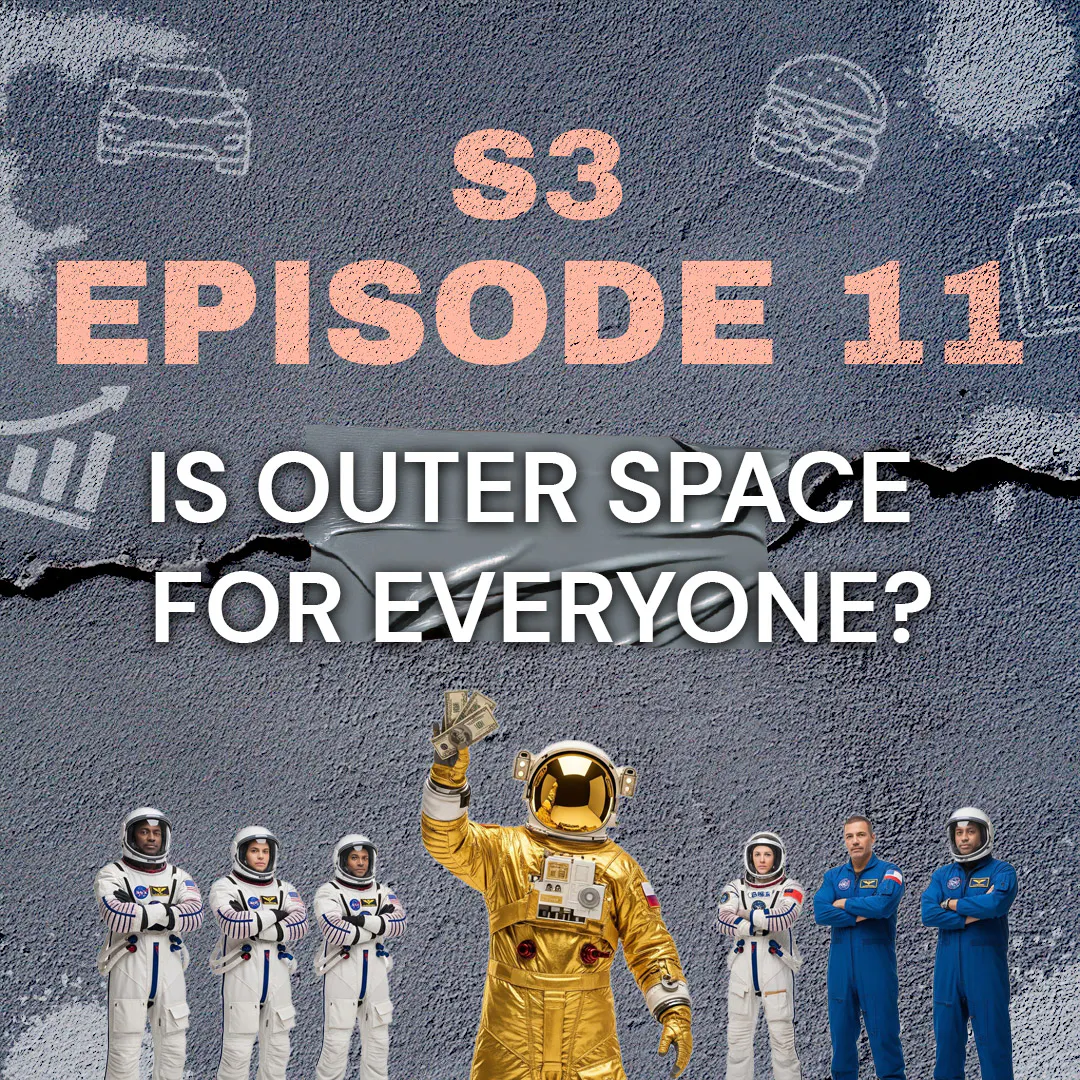
| 3/31/26 | space explorationcommercial spaceflight+4 | Christopher Hearsey | SpaceXBlue Origin+3 | — | space explorationcommercial spaceflight+7 | — | 42m 53s | ||
| 3/24/26 | retail strategycustomer loyalty+3 | — | Target | — | Targetprice cuts+5 | — | 1h 01m 03s | ||
| 3/17/26 | job marketjob seekers+3 | Melissa Eaton | — | — | job searchrecruiters+3 | — | 1h 01m 09s | ||
| 3/10/26 | customer loyaltybrand equity+4 | Rene Huey-Lipton | Southwest AirlinesThe Dame Collective | — | Southwest Airlinescustomer loyalty+5 | — | 51m 56s | ||
| 3/3/26 | Reese's controversybrand integrity+3 | Brad Reese | Reese’s Peanut Butter CupFeastibles+2 | — | Reese'sHershey's+3 | — | 1h 08m 45s | ||
| 2/24/26 | tippinghospitality economy+3 | Mark Moeller | The Recipe of Success | — | tippingtipflation+5 | — | 51m 42s | ||
| 2/17/26 | automation ironyAI strategy+4 | Steve Ferman | 4pillarcoach.com | — | automationAI+5 | — | 58m 41s | ||










Showing 37 of 91
Pitch Fit is a Pro feature
See how bookable this show is for guests, which brands already advertise, the per-episode ad value, and the best-fit guest and sponsor profile. The numbers are blurred on the free plan.
How readily this show books outside guests like you.
How proven this show is for host-read sponsorships.
For Guests
ProFor Advertisers
ProUpgrade to Pro to unlock guest cadence, sponsor categories, fit scores, and per-episode ad value for this show.
Similar Audience Demographics
Podcasts that attract a similar listener profile




Distribution & Reach
About the show, platforms, and key insights.
Distribution & Reach
About the show, platforms, and key insights.
The podcast "We Fixed It. You're Welcome." is hosted by an independent podcast creator known for engaging discussions on business and management topics. The host utilizes an armchair quarterbacking approach, which invites listeners to consider alternative strategies for well-known companies facing contemporary issues. This podcast distinguishes itself through its lively panel discussions that tackle real-world business challenges derived from current headlines. Each episode encourages a spirited debate around a specific company, culminating in self-critiques of their proposed solutions. This format not only entertains but also provides actionable insights into corporate decision-making. The show's audience comprises business professionals and curious listeners eager to understand corporate dynamics and problem-solving strategies. By blending humor and analysis, listeners gain valuable perspectives on how businesses can navigate their challenges, enhancing their own understanding of management and cultural trends.
By the numbers
- Total followers: 242
- Total plays: 242K
- Total reviews: 6
Platforms
YouTube
- Subscribers: 89
- Views: 242K
- Videos: 257
Podcast App
- Followers: 6
- Reviews: 6
Podcast Republic
- Followers: 147
Audience
adults, professionals
Key insights
What the show covers
- debating company issues
- self-critique of solutions
- panel discussions on business
- applying sports analysis to business
Audience interests
- business strategies and solutions
- management challenges and insights
- current events in corporate world
- cultural impacts of companies
Platform reach
- specific platforms not detected
- total followers unknown
- limited distribution information
- potential for growth in audience
Publishing consistency
- 71 episodes released
- active for 1 year
- weekly episode cadence
- season 3 launched January 2026
Chart history for We Fixed It, You're Welcome
Peaked at #1 in United States, top 10 in 5 of 8 tracked markets, currently #1 in United States.
| Market | Genre | Peak | Current | Trend |
|---|---|---|---|---|
| United States | — | #1 | #1 | — |
| Norway | — | #1 | #1 | — |
| Norway | — | #3 | #3 | — |
| Canada | — | #5 | #5 | — |
| United States | — | #10 | #10 | — |
| United Kingdom | — | #19 | #19 | — |
| Germany | — | #45 | #45 | — |
| Canada | — | #65 | #65 | — |
Chart Positions
8 placements across 5 markets.
Chart Positions
8 placements across 5 markets.