How to analyze any podcast in sixty seconds.
Every one of the 5M+ podcasts on CastFox has a profile. It gathers what the show talks about, how big it is, who listens, whether it books guests, its chart history, its episode archive and its YouTube channel, across eight tabs. This page walks through each tab on a real show: Metabolic Mind, by Bret Scher, MD, a health podcast with 187 episodes and a 112K-subscriber YouTube channel.
Updated · Written by the CastFox team from the live product
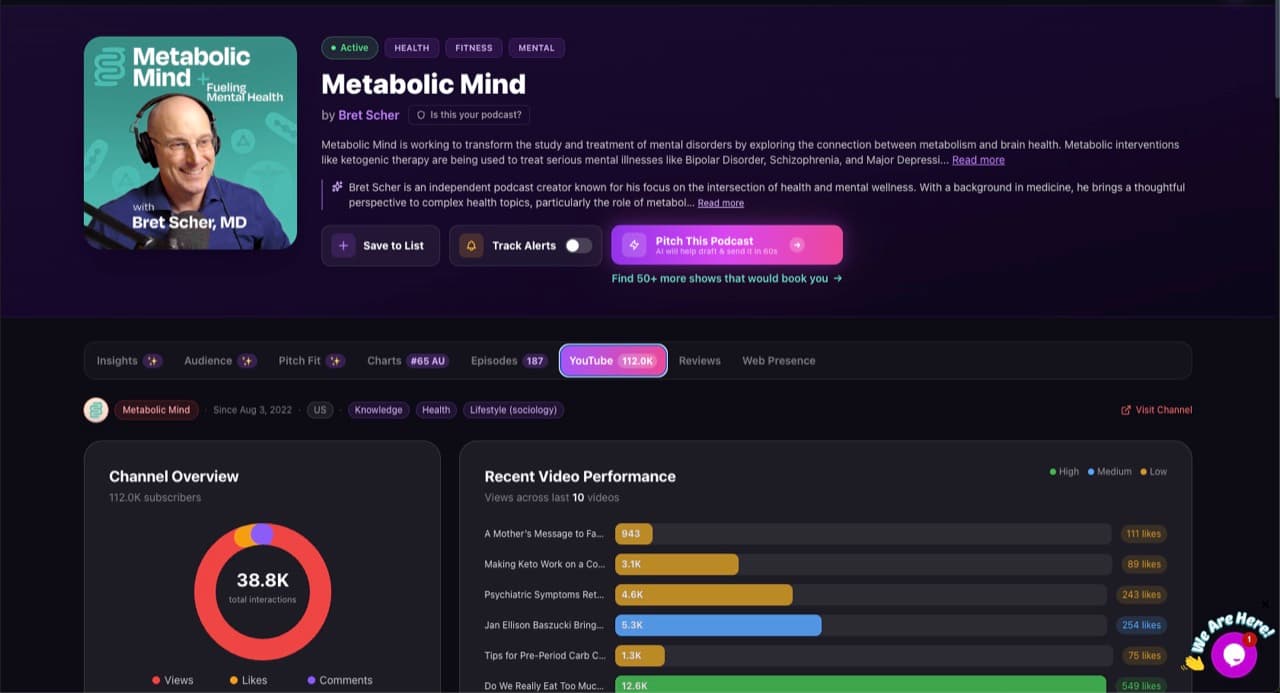
The podcast profile header: the whole show on one screen
The header is the whole show on one screen. Whether it's active, its categories, a description, and a written read on the host. Then three actions: save to a list, track alerts, or pitch the podcast with an AI draft. Everything after this is depth.
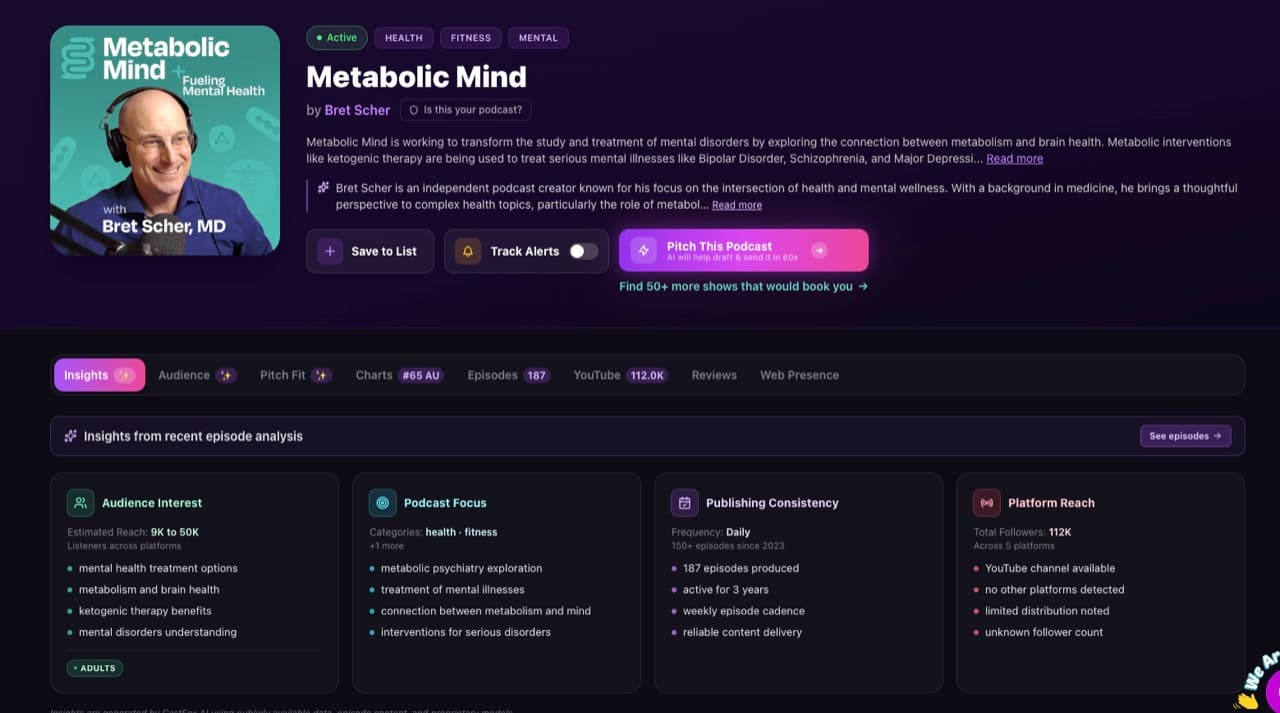
Below the header sits the tab row, and the numbers are already on it: chart position, episode count, YouTube subscribers. You know what's inside before you open anything.
Insights: topics, brands, reach, competition and who's on the show
What the podcast actually talks about
Not the categories it filed itself under, but what it actually says. Most Discussed Topics counts how many episodes cover each subject. Beside it, Brands & References lists the companies, products, people and institutions that come up on air. Both come from the transcripts. Nobody typed them in.
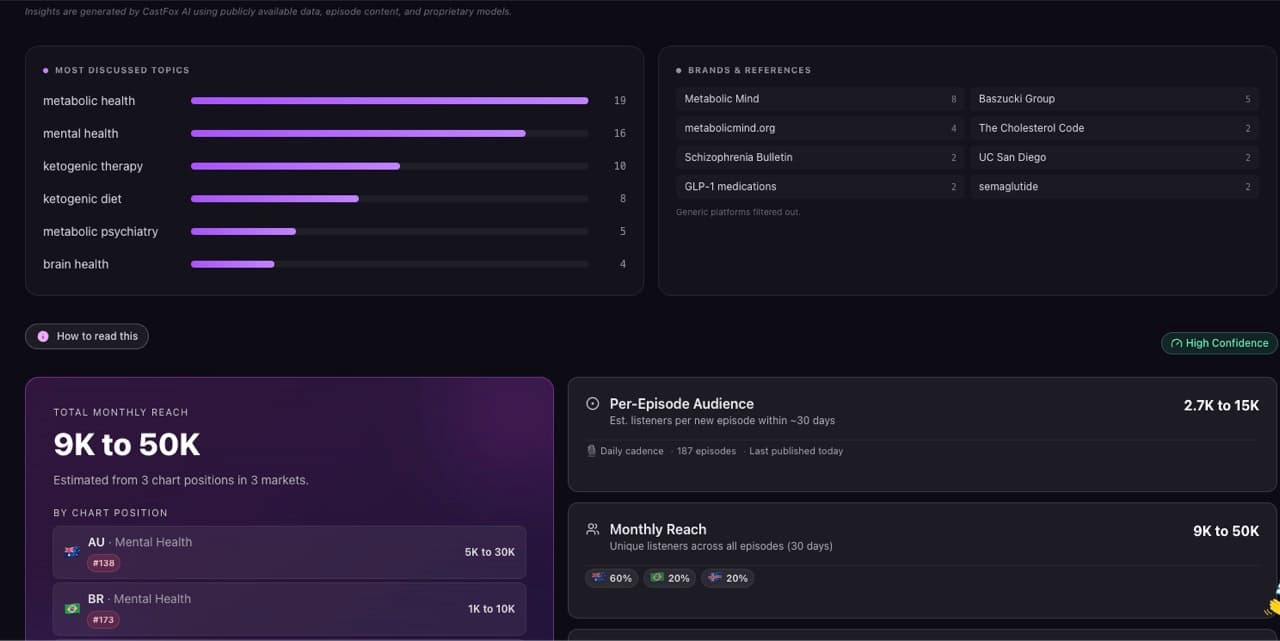
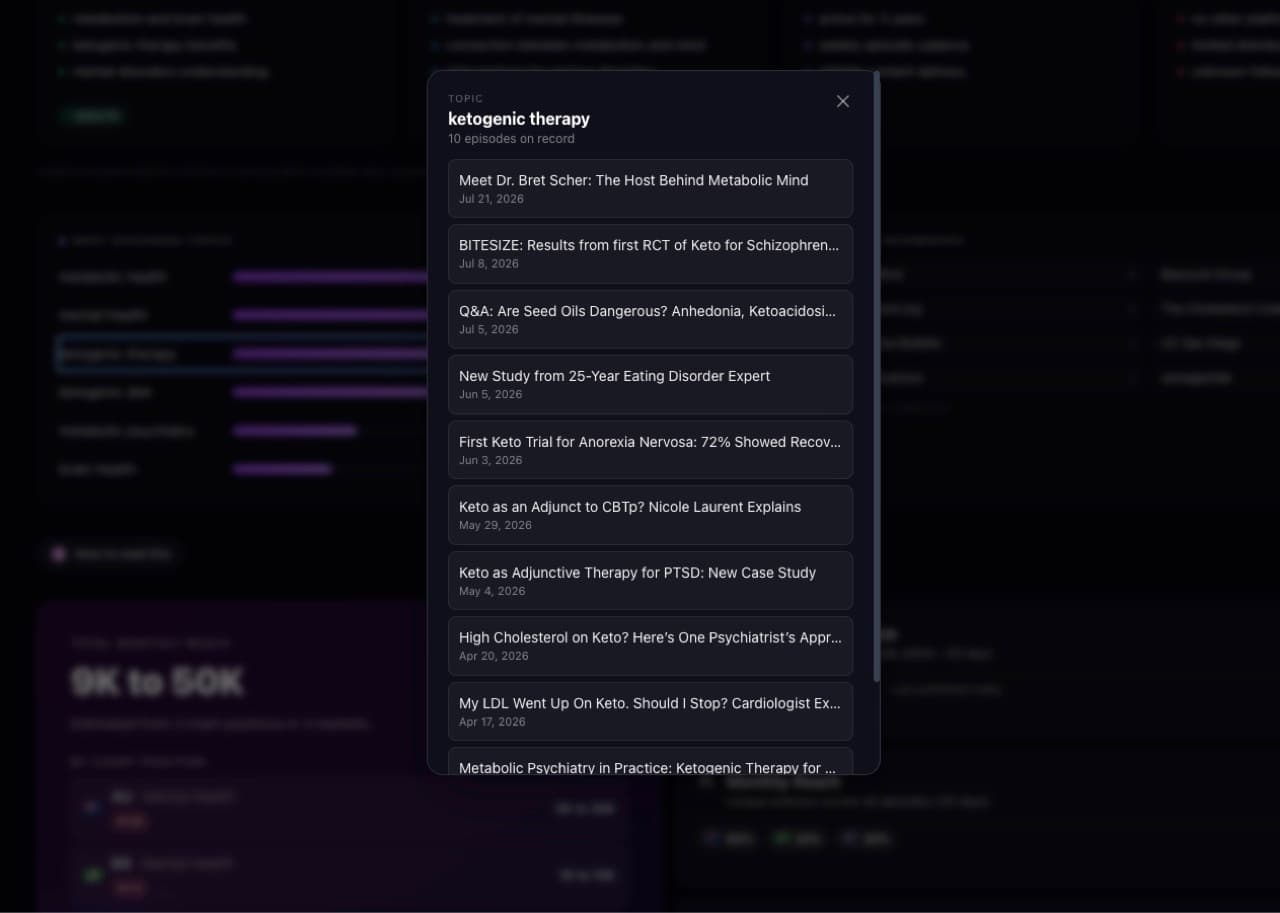
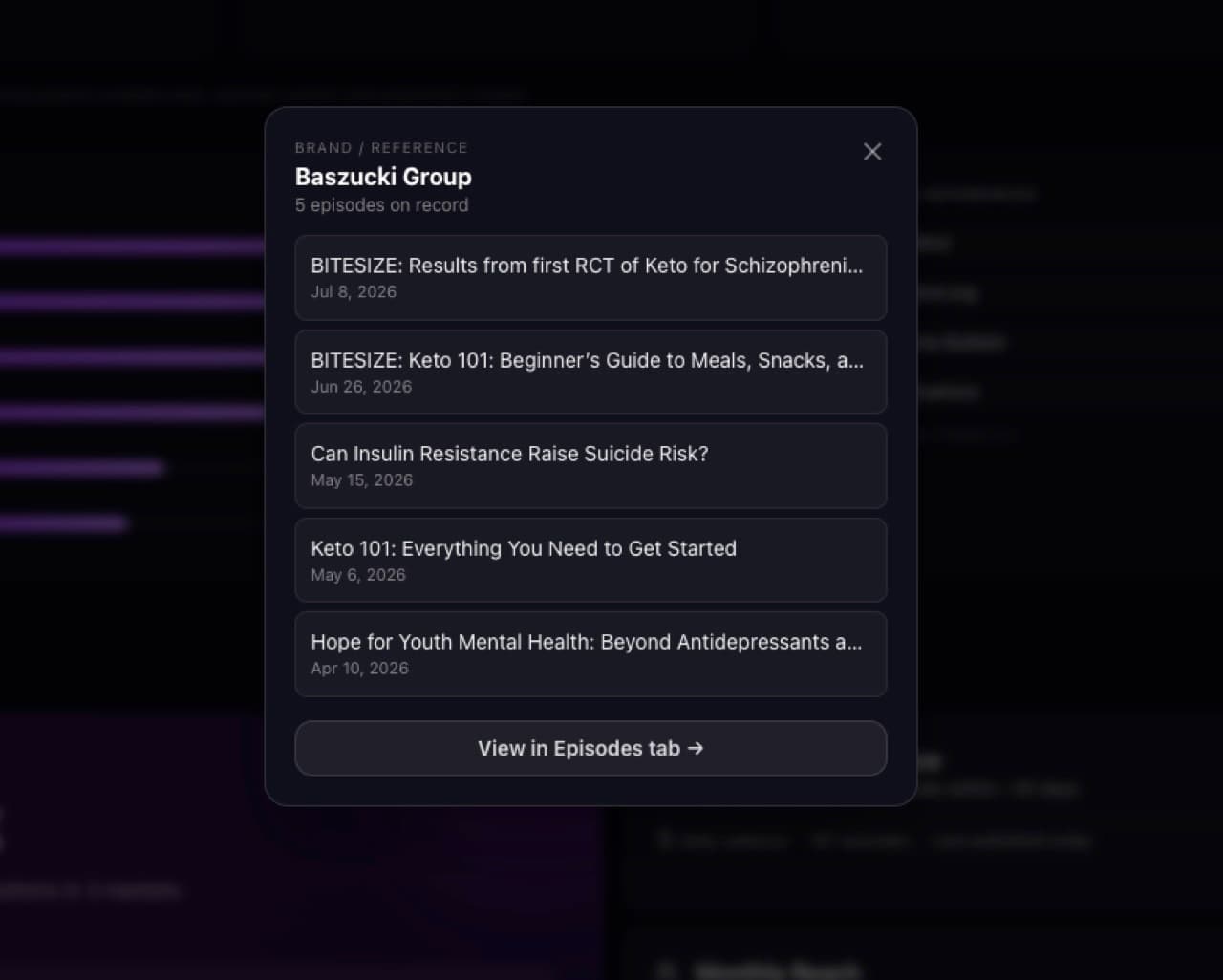
Every topic and every brand is clickable and opens the exact episodes, with dates. That's not a tag. That's the receipts. For an advertiser, checking whether a competitor already lives on a show is two clicks. For a researcher, it's a citation list.
How big the podcast is: reach estimate with confidence
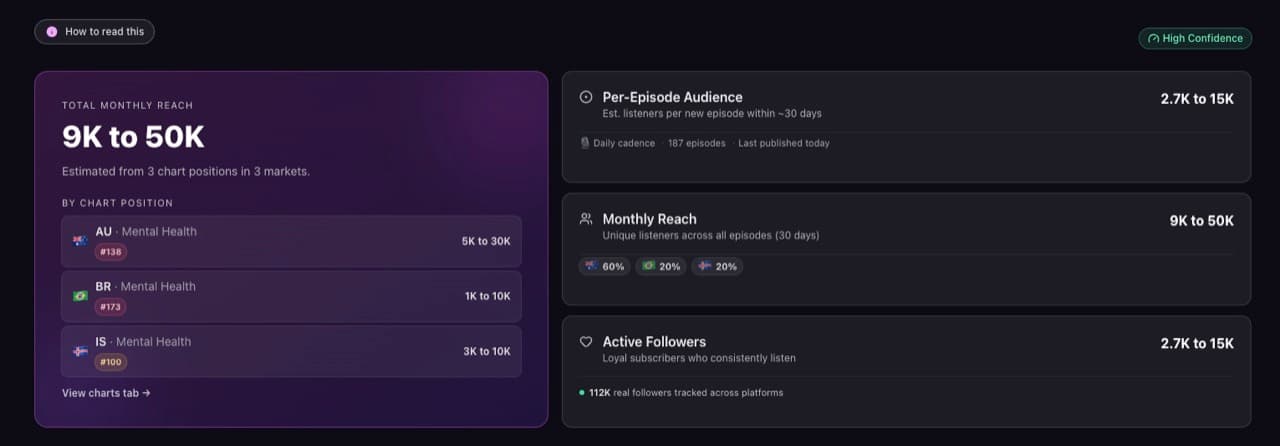
Monthly reach as a range, with the source shown: the chart positions in each market that the estimate is built from, listed individually. Per-episode audience within thirty days. Active followers tracked across platforms. And a confidence rating on the whole thing, so you know how hard to lean on it. Most tools give you one number and no way to check it.
Market competition and platform distribution
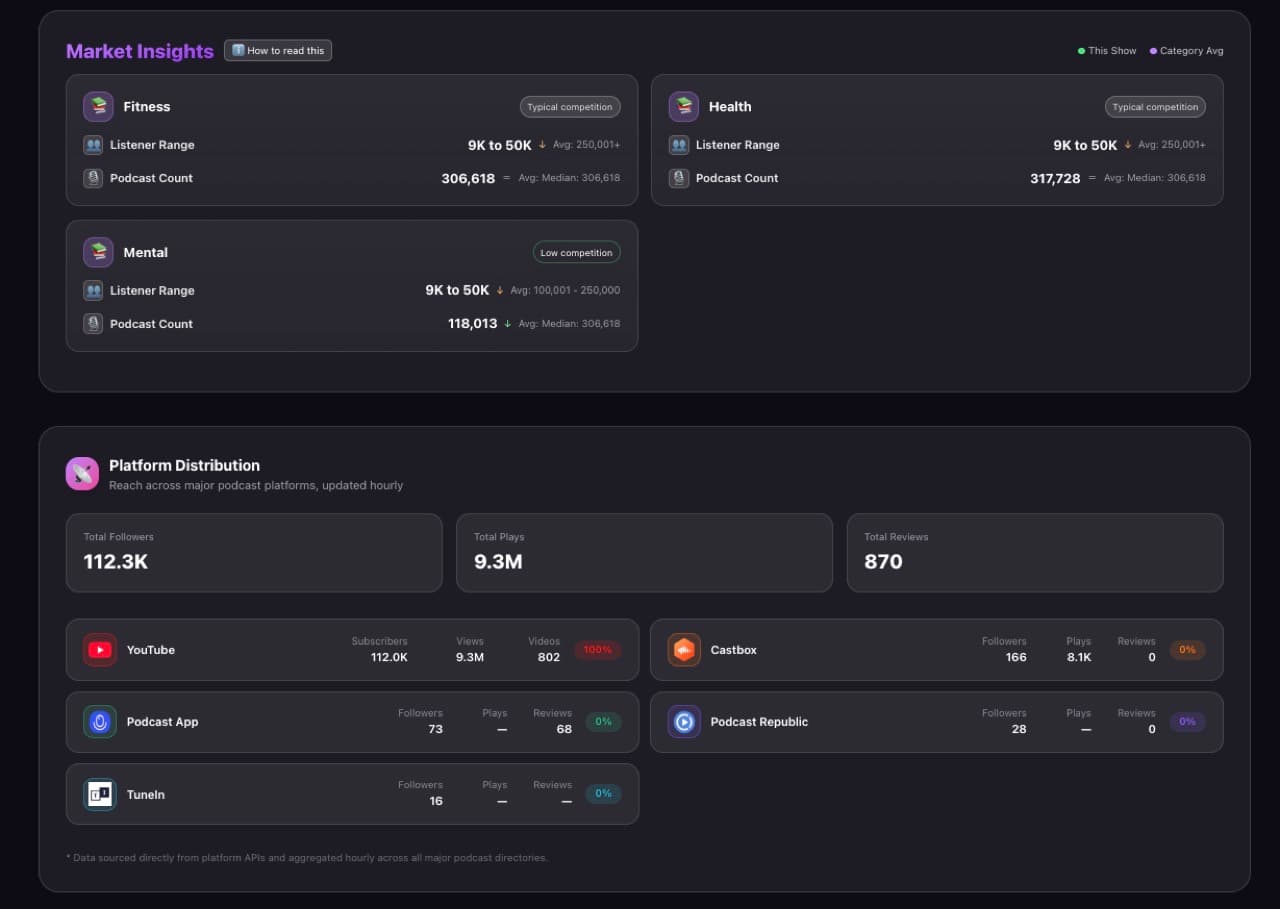
Market Insights places the show against its categories: typical competition in fitness and health, low competition in mental health. Low competition is a gap, and gaps are where you buy ads or pitch a guest. Platform Distribution breaks followers, plays and reviews out by YouTube, Castbox, TuneIn and the rest, so you can see where the audience actually lives.
Hosts, recent guests and official channels
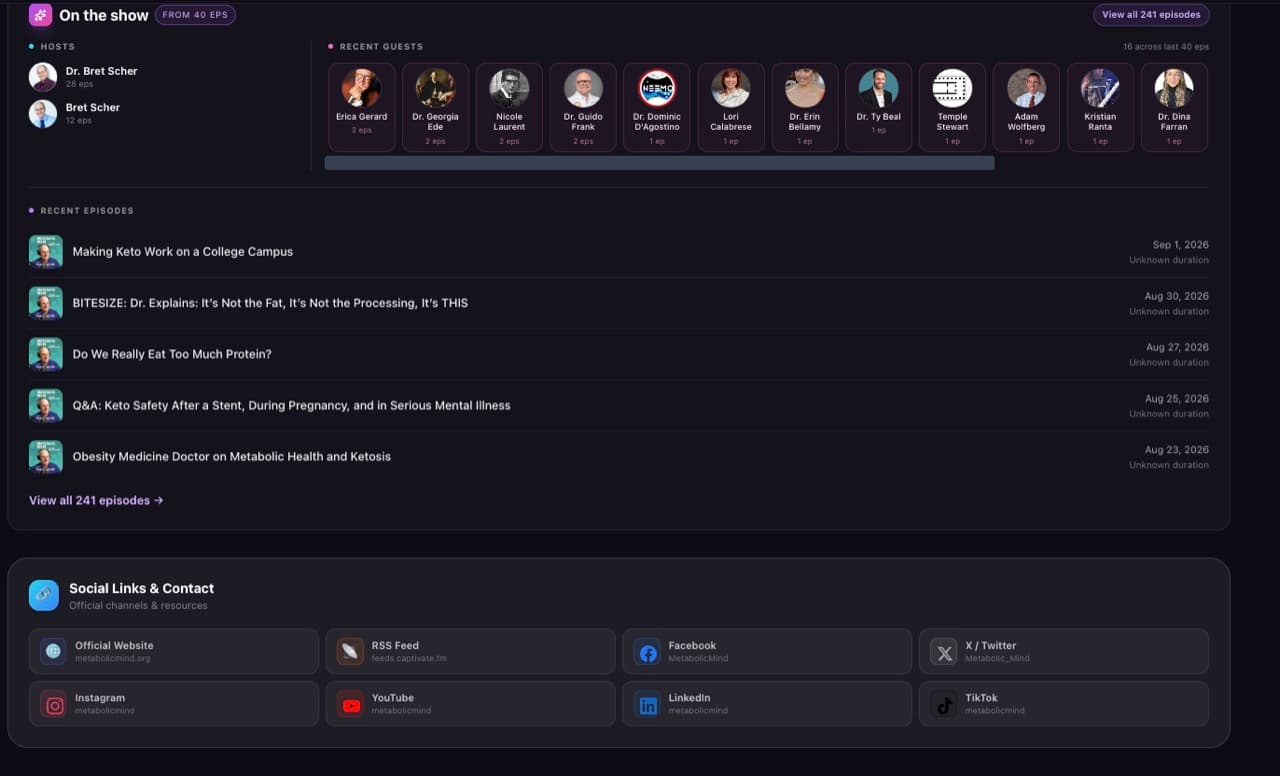
The hosts and how often each appears. Recent guests across the last forty episodes, with faces and counts. The latest episodes with dates. And every official channel in one place: website, RSS, Facebook, X, Instagram, YouTube, LinkedIn, TikTok. A show that books twenty guests a month books guests. That's not a guess anymore.
Audience: podcast listener demographics and locations
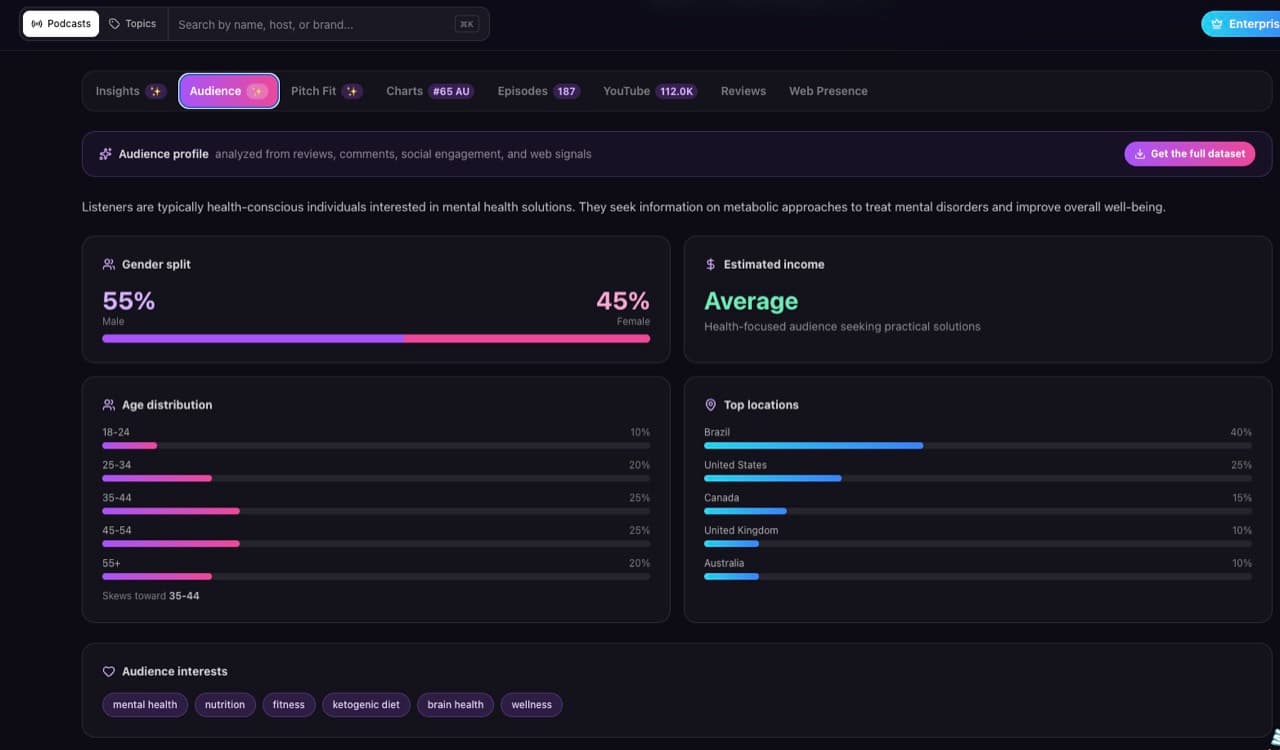
Built from reviews, comments, social engagement and web signals: a written audience profile, gender split, estimated income, age distribution, top locations and interests. The locations row is the one that changes plans.
Pitch Fit: does this podcast book guests?
The tab for anyone who wants on the show. A score out of 100 for how open the podcast is to guests, then the evidence behind it, measured over the last fifty analyzed episodes.
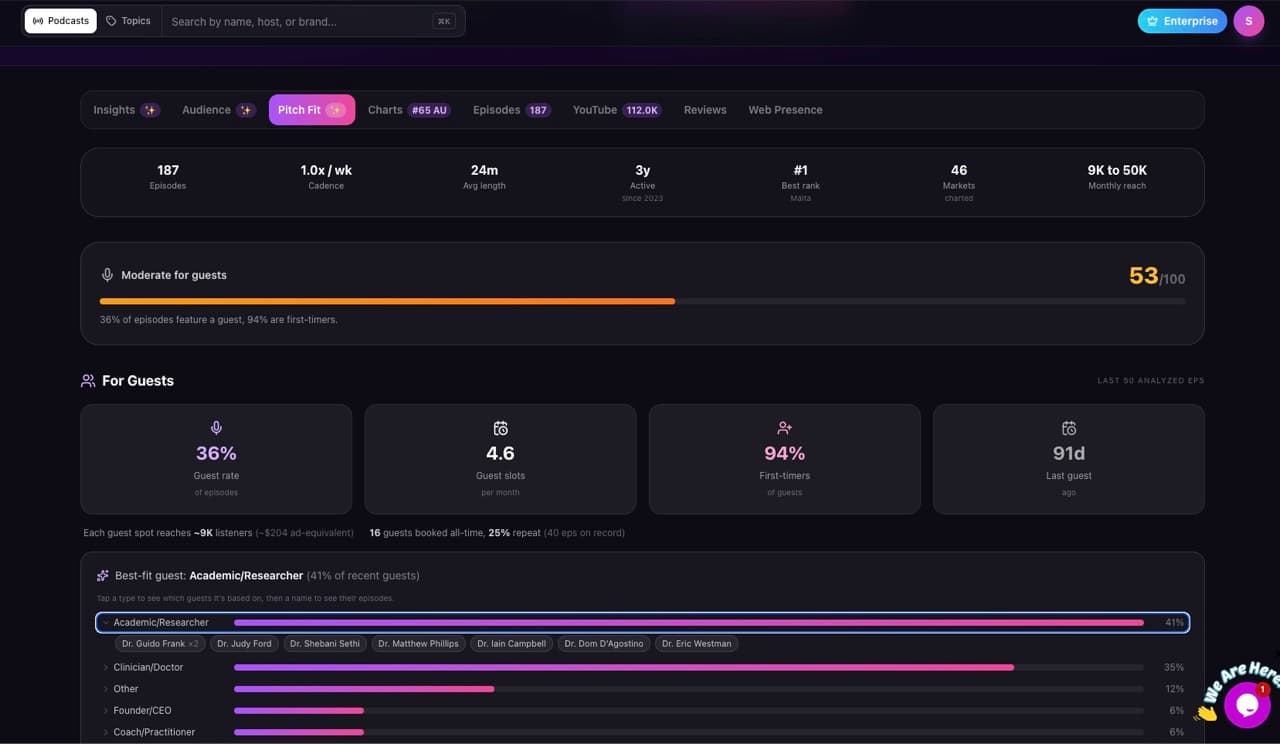
Guest rate
Share of episodes that feature a guest.
Guest slots a month
How many openings there are to pitch for.
First-timers
Guests the host had never had on before. High means open to strangers.
Last guest
How recently the show booked someone.
Under the numbers: what each guest spot is worth, as listeners reached and as ad-equivalent dollars. Then the best-fit guest type, with the actual recent guests behind it named, so you can see who this host says yes to. Here, academics and researchers, 41% of recent guests.
The “Pitch This Podcast” button in the header drafts an email from all of this, and “Find 50+ more shows that would book you” hands the show off to Guest Finder.
Charts: podcast ranking history by country and category
Full ranking history in every market the show has ever charted in, plotted over time. You can see the peaks, and you can see the slides. A show that just cracked a Top 50 reads differently from one that has been sliding for a year.
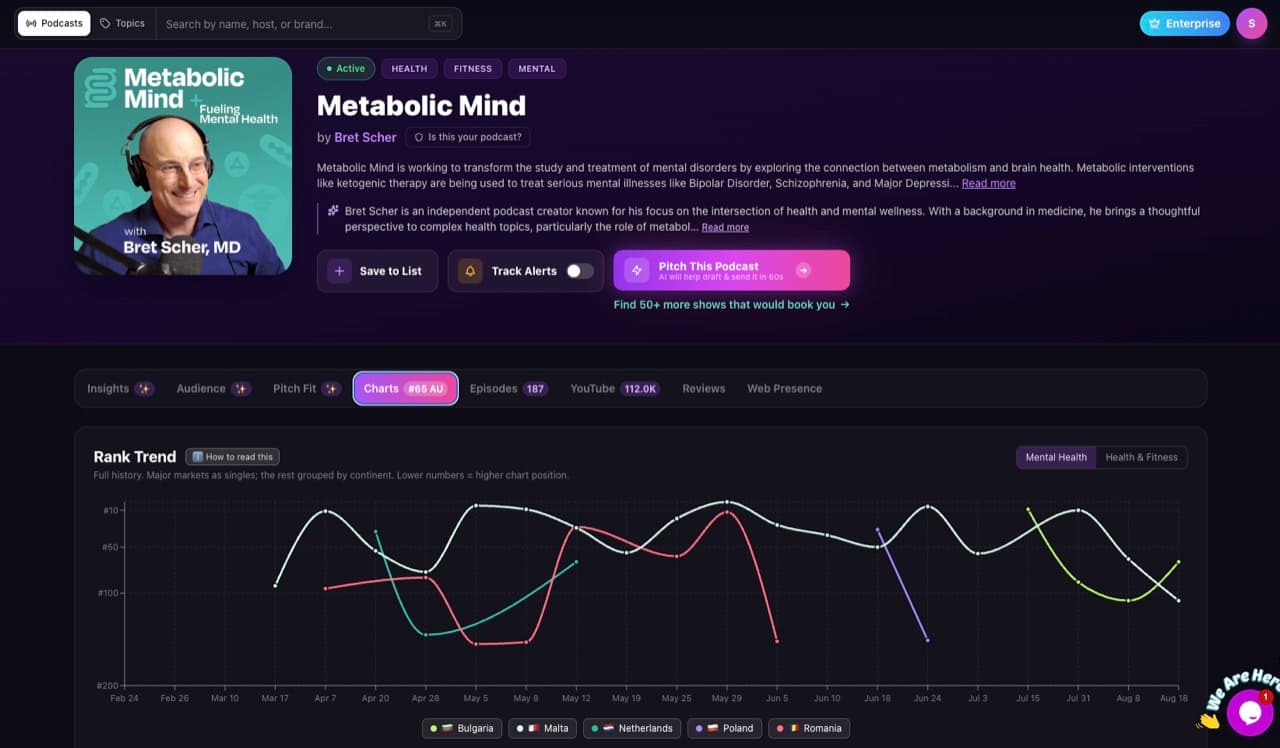
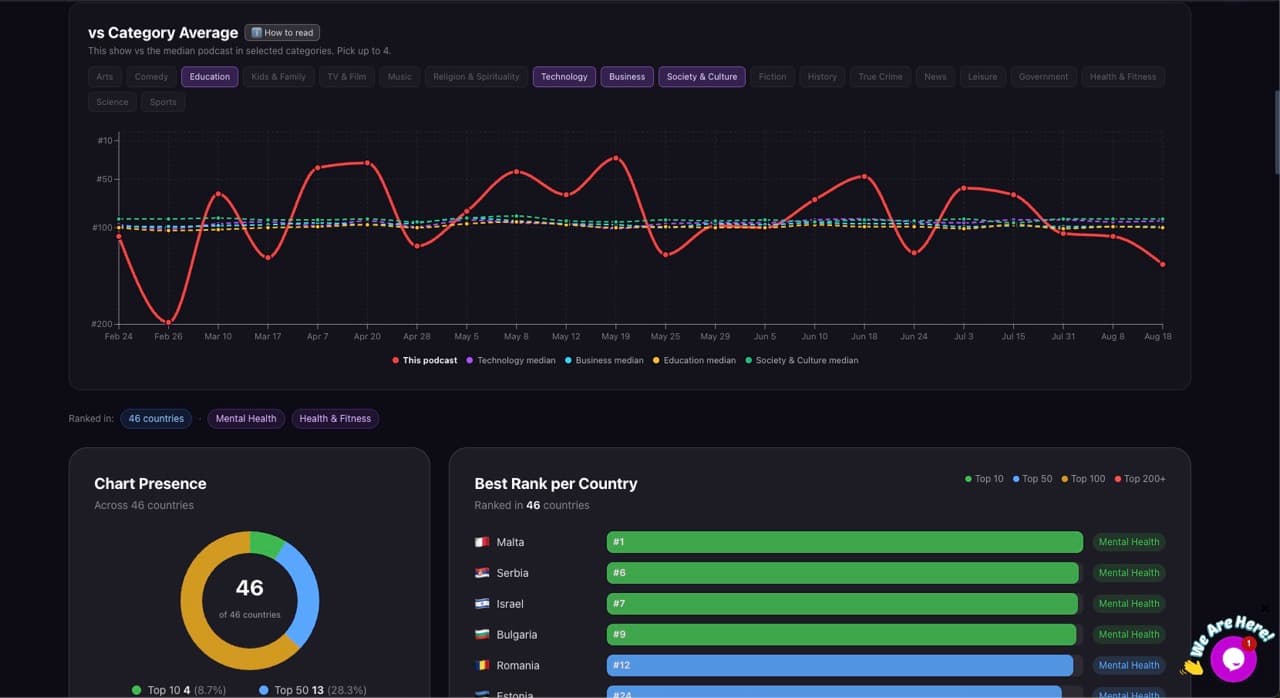
Then a comparison against the median podcast in any category you pick, chart presence by country, and best rank per country.
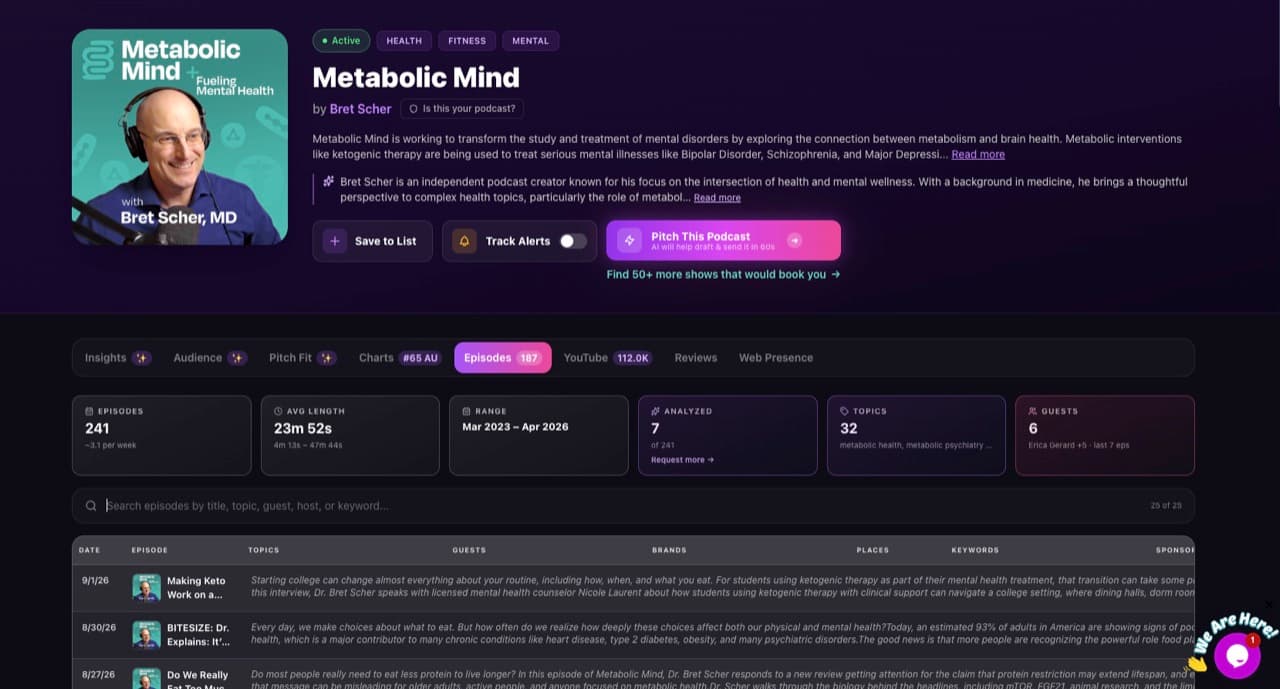
Episodes: the searchable archive with topics, guests and sponsors
The archive, indexed. Episode count, average length, date range, how many have been analyzed, and the topics and guests found across them. The table is searchable by title, topic, guest, host or keyword, with columns for topics, guests, brands, places, keywords and sponsors on each episode. This is where you confirm a sponsor read, find the episode a guest appeared in, or pull every episode on a subject for a report.
YouTube: channel analytics and comment sentiment for the same show
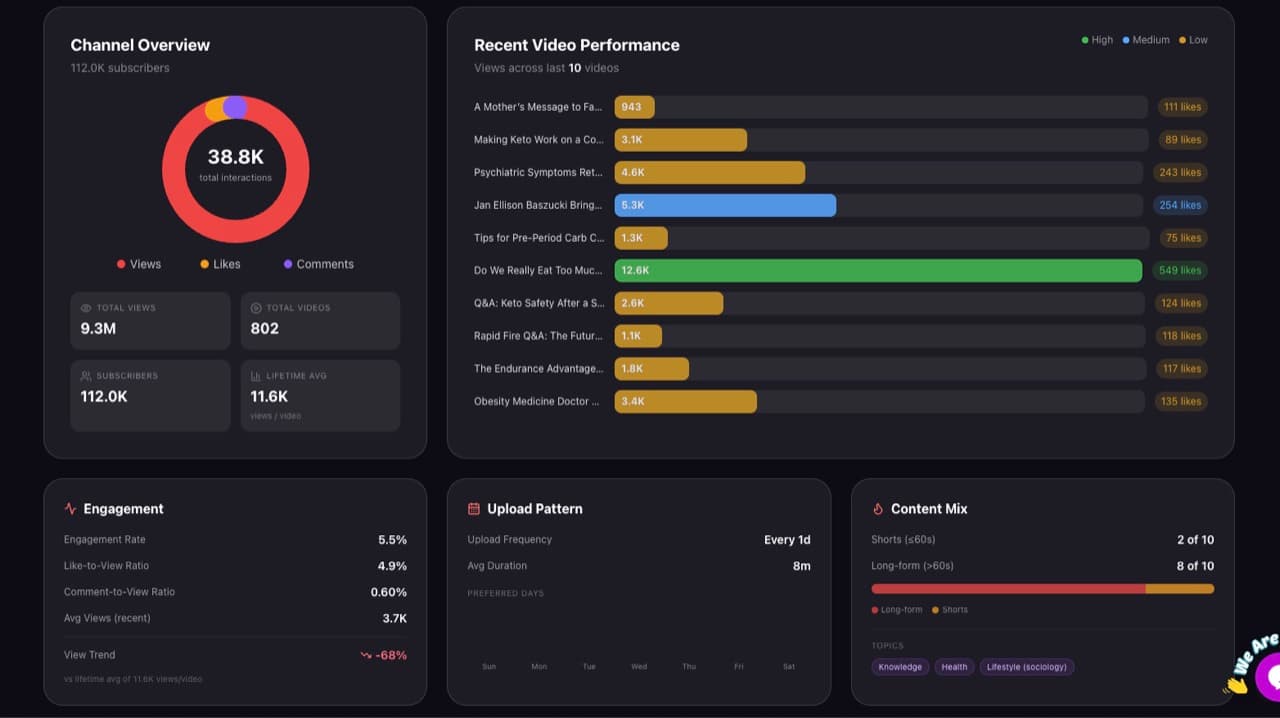
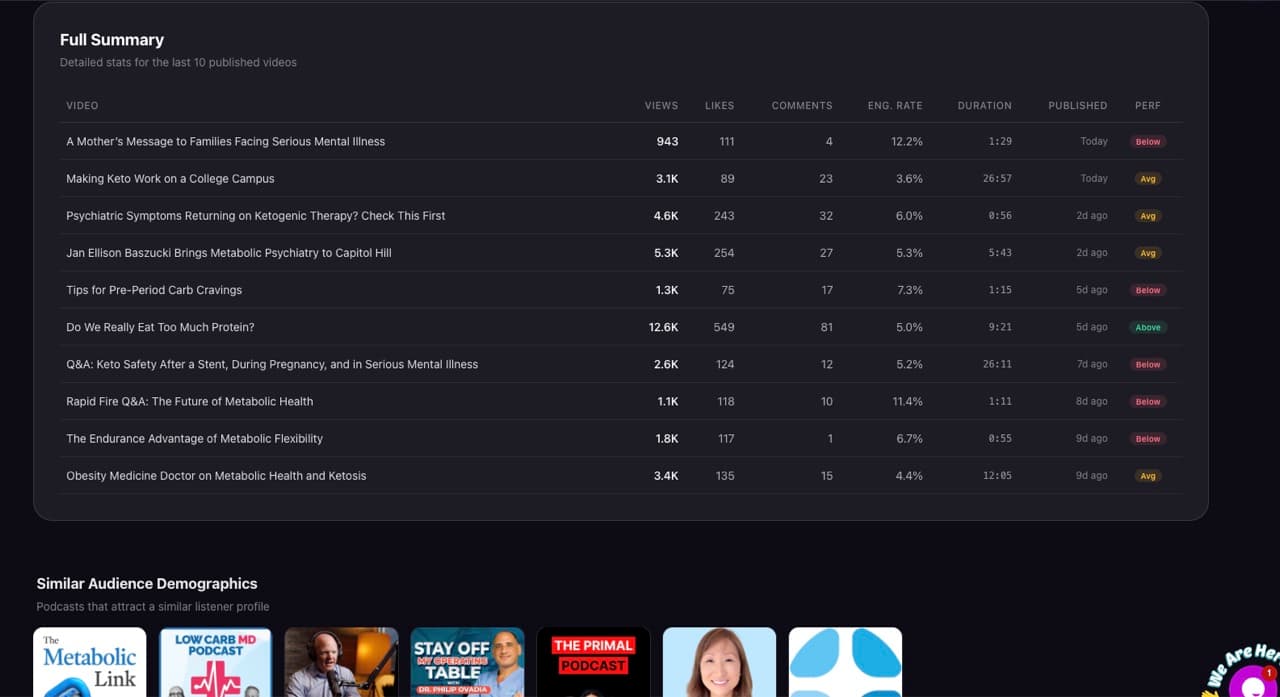
Many shows now reach more people on YouTube than in podcast apps, and this is the tab nobody else does. The same show's channel: overview, the last ten videos with views and likes colour-coded high, medium and low, then channel stats, engagement, upload pattern and shorts versus long-form.
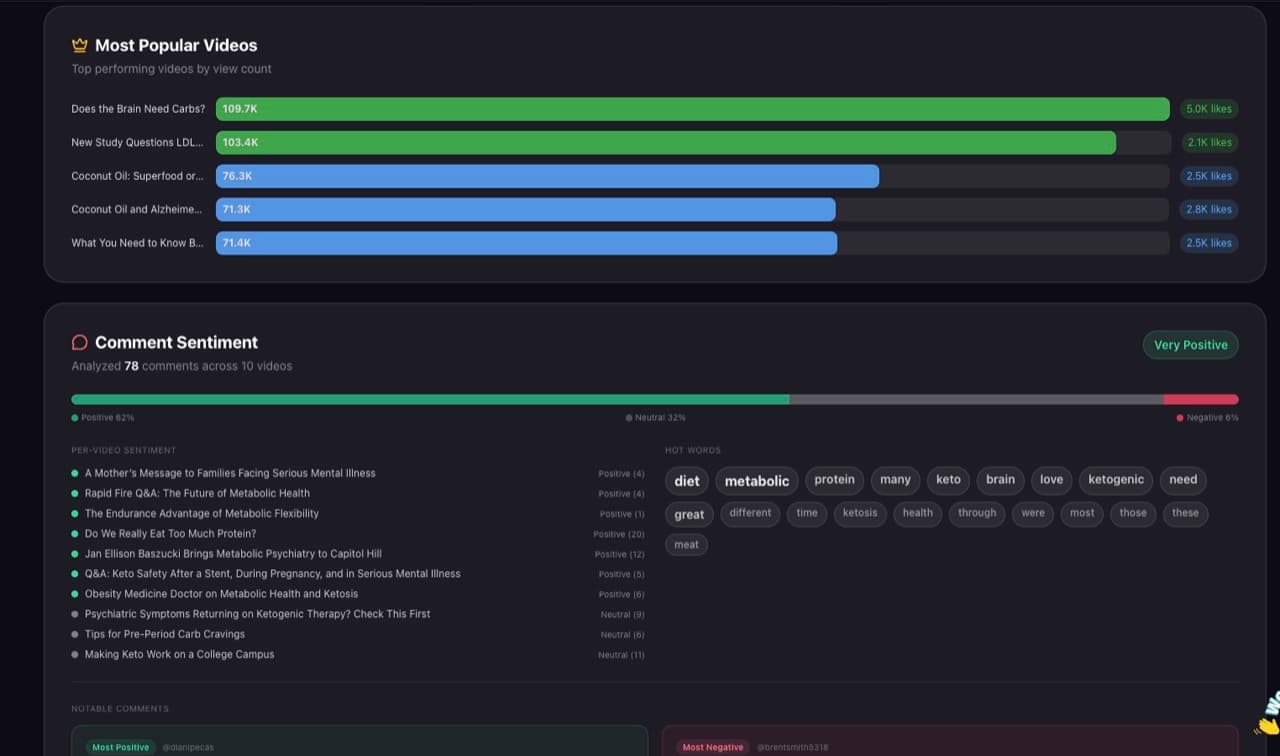
Then the biggest videos ever, and the comments analysed: percentage positive, the words that come up most, sentiment per video, and the most positive and most negative comment pulled out by name. That's how the audience actually feels. Not a follower count, the room.
Reviews and Web Presence
Reviews
Listener reviews from the podcast apps pulled together, so you read the audience in its own words before you write to the host.
Web Presence
An AI-generated report of the show's footprint beyond audio: press, mentions, official sites and social profiles. Useful for judging a host's reach off-platform.
How to read a podcast profile for sponsorship, guesting or research
The same profile answers different questions depending on why you opened it. This is the order that works for each job.
| If you are… | Look at first | Then confirm with | Decision signal |
|---|---|---|---|
| Buying or selling sponsorship | Insights › Reach and Platform Distribution | Audience › top locations; Insights › Brands & References | Reach range at high confidence, audience in your target country, no direct competitor already on the show. |
| Pitching yourself or a client as a guest | Pitch Fit score and first-timer share | Insights › recent guests; Episodes › recent topics | Score above moderate, recent guests like you, a recent episode near your subject to reference. |
| Researching a market or category | Insights › Most Discussed Topics | Charts › vs category average; Episodes archive | Topic counts over time, category position, exportable episode list. |
| Growing your own podcast | Charts › rank trend and Market Insights | YouTube › view trend and content mix | Low-competition categories, cross-promotion partners with a similar audience. |
- Free on every show
- Header, description, host read, Episodes tab
- Pro and up
- Insights, Audience, Pitch Fit, Charts, YouTube, Reviews, Web Presence, unlimited. Free accounts get a monthly allowance of full profiles. Current limits.
Frequently asked questions about podcast analytics
How many listeners does a podcast have, and how does CastFox know?
What is on a CastFox podcast profile?
How can I see which brands advertise on or are mentioned in a podcast?
How do I know if a podcast accepts guests?
Where does the audience demographic data come from?
Does CastFox show a podcast's YouTube performance?
Which parts of a podcast profile are free?
Related guides and tools
- Advertise on podcastsSizing reach and checking audience geography before you spend
- Podcast guestingUsing Pitch Fit and Guest Finder to get booked
- Podcast market researchTopics, categories and competitive intelligence
- Compare podcastsTwo shows side by side
- Podcast chartsDaily Apple rankings in 100+ countries
- Next: OrganizeSave shows into campaign lists