
Angela Watson's Truth for Teachers
Truth for Teachers is designed to speak life, encouragement, and truth into the minds and hearts of educators and get you energized for the week ahead.
Insights from recent episode analysis
On the show
- Caroline Williams1 ep
- Dr. Karen Boyd1 ep
- Andrew Gardner1 ep
Also: Marisol Quevedo Rerucha, Rebecca Bellingham, Veronica Scott, Erin Mote, Bee Wilson
Audience Interest
Podcast Focus
Publishing Consistency
Insights are generated by CastFox AI using publicly available data, episode content, and proprietary models.
Most discussed topics
Brands & references
Total monthly reach
Based on 1 signal.
Built from
By chart position
- 🇺🇸United States · CoursesHOME#19233K to 1.2M
- 🇮🇩ID · Courses#713K to 67K
- 🇦🇪AE · Courses#37.8K to 41K
- 🇦🇺Australia · Courses#236.3K to 33K
- 🇨🇦Canada · Courses#315.3K to 28K
- Per-Episode Audience
Est. listeners per new episode within ~30 days
272K to 1.4M🎙 Weekly cadence·376 episodes·Last published 1w ago - Monthly Reach
Unique listeners across all episodes (30 days)
544K to 2.9M🇺🇸86%🇮🇩5%🇦🇪3%+2 more - Active Followers
Loyal subscribers who consistently listen
299K to 1.6M
Market Insights
Platform Distribution
Reach across major podcast platforms, updated hourly
Total Followers
—
Total Plays
—
Total Reviews
—
* Data sourced directly from platform APIs and aggregated hourly across all major podcast directories.
| Date | Episode | Topics | Guests | Brands | Places | Keywords | Sponsor | Length | |
|---|---|---|---|---|---|---|---|---|---|
| 10/11/26 |  EP358 The first time I questioned traditions vs what's best for kids | I had an experience when I was a new teacher that shaped much of what I believe about how educators should use their time and the most effective way to reach students. It was my very first exposure to understanding and questioning school norms, and made me realize that so much of what we assume about the ways school "should be done" is based on a very specific construct in our local area or even in our individual buildings. Part of this story is in my book "Fewer Things, Better: The Courage to Focus on What Matters Most" but I felt like it was too lengthy to include the best details, and I really wanted to share the entire story with you. So, I hope you'll join me for this episode as I recall the very first time I went against school norms, and why the experience shaped my thinking from that day forward. Listen on or read: https://truthforteachers.com/truth-for-teachers-podcast/the-first-time-i-questioned-tradition-vs-whats-best-for-kids/ | 15m 18s | ||||||
| 9/27/26 |  EP357 6 ways to prime students' brains for learning | You've probably heard the phrase "activate prior knowledge" a million times. It shows up in every lesson plan template, every observation rubric, every methods textbook. And teachers are good at it. But the behavioral science on how priming actually works in the brain goes way deeper than asking kids what they remember from yesterday, and once you understand it, you start seeing opportunities to prime learning in places you probably weren't looking. In this episode, I walk you through six research-backed ways to prime students' brains for learning, all grounded in cognitive science, and most of them are things you can try this week without changing your curriculum, your schedule, or anything about your school's expectations. We get into what priming actually is (and I'm honest about which parts of the priming research have held up and which parts haven't), and then I share six specific strategies with classroom examples for every grade level. We cover how to use the 60-second window before class actually starts, how to treat your opening hook as instruction rather than just engagement, how to use prequestions the way the 2024 ManyClasses study suggests they actually work, how to prime the emotional state kids walk in with, how to prime the cognitive mode you want them in (scientist, historian, writer), and why the last 30 seconds of class matter more than most teachers realize. If you've ever felt like a great Monday lesson somehow evaporated by Tuesday, this episode gives you a clearer lens for evaluating what you're already doing and where you might tweak. You don't need to overhaul anything. You just need to start noticing the priming that's already happening in your classroom and making more deliberate choices about what you're priming kids for. LIsten on or read: https://truthforteachers.com/truth-for-teachers-podcast/6-ways-to-prime-students-brains-for-learning/ | 30m 17s | ||||||
| 9/13/26 |  EP356 The digital delusion: Is classroom tech hurting how kids learn? (with Dr. Jared Cooney Horvath) | "My toaster has undergone more safety and efficacy testing than any piece of ed tech that's been put in front of our kids in the past 20 years." That's according to Dr. Jared Cooney Horvath, a neuroscientist, university professor, and former classroom teacher whose book "The Digital Delusion" has become the center of a national conversation about screens in schools. He's testified before the U.S. Senate, and parents are handing out copies at school board meetings. Jared's argument is that we've spent decades and $400 billion building an ed tech industry on a promise that never materialzed, and that the tools we've handed kids are working against the way human beings actually learn. I came into this conversation agreeing with a lot of his premise and pushing back on some of it, particularly the reliance on standardized test scores as evidence of learning outcomes and the assumption that school was working well before devices showed up. Jared took the pushback seriously, and what came out of it is one of the deepest (and certainly lengthiest!) conversations I've had about whether the ed tech promise keeps failing and what teachers can actually do about it. We dig into: Why the work of learning goes against our natural human biology, and what that means for a tool designed to remove friction What "engagement" means at the level of the brain, and why gamified learning keeps kids entertained without teaching them much The only two use cases where the research shows ed tech genuinely works (and why neither are very exciting) The difference between what a tool could do and what kids will actually do with it -Whether school was actually working better before devices, and what we lost that's worth going back for Jared makes the case for reintroducing friction and eliminating tech as the default rather than banning it outright, and shares what to say to admin and parents when you want to teach differently. Most importantly, Jared makes the case for teacher autonomy and why you need to trust your own expertise about student learning. This conversation ended in a more hopeful place than I expected, and I hope you'll carve out some blocks of time to go deep with us on this topic. It takes time to tease out the nuance, and that's where the most important takeaways are. LIsten on or read: https://truthforteachers.com/truth-for-teachers-podcast/the-digital-delusion/ | 1h 16m 30s | ||||||
| 8/30/26 |  EP355 A short history of the 8-hour workday (and how to protect yours) | A third of your day (apart from work and sleep) is supposed to be yours. So where does it go? In 1817, labor movement activist Robert Owen coined this rallying cry: "Eight hours for work, eight hours for sleep, and eight hours for what we will." But if you've ever tried to make that math work as a teacher, you know the catch. In those "eight hours for what you will," we have to fit commuting, cooking, cleaning, errands, caregiving, homework help, and all the invisible labor of running a life. How do we actually make space for the things that bring us joy? In this episode, I unpack the labor history most of us were never taught, and why I find it a little ironic that I now run a program called the 40 Hour Teacher Workweek. I also talk about the gendered piece of this history that rarely gets named. Women were absolutely part of the labor movement (Frances Perkins literally drafted the Fair Labor Standards Act), but they still ended up with the second shift waiting for them at home. And teachers, who are still overwhelmingly women, are living that reality every single day. I share three practical things I've learned from Katrina Onstad, author of The Weekend Effect, about how to actually reclaim some of that "what you will" time. I also talk about why I refuse to frame rest as a productivity tool, and what I think we owe the workers who fought and died for the protections we now take for granted. This Labor Day, I hope you'll listen to this one somewhere restful. And I hope it gives you permission to protect your time, not because it makes you a better teacher, but because you're a person who deserves a life outside of school. Listen in. Or read the transcription here. | 23m 48s | ||||||
| 8/16/26 |  EP354 You don't have to teach like an influencer. | If you scroll social media right now, you'll probably land on a teacher revamping their reading corner like it's a home renovation reveal, then a TikTok Shop haul of classroom must-haves you didn't know you needed nine seconds ago, then someone who built an entire year's curriculum with AI in under a minute. And somewhere underneath all of it is this creeping feeling that you're already behind, and the school year has hardly even started. In this episode, I'm telling a story about a veteran teacher I worked next door to early in my career, and why I think about my mistake in emulating her every time some new pendulum swing happens in education. And, I discuss how a lot of what shapes our thinking about teaching no longer originates from trainings or mentors or our own gut instincts and professional expertise. It's coming from whichever five seconds of video happened to outperform in an algorithm built to sell ads, not to teach well. The truth is that you don't have to teach like the teacher down the hall, and you don't have to teach like an IG influencer. You just have to keep asking the question I had to learn the hard way: is this authentic to my teaching philosophy, or am I performing someone else's idea of what a good teacher looks like? Listen in. Or read the transcription here. | 20m 25s | ||||||
| 8/2/26 |  EP353 Think out loud: teaching the hidden skills of planning and prioritizing | You make dozens of invisible decisions every class period. Should I squeeze in one more activity or leave time for questions? Do I spend more time on this concept or move on? Is this the best use of our remaining five minutes? You weigh options, estimate time, and reprioritize on the fly, and you do it so automatically that you barely notice anymore. But here's the problem: your students have no idea any of this is happening. They just see you move seamlessly from one thing to the next. If kids never see how you plan, prioritize, and adjust, how are they supposed to learn to do it themselves? In this episode, I'm talking about how to make your thinking processes visible to students, and why it matters so much. We'll cover how to talk through your weekly overview so kids learn to anticipate where their time and energy should go, how to involve students in prioritizing decisions (like "We have five minutes left, should we do X or Y?"), how to model breaking down projects into manageable steps, why most people are bad at estimating time and what to do about it, and what to say when things go off track and plans need to change. These are teachable skills, but kids won't pick them up through osmosis. They need to see it modeled, and even better, they need to be invited into the process. Listen or read the episode here: https://truthforteachers.com/truth-for-teachers-podcast/think-out-loud-teaching-the-hidden-skills-of-planning-and-prioritizing/ | 25m 09s | ||||||
| 7/19/26 | distress toleranceclassroom management+3 | — | — | — | distress toleranceclassroom management+3 | — | 25m 35s | ||
| 6/28/26 | AI in educationlearning science+3 | Erin Mote | InnovateEDUBrooklyn Laboratory Charter School | — | AIclassroom+3 | — | 47m 34s | ||
| 6/14/26 | regretgrowth+3 | — | The Power of Regret: How Looking Backward Moves Us Forward | — | regrethindsight+3 | — | 25m 14s | ||
| 5/31/26 | sensory learningchild development+4 | Bee Wilson | TastEdAngela Watson's Truth for Teachers | UK | curiosityfood education+3 | — | 35m 27s | ||
Want analysis for the episodes below?Free for Pro Submit a request, we'll have your selected episodes analyzed within an hour. Free, at no cost to you, for Pro users. | |||||||||
| 5/17/26 | nervous systemanxiety+3 | — | Everything is TerribleSubstack | — | fight-or-flightparasympathetic nervous system+3 | — | 18m 33s | ||
| 5/3/26 | art in educationidentity exploration+3 | Rebecca BellinghamVeronica Scott | Artful Belonging StudioThe Artful Approach to Exploring Identity and Fostering Belonging | — | artful approacheducation+5 | — | 49m 07s | ||
| 4/19/26 | phone habitsdigital wellness+3 | — | So What Are We Doing Here | — | phone addictiondigital consumption+3 | — | 36m 00s | ||
| 4/5/26 | brain and body connectionlearning+3 | Caroline Williams | Inner Sense | — | brainbody+5 | — | 36m 53s | ||
| 3/15/26 | mindfulnessretreats+3 | — | Insight TimerBooks in the Wild+2 | — | mindfulnessretreats+5 | — | 54m 33s | ||
| 3/1/26 | AI ethicsenvironmental impact+4 | Dr. Karen Boyd | Netflix | — | AIenvironmental impact+5 | — | 55m 51s | ||
| 2/15/26 | hidden curriculumvalues in education+3 | — | — | — | hidden curriculumeducation values+3 | — | 23m 50s | ||
| 2/1/26 | ADHDteaching challenges+4 | Andrew Gardner | BrainPOPYale+3 | — | ADHDteaching+5 | — | 47m 58s | ||
| 1/18/26 | artificial intelligencewriting skills+3 | — | AIneuroscience+1 | — | AIwriting+4 | — | 26m 45s | ||
| 1/4/26 | neurodivergencelearning disabilities+4 | — | — | — | neurodivergentlearning disability+5 | — | 21m 54s | ||
| 11/16/25 | future planningeducator connections+3 | — | Due Season Press | — | 2026teacher retreats+3 | MiaTiagoBooks.com | 34m 52s | ||
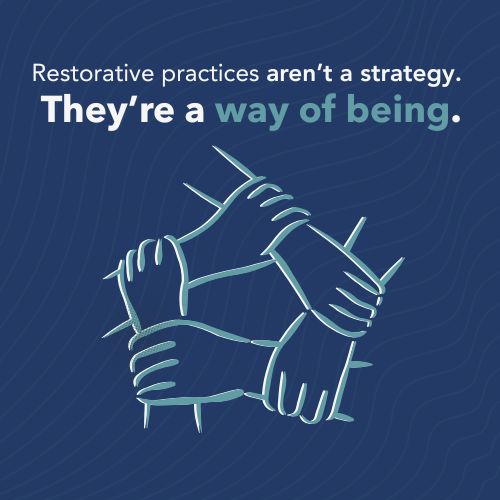
| 11/2/25 | restorative practicesself-compassion+3 | Marisol Quevedo Rerucha | Heartset Consulting GroupBeyond the Surface of Restorative Practices | — | restorative justiceclassroom accountability+3 | — | 51m 02s | ||
| 10/19/25 |  EP336 4 routines to help students notice and adjust their thinking | Metacognition — "thinking about your thinking" — is one of the most powerful skills we can teach students, and it doesn't require adding anything new to your already packed schedule. In this episode, you'll learn four simple, one-minute routines you can weave into your daily classroom flow to help students notice, analyze, and adjust their own thinking. We'll explore: How to use attention checks so students can redirect focus in the moment Why brain break signals teach learners to connect physical energy with mental clarity (and how to manage them without chaos) How mistake moments reframe errors as valuable information A fresh take on end-of-day brain checks that builds awareness of learning strategies, not just content recall Whether you teach kindergarteners or high school seniors, you'll walk away with concrete ideas for creating a classroom culture where students take ownership of their learning process. Plus, I'll share how my Finding Flow Solutions K–12 curriculum can give you ready-made, no-prep lessons to teach these skills — and where to grab your free downloadable sample lesson. Get the shareable article/transcript for this episode here. This episide is brought to you by Listenwise and MiaTiagoBooks.com. | 27m 23s | ||||||
| 10/5/25 |  EP335 How teacher language shapes us—and teaches kids to find their wisest self (with Lily Howard Scott) | "Giving kids, and yourself, language to wrap around the idea that we have an inner leader (our kindest, best self) is transformative." Join me as I talk with Lily Howard Scott, a NYC-based parent, educator, and author, who shares insights from her book The Words That Shape Us: The Science-Based Power of Teacher Language. We're exploring how our internal self-talk shapes our perceptions of students and ourselves, and how intentional language can transform classroom culture. Lily shares practical strategies for helping students of all ages: Notice and separate from their thoughts and feelings ("feelings as visitors") Understand they are always good inside, even when they make a bad choice Access their wisest self to respond thoughtfully instead of reacting automatically Lily also introduces tools like "outer shells and inner swirls" to help students notice assumptions and guide interactions in more mindful, empowering ways. Whether you're looking to improve classroom culture, support student self-reflection, or strengthen your own teacher mindset, this episode offers actionable strategies and inspiring reminders about the words we choose and the impact they have. Get the shareable article/transcript for this episode here. | 1h 01m 11s | ||||||
| 9/21/25 |  EP334 Are you a Type A or Type B teacher? Rethinking effort, expectations, and balance | How much effort is enough—for you and your students? In this episode, I'm weaving together three listener questions about navigating effort, expectations, and balance. We'll explore how to recognize whether you lean more toward Type A (overextending) or Type B (holding back) tendencies, and how to make small, mindful adjustments so you're not burning out—or stagnating. You'll hear practical advice for: Reworking your expectations of yourself during seasons of low energy, burnout, or chronic illness. Knowing when to give yourself permission to do less, and when to gently push yourself to do more. Supporting students who either overextend or under-extend themselves without trying to individualize every message for every learner. Listen in for a simple framework you (and your students) can use to calibrate effort in healthier, more sustainable ways. 🔗 Want to submit a question for a future episode? Share it at truthforteachers.com/podcast. Get the shareable article/transcript for this episode here.. | 23m 49s | ||||||




Showing 25 of 376
Pitch Fit is a Pro feature
See how bookable this show is for guests, which brands already advertise, the per-episode ad value, and the best-fit guest and sponsor profile. The numbers are blurred on the free plan.
How readily this show books outside guests like you.
How proven this show is for host-read sponsorships.
For Guests
ProFor Advertisers
ProUpgrade to Pro to unlock guest cadence, sponsor categories, fit scores, and per-episode ad value for this show.
Similar Audience Demographics
Podcasts that attract a similar listener profile

The Cult of Pedagogy Podcast
Jennifer Gonzalez
Science of Reading: The Podcast
Amplify Education

School of Practice
Edutopia

Melissa & Lori Love Literacy ® | Science of Reading for Teachers
Supported by Great Minds

Reach All Readers
Anna Geiger

The Lazy Genius Podcast
Kendra, The Lazy Genius

We Can Do Hard Things
Treat Media and Glennon Doyle

For The Love With Jen Hatmaker Podcast
Jen Hatmaker
Chart history for Angela Watson's Truth for Teachers
Peaked at #3 in AE, top 10 in 2 of 33 tracked markets, currently #3 in AE.
| Market | Genre | Peak | Current | Trend |
|---|---|---|---|---|
| AE | — | #3 | #3 | — |
| ID | — | #7 | #7 | — |
| United States | — | #19 | #19 | — |
| Australia | — | #23 | #23 | — |
| SA | — | #29 | #29 | — |
| Canada | — | #31 | #31 | — |
| Ireland | — | #34 | #34 | — |
| SG | — | #38 | #38 | — |
| VN | — | #46 | #46 | — |
| New Zealand | — | #55 | #55 | — |
| KE | — | #61 | #61 | — |
| PL | — | #65 | #65 | — |
| TW | — | #68 | #68 | — |
| HK | — | #69 | #69 | — |
| South Africa | — | #71 | #71 | — |
| Japan | — | #74 | #74 | — |
| IL | — | #81 | #81 | — |
| Sweden | — | #95 | #95 | — |
| CZ | — | #98 | #98 | — |
| Norway | — | #102 | #102 | — |
Chart Positions
33 placements across 31 markets.
Chart Positions
33 placements across 31 markets.