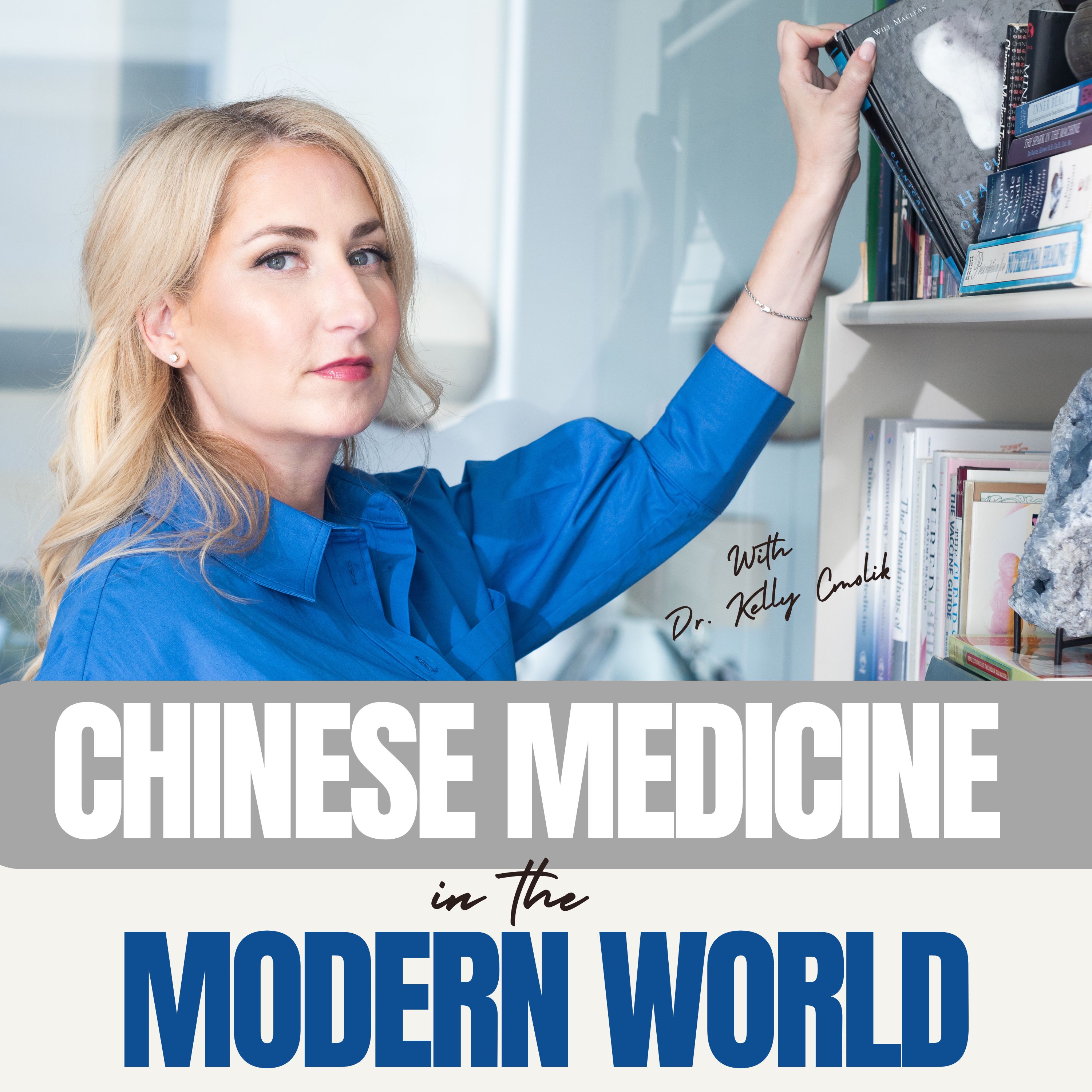
Chinese Medicine in the Modern World
Join Dr. Kelly Cmolik, Doctor of Traditional Chinese Medicine, as she explores how Traditional Chinese Medicine (TCM) address today’s toughest health challenges—including chronic inflammation, autoimmune disease, gut dys...
AI overview.Dr. Kelly Cmolik is a seasoned Doctor of Traditional Chinese Medicine with over 20 years of clinical experience, known for her expertise in integrating ancient …
Insights from recent episode analysis
On the show
- Dr. Kelly Cmolik11 eps
Audience Interest
- traditional Chinese medicine practices
- chronic health issues
Podcast Focus
- exploring traditional Chinese medicine
- addressing modern health challenges
Publishing Consistency
- active for one year
- weekly episode cadence
Insights are generated by CastFox AI using publicly available data, episode content, and proprietary models.
Most discussed topics
Brands & references
Total monthly reach
Based on the show's feed history.
Built from
By chart position
- 🇫🇮FI · Medicine#221K to 252K
- Per-Episode Audience
Est. listeners per new episode within ~30 days
21K to 252K🎙 Monthly cadence·10 episodes·Last published 2w ago - Monthly Reach
Unique listeners across all episodes (30 days)
23K to 280K🇺🇸71%🇫🇮29% - Active Followers
Loyal subscribers who consistently listen
9.1K to 112K9 real followers tracked across platforms
Market Insights
Platform Distribution
Reach across major podcast platforms, updated hourly
Total Followers
—
Total Plays
—
Total Reviews
—
* Data sourced directly from platform APIs and aggregated hourly across all major podcast directories.
| Date | Episode | Topics | Guests | Brands | Places | Keywords | Sponsor | Length | |
|---|---|---|---|---|---|---|---|---|---|
| 10/5/26 |  Peptides & GLP-1s After 40: What Women Need to Know | In this special guest episode of Chinese Medicine in the Modern World, Dr. Kelly Cmolik sits down with her friend and first-ever podcast guest, Dr. Mary Pines — a PhD biomedical scientist with 25+ years of research experience and founder of Better Beyond 40, a program helping women navigate perimenopause, menopause, and healthy aging.Together they break down the rapidly growing world of peptide therapy for women over 40: what peptides actually are, how they differ from hormones and nutritional proteins, why GLP-1 medications (like Ozempic and Mounjaro) have reshaped the conversation around weight and metabolism, and how Dr. Kelly integrates peptides into a Chinese medicine framework built around clearing inflammation, rebalancing the body, and tonifying what's deficient.The conversation covers commonly discussed compounds — KPV, BPC-157, TB-500, GHK-Cu, Thymosin alpha-1, growth hormone secretagogues (tesamorelin, sermorelin, CJC-1295, ipamorelin), and epitalon — along with candid discussion of safety concerns, sourcing, dosing philosophy, and the historical origins of peptide science with Russian scientist Vladimir Khavinson.In this episode, you'll learn:What a peptide is, and how it differs from a hormone or a nutritional protein like collagenWhy peptides are considered more "homeostatic" than blunt-force hormone replacementHow GLP-1 medications work, and why irresponsible dosing (not the drug class itself) drove many side effectsWhy weight loss without addressing muscle, bone density, and detox pathways can backfireHow Dr. Kelly integrates peptides into a three-phase Chinese medicine protocol (clear, rebalance, tonify)The difference between FDA-approved GLP-1 drugs and "gray market" investigational peptidesCommon concerns around BPC-157, angiogenesis, and cancer risk — and the current thinking on that topicThe history of peptide science, from Cold War Russia to modern longevity medicineThree questions to ask yourself before starting any peptide protocolLinks & Resources📅 Book a consultation with Dr. Kelly: https://drcmolik.janeapp.com/🌿 Learn about Dr. Kelly's clinic & services: https://www.drcmolik.com/services🔗 Follow Dr. Kelly on Instagram: @drkellycmolik👩⚕️ Visit Dr. Mary Pines' website: https://drmarypines.com🎧 Check out Dr. Mary Pines' podcast: Better Beyond 40📱 Follow Dr. Mary Pines: YouTube, Instagram, and Facebook — search "Dr. Mary Pines" or Better Beyond 40Meet the Guest: Dr. Mary Pines, PhDDr. Mary Pines holds a PhD in biomedical sciences from the University of Cambridge, with expertise spanning genetics, biochemistry, and molecular biology. She has worked as a biomedical scientist for 25 years, published peer-reviewed research in Cell and Nature Cell Biology, and was named Postdoctoral Researcher of the Year by UBC's Department of Cell and Physiological Sciences. She has more than a decade of experience helping women with health and longevity and is the founder of Better Beyond 40, a program supporting women through perimenopause, menopause, and healthy aging using a lens of hormones, metabolism, and longevity.Find her at drmarypines.com, on YouTube, Instagram, and Facebook, and via her own podcast, Better Beyond 40.Key TakeawaysPeptides are short chains of amino acids (roughly 2–50), distinct from large structural proteins (like collagen) and from hormones. The episode focuses on "signaling" peptides — molecules the body naturally produces that decline with age.Peptides act more like a targeted signal than a hormone. Dr. Pines describes hormones as "loudspeakers" reaching many systems at once, while peptides send more precise, localized signals.A key appeal of peptides is their built-in regulatory mechanism. Unlike a blunt-force approach (e.g., taking growth hormone directly), peptides are described as working with the body's existing homeostatic systems rather than overriding them.Dr. Kelly frames peptides as an adjunct — not a replacement — for root-cause Chinese medicine work. Her clinical approach layers three phases: (1) clearing inflammation and underlying pathogens, (2) rebalancing digestive, metabolic, and organ function, and (3) tonifying/bolstering systems that are deficient, especially with age.On GLP-1 medications (e.g., Ozempic, Mounjaro): Dr. Pines argues that many reported side effects (nausea, gastroparesis) stemmed from aggressive, high starting doses rather than the drug class itself — she advocates starting low and titrating slowly.GLP-1s are positioned as a tool for people already doing "the right things" — lifestyle, nutrition, and movement — who are still experiencing weight-loss resistance, rather than a replacement for foundational habits.Rapid weight loss carries real risks beyond muscle and bone loss, including the release of toxins stored in fat tissue. Dr. Kelly emphasizes supporting elimination pathways (hydration, fiber, bowel regularity) during any rapid metabolic shift.A DEXA scan (body composition scan) is recommended before and during use of GLP-1s or other metabolic-support peptides to monitor bone density and muscle mass.Investigational/"gray market" peptides are not automatically unsafe — Dr. Pines distinguishes regulatory status (patentability, FDA approval) from actual safety evidence, citing decades of international clinical use, mechanistic research, and preclinical data for peptides that lack large-scale randomized trials in North America.BPC-157 and cancer risk is a frequently raised concern. Dr. Pines states that current evidence does not support the idea that BPC-157's angiogenesis-related effects promote tumor growth, distinguishing regulated, healing-related blood vessel formation from tumor angiogenesis. (See editorial note below — this is a claim from the guest that should be verified before publishing without qualification.)Peptides discussed for inflammation/immune modulation: KPV, Thymosin alpha-1.Peptides discussed for tissue repair/recovery (informally called the "Wolverine stack"): BPC-157 and TB-500.GHK-Cu (copper peptide) was discussed in relation to connective tissue, skin, hair, and nails.Growth hormone secretagogues mentioned: tesamorelin, sermorelin, CJC-1295, ipamorelin — associated with muscle, sleep, and body composition support.Epitalon (a pineal gland peptide) was discussed in relation to circadian rhythm support, particularly for frequent travelers and shift workers.Peptide stacking and protocol length: Dr. Pines describes typically combining two to three peptides, with protocols commonly running around 12 weeks (sometimes shorter or longer depending on the case).Historical origin: Peptide science is credited to Russian scientist Vladimir Khavinson, whose Cold War-era research (originally aimed at accelerating soldier recovery) led to the discovery of compounds including BPC-157 and a broader class of short bioregulator peptides.Three questions before starting any peptide: (1) What do you actually want to accomplish, and how will you know it's working? (2) Have you addressed the foundational lifestyle factors first? (3) What else are you doing to support the outcome you want?⚠️ Editorial Notes for Review Before PublishingA few items in this interview involve specific medical/safety claims about peptides (an area with active debate and limited regulatory approval in North America). Flagging these for your review before they go out in published show notes or marketing copy:BPC-157 and cancer/tumor risk: Dr. Pines states there is "zero evidence" linking BPC-157 to tumor promotion. This is a contested area even within the peptide community, and framing this definitively in public-facing content could carry liability or credibility risk. Recommend either attributing this explicitly as Dr. Pines' clinical opinion (as done above) or softening the language.Specific dosing philosophy ("microdose then titrate") is mentioned in general terms but no actual dosages are given — good, but worth... | 50m 10s | ||||||
| 9/7/26 | Chinese medicinedigestion+4 | — | Chinese Medicine in the Modern World | Late Summer | Late Summerdigestion+5 | — | 24m 06s | ||
| 8/3/26 | Chinese medicineHeart Fire+5 | — | Heart Fire | August | Heart FireChinese medicine+8 | — | 21m 58s | ||
| 7/1/26 | nutritiondigestive health+4 | — | Traditional Chinese Medicine | SIBOCandida | summer plateraw food debate+5 | — | 32m 23s | ||
| 6/1/26 | skin healthTraditional Chinese Medicine+4 | — | The Summer Glow Paradox | China | eczemapsoriasis+7 | — | 22m 17s | ||
| 5/4/26 | anxietydepression+5 | — | — | — | mental healthChinese Medicine+8 | — | 26m 48s | ||
| 4/7/26 | psoriasischronic inflammation+5 | — | — | — | psoriasischronic skin inflammation+7 | — | 23m 25s | ||
| 3/2/26 | seasonal allergiesChinese Medicine+4 | — | — | — | allergic rhinitishistamine+5 | — | 30m 21s | ||
| 2/2/26 | blood deficiencyChinese medicine+4 | — | — | — | blood deficiencyChinese medicine+6 | — | 31m 42s | ||
| 1/5/26 | eczemaChinese medicine+4 | — | Chinese medicinesteroid creams+1 | — | eczemaChinese medicine+6 | — | 27m 38s | ||
| 12/1/25 | gut healthChinese Medicine+5 | — | — | — | gut symptomschronic gut issues+5 | — | 38m 21s | ||
| 11/27/25 | Traditional Chinese Medicinehealth challenges+3 | — | Traditional Chinese MedicineChinese Medicine in the Modern World | — | Traditional Chinese Medicinechronic inflammation+3 | — | 1m 49s | ||
Showing 12 of 10
Pitch Fit is a Pro feature
See how bookable this show is for guests, which brands already advertise, the per-episode ad value, and the best-fit guest and sponsor profile. The numbers are blurred on the free plan.
How readily this show books outside guests like you.
How proven this show is for host-read sponsorships.
For Guests
ProFor Advertisers
ProUpgrade to Pro to unlock guest cadence, sponsor categories, fit scores, and per-episode ad value for this show.
Similar Audience Demographics
Podcasts that attract a similar listener profile


Distribution & Reach
About the show, platforms, and key insights.
Distribution & Reach
About the show, platforms, and key insights.
Dr. Kelly Cmolik is a seasoned Doctor of Traditional Chinese Medicine with over 20 years of clinical experience, known for her expertise in integrating ancient practices with modern medical insights. She focuses on addressing prevalent health issues through a holistic lens, emphasizing the importance of understanding root causes rather than merely treating symptoms. "Chinese Medicine in the Modern World" is distinctive for its in-depth exploration of how Traditional Chinese Medicine (TCM) can tackle contemporary health challenges like chronic inflammation, autoimmune diseases, and various skin conditions. The podcast format typically involves discussions that blend TCM wisdom with evidence-based medicine, making complex topics accessible to a broader audience. Listeners, ranging from health enthusiasts to those seeking alternative treatments, tune in for Dr. Cmolik's expert insights and practical advice. The value lies in her ability to bridge the gap between ancient practices and modern health needs, empowering individuals to take control of their well-being through informed choices.
By the numbers
- Total followers: 378K
- Total plays: 66M
Platforms
TuneIn
- Followers: 2
Castbox
- Followers: 7
- Plays: 8
YouTube
- Subscribers: 378K
- Views: 66M
- Videos: 637
Audience
adults
Key insights
What the show covers
- exploring traditional Chinese medicine
- addressing modern health challenges
- blending ancient wisdom with science
- root-cause health solutions
Audience interests
- traditional Chinese medicine practices
- chronic health issues
- natural treatment strategies
- integrative health approaches
Platform reach
- no platforms detected yet
- unknown follower count
- potential for broad distribution
- limited visibility currently
Publishing consistency
- active for one year
- weekly episode cadence
- six episodes released
- consistent publishing schedule
Chart history for Chinese Medicine in the Modern World
Peaked at #2 in Finland, top 10 in 1 of 2 tracked markets, currently #2 in Finland.
| Market | Genre | Peak | Current | Trend |
|---|---|---|---|---|
| Finland | — | #2 | #2 | — |
| Finland | — | #18 | #18 | — |
Chart Positions
2 placements across 1 market.
Chart Positions
2 placements across 1 market.