
Dwarkesh Podcast
by Dwarkesh Patel
Is this your podcast?Dwarkesh Patel is an independent podcast creator known for his insightful discussions that bridge technology and science. He has gained recognition for his ability to engage with complex topics and present them in an accessible manner, ofte…
Insights from recent episode analysis
Audience Interest
- technology advancements
- scientific discoveries
Podcast Focus
- interviews with experts
- technology insights
Publishing Consistency
- active for 5 years
- weekly episode releases
Platform Reach
- available on TuneIn
- available on Castbox
Insights are generated by CastFox AI using publicly available data, episode content, and proprietary models.
Most discussed topics
Brands & references
Total monthly reach
Estimated from 49 chart positions in 49 markets.
By chart position
- 🇨🇦CA · Technology#41M to 3M
- 🇬🇧GB · Technology#6300K to 1M
- 🇦🇺AU · Technology#7300K to 1M
- 🇺🇸US · Technology#8300K to 1M
- 🇩🇪DE · Technology#9300K to 1M
- Per-Episode Audience
Est. listeners per new episode within ~30 days
1.4M to 4.4M🎙 Daily cadence·139 episodes·Last published 2d ago - Monthly Reach
Unique listeners across all episodes (30 days)
4.8M to 15M🇨🇦20%🇬🇧7%🇦🇺7%+46 more - Active Followers
Loyal subscribers who consistently listen
2.6M to 8.1M5.7K real followers tracked across platforms
Market Insights
Platform Distribution
Reach across major podcast platforms, updated hourly
Total Followers
—
Total Plays
—
Total Reviews
—
* Data sourced directly from platform APIs and aggregated hourly across all major podcast directories.
On the show
From 20 epsHost
Recent guests
Recent episodes
AI researchers debate how close we are to recursive self-improvement
Sep 11, 2026
1h 37m 01s
Ajeya Cotra – Inside the OpenAI agent swarm that hacked Hugging Face
Sep 1, 2026
2h 20m 33s
The rise and fall of agent civilizations
Aug 31, 2026
24m 40s
Dylan Patel – Anthropic & OpenAI will have most of the world’s compute by 2028
Aug 25, 2026
1h 16m 53s
Ryan Greenblatt – What happens once AI can automate AI research?
Aug 11, 2026
2h 12m 32s
Social Links & Contact
Official channels & resources
Official Website
Login
RSS Feed
Login
| Date | Episode | Topics | Guests | Brands | Places | Keywords | Sponsor | Length | |
|---|---|---|---|---|---|---|---|---|---|
| 9/11/26 |  AI researchers debate how close we are to recursive self-improvement | New episode with John Schulman, Beren Millidge and Charlie O’Neill. I got together with some of the most insightful AI researchers I know who are at the openish companies, because I wanted to hear the details of what's actually happening at the frontier and what comes next.Watch on YouTube; read the transcript.Sponsors* Antithesis helps you trust your code. As agents generate more and more of your software, the bottleneck shifts from your engineers actually writing code to verifying it. Antithesis does that testing for you. Ron Minsky, who co-leads Jane Street’s tech group, told me that Antithesis was able to help his team shake out bugs in software that had already undergone heavy review. If you want to see how it fits into your development process, go to antithesis.com/dwarkesh* Grok Bot has been a great way to hand off tasks. My team uses it as a producer: whenever my editor posts a rough cut of an interview in Slack, Grok Bot opens the transcript on its own computer, matches my notes to the exact moments they refer to, and uses a file of my preferences to suggest edits. Then it sends me its top clip candidates so I can review everything from my phone, which saves my editors from sorting through hours of footage. Try Grok Bot for yourself at x.ai/bot* Jane Street just launched its most ambitious competition yet: design a protocol-emulator ASIC. Basically, if you have a chip you want to test outside of a live system, you should be able to connect it to your design and have it simulate realistic traffic. Jane Street wants general-purpose, reprogrammable designs that can work across multiple protocols and remain useful as new ones emerge. The most novel submissions will actually get taped out, and the winners will receive a physical copy! The competition is open until January 18, 2027, and teams are encouraged. To get started download the template code at janestreet.com/dwarkeshTimestamps(00:00:00) – Steelmanning the case against RSI(00:18:39) – What’s driving the Chinese labs’ progress(00:28:06) – How will automated AI researchers be trained(00:33:51) – Will long-horizon RL elicit AGI?(00:45:24) – The sim-to-real gap(01:00:33) – How much progress is explained by data?(01:18:03) – Why is RL working so well?(01:24:54) – Move 37 and entropy collapse(01:28:32) – Rapid-fire timelines This is a public episode. If you would like to discuss this with other subscribers or get access to bonus episodes, visit www.dwarkesh.com | 1h 37m 01s | ||||||
| 9/1/26 | 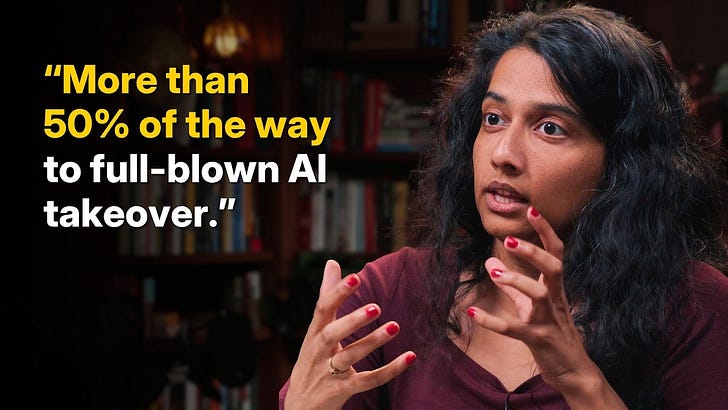 Ajeya Cotra – Inside the OpenAI agent swarm that hacked Hugging Face | Ajeya Cotra is a researcher at METR, where she works on threat modeling for loss-of-control risks from advanced AI. Before that, she led the technical AI safety program at what is now Coefficient Giving.She is one the three authors of METR and Redwood Research’s “Brief independent investigation of agents’ behavior, reasoning and collaboration in the OpenAI / Hugging Face hacking incident”.We go through not only what she and her coauthors discovered during this investigation, but what it means for how we should train future, smarter AIs which might be involved in the process of recursive self-improvement.Watch on YouTube; read the transcript.Sponsors* Jane Street’s ML engineering internships start with an intense four-day bootcamp: PyTorch, autograd, writing kernels, profiling workloads… all the things that Jane Street engineers need to know for their daily work. After that, interns tackle real projects, things the firm actually wants in its codebase. If you want to apply, or if you want to watch my recent conversation with Axel, one of Jane Street’s ML engineers, go to janestreet.com/dwarkesh* Cursor, which is now part of SpaceX, noticed that their MoE layers were eating more than half of total training time. So they wrote and open-sourced Mixture-of-Kittens, which is a custom megakernel for training MoE models on NVL72s. This kernel sped up an end-to-end run across 512 GPUs by 1.4x, from about 760 to over 1000 tokens per second per GPU. If you want to read more about the ML research that Cursor and SpaceX are doing, go to cursor.com/dwarkesh* Antithesis hands you (or your agents) a bug’s root cause so you can avoid days of manual debugging. If your test run crashes, Antithesis rewinds, branches off hundreds of slightly varied rollouts, and checks in how many of them the crash still appears. Then it rewinds further and does this all again. As Antithesis rewinds, it eventually finds the spot where the frequency of the crash plummets: that’s where the root cause lives! If you want to see it in action, go to antithesis.com/dwarkeshTimestamps(00:00:00) - Agents get kicked off(00:06:45) - Self-sacrificing behavior(00:13:43) - Potemkin villages(00:23:27) - The Hugging Face attack(00:35:23) - The slopvestigation(00:52:02) - Understanding the AI's motives(01:05:31) - The actual dangers of anthropomorphizing(01:14:30) - What smarter models might do(01:30:29) - The implications for recursive self-improvement(01:38:10) - Is this the case for open source?(01:53:04) - How do we prevent this in the future?(02:15:58) - The clearest warning shot we might ever get This is a public episode. If you would like to discuss this with other subscribers or get access to bonus episodes, visit www.dwarkesh.com | 2h 20m 33s | ||||||
| 8/31/26 |  The rise and fall of agent civilizations | This is a video recording of a post I wrote last week. You can read the original here. This is a public episode. If you would like to discuss this with other subscribers or get access to bonus episodes, visit www.dwarkesh.com | 24m 40s | ||||||
| 8/25/26 |  Dylan Patel – Anthropic & OpenAI will have most of the world’s compute by 2028 | Had a lot of fun chatting again with my twin brother Dylan Patel.We went through lab economics over the next few years - the shift from inference to training as RSI draws near; and how Anthropic and OpenAI are on track to control most of the world’s usable FLOPs within the next few years (because they can monetize compute better and thus outbid everyone).And then we discuss whether the >$10T of total AI capex we’ll see by the end of the decade will cause a sovereign debt crisis, where hyperscaler debt raises interest rates, drives non-AI exposed countries into bankruptcy, and crashes non-AI equities.One question we weren’t able to resolve is whether there’s anything that can counter all the forces barrelling towards centralization in this industry - the economies of scale in training, the scarcity of compute, and eventually continual learning and RSI.Watch on YouTube; read the transcript.Sponsors* Grok Bot has been quite helpful with my search for a new editor. I created a recruiter bot and described the type of editor I was looking for. That bot then spun up a handful of subagents that combed through my emails and X DMs, read the end credits of various documentaries I like, and figured out who edits for some of my favorite YouTubers. It took all of those results, and then delivered me a shortlist of candidates that matched my criteria. Try Grok Bot for yourself at x.ai/bot* Antithesis lets you add time travel to your software testing toolkit. Since the Antithesis platform is fully deterministic, everything that happens inside of it is perfectly reproducible. So if your software crashes, you can rewind to the exact right moment, freeze time, and investigate. Or you can test different hypotheses by perturbing the system: kill a node or disable a feature, see what happens, then reset the trajectory and try something else. Learn more at antithesis.com/dwarkesh* Jane Street is hiring for two separate ML internships right now, one focused primarily on research and one focused on engineering. In both cases, interns are expected to contribute to real work, not contrived exercises: one common project is adapting a frontier LLM paper to financial markets, which tend to come with a ton of different gnarly challenges. Importantly, you don’t need any finance background to apply. 2027 applications are open now at janestreet.com/dwarkeshTimestamps(00:00:00) – Two labs will soon control most of the world’s compute(00:07:01) – $6 billion in fab capex enables $1t+ of end revenue(00:13:08) – Compute prices will rise if the labs outbid everyone(00:18:22) – Which layer will capture most of the surplus?(00:25:40) – What could slow down progress?(00:29:43) – Labs are shifting compute from inference to R&D(00:33:27) – China gets less than 10% of new compute, but its labs need less(00:48:48) – Will AI cause a sovereign debt crisis?(01:07:52) – Will the world’s future workforce belong to a few companies? This is a public episode. If you would like to discuss this with other subscribers or get access to bonus episodes, visit www.dwarkesh.com | 1h 16m 53s | ||||||
| 8/11/26 |  Ryan Greenblatt – What happens once AI can automate AI research? | Ryan Greenblatt is the Chief Scientist at Redwood Research, where he works on technical AI safety research. He's also lead author on the "Alignment faking in Large Language Models", and is currently working on a third party investigation into the OpenAI/HuggingFace incident. In my opinion, he's one of the most interesting thinkers on the future of AI.Had him on to discuss/debate recursive self-improvement. This might be the most important question in the world right now – whether within a year or so of achieving human-level intelligence, you slingshot towards having 10s of billions of superintelligences, each of which is dramatically more competent than human experts across all fields.I’ve historically been skeptical of this possibility. My intuition has been that we will end up significantly bottlenecked by not only compute scaling but human expert data, which I think underlies most of the AI progress today.If, because of RSI, we got a jump as big as GPT-3 to a Mythos (i.e. 6 years of AI progress) within a single year of achieving AGI, then the thing we get there at the end of that year is definitively and wildly superhuman.We hashed it out, and I think Ryan made a pretty good case that this kind of speedup is plausible. FWIW, Ryan’s median for when we automate AI R&D is 2031.We then discussed the alignment implications of this scenario. Who should these superintelligences be aligned to? In the future, our capacity to steward our votes and our capital, and to make sense of what’s happening in the world, will all be titrated by superintelligences. And I worry that specs like the Claude Constitution are not shaping these ASIs to truly be my personal advocates and guardian angels.And can we get them aligned to anything in the first place? Ryan and I had a long debate about whether the kind of reward hacking we saw with the OAI/Hugging Face hack extrapolates to superintelligences that would team up to literally take over the world.The first piece of advice you get when you’re learning to drive is that it will go much smoother if you look at the horizon instead of directly in front of your tires. And so it is with the trajectory of AI. Hope you enjoy!Watch on YouTube; read the transcript.Sponsors* Antithesis is a software testing platform that finds the failures no human or AI could ever anticipate. It runs thousands of copies of your code inside a fully deterministic computer, injecting faults and steering each trajectory toward the most insidious bugs. This lets you find critical issues in minutes rather than waiting months for your users to uncover them. Learn more at antithesis.com/dwarkesh* Jane Street’s back with a new puzzle. They designed an ASIC and sent me the final masks… but they didn’t tell me what the chip actually does. So that’s the challenge: reverse engineer the circuit and figure out the chip’s purpose. Jane Street has a bunch of swag ready to send to the most creative solutions, and they’re also planning to feature the top write-ups in a blog post. Download the files and get started at janestreet.com/dwarkesh* Cursor and SpaceX recently released Grok 4.5, and I’ve been surprised by just how good the model is. For example, when I tested it against Fable and Sol on a bunch of AI governance questions, all three models gave substantially the same answers, but Grok was faster, more concise, and cheaper. Grok 4.6 is coming soon, but in the meantime, you can try 4.5 at cursor.com/dwarkeshTimestamps(00:00:00) – Is AI R&D verifiable enough to unlock recursive self-improvement?(00:16:52) – Is AI progress bottlenecked by human expert data?(00:34:02) – Flat token prices suggest scaling has been slow(00:39:47) – Skills AI can’t train on: does it even need them?(00:48:07) – Aligned to whom?(01:09:18) – Recent incidents of AIs colluding and deceiving humans(01:19:38) – What could possibly go wrong? A concrete scenario(01:48:02) – From reward hacking to takeover This is a public episode. If you would like to discuss this with other subscribers or get access to bonus episodes, visit www.dwarkesh.com | 2h 12m 32s | ||||||
| 8/7/26 |  8 Predictions for the Era of Continual Learning | Read the essay here. This is a public episode. If you would like to discuss this with other subscribers or get access to bonus episodes, visit www.dwarkesh.com | 8m 37s | ||||||
| 8/3/26 |  Why smarter AI models could drive up compute prices 10x | This is a video recording of a post I wrote last week. If you want to read the original you can check it out here.Thanks to Mercury for sponsoring this video. Mercury’s built-in AI, Command, helps me close my books and saves me a bunch of time. At the end of each month, Command categorizes my transactions and provides its rationale for every choice: I just review, fix anything that’s off, and approve... and then Mercury syncs everything to QuickBooks. Get started at mercury.com/command This is a public episode. If you would like to discuss this with other subscribers or get access to bonus episodes, visit www.dwarkesh.com | 11m 18s | ||||||
| 7/10/26 | general relativityblack holes+3 | Adam Brown | Google DeepMind | — | general relativityblack holes+5 | Jane Street | 1h 38m 24s | ||
| 6/30/26 | AImathematics+4 | Grant Sanderson | — | — | AImathematics+4 | Gemini 3.5 Live TranslateCODE | 1h 33m 39s | ||
| 6/26/26 | AI learningautomation+3 | — | — | — | AIlearning+5 | Mercury | 19m 53s | ||
| 6/19/26 | AI progresssample efficiency+2 | — | Command | — | AIsample efficiency+4 | Mercury | 11m 57s | ||
| 6/16/26 | Machiavellipolitics+4 | Ada Palmer | FlorenceMedici | — | Machiavellipolitics+5 | — | 2h 08m 20s | ||
| 6/4/26 | AGIeconomics+4 | Alex ImasPhil Trammell | Gemini OmniGemini app+3 | — | AGIeconomics+4 | Jane StreetCODE | 1h 16m 08s | ||
| 5/22/26 | chip designGPUs+5 | Reiner Pope | MatXGoogle+1 | — | chip designlogic gates+5 | Crusoedwarkesh | 1h 20m 30s | ||
| 5/15/26 | AlphaGoAI tools+3 | Eric Jang | — | — | AlphaGoAI+5 | Cursor | 2h 37m 29s | ||
| 5/8/26 | human evolutionancient DNA+4 | David Reich | — | CaucasusEurope+1 | Bronze Agenatural selection+4 | — | 2h 13m 20s | ||
| 4/29/26 | LLMsAI training+3 | Reiner Pope | Gemma 4MatX+1 | — | LLMsAI+6 | Jane Street | 2h 13m 50s | ||
| 4/15/26 | TPU competitionNvidia supply chain+4 | Jensen Huang | Blackwell GPUsNvidia | — | TPUNvidia+5 | Crusoedwarkesh | 1h 43m 12s | ||
| 4/7/26 | scientific progresshistory of science+3 | Michael Nielsen | Earth | — | scientific progressverification loop+5 | — | 2h 03m 03s | ||
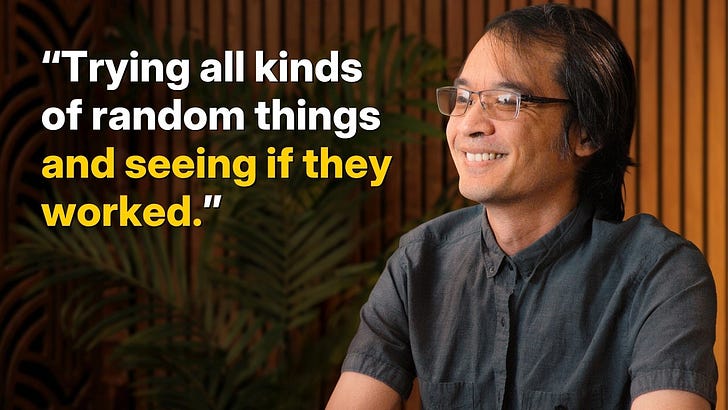
| 3/20/26 | mathematical discoveryplanetary motion+3 | Terence Tao | Mercury | — | KeplerNewton+5 | Jane Streetdwarkesh | 1h 23m 44s | ||
| 3/13/26 | AI computescaling challenges+4 | Dylan Patel | SemiAnalysisNvidia+1 | — | AIcompute+5 | Mercury | 2h 30m 44s | ||
| 3/11/26 | AIsurveillance+3 | — | AnthropicThe Pentagon | — | AIAnthropic+5 | — | 24m 38s | ||
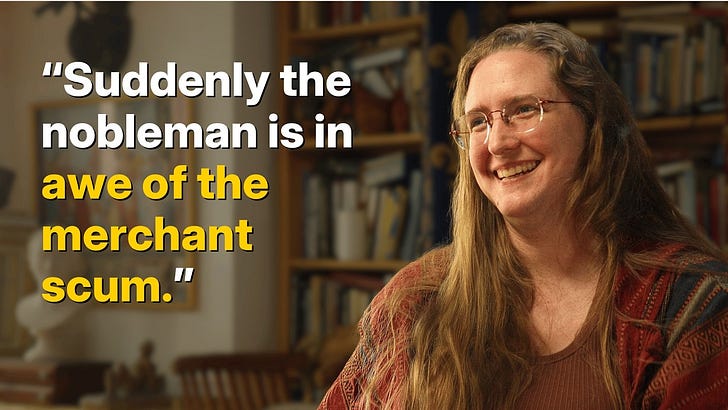
| 3/6/26 | Renaissance historyprinting revolution+4 | Ada Palmer | University of ChicagoInventing the Renaissance | FlorenceWittenberg+2 | RenaissanceGutenberg+7 | — | 2h 02m 19s | ||
| 2/13/26 | AGIscaling hypothesis+4 | Dario Amodei | Anthropic | — | AGIscaling hypothesis+5 | Labelboxdwarkesh | 2h 22m 20s | ||
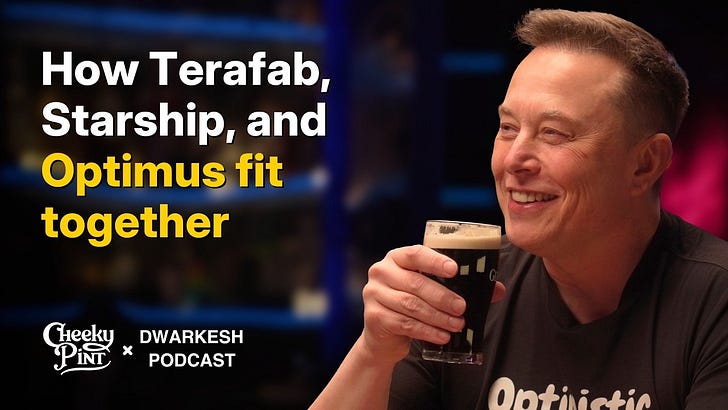
| 2/5/26 | AI in spaceorbital data centers+4 | Elon Musk | DOGEOptimus+1 | — | AIspace+5 | Mercurypersonal-banking | 2h 49m 45s | ||











Showing 25 of 140
Pitch Fit is a Pro feature
See how bookable this show is for guests, which brands already advertise, the per-episode ad value, and the best-fit guest and sponsor profile. The numbers are blurred on the free plan.
How readily this show books outside guests like you.
How proven this show is for host-read sponsorships.
For Guests
ProFor Advertisers
ProUpgrade to Pro to unlock guest cadence, sponsor categories, fit scores, and per-episode ad value for this show.
Similar Audience Demographics
Podcasts that attract a similar listener profile

No Priors: Artificial Intelligence | Technology | Startups
Conviction

The a16z Show
Andreessen Horowitz

Invest Like the Best with Patrick O'Shaughnessy
Colossus | Investing & Business Podcasts

All-In with Chamath, Jason, Sacks & Friedberg
All-In Podcast, LLC

Conversations with Tyler
Mercatus Center at George Mason University

Training Data
Sequoia Capital

TBPN
John Coogan & Jordi Hays
Distribution & Reach
About the show, platforms, and key insights.
Distribution & Reach
About the show, platforms, and key insights.
Dwarkesh Patel is an independent podcast creator known for his insightful discussions that bridge technology and science. He has gained recognition for his ability to engage with complex topics and present them in an accessible manner, often featuring expert guests from various fields. The Dwarkesh Podcast stands out for its deeply researched interviews, delving into cutting-edge developments and philosophical questions within the realms of technology and science. The format typically includes in-depth conversations, allowing for comprehensive exploration of subjects that resonate with contemporary issues and innovative ideas. The podcast appeals to a diverse audience, including tech enthusiasts, academics, and curious minds seeking to understand the implications of modern advancements. Listeners appreciate the intellectual rigor and the nuanced perspectives offered, making it a valuable resource for anyone interested in the intersection of technology and science.
By the numbers
- Total followers: 5.7K
- Total plays: 93K
- Total reviews: 484
Platforms
TuneIn
- Followers: 107
Castbox
- Followers: 4.0K
- Plays: 93K
- Reviews: 8
YouTube
- Subscribers: 2
- Views: 195
- Videos: 23
Podcast App
- Followers: 551
- Reviews: 475
Podcast Republic
- Followers: 1.0K
- Reviews: 1
Find them online
Audience
professionals
Key insights
What the show covers
- interviews with experts
- technology insights
- science exploration
- critical thinking topics
Audience interests
- technology advancements
- scientific discoveries
- in-depth interviews
- research-driven discussions
Platform reach
- available on TuneIn
- available on Castbox
- available on YouTube
- available on PodcastApp
Publishing consistency
- active for 5 years
- weekly episode releases
- 123 total episodes
- consistent content delivery
Chart history for Dwarkesh Podcast
Peaked at #2 in CH, top 10 in 28 of 49 tracked markets, currently #2 in CH.
| Market | Genre | Peak | Current | Trend |
|---|---|---|---|---|
| CH | — | #2 | #2 | — |
| Finland | — | #2 | #2 | — |
| IL | — | #2 | #2 | — |
| PT | — | #3 | #3 | — |
| SG | — | #3 | #3 | — |
| Canada | — | #4 | #4 | — |
| Ireland | — | #4 | #4 | — |
| India | — | #4 | #4 | — |
| Norway | — | #5 | #5 | — |
| CZ | — | #5 | #5 | — |
| AE | — | #5 | #5 | — |
| TH | — | #5 | #5 | — |
| United Kingdom | — | #6 | #6 | — |
| Spain | — | #6 | #6 | — |
| IS | — | #6 | #6 | — |
| Australia | — | #7 | #7 | — |
| New Zealand | — | #7 | #7 | — |
| PH | — | #7 | #7 | — |
| VN | — | #7 | #7 | — |
| United States | — | #8 | #8 | — |
Chart Positions
49 placements across 49 markets.
Chart Positions
49 placements across 49 markets.