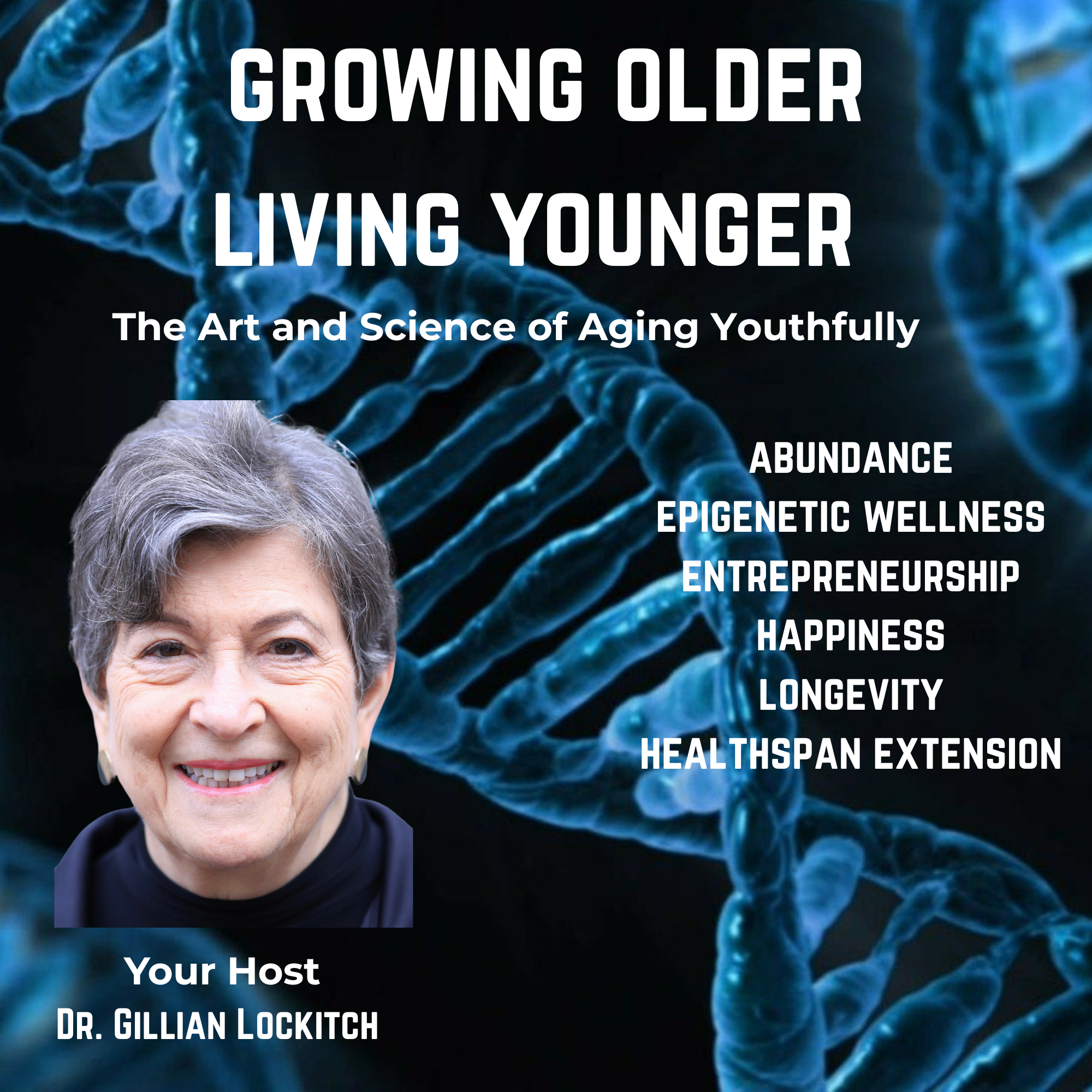
Growing Older Living Younger: About longevity, wellness, healthspan,
by Dr. Gillian Lockitch
Is this your podcast?Insights from recent episode analysis
Audience Interest
Podcast Focus
Publishing Consistency
Platform Reach
Insights are generated by CastFox AI using publicly available data, episode content, and proprietary models.
Total monthly reach
Estimated from 4 chart positions in 4 markets.
By chart position
- 🇬🇧GB · Alternative Health#1125K to 30K
- 🇦🇺AU · Alternative Health#1365K to 30K
- 🇲🇾MY · Alternative Health#593K to 10K
- 🇧🇪BE · Alternative Health#160500 to 3K
- Per-Episode Audience
Est. listeners per new episode within ~30 days
4.0K to 22K🎙 Daily cadence·262 episodes·Last published 2d ago - Monthly Reach
Unique listeners across all episodes (30 days)
14K to 73K🇬🇧41%🇦🇺41%🇲🇾14%+1 more - Active Followers
Loyal subscribers who consistently listen
5.4K to 29K
Market Insights
Platform Distribution
Reach across major podcast platforms, updated hourly
Total Followers
—
Total Plays
—
Total Reviews
—
* Data sourced directly from platform APIs and aggregated hourly across all major podcast directories.
On the show
Recent episodes
268 Prevent Macular Degeneration and Cognitive Decline: How Essential Carotenoids Protect Your Brain and Vision with Prof. John Nolan
May 18, 2026
Unknown duration
052 Dr. Helen Knaggs. Your Skin: A Window to Your Health.
May 15, 2026
Unknown duration
267 Muscle, Mitochondria and the Aging Brain: The Midlife Metabolism Reset with Dr. Elizabeth Goldspink
May 11, 2026
Unknown duration
050 Dr. Paul Alan Cox: Plants, People and Culture. How Ethnobotanical Research has Changed Our Lives
May 8, 2026
Unknown duration
266 How Smell Impacts Memory: The Science of Olfactory Training with Jonathan Askholm
May 4, 2026
Unknown duration
Social Links & Contact
Official channels & resources
Official Website
Login
RSS Feed
Login
| Date | Episode | Description | Length | ||||||
|---|---|---|---|---|---|---|---|---|---|
| 5/18/26 | ![]() 268 Prevent Macular Degeneration and Cognitive Decline: How Essential Carotenoids Protect Your Brain and Vision with Prof. John Nolan | What if essential carotenoid antioxidants you consume today, could protect your vision and cognitive functions now and in the future? In this episode, Professor John Nolan explains how specific carotenoids, lutein, zeaxanthin and meso-zeaxanthin play a critical role in protecting the retina and brain from oxidative stress, a key driver of damage and age-related decline. As a leading researcher in ocular and brain nutrition, he shares ground- breaking insights from clinical trials showing how targeted supplementation can improve visual function and support cognitive performance. Listeners will learn why prevention must begin early, how to identify effective nutritional strategies, and how to take control of long-term eye and brain health to extend their healthspan.Professor John Nolan is a full professor at South East Technological University in Waterford, Ireland, where he holds the Howard Chair in Human Nutrition. He is a nutritional biochemist specializing in the role of carotenoids in vision and cognitive health. As Director of the Nutrition Research Centre Ireland he has led major international clinical trials, including the CREST studies, published over 100 peer-reviewed scientific papers, and is founder and chair of the International Brain and Ocular Nutrition Conference. His research focuses on targeted nutrition to prevent and manage age-related diseases such as macular degeneration and Alzheimer's disease, advancing evidence-based nutritional strategies to support lifelong eye and brain health. Episode Timeline 00:00 – Welcome and introduction 04:25 – Origins of carotenoid research and macular degeneration Early work identifying nutrition as a key modifiable risk factor 09:30 – What carotenoids are and why they matter Role as antioxidants and "internal sunscreen" for the eye 13:55 – Can macular degeneration be reversed or improved Distinguishing regeneration, slowing progression, and functional improvement 17:30 – Brain and eye connection How nutrition may reactivate neural pathways and support cognition 20:27 – Challenging the current medical model Why prevention must replace late-stage intervention 25:16 – The importance of meso-zeaxanthin Why some individuals cannot convert nutrients effectively 28:37 – Supplement quality and evidence-based formulations Risks of unregulated supplements and importance of clinical validation 32:18 – Nutrition, lifestyle, and informed decision-making Why education and professional guidance are essential 33:21 – Starting early for lifelong protection "From the cradle to the dance floor" approach to nutrition 35:55 – Declining nutrient density in modern food Why diet alone may no longer be sufficient 37:18 – Wrap-up and key takeaways Connect with the research of Prof John Nolan https://profjohnnolan.com Instagram: https://www.instagram.com/profjohnnolan/ LinkedIn: https://www.linkedin.com/in/johnmnolan/ Facebook: https://www.facebook.com/profjohnnolan/ Upcoming Vision for Vision documentary (watch the trailer ) Calls to Action : Join the Growing Older Living Younger Community Connect with Dr. Gillian Lockitch at https://www.askdrgill.com/ or email: askdrgill@gmail.com for a personal consult Download Guide to Nature's Colorful Antioxidants 2026 Subscribe to Growing Older Living Younger on your favorite podcast platform and leave a review to help others discover the show. | — | ||||||
| 5/15/26 | ![]() 052 Dr. Helen Knaggs. Your Skin: A Window to Your Health. | Flashback Friday: Episode 52 from Season 1 May 2022 Audrey Hepburn, a Screen Legend and a truly iconic beauty, said "The beauty of a woman grows with the passing years." I was reflecting on previous discussions I have had on ageism as I read yet another comment on beauty and aging youthfully. The debate centered around the question of whether we should accept and indeed celebrate the aging of our appearance as a reflection of the wisdom gained as we grow older, or whether, as I believe, we should do all we can to delay the wrinkling, dryness and loss of radiance that naturally accompanies aging, and endeavor to look vibrant and healthy as we age. Our appearance, the quality of our skin, hair, teeth, eyes, is as much a window to our overall as is our posture, gait and mental acuity. Choosing to ward off dull, wrinkled skin and thinning, lack-luster hair is not a question of vanity but a celebration of our inner vitality. Today's conversation brings to you an expert in the biology of skin and hair, to discuss how our outward changes of aging may reflect our inner state of health. Dr. Helen Knaggs, is the Vice President of Global Research and Development for Nu Skin. With over 30 years of experience in skin research and product development, including years spent specializing in acne research, her expertise in skin and hair biology has led to numerous publications and patents. Dr. Knaggs earned bachelor's degrees with honors in biochemistry and pharmacology, and a doctorate degree from the Department of Biochemistry and Molecular Biology at the University of Leeds, England. She spent several years as a research biochemist in the dermatology department of Leeds General Infirmary where her work involved clinical and lab research, interpretation of trial results and data reporting to corporate and scientific communities. As vice president of Nu Skin Global Research and Development, she works closely with the Nu Skin Scientific Advisory Board to identify the latest research and trends in skin care for the Nu Skin brand. We discuss how lifestyle as much as inheritance affects the aging of your skin, and what you can do to preserve both the health and the beauty of your appearance from inside out and outside in. To learn more about the nutritional and skin care products that will promote your youthful aging, schedule a Living Younger Discovery call with me at askdrgill@gmail.com To discover how you can create your personal lifestyle roadmap to Growing Older Living Younger, visit www.askdrgill.com to order your copy of Growing Older Living Younger: The Science of Aging Gracefully and The Art of Retiring Comfortably. | — | ||||||
| 5/11/26 | ![]() 267 Muscle, Mitochondria and the Aging Brain: The Midlife Metabolism Reset with Dr. Elizabeth Goldspink | What if the fatigue, brain fog, and loss of strength many women experience after 50 are not simply hormonal, but reflect deeper shifts in metabolism, muscle, and mitochondrial function? In this insightful episode, Dr. Elizabeth Goldspink reframes midlife as a metabolic and neurological transition rather than a purely hormonal one. She explains how muscle acts as a longevity organ, how mitochondrial efficiency impacts both energy and cognition, and how targeted lifestyle and nutrition strategies can restore resilience. This empowering conversation offers practical, science-informed steps to help women take control of how they age. Dr. Elizabeth Goldspink is a naturopathic doctor, women's health researcher, and founder of Wellex. She has more than 16 years of clinical experience supporting women's hormonal, metabolic, and immune health. Dr. Goldspink is a published author in peer-reviewed medical journals and has completed advanced training in mind-body medicine at Harvard University. Her work focuses on translating complex scientific research into practical, personalized health strategies. She has helped thousands of women restore energy, resilience, and long-term well-being. Her current focus is on evidence-based supplementation and metabolic health optimization for women in midlife and beyond. Episode Timeline 00:00 – Welcome and introduction 02:30 – Midlife symptoms reframed: beyond hormones to metabolism and mitochondria 04:00 – Dr. Goldspink's personal journey from marketing professional to naturopathic medicine 06:00 – Why brain fog, fatigue, and strength loss signal deeper biological shifts 08:00 – Muscle as a longevity organ and its role in metabolic and cognitive health 11:00 – The metabolic functions of muscle and the importance of myokines 13:30 – Resistance training and why lifting weights matters for women over 50 16:00 – Nutrition fundamentals: protein intake, glycemic stability, and whole foods 19:00 – Mitochondrial health and its connection to energy and cognition 22:00 – Practical strategies to optimize mitochondria without complex protocols 25:00 – Creatine explained: benefits for muscle, brain, and aging 29:00 – Real-world recovery and rebuilding strength after health setbacks 31:00 – Brain training, lifestyle habits, and community connection 33:00 – Managing stress, social media overload, and mental resilience 35:00 – Supplement strategy after 50: what to use and what to avoid 37:30 – Common mistakes: overuse of antioxidants and low-quality supplements 40:00 – The origin of Wellex and a mission to support underserved women's health needs 43:00 – Practical daily steps to rebuild resilience and support healthy aging 45:00 – Wrap-up and key takeaways Connect with Dr. Elizabeth Goldspink Website: https://wellex.co Science-backed supplements for women's metabolic and hormonal health Information on clinical research and product formulations Call to Action Find Growing Older Living Younger: The Science of Aging Gracefully and the Art of Retiring Comfortably at www.gillianlockitch.com (North America) or on Kindle Subscribe to Growing Older Living Younger on your favorite podcast platform and leave a review to help others discover the show. Join the Growing Older Living Younger Community Connect with Dr. Gillian Lockitch at https://www.askdrgill.com/ or email: askdrgill@gmail.com Download Guide to Nature's Colorful Antioxidants. 2026 | — | ||||||
| 5/8/26 | ![]() 050 Dr. Paul Alan Cox: Plants, People and Culture. How Ethnobotanical Research has Changed Our Lives | Flashback Friday Episode 50 - May 2022"Walk into any pharmacy and ask to examine a bottle of prescription medicine chosen at random. There is a one in four chance that the prescription medication you hold in your hand has an active ingredient derived from a plant. Most of these plant-derived drugs were originally discovered through the study of traditional remedies and folk knowledge of indigenous people." (M. Balick, P. Cox.) As I read this opening paragraph in the chapter on PlantsThat Heal, from the book, Plants, People and Culture: The Science of Ethnobotany by Drs. Michael Balick and Paul Cox, I thought, what better way to celebrate the 50th episode of Growing Older Living Younger, than a conversation with ethnobotanist, Dr. Paul Alan Cox, Executive Director of the Brain Chemistry Labs, whose passion for learning about indigenous cultures and searching for new medicines, has taken him around the world. Dr. Cox has worked in remote island villages and other locations including Polynesia, Indonesia, the Solomon Islands, Fiji, Australia, Japan, Sri Lanka, East Africa, Scandinavia, the Arabian Gulf and the Colorado Plateau. He was both a Danforth Fellow and a National Science Foundation Fellow at Harvard where he received his Ph.D. He was awarded the Goldman Environmental Prize, sometimes known as the Nobel Prize of the Environment and was named one of TIME magazine's eleven "Heroes of Medicine" for his discovery of a new HIV drug candidate. His conservation foundation, Seacology, has set aside over 1.5 million acres of rain forest and coral reef in 66 countries around the world. We discuss how plant derived bioactive substances can both heal and harm, and how learning about age-old healing traditions can guide discovery of new therapeutic drugs. A comparison of villages with the highest and the lowest known rates of Alzheimer's disease and ALS (amyotrophic lateral sclerosis) led to the discovery in Guam of a neurotoxin produced by cyanobacteria that accumulates in the foods in their traditional diet. Ogimi in Okinawa has no record of Alzheimer's, ALS, or Parkinson's disease, and has more women, over the age of 100, than almost anywhere in the world. At the Brain Chemistry Labs in Jackson, Wyoming, a not-for-profit research institute, studies are focused on finding new treatments for ALS, Alzheimer's and Parkinson's disease. You will find many more fascinating stories about plants and human in the book, Plants, People and Culture: The Science of Ethnobotany. 2nd Ed. 2021 By Michael J. Balick and Paul A. Cox. CRC Press.Brain Chemistry Labs: https://twitter.com/brain_chem_labs https://www.facebook.com/brainchemistrylabs To contact Dr. Gillian Lockitch info@askdrgill,comOrder your copy of Growing Older Living Younger: The Science of Aging Gracefully and The Art of Retiring Comfortably at the Growing Older Living Younger website: www.askdrgill.com Schedule your free Living Younger Discovery call by email to askdrgill@gmail.com | — | ||||||
| 5/4/26 | ![]() 266 How Smell Impacts Memory: The Science of Olfactory Training with Jonathan Askholm | What if one of the most powerful tools for protecting your brain health has been right under your nose all along? In this fascinating episode, Jonathan Askholm explores the science of olfaction and its direct connection to memory, emotion, and cognitive function. Drawing on emerging research and personal experience, he explains how intentional smell training may improve memory, mood, and even support healthy aging. This conversation opens a new and highly accessible pathway to brain health, reinforcing that a simple daily practice can have profound effects on how we age. Jonathan Askholm is a brain health educator and co-founder of Memorease, a company focused on olfactory training for cognitive wellness. He has a background in psychology and a passion for teaching practical strategies that support mental and emotional well-being. His work is deeply influenced by his personal experience of losing his father to dementia, which inspired his mission to help others take proactive steps toward brain health. Jonathan collaborates with experts in scent creation to develop structured olfactory training tools grounded in scientific research. He regularly delivers workshops and presentations to older adults and community groups across Canada. His current focus is on making this brain health practice, simple, accessible, and empowering for everyday use. Episode Timeline 00:00 – Welcome and introduction 02:30 – The surprising link between smell, memory, and brain health 04:00 – Jonathan's personal journey and his father's experience with dementia 07:00 – Why the sense of smell is often overlooked in modern health conversations 10:00 – The neuroscience of olfaction: direct pathways to memory and emotion 14:30 – Smell as a survival sense and its decline with age 18:00 – What is olfactory training and how it works 21:30 – The four scent categories used in research and training 24:00 – Evidence from studies: cognition, mood, and brain structure changes 27:00 – Practical applications and how to begin smell training at home 29:30 – The role of mindfulness and attention in olfactory training 32:00 – Olfactory training for anosmia and post-viral smell loss 34:00 – COVID-related smell loss and implications for brain health 36:00 – Who benefits most from olfactory training 37:00 – Wrap-up and key takeaway Connect with Jonathan Askholm Website: https://memorease.care Olfactory training kits and resources available through the website Workshops and presentations available through direct contact Call to Action Order Growing Older Living Younger: The Science of Aging Gracefully and the Art of Retiring Comfortably at www.gillianlockitch.com (North America) Subscribe to Growing Older Living Younger on your favorite podcast platform and leave a review to help others discover the show. Join the Growing Older Living Younger Community Connect with Dr. Gillian Lockitch at https://www.askdrgill.com/ or email: askdrgill@gmail.com Download Guide to Nature's Colorful Antioxidants. 2026 | — | ||||||
| 5/1/26 | ![]() 095 Dr. Lucinda Sykes. Sleep Well, Be Well | THIS EPISODE OF GROWING OLDER LIVING YOUNGER focuses on sleep and the ways we can achieve sufficient natural sleep. Today's Featured Expert is retired medical doctor and longtime mindfulness teacher, Dr. Lucinda Sykes, on her approach to promoting deep natural sleep We discuss the importance of natural deep sleep, what happens to our brains during the stages of sleep, the adverse effects of sleep medications, and the importance of consistent sleep habits in a sleep conducive environment. Episode Timeline:0:11 Introduction to today's episode.7:18 Why is the quality of sleep so important?11:43 What are the three stages of sleep?17:43 Approach to her clients with a sleep problem24:01 The major factors in chronic insomnia.30:47 Insomnia and sleep medication use.36:59 Key takeaways Speaker Bio:Dr. Lucinda Sykes' background includes family medicine and Jungian psychotherapy. She has Certification in Analytical Psychology from the CG Jung Institute, Zurich as well as extensive training in MBSR (mindfulness-based stress reduction) at the U Mass Center for Mindfulness,More than 6000 patients attended medical programs of mindfulness at her Toronto clinic, Meditation for Health. When COVID ended the clinic's in-person teaching in 2020, Lucinda shifted her work online, directing her special interest in sleep and mindfulness to new coaching programs for Women 50+. Learn more about natural sleep and Dr. Sykes www.lucindasykesmd.com https://www.facebook.com/joyfulafter50 https://www.happysleepsecrets.com Connect with Dr. Gillian Lockitch:To discover how to reset your Aging Blueprint or kickstart your wellness, beauty and healthy aging business, schedule a call with Dr. Gillian Lockitch at askdrgill@gmail.com To get your copy of Growing Older Living Younger: The Science of Aging Gracefully and The Art of Retiring Comfortably click here | — | ||||||
| 4/27/26 | ![]() 265 The Move More Method: The Science of Everyday Movement for Longevity with James D. Walter | What if the greatest threat to your independence, your brain health, and even your lifespan isn't aging itself—but the hours you spend sitting each day? In this powerful episode, Dr. Gillian Lockitch explores a transformative approach to health with Dr. James Walter: the concept of "Move More Moments." Drawing from his expertise in cardiovascular exercise physiology, Dr. Walter challenges the traditional focus on structured exercise programs. Instead, he introduces a more accessible strategy—re-engineering your day to reduce sedentary time and integrate movement into everyday life. This conversation highlights how even small, frequent bouts of movement can improve cardiovascular health, regulate blood sugar, reduce disease risk, and restore vitality. Dr. James Walter is the founder and president of the Institute for the Preservation of Health. He holds a PhD in cardiovascular exercise physiology and has spent decades developing preventive and rehabilitative cardiology programs. Driven by the early loss of his father to heart disease, Dr. Walter has dedicated his career to helping individuals take control of their health through practical lifestyle strategies. Episode Timeline 00:00 — Movement as the key to independence 02:50 — Dr. Walter's personal journey 06:30 — The problem with exercise guidelines 09:20 — A personal story of lost mobility 12:40 — Rethinking exercise 13:30 — What are Move More Moments 16:40 — Everyday movement examples 18:20 — Walking instead of sitting 20:30 — Science of small movements 23:10 — Steps and longevity 26:50 — Changing mindset and environment 28:00 — Genetics vs lifestyle 31:15 — Nutrition and prevention 34:10 — Key takeaway: move more Call to Action Find "Growing Older Living Younger: The Science of Aging Gracfully and the Art of Retiring Comfortably" at www.gillianlockitch.com (North America) or on Kindle Download : Ten Tips to Build A Better Body 2026. Subscribe to Growing Older Living Younger on your favorite podcast platform and leave a review to help others discover the show Join the Growing Older Living Younger Community Connect with Dr. Gillian Lockitch at https://www.askdrgill.com/ or email: askdrgill@gmail.com to schedule a one-on-one phone or video call. | — | ||||||
| 4/24/26 | ![]() 066 Brain Health Programs to Keep Your Mind Sharp with Henry Mahncke Ph.D | Flashback Friday Episode 66 from 2022 "Brains at any age are capable of rewiring and changing. No one should be aging, thinking that it's all downhill from here' (Dr. Henry Mahncke). This comment on brain plasticity, made by research neuroscientist, Dr. Henry Mahncke, in Episode 10: Rewiring Your Brain, echoes in my head, whenever I reflect on the goal of Growing Older Living Younger, namely to extend our health span by preserving a healthy mind in a healthy body. My brain is a year older since that episode but I'm sure that by following my personal roadmap for aging well, my cognitive functions have not aged in parallel with my chronological age. Preserving brain health, cognitive functions and warding off dementia, is a desire that is frequently expressed when I talk to men and women during the complimentary Growing Older Living Younger Discovery call I offer. Many people are living into their 80s or 90s and have relatives or friends diagnosed with dementia. They may be aware that the prevalence of dementia is increasing dramatically. Prevalence refers to the proportion of people within a population at a given time who have a specific characteristic. Since dementia occurs more in elderly people, the more elderly people there are, the greater the number of people there will be who have dementia. But as individuals we are more concerned about individual risk. I was intrigued to read that a recent study showed that the incidence of dementia in people of European ancestry living in Europe and the USA (that is the number of new cases in a population) has actually declined an average of 13% every decade over the last 30 years. Reflecting on what could be causing this decrease in the incidence of dementia, I suspect that it reflects an increasing understanding of the effects of lifestyle management, nutrition, targeted wellness products, exercise, socialization, sleep, and. keeping mentally active. In that vein, I invited Dr. Mahncke back to Growing Older Living Younger to describe a new community based Brain Health Program that is being developed in conjunction with the YMCA of San Francisco and also to share updates on some of the studies we discussed in the earlier episode. Dr. Mahncke is the CEO of Posit Science, the leading provider of plasticity-based brain training and assessments. BrainHQ is an online and app program of plasticity-based brain training exercises to improve cognitive measures like attention, memory, processing speed and executive functions. that impact real world activities like driving, balance, gait, mood, confidence and everyday cognitive functions. To Learn More:Connect with Dr. Henry Mahncke at: www.brainhq.com - you can also download the BrainHQ App LinkedIn: https://www.linkedin.com/in/henry-mahncke-3b89072/ Facebook: https://www.facebook.com/Brainhq/ Connect with Dr. Gillian Lockitch: askdrgill@gmail.com Order your copy of Growing Older Living Younger: The Science of Aging Gracefully and The Art of Retiring Comfortably at www.gillianlockitch.com Here is how to rate and review Growing Older Living Younger on Apple podcast: Open the Podcasts app on your iPhone, iPad, or Mac. Search for Growing Older Living Younger podcast and select it. On the show page see where it lists all the episodes and scroll down to find "Ratings & Reviews." Select "Write a Review" and rate. Hopefully you will give a 5 star rating Pick a title for your review and write your review - no longer than 300 words. Select "Send" or "Save", enter a nickname and it's done. | — | ||||||
| 4/20/26 | ![]() 264 The Posture Longevity Link: How Your Spine Shapes Your Healthspan with Dr. Mark Morningstar | What if one of the most powerful influences on your health, your hormones, and even your longevity was something you rarely think about—your posture? In this eye-opening episode, Dr. Gillian Lockitch explores the profound connection between structural alignment and the biological systems that govern how we age. Joined by scoliosis specialist and spinal health expert Dr. Mark Morningstar, this conversation uncovers the science behind how chronic postural distortions—like forward head posture and slouching—can reduce lung capacity, alter nervous system balance, and disrupt stress hormone regulation. These subtle but persistent changes can contribute to fatigue, anxiety, reduced resilience, and long-term decline. This episode reframes posture from a cosmetic concern into a critical pillar of healthy aging. You will learn how spinal motion influences brain function, why breathing patterns are central to longevity, and how simple daily habits can shift your body from chronic stress into a state of balance and vitality. Dr. Mark Morningstar is a scoliosis specialist, researcher, and educator affiliated with Back Genius, a network dedicated to evidence-based, whole-body spinal care. A graduate of Palmer College of Chiropractic, he is triple board certified in clinical nutrition, spine care, and integrative medicine. With over two decades of clinical experience, Dr. Morningstar focuses on complex spinal and neurological conditions, including scoliosis and chronic pain syndromes. Episode Timeline 00:00 — Posture as a hidden driver of health 02:30 — Why posture is more than cosmetic 04:10 — Dr. Morningstar's journey into scoliosis care 09:50 — The multifactorial nature of scoliosis 12:10 — Forward head posture and breathing capacity 14:20 — Posture and stress hormones 16:00 — Autopilot vs conscious posture control 17:20 — Standing desks and movement awareness 20:30 — Vagus nerve and parasympathetic function 24:00 — Breathing patterns and anxiety 25:30 — Vagus nerve activation techniques 29:10 — Posture and longevity 31:00 — Movement and dancing 32:10 — Early warning signs of poor posture 34:10 — One key action for better posture 37:00 — Final thoughts on daily habits Links for Dr. Morningstar FB: facebook.com/backgenius IG: dr.mark.morningstar LI: www.linkedin.com/in/mark-morningstar-dc-phd-facsp-dacbn-chs-a4085415 YT: @scoliosisworld Call to Action Download : Ten Tips to Build A Better Body 2026. Find "Growing Older Living Younger: The Science of Aging Gracfully and the Art of Retiring Comfortably" at www.gillianlockitch.com (North America) or on Kindle Subscribe to Growing Older Living Younger on your favorite podcast platform and leave a review to help others discover the show Join the Growing Older Living Younger Community Connect with Dr. Gillian Lockitch at https://www.askdrgill.com/ or email: askdrgill@gmail.com to schedule a one-on-one zoom or phone call | — | ||||||
| 4/17/26 | ![]() 176 Dr. Wayne Gradman. Don't Fall! The Fall Guy Tells You Why | Flashback Friday's EPISODE 176 of GROWING OLDER LIVING YOUNGER focuses on a vital topic for all who want to age in good health, namely preventing falls, and potential fractures. Falls are a leading cause of injury, disability and loss of independence among seniors, often resulting in fractures, hospitalizations and long term health complications. Maintaining mobility and preventing falls is absolutely key to promoting a healthier, independent form of aging. My guest today is Dr Wayne Gradman, author of The Fall Guy, How to Keep Gravity from Ruining your Day. Dr Gradman obtained his MD from Harvard Medical School, followed by postgraduate work, interrupted by military service, at UCLA and Cedars Sinai Medical Center in Los Angeles. His private practice was in vascular surgery. He has been married for 52 years, and credits his wife for a very practical point, The 20-Foot Rule. 0:01 Introduction and Overview of the Podcast 2:17 Introduction of Dr. Wayne Gradman 3:54 Intrinsic and Extrinsic Fall Factors 8:48 Personal Experiences and Practical Tips 9:05 Practical Tips for Preventing Falls 14:18 Home Safety and Bathroom Precautions 18:27 Stairs and Banisters 22:09 Outdoor Safety and Exercise 29:00 Exercise for Fall Prevention 33:31 Key Takeaways and Conclusion Contact Dr. Lockitch ar askdrgill@gmail.com Check out the website for Dr. Gradman https://wgradman.com And if you have not already done so, please follow, rate and review this Growing Older Living Younger podcast. | — | ||||||
Want analysis for the episodes below?Free for Pro Submit a request, we'll have your selected episodes analyzed within an hour. Free, at no cost to you, for Pro users. | |||||||||
| 4/13/26 | ![]() 263 Why Your Scale Lies - The Truth About Body Fat, Wearables and Aging with Cheryl McColgan | Have you ever stepped on a scale and questioned whether the numbers truly reflect what is happening inside your body? In this episode, Dr. Gillian Lockitch speaks with nutrition expert Cheryl McColgan to unpack the confusion around body composition data, wearable devices, and the science behind tracking your health as you age. Together, they explore how to interpret trends rather than obsess over absolute numbers, and how lifestyle habits like sleep, stress management, and nutrition influence the data we see. This conversation empowers listeners to use technology wisely while focusing on the foundational habits that support vibrant, healthy aging. Cheryl McColgan is an author, coach, and the founder of Heal Nourish Grow, a wellness platform focused on nutrition, metabolic health, and sustainable lifestyle practices. With over 25 years of experience in psychology, addiction studies, fitness, yoga, and nutrition, Cheryl brings a multidisciplinary approach to health optimization. She is also the host of the Heal Nourish Grow podcast and has authored multiple books on keto nutrition and fat loss. At age 52, she became a competitive bodybuilder, demonstrating her commitment to strength, longevity, and aging powerfully. Episode Timeline: 00:00 – Welcome and introduction 00:30 – A personal story of unexplained weight gain Dr. Gillian shares her experience with atrial fibrillation, weight gain, and confusion over body composition data 06:35 – Cheryl's journey into health, nutrition, and bodybuilding From early exposure to fitness to becoming a competitor in her 50s 10:48 – Can we trust wearable and scale data? Why body composition devices vary and how to approach their accuracy 12:27 – The problem with body fat readings Why scales may underestimate fat and how algorithms affect results 16:08 – Hydration, inflammation, and measurement variability How fluid shifts, illness, and exercise impact bioimpedance readings 18:46 – Daily vs weekly tracking Why trends over time matter more than isolated measurements 21:38 – How wearables measure stress, sleep, and recovery Understanding HRV, skin signals, and algorithm-driven insights 24:16 – Are we becoming obsessed with health data? Balancing measurement with mindset and wellbeing 29:04 – The most important habits for healthy aging Sleep, stress management, and aligning exercise with life demands 31:32 – Rethinking productivity and rest The importance of giving yourself permission to recover 33:18 – Keto, metabolic health, and personalized nutrition Cheryl's journey from vegetarian to keto and evolving dietary flexibility 36:58 – Final reflections and practical takeaways Using tools wisely while focusing on foundational health behaviors Call to Action: Download Guide to nature's Colourful Antioxidants Find "Growing Older Living Younger: The Science of Aging Gracefully and the Art of Retiring Comfortably" at www.gillianlockitch.com (N.America only) Subscribe to Growing Older Living Younger on your favorite podcast platform and leave a 5 star review to help others discover the show. Join the Growing Older Living Younger Community Connect with Dr. Gillian Lockitch at https://www.askdrgill.com/ or email: askdrgill@gmail.com to book a one-on-one call. Learn more about Cheryl's work at https://healnourishgrow.com Instagram: https://instagram.com/healnourishgrow Twitter: https://twitter.com/healnourishgrow Pinterest: https://pinterest.com/healnourishgrow YouTube: https://youtube.com/healnourishgrow Facebook: https://facebook.com/healnourishgrow | — | ||||||
| 4/10/26 | ![]() 132 Dr. Michael Breus: Sleep Times and Chronotypes: Are You a Lion, Bear, Wolf or Dolphin | THIS FLASHBACK FRIDAY EPISODE 132 OF GROWING OLDER LIVING YOUNGER focuses on understanding how our unique internal circadian rhythms, derived from interaction of genotype with environment, define our chronotype, which can help us optimize the times at which we should sleep, eat, exercise, interact with others and much more. Today's Featured Expert is Dr. Michael Breus, Clinical Psychologist, diplomate of the American Board of Sleep Medicine, and a fellow of the American Academy of Sleep Medicine. Dr. Breus is the author of The Power of When, a biohacking guidebook showing that, based on your genetic, biological chronotype, there is an optimal time to do everything from eating to exercising, to even asking for a raise. He is the author of two other books, focusing on sleep, The Sleep Doctors Four Week Program to Better Sleep and Better Health, and The Sleep Doctor's Diet Plan. Known as the Sleep Doctor, Dr. Breus is recognised for his characterization of 4 chronotypes, Lion, Bear, Wolf and Dolphin. Episode Timeline: 0.11 Intro to Sleep medicine and chronobiology 5:41 Genetics, time zones and personality traits 10:20 Circadian science and biological clocks. 21:06 Sleep disturbances and muscle cramps 26:55 Sleep apnea and its impact on daily life. 32:57 A Sleep Doctor's approach to Aging, Wellness and Genetics About this episode's Featured Expert: Dr. Michael Breus Website: www.sleepdoctor.com https://www.linkedin.com/in/thesleepdoctor/ About Your Host: Dr. Gillian Lockitch Download your free Guide to Living Younger Longer. Schedule a free Discovery Call with Dr. Gill Email Dr. Gill at askdrgill@gmail.com About Your Host: Dr. Gillian Lockitch website: https://www.askdrgill.com/ Facebook: https://www.facebook.com/gillian.lockitch/ https://www.facebook.com/groups/growingolderlivingyounger Order Growing Older Living Younger: The Science of Aging Gracefully and the Art of Retiring Comfortably And if you have not already done so, please follow, rate and review the podcast Growing Older Living Younger. | — | ||||||
| 4/6/26 | ![]() 262 Strong Bones for Life: Preventing Osteoporosis and Fractures as You Age with Kyle Zagrodzky | Bone density loss and osteoporosis are among the biggest threats to independence after 50. In this episode, bone health expert Kyle Zagrodzky explains the science of bone remodeling, skeletal strength, fracture prevention, and how mechanical loading can help build stronger bones as we age. Bone health is often overlooked until a fracture occurs, yet skeletal strength is one of the most important factors determining mobility as we age. In this episode, Dr. Gillian Lockitch speaks with Kyle about how modern lifestyles contribute to declining bone density and muscle strength across generations, and why traditional approaches to bone health often miss a crucial biological trigger. The conversation explores practical strategies for strengthening bone, improving balance, and reducing fracture risk so that listeners can remain active, resilient, and independent throughout later life. Kyle Zagrodzky is the Founder and CEO of OsteoStrong, an international wellness franchise dedicated to improving skeletal health and preventing fractures through science-based conditioning protocols. A seasoned entrepreneur with more than three decades of experience building high-performance companies, he shifted his focus toward bone health in 2012 after discovering breakthrough bone density technology developed by inventor Dr. John Jaquish. Today OsteoStrong operates in more than 200 locations across multiple countries and serves hundreds of thousands of members seeking stronger bones, better balance, and improved musculoskeletal health. Kyle also hosted the Unbreakable Me podcast and is a leading advocate for proactive skeletal health as a central pillar of longevity. Episode Timeline 00:00 – Welcome and introduction Dr. Gillian Lockitch introduces the episode and highlights why bone health is essential for maintaining independence, mobility, and an active lifestyle as we age. 00:30 – Why bone health is often overlooked Dr. Lockitch explains how bone loss develops silently, particularly during menopause and aging, and why strengthening the skeletal system is critical for healthy longevity. 04:57 – Kyle Zagrodzky's entrepreneurial journey Kyle shares his background as a bootstrap entrepreneur, his experience in the fitness industry, and the turning point that led him to focus on bone health innovation. 06:30 – Discovering breakthrough bone density technology Kyle describes meeting scientist Dr. John Jaquish and learning about a prototype device designed to stimulate bone growth through mechanical loading. 08:47 – From prototype to global OsteoStrong franchise The discussion explores how Kyle helped transform a scientific concept into an international network of skeletal conditioning centers. 10:13 – The fundamentals of longevity Both hosts discuss the importance of focusing on core lifestyle practices such as movement, nutrition, resistance training, and social connection rather than chasing every new biohacking trend. 15:23 – Why bone density is declining in modern society Kyle explains research showing that younger generations are developing lower bone mass due to sedentary lifestyles and insufficient mechanical loading. 18:00 – The science of bone remodeling The conversation explores Wolff's Law and how bones respond to mechanical stress, along with the level of force required to stimulate new bone growth. 21:50 – How OsteoStrong works Kyle explains the technology behind OsteoStrong devices and how controlled high force loading can stimulate bone growth safely without traditional impact exercise. 26:21 – Practical solutions for people without access to OsteoStrong Kyle shares alternative strategies including resistance training, variable resistance systems such as the X3 bar, and the importance of balance and strength training. 30:45 – The overlooked role of protein Kyle discusses why adequate protein intake is critical for maintaining muscle mass and supporting skeletal health as we age. 32:13 – Dr. Lockitch's personal bone health journey Dr. Lockitch shares her experience with osteoporosis, maintaining bone health through lifestyle approaches, and rebuilding strength after atrial fibrillation limited her activity. 33:59 – The pros and cons of common osteoporosis medications Kyle explains how bisphosphonate drugs work, potential risks associated with long-term use, and why bone remodeling balance is important. 37:11 – Extending healthspan, not just lifespan Dr. Lockitch emphasizes the importance of maintaining vitality, independence, and quality of life rather than simply living longer. 37:50 – Final insights and closing thoughts Kyle and Dr. Lockitch reflect on the importance of empowering people to strengthen their bones and extend their healthy years. Connect with Osteostrong https://osteostrong.me https://x3bar.com Connect with Dr. Gillian Lockitch https://www.askdrgill.com askdrgill@gmail.com Find "Growing Older Living Younger: The Science of Aging Gracefully and the Art of Retiring Comfortably" at www.gillianlockitch.com or on Kindle. Subscribe to Growing Older Living Younger on your favorite podcast platform and leave a review to help others discover the show. Join the Growing Older Living Younger Community | — | ||||||
| 4/3/26 | ![]() 073 Jayne Buxton. Is Plant-Based Nutrition Really Good for Your Health and Our Planet? | One of the most important personal choices you can make about your health and about aging well, centres on nutrition. The reality is that we are what we eat. Food and the social aspects of eating together is an important aspect of daily life. And society's hunger for knowledge about food and health is reflected in the tsunami of contradictory information that floods our newspapers, magazines, computers and televisions every day. It's hard for even a dedicated researcher like me to make sense of it. Sadly, as for many important issues of the day, discussion about nutrition and health has become a battleground rather than arena where investigation and thoughtful debate occurs so that we can make informed choices. And the key word is choice.As a medical specialist in human biochemistry with a particular focus on nutrition and micronutrients, I have been perplexed by the drive to force consumers onto a diet based solely on plants, with claims that this would be good for our health and the only solution to save our planet. Where in the battleground of extremes between vegans and carnivores is there a place for those of us who believe that we should have access to fresh, whole foods, meat, fish, poultry, eggs, vegetables, nuts, seeds, healthy fats, cheese or yogurt, and choose what feels right for us? Today I talk to Jayne Buxton, journalist, former business analyst, entrepreneur and author of The Great Plant-Based Con: Why eating a Plants-only diet won't improve your health or save the planet. There is much to unpack in this extensively researched and referenced book, but our conversation focuses on 3 key areas. How a plant-only diet affects human health, the mythology that asserts that a plant-only diet is best for the planet, and what are the powerful forces propelling us towards a plant-only diet, and away from the freedom to choose what we put in our bodies. In this conversation we could only touch on highlights from the book. Learn more about "The Great Plant-Based Con: Why eating a Plants-only diet won't improve your health or save the planet" at www.jaynereesbuxton.com Find Jayne at @jaynereesbuxt Contact Dr. Gillian Lockitch to discover how you can create your own roadmap to living younger as you grow older, You can schedule a free Discovery Call with me Order your copy of Growing Older Living Younger: The Science of Aging Gracefully and The Art of Retiring Comfortably at www.gillianlockitch.com. And join our private Growing Older Living Younger Community, to meet people, who like you, are discovering and sharing ways to age in great health. Help spread the word by subscribing, rating and reviewing the show. Here is how to do it in 7 easy steps on Apple Podcasts 1. Open the Podcasts app on your iPhone, iPad, or Mac. 2.Search for Growing Older Living Younger podcast and select it. Navigate to the show page which lists all the episodes - 3. Scroll down to find "Ratings & Reviews." 4. Select "Write a Review." and rate between one and five stars. 5. Pick a title for your review. Write your review - no longer than 300 words. 6. Don't forget to "Send" or "Save" 7. Enter a nickname. | — | ||||||
| 3/30/26 | ![]() 261 Protect Your Brain, Eyes, Heart, Skin and Body: Oxidative Stress, Antioxidants and a Unique Biomarker with Dr. Gillian Lockitch | What if everything you're doing to stay healthy—your diet, your supplements, your exercise routine—is only part of the story? What if the real question is whether your body is actually absorbing, using, and benefiting at the cellular level? In this powerful solo episode, Dr. Gillian Lockitch invites you to rethink how you measure wellness and healthy aging by introducing a biomarker that is both completely personal and scientifically valid: your antioxidant protection score.Drawing from her background as a physician and specialist medical biochemist, as well as a life-changing personal health scare, Dr. Lockitch explains the invisible but relentless process of oxidative stress—the cellular damage caused by free radicals that accumulates over time and contributes to aging and chronic disease. Through a vivid and emotional story of her sudden diagnosis of myopic macular degeneration, she brings home the reality that aging is not just about time passing, but about what is happening inside your body every single day. This episode goes beyond theory to illuminate the science of antioxidants as your body's essential defense system. You will learn how endogenous antioxidants produced within your cells work in partnership with dietary antioxidants like carotenoids, and why this balance is critical for protecting your brain, eyes, heart, skin, and overall vitality. Dr. Lockitch also explains why nutrient intake alone is not enough—what truly matters is bioavailability, absorption, and delivery to target tissues.Most importantly, this conversation introduces a breakthrough in personalized health: the ability to measure your antioxidant status quickly, non-invasively, and in real time. By tracking carotenoid levels in your skin, with the new Prysm io, you gain a window into your body's internal resilience against oxidative stress. This transforms your approach from guessing and hoping to knowing and acting. If you've ever wondered whether your healthy lifestyle is truly making a difference, this episode will shift your perspective. It is both a call to awareness and a message of empowerment: when you understand what is happening inside your body, you gain the ability to change it—and to take control of how you age, from the inside out. Episode Timeline: 00:00 – Welcome and introduction Dr. Gillian introduces the episode and poses the powerful question: do you know your antioxidant score? 01:10 – Why antioxidant protection matters Explores the gap between healthy habits and measurable protection against oxidative stress. 03:30 – A personal turning point Dr. Gillian shares her diagnosis of myopic macular degeneration and the urgent treatment that followed. 06:10 – Lessons from the AREDS study How targeted nutrients support eye health and why prevention is more powerful than treatment. 08:20 – Measuring what matters Introduction to antioxidant scanning and the surprising results from early testing. 10:30 – Understanding oxidative stress Clear explanation of free radicals, cellular damage, and environmental contributors. 13:00 – Internal vs dietary antioxidants How your body's own defense systems work alongside nutrients from food and supplements. 15:10 – The role of carotenoids in healthy aging How these plant compounds support the eyes, brain, heart, and skin. 17:00 – Introducing the Prysm iO device How this non-invasive technology measures antioxidant levels in seconds. 18:30 – From guessing to knowing Why tracking your antioxidant score empowers better aging decisions. 19:30 – Final thoughts and invitation Call to action to measure, monitor, and take control of your biological aging. Connect with Dr. Gillian Lockitch Download your Guide to Nature's Colouful Antioxidants Connect with Dr. Gillian Lockitch at askdrgill@gmail.com to request a zoom call to demo the Prysm io: Email Subject: Prysm Podcast Join the Growing Older Living Younger Facebook Community here Share the Growing Older Living Younger podcast link for anyone you care about and invite them to subscribe | — | ||||||
| 3/27/26 | ![]() 107 Lori Aloisio: Holistic Harmony: Secrets of Lasting Weightloss | In this Flashback Friday EPISODE OF GROWING OLDER LIVING YOUNGER, we focus on helping women to achieve sustainable weight loss through uncovering the underlying beliefs leading to excess weight gain. Today's Featured Guest is Lori Aloisio, holistic health coach and registered nurse. Lori's passion for helping and healing initially led her to become a registered nurse but she always viewed health and well being from a holistic perspective. Knowing that she needed to look at a larger picture to understand the many factors that contribute to illness and disease, Lori went on to study alternative healing practices, including ancient Chinese medicine, therapeutic and other nutrition techniques. In helping women struggle with weight loss problems, she's focused on showing that there are sustainable options. Episode Timeline0:11 Introduction to today's episode 3:40 What led Lori to become a registered nurse? 6:29 Why Lori moved to Brazil 11:44 How to learn what the body wants to tell us. 14:47 The importance of choosing a healthy lifestyle. 18:52 How to embody who you truly want to be. 20:45 How long does it take to recover from the effects of weight gain? 23:39 Balancing the feminine and masculine in us. Key TakeawayThat there's always a reason behind excess weight and one needs to uncover the underlying cause. Why would my body think that I would need this excess weight? Was there maybe some trauma or some negative event in my life that makes me want to hide behind this protective shield as well? Learn more about Lori here:https://www.instagram.com/lorialoisio/ https://www.facebook.com/groups/manifestingweightlossnow https://www.youtube.com/healthyandfreelife Coupon Code ALIGNED for 11% off all my 1:1 programs Contact Dr. Gillian LockitchChange Your Aging Masterplan: Reversing Aging to Live Younger Longer :For more information book a free Discovery Call with Dr. Gill or email at askdrgill@gmail.com To get your copy of Growing Older Living Younger: The Science of Aging Gracefully and The Art of Retiring Comfortably click here And if you have not already done so, follow, rate and review the show. | — | ||||||
| 3/23/26 | ![]() 260 From Self Doubt to Self Trust: Reframing Midlife through Biology, Beauty and Brain Science with Natalya Borakowski | In this conversation with Dr. Gillian Lockitch, Dr. Natalya Borakowski explains the neurological remodeling and hormonal shifts that occur during perimenopause and menopause — and why these changes can trigger identity disruption and appearance anxiety. You'll learn how understanding the biology behind midlife can restore self-trust, reduce fear, and support aging youthfully. Midlife often arrives with an unexpected sense of instability. Women describe feeling anxious, self-critical, emotionally reactive, or disconnected from their reflection — even when medical tests show nothing "wrong." Estrogen and progesterone influence neurotransmitters like GABA, dopamine, and serotonin, and hormonal shifts temporarily alter emotional regulation, stress response, and self-perception This experience is not psychological weakness or hysteria. It is a biological and neurological transition that most women are never prepared for. If we misinterpret midlife symptoms as personal failure, we amplify stress and self-judgment — two drivers of accelerated aging. For women committed to healthy longevity and extending healthspan, understanding the hormonal remodeling of the brain is essential. When we understand what is happening, fear lessens. And when fear lessens, physiology follows. Natalya Borakowski is a naturopathic physician and founder of Desert Bloom Skincare. Her upcoming book, Emotional Esthetics: The Story of Aging, The Biology of Beauty, and the Art of Self-Trust, reframes midlife distress as a natural neurological transition rather than a cosmetic crisis. Episode Timeline: 00:00 — Opening question: Is midlife distress biological, not psychological? 03:45 — Natalya's journey into medicine and skin health 07:30 — Cultural pressures, appearance & identity 13:15 — The "identity perception split" explained 18:40 — Hormones, neurotransmitters & brain remodeling 23:50 — Wellness vs performance and self-surveillance 26:30 — Personal stories: health crises & device tracking 31:10 — Nervous system safety and the vagus nerve 32:10 — The essential mindset shift: aging as transformation 34:10 — Closing reflections and resources Connect with Natalya Borakowski We are happy to offer a complimentary download The Aging Out Loud Starter kit https://free-gift.unveilyou.life/ Instagram accounts @unveilyou.life @natalyaborakowski LinkedIn www.linkedin.com/in/natalyaborakowski Connect with Dr. Gillian Lockitch Download your guide toBuild Back a Better Body: Strengthen Bones, Muscles, Joint and Fascia Connect with Dr. Gillian Lockitch at askdrgill@gmail.com to request a phone conversation or zoom call Join the Growing Older Living Younger Facebook Community here Share the Growing Older Living Younger podcast link for anyone you care about and invite them to subscribe | — | ||||||
| 3/20/26 | ![]() 105 Dr. Vera Tarman: Food Addiction- A Silent Killer. | THIS Flashback Friday EPISODE OF GROWING OLDER LIVING YOUNGER focuses on food addiction, in particular addiction to sugar and refined carbohydrates.Today's Featured Expert is Dr. Vera Tarman, author of Food Junkies: Recovery from Food Addiction, cohost of the popular Food Junkies Podcast and founder of the Facebook group called "I'm Sweet Enough: Sugar-Free for Life."We discuss the reality and the pathophysiology of sugar addiction, how to know whether you have an addiction and the impact that corporate sponsorship of research and disease-focused organizations have on the common narrative. Episode Timeline0:11 Introduction to today's episode. 2:58 The difference between pleasure seeking and addiction. 7:45 How to decide if you have a true sugar addiction? 12:29 Dopamine re-uptake. 17:08 Are there genetic predispositions to addiction? 21:28 The connection between diabetes and sugar addiction. 25:27 You are what you eat 31:41 Why sponsorship of research by corporations is problematic. 37:52 Training yourself to say no to sugar addiction. Speaker Bio: Dr, Vera Tarman. MD, MSc, FCFP, ABAM, is a specialist in addiction medicine, Medical Director of Renascent and a senior staff physician at Salvation Army. she is author of Food Junkies: Recovery from Food Addiction and cohosts the Food Junkies Podcast Learn more about Dr. Tarman's work, and sugar addiction at the links in the show notes. Facebook: www.fb.com/groups/SugarFreeForLife Website: veratarmanMD.com and addictionsunplugged.com; You tube: https://www.youtube.com/c/VeraTarmanMD Linked In: https://www.linkedin.com/in/drveratarman/ Change Your Aging Masterplan: Seven Keys to Reversing Aging to Live Younger Longer - with Dr. Gillian Lockitch, starts May 30th. For more information Email Dr. Gill at askdrgill@gmail.com or book a free Discovery Call with me. To get your copy of Growing Older Living Younger: The Science of Aging Gracefully and The Art of Retiring Comfortably click here And if you have not already done so, follow, rate and review the show. | — | ||||||
| 3/16/26 | ![]() 259 Food, Metabolism, Weight Gain: Why Calorie Counts, Willpower and Diets Keep Failing Us as We Age | Why does weight loss feel harder with age—even when we "do everything right"? In this episode, award-winning health journalist Julia Belluz challenges the calorie-centric narrative of weight control and explains how metabolism, hormones, food environments, and ultra-processed foods shape how—and why—we eat. This conversation reframes weight, aging, and health through evidence rather than diet dogma.For decades, we've been told that weight control is simply a matter of discipline: eat less, move more, and the scale will comply. Yet for many people—especially as they age—this advice fails repeatedly, leading to frustration, guilt, and confusion. Midlife and beyond bring hormonal shifts, metabolic adaptation, and increasing exposure to highly engineered food environments. Understanding why our bodies resist weight loss—and how our environment pushes us toward overeating—is essential for protecting healthspan rather than blaming ourselves for biology. My guest, Julia Belluz, is an award-winning health and science journalist, New York Times opinion contributor, and co-author of Food Intelligence, written with metabolic researcher Kevin Hall. Together, they unpack decades of misunderstood nutrition science and explain what actually drives hunger, metabolism, and eating behavior.Listeners will learn why metabolism slows as a response—not a cause—of weight loss, what The Biggest Loser study revealed about long-term metabolic adaptation, how hormones interact with ultra-processed foods, and why environment often overrides conscious food choices. Episode Timeline: 00:00 — Why weight loss feels harder with age 03:50 — Julia's path into nutrition journalism 07:45 — The Biggest Loser metabolism findings 11:10 — "It's not metabolism, stupid" 15:55 — Hormones, hunger, and eating behavior 22:15 — Food environments and ultra-processed foods 27:30 — Nutrition studies: signal vs noise 30:40 — Supplements, misinformation, and risks 32:55 — What is hopeful moving forward ? Connect with Julia Belluz https://www.juliabelluz.com/ Find the Book "Food Intelligence" by Julia Belluz and Kevin Hall PhD. Call to Action: Order the book Growing Older Living Younger: The Science of Aging Gracefully and the Art of Retiring Comfortably (North America only ) or find it on kindle Subscribe to Growing Older Living Younger on your favorite podcast platform and leave a review to help others discover the show. Join the Growing Older Living Younger Community Website: https://www.askdrgill.com/ | — | ||||||
| 3/13/26 | ![]() 093 Bob Schafer: Train Your Brain while Playing Games | Flashback Friday re-post of most popular episodes THIS EPISODE OF GROWING OLDER LIVING YOUNGER focuses on improving your cognitive functioning through playing computer brain training games.Today's Featured Expert discussing the neuroscience of cognitive training and the Lumosity brain training program, is Bob Schafer, President of Lumos Labs Medical, and Chief Science Officer at Lumos Labs (Lumosity)We discuss the neuroscience of cognition and Lumos Labs Human Cognition Project, how the Lumosity platform is built around training cognitive skills through engaging digital games, what you, the consumer, can learn from regularly training on Lumosity, and how Lumos Labs is working in the new frontier of digital medicine.Episode Timeline: 0:11 Introduction to this episode 5:16 Introduction to the Human Cognition Project 12:48 The Lumosity database 16:23 What percentage of users stick with the program? 21:03 The importance of engagement in brain training. 26:54 How to assess your performance 35:14 Are there mental barriers to progress?Speaker Bio:Bob earned his PhD in neuroscience from Stanford University and was a postdoctoral fellow at MIT. He has published original research in top journals including Science and Neuron. Prior to joining Lumos Labs, he was founder and CEO of a YCombinator-funded startup company that used neuroscience and predictive analytics to improve hiring decisions and team development. In 2015, Bob and his startup team joined Lumos Labs. Here, Bob has served in a number of roles leading research, product, and business initiatives, including the formation of the company's Lumos Labs Medical division. Over 100 million people in the Lumosity community have combined to play more than 7 billion cognitive gameplays across more than 15 years, providing, along with the Lumos Labs "Human Cognition Project,", unique insights into the brain and mind.Learn more about Lumosity at these linkshttps://www.linkedin.com/in/bob-schafer-4171554/ Schedule a free Discovery Call with me to discover how to Reset Your Aging Blueprint or kickstart your wellness, beauty and healthy aging business. email: askdrgill@gmail.com Order your copy of Growing Older Living Younger: The Science of Aging Gracefully and The Art of Retiring Comfortably click here - North America only . Otherwise available on Kindle | — | ||||||
| 3/9/26 | ![]() 258 Backpain, Aging and Mobility: Prevention, Treatment or Surgery with Dr. Gbolahan Okubadejo | Back pain is one of the most common causes of reduced mobility and loss of independence as we age. In this episode, spine surgeon Dr. Gbolahan Okubadejo explains the causes of back and neck pain, when conservative treatment is appropriate, and when spine surgery may become the best option for restoring mobility and quality of life. Chronic back and neck often trigger fear. Many people assume pain is inevitable, that surgery always leads to long downtime, or that recovery means permanent limitation. In this episode, we explore modern advances in spine care, recovery, and how the right mindset and preparation can help people reclaim movement, confidence, and independence at any age. Dr. Gbolahan Okubadejo is a board-certified, fellowship-trained spinal and orthopedic surgeon and founder of the Institute for Comprehensive Spine Care, with offices across New York and New Jersey. A graduate of Brown University and Johns Hopkins University School of Medicine, he completed his orthopedic residency at Washington University in St. Louis and a spine fellowship at UPMC. He is also the creator of the 360 Dynamized Core system for spine-safe core strengthening. Episode Timeline: 00:00 — A personal story: emergency spine surgery and recovery 05:40 — Why spine pain becomes more common with age 09:10 — Imaging vs symptoms: understanding the disconnect 12:55 — How surgeons decide who needs surgery 18:20 — Mindset, movement, and recovery outcomes 22:10 — Minimally invasive and endoscopic techniques 26:40 — Core strength, prevention, and daily habits 32:50 — A practical action for people in pain today Connect with Dr. Gbolahan Okubadejo www.nynjspine.com 360coreboard.com Call to Action: Find "Growing Older Living Younger: The Science of Aging Gracefully and the Art of Retiring Comfortably" (North America only) or on Kindle. Subscribe to Growing Older Living Younger on your favorite podcast platform and leave a review to help others discover the show. Join the Growing Older Living Younger Community Connect with Dr. Gillian Lockitch email: askdrgill@gmail.com | — | ||||||
| 3/6/26 | ![]() 147 John Nolan PhD. Nutrients for Your Eyes and Brain: The Magic of Marigolds | EPISODE 147 OF GROWING OLDER LIVING YOUNGER focuses on protecting eye, brain and overall health with the antioxidant carotenoid pigments, especially lutein, zeaxanthin and meso-zeaxanthin, as determined in the Central Retinal Enrichment Supplementation Clinical Trials (CREST). Download my free Guide to the Colourful Antioxidants in Your Food that explains the wellness benefits and food sources of these protective nutrients. To tell us how key nutrients can protect our eyes from macular degeneration, and help preserve memory and mental acuity, I talk with today's Featured Expert, Professor John Nolan. He is a Fulbright Scholar, and a full professor at the South East Technological University (SETU), Waterford, Ireland, where he holds a Howard Chair in Human Nutrition, He is the Director of the Nutrition Research Centre Ireland (NRCI). This research centre studies the role of nutrition for vision, cognitive function and prevention of age-related diseases. In 2011, Prof Nolan won a prestigious European Research Council (ERC) research grant to study the impact of nutritional supplementation on visual function via two Central Retinal Enrichment Supplementation Clinical Trials), and has published 117 peer-reviewed scientific papers. Episode Timeline: 0:11 Why targeted nutrition for Eye Health 5:17 Nutrition and eye health with a focus on carotenoids. 10:02 Measuring macular pigment in the eye and its changes with supplements. 16:04 The importance of macula pigments in eye health. 21:07 Lutein, zeaxanthin, and meso-zeaxanthin.in eye health. 28: 07 Sources of antioxidants, micronutrient supplements, and their overall effects on health of the body. 31:53 Eye health and antioxidants. 37:41 Antioxidants and healthy aging Learn more about Prof John Nolan and the Carotenoid research: http://www.profjohnnolan.com/ http://www.bonconference.org/ https://ie.linkedin.com/in/johnmnolan https://www.instagram.com/profjohnnolan Get to know Your Host: Dr. Gillian Lockitch Download Your free Guide to the Colourful Antioxidants in Your Food Download the Growing Older Living Younger app for your smartphone or tablet Schedule a free Discovery Call with Dr. Gill at askdrgill@gmail.com website: https://www.askdrgill.com/ Facebook: https://www.facebook.com/gillian.lockitch/rlivingyounger LinkedIn: https://www.linkedin.com/in/gillianlockitch/ X: https://twitter.com/GilliansReviews And if you have not already done so, follow, rate and review this Growing Older Living Younger podcast. | — | ||||||
| 3/2/26 | ![]() 257 Integrating Western Biometrics and Traditional Chinese Medicine to Rethink Preventive Aging Care with Ryan Yuen | Modern medicine excels at treating disease, less so at prevention. In this episode, we explore how wearable technology powered by artificial intelligence is bringing together Western physiology biometrics and Traditional Chinese Medicine to support true preventive health. Ryan Yuen shares how continuous monitoring of subtle body signals can help identify imbalance long before symptoms appear—and what this means for healthy longevity. Aging well is not about acccepting decline—it's about identifying early warning signs and supporting body balance before disease is established. Traditional Chinese Medicine has emphasized this philosophy for thousands of years,. Modern wearable technology now allows us to monitor the body continuously, shifting how we approach healthspan extension ato live younger longer.Ryan Yuen, Digital Business Lead at Link2Care, is helping bridge ancient medical wisdom with modern data science. The Watch2Care Vital smartwatch integrates 38 Western physiological metrics with 18 Traditional Chinese Medicine functional indicators across five organ systems—using AI to translate data into actionable daily insights read in the Fitvibe app. Episode Timeline: 00:00 — Prevention versus diagnosis and treatment in modern healthcare 03:10 — The aging population crisis and why healthcare systems need to change 07:45 — Integrating Western metrics with TCM philosophy using AI 12:30 — Understanding the five TCM organ systems 18:50 — Interpreting health scores and early warning signs 22:30 — Practical lifestyle actions based on daily data 26:30 — What preventive health could look like in the future Connect with Ryan Yuen and Watch2Care Vital* Official Website and Shop: www.link2care.asia LinkTree: https://linktr.ee/link2careglobal Facebook: https://www.facebook.com/profile.php?id=61584628198577 Instagram: https://www.instagram.com/link2care_global *To show our appreciation for your community, we would like to offer your listeners an exclusive, limited-time promotion. When listeners use the discount code on our official website, they will receive 30% off the Watch2Care Vital and can add two additional wristbands to their cart for free. Discount Code: GOLY30 Connect with Dr. Gillian Lockitch at askdrgill@gmail.com to request a phone conversation or zoom call Join the Growing Older Living Younger Facebook Community here Share the Growing Older Living Younger podcast link for anyone you care about and invite them to subscribe https://www.facebook.com/groups/growingolderlivingyoungercommunity | — | ||||||
| 2/27/26 | ![]() 098 Kathleen Nadeau, PhD. Still Distracted? Could ADHD in our Elders be Mistaken for Dementia? | THIS EPISODE OF GROWING OLDER LIVING YOUNGER focuses on ADHD (Attention Deficit Hyperactivity Disorder) in older adults. Today's Featured Expert is Kathleen Nadeau, PhD. We discuss how unrecognized ADHD (Attention Deficit Hyperactivity Disorder) may impact healthy aging and perhaps be confused with dementia in an older person; and whether there are alternative strategies to medication Speaker BioDr. Kathleen Nadeau is an internationally recognized authority on ADHD across the lifespan and is the author of 15 books related to ADHD. Her most recent book, Still Distracted After All These Years, is the very first book ever written for, and about older adults with ADHD. She is the founder and clinical director of the largest private ADHD specialty clinic in the US, The Chesapeake Center for ADHD in Bethesda, MD. She is known for her supportive, encouraging and practical approach to helping people with ADHD at every age. Episode Timeline 0:11 Introduction to this episode 3:11 What led Dr.Nadeau into this field of mental health? 7:12 Stereotypes about ADHD in adults. 10:29 ADHD or dysregulated attentional system. 15:12 What is ADHD and what does it mean? 19:21 Why ADHD is important for healthy aging? 22:51 What is the cost of undiagnosed ADHD? 26:54 The medicalization of ADHD 35:39 Are there clusters of disorders that contribute to ADHD? Learn more about Dr. Nadeau's work at these links Facebook - https://www.facebook.com/profile.php?id=100087748066711 Instagram - https://www.instagram.com/stilldistracted/ Website - http://www.still-distracted.com/ Bit.ly link - bit.ly/still-distracted Links to: https://chesapeakeadd.com/whats-new/ To discover how to Reset Your Aging Blueprint or build your wellness, beauty and healthy aging business, schedule a free Discovery Call with me.To get your copy of Growing Older Living Younger: The Science of Aging Gracefully and The Art of Retiring Comfortably click here | — | ||||||
| 2/23/26 | ![]() 256 Living with Dementia: We Are Still Here so Don't Walk Away with Marilyn Raichle | Dementia is one of the greatest fears associated with aging—but what if it didn't have to mean loss, disappearance, or despair? In this deeply moving episode, author and arts innovator Marilyn Raichle shares how walking toward her mother, rather than away, transformed dementia into a journey of presence, creativity, connection, and joy. This conversation offers a profoundly human reframe of memory loss and aging. For many people, dementia is equated with the loss of self, meaning, and value. Families are often advised—explicitly or implicitly—to disengage emotionally, preparing for inevitable decline and disappearance. But how we approach dementia shapes not only quality of life for those living with it, but also the emotional, psychological, and biological stress experienced by care partners. Chronic fear, grief, and disengagement accelerate aging for everyone involved, while presence, joy, and connection support resilience and healthspan. Author of Don't Walk Away, A Care Partner's Journey, Marilyn Raichle brings a rare perspective shaped by a lifetime in the performing arts and nine years as a care partner to her mother, Jean. Through art, shared joy, and daily presence, Marilyn discovered that her mother was not "gone," but distilled to her essential humanity—creative, competitive, loving, and alive. Listeners will learn how creativity opens pathways to connection, why joy is possible even in advanced dementia, and how reframing the experience from caregiving to partnership transforms both lives. Episode Timelines: 00:00 — Dementia and our deepest fears about aging 03:45 — Marilyn's background in the performing arts 07:30 — Becoming a reluctant care partner 10:45 — Discovering creativity through painting 14:30 — The Art of Alzheimer's is born 18:40 — Enduring personhood explained 22:55 — Sharing joy as a daily practice 27:30 — A single mindset shift for care partners 31:00 — Final reflections on love, presence, and meaning Connect with Marilyn Raichle dontwalkaway.net/ https://www.facebook.com/marilyn.raichle https://www.linkedin.com/in/marilynraichle/ instagram.com/raichlem/ Connect with Dr. Gillian Lockitch Download your Guide to Nature's Colouful Antioxidants for Eye, Heart, Brain and Skin Wellness and Download your Checklist to Mind and Memory Boosting Strategies Connect with Dr. Gillian Lockitch at askdrgill@gmail.com to request a phone conversation or zoom call Join the Growing Older Living Younger Facebook Community here Share the Growing Older Living Younger podcast link for anyone you care about and invite them to subscribe | — | ||||||
Showing 25 of 268
Sponsor Intelligence
Sign in to see which brands sponsor this podcast, their ad offers, and promo codes.
Chart Positions
4 placements across 4 markets.
Chart Positions
4 placements across 4 markets.