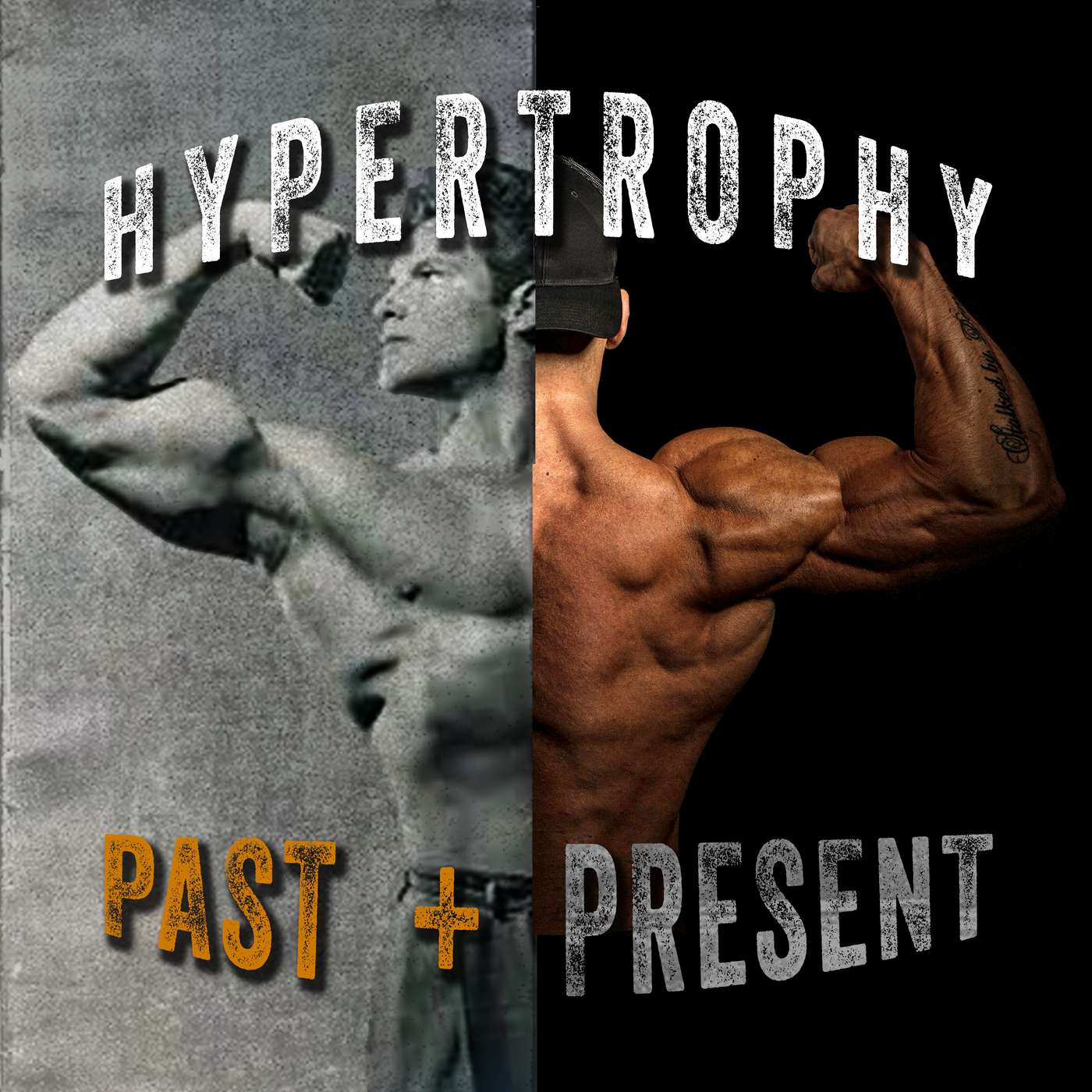
Hypertrophy Past and Present
by Chris Beardsley and Jake Doleschal
Is this your podcast?Insights from recent episode analysis
Audience Interest
Podcast Focus
Publishing Consistency
Platform Reach
Insights are generated by CastFox AI using publicly available data, episode content, and proprietary models.
Most discussed topics
Brands & references
Total monthly reach
Estimated from 36 chart positions in 36 markets.
By chart position
- 🇦🇺AU · Fitness#7430K to 100K
- 🇨🇦CA · Fitness#1125K to 30K
- 🇬🇧GB · Fitness#1265K to 30K
- 🇺🇸US · Fitness#1275K to 30K
- 🇩🇪DE · Fitness#1525K to 30K
- Per-Episode Audience
Est. listeners per new episode within ~30 days
146K to 491K🎙 Daily cadence·47 episodes·Last published 3d ago - Monthly Reach
Unique listeners across all episodes (30 days)
488K to 1.6M🇫🇷18%🇦🇺6%🇯🇵6%+33 more - Active Followers
Loyal subscribers who consistently listen
146K to 491K
Market Insights
Platform Distribution
Reach across major podcast platforms, updated hourly
Total Followers
—
Total Plays
—
Total Reviews
—
* Data sourced directly from platform APIs and aggregated hourly across all major podcast directories.
On the show
From 22 epsHosts
Recent guests
No guests detected in recent episodes.
Recent episodes
067 Why you’re not progressing (and why it might not be a plateau)
Aug 31, 2026
1h 13m 44s
066 Do you need to feel a muscle for it to grow?
Aug 24, 2026
1h 09m 53s
065 How anabolics changed the fitness industry
Aug 17, 2026
1h 37m 09s
064 Is time under tension important for muscle growth?
Aug 11, 2026
1h 06m 00s
063 Are workouts over an hour killing your gains?
Aug 4, 2026
1h 27m 41s
Social Links & Contact
Official channels & resources
RSS Feed
Login
| Date | Episode | Topics | Guests | Brands | Places | Keywords | Sponsor | Length | |
|---|---|---|---|---|---|---|---|---|---|
| 8/31/26 | 067 Why you’re not progressing (and why it might not be a plateau) | In this episode of Hypertrophy Past & Present, Jake and Chris begin by reviewing Stuart McRobert’s 1989 hardgainer routine, a minimalist two-day-per-week program designed as an alternative to the increasingly extreme bodybuilding routines of the late 1980s. The conversation then explores an important distinction: is every period of stalled progress really a plateau, or are there times when we should simply expect progress to slow or stop?Key topics include:Stuart McRobert’s 1989 twice-weekly full-body hardgainer routineThe difference between a true plateau and a program that was never capable of producing continued progressWhy strength gains can sometimes make a poorly designed hypertrophy program appear to be workingWhy life stress, poor sleep, dieting, or adding other forms of exercise may cause you to stop progressing without necessarily creating a true plateauWhy coaches should investigate what has changed before immediately modifying a client’s training programThe difference between managing a temporary lack of progress and actively trying to “bust” a plateauWhy temporary stressors may only require reducing training volume, while long-term lifestyle changes may require rebuilding the program entirelyWant to train like a Silver-Era bodybuilder? Join our Hypertrophy Past and Present Training group on TrainHeroic.com | 1h 13m 44s | ||||||
| 8/24/26 | 066 Do you need to feel a muscle for it to grow? | In this episode of Hypertrophy Past & Present, Jake and Chris begin with another Leroy Colbert routine, this time examining an over 100 set silver-era routine. The conversation then explores whether you actually need to “feel” a muscle for it to grow, what the pump can tell us about muscle recruitment, and where the mind-muscle connection may or may not be useful.Key topics include:Leroy Colbert’s extreme 10-set-per-exercise Silver Era routineWhy “feeling” a muscle and getting a pump are not necessarily the same thingWhy stretch, cramping, and soreness can be misleading indicators of muscle activationMind-muscle connection, internal focus, and how they change muscle recruitmentWhy exercise selection may be a better solution than trying to force a mind-muscle connectionWhen mind-muscle connection and isometric contractions may actually be usefulWhy constantly using a mind-muscle connection can interfere with progressive overloadWhy pre-fatiguing a muscle doesn’t cause the other muscles in a compound exercise to “do more work”What motor learning research tells us about training and practising skills while fatiguedJoin our Hypertrophy Past and Present Training group on TrainHeroic.com | 1h 09m 53s | ||||||
| 8/17/26 | 065 How anabolics changed the fitness industry | In this episode of Hypertrophy Past & Present, Jake and Chris begin with Leroy Colbert’s late-1970s enormous volume training plan. The conversation then explores whether using pre-steroid bodybuilders as a model for natural training is really an “appeal to tradition,” before examining the evidence that anabolic steroids can directly stimulate muscle growth even without resistance training.Key topics include:Leroy Colbert’s high-volume late-1970s routineWhy bodybuilding training changed so dramatically after the introduction of anabolic steroidsForcing Chris into a philosophy conversation: appeal to tradition fallacy, Chesterton’s fence, the Lindy effect, and Occam’s razorEvidence that anabolic steroids can build muscle without a resistance-training stimulusWhy steroid-induced muscle growth cannot simply be dismissed as water weight or sarcoplasmic hypertrophyThe dose-response relationship between testosterone and muscle growthWhy “replacement” doses of testosterone may still produce supraphysiological effects at the muscleJoin our Hypertrophy Past and Present Training group on TrainHeroic.com | 1h 37m 09s | ||||||
| 8/11/26 | 064 Is time under tension important for muscle growth? | In this episode of Hypertrophy Past & Present, Jake and Chris begin with Reg Park’s 1949 pre-contest routine, which involved training six days per week, twice per day, including the infamous 20-rep breathing squat. This leads into a deep dive on time under tension: Does making a set last longer actually increase muscle growth? Jake and Chris explore why total time under tension may be the wrong thing to measure and whether we should instead be thinking about “time under stimulating tension.”Key topics include:Reg Park’s 1949 twice-a-day, six-day-per-week routineWhy total time under tension may be a misleading measure of stimulusThe difference between time under tension and time under stimulating tensionWhy the early repetitions of a high-rep set may contribute little to muscle growthWhether slowing down the concentric can maintain stimulus with fewer repetitionsWhy very slow eccentrics may actually reduce the hypertrophy stimulusWhether the final repetition of a set is really the most stimulatingUsing isometrics to replicate the stimulus of a conventional setJoin our Hypertrophy Past and Present Training group on TrainHeroic.com | 1h 06m 00s | ||||||
| 8/4/26 | 063 Are workouts over an hour killing your gains? | In this episode of Hypertrophy Past & Present, Jake and Chris begin with a full-body routine from legendary bodybuilding coach Vince Gironda and the unusual reliance on isolation exercises. The conversation then shifts to workout duration: Is there any truth to the claim that workouts must be kept under 45, 60 or 90 minutes? Jake and Chris examine what actually happens as a workout becomes longer, including declining motivation, cardiovascular fatigue, exercise-order effects, cortisol, and the post-workout MPS elevation.Key topics include:Vince Gironda’s beginner full-body routineWhy Gironda avoided conventional bench presses and squatsCan isolation-only training build a complete physiqueWhether exercise-induced cortisol interferes with muscle growthWhy muscle growth is regulated at the muscle-fibre level, not across the whole bodyWhen an extremely long workout may stop stimulating the same muscleWhy returning to the same muscle several hours later may be redundantWhether cardio after resistance training interferes with hypertrophyJoin our Hypertrophy Past and Present Training group on TrainHeroic.com | 1h 27m 41s | ||||||
| 7/27/26 | 062 How to overcome a hypertrophy plateau | In this episode of Hypertrophy Past & Present, Jake and Chris begin with an early 1950s “muscular bulk” routine from Jack Delinger. They discuss the minimalist, barbell-only full-body program and how exercise variety may need to gradually increase as a bodybuilder becomes more advanced.The conversation then shifts to training plateaus: what actually qualifies as a plateau, why slow progress is often mistaken for no progress, and how to distinguish between plateaus caused by accumulating fatigue and those caused by limitations in exercise selection or motor unit recruitment.Key topics include:Jack Delinger’s minimalist full-body muscular bulk routineWhat actually qualifies as a training plateauThe difference between fatigue and “stimulus” plateausWhy changing exercises can create the illusion that a plateau has been solvedHow dominant muscle groups can limit the development of other musclesWhen to keep an exercise and add another rather than replacing itWhy adding more volume rarely addresses the actual cause of a plateauJoin our Hypertrophy Past and Present Training group on Trainheroic.com | 1h 24m 05s | ||||||
| 7/21/26 | hypertrophybodybuilding+4 | — | — | — | hypertrophybodybuilding routine+5 | — | 1h 29m 53s | ||
| 7/13/26 | hypertrophytraining routines+4 | — | — | — | hypertrophystimulating repetitions+5 | — | 1h 17m 24s | ||
| 7/6/26 | hypertrophymuscle-fibre specificity+4 | — | — | — | hypertrophymuscle-fibre+5 | — | 1h 47m 59s | ||
| 6/29/26 | training frequencymTOR+5 | — | — | — | mTORhypertrophy+6 | — | 1h 30m 33s | ||
| 6/22/26 | full body trainingexercise selection+3 | — | — | — | full body workouthypertrophy+3 | — | 1h 38m 24s | ||
| 6/15/26 | deloadstraining programs+4 | — | — | — | deloadDorian Yates+5 | — | 1h 15m 29s | ||
| 6/8/26 | back trainingexercise techniques+4 | — | — | — | back specializationlats+5 | — | 1h 22m 24s | ||
| 6/1/26 | powerbuildingbodybuilding+5 | — | — | — | powerbuildingReg Park+5 | — | 1h 05m 59s | ||
| 5/25/26 | progression modelsprogressive overload+4 | — | — | — | bodybuildingprogression+5 | — | 1h 21m 41s | ||
| 5/18/26 | fatigue mechanismsrest periods+3 | — | — | — | fatiguerest periods+3 | — | 1h 26m 28s | ||
| 5/11/26 | drop setsmultiple poundage system+5 | — | — | — | drop setsHenry J. Atkin+5 | — | 1h 16m 12s | ||
| 5/5/26 | circuit traininghypertrophy+3 | — | — | — | circuit traininghypertrophy+3 | — | 1h 11m 02s | ||
| 4/26/26 | weightliftingtraining frequency+4 | — | — | — | Paul Andersonweightlifting+5 | — | 1h 42m 43s | ||
| 4/20/26 | fatigueworkout structure+3 | — | — | — | fatigueworkout+6 | — | 1h 28m 52s | ||
| 4/13/26 | program designtraining frameworks+3 | — | — | — | workout programhypertrophy+3 | — | 1h 32m 26s | ||
| 4/7/26 | hypertrophystrength training+4 | — | — | — | hypertrophy potentialstrength gains+4 | — | 1h 41m 43s | ||
| 3/30/26 | full body trainingupper/lower split+5 | — | — | — | training splitsmuscle training+5 | — | 1h 25m 48s | ||
| 3/23/26 | fat loss training programSilver Era bodybuilders+3 | — | Hypertrophy Past & Present | — | fat losstraining program+5 | — | 1h 14m 32s | ||
| 3/16/26 | glute developmentexercise routines+3 | — | — | — | gluteship abduction+6 | — | 1h 30m 39s | ||
Showing 25 of 67
Pitch Fit is a Pro feature
See how bookable this show is for guests, which brands already advertise, the per-episode ad value, and the best-fit guest and sponsor profile. The numbers are blurred on the free plan.
How readily this show books outside guests like you.
How proven this show is for host-read sponsorships.
For Guests
ProFor Advertisers
ProUpgrade to Pro to unlock guest cadence, sponsor categories, fit scores, and per-episode ad value for this show.
Similar Audience Demographics
Podcasts that attract a similar listener profile

High Performance Physiology
Chris Beardsley and Rob Mauceri

The Revive Stronger Podcast
Revive Stronger

Iron Culture presented by MASS
Eric Helms & Eric Trexler

RP Strength Podcast
Nick Shaw

3D Muscle Journey
3D Muscle Journey
Barbell Shrugged
Barbell Shrugged

Chasing Clarity: Health & Fitness Podcast
Brandon DaCruz
Chart history for Hypertrophy Past and Present
Peaked at #8 in TR, top 10 in 2 of 37 tracked markets, currently #8 in TR.
| Market | Genre | Peak | Current | Trend |
|---|---|---|---|---|
| TR | — | #8 | #8 | — |
| RO | — | #9 | #9 | — |
| France | — | #14 | #14 | — |
| BE | — | #15 | #15 | — |
| AT | — | #24 | #24 | — |
| Finland | — | #28 | #28 | — |
| Japan | — | #28 | #28 | — |
| Sweden | — | #30 | #30 | — |
| India | — | #35 | #35 | — |
| Mexico | — | #37 | #37 | — |
| Netherlands | — | #38 | #38 | — |
| HU | — | #39 | #39 | — |
| IL | — | #42 | #42 | — |
| New Zealand | — | #47 | #47 | — |
| AE | — | #51 | #51 | — |
| Spain | — | #61 | #61 | — |
| VN | — | #61 | #61 | — |
| GR | — | #62 | #62 | — |
| Ireland | — | #67 | #67 | — |
| Norway | — | #68 | #68 | — |
Chart Positions
37 placements across 36 markets.
Chart Positions
37 placements across 36 markets.