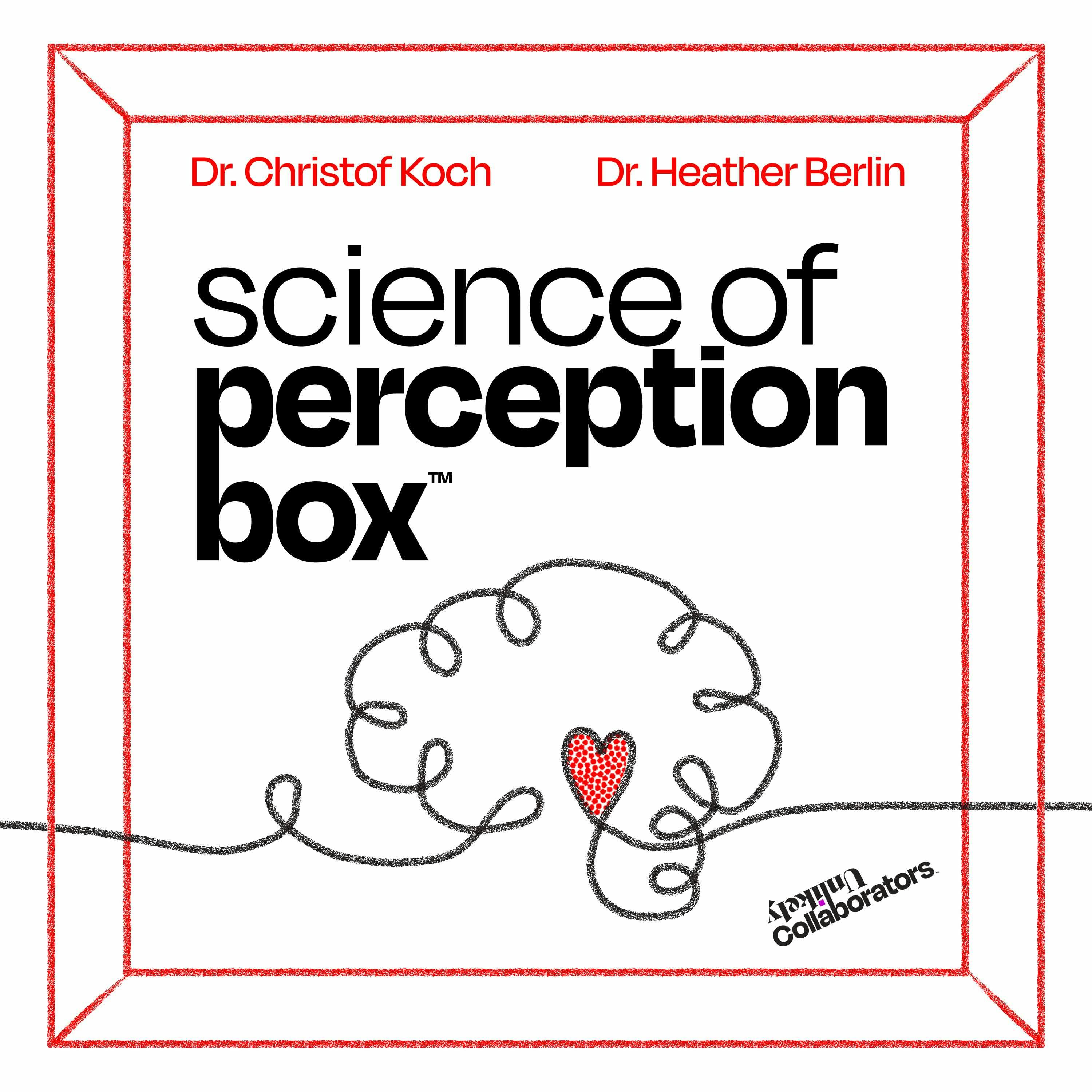
Science of Perception Box
by Unlikely Collaborators | Pod People
Is this your podcast?On the show
From 10 epsHosts
Recent guests
Recent episodes
Can a Plant, a Chatbot, or Your Gut Be Conscious? With Michael Pollan
Oct 14, 2026
59m 56s
The ‘Self’ You Can’t Find with Sam Harris
Oct 7, 2026
43m 18s
The Physics of Consciousness
Sep 30, 2026
26m 14s
How to Recover From Decades of Chronic Stress
Sep 23, 2026
46m 02s
Are Your Emotions Telling You the Truth?
Sep 16, 2026
48m 14s
Insights from recent episode analysis
Audience Interest
Podcast Focus
Publishing Consistency
Platform Reach
Insights are generated by CastFox AI using publicly available data, episode content, and proprietary models.
Most discussed topics
Brands & references
Total monthly reach
Blended from 1 signal.
Built from
By chart position
- 🇺🇸United States · Life SciencesHOME#1600K to 3.8M
- 🇲🇽Mexico · Life Sciences#121K to 131K
- 🇨🇦Canada · Life Sciences#96.8K to 43K
- 🇬🇧United Kingdom · Life Sciences#214.8K to 30K
- 🇧🇷Brazil · Life Sciences#263.3K to 21K
- Per-Episode Audience
Est. listeners per new episode within ~30 days
656K to 4.1M🎙 ~2x weekly·16 episodes·Last published 4d ago - Monthly Reach
Unique listeners across all episodes (30 days)
1.3M to 8.2M🇺🇸92%🇲🇽3%🇨🇦1%+2 more - Active Followers
Loyal subscribers who consistently listen
525K to 3.3M
Market Insights
Platform Distribution
Reach across major podcast platforms, updated hourly
Total Followers
—
Total Plays
—
Total Reviews
—
* Data sourced directly from platform APIs and aggregated hourly across all major podcast directories.
Social Links & Contact
Official channels & resources
RSS Feed
Login
| Date | Episode | Topics | Guests | Brands | Places | Keywords | Sponsor | Length | |
|---|---|---|---|---|---|---|---|---|---|
| 10/14/26 |  Can a Plant, a Chatbot, or Your Gut Be Conscious? With Michael Pollan | In this special live episode, journalist and bestselling author Michael Pollan explains how a psychedelic experience “smudged the windshield” of his consciousness and started the search behind his new book, A World Appears. He explains the difference between sentience and consciousness and shares some surprising plant research: corn that solves mazes, plants that recognize their relatives, and anesthetics that knock out a Venus flytrap. Pollan’s exploration of consciousness reveals a central idea of the Perception Box, a framework developed by Elizabeth R. Koch for understanding the forces within us that shape how we see ourselves, relate to others, and move through the world. Dr. Heather Berlin is a neuroscientist, clinical psychologist, and Professor of Psychiatry and Neuroscience at the Icahn School of Medicine at Mount Sinai in New York City. Dr. Christof Koch is Chief Scientist for the Tiny Blue Dot Foundation and the current Meritorious Investigator and former President of the Allen Institute for Brain Science. Join us for new episodes every Thursday. Follow the show on YouTube, Spotify, Apple Podcasts, Amazon Music, or wherever podcasts are found. Love the show? Write us a review on your podcast app, or tell a friend about the show. Visit unlikelycollaborators.com for more information. Chapters: 00:00 Intro 03:29 How psychedelics “smudged the windshield” 08:41 Are plants conscious? 16:03 Can machines be conscious? 18:53 Do we need a cortex to be conscious? 23:53 Materialism vs. idealism 33:17 The microbiome and embodied consciousness 34:53 Why the brain isn’t a computer 40:15 How gut bacteria shape the mind 48:55 Consciousness hygiene 55:00 The Perception Box question | 59m 56s | ||||||
| 10/7/26 |  The ‘Self’ You Can’t Find with Sam Harris | Most of us feel like there's a "me" behind our eyes, a thinker of our thoughts and author of our choices. Author and Waking Up founder Sam Harris argues that when you look closely enough, that self disappears. Dr. Heather Berlin and Dr. Christof Koch dig into why the sense of self may be something the brain constructs moment to moment, and why free will, in Sam's view, doesn't hold up to either physics or careful attention. Along the way they explore what meditation and psychedelics reveal about the mind, why denying free will isn't fatalism, and why Sam sees that as grounds for optimism about how much we can change. Sam’s exploration into free will reveals a central idea of the Perception Box, a framework developed by Elizabeth R. Koch for understanding the forces within us that shape how we see ourselves, relate to others, and move through the world. Dr. Heather Berlin is a neuroscientist, clinical psychologist, and Professor of Psychiatry and Neuroscience at the Icahn School of Medicine at Mount Sinai in New York City. Dr. Christof Koch is Chief Scientist for the Tiny Blue Dot Foundation and the current Meritorious Investigator and former President of the Allen Institute for Brain Science. Join us for new episodes every Thursday. Follow the show on YouTube, Spotify, Apple Podcasts, Amazon Music, or wherever podcasts are found. Love the show? Write us a review on your podcast app, or tell a friend about the show. Visit unlikelycollaborators.com for more information. Chapters: 0:00 Intro 6:50 Self-consciousness and the neuroscience of self 12:50 Do we have free will? 24:00 Waking up: lucid dreaming and meditation 29:20 Intrusive thoughts and what we can control 31:00 Psychedelics and meditation 38:45 Can free will be settled? | 43m 18s | ||||||
| 9/30/26 |  The Physics of Consciousness | Theoretical physicist Dr. Michio Kaku joins hosts Dr. Heather Berlin and Dr. Christof Koch to explore what physics can teach us about consciousness and reality itself. Dr. Kaku argues that consciousness is best understood as feedback loops, shaping the walls of our own Perception Box™ long before we're aware of it. The conversation asks if quantum mechanics has anything to do with a "warm, wet" brain, illuminating a central idea of the Perception Box, a framework developed by Elizabeth R. Koch for understanding the forces within us that shape how we see ourselves, relate to others, and move through the world. Dr. Michio Kaku is a theoretical physicist, bestselling author, acclaimed public speaker, renowned futurist, and popularizer of science. As co-founder of String Field Theory, Dr. Kaku carries on Einstein's quest to unite the four fundamental forces of nature into a single grand unified theory of everything. He received a B.S. (summa cum laude) from Harvard University in 1968, then went on to the Berkeley Radiation Laboratory at the University of California, Berkeley, where he received a Ph.D. in 1972. In 1973, he held a lectureship at Princeton University. Dr. Heather Berlin is a neuroscientist, clinical psychologist, and Professor of Psychiatry and Neuroscience at the Icahn School of Medicine at Mount Sinai in New York City. Dr. Christof Koch is Chief Scientist for the Tiny Blue Dot Foundation and the current Meritorious Investigator and former President of the Allen Institute for Brain Science. Join us for new episodes every Thursday. Follow the show on YouTube, Spotify, Apple Podcasts, Amazon Music, or wherever podcasts are found. Love the show? Write us a review on your podcast app, or tell a friend about the show. Visit unlikelycollaborators.com for more information. Chapters: 00:00 Intro 01:48 Can Physics Explain Consciousness? 03:24 Defining Consciousness vs. Intelligence 09:57 Schrödinger's Cat and the Many-Worlds Theory 12:47 Do Quantum Effects Scale Up to the Brain? 16:13 Could AI Ever Be Conscious? 21:04 Perception Box Question: How Do Others Perceive You? 23:15 Kaku's Multiple Identities Through Life | 26m 14s | ||||||
| 9/23/26 |  How to Recover From Decades of Chronic Stress | Stress researcher Dr. Elissa Epel explains why the goal isn't to eliminate stress but to get better at recovering from it. She says that a sharp, short stress response followed by real rest is the hallmark of a young, healthy nervous system. She breaks down the science of why chronic vigilance quietly ages our cells and shortens telomeres. Plus: why lying down can defuse an argument, how someone can recover from years of chronic stress, and why nature, ritual, and even a good nap belong in everyone's stress prescription. Dr. Epel's research reveals a central idea of the Perception Box, a framework developed by Elizabeth R. Koch for understanding the forces within us that shape how we see ourselves, relate to others, and move through the world. Elissa Epel, Ph.D., is a professor of psychiatry at UCSF, where she directs the Aging, Metabolism, and Emotions Center. She co-wrote the New York Times bestseller The Telomere Effect with Nobel laureate Elizabeth Blackburn, and her latest book is The Stress Prescription. A member of the National Academy of Medicine, her research has been featured on 60 Minutes, NPR, and in the New York Times and Wall Street Journal. Dr. Heather Berlin is a neuroscientist, clinical psychologist, and Professor of Psychiatry and Neuroscience at the Icahn School of Medicine at Mount Sinai in New York City. Dr. Christof Koch is Chief Scientist for the Tiny Blue Dot Foundation and the current Meritorious Investigator and former President of the Allen Institute for Brain Science. Join us for new episodes every Thursday. Follow the show on YouTube, Spotify, Apple Podcasts, Amazon Music, or wherever podcasts are found. Love the show? Write us a review on your podcast app, or tell a friend about the show. Visit unlikelycollaborators.com for more information. Chapters: 03:00 What happens in mind and body under stress 05:16 Why too little stress ages you faster 13:20 Is chronic stress damage reversible? 15:12 What a healthy stress response looks like 18:06 Tunnel vision: the Perception Box under stress 24:15 Building recovery into your day 27:37 The stress prescription, part two: practices 31:13 Deep rest as a gateway to transformation 32:38 Recovering from years of chronic stress 38:41 Highly sensitive people and anxiety 40:09 Perception Box question: what do you want people to believe about you? | 46m 02s | ||||||
| 9/16/26 |  Are Your Emotions Telling You the Truth? | Dr. Lisa Feldman Barrett, psychologist and neuroscientist, joins hosts Dr. Heather Berlin and Dr. Christof Koch to unpack her theory of constructed emotion: the idea that emotions aren't hardwired reactions but stories the brain builds to explain physical signals like a racing heart or a furrowed brow. Dr. Barrett explains why there's no universal facial expression for anger or fear, how the same racing heart can be read as fear or excitement depending on your Perception Box™, and why "you have more control over your interpretation than you think," even if that control takes practice to build. Dr. Lisa Feldman Barrett is a psychological scientist and neuroscientist, University Distinguished Professor of Psychology at Northeastern University, and originator of the theory of constructed emotion. She is the author of How Emotions Are Made and Seven and a Half Lessons About the Brain. Dr. Heather Berlin is a neuroscientist, clinical psychologist, and Professor of Psychiatry and Neuroscience at the Icahn School of Medicine at Mount Sinai in New York City. Dr. Christof Koch is Chief Scientist for the Tiny Blue Dot Foundation and the current Meritorious Investigator and former President of the Allen Institute for Brain Science. Join us for new episodes of Science of Perception Box every Wednesday. Follow the show on YouTube, Spotify, Apple Podcasts, Amazon Music, or wherever you get your podcasts. Love Science of Perception Box? Write us a review on your podcast app, or tell a friend! Visit unlikelycollaborators.com for more information. Chapters: 03:17 Brain as Prediction Machine 07:41 Why Predictions Feel Invisible 13:55 Feelings Versus Emotions 18:43 No Universal Expressions 30:31 Babies And Basic Affect 32:03 Training Emotional Flexibility 38:42 Rewiring Predictions Over Time 41:45 Letting Go Of Convictions | 48m 14s | ||||||
| 9/9/26 | common knowledgesocial dynamics+4 | Steven Pinker | Harvard UniversityIcahn School of Medicine at Mount Sinai+7 | — | common knowledgeSteven Pinker+5 | — | 44m 25s | ||
| 9/2/26 | consciousnessneuroscience+3 | Anil Seth | University of SussexIcahn School of Medicine at Mount Sinai+3 | — | consciousnessneuroscience+5 | — | 44m 23s | ||
| 8/26/26 | victim mindsetpsychology+4 | Dr. Scott Barry Kaufman | Columbia UniversityNYU+6 | — | victimhoodlearned helplessness+6 | — | 31m 05s | ||
| 8/19/26 | mind-body connectionneuroscience+3 | Andrew HubermanDr. Christof Koch | Stanford University School of MedicineHuberman Lab+3 | — | neurosciencebrain-body connection+3 | — | 45m 09s | ||
| 8/12/26 | letting gopersonal growth+3 | Mel Robbins | Mel Robbins PodcastTiny Blue Dot Foundation+2 | New York City | Let Them TheoryMel Robbins+3 | — | 49m 28s | ||
Want analysis for the episodes below?Free for Pro Submit a request, we'll have your selected episodes analyzed within an hour. Free, at no cost to you, for Pro users. | |||||||||
| 8/5/26 | parentingchild development+4 | Dr. Camilo Ortiz | Independence TherapyUniversity of Massachusetts, Amherst+4 | — | riskparenting+5 | — | 50m 36s | ||
| 7/29/26 | perceptionneuroscience+4 | Mel RobbinsAndrew Huberman+1 | Icahn School of Medicine at Mount SinaiTiny Blue Dot Foundation+3 | — | perceptionneuroscience+5 | — | 1m 20s | ||
| 3/13/25 | psychedelicsplacebo effect+5 | Dr. Boris Heifets | StanfordIcahn School of Medicine at Mount Sinai+2 | — | psychedelicsplacebo effect+5 | — | 48m 00s | ||
| 3/6/25 | perceptionmemory+4 | Dr. Lila Davachi | Columbia UniversityYale University+2 | — | time perceptionmemory encoding+3 | — | 44m 30s | ||
| 2/27/25 | aweemotion+4 | Dr. Dacher Keltner | UC BerkeleyGreater Good Science Center+7 | — | awewonder+4 | — | 38m 34s | ||
| 2/20/25 | Cultivating More Childhood Wonder with Dr. Alison Gopnik | How can parents embrace science in order to give their children the best possible environment to thrive in? Cognitive development expert Dr. Alison Gopnik joins us to discuss how navigating challenges fosters healthier adults, likening caregiving to being a gardener creating an environment where various ”plants” can thrive in different conditions. Exposing children to diverse environments helps them develop better coping mechanisms, akin to how the immune system strengthens against viruses. Dr. Gopnik is a professor at the University of California at Berkeley, where she has taught since 1988. She is a world leader in cognitive science, particularly the study of children’s learning and development. She is the author of over 100 journal articles and several books including the best-selling and critically acclaimed popular books The Scientist in the Crib, The Philosophical Baby, and The Gardener and the Carpenter. She is a fellow of the Cognitive Science Society and the American Association for the Advancement of Science and a member of the American Academy of Arts and Sciences. Dr. Heather Berlin is a neuroscientist, clinical psychologist, and Professor of Psychiatry and Neuroscience at the Icahn School of Medicine at Mount Sinai in New York City. Dr. Christof Koch is Chief Scientist for the Tiny Blue Dot Foundation and the current Meritorious Investigator and former President of the Allen Institute for Brain Science. Join us for new episodes every Thursday. Follow the show on YouTube, Spotify, Apple Podcasts, Amazon Music, or wherever podcasts are found. Love the show? Write us a review on your podcast app, or tell a friend about the show. Visit unlikelycollaborators.com for more information. Episode Chapters: (00:00) - Introduction (01:41) - Understanding Child Development (03:58) - Children as Natural Learners (05:18) - Causal Inference in Children (11:10) - Exploration vs. Exploitation (15:40) - Adults vs. Children: Learning and Attention (19:23) - Novelty and Creativity in Adulthood (25:51) - Children's Social Problem-Solving Abilities (28:17) - The Role of Caregiving in Human Evolution (34:49) - Balancing Safety and Exploration in Parenting (41:51) - AI Learning vs. Child Learning (43:57) - Perception Box Questions and Reflections | 48m 03s | ||||||
| 2/13/25 | Why Did We Evolve to Feel Romantic Love? with Dr. Helen Fisher | We long for love. We die for love. We kill for love. But why do we love? Cohosts Dr. Heather Berlin and Dr. Christoph Koch ask this question to Helen Fisher, PhD. who dedicated her career to researching romantic love. In this episode of Science of Perception Box, we explore how the act of being in love or out of love changes how we view ourselves and the world around us. Dr. Fisher was a biological anthropologist, Senior Research Fellow at The Kinsey Institute, and Chief Science Advisor to Match.com. She used brain scanning (fMRI) to study the neural systems associated with the sex drive, romantic love, attachment, rejection, love addiction, long-term partnership happiness, and the biological foundations of human personality. She conducted extensive research on the evolution, biology, and psychology of human sexuality, monogamy, adultery, and divorce. Dr. Heather Berlin is a neuroscientist, clinical psychologist, and Professor of Psychiatry and Neuroscience at the Icahn School of Medicine at Mount Sinai in New York City. Dr. Christof Koch is Chief Scientist for the Tiny Blue Dot Foundation and the current Meritorious Investigator and former President of the Allen Institute for Brain Science. Join us for new episodes every Thursday. Follow the show on YouTube, Spotify, Apple Podcasts, Amazon Music, or wherever podcasts are found. Love the show? Write us a review on your podcast app, or tell a friend about the show. Visit unlikelycollaborators.com for more information. Episode Chapters: (00:00) - Introduction to the Science of Perception Box (02:03) - Exploring Love and Heartbreak (05:16) - The Brain Chemistry of Love (06:41) - The Evolutionary Purpose of Love (09:35) - The Complexities of Romantic Relationships (20:53) - The Impact of Rejection and Heartbreak (24:10) - The Distraction Test and Emotional Response (25:15) - Love as an Addiction (27:31) - Phases of Breakup and Emotional Recovery (31:21) - The Concept of Slow Love (33:05) - Impact of Internet on Modern Dating (38:58) - Perception Box Questions (44:57) - Final Reflections and Closing Thoughts | 45m 43s | ||||||
| 2/6/25 | How Does Our Cultural Identity Influence Us? with Dr. Daphna Oyserman | Our cultural lenses can expand our Perception Box or contract it, keeping us closed off to new opportunities. So how do we become aware of the personal influences that shape our perceptions? In this episode of Science of Perception Box, cohosts Dr. Heather Berlin and Dr. Christoph Koch discuss the impact of cultural differences on identity and mindsets with guest Dr. Daphna Oyserman. Dr. Oyserman shares her insights on how small changes in context can significantly affect our mindset and choices, impacting our health and academic performance. Dr. Daphna Oyserman is a Dean’s Professor of Psychology and Professor of Psychology and Education at the University of Southern California. Dr. Oyserman received a PhD in psychology and social work from the University of Michigan and served on the faculty of The Hebrew University, Jerusalem, before returning to the University of Michigan where she last held appointments as the Edwin J. Thomas Collegiate Professor of Social Work, Professor of Psychology, and Research Professor in the Institute for Social Research. Dr. Heather Berlin is a neuroscientist, clinical psychologist, and Professor of Psychiatry and Neuroscience at the Icahn School of Medicine at Mount Sinai in New York City. Dr. Christof Koch is Chief Scientist for the Tiny Blue Dot Foundation and the current Meritorious Investigator and former President of the Allen Institute for Brain Science. Join us for new episodes every Thursday. Follow the show on YouTube, Spotify, Apple Podcasts, Amazon Music, or wherever podcasts are found. Love the show? Write us a review on your podcast app, or tell a friend about the show. Visit unlikelycollaborators.com for more information. Episode Chapters: (00:00) - Introduction (02:19) - Cultural Identity and Understanding Cultural Differences (05:26) - The Role of Culture in Society (07:24) - Cultural Norms and Time Perception (11:27) - Identity and Self-Perception (13:54) - Culture and Motivation (20:10) - Perception of Difficulty and Cultural Narratives (23:00) - The Dilemma of Difficulty: When to Persevere or Pivot (24:00) - Cultural Perspectives on Difficulty and Success (28:14) - The Role of Talent vs. Hard Work in Achievement (31:37) - Shifting Mindsets: Small Changes, Big Impacts (34:49) - Procrastination and the Future Self (38:21) - Teaching the Value of Hard Work to Kids (42:34) - The Influence of Culture on Persistence (45:57) - Concluding Thoughts and Reflections | 48m 51s | ||||||
| 1/30/25 | A Case of Mistaken Identity with Dr. Dan Siegel | What is the mind? Does the mind exist only in your own Perception Box, or is there a greater connection of consciousness? In this episode of Science of Perception Box, cohosts Dr. Heather Berlin and Dr. Christoph Koch discuss the interconnectedness of the mind, the impact of implicit memories from infancy on childhood attachment, and the wheel of awareness with Dr. Dan Siegel. Dr. Siegel shares his research and practices on healing unresolved trauma, preventing burnout for caregivers and medical professionals, and channeling the Perception Box-expanding power of empathy. Dr. Siegel is the Executive Director of the Mindsight Institute and Founding Co-Director of the Mindful Awareness Research Center at UCLA, where he was also Co-Principal Investigator of the Center for Culture, Brain, and Development and Clinical Professor at the School of Medicine. An award-winning educator, he is a Distinguished Fellow of the American Psychiatric Association and recipient of several honorary fellowships. He has authored numerous articles and books, including five New York Times bestsellers. Dr. Heather Berlin is a neuroscientist, clinical psychologist, and Professor of Psychiatry and Neuroscience at the Icahn School of Medicine at Mount Sinai in New York City. Dr. Christof Koch is Chief Scientist for the Tiny Blue Dot Foundation and the current Meritorious Investigator and former President of the Allen Institute for Brain Science. Join us for new episodes every Thursday. Follow the show on YouTube, Spotify, Apple Podcasts, Amazon Music, or wherever podcasts are found. Love the show? Write us a review on your podcast app, or tell a friend about the show. Visit unlikelycollaborators.com for more information. Episode Chapters: (00:00) - Introduction (02:23) - Defining the Mind (03:34) - The Concept of Mindsight (06:55) - Empathy and Compassion in Medicine (15:51) - Implicit and Explicit Memory (22:34) - Therapeutic Insights and Transformative Experiences (27:03) - Exploring the Mind and Energy Flow (27:29) - Chaos and Rigidity in Patients (28:51) - Discovering Complex Systems and Emergence (31:15) - The Wheel of Awareness (32:21) - Integration of Consciousness Practice (33:52) - Therapeutic Value of Pure Consciousness (36:31) - Redefining the Self and Modern Culture (42:39) - Personal Reflections and Overcoming Childhood Fears (49:53) - The Power of Therapy and Brain Plasticity (51:04) - Closing Thoughts | 51m 49s | ||||||
| 1/23/25 | How Food Affects Your Mind with Michael Pollan | Humans have a symbiotic relationship with plants. Plants coevolved to suit our desires for nourishment, beauty, and altering consciousness. Journalist Michael Pollan has investigated the human connection to plants. This week on Science of Perception Box, Dr. Heather Berlin and Dr. Christof Koch ask Pollan about modern trends like ultra-processed foods, industrialized agriculture, and consciousness-altering drugs from plants including caffeine, cannabis, and psychedelics. For more than 30 years, Michael Pollan has been writing books and articles about the places where the human and natural worlds intersect: on our plates, in our farms and gardens, and in our minds. Pollan is the author of eight books, six of which have been New York Times bestsellers. In 2003, Pollan was appointed the John S. and James L. Knight Professor of Journalism at UC Berkeley’s Graduate School of Journalism and the director of the Knight Program in Science and Environmental Journalism. In 2020, along with Dacher Keltner and others, he cofounded the UC Berkeley Center for the Science of Psychedelics. Dr. Heather Berlin is a neuroscientist, clinical psychologist, and Professor of Psychiatry and Neuroscience at the Icahn School of Medicine at Mount Sinai in New York City. Dr. Christof Koch is Chief Scientist for the Tiny Blue Dot Foundation and the current Meritorious Investigator and former President of the Allen Institute for Brain Science. Join us for new episodes every Thursday. Follow the show on YouTube, Spotify, Apple Podcasts, Amazon Music, or wherever podcasts are found. Love the show? Write us a review on your podcast app, or tell a friend about the show. Visit unlikelycollaborators.com for more information. Episode Chapters: (00:00) - Introduction (02:26) - The Profound Impact of Food on Mood and Perception (04:17) - Exploring Ultra-Processed Foods and Their Effects (06:45) - The Psychological and Physiological Effects of Food (10:29) - The Connection Between Food, Culture, and Education (17:46) - Michael Pollan's Journey into Food and Agriculture (21:42) - The Symbiotic Relationship Between Humans and Plants (22:55) - The Human Desire to Alter Consciousness (25:15) - The Transparent Experience of Coffee (25:47) - Caffeine's Benefits and Drawbacks (26:38) - Exploring Consciousness-Altering Substances (27:18) - Psychedelics and Cultural Evolution (29:02) - Creativity and Psychedelics (32:52) - The Nature of Ego and Consciousness (41:11) - Public vs. Private Self (45:31) - Conclusion and Final Thoughts | 46m 29s | ||||||
| 1/16/25 | How Curiosity Quiets Anxiety with Dr. Judson Brewer | Anxiety can make us feel like we’re trapped in our brain. So how do we open the door and gain freedom? This week in our inaugural episode, Dr. Heather Berlin and Dr. Christof Koch invite Dr. Judson Brewer to discuss the habit loops that increase anxiety, why anxiety contracts our Perception Box, and what steps we can take to change our relationship with anxiety and understand its evolutionary benefit. Dr. Judson Brewer studies the neural mechanisms of mindfulness. He is the Director of Research and Innovation at Brown University’s Mindfulness Center, where he’s also an Associate Professor at the School of Medicine. Dr. Brewer is a leading expert in the science of self-mastery and breaking habits. His books include Unwinding Anxiety, The Craving Mind, and The Hunger Habit. Dr. Heather Berlin is a neuroscientist, clinical psychologist, and Professor of Psychiatry and Neuroscience at the Icahn School of Medicine at Mount Sinai in New York City. Dr. Christof Koch is Chief Scientist for the Tiny Blue Dot Foundation and the current Meritorious Investigator and former President of the Allen Institute for Brain Science. Join us for new episodes every Thursday. Follow the show on YouTube, Spotify, Apple Podcasts, Amazon Music, or wherever podcasts are found. Love the show? Write us a review on your podcast app, or tell a friend about the show. Visit unlikelycollaborators.com for more information. Episode Chapters: (00:00) - Introduction (02:45) - Dr. Judson Brewer (05:54) - Habit Loops of Anxiety (08:16) - Breaking the Worry Cycle (10:52) - Will Power is a Myth (14:40) - Trigger, Behavior & Result (17:06) - Breaking Overeating Habit Loops (19:48) - The Feeling Body (22:40) - Opening the Perception Box (25:09) - Bigger Better Offers (28:01) - Curiosity, Compassion and Perception (31:40) - How Anxiety Can Box You In (35:14) - Learning to Allow Anxiety (36:05) - We Create Our Perception Boxes (37:40) - Perception Box Questions | 42m 16s | ||||||
| 12/5/24 | Introducing: Science of Perception Box | Join renowned scientists Dr. Heather Berlin and Dr. Christof Koch on the Science of Perception Box, where they delve into the Perception Box—a groundbreaking concept developed by Elizabeth R. Koch, that reveals how our beliefs, biases, and neural wiring shape our reality and define how we experience the world. Through captivating conversations with expert guests like psychiatrist Dr. Judson Brewer, anthropologist Dr. Helen Fisher, and journalist Michael Pollan, the show explores how the Perception Box expands in states of awe, curiosity, and love, and contracts during fear, anxiety, or anger. From mindfulness and romantic relationships to psychedelics and human connection, each episode uncovers transformative insights into unlocking greater awareness, fostering curiosity, and reshaping how we perceive the world. New episodes drop every Thursday on YouTube, Spotify, Apple Podcasts, Amazon Music, or wherever you listen to podcasts. Follow the journey and redefine your reality. | 1m 48s | ||||||


Showing 22 of 16
Pitch Fit is a Pro feature
See how bookable this show is for guests, which brands already advertise, the per-episode ad value, and the best-fit guest and sponsor profile. The numbers are blurred on the free plan.
How readily this show books outside guests like you.
How proven this show is for host-read sponsorships.
For Guests
ProFor Advertisers
ProUpgrade to Pro to unlock guest cadence, sponsor categories, fit scores, and per-episode ad value for this show.
Similar Audience Demographics
Podcasts that attract a similar listener profile

Your Next Dollar: Money Management for High Earners
NerdWallet Wealth Partners

Smart Travel: Upgrade Your Getaways
NerdWallet Travel

Do This, NOT That: Marketing Tips with Jay Schwedelson
GURU Media Hub

Icons and Ideas with Peter Mallouk
Peter Mallouk

The $100 MBA Show
Omar Zenhom

NerdWallet's Smart Money Podcast
NerdWallet Personal Finance
With and For hosted by Dr. Pam King
Dr. Pam King
Chart history for Science of Perception Box
Peaked at #1 in United States, top 10 in 7 of 50 tracked markets, currently #1 in United States.
| Market | Genre | Peak | Current | Trend |
|---|---|---|---|---|
| United States | — | #1 | #1 | — |
| Mexico | — | #1 | #1 | — |
| United States | — | #4 | #4 | — |
| ID | — | #7 | #7 | — |
| PT | — | #8 | #8 | — |
| VN | — | #8 | #8 | — |
| Canada | — | #9 | #9 | — |
| Sweden | — | #11 | #11 | — |
| Mexico | — | #12 | #12 | — |
| South Africa | — | #12 | #12 | — |
| KE | — | #12 | #12 | — |
| SG | — | #13 | #13 | — |
| NG | — | #15 | #15 | — |
| United Kingdom | — | #21 | #21 | — |
| Italy | — | #26 | #26 | — |
| Brazil | — | #26 | #26 | — |
| GR | — | #30 | #30 | — |
| Australia | — | #31 | #31 | — |
| TW | — | #31 | #31 | — |
| PL | — | #32 | #32 | — |
Chart Positions
50 placements across 41 markets.
Chart Positions
50 placements across 41 markets.