Short Wave
by NPR
Is this your podcast?NPR, or National Public Radio, is a renowned American media organization recognized for its in-depth journalism and diverse programming, particularly in news, culture, and science. Known for its commitment to quality content, NPR produces a…
Insights from recent episode analysis
Audience Interest
- science news and discoveries
- everyday mysteries explained
Podcast Focus
- short episodes under 15 minutes
- science behind current headlines
Publishing Consistency
- active for 4 years
- weekly or more episodes
Platform Reach
- available on NPR platforms
- potentially on major podcast apps
Insights are generated by CastFox AI using publicly available data, episode content, and proprietary models.
Most discussed topics
Brands & references
Total monthly reach
Estimated from 45 chart positions in 45 markets.
By chart position
- 🇺🇸US · Life Sciences#21M to 3M
- 🇨🇦CA · Life Sciences#31M to 3M
- 🇦🇺AU · Life Sciences#41M to 3M
- 🇬🇧GB · Life Sciences#6300K to 1M
- 🇩🇪DE · Life Sciences#10300K to 1M
- Per-Episode Audience
Est. listeners per new episode within ~30 days
2.4M to 7.2M🎙 Daily cadence·1,000 episodes·Last published 3d ago - Monthly Reach
Unique listeners across all episodes (30 days)
8.1M to 24M🇺🇸13%🇨🇦13%🇦🇺13%+42 more - Active Followers
Loyal subscribers who consistently listen
3.2M to 9.6M156K real followers tracked across platforms
Market Insights
Platform Distribution
Reach across major podcast platforms, updated hourly
Total Followers
—
Total Plays
—
Total Reviews
—
* Data sourced directly from platform APIs and aggregated hourly across all major podcast directories.
On the show
From 15 epsHosts
Recent guests
Recent episodes
Why your sunscreen is finally getting a major upgrade
Jun 12, 2026
9m 30s
How a single flu shot could protect you for decades
Jun 10, 2026
11m 26s
Your DNA is changing all the time. Here’s why
Jun 9, 2026
14m 12s
Inner monologues are still a mystery
Jun 8, 2026
14m 17s
Prepare to be baffled by what we don't know about eels
Jun 5, 2026
13m 38s
Social Links & Contact
Official channels & resources
Official Website
Login
RSS Feed
Login
| Date | Episode | Topics | Guests | Brands | Places | Keywords | Sponsor | Length | |
|---|---|---|---|---|---|---|---|---|---|
| 6/12/26 | ![]() Why your sunscreen is finally getting a major upgrade | Until this week, the United States hadn’t approved a new sunscreen ingredient in over 20 years. That changed Tuesday, when the FDA approved a new chemical for U.S. sunscreens. It’s called bemotrizinol, and NPR science correspondent Maria Godoy joins us to tell us all about it — including the soonest it’s expected to hit shelves.Interested in more science news? Email us your question at shortwave@npr.org.Listen to every episode of Short Wave sponsor-free and support our work at NPR by signing up for Short Wave+ at plus.npr.org/shortwave.CORRECTION: This story incorrectly referred to Dr. Heather Rogers as a spokesperson for the American Academy of Dermatology. She is a fellow of the academy.See pcm.adswizz.com for information about our collection and use of personal data for sponsorship and to manage your podcast sponsorship preferences.NPR Privacy Policy | 9m 30s | ||||||
| 6/10/26 | ![]() How a single flu shot could protect you for decades | Every year, tens of millions of people in the U.S. get the flu vaccine. That’s because the virus changes year-to-year and protection only lasts around six months. Adolfo Garcia-Sastre wants to change that. He’s one scientist working on a universal flu vaccine that could provide decades of protection against all flu illnesses – but only if his team can find the resources that disappeared when U.S. funding dipped.If you liked this episode, listen to our episode on a vaccine trial that could end HIV.Interested in more medical innovations? Email us your question at shortwave@npr.org.Listen to every episode of Short Wave sponsor-free and support our work at NPR by signing up for Short Wave+ at plus.npr.org/shortwave.See pcm.adswizz.com for information about our collection and use of personal data for sponsorship and to manage your podcast sponsorship preferences.NPR Privacy Policy | 11m 26s | ||||||
| 6/9/26 | ![]() Your DNA is changing all the time. Here’s why | We tend to think of the DNA strands that contain our genetic code as consistent, stable units. But in reality, the cells that make up our bodies are constantly replicating and changing. Even as you read this sentence, in fact, the genes within your cells are mutating. So, what causes these mutations and what’s the impact? Science writer Roxanne Khamsi examines the answers in her new book, Beyond Inheritance. Today on the show, she gets into how scientists examine these mutations, how they’ve shifted our understanding of disease and what the future of genetic therapy could entail.Interested in more biological and life sciences? Email us your question at shortwave@npr.org.Listen to every episode of Short Wave sponsor-free and support our work at NPR by signing up for Short Wave+ at plus.npr.org/shortwave.See pcm.adswizz.com for information about our collection and use of personal data for sponsorship and to manage your podcast sponsorship preferences.NPR Privacy Policy | 14m 12s | ||||||
| 6/8/26 | ![]() Inner monologues are still a mystery | Emily Kwong is pretty sure she lacks an inner monologue, while the inner monologue of producer Rachel Carlson won’t stop chatting. But how well can a person know their inner self? And what does science have to say about it? We dig in in this encore episode of Short Wave.To learn more about Charles Fernyhough’s research on voice hearing, visit the project website. If you liked this episode, check out our episode on when your brain is actually an "adult."Interested in more science inside your brain? Email us your question at shortwave@npr.org.Listen to every episode of Short Wave sponsor-free and support our work at NPR by signing up for Short Wave+ at plus.npr.org/shortwave.See pcm.adswizz.com for information about our collection and use of personal data for sponsorship and to manage your podcast sponsorship preferences.NPR Privacy Policy | 14m 17s | ||||||
| 6/5/26 | ![]() Prepare to be baffled by what we don't know about eels | More than a century ago, all that people knew about European eels was that they lived in the rivers and streams for decades — until they swam out to the ocean and never returned. Eventually, tiny eels would show up and the cycle would start again. Where did the adult eels go? Where did the baby eels come from? Did they even reproduce at all or just spontaneously emerge into being? Science now has some — but not all — of the answers to these questions. Today on the show, Regina G. Barber talks to fish physiologist Arjan Palstra about this mystery and how close scientists are to solving it. If you liked this episode, check out our episode on the Pacific lamprey.Interested in more science mysteries? Email us your question at shortwave@npr.org.Listen to every episode of Short Wave sponsor-free and support our work at NPR by signing up for Short Wave+ at plus.npr.org/shortwave.See pcm.adswizz.com for information about our collection and use of personal data for sponsorship and to manage your podcast sponsorship preferences.NPR Privacy Policy | 13m 38s | ||||||
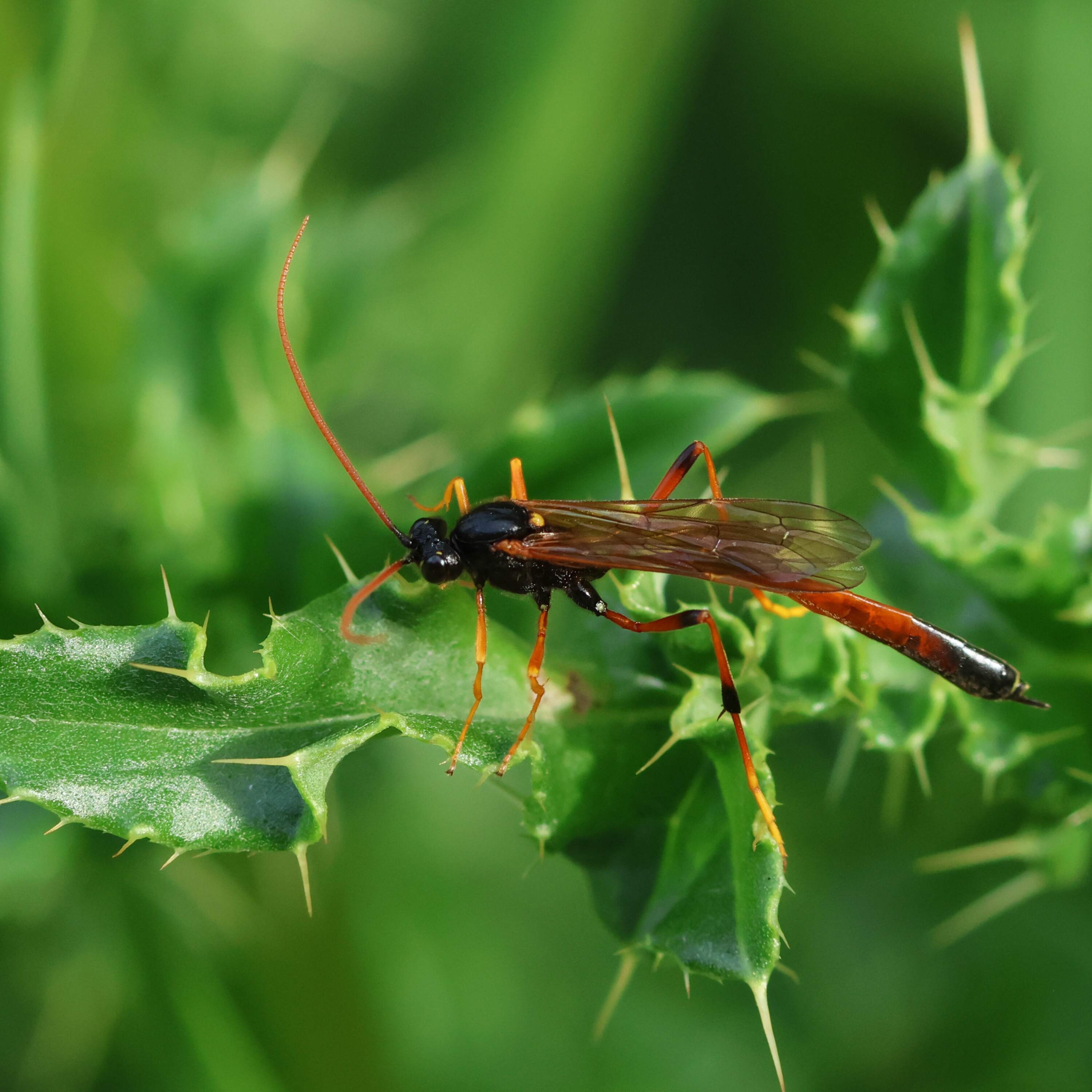
| 6/3/26 | ![]() This common garden plant summons wasps as bodyguards | In our latest science news roundup: how nature adapts, for better or worse. When faced with pests, plants may not be able to run away – but that doesn’t mean they’re defenseless. Some have thorns or spines, others have poisonous leaves or berries, and still others have…elaborate chemical defense alarm systems? In a recent study, researchers discovered that the common bean plant, P. vulgaris, has a particularly innovative response to hungry caterpillars: a compound in the caterpillar's spit causes the plants to release a chemical signal that attracts wasps. Those wasps then eat the caterpillars or lay eggs in their bodies, effectively removing the threat. Today on the show, we’re diving into plant science and a round of other new scientific studies with All Things Considered host Sacha Pfeiffer.If you're interested in the fibermaxxing episode Han mentioned, check it out here.Listen to every episode of Short Wave sponsor-free and support our work at NPR by signing up for Short Wave+ at plus.npr.org/shortwave.See pcm.adswizz.com for information about our collection and use of personal data for sponsorship and to manage your podcast sponsorship preferences.NPR Privacy Policy | 9m 26s | ||||||
| 6/2/26 | ![]() Why are scientists planting tiny forests in big cities? | Healthy forests help combat climate change, provide humans with drinking water and even improve mental and physical health. But it’s hard to imagine an entire forest in the middle of a big city. That’s where micro-forests come into play — public forests on a smaller scale, filled with native plants. They exist around the world, and producer Rachel Carlson went to visit the largest micro-forest in California in this encore episode. She joins host Emily Kwong to chat about what she saw. Interested in more of the science behind urban nature? Email us your question at shortwave@npr.org.Listen to every episode of Short Wave sponsor-free and support our work at NPR by signing up for Short Wave+ at plus.npr.org/shortwave.See pcm.adswizz.com for information about our collection and use of personal data for sponsorship and to manage your podcast sponsorship preferences.NPR Privacy Policy | 12m 12s | ||||||
| 6/1/26 | ![]() Why you can't stop scrolling: the science of 'dark flow' | You pick up your phone to do one quick task, and suddenly 20 minutes have flown by without you even noticing. How do apps do that to you? Science journalist Michaeleen Doucleff felt like her phone had superglue on it, holding her on it for hours each day while draining her of time and energy. Turns out, that feeling isn’t accidental. In her new book, Dopamine Kids, Michaeleen describes four features that tech companies add to apps to keep us scrolling for as long as possible. She’s sharing this superglue recipe with Short Wave host Emily Kwong … and explaining how these features can pull people into what scientists call a ‘dark flow’ state.Interested in more tech and social media science? Email us your question at shortwave@npr.org.Listen to every episode of Short Wave sponsor-free and support our work at NPR by signing up for Short Wave+ at plus.npr.org/shortwave.Listen to Short Wave on Spotify and Apple Podcasts.This episode was produced by Hannah Chinn. It was edited by Rebecca Ramirez. Tyler Jones checked the facts. The audio engineer was Jimmy Keeley.See pcm.adswizz.com for information about our collection and use of personal data for sponsorship and to manage your podcast sponsorship preferences.NPR Privacy Policy | 12m 48s | ||||||
| 5/29/26 | ![]() This distant planet has wild weather and gemstone clouds | For many astronomers and astrophysicists there are two distinct, important periods: before the James Webb Space Telescope – and after. It has powered many scientific discoveries since it came online, including two at the heart of this episode: insights into one of Neptune’s moons and a “hot Jupiter” exoplanet orbiting another star. This exoplanet has a strange weather system with high winds and cloud coverage only on one side of the planet. Fill in some of the scientific gaps about our solar system and the universe beyond with us.Interested in more space science? Email us your question at shortwave@npr.org.Listen to every episode of Short Wave sponsor-free and support our work at NPR by signing up for Short Wave+ at plus.npr.org/shortwave.See pcm.adswizz.com for information about our collection and use of personal data for sponsorship and to manage your podcast sponsorship preferences.NPR Privacy Policy | 9m 47s | ||||||
| 5/27/26 | ![]() Should we reengineer the world's deadliest animal? | The most ferocious predator for us humans is actually quite small: the mosquito. They are hungry for blood, spreading diseases like malaria, yellow fever and dengue – and picking up new ones all the time. But what if we could wipe out the mosquito? Gene-editing technology could do it, potentially saving millions of lives. But it comes with serious potential for risk. Which begs the question: Should we get to decide when humanity rewrites nature? Here to discuss that is Ben Bradford, the host of a new podcast distributed by the NPR Network: Are We Doomed?Interested in more science? Email us your question at shortwave@npr.org.Listen to every episode of Short Wave sponsor-free and support our work at NPR by signing up for Short Wave+ at plus.npr.org/shortwave.See pcm.adswizz.com for information about our collection and use of personal data for sponsorship and to manage your podcast sponsorship preferences.NPR Privacy Policy | 11m 59s | ||||||
Want analysis for the episodes below?Free for Pro Submit a request, we'll have your selected episodes analyzed within an hour. Free, at no cost to you, for Pro users. | |||||||||
| 5/26/26 | ![]() Is it getting windier? | Is it getting windier? Long-time listener Barry Zalph thinks it is, at least in Louisville. And he’s not the only one. Redditors and local reporters have noticed a recent uptick in the region’s windstorms, too. But does that point to any larger trends in windiness? And if so, what could be causing it? We talked to meteorologist and extreme weather specialist Scott Gunter to find out. Plus, we dig into whether Tornado Alley is shifting into Kentucky as the climate warms. This episode is part of Nature Quest, our monthly listener-driven segment about climate and the environment. Have a question for us? Send a voice memo to shortwave@npr.org with your name, location and what you’re noticing in the environment around you… it could be our next Nature Quest!Interested in more weather and wind science? Email us your question at shortwave@npr.org.Listen to every episode of Short Wave sponsor-free and support our work at NPR by signing up for Short Wave+ at plus.npr.org/shortwave.See pcm.adswizz.com for information about our collection and use of personal data for sponsorship and to manage your podcast sponsorship preferences.NPR Privacy Policy | 11m 52s | ||||||
| 5/25/26 | ![]() The magic — and science — of synchronous fireflies | Every year for two weeks between mid-May and mid-June, Congaree National Park in South Carolina is home to a fairy-tale-like display of flashing lights. These rhythmic performances happen all because of thousands of fireflies, flashing their belly lanterns at exactly the same time. According to the National Park Service, there are just three species of these synchronous fireflies in North America, making the experience all the more magical for the lucky visitors who get the chance to see them. (encore)This story was originally reported for NPR by science correspondent Pien Huang. Read Pien's full story here.Want more of the science behind wildlife wonders? Email us at shortwave@npr.org.Listen to every episode of Short Wave sponsor-free and support our work at NPR by signing up for Short Wave+ at plus.npr.org/shortwave.Today's episode was produced by Rachel Carlson. It was edited by Berly McCoy. Pien checked the facts. Kwesi Lee was the audio engineer.See pcm.adswizz.com for information about our collection and use of personal data for sponsorship and to manage your podcast sponsorship preferences.NPR Privacy Policy | 13m 06s | ||||||
| 5/22/26 | ![]() The supertree shielding coastlines and storing carbon | Coastal fishing communities around the world are struggling with declining fish stocks. That’s because of climate change, environmental degradation and overfishing. But one tree – the humble mangrove – has a superpower that’s supporting healthy fisheries in many parts of the world. The majority of fishes we eat worldwide are supported by mangroves: Their roots serve as a nursery for baby fish. So, today on the show, two reporters travel to Cambodia, where they discover why a local fishing solution now plays a crucial role in slowing global warming. Read more about Rebecca Hersher and Ryan Kellman’s journey here (and check out their incredible photos). Interested in more climate science? Email us your question at shortwave@npr.org.Listen to every episode of Short Wave sponsor-free and support our work at NPR by signing up for Short Wave+ at plus.npr.org/shortwave.See pcm.adswizz.com for information about our collection and use of personal data for sponsorship and to manage your podcast sponsorship preferences.NPR Privacy Policy | 12m 01s | ||||||
| 5/20/26 | ![]() Why renaming this common hormonal disorder is a huge deal | You probably know someone who has a condition that, until last week, was known as PCOS, or polycystic ovary syndrome. It affects one in eight reproductive-aged women. But despite it being such a common disorder, patients are often misdiagnosed and have delayed treatment. Now, medical professionals are trying to change that. After 15 years of work, the condition has been renamed to PMOS, or polyendocrine metabolic ovarian syndrome. The new name reflects the real driver of the condition: disruptions in hormones. But how much can changing a name really do? Click here to access resources about PMOS in multiple languages. Interested in more science? Email us your question at shortwave@npr.org.Listen to every episode of Short Wave sponsor-free and support our work at NPR by signing up for Short Wave+ at plus.npr.org/shortwave.See pcm.adswizz.com for information about our collection and use of personal data for sponsorship and to manage your podcast sponsorship preferences.NPR Privacy Policy | 13m 31s | ||||||
| 5/19/26 | ![]() A solution for California's water woes | For years, farmers in California have been pumping huge amounts of water from their wells to irrigate their crops. The state’s Central Valley is the nation’s single biggest source for many different foods. But all that water use is making aquifers shrink, wells go dry and, in some places, the ground sink. Science reporter Dan Charles has been looking into the issue and is on the show today to talk about what happens when water gets scarce. What is it like for farmers? And for the people enforcing new water restrictions? If you liked this episode, check out some of our other recent water stories – including why the world’s freshwater is getting saltier, what’s happening to our groundwater supply, and what happens when a city runs out of water.Interested in more stories about water, farming and food production? Email us your question at shortwave@npr.org.Listen to every episode of Short Wave sponsor-free and support our work at NPR by signing up for Short Wave+ at plus.npr.org/shortwave.See pcm.adswizz.com for information about our collection and use of personal data for sponsorship and to manage your podcast sponsorship preferences.NPR Privacy Policy | 14m 27s | ||||||
| 5/18/26 | ![]() What's up with your nightmares? | Dreams of flying? Nightmares of teeth falling out? Falling off a cliff? As a sleep scientist at the University of Montreal, Michelle Carr has pretty much heard it all. In Michelle’s new book Nightmare Obscura, she explores the science of dreams, nightmares – and even something called dream engineering, where people influence their own dreams while they sleep. Today on Short Wave, co-host Regina G. Barber dives into the science of our sleeping life with Michelle Carr. (encore)Interested in any upcoming science books? Email us your question at shortwave@npr.org.Listen to every episode of Short Wave sponsor-free and support our work at NPR by signing up for Short Wave+ at plus.npr.org/shortwave.See pcm.adswizz.com for information about our collection and use of personal data for sponsorship and to manage your podcast sponsorship preferences.NPR Privacy Policy | 14m 17s | ||||||
| 5/15/26 | ![]() A chemical found in fish could help reinvent your sunscreen | It’s been over 25 years since the FDA approved a new ingredient for sunscreen in the United States. But a molecule called gadusol found in fish and coral reefs is a promising candidate. It absorbs U.V. rays — acting like a built-in sunscreen for fish. But there’s a big hurdle if scientists want to turn gadusol into human sunscreen: They’d need to make a lot of it. A new study out this week in the journal Trends in Biotechnology takes us a big step closer. Their solution? Using the bacteria best known for making your stomach hurt: e. Coli. Interested in more science? Email us your question at shortwave@npr.org.Listen to every episode of Short Wave sponsor-free and support our work at NPR by signing up for Short Wave+ at plus.npr.org/shortwave.See pcm.adswizz.com for information about our collection and use of personal data for sponsorship and to manage your podcast sponsorship preferences.NPR Privacy Policy | 10m 32s | ||||||
| 5/13/26 | ![]() Should you be fibermaxxing? Here's what the science says | The average person eats 10-15 grams of fiber per day, according to the USDA. The problem? That’s WAY under the recommended daily amount. Fiber – a type of carb that our bodies are unable to digest – is prevalent in foods like fruits, veggies, whole grains, and beans. And it’s key for everything from feelings of fullness, to gut health, to good poop. That’s why a lot of people online are “fibermaxxing”: trying to meet or exceed the daily recommendation of fiber, in hopes it’ll improve their health. But how should YOU add fiber to your diet… and are the fibermaxxers overdoing it? Gastroenterologist Berkeley Limketkai is here to help parse the science on how little fiber is too little, how much fiber is too much – and, like Goldilocks, how we can figure out the amount that’s just right.Interested in more food and dietary science? Email us your question at shortwave@npr.org.Listen to every episode of Short Wave sponsor-free and support our work at NPR by signing up for Short Wave+ at plus.npr.org/shortwave.See pcm.adswizz.com for information about our collection and use of personal data for sponsorship and to manage your podcast sponsorship preferences.NPR Privacy Policy | 12m 00s | ||||||
| 5/12/26 | ![]() Why Swedish scientists gave salmon cocaine | A recent study caught our eye: salmon on cocaine. Or really, researchers giving salmon cocaine…for science. See, scientists know human drugs pollute aquatic environments – past studies have shown even anti-anxiety drugs can change how fish act. But illicit drugs are less studied. And Jack Brand, an aquatic ecologist at the Swedish University of Agricultural Sciences, wanted to know how illicit drugs like cocaine might change fish behavior, like foraging and mating. To answer that question, Jack and his team gave salmon cocaine. Interested in more science? Email us your question at shortwave@npr.org.Listen to every episode of Short Wave sponsor-free and support our work at NPR by signing up for Short Wave+ at plus.npr.org/shortwave.See pcm.adswizz.com for information about our collection and use of personal data for sponsorship and to manage your podcast sponsorship preferences.NPR Privacy Policy | 10m 05s | ||||||
| 5/11/26 | ![]() Without this pill, lots of people would be dead | 25 years ago, the FDA approved a pill that would change the way scientists treat cancer … for good. The pill was called Gleevec; it was designed specifically to treat CML, chronic myeloid leukemia, and it was one of the first targeted cancer therapies available. A quarter century after approval, it’s still being prescribed, as are second, third and fourth-generation drugs that followed in its footsteps. What made it so special – and so effective? Pharmaceutical correspondent Sydney Lupkin walks us through the history of the drug, and why it’s continued to change lives for decades.If you liked this episode, check out our other episodes with Sydney on accelerated drug approvals and the development of GLP-1 pills.Interested in more stories about medicine and medical treatment? Email us your question at shortwave@npr.org.Listen to every episode of Short Wave sponsor-free and support our work at NPR by signing up for Short Wave+ at plus.npr.org/shortwave.See pcm.adswizz.com for information about our collection and use of personal data for sponsorship and to manage your podcast sponsorship preferences.NPR Privacy Policy | 14m 27s | ||||||
| 5/8/26 | ![]() Hantavirus: the risks, the science and what you need to know✨ | hantavirusinfectious diseases+4 | Emily Abdoler | World Health OrganizationUniversity of Michigan | Atlantic Ocean | hantavirusinfectious disease+5 | — | 12m 57s | |
| 5/6/26 | ![]() How science is taking tripping mainstream✨ | psychedelicsbrain research+3 | — | NPR | President TrumpPresident Nixon | psychedelicsbrain+6 | — | 12m 56s | |
| 5/5/26 | ![]() This medical condition stumped doctors for years✨ | functional neurological disordermedical misdiagnosis+3 | Kyla Madonna Kenney | NPR | — | functional neurological disorderneurologist+5 | — | 14m 29s | |
| 5/4/26 | ![]() The secret behind clownfish stripes and more fishy fascinations✨ | clownfishfish behavior+4 | Ari Daniel | NPR | Democratic Republic of CongoShedd Aquarium+2 | clownfish stripesfishy science+4 | — | 12m 43s | |
| 5/1/26 | ![]() Coffee is complex. Can science standardize it for the better?✨ | coffee scienceflavor assessment+3 | — | University of Oregon | — | coffeeflavor+6 | — | 10m 10s | |
Showing 25 of 1502
Sponsor Intelligence
Sign in to see which brands sponsor this podcast, their ad offers, and promo codes.
Similar Audience Demographics
Podcasts that attract a similar listener profile
Chart Positions
50 placements across 45 markets.
Chart Positions
50 placements across 45 markets.