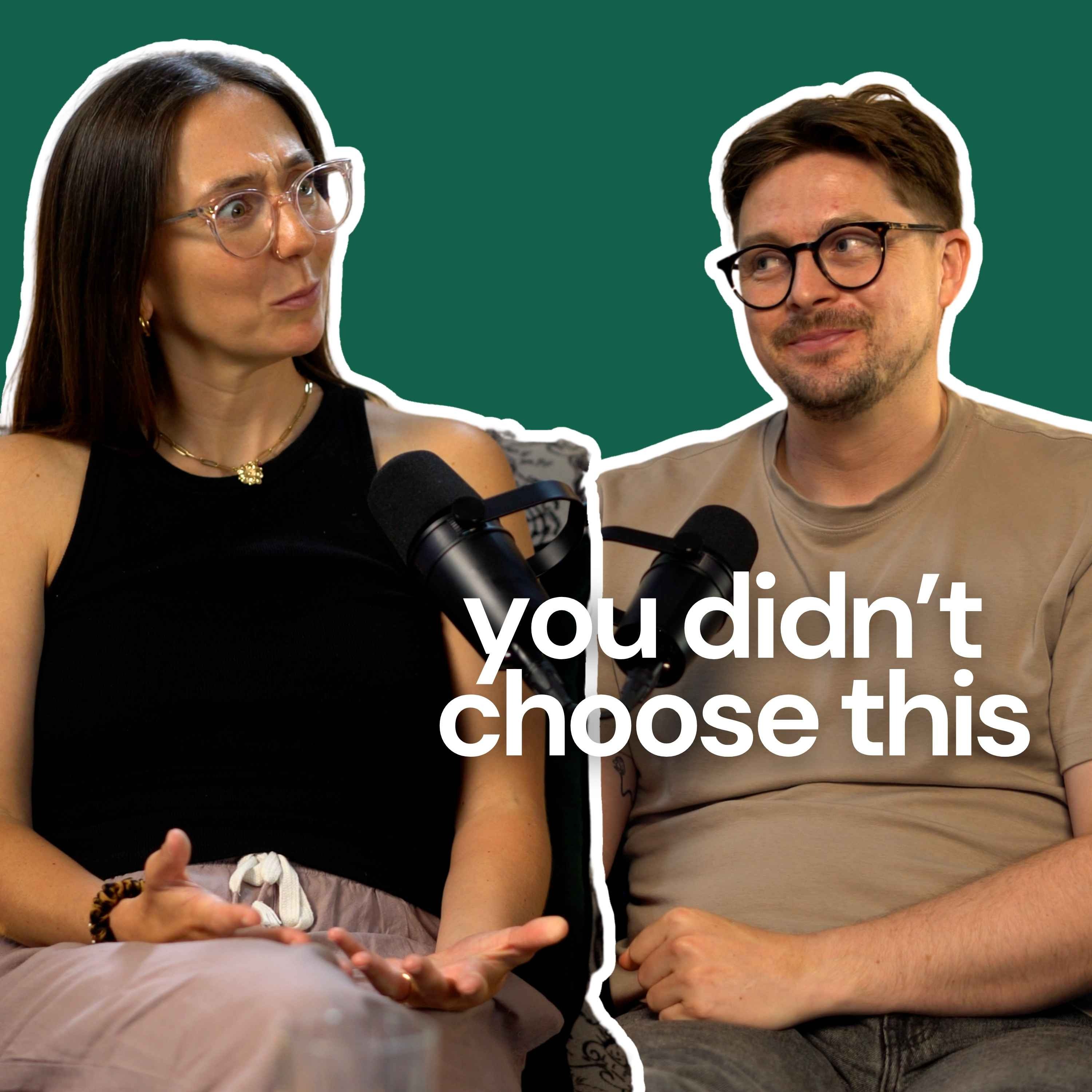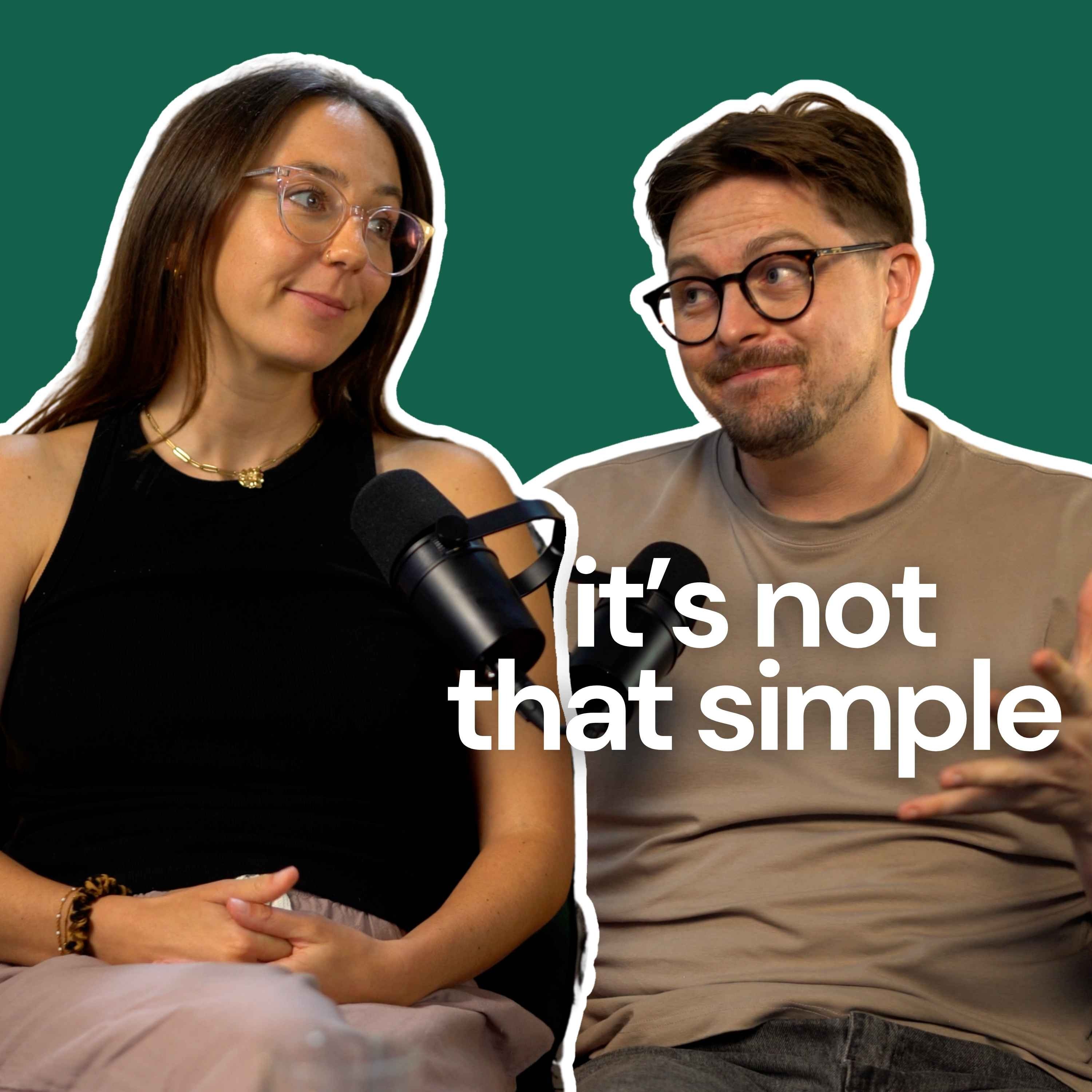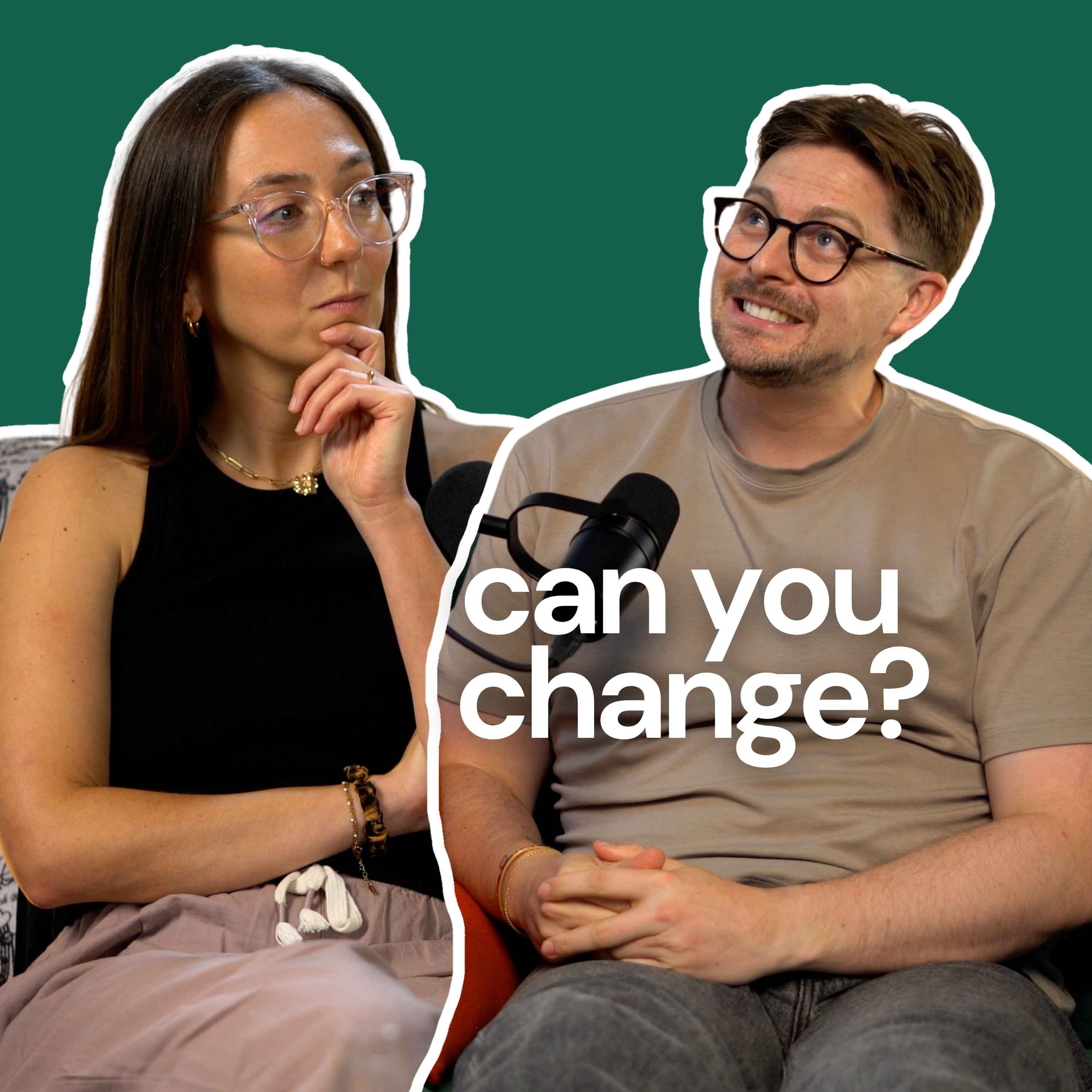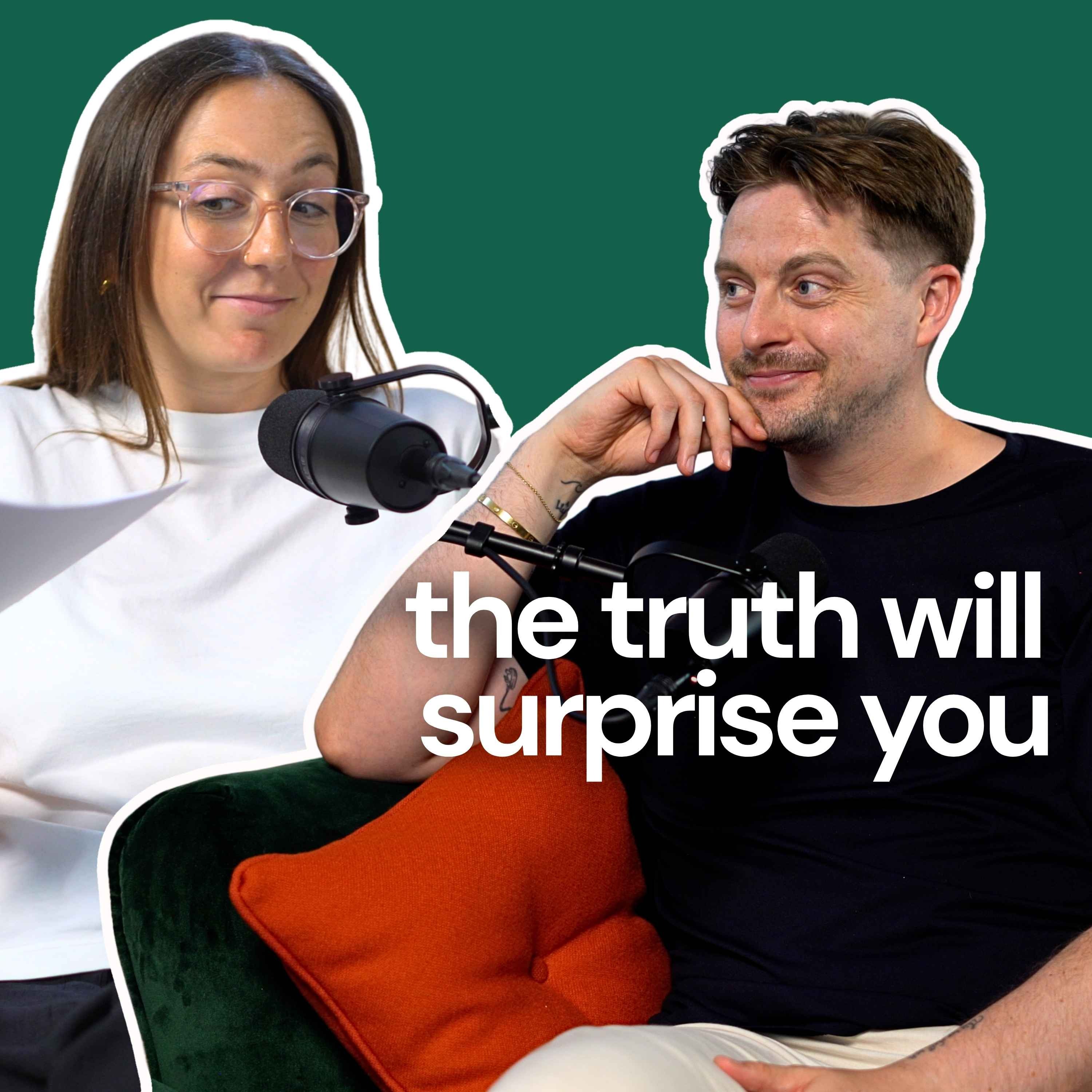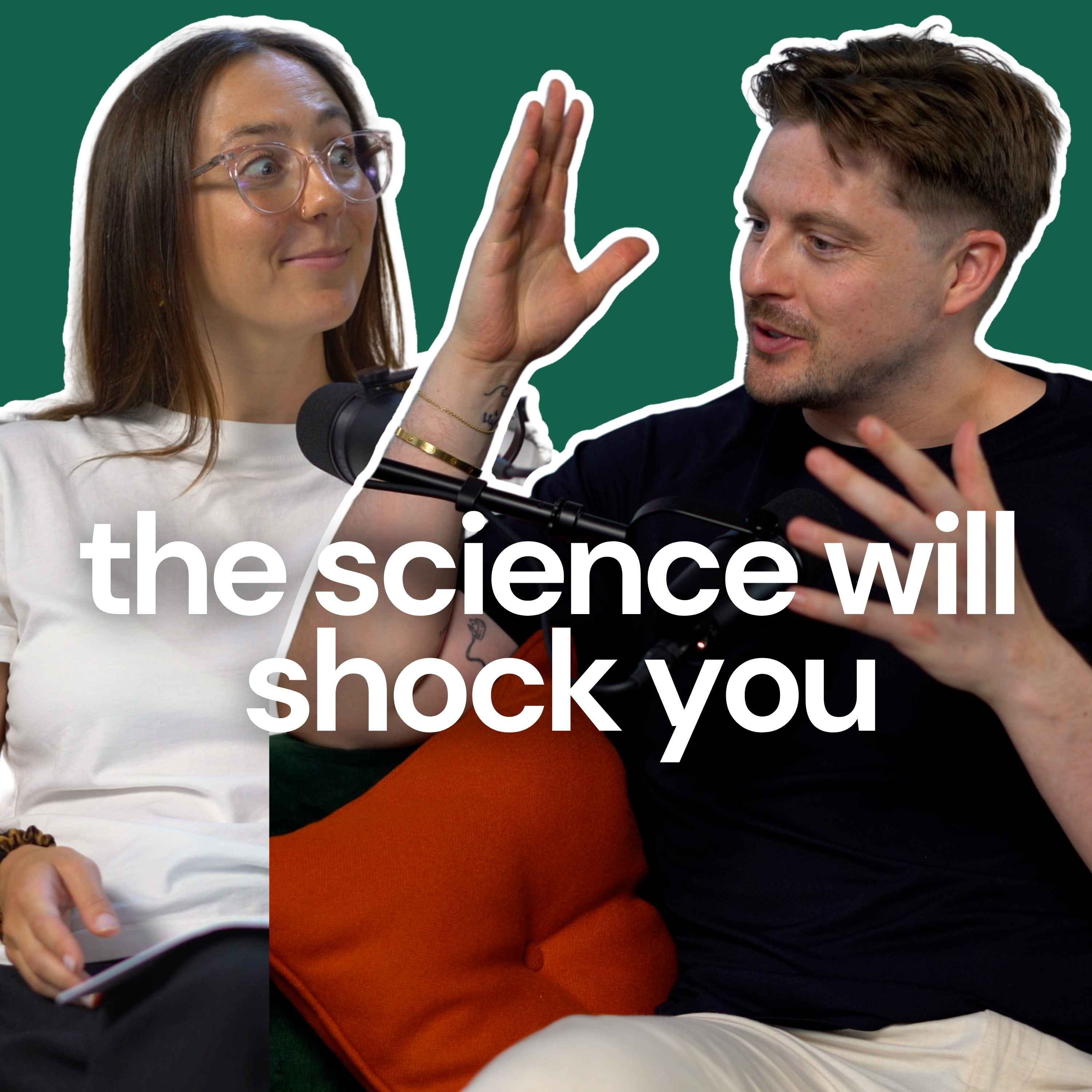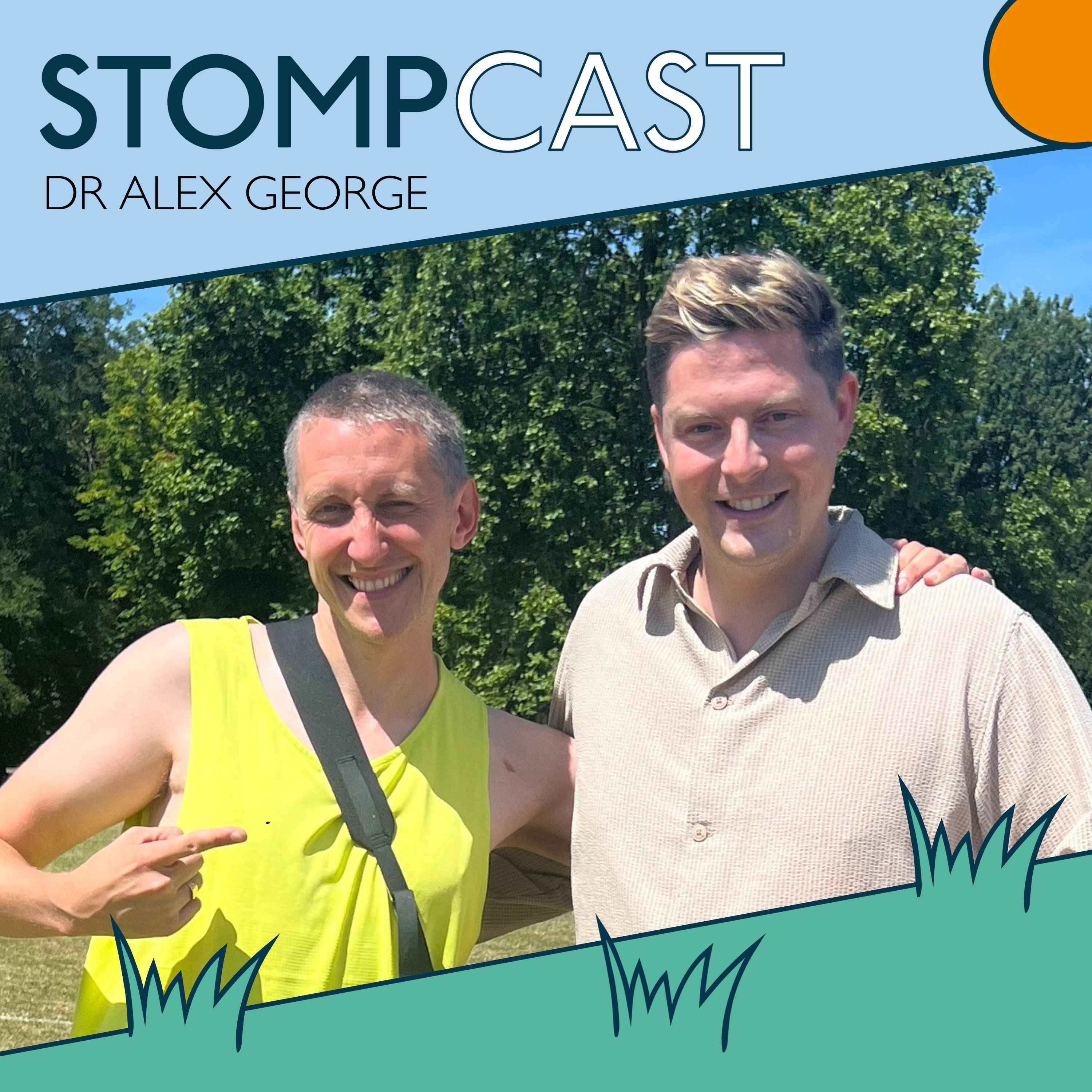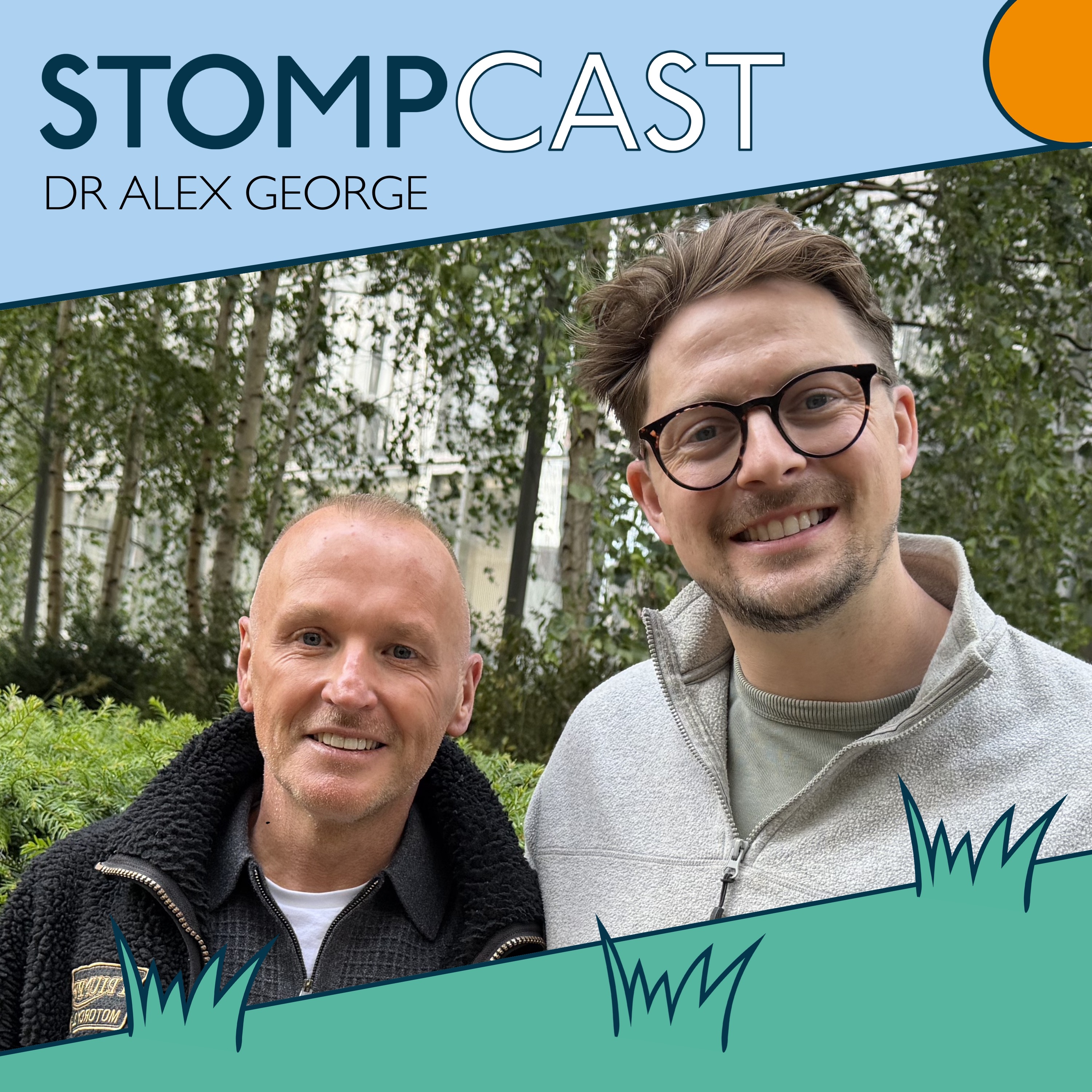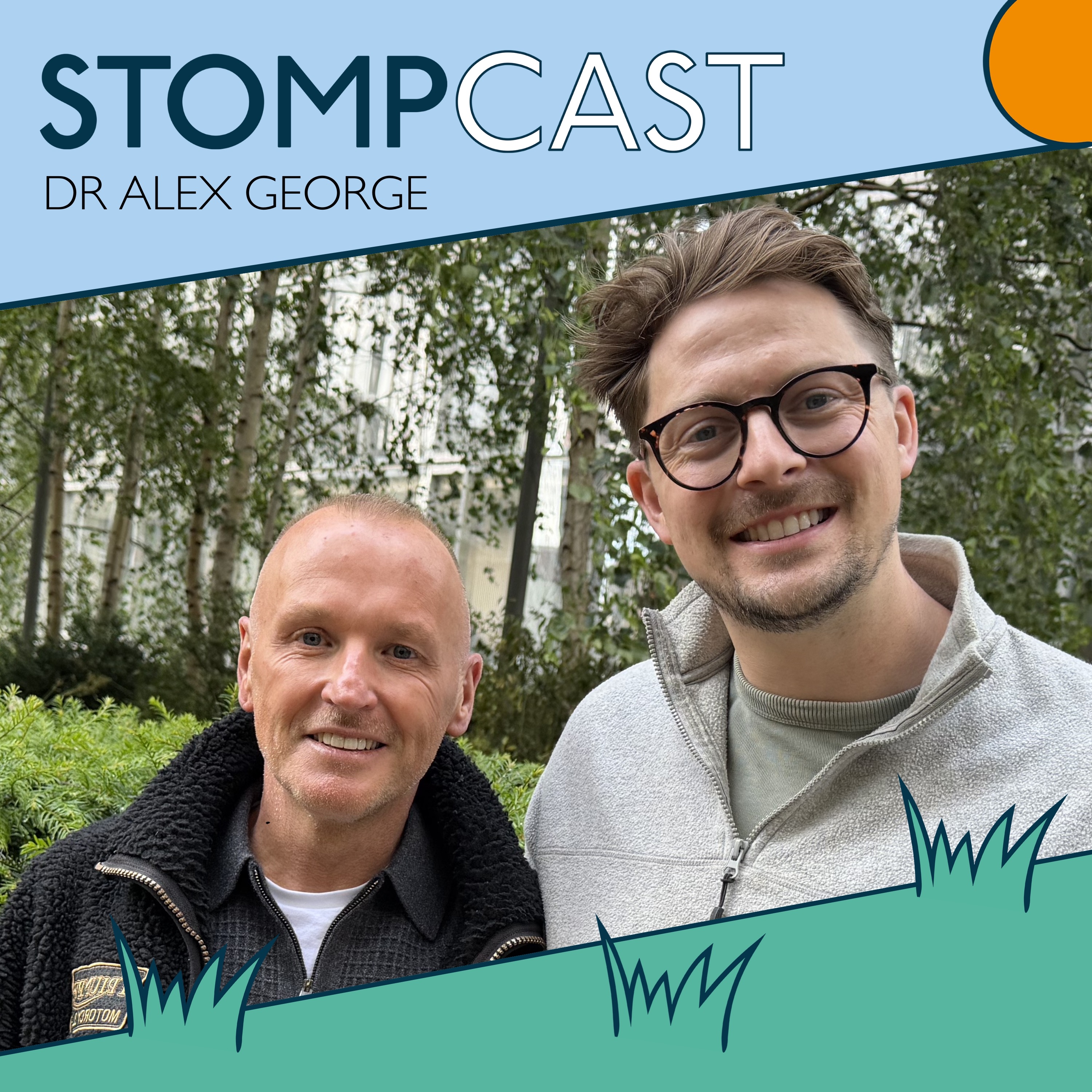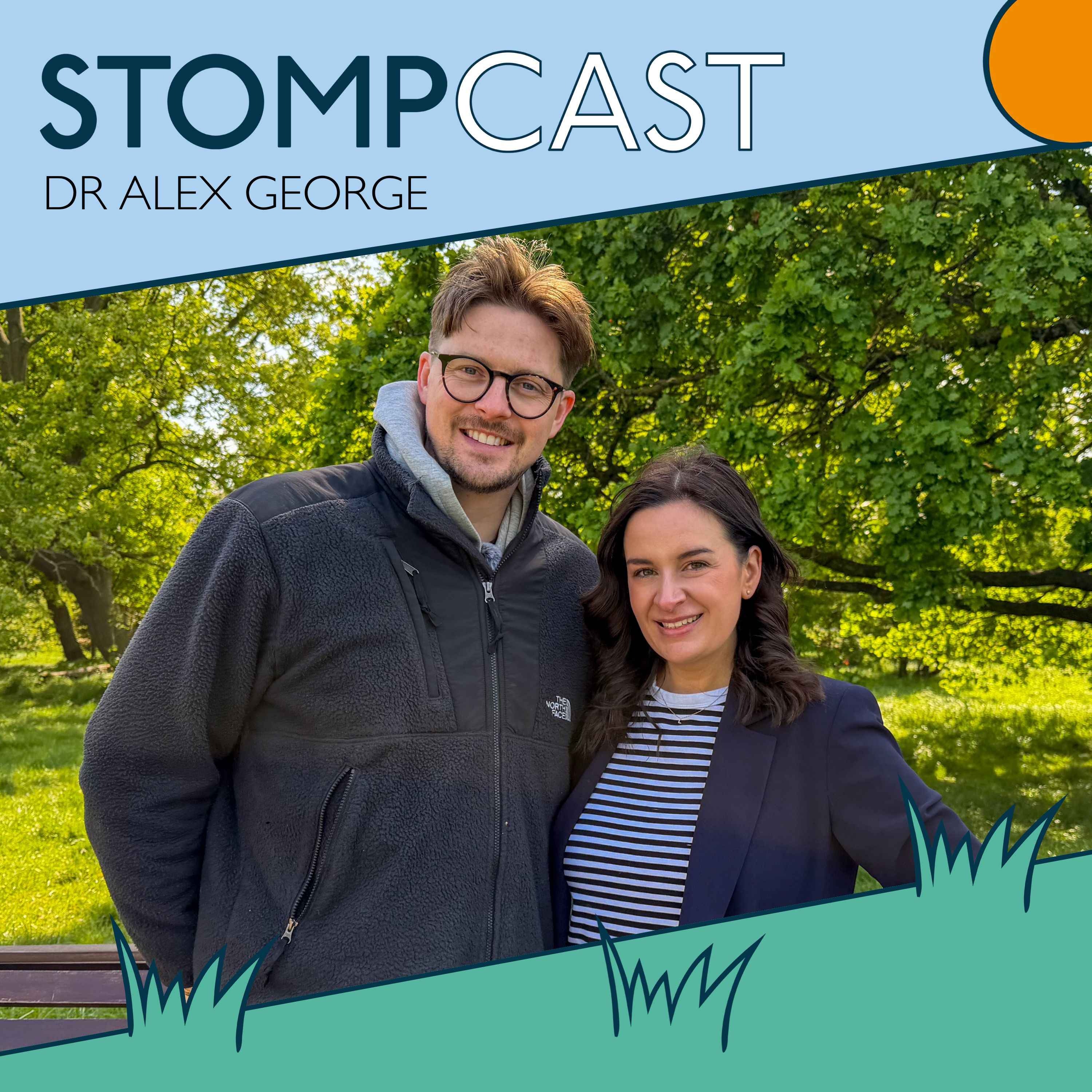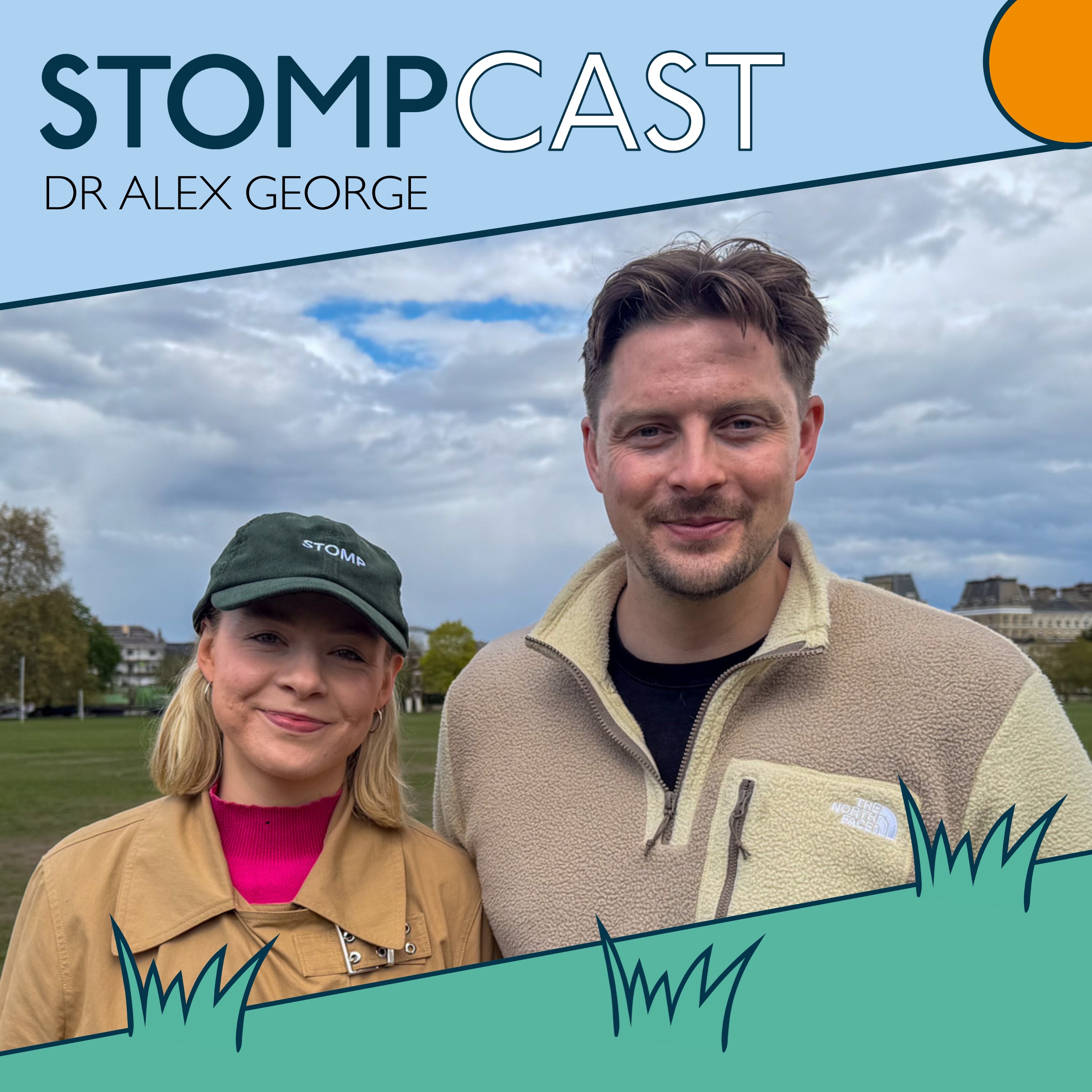
Stompcast
by Dr Alex George
Is this your podcast?Insights from recent episode analysis
Audience Interest
Podcast Focus
Publishing Consistency
Platform Reach
Insights are generated by CastFox AI using publicly available data, episode content, and proprietary models.
Most discussed topics
Brands & references
Total monthly reach
Estimated from 14 chart positions in 14 markets.
By chart position
- 🇬🇧GB · Mental Health#17300K to 1M
- 🇮🇳IN · Mental Health#3930K to 100K
- 🇰🇷KR · Mental Health#1271K to 10K
- 🇯🇵JP · Mental Health#1301K to 10K
- 🇮🇪IE · Mental Health#1530K to 100K
- Per-Episode Audience
Est. listeners per new episode within ~30 days
117K to 395K🎙 Daily cadence·579 episodes·Last published yesterday - Monthly Reach
Unique listeners across all episodes (30 days)
391K to 1.3M🇬🇧76%🇮🇳8%🇮🇪8%+11 more - Active Followers
Loyal subscribers who consistently listen
117K to 395K
Market Insights
Platform Distribution
Reach across major podcast platforms, updated hourly
Total Followers
—
Total Plays
—
Total Reviews
—
* Data sourced directly from platform APIs and aggregated hourly across all major podcast directories.
On the show
From 34 epsHost
Recent guests
Recent episodes
Is Female Intuition Real? | Pt 3
Sep 1, 2026
Unknown duration
Does Your Body Know Something You Don’t? | Pt 2
Aug 31, 2026
Unknown duration
Can You Trust Your Gut Instinct? | Pt 1
Aug 30, 2026
Unknown duration
Can Rejection Actually Make You More Creative? | Pt 3
Aug 25, 2026
Unknown duration
How Do You Stop Taking Rejection Personally? | Pt 2
Aug 24, 2026
Unknown duration
Social Links & Contact
Official channels & resources
Official Website
Login
RSS Feed
Login
| Date | Episode | Topics | Guests | Brands | Places | Keywords | Sponsor | Length | |
|---|---|---|---|---|---|---|---|---|---|
| 9/1/26 | Is Female Intuition Real? | Pt 3 | Is female intuition actually real? And does sleeping on a decision genuinely make it better? In Part 3, Dr Alex George and research scientist Dr Kathryn Bates put some of the most common claims about intuition to the test in Myth, Fact and It’s Complicated, including whether anxiety is simply your gut telling you something is wrong.No lectures. No easy answers. Just two people trying their best to figure it out.We're not here to give medical advice, we're just two friends exploring the science and figuring out life together. If you have any concerns about your health, please speak to your doctor.Each episode arrives in three parts from Monday to Wednesday. Part One tackles the Big Question. Part Two answers a real dilemma sent in by a listener. Part Three puts the most common claims to the test in Myth, Fact and It's Complicated.Have a question or dilemma you'd like us to tackle in a future episode? We'd love to hear from you. Email us at [email protected]. Hosted on Acast. See acast.com/privacy for more information. | — | ||||||
| 8/31/26 | Does Your Body Know Something You Don’t? | Pt 2 | Is gut instinct just your body noticing something before your conscious mind catches up? In Part 2, Dr Alex George and research scientist Dr Kathryn Bates explore how physical sensations can influence our decisions, the science of somatic markers and the gut-brain connection, and why a feeling in your stomach doesn’t necessarily mean someone is untrustworthy.No lectures. No easy answers. Just two people trying their best to figure it out.We're not here to give medical advice, we're just two friends exploring the science and figuring out life together. If you have any concerns about your health, please speak to your doctor.Each episode arrives in three parts from Monday to Wednesday. Part One tackles the Big Question. Part Two answers a real dilemma sent in by a listener. Part Three puts the most common claims to the test in Myth, Fact and It's Complicated.Have a question or dilemma you'd like us to tackle in a future episode? We'd love to hear from you. Email us at [email protected]. Hosted on Acast. See acast.com/privacy for more information. | — | ||||||
| 8/30/26 | Can You Trust Your Gut Instinct? | Pt 1 | Should you always trust your gut instinct? In Part 1, Dr Alex George and research scientist Dr Kathryn Bates explore the neuroscience of intuition, why it can be accurate, why it can also fail, and how to tell whether the feeling in your gut is worth listening to.No lectures. No easy answers. Just two people trying their best to figure it out.We're not here to give medical advice, we're just two friends exploring the science and figuring out life together. If you have any concerns about your health, please speak to your doctor.Each episode arrives in three parts from Monday to Wednesday. Part One tackles the Big Question. Part Two answers a real dilemma sent in by a listener. Part Three puts the most common claims to the test in Myth, Fact and It's Complicated.Have a question or dilemma you'd like us to tackle in a future episode? We'd love to hear from you. Email us at [email protected]. Hosted on Acast. See acast.com/privacy for more information. | — | ||||||
| 8/25/26 | Can Rejection Actually Make You More Creative? | Pt 3 | Can rejection actually make you more creative? In Part 3, Dr Alex George and research scientist Dr Kathryn Bates put some surprising claims about rejection to the test in Myth, Fact and It's Complicated including whether rejection can boost creativity, whether social media is making us more sensitive to it, and whether rejection sensitivity is really just another name for worrying.No lectures. No easy answers. Just two people trying their best to figure it out.We're not here to give medical advice, we're just two friends exploring the science and figuring out life together. If you have any concerns about your health, please speak to your doctor.Each episode arrives in three parts from Monday to Wednesday. Part One tackles the Big Question. Part Two answers a real dilemma sent in by a listener. Part Three puts the most common claims to the test in Myth, Fact and It's Complicated.Have a question or dilemma you'd like us to tackle in a future episode? We'd love to hear from you. Email us at [email protected]. Hosted on Acast. See acast.com/privacy for more information. | — | ||||||
| 8/24/26 | How Do You Stop Taking Rejection Personally? | Pt 2 | Can you actually become less sensitive to rejection? In Part 2, Dr Alex George and research scientist Dr Kathryn Bates tackle a listener’s dilemma about internalising failure and avoiding conflict, and explore what can help when rejection takes over, from breaking cycles of overthinking and reframing situations to self-compassion and acceptance.You can read about tips from a psychologist in this article: https://www.psychologytoday.com/gb/blog/what-the-wild-things-are/202506/the-deep-sting-of-rejection-0.No lectures. No easy answers. Just two people trying their best to figure it out.We're not here to give medical advice, we're just two friends exploring the science and figuring out life together. If you have any concerns about your health, please speak to your doctor.Each episode arrives in three parts from Monday to Wednesday. Part One tackles the Big Question. Part Two answers a real dilemma sent in by a listener. Part Three puts the most common claims to the test in Myth, Fact and It's Complicated.Have a question or dilemma you'd like us to tackle in a future episode? We'd love to hear from you. Email us at [email protected]. Hosted on Acast. See acast.com/privacy for more information. | — | ||||||
| 8/23/26 | Why Does Rejection Feel Physically Painful? | Pt 1 | Why does rejection hurt so much, and why do some people feel it far more intensely than others? Paris Hilton has described Rejection Sensitive Dysphoria as “like a demon in your mind” but what actually is RSD, and why can it feel so physical? In Part 1, Dr Alex George and research scientist Dr Kathryn Bates explore the science behind rejection sensitivity, its links with ADHD and neurodivergence, and why our brains are wired to see social exclusion as a threat.No lectures. No easy answers. Just two people trying their best to figure it out.We're not here to give medical advice, we're just two friends exploring the science and figuring out life together. If you have any concerns about your health, please speak to your doctor.Each episode arrives in three parts from Monday to Wednesday. Part One tackles the Big Question. Part Two answers a real dilemma sent in by a listener. Part Three puts the most common claims to the test in Myth, Fact and It's Complicated.Have a question or dilemma you'd like us to tackle in a future episode? We'd love to hear from you. Email us at [email protected]. Hosted on Acast. See acast.com/privacy for more information. | — | ||||||
| 8/18/26 | Can Hypnosis Unlock Repressed Memories? | Pt 3 | Does stress help you remember things better? Does alcohol erase your memories? And can hypnosis actually unlock memories you’ve buried?In Part 3, Dr Alex George and research scientist Dr Kathryn Bates put these common beliefs about memory to the test in Myth, Fact and It’s Complicated. They cover why hypnosis may be more likely to create false memories than recover repressed ones, and the surprising number of clinicians who believe repressed trauma can be uncovered in therapy.No lectures. No easy answers. Just two people trying their best to figure it out.We're not here to give medical advice, we're just two friends exploring the science and figuring out life together. If you have any concerns about your health, please speak to your doctor.Each episode arrives in three parts from Monday to Wednesday. Part One tackles the Big Question. Part Two answers a real dilemma sent in by a listener. Part Three puts the most common claims to the test in Myth, Fact and It's Complicated.Have a question or dilemma you'd like us to tackle in a future episode? We'd love to hear from you. Email us at [email protected]. Hosted on Acast. See acast.com/privacy for more information. | — | ||||||
| 8/17/26 | Photographic Memory Isn't Real: Here's the Science | Pt 2 | A listener asks: do some people really have a photographic memory, or is something else going on? In Part 2, Dr Alex George and research scientist Dr Kathryn Bates explore the science behind extraordinary memory, from artist Stephen Wiltshire’s ability to recreate incredibly detailed cityscapes to the rare phenomenon that allows some people to recall almost every day of their lives in remarkable detail. Plus, what does it actually mean if you can’t picture things in your mind? And what did the co-founder of Pixar discover when he explored how differently we visualise the world?No lectures. No easy answers. Just two people trying their best to figure it out.We're not here to give medical advice, we're just two friends exploring the science and figuring out life together. If you have any concerns about your health, please speak to your doctor.Each episode arrives in three parts from Monday to Wednesday. Part One tackles the Big Question. Part Two answers a real dilemma sent in by a listener. Part Three puts the most common claims to the test in Myth, Fact and It's Complicated.Have a question or dilemma you'd like us to tackle in a future episode? We'd love to hear from you. Email us at [email protected]. Hosted on Acast. See acast.com/privacy for more information. | — | ||||||
| 8/16/26 | Why Can't I Remember My Childhood, But My Sibling Can? | Pt 1 | Why do some people have vivid memories from early childhood while others have almost none, and does that mean they have a better memory?In Part 1, Dr Alex George and research scientist Dr Kathryn Bates get into how memory actually works, the 108-year-old neuroscientist behind one of the most important discoveries in memory research, and the landmark car crash experiment that showed how changing a single word can alter what someone remembers.No lectures. No easy answers. Just two people trying their best to figure it out.We're not here to give medical advice, we're just two friends exploring the science and figuring out life together. If you have any concerns about your health, please speak to your doctor.Each episode arrives in three parts from Monday to Wednesday. Part One tackles the Big Question. Part Two answers a real dilemma sent in by a listener. Part Three puts the most common claims to the test in Myth, Fact and It's Complicated.Have a question or dilemma you'd like us to tackle in a future episode? We'd love to hear from you. Email us at [email protected]. Hosted on Acast. See acast.com/privacy for more information. | — | ||||||
| 8/11/26 | Are Gratitude Journals and Your Mindset Just Manifestation Rebranded? | Pt 3 | Social media claims your brain is wired to help you manifest. Gratitude journals and positive mindsets are often presented as the science-backed alternative to vision boards, but is any of it actually the same thing? In Part 3, Dr Alex George and research scientist Dr Kathryn Bates separate myth from fact as they explore the neuroscience behind manifestation, the difference between a positive mindset and magical thinking, and what placebo effects really tell us about the power of our beliefs.No lectures. No easy answers. Just two people trying their best to figure it out.We're not here to give medical advice, we're just two friends exploring the science and figuring out life together. If you have any concerns about your health, please speak to your doctor.Each episode arrives in three parts from Monday to Wednesday. Part One tackles the Big Question. Part Two answers a real dilemma sent in by a listener. Part Three puts the most common claims to the test in Myth, Fact and It's Complicated.Have a question or dilemma you'd like us to tackle in a future episode? We'd love to hear from you. Email us at [email protected]. Hosted on Acast. See acast.com/privacy for more information. | — | ||||||
Want analysis for the episodes below?Free for Pro Submit a request, we'll have your selected episodes analyzed within an hour. Free, at no cost to you, for Pro users. | |||||||||
| 8/10/26 | If I Think I'll Fail, Am I More Likely To? | The Science Of Self-Fulfilling Prophecies | Pt 2 | If you think you're going to fail, are you more likely to? In Part 2, Dr Alex George and research scientist Dr Kathryn Bates explore the science of self-fulfilling prophecies, what the evidence actually shows, why the effects are weaker than many self-help books claim, and what a study of six-year-olds reveals about the surprising power of other people's expectations. Plus, Alex and Kathryn reflect on how they deal with failure, and Kathryn explains why, as a scientist, she fails at something every day.No lectures. No easy answers. Just two people trying their best to figure it out.We're not here to give medical advice, we're just two friends exploring the science and figuring out life together. If you have any concerns about your health, please speak to your doctor.Each episode arrives in three parts from Monday to Wednesday. Part One tackles the Big Question. Part Two answers a real dilemma sent in by a listener. Part Three puts the most common claims to the test in Myth, Fact and It's Complicated.Have a question or dilemma you'd like us to tackle in a future episode? We'd love to hear from you. Email us at [email protected]. Hosted on Acast. See acast.com/privacy for more information. | — | ||||||
| 8/9/26 | Did Dua Lipa Really Manifest Her Husband? | Pt 1 | Dua Lipa says headlining Glastonbury was on her dream board and even believes she manifested her husband. Millions of videos on TikTok are about manifestation, but does any of it actually work? In Part 1, Dr Alex George and research scientist Dr Kathryn Bates explore the psychology of manifestation, why a Cambridge professor calls it pseudoscience, and what the evidence on goal setting actually shows.No lectures. No easy answers. Just two people trying their best to figure it out. We're not here to give medical advice, we're just two friends exploring the science and figuring out life together. If you have any concerns about your health, please speak to your doctor.Each episode arrives in three parts from Monday to Wednesday. Part One tackles the Big Question. Part Two answers a real dilemma sent in by a listener. Part Three puts the most common claims to the test in Myth, Fact and It's Complicated.Have a question or dilemma you'd like us to tackle in a future episode? We'd love to hear from you. Email us at [email protected]. Hosted on Acast. See acast.com/privacy for more information. | — | ||||||
| 8/5/26 | Will Humans Ever Live Forever? | Pt 3 | Does your life really flash before your eyes when you die? Are humans the only species that know they're going to die? And could we ever live forever? In Part 3, Dr Alex George and research scientist Dr Kathryn Bates separate Myth, Fact and It's Complicated as they explore the science behind some of the biggest questions about death and dying, consciousness, immortality and what it means to be human.No lectures. No easy answers. Just two people trying their best to figure it out.We're not here to give medical advice, we're just two friends exploring the science and figuring out life together. If you have any concerns about your health, please speak to your doctor.Each episode arrives in three parts from Monday to Wednesday. Part One tackles the Big Question. Part Two answers a real dilemma sent in by a listener. Part Three puts the most common claims to the test in Myth, Fact and It's Complicated.Have a question or dilemma you'd like us to tackle in a future episode? We'd love to hear from you. Email us at [email protected]. Hosted on Acast. See acast.com/privacy for more information. | — | ||||||
| 8/3/26 | Why Thinking About Death Could Change Your Life | Pt 2 | How do you find acceptance in grief and come to terms with the idea of your own death? Will we be able to live forever? In Part 2, Dr Alex George reflects on losing his brother to suicide and what finding acceptance has looked like for him. Alongside research scientist Dr Kathryn Bates, they explore the psychology of grief, bereavement, mortality and why thinking about death could actually change the way you live.No lectures. No easy answers. Just two people trying their best to figure it out.We're not here to give medical advice, we're just two friends exploring the science and figuring out life together. If you have any concerns about your health, please speak to your doctor.Each episode arrives in three parts from Monday to Wednesday. Part One tackles the Big Question. Part Two answers a real dilemma sent in by a listener. Part Three puts the most common claims to the test in Myth, Fact and It's Complicated.Have a question or dilemma you'd like us to tackle in a future episode? We'd love to hear from you. Email us at [email protected]. Hosted on Acast. See acast.com/privacy for more information. | — | ||||||
| 8/2/26 | Does Your Brain Give You 7 Minutes When You Die? | Pt 1 | What happens in the brain when you die? Does your life really flash before your eyes? Do we get to relive our best experiences? In Part 1, Dr Alex George and research scientist Dr Kathryn Bates explore the science of near-death experiences, consciousness and the life review - from the tunnel of light to the latest research on brain activity in the moments after the heart stops. Together, they unpack what neuroscience can tell us about death and dying, and where the science still leaves unanswered questions.No lectures. No easy answers. Just two people trying their best to figure it out. We're not here to give medical advice, we're just two friends exploring the science and figuring out life together. If you have any concerns about your health, please speak to your doctor.Each episode arrives in three parts from Monday to Wednesday. Part One tackles the Big Question. Part Two answers a real dilemma sent in by a listener. Part Three puts the most common claims to the test in Myth, Fact and It's Complicated.Have a question or dilemma you'd like us to tackle in a future episode? We'd love to hear from you. Email us at [email protected]. Hosted on Acast. See acast.com/privacy for more information. | — | ||||||
| 7/28/26 | Can Social Media Really Ruin Your Focus? | Pt 3 | Is social media really ruining our attention spans? In Part 3 of the Figuring It Out podcast, Dr Alex George and research scientist Dr Kathryn Bates put some of the biggest claims about focus and distraction to the test in Myth, Fact or It's Complicated. Can you train yourself to focus? Is social media really to blame? And what does the evidence actually say?No lectures. No easy answers. Just two people trying their best to figure it out.We're not here to give medical advice, we're just two friends exploring the science and figuring out life together. If you have any concerns about your health, please speak to your doctor.Each episode arrives in three parts from Monday to Wednesday. Part One tackles the Big Question. Part Two answers a real dilemma sent in by a listener. Part Three puts the most common claims to the test in Myth, Fact and It's Complicated.Have a question or dilemma you'd like us to tackle in a future episode? We'd love to hear from you. Email us at [email protected]. Hosted on Acast. See acast.com/privacy for more information. | — | ||||||
| 7/27/26 | Why Can I Focus On Everything Except What Actually Matters? | Pt 2 | Why is it so much easier to focus on random things or a new hobby than an important deadline? In Part 2 of the Figuring It Out podcast, Dr Alex George and research scientist Dr Kathryn Bates answer a listener's dilemma about why our brains are drawn to distractions, what's really happening when we struggle to focus, and what the science says we can actually do about it.No lectures. No easy answers. Just two people trying their best to figure it out.We're not here to give medical advice, we're just two friends exploring the science and figuring out life together. If you have any concerns about your health, please speak to your doctor.Each episode arrives in three parts from Monday to Wednesday. Part One tackles the Big Question. Part Two answers a real dilemma sent in by a listener. Part Three puts the most common claims to the test in Myth, Fact and It's Complicated.Have a question or dilemma you'd like us to tackle in a future episode? We'd love to hear from you. Email us at [email protected]. Hosted on Acast. See acast.com/privacy for more information. | — | ||||||
| 7/27/26 | Has Your Attention Span Actually Got Worse? | Pt 1 | Do you feel like you can't concentrate the way you used to? In Part 1 of the Figuring It Out podcast, Dr Alex George and research scientist Dr Kathryn Bates explore the science of attention, whether our attention spans have actually got shorter, and why modern life makes it feel harder than ever to concentrate. They also unpack one of the internet's biggest myths about attention and reveal what the evidence really says.No lectures. No easy answers. Just two people trying their best to figure it out.We're not here to give medical advice, we're just two friends exploring the science and figuring out life together. If you have any concerns about your health, please speak to your doctor.Each episode arrives in three parts from Monday to Wednesday. Part One tackles the Big Question. Part Two answers a real dilemma sent in by a listener. Part Three puts the most common claims to the test in Myth, Fact and It's Complicated.Have a question or dilemma you'd like us to tackle in a future episode? We'd love to hear from you. Email us at [email protected]. Hosted on Acast. See acast.com/privacy for more information. | — | ||||||
| 7/22/26 | Welcome to Figuring It Out | Welcome to the Figuring It Out podcast with Dr Alex George and Dr Kathryn Bates.After four incredible years of The Stompcast, Dr Alex George is putting down his stomping boots to figure out life's biggest questions. Joining him is Dr Kathryn Bates, a research scientist at King's College London specialising in development and mental health.Together, they combine medicine and the latest research to explore the questions we all ask about our minds, our relationships, our choices and our health.No lectures. No easy answers. Just two people trying their best to figure it out.New episodes arrive every week in three parts from Monday to Wednesday.Listen to this short trailer to find out what you can expect, then follow the podcast so you never miss an episode. Hosted on Acast. See acast.com/privacy for more information. | — | ||||||
| 7/21/26 | therapypersonality change+3 | Dr Kathryn Bates | — | — | therapypersonality+5 | — | 19m 57s | ||
| 7/20/26 | decision makingfree will+3 | Kathryn | Acastfiguringitoutpod.com | — | decision makingfree will+3 | — | 29m 05s | ||
| 7/19/26 | personalitychoice+3 | Dr Kathryn Bates | Acastopenpsychometrics.org+1 | — | personality testself-exploration+3 | — | 39m 16s | ||
| 7/14/26 | déjà vubrain function+3 | Dr Kathryn Bates | — | — | déjà vubrain+5 | — | 15m 06s | ||
| 7/13/26 | anxietyintuition+3 | Dr Kathryn Bates | — | — | intuitionanxiety+3 | — | 18m 51s | ||
| 7/12/26 | déjà vubrain science+3 | Dr Kathryn Bates | — | — | déjà vuscience+4 | — | 22m 54s | ||
Showing 25 of 641
Pitch Fit is a Pro feature
See how bookable this show is for guests, which brands already advertise, the per-episode ad value, and the best-fit guest and sponsor profile. The numbers are blurred on the free plan.
How readily this show books outside guests like you.
How proven this show is for host-read sponsorships.
For Guests
ProFor Advertisers
ProUpgrade to Pro to unlock guest cadence, sponsor categories, fit scores, and per-episode ad value for this show.
Similar Audience Demographics
Podcasts that attract a similar listener profile
Chart history for Stompcast
Peaked at #15 in Ireland, currently #15 in Ireland.
| Market | Genre | Peak | Current | Trend |
|---|---|---|---|---|
| Ireland | — | #15 | #15 | — |
| United Kingdom | — | #17 | #17 | — |
| Ireland | — | #31 | #31 | — |
| ID | — | #35 | #35 | — |
| India | — | #39 | #39 | — |
| United Kingdom | — | #41 | #41 | — |
| TH | — | #56 | #56 | — |
| SG | — | #67 | #67 | — |
| RO | — | #72 | #72 | — |
| TR | — | #72 | #72 | — |
| Finland | — | #76 | #76 | — |
| IS | — | #80 | #80 | — |
| ID | — | #86 | #86 | — |
| India | — | #112 | #112 | — |
| CZ | — | #117 | #117 | — |
| South Korea | — | #127 | #127 | — |
| Japan | — | #130 | #130 | — |
| TH | — | #149 | #149 | — |
| New Zealand | — | #150 | #150 | — |
| TR | — | #155 | #155 | — |
Chart Positions
20 placements across 14 markets.
Chart Positions
20 placements across 14 markets.