
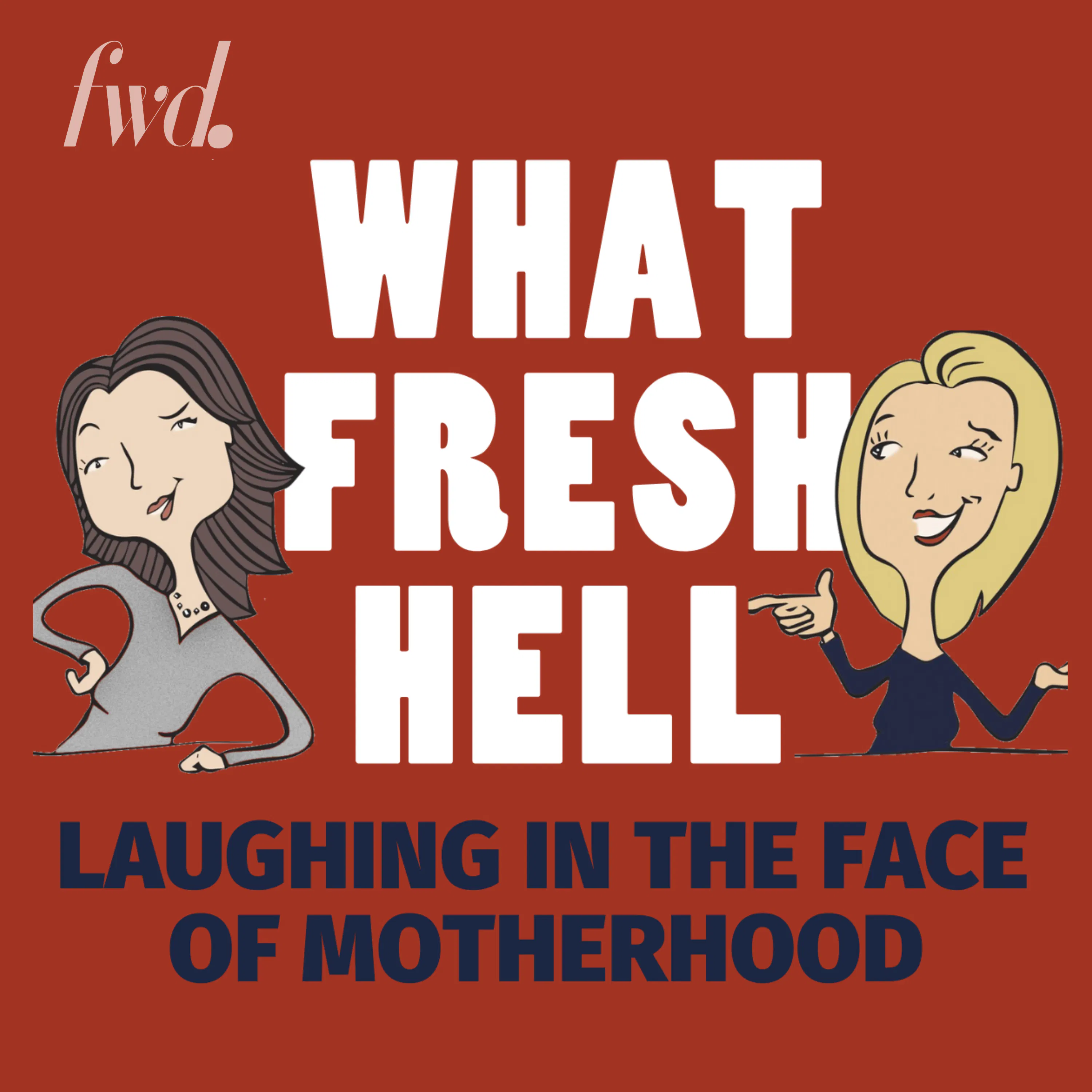
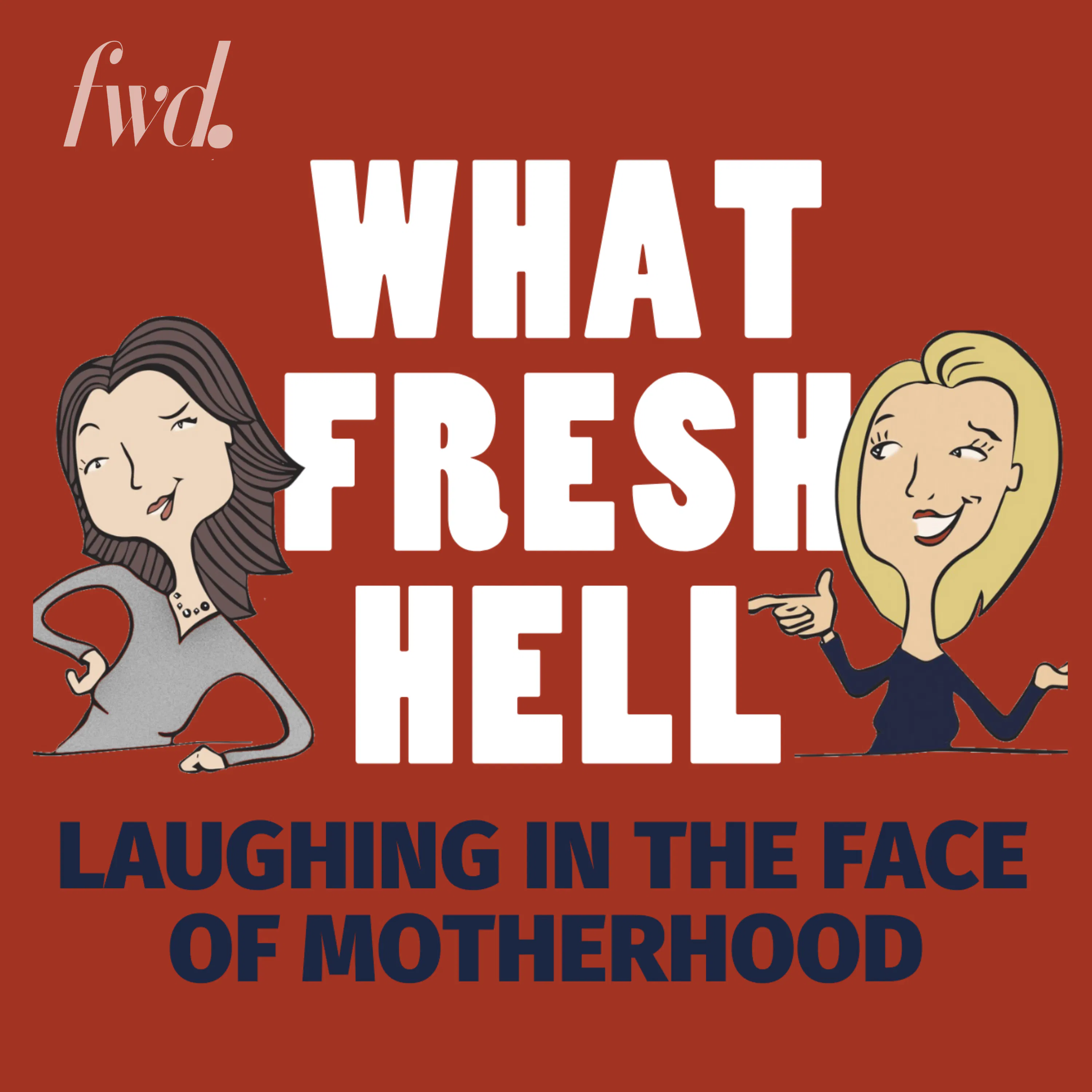
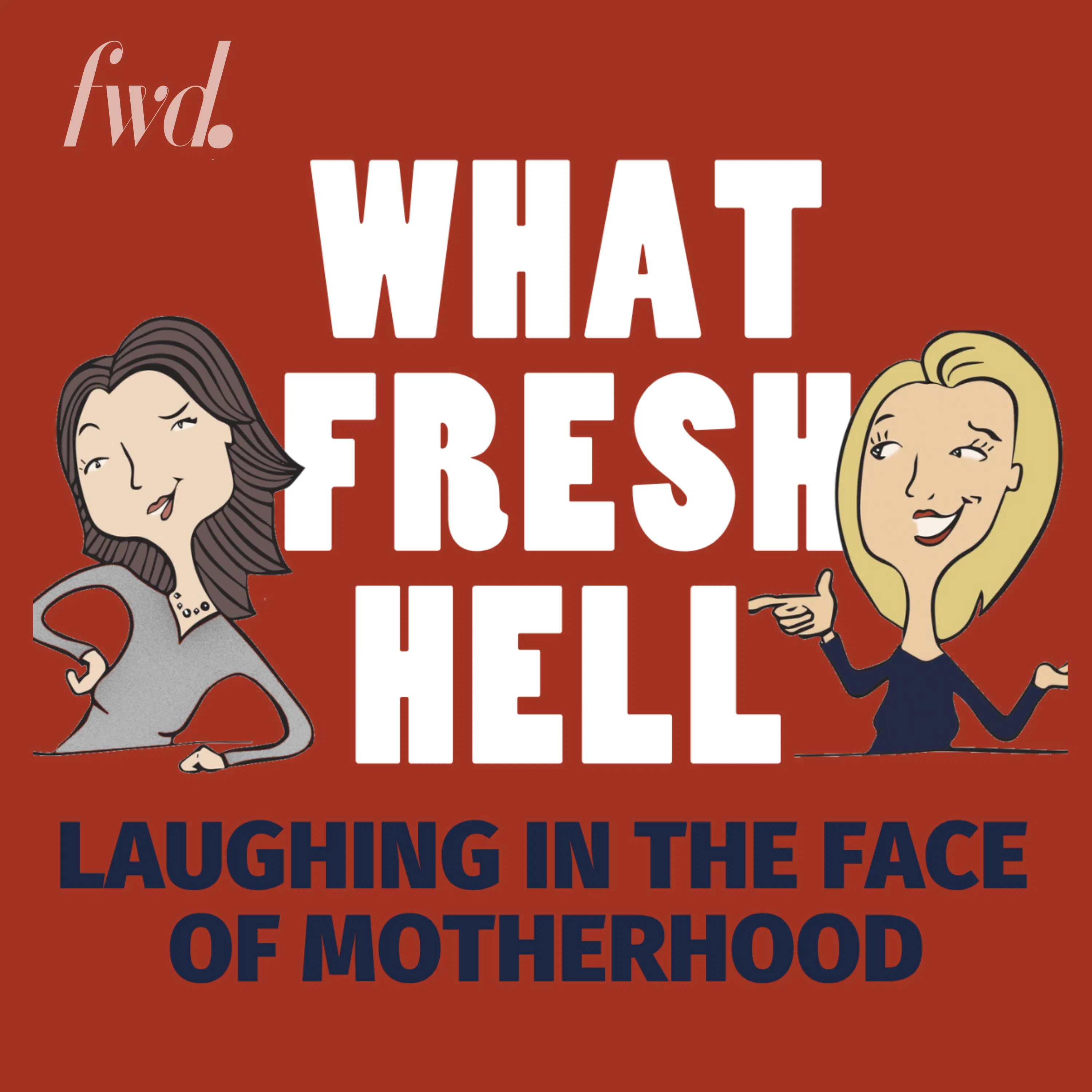
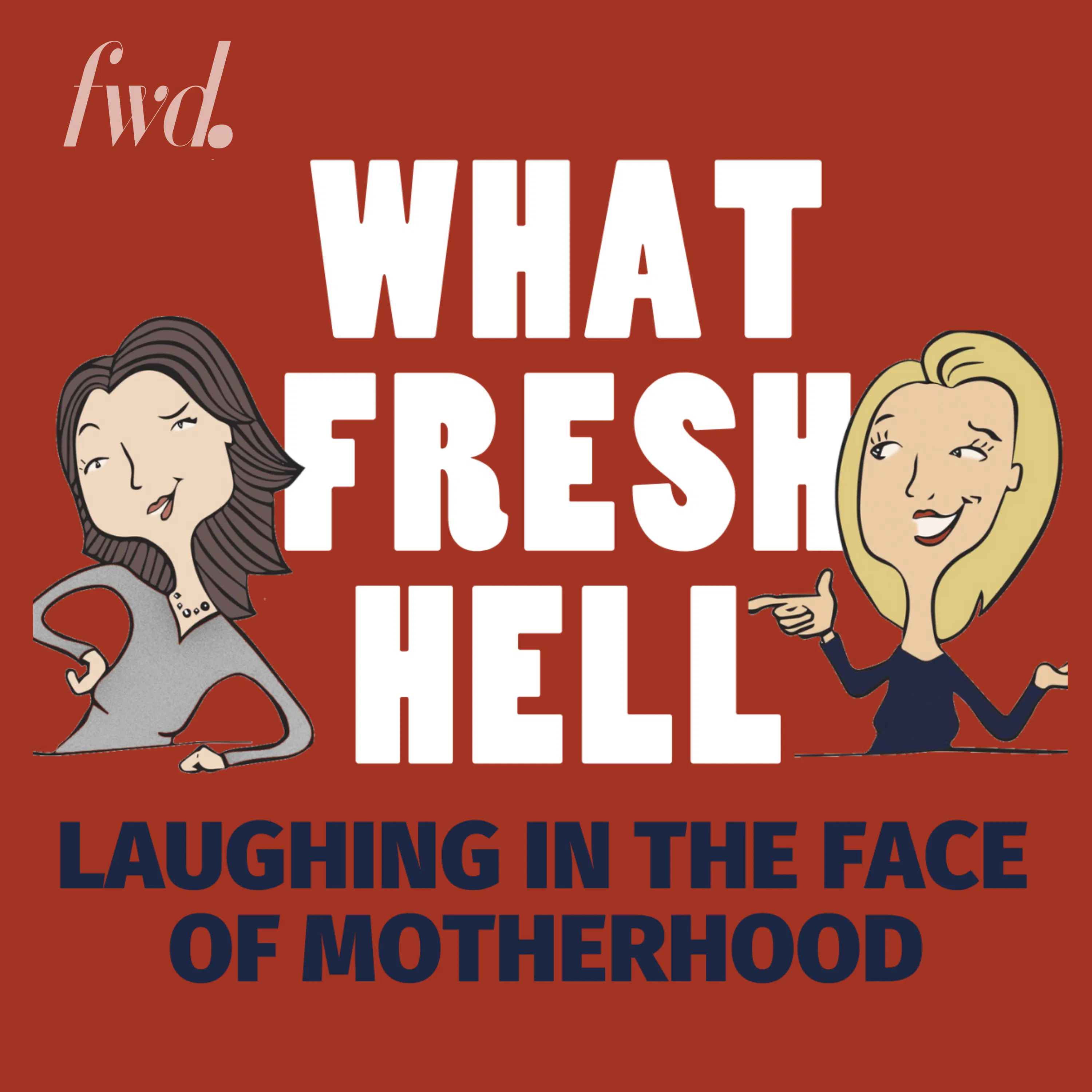
What Fresh Hell: Parenting, Relationships, and Making Life Better, with Two Funny Moms
by Margaret Ables and Amy Wilson
Is this your podcast?Margaret Ables and Amy Wilson are independent podcast creators known for their relatable and humorous takes on the challenges of motherhood. Both busy moms of three, they bring contrasting parenting styles to the conversation—Margaret’s lai…
On the show
From 44 epsHosts
Recent guests
Recent episodes
Fresh Take: Dr. Siggie Cohen on Setting Boundaries Without Dismissing Kids' Feelings
Oct 2, 2026
43m 53s
Which Behaviors Should You Fix and Which Should You ignore?
Sep 30, 2026
44m 17s
Deep Dive: When One Family Member's Moods Are Running the House
Sep 28, 2026
44m 25s
Fresh Take: Fran Hauser on How to Make Time for What Actually Matters
Sep 25, 2026
35m 12s
Transitions
Sep 23, 2026
47m 09s
Insights from recent episode analysis
Audience Interest
- parenting tips and advice
- humor in motherhood
Podcast Focus
- comedy about parenting challenges
- practical parenting strategies
Publishing Consistency
- 1000 episodes produced
- active for 7 years
Platform Reach
- available on major podcast platforms
- growing listener base
Insights are generated by CastFox AI using publicly available data, episode content, and proprietary models.
Most discussed topics
Brands & references
Total monthly reach
Estimated from 25 chart positions in 25 markets.
By chart position
- 🇺🇸US · Parenting#33100K to 300K
- 🇨🇦CA · Parenting#5830K to 100K
- 🇬🇧GB · Parenting#1735K to 30K
- 🇦🇺AU · Parenting#1835K to 30K
- 🇪🇸ES · Parenting#4630K to 100K
- Per-Episode Audience
Est. listeners per new episode within ~30 days
109K to 359K🎙 Daily cadence·1,000 episodes·Last published 3d ago - Monthly Reach
Unique listeners across all episodes (30 days)
363K to 1.2M🇺🇸25%🇨🇦8%🇪🇸8%+22 more - Active Followers
Loyal subscribers who consistently listen
145K to 479K
Market Insights
Platform Distribution
Reach across major podcast platforms, updated hourly
Total Followers
—
Total Plays
—
Total Reviews
—
* Data sourced directly from platform APIs and aggregated hourly across all major podcast directories.
Social Links & Contact
Official channels & resources
Official Website
Login
RSS Feed
Login
| Date | Episode | Topics | Guests | Brands | Places | Keywords | Sponsor | Length | |
|---|---|---|---|---|---|---|---|---|---|
| 10/2/26 |  Fresh Take: Dr. Siggie Cohen on Setting Boundaries Without Dismissing Kids' Feelings | We want our kids to feel validated and heard. We also don't want to engage in five-hour negotiations every time they have to do something they don't want to do. Where's the happy middle? Child development specialist Dr. Siggie Cohen, author of YOU ARE THE PARENT, explains how parents can create a balanced approach. Dr. Cohen explains why well-intentioned parents can end up overexplaining, over-fixing, over-advising, and trying too hard to prevent their children from experiencing difficult emotions. Dr. Cohen and Margaret discuss: The difference between validating emotions and accommodating behavior Why children need to learn both emotional awareness and the ability to function even when they don't feel like doing something How parents can respond when kids are overwhelmed and why stopping inappropriate behavior doesn't mean stopping the emotion behind it Why happiness shouldn't be the ultimate goal for children How to make true, authentic repair after parenting mistakes Here's where you can find Dr. Cohen: https://drsiggie.com @dr.siggie on IG, FB, and YouTube @parenting.with.dr.siggie on TikTok Free resources on her website, including her newsletter signup Buy YOU ARE THE PARENT: https://bookshop.org/a/12099/9780063448643 We love the sponsors that make this show possible! You can always find all the special deals and codes for all our current sponsors on our website: https://www.whatfreshhellpodcast.com/p/promo-codes/ What Fresh Hell is co-hosted by Margaret Ables and Amy Wilson. Learn more about your ad choices. Visit podcastchoices.com/adchoices | 43m 53s | ||||||
| 9/30/26 |  Which Behaviors Should You Fix and Which Should You ignore? | Which kid behaviors need to be addressed in the moment—and which are better ignored? We discuss when to fix behavior and when to let it go, from whining and backtalk to tantrums and other attention-seeking behavior. Topics include: How to reduce power struggles while still establishing clear rules and boundaries Why target behaviors should be specific and observable How to set expectations before challenging behavior happens Practical strategies for handling difficult behavior in public Knowing when a child's behavior is really a signal of an unmet need This episode includes advice from the Child Mind Institute's Complete Guide to Managing Behavior Problems. We love the sponsors that make this show possible! You can always find all the special deals and codes for all our current sponsors on our website: https://www.whatfreshhellpodcast.com/p/promo-codes/ What Fresh Hell is co-hosted by Margaret Ables and Amy Wilson. Learn more about your ad choices. Visit podcastchoices.com/adchoices | 44m 17s | ||||||
| 9/28/26 |  Deep Dive: When One Family Member's Moods Are Running the House | This Deep Dive series is all about reducing the friction between ourselves and our kids when trying to communicate with them, whether it's yelling less, finding real reasons for constant defiance, or picking our battles. What do we do when one of our kid's moods is affecting everyone else in the house? Whether it's anxiety, frustration, rigidity, or plain old temper tantrums, understanding where it's coming from is the first step. But even when we don't allow emotions to be an excuse poor behavior, that misbehavior can happen anyhow—and walking on eggshells is no way to teach the dysregulated person better emotional skills. In this episode, we discuss: the sometimes hidden needs of the other kids in the house why "fair" is not the same thing as "equal" the single most important factor for positive family well-being Here are links to some of the resources mentioned in the episode: Our episode "When One of Our Kids Is Taking All Our Bandwidth" Nicole Schwarz for imperfectfamilies.com: When The Siblings of a Difficult Child Feel Ignored Leigh Anderson for Lifehacker: What to Do If Your Child's Behavior Is Ruining Your Relationship With Your Partner Pamela Li for Parenting for Bain: Emotional Regulation in Children | A Complete Guide Jane Indergaard for ADHD Newsstand: It's Never About Me: The Hidden Needs of Siblings What Fresh Hell is co-hosted by Amy Wilson and Margaret Ables. We love the sponsors that make this show possible! You can always find all the special deals and codes for all our current sponsors on our website: https://www.whatfreshhellpodcast.com/p/promo-codes/ Learn more about your ad choices. Visit podcastchoices.com/adchoices | 44m 25s | ||||||
| 9/25/26 |  Fresh Take: Fran Hauser on How to Make Time for What Actually Matters | How much of your time is actually going toward what matters most to you? Career expert and author Fran Hauser joins us to talk about her new book, 20 MINUTES IS THE NEW HOUR, and how women can rethink their relationship with time. We discuss: The “four Ps” that can quietly consume our time: perfectionism, people-pleasing, procrastination, and padding Applying these ideas to family life How a “to-don't” list can help you get your priorities in order The difference between chronos (clock and calendar time) and kairos (the quality and experience of time) Here's where you can find Fran: https://franhauser.com @fran_hauser on IG and Threads Buy 20 MINUTES IS THE NEW HOUR from Bedford Books: https://www.bedfordbooks.shop/store/p/20minutes We love the sponsors that make this show possible! You can always find all the special deals and codes for all our current sponsors on our website: https://www.whatfreshhellpodcast.com/p/promo-codes/ What Fresh Hell is co-hosted by Margaret Ables and Amy Wilson. Learn more about your ad choices. Visit podcastchoices.com/adchoices | 35m 12s | ||||||
| 9/23/26 |  Transitions | We want our kids to grow and stretch their wings, but that doesn't mean every milestone is easy for parents. We talk about the complicated emotions that come with parenting transitions, from starting school to getting a driver's license to moving into a first apartment. We discuss: Why a child's growing independence can bring sadness, anxiety, nostalgia, and even a loss of identity for parents The "second arrow of suffering," aka beating yourself up for having perfectly normal feelings about your kids' milestones How to talk about your emotions without making your child responsible for them Practical ways to navigate difficult transitions during parenting Here are links to some of the resources mentioned in the episode: CDC: Tips for Encouraging Independence Collischon, Matthias, et. al for the Advances in Life Course research Journal: Parental well-being when children move out: A panel study on short- and long-term effects American Psychological Association: Parents and caregivers are essential to children’s healthy development Hartanto, Andree, et. al for the Communications Psychology Journal: Cultural contexts differentially shape parents’ loneliness and wellbeing during the empty nest period We love the sponsors that make this show possible! You can always find all the special deals and codes for all our current sponsors on our website: https://www.whatfreshhellpodcast.com/p/promo-codes/ What Fresh Hell is co-hosted by Margaret Ables and Amy Wilson. Learn more about your ad choices. Visit podcastchoices.com/adchoices | 47m 09s | ||||||
| 9/21/26 |  DEEP DIVE: What Happened to My Sweet Child? | This Deep Dive series is all about reducing the friction between ourselves and our kids when trying to communicate with them, whether it's yelling less, finding real reasons for constant defiance, or picking our battles. Why do formerly-sunny kids turn overnight into little tornadoes of defiance and aggression? A listener posted this question in our Facebook group: My four-year-old daughter has recently developed a special, defiant, boundary-testing, aggressive version of herself that she saves only for me. I can’t make sense of it at all. WFH, send help! In this episode, we explain why these sudden onsets of periods of dysregulation are completely normal almost every kid will go through this—and a lot of four-year-olds, although not they do not have exclusive ownership of this sort of behavior and why most kids alternate between periods of regulation and dysregulation repeatedly as they grow and mature. These difficult stretches don't mean you're doing anything wrong as a parent. They don't mean you need to lock everything down because your kid will be a tornado forever. But they also don't mean mean you need to become the 24/7 punching bag for your dysregulated kid. Here's what to do instead. Here are links to some of the resources mentioned in the episode: Rebecca Onion for Slate: Why These Child Psych Books From the 1980s Are All Over Parenting Facebook Groups Today Allana Robinson for Mom Halo: Here's why your 4 year old's behaviour is out of control Uncommon Sense Parenting with Allana Robinson: What Exactly Is Stress? Louise Bates Ames: Your Four-Year-Old: Wild and Wonderful Protect your loved ones without spying on them. Go to https://heypolo.com/hell or use code HELL and get 70% off your first year! We love the sponsors that make this show possible! You can always find all the special deals and codes for all our current sponsors on our website: https://www.whatfreshhellpodcast.com/p/promo-codes/ What Fresh Hell is co-hosted by Margaret Ables and Amy Wilson. Learn more about your ad choices. Visit podcastchoices.com/adchoices | 42m 58s | ||||||
| 9/18/26 |  Fresh Take: Dr. Thomas Phelan on What Parents Should Know About Misophonia | Why do ordinary sounds like chewing, slurping, or pen-tapping trigger intense averse reactions in some people? And what does a parent do when it's her own kid screaming at her for having a case of the sniffles? Clinical psychologist Dr. Thomas W. Phelan, author of STOP THAT CHEWING! joins Amy to explain the neurophysiological underpinnings of misophonia, why it can be so difficult for sufferers and their families, and how to stop this involuntary response from completely disrupting your family life. Dr. Phelan and Amy discuss: Why anxiety, OCD, ARFID, and other neurological manifestations often accompany misophonia Why siblings and parents (especially fathers) are most likely to be triggers The impact of misophonia on relationships, school, work, and social life Practical ways to manage misophonia triggers and work towards sustainable solutions Here's where you can find Dr. Phelan: https://www.123magic.com https://stopthatchewing.com Buy STOP THAT CHEWING: https://bookshop.org/a/12099/9798995697824 We love the sponsors that make this show possible! You can always find all the special deals and codes for all our current sponsors on our website: https://www.whatfreshhellpodcast.com/p/promo-codes/ What Fresh Hell is co-hosted by Margaret Ables and Amy Wilson. Learn more about your ad choices. Visit podcastchoices.com/adchoices | 36m 44s | ||||||
| 9/16/26 |  Why Our Friendships Stall (and How to Fix It) | Why does it feel harder than ever to get together with our friends? Why does every "we should hang out soon!" in a group text feel destined to peter out before it actually happens? In this episode, we explore the modern “friendship recession" that started during the pandemic and hasn't changed back. We discuss: the surprising finding that the quantity of one's friendships matters at least as much as the quality how to set the bar for in-person gatherings a little lower why having three old friends is good, but bringing new people in migh be even better practical ways to build more connection into everyday life Here are links to some of the resources mentioned in the episode: Kathleen Walsh for The Cut: "I Should Be Allowed to Cold-Call My Friends” Erica Pandey for Axios: Americans of all ages are spending less time socializing Derek Thompson for The Atlantic: The Anti-Social Century Russell Contreras for Axios: 15,000 churches could close this year amid religious shift in U.S. Daniel A. Cox for Survey Center on American Life blog: Yes, Having More Friends is Better Daniel A. Cox for Survey Center on American Life newsletter: America’s “Friendship Recession” Is Weakening Civic Life H.K. Collins, et. al. for the Proceedings of the Natural Academy of Sciences: Relational diversity in social portfolios predicts well-being What Fresh Hell is co-hosted by Amy Wilson and Margaret Ables. Protect your loved ones without spying on them. Go to https://heypolo.com/hell or use code HELL and get 70% off your first year! We love the sponsors that make this show possible! You can always find all the special deals and codes for all our current sponsors on our website: https://www.whatfreshhellpodcast.com/p/promo-codes/ Learn more about your ad choices. Visit podcastchoices.com/adchoices | 42m 24s | ||||||
| 9/14/26 |  DEEP DIVE: How to Yell Less | This Deep Dive series is all about reducing the friction between ourselves and our kids when trying to communicate with them, whether it's yelling less, finding real reasons for constant defiance, or picking our battles. SHOULD we yell at our kids? No. Do we? Yes. Some of us perhaps a little too often. Kids are hardwired to push our buttons to get attention, and none of us are saints. But while verbal abuse is definitely horrible, hollering “you are about to miss the bus again” is perhaps a little more forgivable—and fixable, as it turns out. And it is definitely better to yell less, not just because you’ll have a more peaceful home, but because the more yelling your household has in it, the more it is likely to have. In this episode Amy and Margaret discuss: Why yelling at your kids might not be as universally toxic as some headlines have claimed Why yelling is, in the end, ineffective Why finding workarounds for the sources of tension might be a more effective path to change than berating yourself for (once again) having raised your voice Here are links to some of the resources mentioned in the episode: Our Fresh Take with Carla Naumburg Our Fresh Take with Emily Edlynn Lisa Belkin for NYT: Can Yelling at Your Kids Be Good? Sue Shellenbarger for WSJ: Talking to Your Kids After You Yell Ming-Te Wang and Sarah Kenny in the Journal of the Society for Research in Child Development: Longitudinal Links Between Fathers’ and Mothers’ Harsh Verbal Discipline and Adolescents’ Conduct Problems and Depressive Symptoms Dr. Emily Edlynn for Psychology Today: The Truth About Parents Who Yell at Kids Stephen Marche for NYT: Why You Should Stop Yelling at Your Kids Protect your loved ones without spying on them. Go to https://heypolo.com/hell or use code HELL and get 70% off your first year! We love the sponsors that make this show possible! You can always find all the special deals and codes for all our current sponsors on our website: https://www.whatfreshhellpodcast.com/p/promo-codes/ What Fresh Hell is co-hosted by Margaret Ables and Amy Wilson. Learn more about your ad choices. Visit podcastchoices.com/adchoices | 45m 39s | ||||||
| 9/11/26 |  Fresh Take: Sona Movsesian on Being the "World's Worst Mom" | What if being a comedian is kind of great for most things, but not so much for parenthood? We talk with Sona Movsesian, co-host of Conan O'Brien Needs a Friend and author of the new book THE WORLD'S WORST MOM, about mom guilt, the mental load, and what becoming a mother taught her about her relationship with her own mom. We discuss: why Sona calls herself the “World's Worst Mom” the special fresh hell of twin boys how you see your mom differently as soon as you become one Here's where you can find Sona: @sonamov on IG Buy THE WORLD'S WORST MOM: https://bookshop.org/a/12099/9798217046706 Listen to the "Conan O'Brien Needs a Friend" podcast Protect your loved ones without spying on them. Go to https://heypolo.com/hell or use code HELL and get 70% off your first year! We love the sponsors that make this show possible! You can always find all the special deals and codes for all our current sponsors on our website: https://www.whatfreshhellpodcast.com/p/promo-codes/ Learn more about your ad choices. Visit podcastchoices.com/adchoices | 34m 12s | ||||||
Want analysis for the episodes below?Free for Pro Submit a request, we'll have your selected episodes analyzed within an hour. Free, at no cost to you, for Pro users. | |||||||||
| 9/9/26 | youth sportsparenting+4 | — | U.S. House Committee on Educationi9 Sports+1 | — | youth sportssports specialization+5 | — | 42m 01s | ||
| 9/7/26 | communication with kidsdefiance+3 | — | VeryWell FamilyAdditude+1 | — | defianceparenting+5 | — | 41m 53s | ||
| 9/4/26 | back-to-school transitionparenting tips+5 | — | Pew Research CenterPennState+2 | — | back-to-schoolparenting+5 | — | 40m 25s | ||
| 9/2/26 | overfunctioningparenting stress+4 | — | In Defense of Mom AnxietyOverfunctioning: The Drive to Do it All, or When Helping Others Is Hurting You+5 | — | overfunctioningparenting+5 | — | 42m 10s | ||
| 8/31/26 | achievement pressureparenting+3 | Jennifer Wallace | Wall Street JournalWashington Post+2 | — | achievement pressureparenting+4 | — | 33m 09s | ||
| 8/28/26 | mental healthacademic pressure+3 | Dr. Stuart Slavin | What Fresh HellTHE SUCCESS TRAP | — | depressionanxiety+5 | — | 39m 13s | ||
| 8/26/26 | parentingcommunication+4 | — | Grown and FlowniMom Blog+2 | — | parentingcommunication+4 | — | 42m 56s | ||
| 8/24/26 | youth sportsparenting+3 | Linda Flanagan | Positive Coaching AllianceAspen Institute+5 | — | kids sportsparenting challenges+3 | — | 33m 46s | ||
| 8/21/26 | health advocacypatient empowerment+3 | Dr. Lucy McBride | What Fresh HellBookshop+1 | — | healthcarepatient personality+3 | — | 35m 37s | ||
| 8/19/26 | outsourcing household tasksmental load+4 | — | Scary MommySubstack+2 | — | outsourcingmental load+5 | — | 42m 43s | ||
| 8/17/26 |  DEEP DIVE: Are Our Kids Overscheduled? | This "Deep Dive" series revisits a few of our past episodes on back-to-school challenges such as the morning rush, school projects which require lots of parental oversight, and how to help our kids navigate intensifying academic pressure. So many of us spend hours chauffeuring our kids back and forth to their myriad activities. Why are kids so overloaded with activities these days, and can we get off of this ride? Here are some parenting strategies for navigating this issue. Amy and Margaret discuss: Why kids are so overscheduled these days How overscheduling really affects kids, beyond the mom guilt-inducing headlines What questions to ask when assessing if our kids are overscheduled Here are links to some of the resources mentioned in the episode: Dr Shimi King: Overscheduling Your Kids Isn’t the Fast-Track to Success it Once Was Solution Health: Overbooked Kids: The Overscheduled Crisis Anna Nordberg for Slate: The Fine Art of Underscheduling Jill Barshay for Mind Shift: Overscheduling Kids’ Lives Causes Depression and Anxiety, Study Finds Carolina Caetano, et. al for Economics of Education Review: Are children spending too much time on enrichment activities? What Fresh Hell is co-hosted by Amy Wilson and Margaret Ables. We love the sponsors that make this show possible! You can always find all the special deals and codes for all our current sponsors on our website: https://www.whatfreshhellpodcast.com/p/promo-codes/ Learn more about your ad choices. Visit podcastchoices.com/adchoices | 42m 25s | ||||||
| 8/14/26 |  Fresh Take: Dr. Özgür Bolat on the Real Science of Motivating Kids | We think of rewarding kids as a surefire way to get the behavior we want. But what if rewards mainly serve to underline our children's intrinsic drive to succeed? Dr. Özgür Bolat, education scientist and author of The Reward Trap: Why Rewards Backfire and the Real Science for Motivating Kids, explains why rewarding kids may actually undermine their motivation in the long run. As Dr. Bolat explains, there's a difference between motivation and compliance. Rewards can get children to do something, but they don't necessarily create the ownership, engagement, or intrinsic motivation parents actually want. In this episode, we discuss: How rewards can change the way children view an activity Hedonic adaptation and why rewards often need to get bigger to have the same effect The connection between rewards, praise, and controlling parenting How autonomy-enhancing parenting differs from control Why family chores can help children develop a sense of responsibility and prosocial values Mastery orientation vs. performance orientation, and how each affects children's anxiety and motivation Why focusing too heavily on grades, competition, and achievement can create performance anxiety How parents can encourage curiosity and help kids find motivation even in subjects they don't initially enjoy The role of flow in learning and why children become deeply engaged when a task matches their skill level Why differentiated learning matters—and what happens when work is too easy or too difficult How rewards and competition in school can contribute to learned helplessness Why understanding big concepts can actually help children remember facts and information Dr. Bolat's PEACE model for building connection with children How getting curious about the reason behind a child's behavior can reveal what they actually need Why a homework problem may be a symptom of a much bigger issue around fear, judgment, or connection Here's where you can find Dr. Bolat: https://ozgurbolat.co.uk/ LinkedIn @dr.ozgurbolat on IG https://ozgurbolat.substack.com/ Buy THE REWARD TRAP: https://bookshop.org/a/12099/9798893961805 What Fresh Hell is co-hosted by Amy Wilson and Margaret Ables. We love the sponsors that make this show possible! You can always find all the special deals and codes for all our current sponsors on our website: https://www.whatfreshhellpodcast.com/p/promo-codes/ Learn more about your ad choices. Visit podcastchoices.com/adchoices | 33m 23s | ||||||
| 8/12/26 |  Helping Our Kids Feel Seen | What happens when one child’s needs take up most of a family’s attention? Even when parents are doing their best, it can be easy for another child to quietly become the “easy” one—the independent kid, the high achiever, the people-pleaser who never seems to need anything. In this episode, we discuss: What the term glass child means and why some children can become overlooked How hyperindependence can be both a strength and a sign that a child doesn't feel comfortable asking for help Why people-pleasing isn't inherently a bad quality—and when it can become a problem How being the “easy,” responsible, or high-achieving child can lead to perfectionism Why some kids learn to hide anger, sadness, resentment, or other difficult emotions The importance of making space for children to express complicated feelings without judgment How small-T trauma and difficult family dynamics can affect kids even when their experiences don't seem “bad enough” compared with someone else's Why children may act out or seek negative attention when they're feeling overlooked How parents can use short, intentional moments of one-on-one connection to help every child feel seen The idea behind the 7-minute rule: finding small windows of distraction-free connection throughout the day How connection can look different at different ages, from play and cuddling with young children to mentorship and open communication with teens Why you don't need to perfectly balance your attention every single day to make your kids feel loved and supported Here are links to some of the resources mentioned in the episode: Jenn Lonzer for the Cleveland Clinic: Always Coping, Rarely Seen: Explaining Glass Child Syndrome Dr Becky Kennedy of "Good Inside" blog: What is the 777 Rule in Parenting? Corinne Masur for Psychology Today: Helping Kids Feel They Matter Our episode When One of Our Kids Takes Up All of Our Bandwidth Our Fresh Take with Sara Hirsh Bordo Harlan Cohen on IG What Fresh Hell is co-hosted by Amy Wilson and Margaret Ables. We love the sponsors that make this show possible! You can always find all the special deals and codes for all our current sponsors on our website: https://www.whatfreshhellpodcast.com/p/promo-codes/ Learn more about your ad choices. Visit podcastchoices.com/adchoices | 43m 00s | ||||||
| 8/10/26 |  DEEP DIVE: When School Projects Become Parents' Projects (and How to Push Back) | This "Deep Dive" series revisits a few of our past episodes on back-to-school challenges such as the morning rush, school projects which require lots of parental oversight, and how to help our kids navigate intensifying academic pressure. Whether it’s the science fair, the pinewood derby, or a pre-K shoebox diorama, sooner or later every kid gets assigned a school project that is, without question, a PARENTS' project. What four-year-old can fashion her own “Dress As Your Patron Saint” costume? What sixth-grader can attempt proper MLA citation format without extreme maternal participation? It’s not so much the projects we mind— it’s the feeling that however we handle it, we’re doing it wrong. If we make the origami cranes for the kid, we’re snowplow parents. If we send them in with a social studies project they made entirely themselves out of paper plates and crayons, we also own their cheek-burning shame when their projects pale in comparison to the professionally produced ones of their peers. In this episode, we discuss how to discern the right amount of help such projects require: not too much, and not too little. Sure, we can help our kids win the battle of the pinewood derby… but we really want to win the war of having our kids who can someday accomplish things all by themselves. Here’s links to research and other writing we discuss in this episode: Susan Messina for Huffington Post: That Fake Science Fair Poster That Went Viral? I Made It. Here's Why Dana Goldstein for The Atlantic: Don't Help Your Kids With Their Homework The Broken Compass: Parental Involvement With Children’s Education Dr. Keith Robinson and Dr. Angel Harris for the New York Times: Parental Involvement Is Overrated Wendy Wisner for Scary Mommy: It’s Obvious When Parents Complete Their Kid’s School Projects, So Please Stop easybib.com (Amy recommends for an easier way to create bibliographies) sciencebuddies.org (Amy recommends as a resource to choose science fair projects) What Fresh Hell is co-hosted by Amy Wilson and Margaret Ables. We love the sponsors that make this show possible! You can always find all the special deals and codes for all our current sponsors on our website: https://www.whatfreshhellpodcast.com/p/promo-codes/ Learn more about your ad choices. Visit podcastchoices.com/adchoices | 48m 38s | ||||||
| 8/7/26 |  Fresh Take: Michael McLeod on ADHD and Executive Function | Kids (and adults) with ADHD don't actually have a deficit of attention. Today, Attention Deficit Hyperactivity Disorder is more properly understood as a deficit of executive function— and as this week's guest Michael McLeod, founder of GrowNOW ADHD and author of THE EXECUTIVE FUNCTION PLAYBOOK, explains, executive function means a whole lot more than a messy backpack. To help kids with ADHD succeed, Michael argues, parents need to help children strengthen the internal skills that lead to lifelong independence. In this interview, drawing from his decades of experience working with families whose kids are growing up with ADHD, Michael explains his four-pillar framework for developing executive functioning skills: self-awareness, self-regulation, self-motivation, and self-evaluation. In this episode, you'll learn: How self-awareness and "time blindness" can affect daily life when you have ADHD Why novel experiences are crucial opportunities for kids with ADHD How exposure to screens intensifies ADHD symptoms Why negative attention feels great to the ADHD brain How to support ADHD kids without lowering expectations for their capability Here's where you can find Michael: www. grownowadhd.com @grownowADHD on IG, FB, and YouTube Buy THE EXECUTIVE FUNCTION PLAYBOOK: https://bookshop.org/a/12099/9781394309153 Buy the accompanying workbook: https://bookshop.org/a/12099/9781394364589 What Fresh Hell is co-hosted by Amy Wilson and Margaret Ables. We love the sponsors that make this show possible! You can always find all the special deals and codes for all our current sponsors on our website: https://www.whatfreshhellpodcast.com/p/promo-codes/ Learn more about your ad choices. Visit podcastchoices.com/adchoices | 42m 45s | ||||||
| 7/20/26 | screen timeaddictive technologies+3 | Gaia Bernstein | Big TechBig Tobacco+2 | — | screen timeaddiction+5 | — | 32m 39s | ||
| 7/17/26 | parenting challengesemotional reactions+4 | Dr. Cassidy Freitas | MOM NEEDS A MOMENTHolding Space+1 | — | parentingemotional triggers+5 | — | 38m 55s | ||
| 7/15/26 | supporting kids' interestsexploration vs specialization+3 | — | Business InsiderHuffPost+2 | — | child interestsparenting+5 | — | 42m 53s | ||
| 7/13/26 | screen timedigital responsibility+3 | Catherine Pearlman | The Family CoachFirst Phone: A Child's Guide To Digital Responsibility, Safety, and Etiquette | — | screen timekids+5 | — | 33m 52s | ||
| 7/10/26 | codependencyco-parenting+4 | Laura Clery | Idiotbookshop.org+1 | — | Laura Clerycodependency+6 | — | 42m 49s | ||
| 7/8/26 | parentingresponsibility+3 | — | What Fresh Hell | — | parentinggrownup+5 | — | 40m 23s | ||
| 7/6/26 | screen timeeffects of technology on children+4 | Susan Linn | Mr. Rogers' Neighborhoodfairplayforkids.org+2 | — | screen timebig tech+5 | — | 30m 22s | ||
| 7/3/26 | parenting challengeshumor in parenting+3 | — | What Fresh HellFacebook | — | parentinghumor+3 | — | 48m 45s | ||
| 7/1/26 | change managementtransition+4 | — | TalkspaceNorth Highland+2 | Sharon Playhouse | changetransition+5 | — | 44m 30s | ||
| 6/29/26 | traveling with familyparenting tips+4 | — | The Boston GlobeSmart Women Travelers+1 | — | travel tipsparenting+5 | — | 44m 02s | ||
| 6/12/26 | resilienceparenting+4 | Talia Kovacs | What Fresh Hell | — | resilienceparenting+5 | — | 36m 07s | ||
| 6/10/26 | parenting tipslistener feedback+3 | — | What Fresh Hellpodcastchoices.com | — | life-changertravel hacks+3 | — | 45m 19s | ||
| 6/8/26 | vacation tipsextended family+4 | — | Facebook | — | vacationextended family+5 | What Fresh Hell | 40m 05s | ||
| 6/5/26 | hormoneshealth+5 | Gillian Goddard | The Savvy PatientThe Hormone Loop: An Empowering Guide to Restoring Hormonal Harmony from Puberty to Menopause | — | hormonesmetabolism+6 | — | 40m 38s | ||
| 6/3/26 | Gen Z slangparenting+3 | — | What Fresh HellWhat Fresh Hell Plus | — | Gen Zslang+5 | Supporting Castnone | 44m 46s | ||
| 6/1/26 | helping othersmotherhood+4 | — | LA Times | — | helpmotherhood+5 | — | 41m 32s | ||
| 5/29/26 | divorcecustody disputes+5 | Kristen HolstromSamantha McBride | Custody Queens | — | divorcecustody+6 | — | 45m 52s | ||
| 5/27/26 | nostalgiaparenting+4 | — | University of Florida Medical Physiology OnlineThe British Psychological Society+4 | — | nostalgiaparenthood+5 | — | 45m 09s | ||
| 5/25/26 | advocating for needsmotherhood+3 | Mara Glatzel | NeedyNEEDY: How To Advocate for Your Needs and Claim Your Sovereignty | — | needsmotherhood+3 | — | 34m 10s | ||
| 5/22/26 | emotional truth of motherhoodmaternal ambivalence+3 | Dr. Margo Lowy | What Fresh Hellbookshop.org+2 | — | motherhoodambivalence+5 | — | 36m 40s | ||
| 5/8/26 | social media and motherhoodpostpartum mental health+4 | Rachael Shepard-OhtaCaitlin Wilder | You're So RightWhat Fresh Hell+2 | — | motherhoodsocial media+6 | — | 46m 11s | ||
| 5/6/26 | American parentingcultural expectations+4 | — | AmericanParisian | — | parenting stylescultural comparison+3 | — | 44m 03s | ||
| 5/4/26 | special needs parentingneurodiversity+4 | Olivia Martinez-Hauge | The Center for Connection and Neurodiversity | — | special needsneurodiversity+5 | — | 34m 45s | ||
| 5/1/26 | animal behaviorparenting+4 | Elizabeth Preston | The Creatures' Guide to Caring | — | parentinganimal behavior+5 | — | 35m 39s | ||
| 4/29/26 | choresparenting+4 | Michaeleen Doucleff | Psychology TodayJohns Hopkins Medicine+2 | — | choresparenting tips+4 | — | 44m 47s | ||
| 4/27/26 | autismparenting+3 | Dr. Lynn Koegel | Stanford School of MedicineautismPRThelp.com+2 | — | autismparenting+5 | — | 36m 21s | ||
| 4/24/26 | mental loadwomen's work+4 | Leah Ruppanner | The Miss Perceived PodcastDRAINED | — | mental loadoverwhelmed+3 | — | 45m 13s | ||
| 4/22/26 | emotional intelligenceparenting+4 | — | Ohio University ExtensionBrigham Young University+1 | — | emotional intelligenceEQ+5 | — | 44m 05s | ||
| 4/20/26 | parenting autismspecial needs+4 | Kate Swenson | Finding Cooper's VoiceThe More Than Project+1 | — | autismparenting+6 | — | 32m 25s | ||
| 4/17/26 | influencer familieschildhood and content+4 | Fortesa Latifi | What Fresh HellLIKE, FOLLOW, SUBSCRIBE | — | influencerparenting+5 | — | 43m 47s | ||
| 4/15/26 | parenting milestonesdaily life changes+3 | Christina Martin | What Fresh Hell | — | parentingmilestones+3 | — | 44m 06s | ||
| 4/13/26 | disabilitiesparenting+4 | Meg Zucker | Don’t Hide It, Flaunt ItBorn Extraordinary: Empowering Children with Differences & Disabilities | — | disabilitydifference+5 | — | 30m 22s | ||
| 4/10/26 | parentingcollege transition+3 | Christina Geist | What Fresh Hellbookshop.org+1 | — | college preparationparenting tips+3 | — | 41m 51s | ||
| 4/8/26 | uncertaintyparenting+4 | — | — | — | Ellsberg Paradoxamygdala+5 | — | 41m 11s | ||









Showing 59 of 1000
Pitch Fit is a Pro feature
See how bookable this show is for guests, which brands already advertise, the per-episode ad value, and the best-fit guest and sponsor profile. The numbers are blurred on the free plan.
How readily this show books outside guests like you.
How proven this show is for host-read sponsorships.
For Guests
ProFor Advertisers
ProUpgrade to Pro to unlock guest cadence, sponsor categories, fit scores, and per-episode ad value for this show.
Similar Audience Demographics
Podcasts that attract a similar listener profile

The Girl Next Door Podcast
Kelsey Wharton and Erica Ladd

Midlife Lady Leisure Pursuits
Meagan Francis and Sarah Powers

Edit Your Life | Simplify + Declutter Your Home, Time, and Mental Space
Christine Koh

Best of Both Worlds Podcast
iHeartPodcasts

Good Inside with Dr. Becky
Good Inside

The Lazy Genius Podcast
Kendra, The Lazy Genius

Raising Good Humans
Aliza Pressman
Distribution & Reach
About the show, platforms, and key insights.
Distribution & Reach
About the show, platforms, and key insights.
Margaret Ables and Amy Wilson are independent podcast creators known for their relatable and humorous takes on the challenges of motherhood. Both busy moms of three, they bring contrasting parenting styles to the conversation—Margaret’s laid-back approach complements Amy’s structured, organized mindset, making their dynamic engaging and insightful. “What Fresh Hell: Laughing in the Face of Motherhood” stands out by blending parenting tips with comedic commentary, addressing the daily hurdles faced by parents. The show’s format features light-hearted discussions on various parenting topics, allowing listeners to find humor in their struggles while feeling a sense of community and support. The podcast appeals to parents, particularly mothers, seeking laughter and reassurance in their parenting journey. With an estimated audience of 344K to 1.1M, listeners value the blend of humor and practical advice, as it helps alleviate the stresses of parenting and fosters a sense of camaraderie among those navigating similar challenges.
Platforms
Audience
family, kids, teens
Key insights
What the show covers
- comedy about parenting challenges
- practical parenting strategies
- personal stories from moms
- lighthearted discussions on motherhood
Audience interests
- parenting tips and advice
- humor in motherhood
- support for busy moms
- different parenting styles
Platform reach
- available on major podcast platforms
- growing listener base
- potential for social media presence
- unknown follower count across platforms
Publishing consistency
- 1000 episodes produced
- active for 7 years
- weekly episode release
- consistent engagement with audience
Chart history for What Fresh Hell: Parenting, Relationships, and Making Life Better, with Two Funny Moms
Peaked at #8 in CL, top 10 in 2 of 33 tracked markets, currently #8 in CL.
| Market | Genre | Peak | Current | Trend |
|---|---|---|---|---|
| CL | — | #8 | #8 | — |
| VN | — | #10 | #10 | — |
| HK | — | #11 | #11 | — |
| GR | — | #15 | #15 | — |
| United States | — | #33 | #33 | — |
| SA | — | #34 | #34 | — |
| CL | — | #37 | #37 | — |
| KE | — | #41 | #41 | — |
| Spain | — | #46 | #46 | — |
| PT | — | #48 | #48 | — |
| GR | — | #48 | #48 | — |
| India | — | #54 | #54 | — |
| Canada | — | #58 | #58 | — |
| Brazil | — | #84 | #84 | — |
| Ireland | — | #90 | #90 | — |
| MY | — | #93 | #93 | — |
| BE | — | #100 | #100 | — |
| Mexico | — | #100 | #100 | — |
| South Africa | — | #110 | #110 | — |
| VN | — | #114 | #114 | — |
Chart Positions
33 placements across 25 markets.
Chart Positions
33 placements across 25 markets.