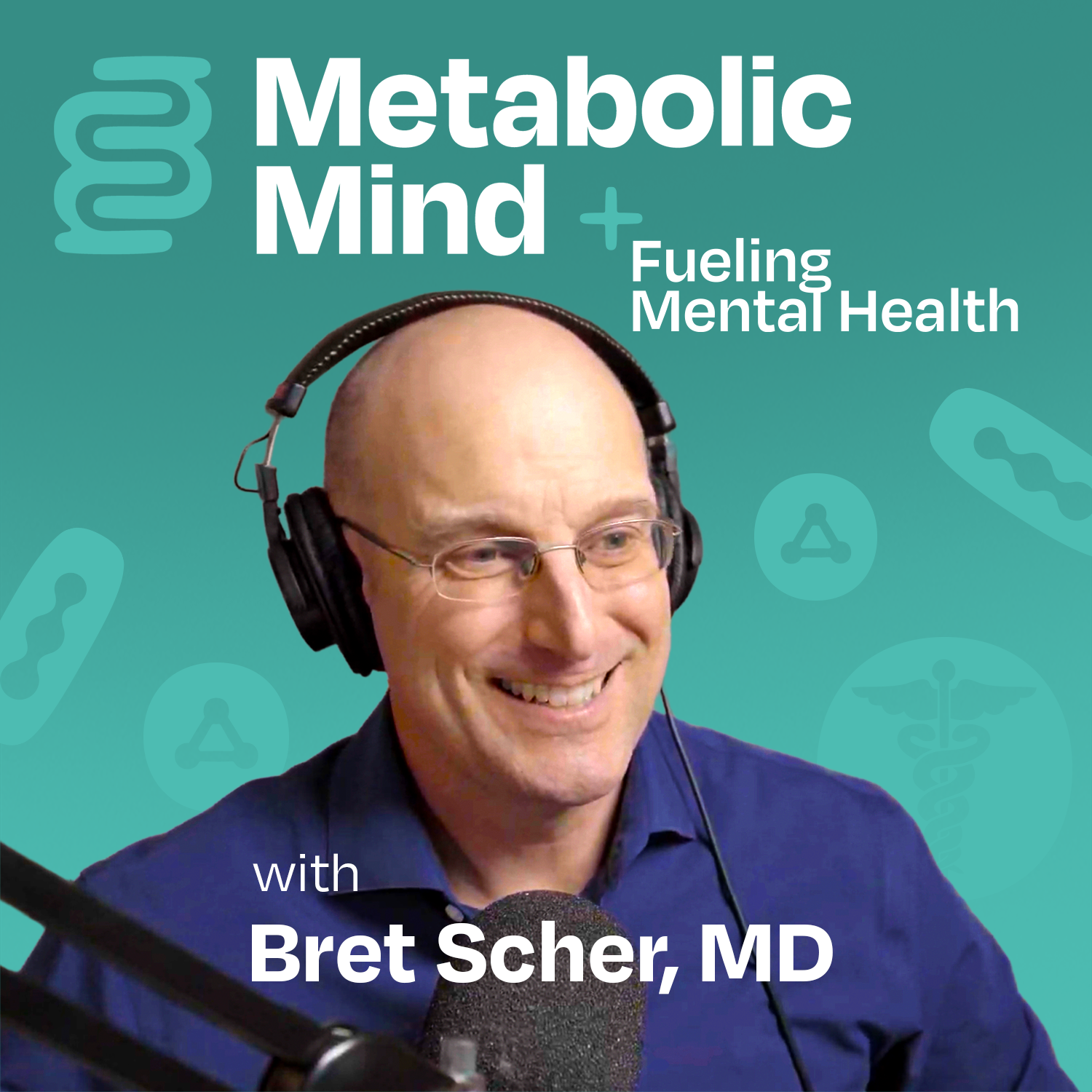
Metabolic Mind
by Bret Scher
Is this your podcast?Bret Scher is an independent podcast creator known for his focus on the intersection of health and mental wellness. With a background in medicine, he brings a thoughtful perspective to complex health topics, particularly the role of metabol…
On the show
From 50 epsHosts
Recent guests
Recent episodes
BITESIZE: What “Healthy” Food Labels May Be Hiding
Oct 15, 2026
7m 53s
Dr. Bill Schindler on Ancestral Diets and Modern Nutrition
Oct 13, 2026
1h 00m 16s
BITESIZE: Ketogenic Diet Dangerous? Breaking Down the New Study
Oct 11, 2026
6m 53s
Q&A: Food Noise, Aging on Low-Carb, Carnivore Microbiome & Keto Snacks
Oct 8, 2026
19m 34s
Dementia Prevention Through a Metabolic Lens
Oct 6, 2026
40m 56s
Insights from recent episode analysis
Audience Interest
- mental health treatment options
- metabolism and brain health
Podcast Focus
- metabolic psychiatry exploration
- treatment of mental illnesses
Publishing Consistency
- 187 episodes produced
- active for 3 years
Platform Reach
- YouTube channel available
- no other platforms detected
Insights are generated by CastFox AI using publicly available data, episode content, and proprietary models.
Most discussed topics
Brands & references
Total monthly reach
Blended from 3 signals.
Built from
By chart position
- 🇺🇸United States · Mental HealthHOME#1931.2K to 7.2K
- 🇬🇧United Kingdom · Mental Health#120239 to 1.4K
- 🇬🇷GR · Mental Health#8237 to 1.4K
- 🇨🇦Canada · Mental Health#125143 to 823
- 🇿🇦ZA · Mental Health#32126 to 729
- Per-Episode Audience
Est. listeners per new episode within ~30 days
2.3K to 13K🎙 Daily cadence·242 episodes·Last published 4d ago - Monthly Reach
Unique listeners across all episodes (30 days)
7.8K to 45K🇺🇸53%🇬🇧10%🇬🇷10%+8 more - Active Followers
Loyal subscribers who consistently listen
3.1K to 18K283 real followers tracked across platforms
Market Insights
Platform Distribution
Reach across major podcast platforms, updated hourly
Total Followers
—
Total Plays
—
Total Reviews
—
* Data sourced directly from platform APIs and aggregated hourly across all major podcast directories.
Social Links & Contact
Official channels & resources
Official Website
Login
RSS Feed
Login
| Date | Episode | Topics | Guests | Brands | Places | Keywords | Sponsor | Length | |
|---|---|---|---|---|---|---|---|---|---|
| 10/15/26 | BITESIZE: What “Healthy” Food Labels May Be Hiding | Some “healthy” foods may be working against your metabolic health.In this episode of Metabolic Mind, Dr. Bret Scher examines how products such as agave nectar, commercial green juices, low-fat fruit yogurt, and açaí bowls can create a health halo while delivering large amounts of rapidly digestible sugar.Dr. Scher explains how liquid carbohydrates, added sugars, and concentrated fructose may affect satiety, insulin response, hunger, and other markers of metabolic health. He also examines how front-of-package phrases such as “natural,” “low fat,” “made with real fruit,” and “superfood” can make certain products appear healthier than their nutrition labels suggest.The episode covers:How liquid and rapidly digestible carbohydrates affect satiety differently from whole foodsWhy agave nectar’s low glycemic index does not tell the full story about how its fructose content is processed by the liverHow removing fiber and adding fruit can change the metabolic effects of some commercial green juicesHow some low-fat fruit yogurts replace fat with added sugarWhy some açaí bowls can deliver a large, rapidly absorbed sugar loadHow to assess total carbohydrates, added sugar, and ingredient listsWhy front-of-package health claims may offer an incomplete picture of a food’s nutritional contentThis episode offers a practical guide to recognizing misleading health claims and evaluating nutrition labels through a metabolic health lens.👉 Want to stay up to date with the latest research on metabolic health and metabolic psychiatry? Sign up for our newsletter to stay informed: metabolicmind.org/about-us/newsletter/🔎 Have questions about how to apply metabolic therapies effectively? Submit them at metabolicmind.org/questions to be featured in a future Metabolic Mailbag episode.#MetabolicMind #KetogenicTherapy #FoodAsMedicineExpert Featured:Bret Scher, MD - Baszucki Group Medical Director & Host of the Metabolic Mind Podcasthttps://www.linkedin.com/in/bret-scher-08baaa102/https://www.instagram.com/drscher858/?hl=enhttps://x.com/bschermdFree CME Clinician Trainings:Are you a clinician who would like to learn more about the science behind these therapies and how to implement them in practice? Earn CME with our growing library of courses from some of the top experts in the field including Dr. Chris Palmer, Dr. Georgia Ede, Dr. Matthew Bernstein, Dr. Mariela Glandt, Dr. Deanna Kelly, Dr. Julie Milder, Dr. Zoltan Sarnyai, and Dr. Bret Scher with more coming soon.Our courses have been made FREE by grants from Baszucki Group, so we can spread these powerful therapies as widely as possible. Earn CME/CNE credits: https://www.metabolicmind.org/for-clinicians/trainings-courses/?utm_medium=organic-social&utm_source=youtube&utm_campaign=cme-ytFollow our channel for more information and education from Bret Scher, MD, FACC, including interviews with leading experts in Metabolic Psychiatry.Learn more about metabolic psychiatry and find helpful resources at https://metabolicmind.org/About us:Metabolic Mind is a non-profit initiative of Baszucki Group working to transform the study and treatment of mental disorders by exploring the connection between metabolism and brain health. We leverage the science of metabolic psychiatry and personal stories to offer education, community, and hope to people struggling with mental health challenges and those who care for them.Our channel is for informational purposes only. We are not providing individual or group medical or healthcare advice nor establishing a provider-patient relationship. Many of the interventions we discuss can have dramatic or potentially dangerous effects if done without proper supervision. Consult your healthcare provider before changing your lifestyle or medications. | 7m 53s | ||||||
| 10/13/26 | Dr. Bill Schindler on Ancestral Diets and Modern Nutrition | How did humans go from being deeply connected to our food to barely knowing where it comes from or how it was made?In this episode of Metabolic Mind, Dr. Bret Scher speaks with experimental archaeologist and chef Dr. Bill Schindler about what human evolution can teach us about food, nutrition, and the way we eat today. Drawing on archaeology and his time with hunter-gatherer communities around the world, Dr. Schindler traces how human diets changed through hunting, food processing, agriculture, and eventually the modern food system.A major turning point came with agriculture. Dr. Schindler describes how dietary diversity declined as societies became more dependent on a smaller number of staple crops, while people also became increasingly removed from the source and preparation of their food.They cover:How hunting and food processing shaped human evolutionWhat changed when humans transitioned to agricultureWhat Dr. Schindler has learned from spending time with modern hunter-gatherer communitiesWhy those communities cannot be viewed as untouched examples of ancestral lifeHow culture and environment shape what different populations eatWhy nourishment involves more than macronutrients aloneHow food traditions can create a deeper connection to what we eatWhy Dr. Schindler and his wife Christina created the Modern Stone Age KitchenHow fermentation, sourdough, nose-to-tail cooking, and other traditional techniques are used in a modern restaurantWhy the way food is prepared may be just as important as the ingredients themselvesAt the Modern Stone Age Kitchen, Dr. Schindler has tried to bring those lessons into everyday life by making familiar foods from scratch and using traditional preparation methods to improve nutrient density and reconnect people with the story behind their food.🔎 Have questions about how to apply metabolic therapies effectively? Submit them at metabolicmind.org/questions to be featured in a future Metabolic Mailbag episode.#AncestralNutrition #MetabolicMind #FoodAsMedicineExpert Featured:Dr. Bill Schindlerhttps://www.instagram.com/drbillschindler/?hl=enhttps://www.linkedin.com/in/dr-bill-schindler-46243211https://www.facebook.com/drbillschindler/https://www.facebook.com/modernstoneagekitchen/https://www.instagram.com/themodernstoneagehttps://www.youtube.com/@themodernstoneageResources Mentioned:https://modernstoneage.com/https://modernstoneage.circle.so/ancestral-table-homehttps://modernstoneage.com/shop/p/eat-like-a-human-autographed-bookFree CME Clinician Trainings:Are you a clinician who would like to learn more about the science behind these therapies and how to implement them in practice? Earn CME with our growing library of courses from some of the top experts in the field including Dr. Chris Palmer, Dr. Georgia Ede, Dr. Matthew Bernstein, Dr. Mariela Glandt, Dr. Deanna Kelly, Dr. Julie Milder, Dr. Zoltan Sarnyai, and Dr. Bret Scher with more coming soon.Our courses have been made FREE by grants from Baszucki Group, so we can spread these powerful therapies as widely as possible. Earn CME/CNE credits: https://www.metabolicmind.org/for-clinicians/trainings-courses/?utm_medium=organic-social&utm_source=youtube&utm_campaign=cme-ytFollow our channel for more information and education from Bret Scher, MD, FACC, including interviews with leading experts in Metabolic Psychiatry.Learn more about metabolic psychiatry and find helpful resources at https://metabolicmind.org/About us:Metabolic Mind is a non-profit initiative of Baszucki Group working to transform the study and treatment of mental disorders by exploring the connection between metabolism and brain health. We leverage the science of metabolic psychiatry and personal stories to offer education, community, and hope to people struggling with mental health challenges and those who care for them.Our channel is for informational purposes only. We are not providing individual or group medical or healthcare advice nor establishing a provider-patient relationship. Many of the interventions we discuss can have dramatic or potentially dangerous effects if done without proper supervision. Consult your healthcare provider before changing your lifestyle or medications. | 1h 00m 16s | ||||||
| 10/11/26 | BITESIZE: Ketogenic Diet Dangerous? Breaking Down the New Study | A new study claims ketogenic diets cause liver damage and early death. Here’s what you need to know.A 2025 mouse study recently made headlines, warning that ketogenic diets may lead to fatty liver, high triglycerides, and a shortened lifespan.But here’s the catch:These findings were in genetically altered mice fed a 90% fat diet, filled with highly synthetic components, and they contradict what human trials have shown again and again.In real people, ketogenic diets have consistently been linked to:✅ Lower liver fat and improved liver enzymes✅ Reduced triglycerides✅ Improved insulin sensitivity and A1c✅ Medication reduction or even remission in type 2 diabetesSo why the disconnect?In this video, Dr. Bret Scher breaks it down:What the mouse study really showed (and what it didn’t)Key biological differences between mice and humansWhy human evidence still supports a well-formulated ketogenic diet’s safety and benefitsWhat to look for when evaluating nutrition headlinesAnimal data can provide hints and raise important questions, but when human trials show clear benefits, that’s the signal we should trust.👉 Learn more about the powerful effect of metabolic therapies on the brain and body by subscribing to Metabolic Mind: https://www.youtube.com/@metabolicmind.#MetabolicMind #KetogenicTherapy #FoodAsMedicineExpert Featured:Dr. Bret ScherBaszucki Group Medical Directorhttps://x.com/bschermdResources Mentioned:A long-term ketogenic diet causes hyperlipidemia, liver dysfunction, and glucose intolerance from impaired insulin secretion in micehttps://www.science.org/doi/10.1126/sciadv.adx2752Free CME Clinician Trainings:Are you a clinician who would like to learn more about the science behind these therapies and how to implement them in practice? Earn CME with our growing library of courses from some of the top experts in the field including Dr. Chris Palmer, Dr. Georgia Ede, Dr. Matthew Bernstein and Dr. Bret Scher with more coming soon.Our courses have been made FREE by grants from Baszucki Group, so we can spread these powerful therapies as widely as possible. Earn CME/CNE credits: https://www.metabolicmind.org/for-clinicians/trainings-courses/?utm_medium=organic-social&utm_source=youtube&utm_campaign=cme-ytFollow our channel for more information and education from Bret Scher, MD, FACC, including interviews with leading experts in Metabolic Psychiatry.Learn more about metabolic psychiatry and find helpful resources at https://metabolicmind.org/About us:Metabolic Mind is a non-profit initiative of Baszucki Group working to transform the study and treatment of mental disorders by exploring the connection between metabolism and brain health. We leverage the science of metabolic psychiatry and personal stories to offer education, community, and hope to people struggling with mental health challenges and those who care for them.Our channel is for informational purposes only. We are not providing individual or group medical or healthcare advice nor establishing a provider-patient relationship. Many of the interventions we discuss can have dramatic or potentially dangerous effects if done without proper supervision. Consult your healthcare provider before changing your lifestyle or medications. | 6m 53s | ||||||
| 10/8/26 | Q&A: Food Noise, Aging on Low-Carb, Carnivore Microbiome & Keto Snacks | Can ketosis change symptoms of bulimia? Is low-carb eating safe in your 80s? And what really happens to digestion on a carnivore diet?In this episode of Metabolic Mailbag, Dr. Bret Scher answers questions about ketogenic therapy for eating disorders, low-carb diets in older adults, carnivore diets and gut health, constipation on a ketogenic diet, and even a few easy keto movie-night snacks. He also looks at why being in ketosis may affect symptoms differently than simply eating low carb, what to consider when fasting later in life, and how to think about bowel habits and microbiome changes when fiber intake is very low.He covers:Whether intermittent fasting and low-carb eating are appropriate at age 81Why adequate protein remains important with fastingWhat current research suggests about ketogenic therapy and eating disordersFiber, bowel habits, and constipation on carnivore and ketogenic dietsWhat emerging research suggests about microbiome diversity on carnivoreMagnesium options for constipationSimple keto snack ideas for a movie nightAs always, Dr. Scher emphasizes individual context, clinical guidance, and the importance of looking beyond a single number or dietary rule.🔎 Have questions about how to apply metabolic therapies effectively? Submit them at metabolicmind.org/questions to be featured in a future Metabolic Mailbag episode.#MetabolicMind #KetogenicTherapy #MetabolicMailbagExpert Featured:Bret Scher, MDhttps://www.instagram.com/drscher858/?hl=enhttps://www.linkedin.com/in/bret-scher-08baaa102/https://x.com/bschermdResources Mentioned:Papershttps://clinicaltrials.gov/study/NCT06000774https://toward.health/dr-tro-co-authors-case-series-demonstrating-feasibility-of-ketogenic-diet-for-patients-with-obesity-binge-eating-food-addiction-symptoms/?utm_source=chatgpt.comhttps://www.wsj.com/health/can-ozempic-treat-binge-eating-for-some-the-answer-is-yes-dbdc009f?utm_source=chatgpt.comhttps://journals.bioscientifica.com/mah/article/4/1/MAH250015/77637/Long-term-adherence-to-the-carnivore-diet-and-itshttps://www.nature.com/articles/ncomms4654https://pmc.ncbi.nlm.nih.gov/articles/PMC6546328/Videoshttps://www.youtube.com/watch?v=cThdgRm9ApEAdditional resourceshttps://brainenergy.com/Free CME Clinician Trainings:Are you a clinician who would like to learn more about the science behind these therapies and how to implement them in practice? Earn CME with our growing library of courses from some of the top experts in the field including Dr. Chris Palmer, Dr. Georgia Ede, Dr. Matthew Bernstein, Dr. Mariela Glandt, Dr. Deanna Kelly, Dr. Julie Milder, Dr. Zoltan Sarnyai, and Dr. Bret Scher with more coming soon.Our courses have been made FREE by grants from Baszucki Group, so we can spread these powerful therapies as widely as possible. Earn CME/CNE credits: https://www.metabolicmind.org/for-clinicians/trainings-courses/?utm_medium=organic-social&utm_source=youtube&utm_campaign=cme-ytFollow our channel for more information and education from Bret Scher, MD, FACC, including interviews with leading experts in Metabolic Psychiatry.Learn more about metabolic psychiatry and find helpful resources at https://metabolicmind.org/About us:Metabolic Mind is a non-profit initiative of Baszucki Group working to transform the study and treatment of mental disorders by exploring the connection between metabolism and brain health. We leverage the science of metabolic psychiatry and personal stories to offer education, community, and hope to people struggling with mental health challenges and those who care for them.Our channel is for informational purposes only. We are not providing individual or group medical or healthcare advice nor establishing a provider-patient relationship. Many of the interventions we discuss can have dramatic or potentially dangerous effects if done without proper supervision. Consult your healthcare provider before changing your lifestyle or medications. | 19m 34s | ||||||
| 10/6/26 | Dementia Prevention Through a Metabolic Lens | Alzheimer’s disease is usually discussed in terms of plaques, tangles, and genetics. Dr. Stephen Cunnane has spent years studying another piece of the puzzle: what happens when the aging brain can no longer use glucose efficiently, and whether ketones can help fill that energy gap.In this interview, Dr. Bret Scher and Dr. Cunnane discuss the metabolic side of cognitive decline, including insulin resistance, brain glucose metabolism, and why metabolic health may play an important role in both prevention and treatment.They cover:Why brain glucose utilization declines with age and Alzheimer’s diseaseHow ketones may provide an alternative fuel for the brainWhat clinical trials of ketogenic diets, MCTs, and exogenous ketones have found so farWhy some studies show improvements in quality of life or daily function even when cognitive measures change lessWhat APOE4 may mean for treatment and preventionWhy type 2 diabetes is such an important modifiable risk factor for dementiaThe roles of exercise, carbohydrate reduction, MCTs, and other lifestyle strategiesWhy Dr. Cunnane believes prevention should begin long before cognitive symptoms appearDr. Cunnane also shares news about SPARCUS, the Sprott Prevent Alzheimer Research Collaboration at the University of Sherbrooke. The new program will support research and education around multi-domain metabolic approaches to cognitive health, including reduced carbohydrate intake, MCTs, exercise, and omega-3 supplementation.The research is still evolving, but Dr. Cunnane argues that we already know enough about metabolic health to start taking modifiable dementia risk factors more seriously.👉 Want to stay up to date with the latest research on metabolic health and metabolic psychiatry? Sign up for our newsletter to stay informed: metabolicmind.org/about-us/newsletter/🔎 Have questions about how to apply metabolic therapies effectively? Submit them at metabolicmind.org/questions to be featured in a future Metabolic Mailbag episode.#AlzheimersDisease #MetabolicMind #KetogenicTherapyExpert Featured:Dr. Stephen Cunnanehttps://recherche-cerveau-sherbrooke.ca/en/laboratory-team/Resources Mentioned:https://event.fourwaves.com/kc-5Free CME Clinician Trainings:Are you a clinician who would like to learn more about the science behind these therapies and how to implement them in practice? Earn CME with our growing library of courses from some of the top experts in the field including Dr. Chris Palmer, Dr. Georgia Ede, Dr. Matthew Bernstein, Dr. Mariela Glandt, Dr. Deanna Kelly, Dr. Julie Milder, Dr. Zoltan Sarnyai, and Dr. Bret Scher with more coming soon.Our courses have been made FREE by grants from Baszucki Group, so we can spread these powerful therapies as widely as possible. Earn CME/CNE credits: https://www.metabolicmind.org/for-clinicians/trainings-courses/?utm_medium=organic-social&utm_source=youtube&utm_campaign=cme-ytFollow our channel for more information and education from Bret Scher, MD, FACC, including interviews with leading experts in Metabolic Psychiatry.Learn more about metabolic psychiatry and find helpful resources at https://metabolicmind.org/About us:Metabolic Mind is a non-profit initiative of Baszucki Group working to transform the study and treatment of mental disorders by exploring the connection between metabolism and brain health. We leverage the science of metabolic psychiatry and personal stories to offer education, community, and hope to people struggling with mental health challenges and those who care for them.Our channel is for informational purposes only. We are not providing individual or group medical or healthcare advice nor establishing a provider-patient relationship. Many of the interventions we discuss can have dramatic or potentially dangerous effects if done without proper supervision. Consult your healthcare provider before changing your lifestyle or medications. | 40m 56s | ||||||
| 10/4/26 | BITESIZE: Dr. Georgia Ede’s Guide to Better Mental Health in College | College can be one of the most exciting times of your life, but it can also put enormous pressure on a brain that's still developing.Psychiatrist Dr. Georgia Ede spent 12 years working as an on-campus psychiatrist at Harvard University and Smith College. In this video, she explains why college can be such a vulnerable time for mental health and how sleep, nutrition, alcohol, smoking, vaping, and other everyday habits may affect brain metabolism and resilience.Dr. Ede explores the role of oxidative stress, why blood sugar and insulin matter for the brain, and how metabolic health can influence mood, concentration, memory, and the ability to cope with stress.She shares practical strategies students can use on campus, including:Choosing whole foods and reducing refined carbohydratesMaking better dining hall and snack choicesPrioritizing sleep and regular exerciseLimiting alcohol, smoking, and vapingUsing a continuous glucose monitor to better understand individual responses to carbohydratesWhen a very low-carbohydrate or ketogenic diet may be worth exploring for mental health concernsWhy reaching out for professional support is essential when college starts to feel overwhelmingAny dietary changes, especially ketogenic therapy, should be explored with a qualified clinician. This is particularly important for students taking psychiatric medications or anyone with a history of eating disorders or disordered eating.Taken together, these ideas show how metabolic health may support learning and relationships while students manage the everyday pressures of campus life.👉 Looking for more back-to-school mental health resources for college students? Explore our Back to School blog for stories, science, and practical support for navigating campus life with mental health in mind: metabolicmind.org/resources/library/blog/stories/back-to-school-metabolic-mental-health-guide/#MetabolicMind #KetogenicTherapy #BackToSchoolExpert:Dr. Georgia Ede, MD- Author, Change Your Diet, Change Your Mindhttps://www.linkedin.com/in/georgiaedemd/https://x.com/GeorgiaEdeMDhttps://www.instagram.com/georgiaedemd/Free CME Clinician Trainings:Are you a clinician who would like to learn more about the science behind these therapies and how to implement them in practice? Earn CME with our growing library of courses from some of the top experts in the field including Dr. Chris Palmer, Dr. Georgia Ede, Dr. Matthew Bernstein, Dr. Mariela Glandt, Dr. Deanna Kelly, Dr. Julie Milder, Dr. Zoltan Sarnyai, and Dr. Bret Scher with more coming soon.Our courses have been made FREE by grants from Baszucki Group, so we can spread these powerful therapies as widely as possible. Earn CME/CNE credits:https://www.metabolicmind.org/for-clinicians/trainings-courses/?utm_medium=organic-social&utm_source=youtube&utm_campaign=cme-ytFollow our channel for more information and education from Bret Scher, MD, FACC, including interviews with leading experts in Metabolic Psychiatry.Learn more about metabolic psychiatry and find helpful resources at https://metabolicmind.org/About us:Metabolic Mind is a non-profit initiative of Baszucki Group working to transform the study and treatment of mental disorders by exploring the connection between metabolism and brain health. We leverage the science of metabolic psychiatry and personal stories to offer education, community, and hope to people struggling with mental health challenges and those who care for them.Our channel is for informational purposes only. We are not providing individual or group medical or healthcare advice nor establishing a provider-patient relationship. Many of the interventions we discuss can have dramatic or potentially dangerous effects if done without proper supervision. Consult your healthcare provider before changing your lifestyle or medications. | 7m 34s | ||||||
| 10/1/26 | BITESIZE: Keto Outperformed Mediterranean and Low-Fat Diets in New RCT for Fatty Liver and Prediabetes | Does reducing carbohydrates improve metabolic health beyond what can be explained by weight loss alone?Dr. Bret Scher breaks down a new randomized controlled trial published in Cell Metabolism that compared three diets in people with prediabetes and fatty liver disease: a ketogenic diet, a higher-carbohydrate Mediterranean diet, and a very low-fat, plant-forward diet.One challenge with ketogenic diet research is that participants often lose more weight than those in comparison groups, making it difficult to separate the effects of carbohydrate reduction from those of weight loss itself.In this trial, researchers provided all of the meals, and participants achieved greater than 95% dietary compliance. Importantly, all three groups ultimately lost the same 10% of their body weight. That gave researchers an unusual opportunity to compare metabolic outcomes across the three diets without differences in weight loss muddying the picture.And even with weight loss held constant, the outcomes differed.The ketogenic group reduced liver fat by 67%, compared with 45% in the Mediterranean and plant-forward groups, and saw larger improvements in liver insulin sensitivity. Prediabetes remission also occurred in 50% of the ketogenic group, compared with 29% of the Mediterranean group and 7% of the low-fat, plant-forward group.Dr. Scher covers:Why similar weight loss across the three groups makes this trial especially informativeHow all three diets affected skeletal muscle insulin sensitivityWhy liver insulin sensitivity improved more with the ketogenic dietThe differences in liver fat reduction between the three groupsPrediabetes remission rates across each dietary approachHow carbohydrate reduction may suppress liver fat productionChanges in the glucagon-to-insulin ratio on ketogenic therapyWhat the study found about saturated fat, LDL cholesterol, and ApoBImprovements in triglycerides, VLDL, and lipoprotein insulin resistanceThe study’s limitations, including its small size and 4- to 5-month durationFor people with fatty liver disease or prediabetes, this study adds evidence that carbohydrate reduction may produce metabolic benefits beyond those achieved through weight loss alone.🔎 Have questions about how to apply metabolic therapies effectively? Submit them at metabolicmind.org/questions to be featured in a future Metabolic Mailbag episode.#MetabolicMind #KetogenicTherapy #FoodAsMedicineExpert Featured:Bret Scher, MD - Baszucki Group Medical Director & Host of the Metabolic Mind Podcasthttps://www.linkedin.com/in/bret-scher-08baaa102/https://www.instagram.com/drscher858/?hl=enhttps://x.com/bschermdResources Mentioned:Effect of diet macronutrient content on the cardiometabolic response to weight loss: A randomized clinical triallinkinghub.elsevier.com/retrieve/pii/S1550413126002937Free CME Clinician Trainings:Are you a clinician who would like to learn more about the science behind these therapies and how to implement them in practice? Earn CME with our growing library of courses from some of the top experts in the field including Dr. Chris Palmer, Dr. Georgia Ede, Dr. Matthew Bernstein, Dr. Mariela Glandt, Dr. Deanna Kelly, Dr. Julie Milder, Dr. Zoltan Sarnyai, and Dr. Bret Scher with more coming soon.Our courses have been made FREE by grants from Baszucki Group, so we can spread these powerful therapies as widely as possible. Earn CME/CNE credits: https://www.metabolicmind.org/for-clinicians/trainings-courses/?utm_medium=organic-social&utm_source=youtube&utm_campaign=cme-ytFollow our channel for more information and education from Bret Scher, MD, FACC, including interviews with leading experts in Metabolic Psychiatry.Learn more about metabolic psychiatry and find helpful resources at https://metabolicmind.org/About us:Metabolic Mind is a non-profit initiative of Baszucki Group working to transform the study and treatment of mental disorders by exploring the connection between metabolism and brain health. We leverage the science of metabolic psychiatry and personal stories to offer education, community, and hope to people struggling with mental health challenges and those who care for them.Our channel is for informational purposes only. We are not providing individual or group medical or healthcare advice or establishing a provider-patient relationship. Many of the interventions we discuss can have potentially dangerous effects if done without proper supervision. Consult your healthcare provider before changing your lifestyle or medications. In addition, it is important to note that people may respond differently to ketosis, and there isn't one recognized universal response. | 8m 10s | ||||||
| 9/29/26 | Cynthia Thurlow: Nutrition, Fasting, and Exercise for Perimenopause | For many women, the wellness strategies that carried them through their 20s and 30s can start to backfire in perimenopause. Changes in hormones, muscle mass, insulin sensitivity, sleep, and stress can make midlife feel like a completely different metabolic landscape.In this episode of Metabolic Mind, Dr. Bret Scher speaks with nurse practitioner Cynthia Thurlow about why perimenopause can act like a metabolic stress test. They explore how midlife can change the way women respond to carbohydrates, fasting, exercise, meal timing, and other strategies they may have relied on for years.As Women’s Health Month brings more attention to the health challenges women face across different stages of life, this conversation focuses on one that is still too often misunderstood: the metabolic transition through perimenopause and menopause.They cover:How perimenopause can affect insulin sensitivity and body compositionWhy preserving muscle becomes increasingly important in midlifeThe roles of sleep, stress, protein, meal timing, and strength trainingHow intermittent fasting may need to change across the menstrual cycle and menopauseWhen ketosis may help with metabolic symptoms, and why some women may benefit from more dietary flexibilityHow PMDD and severe PMS may relate to the perimenopause transitionWhere hormone replacement therapy may fit into an individualized planThe potential role of GLP-1 medications alongside lifestyle changesWhy fiber and the gut microbiome deserve more attention during menopauseSimple steps women can take now, including walking after meals, improving sleep, and staying well hydratedCynthia’s message is that while midlife can bring meaningful metabolic and hormonal changes, with the right support, there are practical ways to adjust nutrition, exercise, sleep, and other strategies to support overall health and wellbeing.👉 Want to stay up to date with the latest research on metabolic health and metabolic psychiatry? Sign up for our newsletter to stay informed: metabolicmind.org/about-us/newsletter/🔎 Have questions about how to apply metabolic therapies effectively? Submit them at metabolicmind.org/questions to be featured in a future Metabolic Mailbag episode.#Menopause #Perimenopause #MetabolicMind #KetogenicTherapy #WomensHealthExpert Featured:Cynthia Thurlow, NPhttps://www.cynthiathurlow.com/https://www.instagram.com/cynthia_thurlow_/?hl=enhttps://www.youtube.com/cynthiathurlowhttps://www.linkedin.com/in/cynthia-thurlow/https://x.com/_CynthiaThurlowhttps://podcasts.apple.com/us/podcast/everyday-wellness-midlife-hormones-menopause-and/id1435214303https://cynthiathurlownp.substack.com/Free CME Clinician Trainings:Are you a clinician who would like to learn more about the science behind these therapies and how to implement them in practice? Earn CME with our growing library of courses from some of the top experts in the field including Dr. Chris Palmer, Dr. Georgia Ede, Dr. Matthew Bernstein, Dr. Mariela Glandt, Dr. Deanna Kelly, Dr. Julie Milder, Dr. Zoltan Sarnyai, and Dr. Bret Scher with more coming soon.Our courses have been made FREE by grants from Baszucki Group, so we can spread these powerful therapies as widely as possible. Earn CME/CNE credits: https://www.metabolicmind.org/for-clinicians/trainings-courses/?utm_medium=organic-social&utm_source=youtube&utm_campaign=cme-ytFollow our channel for more information and education from Bret Scher, MD, FACC, including interviews with leading experts in Metabolic Psychiatry.Learn more about metabolic psychiatry and find helpful resources at https://metabolicmind.org/About us:Metabolic Mind is a non-profit initiative of Baszucki Group working to transform the study and treatment of mental disorders by exploring the connection between metabolism and brain health. We leverage the science of metabolic psychiatry and personal stories to offer education, community, and hope to people struggling with mental health challenges and those who care for them.Our channel is for informational purposes only. We are not providing individual or group medical or healthcare advice nor establishing a provider-patient relationship. Many of the interventions we discuss can have dramatic or potentially dangerous effects if done without proper supervision. Consult your healthcare provider before changing your lifestyle or medications. | 55m 37s | ||||||
| 9/27/26 | How to Build a Vegetarian Ketogenic Diet for Mental Health | Hannah Warren spent years living with severe bipolar I disorder before discovering metabolic therapies in 2021. Today, Hannah has been in remission for more than five years, is no longer taking psychiatric medication, and works as Metabolic Mind’s Community Engagement & Advocacy Manager, helping others understand the emerging field of metabolic psychiatry.In this course module, created as part of Nutrition Network’s broader low-carb course for vegetarians, Hannah combines her lived experience with practical guidance for using vegetarian and vegan ketogenic approaches to support metabolic and mental health.She explains how ketogenic therapy differs from general healthy eating, how nutritional ketosis changes the fuels available to the brain, and why that shift is being studied in metabolic psychiatryShe also takes a detailed look at the practical side of vegetarian and vegan ketogenic therapy, including:How to structure a meat-free ketogenic diet while maintaining ketosisWhy ketone testing is especially important for therapeutic useHow to think about carb limits, protein targets, and complete protein sourcesVegetarian and vegan sources of fat and omega-3sKey micronutrients and supplements to monitorMedication interactions and the importance of clinical supervisionHow to use lab testing to monitor metabolic healthCommon foods and meals that can make plant-based keto satisfying and sustainablePositive framing and behavior-change strategies that can support planning and long-term adherenceHannah also shares the mistakes she made when first starting ketogenic therapy, the strategies that helped her refine her approach, and why she believes people should be able to pursue metabolic treatment options without giving up deeply held dietary values.👉 Learn more about the benefits and implementation strategies for vegetarian low-carb diets with the full Nutrition Network course: courses.nutrition-network.org/p/low-carb-for-vegetarians🔎 Have questions about how to apply metabolic therapies effectively? Submit them at metabolicmind.org/questions to be featured in a future Metabolic Mailbag episode.#MetabolicMind #KetogenicTherapy #VegetarianketoExpert Featured:Hannah Warrenhttps://www.metabolicmind.org/team/hannah-warren/https://x.com/Radiantbeastinghttps://www.linkedin.com/in/hannah-warrenjhoole/https://www.radiantbeast.com/https://www.instagram.com/radiant_beastingResources Mentioned:https://courses.nutrition-network.org/p/low-carb-for-vegetariansFree CME Clinician Trainings:Are you a clinician who would like to learn more about the science behind these therapies and how to implement them in practice? Earn CME with our growing library of courses from some of the top experts in the field including Dr. Chris Palmer, Dr. Georgia Ede, Dr. Matthew Bernstein, Dr. Mariela Glandt, Dr. Deanna Kelly, Dr. Julie Milder, Dr. Zoltan Sarnyai, and Dr. Bret Scher with more coming soon.Our courses have been made FREE by grants from Baszucki Group, so we can spread these powerful therapies as widely as possible. Earn CME/CNE credits: https://www.metabolicmind.org/for-clinicians/trainings-courses/?utm_medium=organic-social&utm_source=youtube&utm_campaign=cme-ytFollow our channel for more information and education from Bret Scher, MD, FACC, including interviews with leading experts in Metabolic Psychiatry.Learn more about metabolic psychiatry and find helpful resources at https://metabolicmind.org/About us:Metabolic Mind is a non-profit initiative of Baszucki Group working to transform the study and treatment of mental disorders by exploring the connection between metabolism and brain health. We leverage the science of metabolic psychiatry and personal stories to offer education, community, and hope to people struggling with mental health challenges and those who care for them.Our channel is for informational purposes only. We are not providing individual or group medical or healthcare advice nor establishing a provider-patient relationship. Many of the interventions we discuss can have dramatic or potentially dangerous effects if done without proper supervision. Consult your healthcare provider before changing your lifestyle or medications. | 1h 12m 28s | ||||||
| 9/24/26 | How Experiential Training Builds Clinician Confidence in Ketogenic Therapy | How can clinicians become more comfortable using ketogenic therapy in mental health care? In this episode of Metabolic Mind, Dr. Bret Scher speaks with Dr. Deanna Kelly about Live It, Launch It!, a training program designed to help clinicians learn ketogenic therapy by experiencing it themselves.Dr. Kelly explains why evidence-based treatments can still take years to reach everyday clinical practice, especially when providers don't feel confident using them. To address that gap, her team recruited clinicians for a program that combined ketogenic therapy education with four weeks of personally following a ketogenic diet and published it as a study: https://www.frontiersin.org/journals/psychiatry/articles/10.3389/fpsyt.2026.1913325/fullClinicians started with very low confidence in their ability to use ketogenic therapy. With education alone, those scores improved substantially, and actually living the diet pushed confidence even higher. Participants also reported improvements in mental and physical health, along with an average weight loss of about five pounds.They cover:Why clinician confidence can limit adoption of new treatmentsHow Live It, Launch It! was designedWhy experiential learning added more than education aloneHow clinicians learned to troubleshoot ketosis in real timeWhat participants reported about mood, brain fog, anxiety, and physical healthWhy group support helped clinicians understand how differently people respondWhat side effects and challenges came up during the four weeksHow this model could be scaled across residency programs and health systemsWhy the next step is measuring whether clinicians actually use ketogenic therapy more often with patientsFor Dr. Kelly, the goal is to help clinicians move from knowing about ketogenic therapy to feeling prepared to discuss it and use it in practice as the evidence continues to grow.📖 Want to learn more about metabolic psychiatry? Check out our blog “Metabolic Psychiatry: A New Lens on Mental Health” to explore how researchers and clinicians are examining the connection between metabolism and mental health: metabolicmind.org/resources/library/blog/stories/metabolic-psychiatry-a-new-lens-on-mental-health/🔎 Have questions about how to apply metabolic therapies effectively? Submit them at metabolicmind.org/questions to be featured in a future Metabolic Mailbag episode.#KetogenicTherapy #MetabolicPsychiatry #MetabolicMind #LiveItLaunchItExpert Featured:Dr. Deanna L. Kelly PharmD, BCPPhttps://www.linkedin.com/in/deanna-l-kelly-pharmd-bcpp-3a8b299b/https://www.instagram.com/dr.deanna.kelly/https://x.com/ProfDeannaKResources Mentioned:https://www.frontiersin.org/journals/psychiatry/articles/10.3389/fpsyt.2026.1913325/fullFree CME Clinician Trainings:Are you a clinician who would like to learn more about the science behind these therapies and how to implement them in practice? Earn CME with our growing library of courses from some of the top experts in the field including Dr. Chris Palmer, Dr. Georgia Ede, Dr. Matthew Bernstein, Dr. Mariela Glandt, Dr. Deanna Kelly, Dr. Julie Milder, Dr. Zoltan Sarnyai, and Dr. Bret Scher with more coming soon.Our courses have been made FREE by grants from Baszucki Group, so we can spread these powerful therapies as widely as possible. Earn CME/CNE credits: https://www.metabolicmind.org/for-clinicians/trainings-courses/?utm_medium=organic-social&utm_source=youtube&utm_campaign=cme-ytFollow our channel for more information and education from Bret Scher, MD, FACC, including interviews with leading experts in Metabolic Psychiatry.Learn more about metabolic psychiatry and find helpful resources at https://metabolicmind.org/About us:Metabolic Mind is a non-profit initiative of Baszucki Group working to transform the study and treatment of mental disorders by exploring the connection between metabolism and brain health. We leverage the science of metabolic psychiatry and personal stories to offer education, community, and hope to people struggling with mental health challenges and those who care for them.Our channel is for informational purposes only. We are not providing individual or group medical or healthcare advice nor establishing a provider-patient relationship. Many of the interventions we discuss can have dramatic or potentially dangerous effects if done without proper supervision. Consult your healthcare provider before changing your lifestyle or medications. | 31m 11s | ||||||
Want analysis for the episodes below?Free for Pro Submit a request, we'll have your selected episodes analyzed within an hour. Free, at no cost to you, for Pro users. | |||||||||
| 9/22/26 | LDL, ApoB & More: What Really Shapes Heart Disease Risk? | How should we think about LDL and ApoB, and how much metabolic health changes the cardiovascular risk picture?In this episode of Metabolic Mind, Dr. Bret Scher speaks with vascular surgeon Dr. Lily Johnston about cholesterol and plaque formation, along with the need to personalize cardiovascular prevention.👉 Download our Make Sense of Your Cholesterol guide: https://metmind.co/cholesterol-listenersDr. Johnston brings a unique perspective as both a vascular surgeon who treats advanced blood vessel disease and a physician focused on cardiometabolic prevention. She discusses why ApoB and LDL can play a role in atherosclerosis, while also emphasizing that vascular disease is shaped by many factors, including insulin resistance, diabetes, blood pressure, inflammation, smoking history, fitness, sleep, stress, social connection, and personal goals.They cover:What vascular surgeons treat and why atherosclerosis affects blood vessels throughout the bodyWhy prevention starts long before surgery becomes necessaryHow LDL and ApoB fit within a broader cardiovascular risk assessmentWhy metabolic health and insulin resistance deserve more attentionHow diet, medications, and imaging can help personalize risk assessmentWhy lowering ApoB may matter more for some patients than othersWhat we still need to learn about lean mass hyper-respondersWhy curiosity and humility are essential in cholesterol researchHow patients can ask better questions when the conversation focuses only on LDLThis interview offers a thoughtful look at LDL, ApoB, metabolic health, and cardiovascular prevention, with a focus on better conversations between patients and clinicians.🔎 Have questions about how to apply metabolic therapies effectively? Submit them at metabolicmind.org/questions to be featured in a future Metabolic Mailbag episode.#LDL #ApoB #MetabolicMind #CardiovascularHealthExpert Featured:Dr Lily Johnstonhttps://www.instagram.com/lilyjohnstonmd/https://www.tiktok.com/@lilyjohnstonmdhttps://www.youtube.com/channel/UCMaFSJtYbK8LQ7AyV31TrgQhttps://x.com/lilyejFree CME Clinician Trainings:Are you a clinician who would like to learn more about the science behind these therapies and how to implement them in practice? Earn CME with our growing library of courses from some of the top experts in the field including Dr. Chris Palmer, Dr. Georgia Ede, Dr. Matthew Bernstein, Dr. Mariela Glandt, Dr. Deanna Kelly, Dr. Julie Milder, Dr. Zoltan Sarnyai, and Dr. Bret Scher with more coming soon.Our courses have been made FREE by grants from Baszucki Group, so we can spread these powerful therapies as widely as possible. Earn CME/CNE credits:https://www.metabolicmind.org/for-clinicians/trainings-courses/?utm_medium=organic-social&utm_source=youtube&utm_campaign=cme-ytFollow our channel for more information and education from Bret Scher, MD, FACC, including interviews with leading experts in Metabolic Psychiatry.Learn more about metabolic psychiatry and find helpful resources at https://metabolicmind.org/About us:Metabolic Mind is a non-profit initiative of Baszucki Group working to transform the study and treatment of mental disorders by exploring the connection between metabolism and brain health. We leverage the science of metabolic psychiatry and personal stories to offer education, community, and hope to people struggling with mental health challenges and those who care for them.Our channel is for informational purposes only. We are not providing individual or group medical or healthcare advice nor establishing a provider-patient relationship. Many of the interventions we discuss can have dramatic or potentially dangerous effects if done without proper supervision. Consult your healthcare provider before changing your lifestyle or medications. | 53m 37s | ||||||
| 9/20/26 | BITESIZE: Is RFK Right About Saturated Fat? Here's the Truth | Is saturated fat really the villain it’s been made out to be? Or has decades of poor research and dietary policy misled us?In this video, Dr. Bret Scher dives into the controversy surrounding RFK Jr.'s call to remove the cap on saturated fat, and the Wall Street Journal’s misleading take on it.We explore:✅ Why saturated fat doesn’t just mean pizza and ice cream✅ The science behind whole foods vs. processed foods✅ How carbs, fats, and metabolic health interact✅ What the evidence really says about saturated fat and heart disease✅ Why individualized, whole-food diets matterRemoving the cap on saturated fat isn’t about giving fat a health halo, it's about making room for nutrient-dense, metabolically supportive diets.👉Subscribe to Metabolic Mind for more real conversations about metabolic health, metabolic psychiatry, and mental health: https://www.youtube.com/@metabolicmind.#MetabolicMind #KetogenicTherapy #FoodAsMedicine #SaturatedFatExpert Featured:Dr. Bret ScherBaszucki Group Medical Directorhttps://x.com/bschermdFree CME Clinician Trainings:Are you a clinician who would like to learn more about the science behind these therapies and how to implement them in practice? Earn CME with our growing library of courses from some of the top experts in the field including Dr. Chris Palmer, Dr. Georgia Ede, Dr. Matthew Bernstein and Dr. Bret Scher with more coming soon.Our courses have been made FREE by grants from Baszucki Group, so we can spread these powerful therapies as widely as possible. Earn CME/CNE credits:https://www.metabolicmind.org/for-clinicians/trainings-courses/?utm_medium=organic-social&utm_source=youtube&utm_campaign=cme-ytFollow our channel for more information and education from Bret Scher, MD, FACC, including interviews with leading experts in Metabolic Psychiatry.Learn more about metabolic psychiatry and find helpful resources at https://metabolicmind.org/About us:Metabolic Mind is a non-profit initiative of Baszucki Group working to transform the study and treatment of mental disorders by exploring the connection between metabolism and brain health. We leverage the science of metabolic psychiatry and personal stories to offer education, community, and hope to people struggling with mental health challenges and those who care for them.Our channel is for informational purposes only. We are not providing individual or group medical or healthcare advice nor establishing a provider-patient relationship. Many of the interventions we discuss can have dramatic or potentially dangerous effects if done without proper supervision. Consult your healthcare provider before changing your lifestyle or medications. | 7m 53s | ||||||
| 9/17/26 | BITESIZE: Two LDL Trials. Two Different Results. | Should LDL be treated? In this episode of Metabolic Mind, Dr. Bret Scher explains why the better question is who may benefit from LDL lowering, how aggressively it should be treated, and what outcomes matter most to the individual patient.👉 Get our free 11-page Cholesterol Guide to better understand your lipid panel and prepare for a conversation with your clinician: https://metmind.co/cholesterol-listenersDr. Scher reviews two major trials that studied aggressive LDL lowering in very different populations. VESALIUS-CV looked at high-risk patients with serious vascular disease and found that adding a PCSK9 inhibitor reduced both cardiovascular events and all-cause mortality. STAREE studied older adults without known cardiovascular disease and found fewer cardiac events with statin therapy, while overall survival and hospitalizations did not change. Disability-free survival also showed no differenceHe covers:Why LDL treatment depends on the person, not just the numberWhat VESALIUS-CV found in high-risk patients with vascular diseaseWhy STAREE tells a different story in older adults without known heart diseaseThe difference between reducing cardiac events and extending lifeWhy vascular disease should shape how aggressively LDL is treatedHow age, frailty, cognition, cancer risk, and independence affect the risk-benefit conversationWhy LDL may need a different discussion for someone using ketogenic therapyHow metabolic health, insulin resistance, and direct evidence of vascular disease fit into the decisionThese trials illustrate why LDL treatment should be individualized with a healthcare provider. For some patients, aggressive lowering may save lives. For others, the benefits may be smaller or less connected to the outcomes they care about most.🔎 Have questions about how to apply metabolic therapies effectively? Submit them at metabolicmind.org/questions to be featured in a future Metabolic Mailbag episode.#LDL #CardiovascularHealth #MetabolicMind #MetabolicHealthExpert Featured:Bret Scher, MD - Baszucki Group Medical Director & Host of the Metabolic Mind Podcasthttps://www.linkedin.com/in/bret-scher-08baaa102/https://www.instagram.com/drscher858/?hl=enhttps://x.com/bschermdResources Mentioned:Effects of Evolocumab on Mortality Outcomes in Patients Without Previous Myocardial Infarction or Stroke: A Prespecified Analysis of the VESALIUS-CV Randomized Clinical Trialhttps://www.ahajournals.org/doi/10.1161/CIRCULATIONAHA.126.082436Atorvastatin, Cardiovascular Events, and Disability-free Survival in Older Adultshttps://www.nejm.org/doi/10.1056/NEJMoa2607314https://youtube.com/playlist?list=PLzWI83-NWCL5V7N6MjywX5QbkVn9Svi3q&si=oKVT518X1u0rUcMkFree CME Clinician Trainings:Are you a clinician who would like to learn more about the science behind these therapies and how to implement them in practice? Earn CME with our growing library of courses from some of the top experts in the field including Dr. Chris Palmer, Dr. Georgia Ede, Dr. Matthew Bernstein, Dr. Mariela Glandt, Dr. Deanna Kelly, Dr. Julie Milder, Dr. Zoltan Sarnyai, and Dr. Bret Scher with more coming soon.Our courses have been made FREE by grants from Baszucki Group, so we can spread these powerful therapies as widely as possible. Earn CME/CNE credits:https://www.metabolicmind.org/for-clinicians/trainings-courses/?utm_medium=organic-social&utm_source=youtube&utm_campaign=cme-ytFollow our channel for more information and education from Bret Scher, MD, FACC, including interviews with leading experts in Metabolic Psychiatry.Learn more about metabolic psychiatry and find helpful resources at https://metabolicmind.org/About us:Metabolic Mind is a non-profit initiative of Baszucki Group working to transform the study and treatment of mental disorders by exploring the connection between metabolism and brain health. We leverage the science of metabolic psychiatry and personal stories to offer education, community, and hope to people struggling with mental health challenges and those who care for them.Our channel is for informational purposes only. We are not providing individual or group medical or healthcare advice nor establishing a provider-patient relationship. Many of the interventions we discuss can have dramatic or potentially dangerous effects if done without proper supervision. Consult your healthcare provider before changing your lifestyle or medications. | 8m 14s | ||||||
| 9/15/26 | Vegan Keto and Bipolar Disorder: Dyane Harwood’s Story | Is it possible to follow a diet that’s both vegan and keto? And can a diet like that be used as part of a care plan for bipolar disorder? In this episode of Metabolic Mind, Dr. Bret Scher speaks with author and advocate Dyane Harwood about how she uses a vegan ketogenic diet as part of her treatment for postpartum bipolar disorder.Dyane shares how she first discovered vegan keto, why she started tracking ketones and net carbs, and what she eats in a typical day, from her vegan keto smoothie to tofu, avocado, nut butter, and carefully chosen supplements. She also discusses the practical challenges of vegan keto, including protein intake, B12, omega-3s, magnesium, vitamin D3, eating out, social pressure, and finding a clinical team that understands metabolic psychiatry.They cover:How Dyane discovered vegan keto for bipolar disorderWhy ketosis became more important to her than dietary labelsWhat a typical vegan keto day looks likeHow changing her protein intake affected her ketone levelsWhy tracking net carbs, glucose, and ketones helped her personalize the dietThe supplements she uses, including B12, DHA/EPA, magnesium, vitamin D3, and acetyl-L-carnitineWhat Dyane reports about changes in her energy, activity level, cravings, and moodWhy support, resources, and mentorship can make the process easierHow she thinks about progress, flexibility, and improving over timeDyane’s experience offers a personal example of how a vegan ketogenic diet can fit within a broader treatment plan. Her approach is practical and grounded in the idea that progress can start before everything feels perfect.👉 Learn more about vegan and vegetarian ketogenic approaches on our blog: Is Vegetarian or Vegan Ketogenic Therapy Possible?🔎 Have questions about how to apply metabolic therapies effectively? Submit them at metabolicmind.org/questions to be featured in a future Metabolic Mailbag episode.#VeganKeto #BipolarDisorder #MetabolicPsychiatry #MetabolicMindExpert Featured:Dyane Harwoodhttps://dyane92.wixsite.com/dyaneharwoodhttps://www.linkedin.com/in/dyane-harwood-b41a741b8/https://www.instagram.com/dyaneharwood/Free CME Clinician Trainings:Are you a clinician who would like to learn more about the science behind these therapies and how to implement them in practice? Earn CME with our growing library of courses from some of the top experts in the field including Dr. Chris Palmer, Dr. Georgia Ede, Dr. Matthew Bernstein, Dr. Mariela Glandt, Dr. Deanna Kelly, Dr. Julie Milder, Dr. Zoltan Sarnyai, and Dr. Bret Scher with more coming soon.Our courses have been made FREE by grants from Baszucki Group, so we can spread these powerful therapies as widely as possible. Earn CME/CNE credits:https://www.metabolicmind.org/for-clinicians/trainings-courses/?utm_medium=organic-social&utm_source=youtube&utm_campaign=cme-ytFollow our channel for more information and education from Bret Scher, MD, FACC, including interviews with leading experts in Metabolic Psychiatry.Learn more about metabolic psychiatry and find helpful resources at https://metabolicmind.org/About us:Metabolic Mind is a non-profit initiative of Baszucki Group working to transform the study and treatment of mental disorders by exploring the connection between metabolism and brain health. We leverage the science of metabolic psychiatry and personal stories to offer education, community, and hope to people struggling with mental health challenges and those who care for them.Our channel is for informational purposes only. We are not providing individual or group medical or healthcare advice nor establishing a provider-patient relationship. Many of the interventions we discuss can have dramatic or potentially dangerous effects if done without proper supervision. Consult your healthcare provider before changing your lifestyle or medications. | 32m 21s | ||||||
| 9/13/26 | Q&A: Why Protein Shakes Leave You Hungry, Fasting, Basal Metabolic Rate & More | Can therapeutic ketosis be considered for type 1 diabetes and bipolar disorder? In this Metabolic Mailbag episode, Dr. Bret Scher and producer Erica Gerard answer viewer questions about ketogenic therapy, type 1 diabetes, Parkinson’s medications, omega-3s, fasting, protein intake, metabolic rate, and why some protein foods are more filling than others.They cover:The association between type 1 diabetes and serious mental illnessWhy ketogenic therapy may be possible for some people living with type 1 diabetes, but only with careful medical supervisionHow Parkinson’s medications can interact with protein timingWhether cooking salmon changes the benefits of omega-3 fatsHow intermittent fasting can affect protein intake and ketone levelsWhy MCT oil in coffee may change the meaning of a “fast”What basal metabolic rate means and how ketogenic diets may affect itWhy a protein shake may feel less satisfying than meat, even with the same grams of proteinFrom medication timing to protein needs, this episode explores why metabolic therapies work best when they are personalized, measured, and guided by the realities of each person’s health goals and daily life.🔎 Have questions about how to apply metabolic therapies effectively? Submit them at metabolicmind.org/questions to be featured in a future Metabolic Mailbag episode.🎙️ Take the Metabolic Mind Podcast Listener Survey for a chance to win! We’d love your feedback on what you’re enjoying, what you’d like to hear more of, and how we can make the podcast even more helpful. Complete the quick survey by September 15 for a chance to win a Metabolic Mind giveaway bundle featuring a Keto-Mojo meter, books from Dr. Chris Palmer and Dr. Georgia Ede, Metabolic Mind swag, and more. Winners will be notified September 18. Take the survey here: https://metmind.co/survey-listenersNo purchase necessary. Open to U.S. residents and international participants 18+. Ends 9/15/26 at 11:59 PM PT. Void where prohibited.#MetabolicMind #KetogenicTherapy #FoodAsMedicineExpert Featured:Bret Scher, MD - Baszucki Group Medical Director & Host of the Metabolic Mind Podcasthttps://www.linkedin.com/in/bret-scher-08baaa102/https://www.instagram.com/drscher858/?hl=enhttps://x.com/bschermdFree CME Clinician Trainings:Are you a clinician who would like to learn more about the science behind these therapies and how to implement them in practice? Earn CME with our growing library of courses from some of the top experts in the field including Dr. Chris Palmer, Dr. Georgia Ede, Dr. Matthew Bernstein, Dr. Mariela Glandt, Dr. Deanna Kelly, Dr. Julie Milder, Dr. Zoltan Sarnyai, and Dr. Bret Scher with more coming soon.Our courses have been made FREE by grants from Baszucki Group, so we can spread these powerful therapies as widely as possible. Earn CME/CNE credits:https://www.metabolicmind.org/for-clinicians/trainings-courses/?utm_medium=organic-social&utm_source=youtube&utm_campaign=cme-ytFollow our channel for more information and education from Bret Scher, MD, FACC, including interviews with leading experts in Metabolic Psychiatry.Learn more about metabolic psychiatry and find helpful resources at https://metabolicmind.org/About us:Metabolic Mind is a non-profit initiative of Baszucki Group working to transform the study and treatment of mental disorders by exploring the connection between metabolism and brain health. We leverage the science of metabolic psychiatry and personal stories to offer education, community, and hope to people struggling with mental health challenges and those who care for them.Our channel is for informational purposes only. We are not providing individual or group medical or healthcare advice nor establishing a provider-patient relationship. Many of the interventions we discuss can have dramatic or potentially dangerous effects if done without proper supervision. Consult your healthcare provider before changing your lifestyle or medications. | 24m 45s | ||||||
| 9/10/26 | cholesterolcardiovascular risk+5 | Dr. Bret Scher | Metabolic MindPREVENT | — | cholesterol panelLDL+8 | — | 13m 53s | ||
| 9/8/26 | carnivore dietvegan diet+4 | Denise Potter | Metabolic Mind | — | carnivore ketogenic dietvegan ketogenic diet+4 | — | 1h 00m 33s | ||
| 9/6/26 | animal-sourced foodsmalnutrition+4 | Peter Ballerstedt | The Cholesterol Code | — | animal foodsmalnutrition+7 | — | 15m 46s | ||
| 9/3/26 | low-carb dietketogenic diet+4 | — | — | — | low-carbketogenic+5 | — | 5m 03s | ||
| 9/1/26 | ketogenic therapycollege life+3 | Nicole Laurent | — | — | ketogenic dietcollege nutrition+3 | — | 26m 47s | ||
| 8/30/26 | metabolic healthchronic disease+3 | — | Metabolic Mind | — | metabolic healthrefined carbohydrates+5 | — | 6m 36s | ||
| 8/27/26 | protein intakelongevity+4 | — | Metabolic MindmTOR+4 | — | protein restrictionlifespan+7 | — | 7m 49s | ||
| 8/25/26 | ketogenic therapycardiovascular disease+4 | — | Metabolic Mind | — | ketogenic dietheart disease+8 | — | 27m 35s | ||
| 8/23/26 | metabolic healthobesity medicine+4 | Jeff Pua | Metabolic Mindobesity medicine+3 | — | metabolic healthobesity medicine+5 | — | 14m 16s | ||
| 8/20/26 | chronic stressmetabolic health+5 | — | — | — | chronic stressmetabolic health+8 | — | 7m 58s | ||
| 7/21/26 | metabolic healthketogenic therapy+4 | Erica Gerard | Metabolic MindThe Coalition for Metabolic Health | — | metabolic healthketogenic therapy+5 | — | 47m 44s | ||
| 7/19/26 | metabolic psychiatrymental illness+5 | Dr. Dina FarranDr. Toby Pillinger | King's College London | — | metabolic interventionsmental health outcomes+6 | — | 29m 33s | ||
| 7/16/26 | ketogenic dietfatty liver disease+4 | — | Metabolic Mind | — | ketogenic dietfatty liver+5 | — | 8m 04s | ||
| 7/14/26 | metabolic healthplant-based diet+5 | Dr. Jaimela Dulaney | Metabolic Minddoctordulaney.com+1 | — | CGMinsulin resistance+5 | — | 42m 53s | ||
| 7/12/26 | metabolic healthbrain health+4 | Dr. Dom D'Agostino | Citizen Science InitiativeUSF College of Medicine+1 | — | metabolic healthbrain health+5 | — | 13m 33s | ||
| 7/10/26 | ketogenic dietschizophrenia+4 | Dr. Julie Milder | Schizophrenia Bulletin | — | ketogenic dietschizophrenia+7 | — | 21m 07s | ||
| 7/8/26 | ketogenic therapyschizophrenia+4 | — | UCSFNIMH+2 | — | ketogenic therapyschizophrenia+5 | — | 4m 13s | ||
| 7/5/26 | seed oilsanhedonia+5 | Erica Gerard | Metabolic Mind | — | seed oilsanhedonia+6 | — | 22m 38s | ||
| 7/1/26 | cardiovascular healthketogenic diet+4 | — | NATURE-CTKETO-CTA+1 | — | NATURE-CTketogenic diet+5 | — | 7m 45s | ||
| 6/26/26 | ketogenic dietmetabolic health+3 | — | Baszucki GroupMetabolic Mind+1 | — | ketoketogenic diet+6 | — | 6m 48s | ||
| 6/12/26 | protein guidelinesplant vs. animal debate+4 | — | PBS | — | protein recommendationsmetabolic health+5 | — | 6m 54s | ||
| 6/10/26 | omega-3 supplementscognitive decline+3 | — | omega-3 fish oilDHA+2 | salmonsardines+1 | omega-3cognitive decline+3 | — | 7m 33s | ||
| 6/8/26 | whole-person psychiatrymental health care+5 | Kristian Ranta | Meru Health | — | mental healthpsychiatry+6 | — | 31m 20s | ||
| 6/5/26 | anorexia nervosaketogenic therapy+3 | Dr. Guido Frank | UC San Diego | — | anorexiaketogenic diet+3 | — | 35m 43s | ||
| 6/3/26 | ketogenic therapyanorexia nervosa+3 | Dr. Guido Frank | UC San DiegoCommunications Medicine | — | ketogenic therapyanorexia nervosa+3 | — | 3m 54s | ||
| 6/1/26 | cholesterolcardiovascular disease+4 | — | OlezarsenAPOC3 | — | cholesteroltriglycerides+7 | — | 3m 33s | ||
| 5/29/26 | ketogenic therapyCBTp+3 | Nicole Laurent | Frontiers in Psychology | — | ketogenic therapyCBTp+3 | — | 22m 32s | ||
| 5/27/26 | Keto dietPCOS+4 | Temple Stewart | Metabolic Mind | — | ketogenic dietPCOS+5 | — | 34m 02s | ||
| 5/25/26 | social stigmaGLP-1 medications+4 | — | GLP-1 medicationsOzempic+1 | — | GLP-1weight loss+6 | — | 4m 39s | ||
| 5/22/26 | psychiatric medicationdeprescribing+4 | — | American Psychiatric AssociationKeto and Psych Meds Topic Page+1 | — | psychiatric medicationstapering protocols+5 | — | 8m 27s | ||
| 5/20/26 | eggsAlzheimer's+4 | — | Baszucki Group Medical | — | eggsAlzheimer's+5 | — | 7m 37s | ||
| 5/18/26 | fatty liver diseasemetabolic dysfunction+3 | Adam Wolfberg | Hepatology | — | fatty liver diseasemetabolic dysfunction+5 | — | 27m 55s | ||
| 5/15/26 | insulin resistancesuicide risk+4 | — | Translational PsychiatryBaszucki Group+1 | — | insulin resistancesuicide risk+5 | — | 5m 00s | ||
| 5/13/26 | personalized nutritiondietary recommendations+4 | — | — | — | nutritionmetabolic health+6 | — | 6m 40s | ||
| 5/11/26 | ketogenic dietmetabolic health+5 | Dr. Georgia Ede | Harvard | — | ketosisinsomnia+7 | — | 25m 28s | ||
| 5/8/26 | cholesterolheart disease+4 | — | ApoBLDL+3 | — | ApoBLDL+5 | — | 7m 32s | ||
| 5/6/26 | ketogenic dietreaching ketosis+5 | — | Baszucki Group | — | ketogenic dietketosis+8 | — | 9m 05s | ||
| 5/4/26 | PTSDketogenic therapy+4 | Nicole Laurent | ibogainepsilocybin-assisted therapy+2 | — | PTSDketogenic therapy+5 | — | 24m 04s | ||
| 5/1/26 | ketogenic dietthyroid function+3 | Dr. Georgia Ede | Metabolic Mailbag | — | ketogenic dietthyroid hormones+5 | — | 21m 32s | ||
| 4/29/26 | coconut oilbrain health+5 | — | metabolicmind.org | — | coconut oilbrain energy metabolism+5 | — | 5m 43s | ||
| 4/27/26 | exogenous ketonesbrain health+3 | Dr. Dominic D'Agostino | Department of Defense | — | exogenous ketonesbrain function+3 | — | 45m 37s | ||
| 4/24/26 | GLP-1 medicationsmetabolic health+4 | — | GLP-1 medicationssemaglutide+2 | — | GLP-1depression+6 | — | 6m 34s | ||
| 4/22/26 | GLP-1 receptor agonistscardiovascular health+4 | — | GLP-1 receptor agonistssemaglutide+1 | — | GLP-1cardiovascular risk+5 | — | 7m 32s | ||
| 4/20/26 | ketogenic therapymental health+3 | Lori Calabrese | Metabolic Mindcardiology | — | ketogenic dietcholesterol+3 | — | 25m 56s | ||
| 4/17/26 | ketoLDL cholesterol+3 | Erica Gerard | The Cholesterol Code | — | LDLketo+6 | — | 17m 23s | ||
| 4/15/26 | nutrition guidelinescardiovascular health+4 | — | Dietary Guidelines for AmericansAmerican Heart Association | — | Dietary Guidelines for AmericansAmerican Heart Association+5 | — | 10m 46s | ||
| 4/13/26 | ketogenic therapymental health+4 | Dr. Erin Bellamy | ketogenic therapymental health care+3 | — | ketogenic therapymental health+5 | — | 27m 55s | ||
| 4/10/26 | youth mental healthADHD+5 | — | Wall Street JournalNew York Times+1 | — | ADHDdepression+6 | — | 7m 56s | ||
| 4/8/26 | ApoE4Alzheimer's disease+4 | — | metabolicmind.orgB12+2 | — | ApoE4Alzheimer's disease+6 | — | 7m 00s | ||
| 4/6/26 | food scoring systemsnutrient density+5 | Dr. Ty Beal | Lucky Charmseggs+2 | — | nutritional valuefood quality+5 | — | 49m 27s | ||
Showing 65 of 242
Pitch Fit is a Pro feature
See how bookable this show is for guests, which brands already advertise, the per-episode ad value, and the best-fit guest and sponsor profile. The numbers are blurred on the free plan.
How readily this show books outside guests like you.
How proven this show is for host-read sponsorships.
For Guests
ProFor Advertisers
ProUpgrade to Pro to unlock guest cadence, sponsor categories, fit scores, and per-episode ad value for this show.
Similar Audience Demographics
Podcasts that attract a similar listener profile

The Metabolic Link
Dr. Dominic D'Agostino PhD, Dr. Angela Poff PhD, and Victoria Field

Low Carb MD Podcast
Dr. Brian Lenzkes, Dr. Tro

The Metabolic Classroom with Dr. Ben Bikman
Insulin IQ

Stay Off My Operating Table
Dr. Philip Ovadia

The Primal Podcast
Rina Ahluwalia

Nutrition with Judy | Carnivore Diet
Judy Cho

Dr. Shawn Baker Podcast
Dr. Shawn Baker
Distribution & Reach
About the show, platforms, and key insights.
Distribution & Reach
About the show, platforms, and key insights.
Bret Scher is an independent podcast creator known for his focus on the intersection of health and mental wellness. With a background in medicine, he brings a thoughtful perspective to complex health topics, particularly the role of metabolism in mental health. "Metabolic Mind" stands out by delving into the innovative field of Metabolic Psychiatry, exploring how metabolic interventions, such as ketogenic therapy, can be utilized to address serious mental health disorders like Bipolar Disorder and Schizophrenia. The podcast format includes in-depth discussions and interviews, aiming to educate listeners about the potential benefits of these treatments. The audience consists of individuals seeking alternative approaches to mental health treatment, including patients, caregivers, and health professionals. By providing evidence-based insights and practical advice, listeners gain valuable knowledge on how metabolic factors can influence mental well-being, fostering a deeper understanding of these emerging therapies.
By the numbers
- Total followers: 112K
- Total plays: 9.3M
- Total reviews: 68
Platforms
TuneIn
- Followers: 16
Castbox
- Followers: 166
- Plays: 8.1K
YouTube
- Subscribers: 112K
- Views: 9.3M
- Videos: 802
Podcast App
- Followers: 73
- Reviews: 68
Podcast Republic
- Followers: 28
Audience
adults
Key insights
What the show covers
- metabolic psychiatry exploration
- treatment of mental illnesses
- connection between metabolism and mind
- interventions for serious disorders
Audience interests
- mental health treatment options
- metabolism and brain health
- ketogenic therapy benefits
- mental disorders understanding
Platform reach
- YouTube channel available
- no other platforms detected
- limited distribution noted
- unknown follower count
Publishing consistency
- 187 episodes produced
- active for 3 years
- weekly episode cadence
- reliable content delivery
Estimated Audience
Who listens to Metabolic Mind, estimated by CastFox AI.
Estimated Audience
Who listens to Metabolic Mind, estimated by CastFox AI.
Listeners are typically health-conscious individuals interested in mental health solutions. They seek information on metabolic approaches to treat mental disorders and improve overall well-being.
- mental health
- nutrition
- fitness
- ketogenic diet
- brain health
- wellness
Full demographic breakdown (age, gender, income, countries) is available in the Audience tab. Estimated from chart performance, episode topics, and platform reach. Not measured listener data.
Chart history for Metabolic Mind
Peaked at #8 in GR, top 10 in 1 of 16 tracked markets, currently #8 in GR.
| Market | Genre | Peak | Current | Trend |
|---|---|---|---|---|
| GR | — | #8 | #8 | — |
| GR | — | #14 | #14 | — |
| SG | — | #26 | #26 | — |
| South Africa | — | #32 | #32 | — |
| New Zealand | — | #36 | #36 | — |
| South Africa | — | #74 | #74 | — |
| New Zealand | — | #111 | #111 | — |
| AR | — | #115 | #115 | — |
| United Kingdom | — | #120 | #120 | — |
| TH | — | #123 | #123 | — |
| Canada | — | #125 | #125 | — |
| SG | — | #128 | #128 | — |
| PT | — | #157 | #157 | — |
| Australia | — | #179 | #179 | — |
| HU | — | #190 | #190 | — |
| United States | — | #193 | #193 | — |
Chart Positions
16 placements across 12 markets.
Chart Positions
16 placements across 12 markets.