On the show
From 20 epsHosts
Recent guests
Recent episodes
Can you spot a romance scam?
Sep 30, 2026
18m 13s
Navigating Science and Health Misinformation [Sponsored]
Sep 29, 2026
20m 18s
Fire amoebas, fossilized vomit and AI energy demands
Sep 28, 2026
10m 52s
Unexplainable: Dark matter and the end of answers
Sep 25, 2026
34m 29s
Rethinking Age-Related Vision Loss [Sponsored]
Sep 24, 2026
20m 19s
Insights from recent episode analysis
Audience Interest
Podcast Focus
Publishing Consistency
Platform Reach
Insights are generated by CastFox AI using publicly available data, episode content, and proprietary models.
Most discussed topics
Brands & references
Total monthly reach
Estimated from 42 chart positions in 42 markets.
By chart position
- 🇺🇸US · Science#36100K to 300K
- 🇨🇦CA · Science#45100K to 300K
- 🇦🇺AU · Science#9430K to 100K
- 🇩🇪DE · Science#1475K to 30K
- 🇬🇧GB · Science#1505K to 30K
- Per-Episode Audience
Est. listeners per new episode within ~30 days
140K to 460K🎙 Daily cadence·1,000 episodes·Last published yesterday - Monthly Reach
Unique listeners across all episodes (30 days)
467K to 1.5M🇺🇸20%🇨🇦20%🇦🇺7%+39 more - Active Followers
Loyal subscribers who consistently listen
140K to 460K
Market Insights
Platform Distribution
Reach across major podcast platforms, updated hourly
Total Followers
—
Total Plays
—
Total Reviews
—
* Data sourced directly from platform APIs and aggregated hourly across all major podcast directories.
Social Links & Contact
Official channels & resources
Official Website
Login
RSS Feed
Login
| Date | Episode | Topics | Guests | Brands | Places | Keywords | Sponsor | Length | |
|---|---|---|---|---|---|---|---|---|---|
| 9/30/26 | 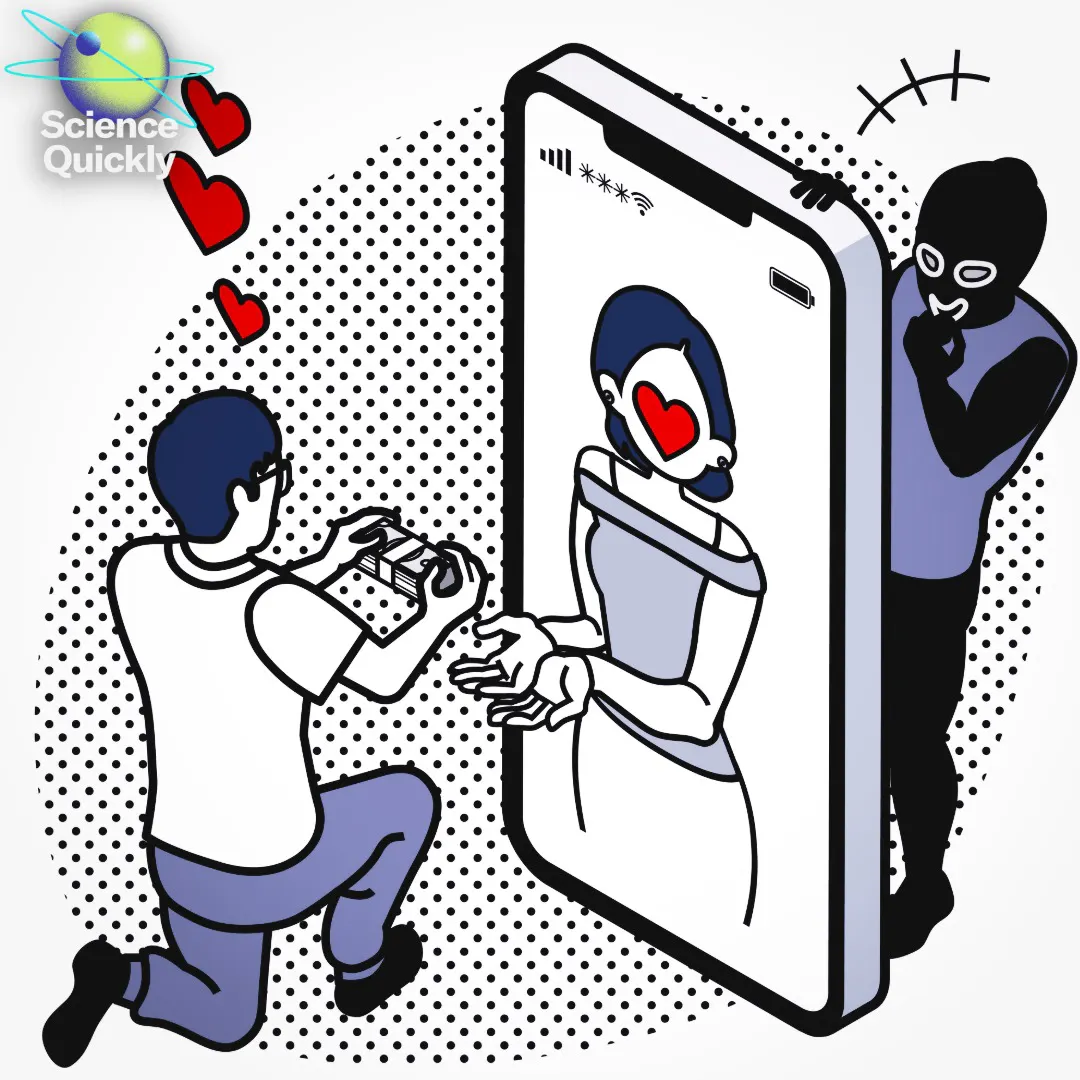 Can you spot a romance scam? | In this episode of Science Quickly, Rachel Feltman speaks with criminologist Fangzhou Wang about how romance scams have evolved from simple online deception into sophisticated, artificial-intelligence-powered fraud operations. They discuss how scammers use dating apps, fake identities, deepfakes and cryptocurrency schemes to build trust and steal money and what researchers are learning about helping people recognize and resist manipulation before they become victims. Recommended Reading: “Daejon Love Case Highlights Online Romance Scams: Research Reveals Scammers’ Tactics—And How to Defend against Them,” by Fangzhou Wang, in the Conversation. Published online September 2, 2026 Fangzhou Wang’s profile at the University of Texas at Arlington “A Crime Script Analysis of Pao Fen Operations and the Construction of Prevention Strategies,” by Fangzhou Wang, in Crime & Delinquency. Published online August 14, 2025 “The Prevention of Online Romance Scams Using a Crime Script Analysis from the Victim’s Perspective,” by Fangzhou Wang and James D. Kelsay, in International Review of Victimology, Vol. 32, No. 2; May 2026 E-mail us at [email protected] if you have any questions, comments or ideas for stories we should cover! Discover something new everyday: subscribe to Scientific American and sign up for Today in Science, our daily newsletter. Science Quickly is produced by Rachel Feltman, Fonda Mwangi, Allison Rodgers and Jeff DelViscio. This episode was edited by Alex Sugiura, with fact-checking by Marielle Issa and Aaron Shattuck. Our theme music was composed by Dominic Smith. Learn more about your ad choices. Visit megaphone.fm/adchoices | 18m 13s | ||||||
| 9/29/26 | Navigating Science and Health Misinformation [Sponsored] | As health misinformation surges online, Morgan McSweeney—known online as Dr. Noc, a science communicator and immunology expert whose videos reach millions each month across TikTok, Instagram, and X—explores why facts alone might not be enough to earn public trust, and what science communicators can do differently. This podcast was produced for Bayer by Scientific American Custom Media, a division separate from the magazine's board of editors. Learn more about your ad choices. Visit megaphone.fm/adchoices | 20m 18s | ||||||
| 9/28/26 |  Fire amoebas, fossilized vomit and AI energy demands | In this episode of Science Quickly, we cover discoveries both big and small, from the supersized particle collider needed to find the next subatomic specimen to tropical sea turtles that found new nesting grounds to a recently discovered eukaryote surprising scientists by surviving hellish temperatures and the ever growing energy needed to power artificial intelligence data centers. Recommended Reading: What’s the Smallest Particle in the Universe? Physicists trace particles back to the quantum vacuum AI’s Power Needs Will Destroy the Renewable Energy Revolution AI Will Drive Doubling of Data Center Energy Demand by 2030 E-mail us at [email protected] if you have any questions, comments or ideas for stories we should cover! Discover something new everyday: subscribe to Scientific American and sign up for Today in Science, our daily newsletter. Science Quickly is produced by Rachel Feltman, Fonda Mwangi, Allison Rodgers and Jeff DelViscio. This episode was edited by Alex Sugiura, with fact-checking by Marielle Issa and Aaron Shattuck. Our theme music was composed by Dominic Smith. Learn more about your ad choices. Visit megaphone.fm/adchoices | 10m 52s | ||||||
| 9/25/26 |  Unexplainable: Dark matter and the end of answers | In this episode of Science Quickly, we share part two of our crossover with Vox’s Unexplainable in which we explore one of the universe’s biggest mysteries: dark matter. Host Noam Hassenfeld talks with Scientific American senior reporter Joseph Howlett, a former physicist who spent years searching for dark matter deep beneath an Italian mountain. Their conversation traces the decades-long hunt for the invisible substance thought to make up most of the universe’s matter and explores an even deeper question: What if some mysteries are beyond science’s reach? Recommended Reading: What if we never find dark matter? Listen to Unexplainable Unexplainable on Spotify E-mail us at [email protected] if you have any questions, comments or ideas for stories we should cover! Discover something new every day: subscribe to Scientific American and sign up for Today in Science, our daily newsletter. Science Quickly is produced by Rachel Feltman, Fonda Mwangi, Allison Rodgers and Jeff DelViscio. This episode was edited by Alex Sugiura, with fact-checking by Marielle Issa and Aaron Shattuck. Our theme music was composed by Dominic Smith. Learn more about your ad choices. Visit megaphone.fm/adchoices | 34m 29s | ||||||
| 9/24/26 | Rethinking Age-Related Vision Loss [Sponsored] | Treatment for wet age-related macular degeneration has advanced significantly with anti-VEGF therapies, but the need for frequent injections remains a challenge. A new, longer-lasting treatment now in development aims to reduce treatment burden while helping preserve vision. This podcast was produced for Ocular Therapeutix by Scientific American Custom Media, a division separate from the magazine’s board of editors. Learn more about your ad choices. Visit megaphone.fm/adchoices Learn more about your ad choices. Visit megaphone.fm/adchoices | 20m 19s | ||||||
| 9/23/26 | 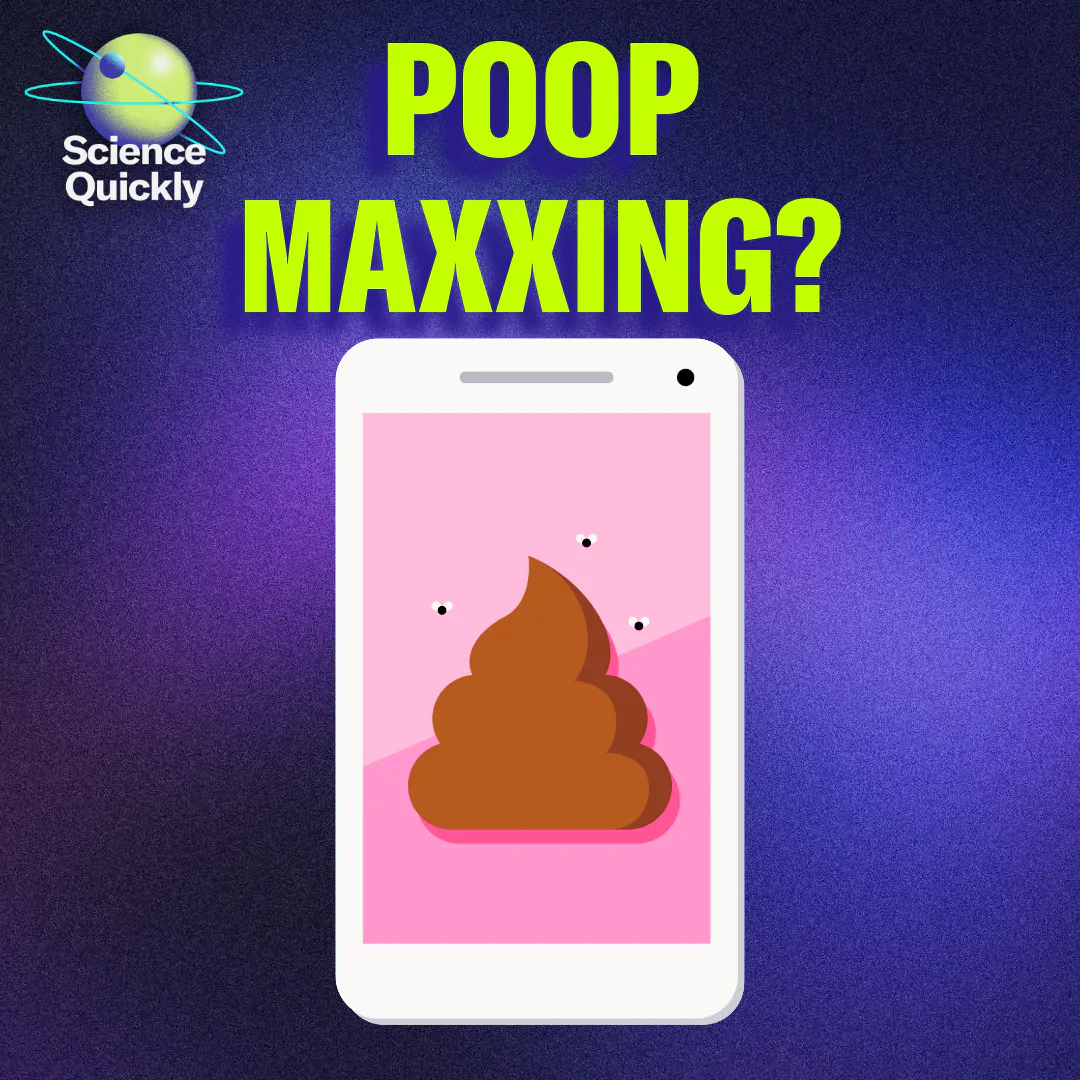 Should you be ‘poop maxxing’? | As colon cancer rates rise in younger adults, more and more people are paying attention to their poop and talking about it on social media, where such “poop maxxing” has become a hashtag. But what’s considered normal, and how can we measure our number twos? Board-certified gastroenterologist Wendi LeBrett joins Rachel Feltman to talk about what’s going on with the poop maxxing trend on social media, what a healthy stool should look and feel like, what common misconceptions around gut health people have, when to see a doctor, and more. Recommended Reading: Colon cancer is killing more young people in the U.S. than any other cancer Scientists gave the same sample to seven at-home microbiome tests. The results were dramatically different A pair of gut bacteria may cause constipation E-mail us at [email protected] if you have any questions, comments or ideas for stories we should cover! Discover something new everyday: subscribe to Scientific American and sign up for Today in Science, our daily newsletter. Science Quickly is produced by Rachel Feltman, Fonda Mwangi, Allison Rodgers and Jeff DelViscio. This episode was edited by Alex Sugiura. Marielle Issa and Aaron Shattuck fact-check our show. Our theme music was composed by Dominic Smith. Learn more about your ad choices. Visit megaphone.fm/adchoices | 16m 19s | ||||||
| 9/21/26 |  Space weapons are here, and AI experts are sounding alarms | In this episode of Science Quickly, we discuss newly revealed U.S. space weapons, growing artificial intelligence safety concerns and the Environmental Protection Agency’s rollback of power plant emissions limits before we end with a look at the tiny sand hoppers reshaping California’s beaches. Recommended Reading: It’s official: The U.S. has weapons in space Trump repeals emissions regulations of fossil-fuel power plants The real danger in OpenAI’s Hugging Face hack E-mail us at [email protected] if you have any questions, comments or ideas for stories we should cover! Discover something new everyday: subscribe to Scientific American and sign up for Today in Science, our daily newsletter. Science Quickly is produced by Rachel Feltman, Fonda Mwangi, Allison Rodgers and Jeff DelViscio. This episode was edited by Alex Sugiura, with fact-checking by Marielle Issa and Aaron Shattuck. Our theme music was composed by Dominic Smith. Learn more about your ad choices. Visit megaphone.fm/adchoices | 15m 16s | ||||||
| 9/18/26 |  Can you hear a forest disappear? | In this episode of Science Quickly, filmmaker and journalist Leah Varjacques takes us to a Bornean rainforest area, where centuries-old patterns of human and wildlife behavior are being disrupted by the construction of a new capital city. In the midst of all this change, Varjacques documents the work of Wendy Erb, a primatologist and bioacoustic scientist at the Cornell Lab of Ornithology. Erb’s team, working with members of the local Balik population, placed audio recorders around the forest to capture the sounds of this diverse ecosystem before it changes forever. Recommended Reading: Can you hear a forest disappearing? Scientists are trying to find out E-mail us at [email protected] if you have any questions, comments or ideas for stories we should cover! Discover something new every day: subscribe to Scientific American and sign up for Today in Science, our daily newsletter. Science Quickly is produced by Rachel Feltman, Fonda Mwangi, Allison Rodgers and Jeff DelViscio. This episode was edited by Alex Sugiura, with fact-checking by Marielle Issa and Aaron Shattuck. Our theme music was composed by Dominic Smith. This episode was reported and narrated by Leah Varjacques, with additional voiceover work by Rizky Rahad. This story was made possible by a grant from the Pulitzer Center and published in partnership with Project Multatuli. Learn more about your ad choices. Visit megaphone.fm/adchoices | 19m 46s | ||||||
| 9/16/26 |  Unexplainable: What happened before the big bang? | In this special crossover episode, Science Quickly shares an appearance by host Rachel Feltman on Vox’s Unexplainable. Together with host Noam Hassenfeld, she explores Scientific American’s special issue on impossible questions, diving into some of science’s biggest mysteries, from how common medications can work without scientists fully understanding them to whether there’s a limit to what humans can ever know. The conversation also ventures to the edge of cosmology, examining competing theories about what may have come before the big bang and why some questions might remain forever unanswered. Recommended Reading: Finding meaning in the impossible The questions science may never answer Listen to Unexplainable Unexplainable on Spotify E-mail us at [email protected] if you have any questions, comments or ideas for stories we should cover! Discover something new every day: subscribe to Scientific American and sign up for Today in Science, our daily newsletter. Science Quickly is produced by Rachel Feltman, Fonda Mwangi, Allison Rodgers and Jeff DelViscio. This episode was edited by Alex Sugiura, with fact-checking by Marielle Issa and Aaron Shattuck. Our theme music was composed by Dominic Smith. Learn more about your ad choices. Visit megaphone.fm/adchoices | 26m 14s | ||||||
| 9/14/26 |  From 9/11’s lasting legacy to AI’s disruptive future | In this episode of Science Quickly, we explore newly released 9/11 records and their revelations about the attacks’ lasting health impacts, unpack a controversial artificial intelligence breakthrough that solved one of mathematics’ biggest problems and examine the growing backlash to a massive AI data center as communities grapple with the costs of powering the AI boom. Recommended Reading: 25 years after 9/11, survivors are still getting sick—here are the numbers AI may have just solved a million-dollar math problem. The field will never be the same The data center backlash comes for SpaceXAI’s Colossus E-mail us at [email protected] if you have any questions, comments or ideas for stories we should cover! Discover something new everyday: subscribe to Scientific American and sign up for Today in Science, our daily newsletter. Science Quickly is produced by Rachel Feltman, Fonda Mwangi, Allison Rodgers and Jeff DelViscio. This episode was edited by Alex Sugiura, with fact-checking by Marielle Issa and Aaron Shattuck. Our theme music was composed by Dominic Smith. Learn more about your ad choices. Visit megaphone.fm/adchoices | 12m 39s | ||||||
Want analysis for the episodes below?Free for Pro Submit a request, we'll have your selected episodes analyzed within an hour. Free, at no cost to you, for Pro users. | |||||||||
| 9/11/26 | 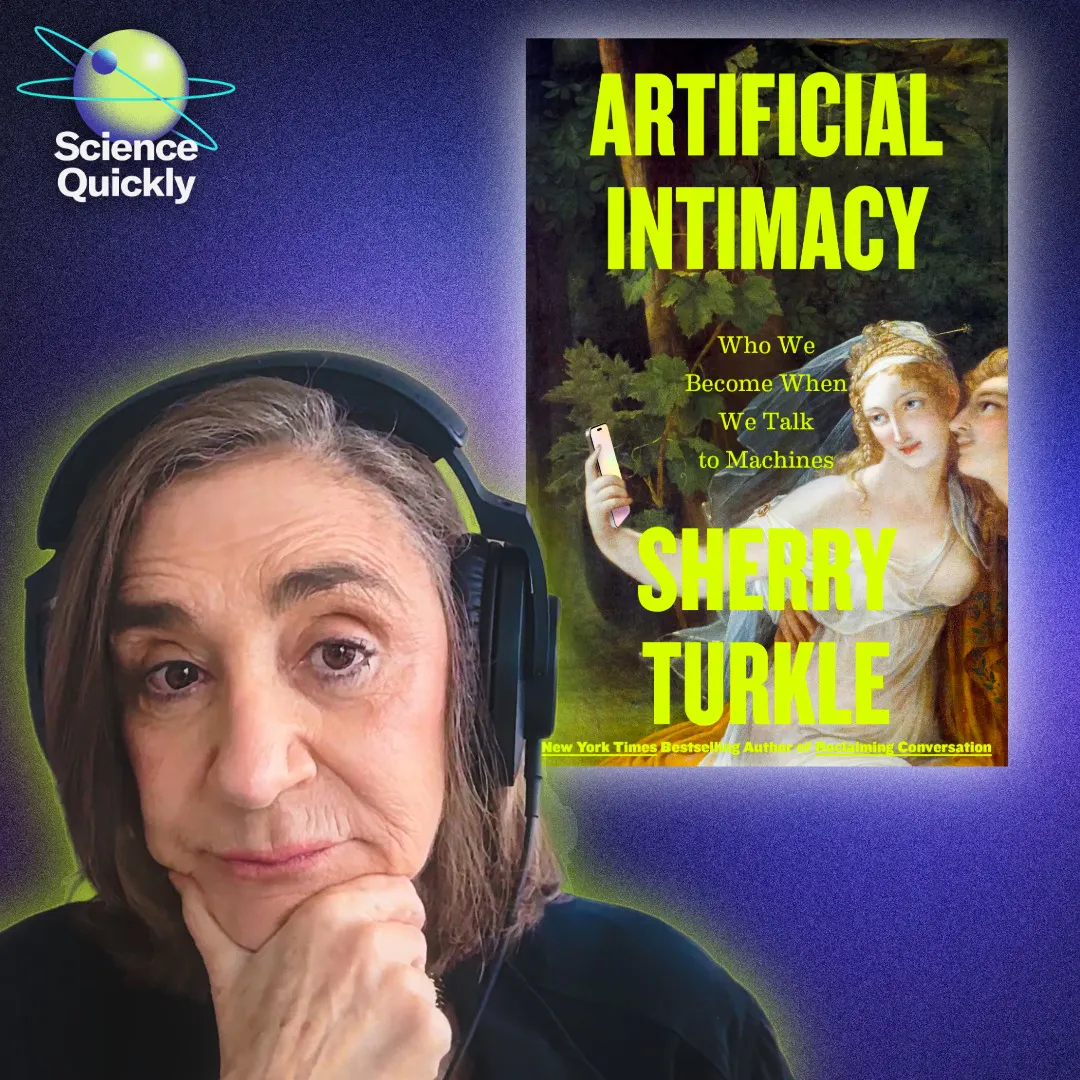 Is AI making us less human? | Can an artificial intelligence really be a friend? In this episode of Science Quickly, Scientific American books and culture lead Bri Kane sits down with Massachusetts Institute of Technology researcher Sherry Turkle to discuss the rise of AI chatbots and their effect on human connection. Turkle explains why she believes AI can imitate intimacy, from empathy and companionship to friendship and love, without truly caring and what we risk losing as machines play a bigger role in our emotional lives. Recommended Reading: Artificial Intimacy. Sherry Turkle. Little, Brown and Company, 2026 E-mail us at [email protected] if you have any questions, comments or ideas for stories we should cover! Discover something new everyday: subscribe to Scientific American and sign up for Today in Science, our daily newsletter. Science Quickly is produced by Rachel Feltman, Fonda Mwangi, Allison Rodgers and Jeff DelViscio. This episode was edited by Alex Sugiura, with fact-checking by Emily Makowski, Marielle Issa and Aaron Shattuck. Our theme music was composed by Dominic Smith. Learn more about your ad choices. Visit megaphone.fm/adchoices | 26m 25s | ||||||
| 9/9/26 | friendshippsychology+4 | Jessica Ayers | Scientific American | — | friendship typessocial networks+6 | — | 17m 56s | ||
| 9/4/26 | dating appshuman connection+4 | Sarah Pierce | Scientific AmericanFor Human Use | — | dating apphuman connection+5 | — | 15m 44s | ||
| 9/2/26 | cybersecuritywater safety+3 | Eric Geller | DEF CON FranklinCybersecurity Dive+1 | — | cyber attackswater treatment plants+3 | — | 15m 29s | ||
| 8/31/26 | NASARoman Space Telescope+4 | Julie McEnery | NASAScientific American | — | NASARoman Space Telescope+5 | — | 14m 26s | ||
| 8/28/26 | Endangered Species Actwildlife preservation+3 | Lynne Barre | U.S. Fish and Wildlife ServiceNational Oceanic and Atmospheric Administration+1 | — | Endangered Species Actwildlife+3 | — | 19m 24s | ||
| 8/26/26 | sperm healthmiscarriage+3 | Sarah Elizabeth Richards | Scientific AmericanScience Quickly | — | miscarriagesperm DNA damage+3 | — | 12m 22s | ||
| 8/24/26 | Arctic ice meltingclimate change+5 | — | Scientific AmericanHow melting Arctic ice has created a new Silk Road+2 | ArcticU.S. | Arcticclimate change+5 | — | 11m 56s | ||
| 8/21/26 | psilocybinanorexia+3 | Alexandra Pattillo | psilocybinScientific American+1 | — | magic mushroomspsychedelic therapy+3 | — | 24m 27s | ||
| 8/19/26 | creativityart+4 | Moiya McTier | Scientific AmericanGrand Central Publishing+1 | — | creativity crisisgenerative AI+4 | — | 15m 59s | ||
| 8/17/26 | solar eclipsevaccines+3 | — | childhood vaccinecoffee+1 | Colombia | solar eclipsevaccines+3 | — | 12m 14s | ||
| 8/14/26 |  How AI helped a nonspeaking opera star find his voice | In this episode of Science Quickly, we meet Jakob Jordan, an autistic performer with apraxia, who stars in the groundbreaking opera Sensorium Ex. Host Rachel Feltman talks with Jordan, composer Paola Prestini and New York University researcher Luke DuBois about the custom artificial intelligence voice technology that helped Jordan express himself in a way traditional speech devices can’t. Together, they explore how AI can enhance, rather than replace, human creativity and communication. Recommended Reading: More about Sensorium Ex Join our Summer Reading Challenge E-mail us at [email protected] if you have any questions, comments or ideas for stories we should cover! Discover something new everyday: subscribe to Scientific American and sign up for Today in Science, our daily newsletter. Science Quickly is produced by Rachel Feltman, Fonda Mwangi, Sushmita Pathak and Jeff DelViscio. This episode was edited by Alex Sugiura, with fact-checking by Marielle Issa and Aaron Shattuck. Our theme music was composed by Dominic Smith. Learn more about your ad choices. Visit megaphone.fm/adchoices | 24m 38s | ||||||
| 8/12/26 |  Could humans learn to speak in music? | What would it take to create a language made entirely of music? In this episode of Science Quickly, Scientific American’s Allison Parshall explores the science and linguistics behind musical languages, from real-world constructed languages to the intricate note-based communication system created for the alien Rocky in Project Hail Mary. Learn how linguists transformed rhythm and pitch into a fully functional language and what these imaginative experiments reveal about the nature of communication itself. Recommended Reading: Andy Weir on Ryan Gosling, alien contact and the wild science of Project Hail Mary Ryan Gosling says Project Hail Mary is ‘a reminder of what we’re capable of’ How did humans evolve language? It may be far more ancient than scientists realized Join our Summer Reading Challenge E-mail us at [email protected] if you have any questions, comments or ideas for stories we should cover! Discover something new everyday: subscribe to Scientific American and sign up for Today in Science, our daily newsletter. Science Quickly is produced by Rachel Feltman, Fonda Mwangi and Jeff DelViscio. This episode was reported by Allison Parshall and edited by Alex Sugiura, with fact-checking by Marielle Issa and Aaron Shattuck. Our theme music was composed by Dominic Smith. Learn more about your ad choices. Visit megaphone.fm/adchoices | 23m 59s | ||||||
| 8/10/26 |  A moon crash, water hacks and a new mRNA flu shot | A wayward SpaceX rocket crashes into the moon, offering scientists a rare chance to study a lunar impact, while cyberattacks targeting U.S. water utilities raise concerns about critical infrastructure security. We also unpack the record-breaking Cyclospora outbreak driving shoppers to farmers markets and explore the Food and Drug Administration’s approval of the first mRNA-based flu vaccine. Recommended Reading: A SpaceX rocket is about to crash into the moon—scientists will be watching Elon Musk reveals SpaceX plans to build satellite factories on the moon In a first, U.S. approves powerful new mRNA vaccine for flu Cyclospora outbreak tied to two deaths as parasite-borne illness continues to rage Join our Summer Reading Challenge E-mail us at [email protected] if you have any questions, comments or ideas for stories we should cover! Discover something new everyday: subscribe to Scientific American and sign up for Today in Science, our daily newsletter. Learn more about your ad choices. Visit megaphone.fm/adchoices | 14m 13s | ||||||
| 8/7/26 |  Is Gen Z making smoking cool again? | In this episode of Science Quickly, Scientific American’s Adam Kovac joins host Rachel Feltman to explore why some experts worry cigarettes may be making a comeback among Generation Z. They discuss how social media, celebrity influence and growing anxiety among young people may have roles in the possible trend and why public health researchers are watching it closely. Recommended Reading: Is Gen Z actually smoking more? An investigation Antinicotine advocates and lawmakers criticize the FDA’s decision to approve flavored vapes A smoking ban for people born after 2008 may be on the cusp of becoming law in the U.K. Here’s what to know Join our Summer Reading Challenge E-mail us at [email protected] if you have any questions, comments or ideas for stories we should cover! Discover something new everyday: subscribe to Scientific American and sign up for Today in Science, our daily newsletter. Science Quickly is produced by Rachel Feltman, Fonda Mwangi and Jeff DelViscio. This episode was edited by Alex Sugiura, with fact-checking by Marielle Issa and Aaron Shattuck. Our theme music was composed by Dominic Smith. Learn more about your ad choices. Visit megaphone.fm/adchoices | 13m 55s | ||||||
| 6/22/26 | Ebola outbreakWorld Cup heat risks+1 | Andrea ThompsonTanya Lewis | Scientific American | AfricaNorth America | EbolaWorld Cup+4 | — | 13m 10s | ||
| 6/19/26 | virusescancer risk+4 | Jaye Gardiner | Scientific American | — | virusescancer+5 | — | 15m 34s | ||
| 6/17/26 | neurosciencelearning+3 | Kauê M. Costa | Scientific American | — | neurosciencebrain learning+3 | Regeneron | 19m 22s | ||
| 6/15/26 | astrophysicscareer journey+3 | Erini Lambrides | NASAScientific American | — | NASAastrophysicist+5 | Regeneron | 22m 50s | ||
| 6/12/26 | alien languagecommunication+3 | Jeffrey Punske | Scientific AmericanDisclosure Day | — | alien languagecommunication+5 | — | 15m 47s | ||
| 6/10/26 | World Cupgrass science+4 | — | 2026 World Cup Soccer BallInternational Federation of Association Football+1 | — | World Cupgrass preparation+4 | — | 17m 32s | ||
| 6/8/26 | health monitoringwastewater surveillance+4 | — | NASAScientific American+3 | Marsancient Rome | World Cuphealth monitoring+6 | — | 9m 15s | ||
| 6/5/26 | PCOSPMOS+4 | Anuja Dokras | Scientific AmericanLancet+2 | — | PCOSPMOS+5 | — | 15m 58s | ||
| 6/3/26 | matheveryday experiences+4 | Manon Bischoff | Scientific American | — | mathelevator waits+5 | — | 13m 01s | ||
| 6/1/26 | Ebola outbreakhealth policy+3 | Tanya Lewis | Scientific American | Democratic Republic of the CongoUganda | Ebolaoutbreak+5 | — | 11m 51s | ||








Showing 35 of 1000
Pitch Fit is a Pro feature
See how bookable this show is for guests, which brands already advertise, the per-episode ad value, and the best-fit guest and sponsor profile. The numbers are blurred on the free plan.
How readily this show books outside guests like you.
How proven this show is for host-read sponsorships.
For Guests
ProFor Advertisers
ProUpgrade to Pro to unlock guest cadence, sponsor categories, fit scores, and per-episode ad value for this show.
Similar Audience Demographics
Podcasts that attract a similar listener profile




Chart history for Science Quickly
Peaked at #15 in ID, currently #15 in ID.
| Market | Genre | Peak | Current | Trend |
|---|---|---|---|---|
| ID | — | #15 | #15 | — |
| TW | — | #21 | #21 | — |
| New Zealand | — | #25 | #25 | — |
| Japan | — | #26 | #26 | — |
| India | — | #26 | #26 | — |
| IL | — | #30 | #30 | — |
| Mexico | — | #34 | #34 | — |
| United States | — | #36 | #36 | — |
| HK | — | #40 | #40 | — |
| PE | — | #42 | #42 | — |
| SG | — | #43 | #43 | — |
| Canada | — | #45 | #45 | — |
| PL | — | #55 | #55 | — |
| South Korea | — | #60 | #60 | — |
| VN | — | #62 | #62 | — |
| South Africa | — | #62 | #62 | — |
| Ireland | — | #69 | #69 | — |
| IS | — | #86 | #86 | — |
| Australia | — | #94 | #94 | — |
| TH | — | #94 | #94 | — |
Chart Positions
42 placements across 42 markets.
Chart Positions
42 placements across 42 markets.