
The Digital Marketing Podcast
An advert free, Weekly digital marketing podcast with listeners in over 180 countries worldwide, The Digital Marketing Podcast combines interviews with global experts, together with the latest news, tools, strategies and...
Insights from recent episode analysis
On the show
- Kramer Reeves1 ep
- Professor Peter König1 ep
- Emily Barfoot1 ep
Also: Rachel Thornton, Kendall Breitman, Phil Agnew, Luke Santamaria, Emma Tronson, Kipp Bodnar, Geoff Tuff
Audience Interest
Podcast Focus
Publishing Consistency
Insights are generated by CastFox AI using publicly available data, episode content, and proprietary models.
Most discussed topics
Brands & references
Total monthly reach
Based on 1 signal.
Built from
By chart position
- 🇺🇸United States · MarketingHOME#7926K to 136K
- 🇬🇧United Kingdom · Marketing#1719K to 101K
- 🇦🇷AR · Marketing#202.2K to 12K
- 🇰🇷South Korea · Marketing#332.2K to 11K
- 🇵🇭PH · Marketing#231.3K to 7.1K
- Per-Episode Audience
Est. listeners per new episode within ~30 days
62K to 328K🎙 Monthly cadence·100 episodes·Last published 1mo ago - Monthly Reach
Unique listeners across all episodes (30 days)
69K to 364K🇺🇸42%🇬🇧31%🇦🇷4%+13 more - Active Followers
Loyal subscribers who consistently listen
28K to 146K
Market Insights
Platform Distribution
Reach across major podcast platforms, updated hourly
Total Followers
—
Total Plays
—
Total Reviews
—
* Data sourced directly from platform APIs and aggregated hourly across all major podcast directories.
| Date | Episode | Topics | Guests | Brands | Places | Keywords | Sponsor | Length | |
|---|---|---|---|---|---|---|---|---|---|
| 9/8/26 |  How to Fix AI Slop: Better Context, Stronger Brands and the Return of Human Judgement with Pacey.ai | How to Fix AI Slop: Better Context, Stronger Brands and the Return of Human Judgement What happens when AI makes it easier to produce marketing content, but that content all starts to look and sound the same? In this episode of The Digital Marketing Podcast, Ciaran Rogers speaks to Evan Greally, founder and CTO of Pacey AI, about avoiding AI slop and getting back to the work that matters: understanding customers, developing ideas and building a distinctive brand. Introduced by Daniel Rowles, the conversation draws on Evan's experience as Head of Creative Tech and Innovation at Droga5 Dublin, part of Accenture Song, and more than 15 years working where creativity and technology meet. What begins with an AI-powered mint plant becomes a wider discussion about data overload, creative control and whether AI can develop something resembling taste. Along the way, Evan explains the thinking behind Pacey, with lessons that extend well beyond any single platform. In This Episode From a talking mint plant to a conversation with nature: Evan shares the story behind The Talking Tree, a project that combined environmental sensors, plant responses and AI-generated conversation. It is an unusual starting point with a serious creative question behind it: could technology encourage people to reconnect with the world around them, rather than spend more time staring at a screen? Why marketing needs to ask "so what?": Customer reviews, social comments, competitor activity and dashboards can all contain useful information. But what should a marketer actually do with it? Ciaran and Evan explore the gap between collecting data and making decisions, and why adding another tool can make that gap wider rather than close it. The value of "honest silence": Evan introduces Pacey's principle of surfacing what matters without manufacturing urgency. He describes a system that looks for support from three or more sources before highlighting an issue, but can also tell a team there is nothing significant to worry about that day. The aim is to focus attention, not create another stream of notifications. Can AI really have taste? Evan argues that AI can develop a useful form of brand-specific taste, while distinguishing it from the personal experience and judgement that shape human taste. He explains how approved copy and visuals help build a brand's taste profile, and why evaluating work from an audience member's perspective may be more revealing than asking a model to give it a numerical score. Would someone actually stop scrolling? Turning a daily briefing into useful action: From a short, podcast-style morning update to content creation, scheduling and performance feedback, Evan outlines how Pacey connects market signals with marketing activity. The discussion explores what changes when a team can move from understanding an opportunity to developing a response without repeatedly copying information between disconnected tools. Why editable creative matters: Ciaran highlights the importance of layered design files rather than finished images that are difficult to change. Evan explains how this approach supports human editing, reusable templates, a brand's own photography and different identities across multiple outlets. He also previews an editable video workflow using customers' own footage, rather than relying entirely on generated visuals. An orchestra, not another isolated instrument: Could marketers build something similar by connecting their own AI tools? Evan acknowledges the potential for prototypes, but explains why filtering data, maintaining context, applying design constraints and continually evaluating results are harder to reproduce. The conversation uses an orchestra analogy to explore how different models and specialist agents can work towards the same creative goal. Building trust before speeding things up: Evan shares a product-development lesson: giving people a login is not the same as helping them adopt a new way of working. Slower onboarding, visible sources and clear explanations of how conclusions were reached became central to building confidence. Throughout the discussion, people remain responsible for deciding what is right for the brand and approving what gets published. Key Takeaways Start with the marketing decision, not the dashboard. Before collecting another metric or adding another tool, ask what it will help you understand, change or prioritise. Give AI direction, not just information. Relevant customer signals, a clear brand perspective and a defined purpose matter more than handing a model an undifferentiated pile of data. Treat creative approval as a learning opportunity. Human choices about copy and design can help establish what good work looks like for a particular brand. That judgement should shape the process, not disappear from it. Keep the work editable and the reasoning visible. Teams need to be able to refine creative assets and inspect the evidence behind recommendations, rather than simply accept whatever a system produces. Use automation to make room for better thinking. The ambition discussed here is not to fill every channel with more posts. It is to give marketers more time to understand their audience, develop ideas and deliver the right message at the right moment. Can AI learn a brand's preferences well enough to demonstrate taste, or does that word belong to human creativity? Listen to the conversation and share your perspective with the team. As Daniel explains in the introduction, The Digital Marketing Podcast has no commercial connection to Pacey AI. 📥 Access the show notes, tools, and links at: https://targetinternet.com/resources/how-to-fix-ai-slop | 24m 34s | ||||||
| 7/10/26 | AI skillsreusable workflows+4 | — | ChatGPTClaude+1 | — | AI skillsreusable workflows+5 | — | 23m 45s | ||
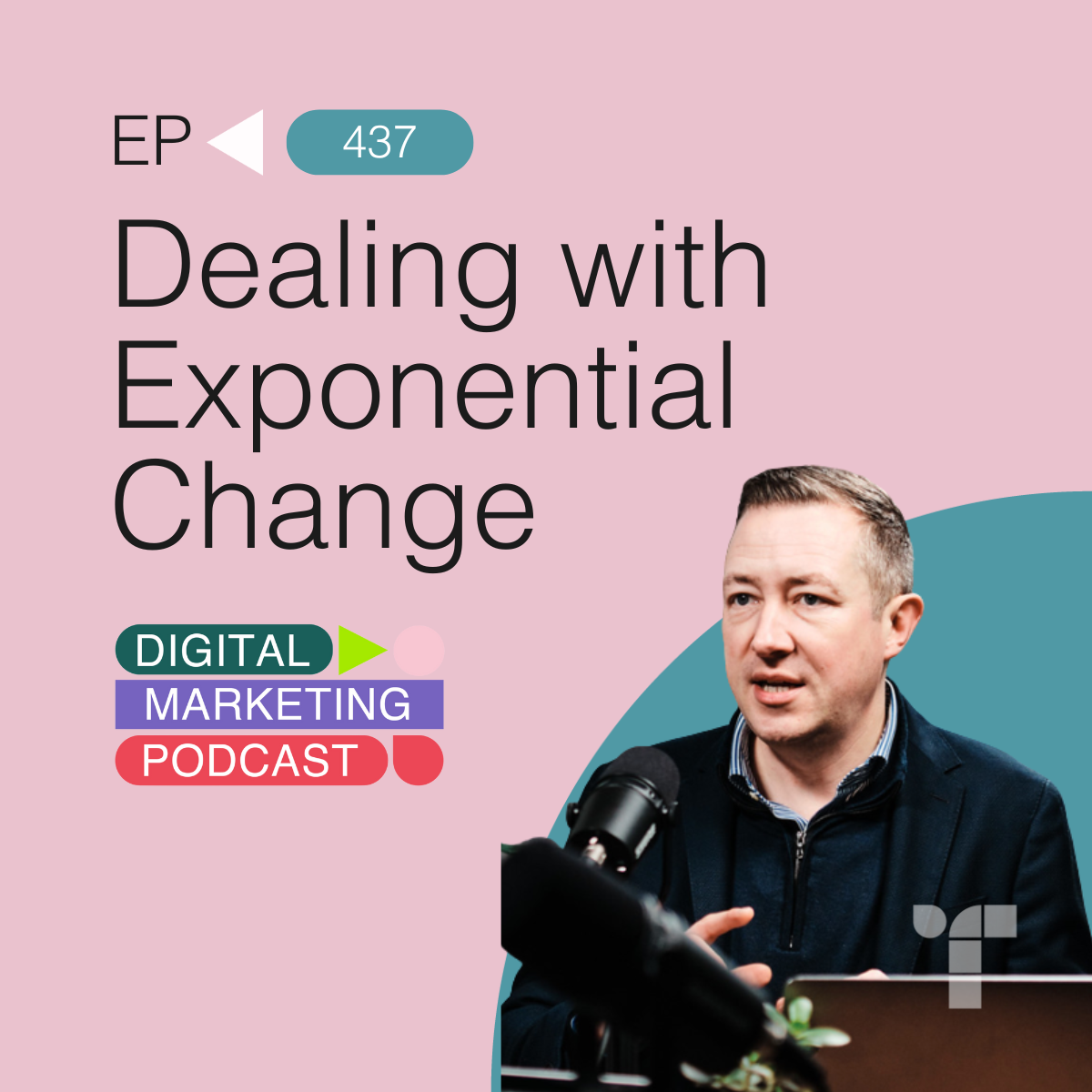
| 5/17/26 | neurosciencedigital marketing+4 | Kramer ReevesProfessor Peter König | EyeQuant | — | neurosciencevisual attention+5 | — | 24m 57s | ||
| 4/29/26 | Reddit marketingcustomer feedback+4 | Emily Barfoot | DoveUnilever+1 | — | DoveReddit+5 | — | 25m 50s | ||
| 4/20/26 | AI in marketingcustomer journey+4 | Rachel Thornton | Adobe Enterprise | — | AIcustomer experience+5 | — | 22m 00s | ||
| 4/9/26 | video marketingSEO+4 | Kendall Breitman | Riverside | — | video marketingSEO+5 | — | 27m 56s | ||
| 4/7/26 | psychology experimentsbehavioral science+3 | Phil Agnew | Nudge | — | social proofloss aversion+3 | — | 45m 06s | ||
| 4/6/26 | gamificationdigital marketing+3 | Luke Santamaria | PlaySpark | — | gamificationdigital marketing+3 | — | 30m 12s | ||
| 2/18/26 | AI adoptionorganizational change+3 | Emma Tronson | Aston University | — | AI adoptionorganizational strategy+3 | — | 27m 10s | ||
| 2/17/26 | AI in marketingAnswer Engine Optimisation+4 | Kipp Bodnar | ChatGPTGemini+2 | — | AI agentsmarketing change+5 | — | 20m 34s | ||
Want analysis for the episodes below?Free for Pro Submit a request, we'll have your selected episodes analyzed within an hour. Free, at no cost to you, for Pro users. | |||||||||
| 1/4/26 | AI-driven changeleadership+4 | Geoff Tuff | DeloitteHone: How Purposeful Leaders Defy Drift | — | AIexponential change+5 | — | 27m 43s | ||
| 1/4/26 |  Generative AI Update - What the Latest Model Wars Mean for Marketers | The generative AI landscape has shifted again, and at speed. In this update episode, Daniel Rowles breaks down a rapid sequence of releases from OpenAI and Google, explaining what has actually changed, what genuinely matters, and how marketers and business leaders should respond. Covering everything from ChatGPT 5.x and Gemini 3 through to image generation breakthroughs, AI-powered apps, and the rise of accessible 'vibe coding', this episode is a practical briefing rather than hype-driven commentary. Daniel focuses on real-world capability, usability, and where these tools are already changing how marketing teams work, build, and analyse. Rather than asking which model is "winning", the episode reframes the question around task-based selection. Different tools now excel at different jobs, from coding and image editing to workflow automation and reporting. Understanding those strengths is quickly becoming a competitive advantage In This Episode How the AI model race intensified between OpenAI and Google at the beginning of 2026 What actually changed with ChatGPT 5.1 and 5.2, beyond the headline claims Why Gemini 3 represents a major leap in reasoning and coding capability How image generation tools have crossed a new threshold in photorealism and editing What Nano Banana Pro means for branded, on-style visual creation Why ChatGPT connectors becoming "apps" is more important than it sounds How tools like Canva, Adobe, and Figma now integrate directly into AI workflows What vibe coding really is, and why it matters for non-technical marketers How canvas mode transforms the way code, content, and interfaces are created Why AI-powered browsers and agent modes could redefine reporting and analysis Key Takeaways No single AI model is best at everything, and choosing by task is now essential Image editing and brand-consistent visuals are becoming dramatically more accessible Marketers can now create interactive tools and content without traditional development AI-assisted coding is shifting from novelty to practical everyday use Workflow automation and reporting are emerging as some of the biggest wins Understanding interfaces and deployment matters as much as model intelligence 📥 Access the show notes, tools, and links at: https://targetinternet.com/resources/generative-ai-update-what-the-latest-model-wars-mean-for-marketers | 16m 31s | ||||||
| 1/4/26 |  Answer Engine Optimisation (AEO) - How to Optimise for Google AI Overviews | Search is changing fast. With AI overviews now appearing in the majority of Google results, the rules of visibility are being rewritten in real time. In this episode, Daniel Rowles explores what answer engine optimisation actually means in practice, and how marketers can adapt without chasing myths, hacks, or constantly shifting theories. Drawing on real testing from Target Internet over the past year, this episode cuts through the noise around GEO, AEO, and SEO to focus on what genuinely works. The result is a practical framework for improving visibility both in traditional organic search and within AI-powered results, particularly Google's AI overviews. If you are worried about falling click-through rates, changing user behaviour, or how large language models decide what to reference, this episode provides clear, grounded guidance. Rather than treating AI search as a black box to be cracked, Daniel reframes it as a probability system influenced by clarity, credibility, and consistency. The five techniques covered here are designed to future-proof your content strategy while still delivering value to real users today. In This Episode Why the industry cannot agree on GEO vs AEO, and why the distinction matters less than you think What current data tells us about AI overviews, click-through rates, and changing search behaviour How question-led content aligns with the way people now search using AI Why inverted pyramid writing is suddenly more important than ever How digital PR and brand mentions influence entity reputation in AI systems The growing role of advocacy, reviews, and online sentiment in visibility Why multimodal content is becoming a core ranking signal, not a nice-to-have How schema markup removes ambiguity for search engines and large language models Where to focus your effort while Google's AI results are still evolving rapidly Key Takeaways Answer engine optimisation overlaps heavily with traditional SEO, so doubling down on fundamentals is still smart Clear, direct answers to specific questions improve your chances of being referenced by AI Brand visibility is no longer just about links, but about being mentioned in the right contexts Positive sentiment and third-party validation increasingly influence AI recommendations Publishing content in multiple formats strengthens your overall search footprint Structured data helps machines understand your content, and humans engage with it more easily 📥 Access the show notes, tools, and links at: https://targetinternet.com/resources/answer-engine-optimisation-aeo-how-to-optimise-for-google-ai-overviews | 16m 44s | ||||||
| 1/2/26 |  Human First Marketing - Why Trust, Purpose and People Matter More Than Ever | In this episode of The Digital Marketing Podcast, Daniel Rowles speaks with Phil Treagus-Evans, author of the new book Human First Marketing, to explore why now, in a world dominated by AI, automation, and synthetic content, marketers must rediscover their humanity. As generative AI reshapes how content is produced, and digital channels become flooded with bland, algorithmically generated material, brands risk losing the very thing that makes them relatable: their people. Phil offers a timely and practical guide for putting humans back at the heart of your marketing strategy, from customer research to team culture and executive presence. Drawing on his work at Giraffe Social, Phil breaks down a four-part framework for building trust, fostering connection, and standing out in a sea of sameness. If you've ever felt like your content is just noise, or you're posting because you're "supposed to", this episode will help you hit reset. In This Episode: Marketing isn't working like it used to Phil opens with a bold claim, and backs it up with data on ad saturation, trust erosion, and content homogenisation due to AI. What is Human First Marketing? A new approach that prioritises people over platforms, empathy over efficiency, and purpose over vanity metrics. The four pillars of Human First Marketing People: Deep customer understanding and employee advocacy Authenticity: Real voices and honest content Connection: Interactions over transactions Purpose: Strategy that means something — and gets results Why you should ditch customer avatars Phil introduces his EMPATH framework for audience research that avoids reductive stereotypes and leans into emotional understanding, patterns of behaviour, and real team insight. The power of visibility and vulnerability From CEOs posting on LinkedIn to sharing the full journey of writing his book, Phil explains how authenticity builds trust, and drives results. Why trust is the new marketing currency In an era of deepfakes and automated outreach, being seen as real, consistent and trustworthy is the ultimate competitive edge. AI isn't the enemy, lazy AI is Phil and Daniel agree: AI is a fantastic tool, but it's the human decisions around how, when and why we use it that matter most. How Human First Marketing improves SEO As Google leans into E-E-A-T (Experience, Expertise, Authoritativeness, Trust), human-centred content becomes not just ethical, but algorithmically rewarded. Key Takeaways: Human content performs better - Whether it's lo-fi video or founder-led storytelling, people trust people more than brands. Leaders must be visible - Exec comms and internal advocacy aren't optional anymore, they're how culture scales and trust grows. Culture comes first - You can't fake authenticity. If your team doesn't believe in what you do, neither will your audience. Strategy before content - Don't just post because you should. Post with intent, empathy, and impact. There's power in transparency - Sharing your struggles, your processes, and your people builds emotional equity. Use AI as a creative partner - Not a content machine. Challenge your thinking, spark ideas, don't outsource your voice. 📥 Access the show notes, tools, and links at: https://targetinternet.com/resources/human-first-marketing-why-trust-purpose-and-people-matter-more-than-ever | 29m 22s | ||||||
| 12/8/25 |  The Big Debate: Non Keyword Signals - AI Chats & Privacy | In this episode of The Digital Marketing Podcast, Daniel Rowles and Ciaran Rogers dive into one of the most significant shifts in digital marketing: the rise of non keyword signals and what it means for search, privacy, and the future of campaign targeting. With AI-powered ad platforms like Google's AI Max and social algorithms driven by behavioural data rather than search intent, the old model of keyword-driven marketing is rapidly giving way to something more opaque, more personalised, and potentially more invasive. Daniel and Ciaran explore how AI systems now use a vast array of signals, from your browsing patterns and email content to your location history and viewing habits, to anticipate what you might want before you even search. But what does this mean for marketers who've spent years honing their SEO and PPC strategies? And what does it mean for user privacy in a world where your chatbot conversations may be fuelling ad targeting? In This Episode: What are non keyword signals? Understand how platforms like Google and Meta are using behaviour, context and historical activity instead of just search terms. Why your impressions are up but clicks are down Learn how AI summaries in Google Search are reducing organic click-throughs, even when your rankings are strong. AI Max campaigns and keywordless targeting Discover how Google Ads is shifting towards AI-led campaigns that rely on intent and engagement signals rather than keyword triggers , and why some brands are seeing 20–30% uplift as a result. What Meta's CMO said about disconnected content Hear how Alex Schultz explained the shift from connected (likes, follows) to disconnected content (Reels, Stories, Shorts), and what that means for social strategy. Privacy concerns and grey areas Explore the implications of Meta's new terms allowing AI chat interactions to inform ad targeting, and whether AI chat data could be inadvertently shared or commercialised. Real-world scenario: Chatbots used for lead capture Daniel raises a powerful example, what if you offered a free AI chatbot to other brands, then harvested user intent data for your own ad targeting? Platform security, data visibility and agent risks From OneDrive access errors to AI agents managing your logins, the hosts discuss the human errors that AI amplifies, and the need for robust security practices. Key Takeaways: We're entering a post-keyword era Platforms are using AI to interpret intent through broader, richer data sources, including chat behaviour, video viewing and app usage. Organic traffic is being cannibalised by AI summaries Even if your visibility improves, actual user clicks may continue to decline. Privacy risks are growing Terms and conditions are changing, and conversations with AI tools may no longer be as private as they seem. Marketing teams must audit how they use AI Understand what data your AI tools are accessing and how that data could be used, now and in the future. Join the conversation This isn't just a podcast - it's an open debate. Daniel and Ciaran want your input, and they're giving away prizes, books and merch to contributors. 📥 Access the show notes, tools, and links at: https://targetinternet.com/resources/the-big-debate-non-keyword-signals-ai-chats-privacy Join the debate: https://www.linkedin.com/feed/update/urn:li:activity:7403862051749564417 | 15m 22s | ||||||
| 12/7/25 |  Vibe Coding - How AI is Revolutionising App Development and Empowering Non-Coders | In this episode of The Digital Marketing Podcast, Daniel Rowles introduces us to the process of Vibe Coding, a revolutionary approach to software development that leverages AI to make app creation accessible to anyone, regardless of coding experience. Vibe coding shifts the focus from writing manual code to guiding AI with natural language prompts, allowing non-developers to build interactive apps, tools, and even businesses. Daniel explores the three tiers of vibe coding, from basic one-page web apps to full-scale, secure, AI-powered platforms , and shares practical steps, tools and security tips to get started. The second half of the episode features a compelling interview with Christo Snyman, a podcast listener who used vibe coding to launch his AI assistant platform Traderly.ai. Christo takes us behind the scenes of building a real-world startup with no prior coding background, sharing his full tech stack, hard-earned lessons, and the mindset needed to succeed. In This Episode: What is Vibe Coding? Understand how natural language prompts can now be used to create working code, dramatically lowering the barrier to digital creation. The Three Levels of Vibe Coding Level 1: Build one-page apps using HTML, CSS, and React, no backend required Level 2: Add memory, interactivity, and live AI responses through API access Level 3: Create fully-fledged apps with user authentication, databases, and deployment Practical Use Cases - From interactive Google algorithm timelines to embedded AI tools for keyword research and content planning, Daniel shares how these tools are being used on Target Internet's own website. Christo's Journey - From Idea to Startup. Learn how Christo turned a common business pain point — small service businesses missing leads due to message overload — into a scalable SaaS platform. Discover his full tech stack including React, Azure Functions, PostgreSQL, Firebase, OpenAI, WordPress, and more. Key Takeaways: Anyone can now build apps using AI tools, whether it's a timeline, calculator, chatbot, or full customer-facing product. AI-assisted development removes fear and unlocks creativity, especially for entrepreneurs without a dev background. Start small and iterate, your Minimal Viable Product doesn't need to be perfect, it needs to be useful. Vibe coding is the bridge between ideas and execution - fast, flexible and increasingly powerful. The future of marketing and tech creation is conversational and it's already here. 📥 Access the show notes, tools, and links at: https://targetinternet.com/resources/vibe-coding-how-ai-is-revolutionising-app-development-and-empowering-non-coders 📩 Join the free newsletter for access to monthly live sessions: https://targetinternet.com/newsletter | 26m 03s | ||||||
| 10/7/25 |  The Changing User Journey - Lessons from the Travel Industry in the Age of AI | In this episode of The Digital Marketing Podcast, Daniel Rowles is joined by Matthew Gardiner from World Travel Market for a special look at how the user journey is being radically reshaped, and why the travel industry offers a powerful lens for understanding the broader changes all marketers now face. From AI-powered search and agents, to disconnected content ecosystems, collapsing funnels, and new expectations for sustainability and meaning, the way users discover, evaluate, and buy has shifted. Whether you work in travel or not, this episode delivers insight into how to adapt your digital strategy for a fragmented, AI-enhanced, and purpose-driven customer journey. In This Episode: Why AI is collapsing the funnel Users no longer move in a straight line from awareness to action. Conversations with AI agents like ChatGPT are replacing multi-step journeys. Whoever owns the AI conversation, owns the customer. From connected to disconnected content The shift from traditional, connected social feeds to short-form, algorithmically driven discovery (Reels, TikToks, Shorts) has changed how we build awareness and trust. AI Overviews and Answer Engine Optimisation With 55% of Google searches now including AI summaries, Daniel explains why SEO alone is not enough and how Generative Engine Optimisation (GEO) and Answer Engine Optimisation (AEO) are the new battlegrounds. Agents are doing the work From itinerary planning to automated bookings, AI agents are reshaping how users interact with brands, often bypassing websites altogether. The new role of structured data Matthew shares how travel brands must now treat structured markup (schema) as a new kind of distribution, ensuring they are machine-readable to AI systems. Why user testing must change Daniel explains why marketers must rethink usability testing to account for personalised algorithms, behaviour-based ad targeting, and AI-powered search. Brand loyalty as a survival tactic In an age of disintermediation, programmes like Bonvoy are keeping users loyal through gamification and exclusive benefits, offering lessons for all industries. Content strategy for the AI era From FAQs and multilingual support to video answers and UGC, the path to visibility is paved with granular, high-quality, human-first content. Industry Case Study: Travel Through a detailed conversation with Matthew Gardiner, the episode explores how the travel industry has continually adapted to disruption. From the rise of OTAs and TripAdvisor to today's challenges around AI agents, soft adventure trends, live tourism, and sustainability expectations, travel may be the canary in the coal mine but its lessons are highly applicable to every sector. Key Takeaways: AI is not just changing how people search; it is rewriting how people trust, book, and choose. Being mentioned in AI conversations is the new SEO. Structured data and FAQ-rich content are your ticket in. Agents now do things, not just recommend. Optimising for transactions and post-click experience is vital. Loyalty schemes, brand identity, and customer advocacy matter more than ever to bypass AI's generic results. Usability testing must reflect real, personalised experiences, not idealised lab setups. 📥 Access the show notes, tools, and links at: https://targetinternet.com/resources/the-changing-user-journey-lessons-from-the-travel-industry 📩 Join the free newsletter for access to monthly live sessions: https://targetinternet.com/newsletter | 27m 23s | ||||||
| 10/7/25 |  The Meta CMO Interview - Digital Marketing Measurement, AI & Why the Basics Still Matter | In this special episode of The Digital Marketing Podcast, Daniel Rowles sits down with Alex Schultz, Meta's Chief Marketing Officer and Vice President of Analytics, to unpack the future of digital marketing, and why the fundamentals still matter more than ever. Alex shares lessons from his remarkable journey: from running the world's top paper airplane website to leading growth at Meta, managing multi-billion dollar ad campaigns, and now authoring the industry-defining book Click Here. With high-profile endorsements from Mark Zuckerberg, Sam Altman, Daniel Ek, and Matthew Vaughn, the book has already gettimg rave reviews, and Daniel is putting it straight onto the reading list for his students at Imperial College. Together, Daniel and Alex dig into the core principles of great marketing: how to set meaningful goals, measure true impact, build high-performance teams, and embrace AI without losing your strategic edge. In This Episode: Why Alex wrote Click Here and why the industry desperately needed a book that gets back to fundamentals, marketing measurement, and pride in the profession. The power of incrementality: How to run meaningful tests, avoid vanity metrics, and prove real value to your CEO and CFO. Why goals are not the same as metrics and how mixing them up can derail your marketing efforts. The importance of awareness: Why most businesses fail because people simply don't know they exist. Marketing mix matters: How one newspaper mention outperformed every digital channel—and why the basics still beat the buzz. Mediocre marketing + great conversion = success: Why broken funnels kill campaigns, no matter how brilliant your creative is. How Meta builds defensible growth : What sets their marketing apart, from deep integration with product and engineering, to AI-powered insights. AI's real impact on marketing jobs: A breakdown of the three kinds of disruption AI will bring, and why the marketers who embrace it will thrive. Paper planes, transparency, and unexpected beginnings: Hear how Alex's nerdy hobby turned into a viral website, and why he publicly shares his university grades to inspire others. Key Takeaways: Get back to basics: Clear goals, good data, and fundamental models (like the funnel) still win. Measure what matters: Metrics are not goals - incrementality is everything. Focus on defensibility and scale in your marketing channels, don't waste time on things that can't grow. AI won't replace marketers - marketers who use AI will replace those who don't. Be transparent and human: Success doesn't require perfection, it requires clarity, curiosity, and continuous learning. 📥 Access the show notes, tools, and links at: https://targetinternet.com/resources/alex-schultz-interview-click-here 📩 Join the free newsletter for access to monthly live sessions: https://targetinternet.com/newsletter | 35m 03s | ||||||
| 9/4/25 |  Regenerative Marketing - The Goose That Thought it was a Chicken! | Far beyond a productivity hack or sustainability trend, the regenerative mindset offers marketers and leaders a framework to design work, creativity and impact that helps build value. You'll have to listen to find out about the Goose! Drawing from systems thinking and marketing strategy, Daniel and Ciaran challenge the "hustle at all costs" mentality and instead champion a more humane, resilient and adaptable approach to digital marketing. In This Episode: What is a Regenerative Mindset? Understand the key difference between sustainability and regeneration - why one aims to sustain the status quo and the other aims to restore, replenish, and grow. Rethinking Productivity and Growth Explore why traditional productivity models are failing marketers in the age of AI, information overload, and fragmented attention, and what to do instead. AI as a Regenerative Tool Rather than using AI to do more, faster, Daniel and Ciaran explore how AI can help reduce cognitive burden, fuel creativity, and foster experimentation when used mindfully. Designing Regenerative Marketing Systems Discover how regenerative principles, such as reciprocity, interdependence, and feedback loops, can help build more sustainable, and effective marketing strategies. Tools, Mindsets and Micro-practices From digital decluttering to reflective learning and systems thinking, the hosts share practical approaches to integrating regeneration into your professional life. Key Takeaways: Regeneration is not about working less, it's about working in flow with better results and less burnout Marketers must go beyond campaign thinking and start designing ecosystems of value and renewal Rest, reflection and curiosity are not luxuries, they're strategic assets A regenerative mindset helps you lead through complexity and adapt with clarity The future of digital marketing isn't just AI or data, it's resilience, systems thinking, and human-centred creativity. 📥 Access the show notes, tools, and links at: https://targetinternet.com/resources/regenerative-marketing-mindset-reimagining-marketing-and-leadership 📩 Join the free newsletter for access to monthly live sessions: https://targetinternet.com/newsletter | 26m 18s | ||||||
| 8/26/25 |  Tools and Tips Special - Navigating AI Search, Ads & SEO in 2025 | In this episode of The Digital Marketing Podcast, hosts Daniel Rowles and Ciaran Rogers return with a fresh round of insights and hands-on tools to help digital marketers adapt and experiment in the evolving AI-driven marketing landscape. From Google's AI Max campaigns to the explosion of generative engine optimisation, Daniel and Ciaran unpack the shifts happening across search, paid media, and SEO. This isn't just another roundup of shiny tools, this episode explores how to think strategically about the role of AI in search, the real impact on your organic performance, and the mindset required to stay ahead of the curve. What's Inside This Episode: AI Max Campaigns in Google Ads Discover how Google's new AI-powered campaign structure is changing the game. It's not just another bidding strategy, it's an integrated layer that leverages keywordless signals, context, and user behaviour across Google properties to personalise campaigns. Learn why separating these into siloed budgets might actually hinder performance and what you need to consider before rolling out. The Vanishing Organic Click While impressions are up, clicks are down. Daniel shares Target Internet's own data showing a drop in organic click-through rates and explains why Google's AI-generated answers, Reddit posts, and video content are pushing traditional organic listings further down the page. LLM Refs and the New SEO Frontier With AI overviews, ChatGPT, and other LLMs becoming key discovery engines, how do you make sure your brand shows up? The hosts explore LLMRefs, a tool that shows how different brands are ranking across major AI models, and reveal just how fragmented and competitive this new landscape is. Structured Data, Schema & the Knowledge Graph Daniel and Ciaran highlight the importance of schema markup and entity relationships in Google's Knowledge Graph, using tools like the Knowledge Graph Explorer to demonstrate how Google perceives your brand and its connections. If you're not surfacing in the right contexts, it could just be due to a missing link, literally. Search Engine Optimization ≠ Generative Engine Optimization The hosts challenge the idea that SEO principles remain unchanged in the world of AI. With so many variables, location, devices, user intent, history, and model-specific behavior, your approach needs to be more agile and nuanced than ever. Key Takeaways: Performance Max and AI Max are now core to Google Ads - understanding signals and context is essential Organic traffic is declining, but impressions may still rise - CTR is the new battleground You can't game the system anymore with a few smart keywords; LLMs require strong content, schema, and reputation The tools are out there - you just need to experiment, validate, and iterate Don't fall into the trap of "a little knowledge" - simplifying complex changes leads to bad decisions AI models aren't clairvoyant - you need to structure and declare your content clearly 📥 Access the show notes, tools, and links at: https://targetinternet.com/resources/tips-and-tools-special 📩 Join the free newsletter for access to monthly live sessions: https://targetinternet.com/newsletter | 27m 20s | ||||||
| 8/3/25 |  ChatGPT Agent and the Future of Digital Marketing | In this episode of The Digital Marketing Podcast, Daniel Rowles and Ciaran Rogers explore one of the most transformative shifts in digital marketing: the arrival of ChatGPT Agent and the rise of agent-based AI. No longer just about generating content, AI is now taking action on our behalf, logging into websites, filling out forms, analysing data, creating content, and even posting to platforms like LinkedIn. It's here now, and it's changing how marketing teams work from the ground up. Daniel shares his firsthand experiments with ChatGPT Agent, from connecting it to Canva to create and publish carousel posts, to testing its ability to analyse his entire LinkedIn history and recommend strategies for future content. While the possibilities are jaw-dropping, the hosts also explore the risks, security concerns, talent pipeline challenges, and the long-term implications for marketing roles. In this episode, you'll learn: What agent-based AI really is and why it's different from traditional AI chat tools How ChatGPT Agent combines deep research, web browsing, and autonomous task execution Real-world test cases, from generating content to posting directly on LinkedIn Why prompt quality and structure are more important than ever The security and compliance risks of connecting agents to business systems How agent-driven automation could replace many junior marketing tasks Why agility and learning culture are now critical for businesses to survive disruption The ethical and strategic questions marketers need to face around job design and human oversight The discussion goes beyond technology to look at the human side of digital marketing. Daniel and Ciaran debate the future of junior roles, how companies can avoid gutting their talent pipelines, and why brands that lean into humanity, creativity, and trust may stand out in an AI-driven landscape. Key Takeaways: ChatGPT Agent is a genuine step change, going from AI that suggests, to AI that does. Marketing teams can gain huge efficiency, but must double-check outputs and guard against overreliance. Security is now a critical concern, as agents gain access to business-critical systems. Junior marketing roles are at risk, companies must balance efficiency with long-term talent growth. Building an agile learning culture is the best defence against AI disruption. 📥 Access the show notes, tools, and links at: https://targetinternet.com/resources/chatgpt-agent-and-the-future-of-digital-marketing 📩 Join the free newsletter for access to monthly live sessions: https://targetinternet.com/newsletter | 30m 56s | ||||||
| 8/3/25 |  The Future of SEO | In this episode of The Digital Marketing Podcast, hosts Daniel Rowles and Ciaran Rogers explore one of the most pressing questions facing marketers today: what does SEO look like in a world dominated by AI search and generative answers? With Google rolling out AI Overviews and AI Mode, and tools like ChatGPT and Gemini changing how people search, the rules of SEO are shifting fast. Some publishers report traffic drops of up to 60%, while others in e-commerce are holding steady. So is SEO really dead, or just evolving into something new? Daniel and Ciaran dig deep into what's happening, separating hype from reality and providing clear, practical advice for marketers trying to adapt. They explain why understanding Generative Engine Optimization (GEO) and AI Overviewsn (AIO) is critical, and how you can stay visible when clicks are disappearing. What you'll learn in this episode: Why AI Overviews are changing user behaviour, and pushing organic results further down the page How share of voice and brand sentiment are becoming as important as traditional ranking factors Why advocacy and positive online mentions may now trump old-school keyword tactics The growing importance of Wikipedia, Reddit, and forums in shaping AI-driven answers Why updating and referencing your best content is more powerful than ever How no-click searches are rewriting what "success" looks like in SEO Practical ways to benchmark your visibility Why prompt-like queries and longer conversational searches are the new normal How to build trust through Google's E‑E‑A‑T principles (Expertise, Experience, Authoritativeness, Trustworthiness) The Future of SEO Episode Mindmap The hosts also explore pitfalls to avoid, from snake-oil SEO sales pitches to rushing into poorly thought-out Wikipedia pages that could backfire. They emphasise a smarter, evidence-based approach: focusing on authenticity, advocacy, and quality content that's updated, referenced, and truly useful. Key Takeaways: SEO isn't dead, but competing for the top three AI-sourced links is tougher than ever. Building advocacy and brand mentions is critical to visibility in AI search. Quality and authenticity (with evidence and references) beat quantity every time. Think conversational: searches are getting longer, more natural, and more complex. Following Google's E‑E‑A‑T framework is the best hedge against AI-driven disruption. If you're a marketer, publisher, or business owner trying to make sense of the shifting SEO landscape, this episode provides both clarity and actionable steps to future-proof your strategy. 📥 Access the show notes, tools, and links at: https://targetinternet.com/resources/the-future-of-seo 📩 Join the free newsletter for access to monthly live sessions: https://targetinternet.com/newsletter | 30m 39s | ||||||
| 7/11/25 |  How to Go Viral – The Science Behind Content that Spreads | In this episode of The Digital Marketing Podcast, Daniel Rowles is joined by Brendan Kane, viral strategist and author of One Million Followers, for a deep dive into the art and science of making content go viral. Going viral often feels like marketing mythology,something bosses ask for, but few can explain or deliver. Brendan, however, has built a career proving that virality isn't luck. It's repeatable, measurable, and rooted in storytelling structures that have worked for decades. Brendan shares the behind-the-scenes thinking that led to his experiment growing an audience of 1 million followers in 30 days, starting from scratch, without a team, celebrity status, or advertising budget. More than a vanity metric, the project was a proof-of-concept for a framework that now helps brands, creators, and entrepreneurs reliably generate massive reach and meaningful engagement. In this episode, you'll learn: Why qualitative analysis - not just views and clicks, holds the key to repeatable success The power of storytelling formats like "Man on the Street" and "Two Characters, One Light Bulb" How to match your brand's resources and personality to the right format Why volume isn't the answer, and what quality actually means in the age of AI and infinite content Why originality is overrated, and how proven formats unlock creativity instead of limiting it How even "boring" industries like tax, insurance, and leather craftsmanship can thrive on social media The truth about "frequency myths" and how creators burn out chasing quantity over story Why format mastery trumps trend-chasing—and how sitcoms, Spielberg, and social media are more alike than you think Brendan also breaks down his format-matching process, built from over 10,000 hours of research and analysis of 300+ viral content structures. His agency works with individuals and brands to identify the storytelling structures that resonate most with their audience, and helps them build repeatable, on-brand content that doesn't just go viral, but converts. This conversation flips conventional marketing wisdom on its head, challenging the obsession with originality and encouraging marketers to focus on structure, story, and strategic authenticity. Key Takeaways: Virality isn't random, it's engineered through proven creative models Storytelling formats provide containers for creativity, not limitations Format mastery enables faster growth and deeper audience trust Business outcomes must be baked into your content strategy from day one Social media isn't just another channel, it's the ultimate storytelling platform 📥 Access the show notes, tools, and links at: https://targetinternet.com/resources/how-to-go-viral 📩 Join the free newsletter for access to Daniel's monthly live sessions: https://targetinternet.com/newsletter | 26m 01s | ||||||
| 7/11/25 |  AI Copywriting and Claude - A Copywriter's Guide to Getting the Best from AI | In this episode of The Digital Marketing Podcast, Daniel Rowles sits down with copywriting and AI expert Kerry Harrison to explore one of the most exciting—and often misunderstood—areas of artificial intelligence: AI-powered copywriting. Together, they dive into how Anthropic's Claude AI compares to tools like ChatGPT and Gemini, and why Claude is quickly becoming a favourite for writers who care about tone, style, and ethical AI. Kerry, a seasoned copywriter and trainer, shares her hands-on experiences using Claude to create high-quality marketing content. She explains how Claude's intuitive interface, stylistic flexibility, and alignment with ethical AI principles make it a uniquely powerful tool for communicators, marketers, and brands. But this isn't just a tool review. It's a masterclass in how to approach AI copywriting strategically. Daniel and Kerry explore a human-first methodology called the AI Sandwich, a practical framework for combining human creativity with AI efficiency. They tackle big questions about authenticity, originality, and prompt engineering, and show how to avoid the cookie-cutter feel that plagues so much AI-generated content. Highlights include: Why Claude's tone of voice and writing capabilities often outperform other models for consumer copy How to train Claude on your own style and get responses that reflect your brand's voice How to use Claude's Projects feature to build custom tools like tone checkers, newsletter editors, and interactive customer personas A breakdown of the AI Sandwich Methodology (Human → AI → Human) for crafting content that feels human, not robotic Techniques for fact-checking, editing, and sense-checking AI outputs to avoid hallucinations and blandness How Kerry uses Claude for marketing strategy, persona creation, positioning, and ideation Tips for integrating Claude with Gmail and calendar tools to improve time management and workflow efficiency This episode is packed with actionable ideas, whether you're a content creator, strategist, marketer, or business owner. You'll learn how to write better prompts, extract more value from AI tools, and remain fiercely authentic and creative in an age of digital automation. Key Takeaways: Train AI on your tone of voice to stand out from generic outputs Use Claude's extended thinking and reasoning models for strategic ideation Human guidance (before and after AI) is critical to compelling content Projects in Claude can act like custom GPTs tailored to your exact needs Staying human, thoughtful, and ethical is still your biggest advantage 💡 Whether you're new to Claude or already exploring AI content workflows, this episode will give you a fresh, grounded, and strategic perspective on what's possible, without losing your creative soul in the process. 📥 Access the show notes, tools, and links at: https://targetinternet.com/resources/ai-copywriting-and-claude 📩 Join the free newsletter for access to Daniel's monthly live sessions: https://targetinternet.com/newsletter | 36m 44s | ||||||
| 7/11/25 |  Branding, Strategy and Taylor Swift | In this episode of The Digital Marketing Podcast, Daniel Rowles explores one of the most unexpected but powerful business case studies in modern branding: Taylor Swift! Joined by Kevin Evers, Senior Editor at Harvard Business Review and author of There's Nothing Like This. Kevin dives into how Swift's career offers a masterclass in brand strategy, audience connection, and long-term business thinking. Why does a global superstar in a notoriously cutthroat industry continue to outperform and outlast her peers? According to Kevin, it's not luck or fandom - it's strategy. Drawing on insights from his newly released book, Kevin breaks down the key inflection points in Swift's 20-year career. From turning down a major label at age 13 to preserve creative control, to executing one of the boldest rebranding and ownership moves in music history with her "Taylor's Version" re-recordings, this episode examines how Swift embodies the core principles of marketing, product-market fit, and customer obsession. Daniel and Kevin unpack how Taylor Swift: Identified a niche audience when the data said it wasn't viable Built trust and intimacy into her brand from day one Embraced user-generated content and fan communities to expand reach Navigated multiple brand pivots without losing authenticity Took complete ownership of her brand and intellectual property Continues to evolve while staying aligned to her audience's needs They also explore how her fandom operates as a distributed marketing engine, elevating everything from live streams to lyric analysis and decoding hidden clues. With references to startup thinking, customer experience design, and even parallels with Jobs-to-Be-Done theory, this conversation turns a pop icon into a blueprint for brand building at scale. Whether you're a marketer, entrepreneur or brand strategist, this episode offers rare insight into what it takes to build something culturally durable, and fiercely customer-centric. Key Takeaways: Brand clarity trumps market data when paired with conviction Fan communities can become your most powerful marketing asset Ownership and authenticity are strategic decisions, not just personal ones Pivoting is easier when you've built long-term trust Obsessing over your audience is a competitive advantage 📥 Access the show notes, tools, and links at: https://targetinternet.com/resources/strategy-branding-and-taylor-swift 📩 Join the free newsletter for access to Daniel's monthly live sessions: https://targetinternet.com/newsletter | 31m 10s | ||||||


Showing 25 of 100
Pitch Fit is a Pro feature
See how bookable this show is for guests, which brands already advertise, the per-episode ad value, and the best-fit guest and sponsor profile. The numbers are blurred on the free plan.
How readily this show books outside guests like you.
How proven this show is for host-read sponsorships.
For Guests
ProFor Advertisers
ProUpgrade to Pro to unlock guest cadence, sponsor categories, fit scores, and per-episode ad value for this show.
Similar Audience Demographics
Podcasts that attract a similar listener profile
Marketing School - Digital Marketing and Online Marketing Tips
Eric Siu and Neil Patel
Social Media Marketing Podcast
Michael Stelzner, Social Media Examiner

AI Explored
Michael Stelzner, Social Media Examiner—AI marketing

Marketing Against The Grain
Hubspot Media

Nudge
Phill Agnew

Leveraging AI
Isar Meitis

Do This, NOT That: Marketing Tips with Jay Schwedelson
GURU Media Hub
Chart history for The Digital Marketing Podcast
Peaked at #13 in IS, currently #13 in IS.
| Market | Genre | Peak | Current | Trend |
|---|---|---|---|---|
| IS | — | #13 | #13 | — |
| United Kingdom | — | #17 | #17 | — |
| AR | — | #20 | #20 | — |
| MY | — | #22 | #22 | — |
| PH | — | #23 | #23 | — |
| CH | — | #30 | #30 | — |
| VN | — | #30 | #30 | — |
| South Korea | — | #33 | #33 | — |
| PL | — | #35 | #35 | — |
| Sweden | — | #42 | #42 | — |
| HK | — | #47 | #47 | — |
| TH | — | #48 | #48 | — |
| Netherlands | — | #53 | #53 | — |
| Spain | — | #58 | #58 | — |
| South Africa | — | #61 | #61 | — |
| Ireland | — | #68 | #68 | — |
| GR | — | #77 | #77 | — |
| United States | — | #79 | #79 | — |
| BE | — | #85 | #85 | — |
| India | — | #89 | #89 | — |
Chart Positions
39 placements across 39 markets.
Chart Positions
39 placements across 39 markets.