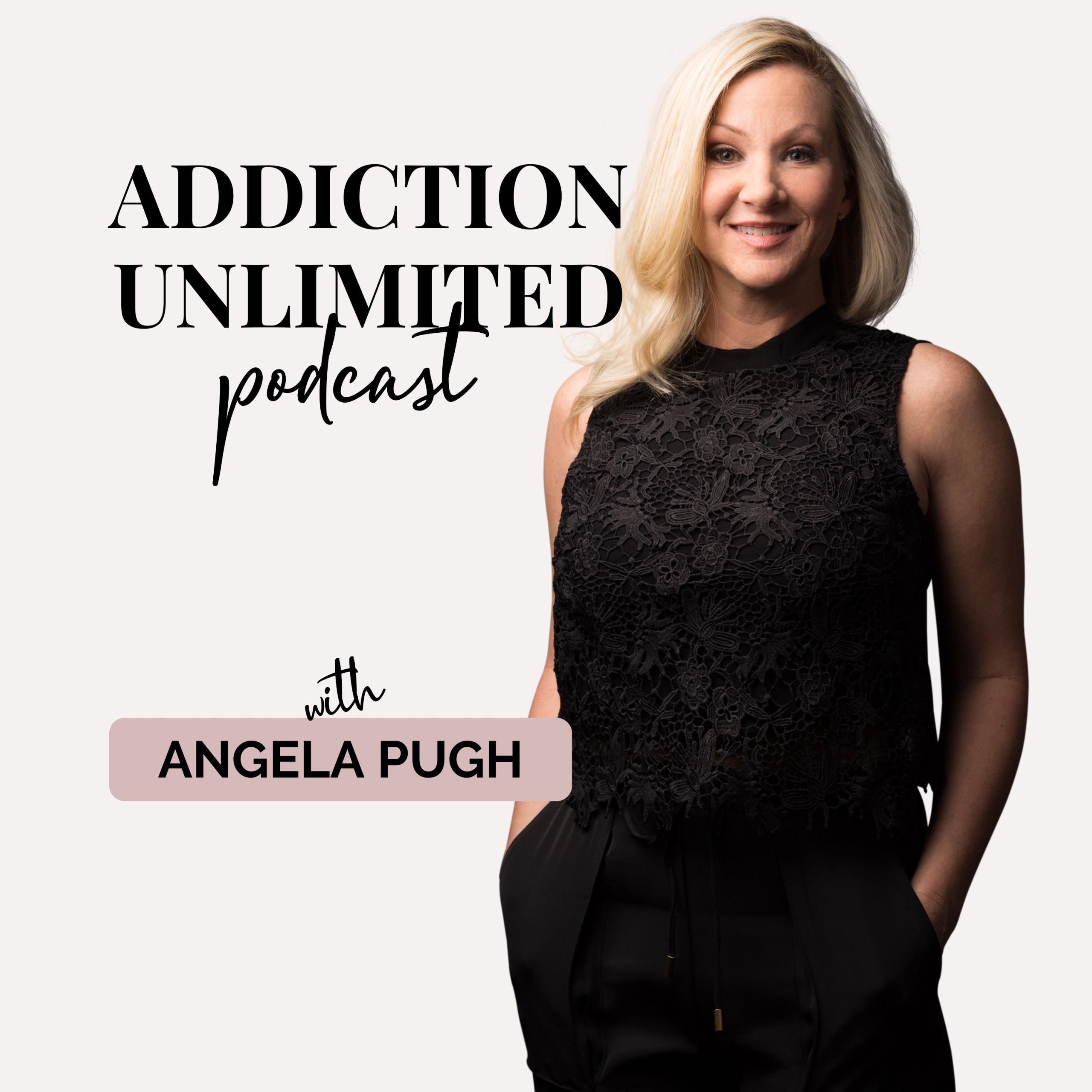
Addiction Unlimited Podcast
by Angela Pugh
Is this your podcast?On the show
From 10 epsHost
Recent guests
No guests detected in recent episodes.
Recent episodes
Why They Tell You Not to Date in Your First Year Sober
Oct 14, 2026
25m 52s
How to Stop Giving Up on Yourself in Sobriety
Oct 7, 2026
24m 46s
How Do I Know If I Actually Have a Drinking Problem?
Sep 30, 2026
32m 53s
The Real Moment You Become Ready to Stay Sober
Sep 23, 2026
27m 09s
You Quit Drinking. What Are You Using to Escape Now?
Sep 16, 2026
30m 54s
Insights from recent episode analysis
Audience Interest
Podcast Focus
Publishing Consistency
Platform Reach
Insights are generated by CastFox AI using publicly available data, episode content, and proprietary models.
Most discussed topics
Brands & references
No brand mentions extracted.
Total monthly reach
Based on the show's feed history.
Built from
By chart position
- 🇫🇮FI · Mental Health#936.0K to 74K
- 🇭🇰HK · Mental Health#905.1K to 63K
- 🇮🇸Iceland · Mental Health#602.7K to 34K
- 🇮🇪Ireland · Mental Health#1622.1K to 26K
- Per-Episode Audience
Est. listeners per new episode within ~30 days
16K to 196K🎙 ~2x weekly·200 episodes·Last published 5d ago - Monthly Reach
Unique listeners across all episodes (30 days)
32K to 392K🇺🇸71%🇫🇮11%🇭🇰9%+2 more - Active Followers
Loyal subscribers who consistently listen
18K to 216K
Market Insights
Platform Distribution
Reach across major podcast platforms, updated hourly
Total Followers
—
Total Plays
—
Total Reviews
—
* Data sourced directly from platform APIs and aggregated hourly across all major podcast directories.
Social Links & Contact
Official channels & resources
Official Website
Login
RSS Feed
Login
| Date | Episode | Topics | Guests | Brands | Places | Keywords | Sponsor | Length | |
|---|---|---|---|---|---|---|---|---|---|
| 10/14/26 | Why They Tell You Not to Date in Your First Year Sober | Why do recovery communities tell you not to date or make major life changes during your first year sober? Because getting sober isn't just about learning how to live without alcohol. It's about learning how to handle your feelings without it. And when you're newly sober, those feelings can be ALL OVER THE PLACE. You're dealing with boredom, loneliness, insecurity, and a whole lot of emotions you may not even know how to identify yet. Then someone comes along, and suddenly life feels exciting again! But dating brings its own emotional roller coaster. Rejection, jealousy, uncertainty, disappointment, and heartbreak can be overwhelming when you're still learning how to manage everyday life without drinking. In this episode, we're talking about why dating in early sobriety can be especially challenging, why major life changes can threaten your stability, and how giving yourself time to build confidence and coping skills can make all the difference. Because the goal isn't to avoid big feelings. It's to learn how to handle them without alcohol. | 25m 52s | ||||||
| 10/7/26 | How to Stop Giving Up on Yourself in Sobriety | About to give up, reach for a drink, or follow the same old pattern? Angela shares how a split-second choice can change your direction—and why the victory starts before you know the outcome. | 24m 46s | ||||||
| 9/30/26 | How Do I Know If I Actually Have a Drinking Problem? | How do you know if you actually have a drinking problem? You make rules about when you’ll drink. You negotiate how many you’re going to have. You promise yourself tonight will be different. You replay last night trying to figure out exactly what happened. You take breaks, make new rules, Google questions, take quizzes, compare yourself to other people—and somehow alcohol keeps requiring more and more of your attention. At some point, that’s worth looking at. In this episode of Addiction Unlimited, we’re getting away from arbitrary drinking counts and labels and looking at something far more revealing: your actual relationship with alcohol. In this episode, we’re getting away from labels and arbitrary drinking counts and looking at something far more useful: your actual relationship with alcohol. Is it really a drinking problem? The surprisingly revealing question that has nothing to do with how much or how often you drink Why taking 30 days off alcohol may not prove what you think it proves The difference between having a plan for the night and actually being in control of what happens When researching your drinking stops giving you answers—and starts becoming part of the answer And after all the research, analyzing and comparing—you already have enough information—you just have to be willing to do something with it. Because sometimes the amount of work you’re doing to prove alcohol isn’t a problem tells you more than another quiz ever will. You don’t have to decide what to call yourself today. You don’t need the perfect label or one more piece of evidence. You can simply acknowledge that your relationship with alcohol isn’t working anymore—and let that be enough truth to take the next step.   Links mentioned in this episode: Book A Call Here: addictionunlimited.com/call Sober Society Membership: addictionunlimited.com/membership Related Episode: Why Am I An Alcoholic – the Bio-Psycho-Social Truth About Addiction Follow me on Instagram: @addictionunlimited Facebook Group: https://www.facebook.com/groups/addictionunlimited     Prefer to read instead of listen? Here’s the full transcript of this episode. 455 Transcript Angela (00:07.374) Hello, my friend. Welcome back to the Addiction Unlimited podcast. I’m your coach, Angela Pugh. How do I know if I actually have a drinking problem? This is probably one of the most common questions people ask themselves when they start getting uncomfortable with their drinking. Am I really an alcoholic? Do I actually have a problem? Or am I just drinking a little too much right now? Maybe I just need to cut back. Maybe I need to take a break.Maybe I should stop drinking during the week and only drink on weekends. We will create an entire strategic plan around drinking before we’ll sit down and ask ourselves the most obvious question. What the hell is going on with me and alcohol? And here’s the first thing I want you to understand. I am not going to give you a diagnostic quiz today. I’m not interested in do you drink X number of drinks on X number of nights? Have you had X number of consequences? Check seven boxes and congratulations, here’s your label. That’s not how I look at this. And I never tell people. Angela (01:52.102) And I never tell people they’re alcoholics. First of all, way too many people can’t handle that word. We have some very delicate sensitivities these days. And I’m a little different about that stuff. I am a no BS human. Tell me the truth so I can figure out the solution. I don’t need you to beat around the bush or hold my hand or find the softest, prettiest language possible. If I’m trying to fix a major problem in my life, I just let’s get on with it. I don’t particularly care what we call it. I care about how I’m fucking up and what I need to do to stop fucking up. I also understand that not everybody feels that way. So when somebody says to me, I don’t know if I’m an alcoholic, I think maybe I just drink too much sometimes. The first thing I notice is that they’re asking the question. at all because that tells me something has shifted. Angela (03:02.24) You are questioning your connection with alcohol because somewhere along the way you felt that relationship start to change. You probably can’t even pinpoint exactly when it happened. You just know you’re thinking about alcohol more than you used to. You’re relying on it in ways you didn’t before. You’re planning around it, recovering from it, wondering about it, worrying about it. And there’s this little voice in the back of your head saying. Something about this doesn’t feel right anymore. And that’s usually when we start asking the question. Then here’s what happens next. Almost immediately after someone tells me they’re wondering if they have a drinking problem, they start giving me all the reasons they don’t. I don’t drink every day. I’ve never had a DUI, I don’t drink in the morning, I have a good job, my kids are taken care of, I don’t hide bottles, I can go days without drinking. And I’m just listening. Because here’s the thing: if an idea is completely preposterous to you. You don’t have to build a defense against it. If somebody said to me, Angela, I think you might secretly be a six foot four professional basketball player. I’m not gonna spend the next three hours Googling the average height of WNBA players and gathering evidence to prove I’m not, right? I’m gonna say that’s absurd. And then I’m gonna move on with my life. When something happens, Clearly doesn’t apply to us. We don’t usually have to convince ourselves that it doesn’t apply. So when you’ve built an entire defense around why you’re definitely not an alcoholic, I’m interested in why you need the defense in the first place. And I think part of the reason people fight this so hard is because they’re not only fighting a conclusion about alcohol. Angela (05:07.69) They’re fighting what they believe that conclusion says about them. To a lot of people, the word alcoholic means, I’m not even really sure, weak, I guess, broken, irresponsible, a bad parent, a bad partner, a failure, somebody who can’t get their shit together. So sometimes when you’re fighting the possibility that you’re an alcoholic, you’re not even protecting alcohol. You’re protecting your identity. You’re saying I’m successful, I’m responsible, I’m a good person, I take care of my family. I’m not that. And somewhere along the way, you’ve decided that being a person with an alcohol problem is incompatible with all those other things. I don’t see it that way at all. I wear the label alcoholic as a badge of honor. Angela (06:06.112) I wear the label alcoholic as a badge of honor. I have a tremendous amount of pride in being an alcoholic because to me, the word represents something I survived, confronted, and overcame. I’ve dealt with something that most people aren’t equipped to handle, recognize, and least of all have the balls to actually do something about it. And I’ve always been a little different in that way. Even when I was drinking, I knew I was an alcoholic. There was nothing normal about how I drank. But I lived in Los Angeles for many, many years. There were sober people everywhere, successful people, powerful people, celebrities. I had plenty of evidence around me that being sober didn’t mean your life was over, and being an alcoholic didn’t mean you were a loser, right? So I wore my alcoholism as a badge of honor. Angela (07:12.556) What embarrassed me wasn’t that I was an alcoholic. What embarrassed me was that I couldn’t handle my life. I was high functioning too. I could work, I made money, I could show up and perform and take care of all the things. But emotionally, I wasn’t growing. I couldn’t cope with my own feelings. I wasn’t advancing in life. Like I was just stuck. And drinking was the thing I used. So I didn’t have to deal with any of it. That’s why I’m not particularly interested in convincing anyone to use the word alcoholic. I love the label. You don’t have to. The label isn’t the fucking point, right? The point is what is actually happening in your life, and are you willing to tell yourself the truth about it? Because I think one of the reasons people stay. Angela (08:20.962) Because one of the reasons people stay confused about this for so long is that we’re looking in the wrong place. We’re obsessed with quantity. How many drinks do I have? How many nights a week do I drink? How many drinks does an alcoholic have? Can an alcoholic go days without drinking? Can an alcoholic only drink on weekends? Can an alcoholic do dry January? And those questions can give you information for sure. But they don’t tell me nearly as much as people think they do. I want to know about your relationship with alcohol. How much mental real estate is it taking up? How much of your time is spent thinking about drinking, planning drinking, actually drinking, or recovering from drinking? Because I had three stages of life. I was thinking about it, doing it, or recovering from it. There wasn’t much room for anything else. And that’s what I want you to look at in your own life, because maybe you don’t drink every day, but you’re thinking about it every day. Maybe you’re making rules about when you can drink, breaking the rules, creating new rules, counting drinks, checking how much wine is left before people come over, wondering whether you need another bottle just in case. Angela (09:40.748) Maybe you wake up the next morning trying to reconstruct the night before. Like, how many did I have? Was it five or was it six? Did anybody notice? Was I too loud? Did I say anything stupid? And then by afternoon, you’re already negotiating with yourself about tonight. I’m not drinking tonight. Except you’re going out. So maybe you’ll have two. You’ll be good tonight. You’ll drink water between drinks, you’ll leave early. And now you’re conducting a forensic investigation into Friday night while simultaneously negotiating the terms of Saturday night. Look at how much work that takes. Angela (10:23.052) Because all the things sneaking, minimizing, planning, counting, defending, negotiating, recovering, making rules and renegotiating new rules, those are not isolated behaviors. They’re an ecosystem. Alcohol has become important enough in your life that you’re having to manage your relationship with it. That’s what I want you to look at. Not whether somebody on the internet says six drinks makes you an alcoholic and five doesn’t. Look at how much of your life revolves around managing alcohol. And if you want an interesting comparison, watch somebody who genuinely has an uncomplicated relationship with alcohol. These fucking weirdos don’t think about it at all. They’re not obsessing about whether or not they’re gonna drink tonight. They’re not freaking out about dinner with friends because they don’t know what they’re gonna drink. They’re not looking at the restaurant menu three days in advance to make sure they have mocktails. They simply don’t care. What’s in their glass? If somebody offers them a drink and they don’t want one, they say, no thanks, and that’s it. No internal crisis, no elaborate explanation, no concern about whether everybody is gonna think they’re weird. They don’t want to drink, so they don’t have one. Angela (11:55.894) And here’s another thing these weirdos do. They don’t finish their drinks. Like, what the fuck is that? They sip. They leave half of it sitting on the table. They forget about it. Meanwhile, we’re watching the level in the glass and calculating whether the server’s going to be back here fast enough because we’re going to need another one. They’re not wondering whether there’s going to be alcohol at the party or the neighborhood barbecue or the camping trip. They go camping to actually camp and enjoy their friends and family, not as an excuse to sit and drink in a different location. Alcohol has no gravitational pull for them. It doesn’t require management because it simply isn’t that important. Angela (12:56.854) And that is a much more interesting thing for you to examine than whether or not you drank three nights or four this week. Angela (13:07.98) And there’s another piece of this that I think is even more important, and that’s control. Because people love to tell me they can go days or weeks without alcohol and not even really think about it. Okay, a lot of us can stop for periods of time. We are fairly defiant people by nature. And especially if somebody tells us we can’t do something, boy, nothing will make me act like a toddler. faster than feeling like somebody’s telling me what to do. So if your spouse gives you a little shit about how much you drink, it doesn’t surprise me at all that you would go, okay, bitch, watch this, and quit for months, even. Because we are defiant and rebellious and we’re control freaks. So if you tell me in some way that you’re paying attention to my drinking, which means you’re trying to control how I’m drinking, of course I’m gonna do something major to prove you wrong. Honestly. A decent amount of my resolve in sobriety came from spite because it was me against alcohol and I wasn’t fucking losing. Period. Angela (14:24.586) One of the realizations I had in my own rock bottom moment was that alcohol was controlling me. It was controlling my choices, my behavior, my chaos and consequences. And that pisses me off. I don’t like being told what to do by anyone. And as soon as I understood that alcohol was running the show, that fueled my fire in a huge way to stay sober because I am the boss of me, not alcohol. So, yes, you may absolutely be able to decide not to pick up the first drink for thirty days or sixty days or however many days, but that’s not the only kind of control. Angela (15:11.17) But that’s not the kind of control I’m interested in. I want you to think about Angela (15:21.868) I want you to think about the last few times you drank before you had the first drink. Maybe you told yourself how you wanted the night to go, right? We love to do that. I’m only gonna have a couple, I’m gonna leave by 10, I have a workout tomorrow. So I’m definitely not gonna get crazy tonight. And here’s what I want you to notice. How much confidence do you actually have in that plan? Not how badly you want it to happen, not whether you’ve successfully done it before. But when you put that first drink to your lips, do you know with certainty how the night’s gonna end? Or are you just crossing your fingers? Because those are two very different things. Are you having one drink? Or are you having a drink and hoping everything goes okay? Because hope is not control. Maybe tonight you have two and go home. Maybe tonight you have six. Maybe you’re home by 10, maybe it’s two in the morning. Maybe you remember everything, maybe there are fuzzy parts. Maybe you’re perfectly pleasant all night long. Maybe you get a little too loud and develop a little attitude with somebody you secretly don’t like. Maybe you get home, wash your makeup off, get everything ready for tomorrow, get to bed, and make your workout in the morning. Or maybe You wake up with a headache, cancel everything you planned, and spend half the day trying to piece together the night before while guilt and anxiety eat you alive. The question isn’t whether the worst case scenario happens every time. The question is whether you know which version you’re getting before you take that first drink. Angela (17:18.786) The question isn’t whether the worst case scenario happens every time. The question is whether you know which version you’re getting before you take that first drink. If you don’t know, that’s the part I want you to pay attention to. That’s the loss of control I’m talking about. And frequency doesn’t answer that question. But I only drink on weekends. Okay, but what happens when you drink on weekends? I only drink a couple times a month. Okay. What happens those couple times a month? You could drink once a year. And if every time you take that first drink, you have no idea whether you’re gonna have two or 12, whether you’re home at 10 or 2, whether you remember the whole night or wake up wondering what the fuck happened, that’s worth paying attention to. Not quantity, predictability. And while you’re looking at that. Stop using other people’s drinking to answer questions about yours. I hear this stuff all the time. My husband drinks way more than I do. My sister drinks every night. My friend gets way drunker than me. At least I’ve never blacked out. Okay. I was a raging alcoholic. I didn’t black out either. You can count on one hand the number of times I blacked out in 15 years of daily drinking. I didn’t drink alone. I didn’t drink in the morning. And it took me 14 years to get a DUI. If I had picked any one of those arbitrary behaviors as the offensive Angela (19:03.798) If I had picked any one of those arbitrary behaviors as the official benchmark for alcoholism, I could have built a very compelling case that I was doing just fine. And I wasn’t. How much or how often somebody else drinks has absolutely nothing to do with your relationship with alcohol. There are probably plenty of people around you who have drinking problems. It’s really none of your business. Your business is your drinking problem. My mom doesn’t drink at all. Oddly, that had no impact on how much I drank, right? So stop looking sideways and just look at yourself. Angela (20:04.856) So, how do you know if you actually have a drinking problem? If you’ve been asking this question repeatedly, you’ve probably done some research. You’ve Googled it, you’ve taken the quizzes, you’ve read the articles and listened to the podcasts, and you’ve looked up how many drinks qualify as alcoholism. You’ve compared yourself to people who drink more than you do. And here’s what I want you to notice about that process. What happens when you get an answer? You don’t like? Do you stop or do you keep searching? Because last week we talked about resistance. Angela (20:52.908) Because on last week’s episode, we talked about resistance and how when we don’t like the answer we’re getting, we just keep searching for a different answer. And this is what resistance can look like in real life. It doesn’t always look like somebody sitting on the couch saying, I refuse to deal with this. Sometimes resistance looks incredibly productive. You’re researching, you’re reading, you’re listening, you’re analyzing, you’re busy as hell, but you’re not moving. The searching looks like problem solving, but it’s really procrastination dressed up as problem solving. Because think about it, if somebody finally looked at you and said, with everything you’ve told me, If somebody finally looked at everything you’ve told them and said, nope, you’re fine. You absolutely do not have a drinking problem, would you believe them? I don’t think you would. Because somewhere underneath all the noise, you already know the truth. Even if you’re a master of denial, you know when something isn’t right. That’s why you’re Googling it in the first place. Angela (22:09.304) People who have an uncomplicated relationship with alcohol aren’t repeatedly searching, am I an alcoholic? Because alcohol doesn’t have enough presence in their lives for them to wonder whether it’s out of control. So when you’re sitting in a pile of evidence and continuing to search for more evidence, eventually we have to ask, what are you actually looking for? Angela (22:40.588) Because sometimes you’re actually stalling. Because knowing creates responsibility. So as long as you’re still quote unquote figuring it out, you can stay exactly where you are. You can keep drinking while telling yourself you’re researching. You can stay in the comfort zone. You can stay in denial. You can stay in avoidance. Angela (23:09.41) But once you finally say this isn’t working anymore, well, now you have a decision to make. And that’s why underneath the question, Am I an alcoholic? there’s another question. And that question is is this bad enough that I actually have to do something about it? Because if the answer is yes, it’s like, fuck, now there’s another thing you have to fix. And I understand that. You’re already exhausted. You’re working and parenting and running a household and trying to exercise and pay bills and managing relationships. You’re taking care of everybody. You already need an extra three hours in every day. And now the thing you’ve been using because you’re overwhelmed is apparently another fucking problem you have to solve. Of course, your brain wants to keep researching. Your brain is like, well, maybe. We should make absolutely certain first. Let’s take another quiz. But there’s also a problem with the belief that recovery is. Angela (24:30.484) Of course, your brain wants to keep researching. Your brain’s like, maybe we should just make absolutely certain first. Let’s take another quiz. But here’s another problem. There’s a real problem with the belief that recovery is going to require all this time and energy you don’t have. We’re pretending drinking doesn’t already require those things. We talk about recovery like it’s this enormous additional expense, another thing requiring time and money and energy and attention and inconvenience. But we’re making a huge error in that calculation. We’re treating drinking like it’s free. It’s not. Think about what you’re already spending to maintain your relationship with alcohol, not just money, although God knows we’re spending that. But think about your time. The evenings that disappear, the mornings you lose because you don’t feel good, the workouts you skip, the hours of anxiety replaying what you said. The emotional energy it takes to negotiate with yourself about whether or not you’re drinking tonight, or how much you’re gonna have, or whether you’ve been drinking too much, or whether you need to take a break, whether you have a problem, whether you need to quit. Think about how much of your life is already being consumed by this thing you’re telling yourself you don’t have time to address. You’re already paying. Angela (26:06.518) Recovery isn’t suddenly asking you to find resources you don’t have. It’s asking you to start redirecting resources you’re already spending. I had to be equally committed to my recovery as I was to my drinking. That means I did my recovery when I was tired because I drank when I was tired. I did my recovery when I had a bad day because I drank when I had a bad day. I drank when I didn’t feel good. I went to the liquor store or the bar when the weather was bad. So when it was time to recover, I couldn’t suddenly decide that being tired or having a bad day or the weather being shitty meant I couldn’t show up. Angela (26:53.814) If it’s snowing out and you don’t want to go to a meeting, ask yourself a simple question. Would the snow have stopped you from drinking? Would the snow or the rain or whatever have stopped you from going to the liquor store or the bar? No. Then apparently snow isn’t the barrier. We will tolerate an unbelievable amount of inconvenience for drinking. We’ll spend the money we don’t have. We’ll sacrifice tomorrow morning. We’ll be hungover. We’ll miss the workout. We’ll be impatient with our kids. We’ll lose an entire day. We’ll tolerate anxiety and guilt and embarrassment and making apologies. Then recovery asks us to be inconvenienced. And suddenly we’re like, whoa, whoa, whoa, let’s not get crazy. I don’t have time for all that. But here’s what I need you to understand: doing nothing isn’t the free option. Angela (27:54.142) One path costs you time, money, energy, and comfort and takes you straight into a dead end. The other path costs you time, money, energy, and comfort and gives you a path to freedom. You’re gonna spend the resources either way. The question is, what are you buying with them? The dead end or freedom? So let’s go back to the question we started with because I don’t want you to get to the end of this episode and think I never actually answered it. How do I know if I actually have a drinking problem? I’m not gonna tell you it’s because you drink four nights a week instead of three. I’m not gonna give you a number of drinks or tell you which consequences officially qualify you. I’m gonna tell you to look at the relationship. First, how much mental real estate is alcohol taking up? How often are you thinking about it, planning it, negotiating with yourself about it, doing it, or recovering from it? If alcohol requires that much management, if you are constantly creating rules around it, worrying about it, thinking about whether there’s enough, promising yourself you’ll do something different next time, that’s a clue. Second, what happens to your control after the first drink? Not whether you can quit for a week or do dry January, but when you have that first drink, can you reliably predict what’s going to happen? Do you know you’re having two and going home at 10? Or are you hoping you’ll have two and go home at 10? Because hope is not control. Angela (29:39.064) Third, what are you doing to protect your drinking? Are you minimizing it, hiding it, sneaking it, defending it, comparing yourself to people who drink more, looking for all the reasons you can’t possibly have a problem because you’ve never had a DUI or you don’t drink in the morning or you’ve never blacked out? If you’re working that hard to prove If you’re working that hard to prove alcohol isn’t a problem, I want you to ask yourself why you need such a strong defense for it in the first place. And fourth, what is alcohol costing you? Not just catastrophes. I don’t care whether you’ve lost your house, your marriage, or your job. What is it costing you today? Your mornings, your energy, your workouts, your patience, your presence in your family, your confidence in yourself, your emotional growth, hours of your life spent recovering, days spent feeling anxious and guilty about the things you said or did. You don’t need a catastrophic rock bottom. before the cost counts. Angela (30:54.01) And finally, why are you still asking the question? If this is the fifth article you’ve read, the tenth podcast you’ve listened to, the 20th quiz you’ve taken, what answer are you still looking for? Because at some point the searching becomes part of the answer. The obsession with proving you don’t have a problem becomes evidence that something isn’t right. People who have an uncomplicated relationship with alcohol don’t spend this much time trying to figure out whether their relationship with alcohol is complicated. Angela (31:47.138) Deciding or understanding you have a drinking problem is a very personal decision that you have to make for yourself. But I can tell you that if alcohol is taking too much space in your brain, if you can’t reliably predict what happens after the first drink, if you’re constantly managing and defending your drinking, if alcohol is costing you things you care about, and if you keep coming back to this question over and over again. You have enough information to stop dismissing what you’re seeing. Angela (32:24.022) You don’t need to figure out the perfect word for it before you’re allowed to do something about it. Maybe today all you’re ready to say is my relationship with alcohol isn’t okay anymore. That’s enough truth to start with. And then get out of your own head because your head is not a reliable source of information. It’s what got you into this mess. Go find a sober community. Start listening to people. And I mean actually listen. Don’t walk into the room and immediately start scanning for all the reasons you’re different. Don’t look at what they’re wearing, what they do for a living, whether they drank more than you or less than you, or whether their story looks exactly like yours. Listen to how people think. Listen to the rules they made, the negotiations they had with themselves. Listen to the guilt. Listen to how much space alcohol took up in their lives. Listen to what happened inside their brain after that first drink. Because that’s where you’re going to hear someone who is successful and accomplished and married and raising kids and running a company and doing all the things. And suddenly you’re going to think, fuck, she thinks exactly like I do. That’s what you need. Perspective. Angela (33:49.824) You need to see that you’re not the only high-functioning person on the planet who ended up with a fucked up relationship with alcohol. Not everybody has some desperate, catastrophic, rock bottom moment, and you don’t need one. You need people who are further down the road than you are so you can see what this looks like on the other side. And if you don’t have that community, that’s exactly why I created Sober Society. We have meetings every week. with real people having real conversations about sobriety and life, the feelings, relationships, triggers, growth, all that shit that happens when you stop using alcohol as the answer to everything. Just get out of isolation and start hearing from people who understand the conversation happening in your head. And if you want to join me, you can find sober society, addictionunlimited dot com forward slash membership. That link is also in the show notes, addictionunlimited.com forward slash membership. And whether you join us or you find another sober community that feels right for you, I want to leave you with this. Angela (35:05.184) Out of millions and millions and millions of sober people, there are people just like you too. You are not the one special case that no one has ever seen before. There are people who drank like you, who thought like you, who were successful like you, who were scared like you, people who sat up at night Googling the exact same questions you’re Googling. Angela (35:33.12) And there are people who found their way through it. Maybe you don’t need one more quiz or challenge or one more definition, one more comparison or consequence or one more terrible morning. Maybe you already have. Angela (35:58.243) Maybe you already have enough information. Maybe the next step isn’t finding another answer. Maybe it’s finally doing something with the one you already have. I love you, my friend. I hope you’re having a fantastic day, and I’ll see you next week. | 32m 53s | ||||||
| 9/23/26 | The Real Moment You Become Ready to Stay Sober | You can desperately want things to change and still have a long list of things you don’t want to do. In this episode, we’re talking about the moment you stop letting fear, discomfort, and resistance make your decisions—and become willing to learn from people who have already gotten where you’re trying to go. Whether you’re trying to quit drinking or you’ve been living sober for years and feel like your growth has stalled, this is a conversation about becoming teachable, seeing what you can’t see on your own, and discovering what becomes possible when you stop requiring recovery to happen according to your rules. | 27m 09s | ||||||
| 9/16/26 | You Quit Drinking. What Are You Using to Escape Now? | You quit drinking—but what are you using to escape now? When normal things like shopping, dating, food, or work get hard to put down, it may be time to look at what’s really going on. | 30m 54s | ||||||
| 9/9/26 | sobrietylife skills+3 | — | — | — | sobrietylife skills+5 | — | 28m 38s | ||
| 9/2/26 | people-pleasingmental health+3 | — | — | — | people-pleasingexhaustion+3 | — | 34m 39s | ||
| 8/26/26 | self-forgivenessrecovery+5 | — | — | — | self-forgivenessrecovery+6 | — | 30m 24s | ||
| 8/19/26 | identityalcohol+3 | — | — | — | alcohol addictionidentity crisis+3 | — | 23m 24s | ||
| 8/12/26 | personalizationemotional chaos+4 | — | — | — | imaginary conversationsoverthinking+3 | — | 33m 19s | ||
Want analysis for the episodes below?Free for Pro Submit a request, we'll have your selected episodes analyzed within an hour. Free, at no cost to you, for Pro users. | |||||||||
| 8/5/26 | sobrietyrecovery+3 | — | — | — | sobrietyrecovery+3 | — | 23m 48s | ||
| 7/29/26 | confidencedrinking relapse+3 | — | — | — | confidencedrinking+5 | — | 19m 54s | ||
| 7/22/26 | alcoholanxiety+4 | — | — | — | alcoholanxiety+5 | — | 21m 34s | ||
| 7/15/26 | alcoholsobriety+3 | — | — | — | Dry JulySober October+3 | — | 14m 34s | ||
| 7/8/26 | alcohol recoverybrain chemistry+4 | — | — | — | alcoholsobriety+7 | — | 38m 53s | ||
| 7/1/26 | Why Dry July Is the Perfect Time to Make a Real Decision | Dry July isn't about proving you can quit. It's about gathering the evidence that leads to acceptance—the moment real recovery begins. | 20m 22s | ||||||
| 6/24/26 | Why Coping Skills Matter More Than Willpower in Recovery | Think sobriety is about willpower? Think again. Learn why coping skills—not motivation—are the key to managing triggers, regulating emotions, and staying sober long term. | 21m 33s | ||||||
| 6/17/26 | What Does Life Without Alcohol Really Look Like? | Addiction Unlimited Podcast | What does sober life actually look like? If you're thinking about quitting drinking, one of the biggest fears is the unknown. What will you do for fun? Will you still be yourself? Will your relationships change? Will life ever feel normal again? In this episode, Angela sits down with Casey Davidson from the Hello Someday Podcast for a candid conversation about what happens after alcohol is no longer part of your life. They talk about the fears they had before quitting, what surprised them most about sobriety, why moderation kept them stuck, how friendships changed, and why life often becomes much bigger than you imagined once alcohol is no longer running the show. If you're struggling to picture your future without alcohol, this conversation will help you stop focusing on forever and start focusing on what's possible. | 1h 03m 42s | ||||||
| 6/10/26 | How to Handle Relationships When You’re Getting Sober | Getting sober doesn’t just change your relationship with alcohol — it changes your relationships with people. In this episode, I’m talking about what really happens when you quit drinking and the people around you are still operating from the old version of you. We’ll talk about partners who still drink, friends who are still in the party lifestyle, and relationships that feel weird, awkward, or strained because you’re changing. You’ll learn why protecting your peace in early sobriety is not selfish, why some friendships can adjust while others fade, and how to communicate what you need without trying to control everyone around you. If your relationships feel confusing right now, this episode will help you breathe, slow down, and understand what’s actually happening. Book a call with me: addictionunlimited.com/call | 35m 32s | ||||||
| 6/3/26 | Should I Go? How to Make Smart Decisions in Early Sobriety | I’ll walk you through five simple questions to ask before you go into any social situation. One of the most common questions people ask in early sobriety is, “Should I go?” Should I go to the birthday party? The barbecue? The wedding? The vacation? The girls’ weekend? The dinner where everyone else will be drinking? And I get it. The world doesn’t stop drinking just because you did. People still invite you places. Life keeps moving. And you don’t want sobriety to feel like a punishment where you hide in your house forever and say no to everything. But here’s the truth: in early sobriety, your job is not to prove how strong you are. Your job is to stay sober. In this episode, I’m helping you stop asking, “Am I allowed to go?” and start asking the question that actually matters: “Can I trust myself to follow my plan when the pressure hits?” Because you can make the most beautiful little sober plan in the world. You can drive yourself, hold your mocktail, stay for 45 minutes, rehearse your exit line, and know exactly what you’ll say if someone offers you a drink. But none of that matters if you abandon yourself in the moment it counts. That moment when someone puts a shot in your face. That moment when your friend says, “Come on, just one.” That moment when everyone else is laughing and loose and you suddenly feel awkward, exposed, and outside the circle. That is where sobriety is decided. We’re also talking about why early sobriety is not the time to test yourself for sport. You are not auditioning for the role of Most Impressive Sober Person. You are learning how to protect something that is still new, still growing, and still becoming solid. I’ll walk you through five simple questions to ask before you go into any social situation. This episode is your permission slip to stop making sobriety harder than it has to be. Sometimes the smartest, strongest, most sober decision is: not yet. Not this weekend. Not with that group. Not at that place. Not while I’m shaky. Not until I trust myself more. That doesn’t mean never. It means you’re honest about where you are right now. And honesty is how you build sobriety that lasts. Your sobriety is worth more than any party, any wedding toast, any awkward conversation, or anyone’s opinion about whether you’re fun. It deserves your attention. It deserves your protection. And so do you. Links mentioned in this episode: Book A Call Here: addictionunlimited.com/call Related Episode: The Small Daily Decisions that Make or Break Your Sobriety Instagram: https://www.instagram.com/addictionunlimited/ Join Facebook Group: https://www.facebook.com/groups/addictionunlimited Prefer to read instead of listen? Here’s the full transcript of this episode. 438 Transcript Angela (00:10.68) Hello, my friend. Welcome back to Addiction Unlimited. I'm your coach, Angela Pugh. Today we're talking about one of the most common questions people ask in early sobriety. Should I go? Should I go to the birthday party? Should I go to dinner with my friends when everyone else is drinking? Should I go on the vacation to the barbecue, to the concert? Should I go to the pool party, the girls' weekend, the neighborhood happy hour? And I get it because the world doesn't stop drinking. Just because you did. Life keeps lifing. People keep inviting you places, birthdays keep happening, vacations still show up on the calendar, and your friends are still your friends. And in early sobriety, all of that can feel really confusing. Mm-hmm. Angela (01:06.412) Because on one hand, you don't want to isolate. You don't want to hide from your house. You don't want to hide in your house forever. You don't want sobriety to feel like a punishment. You don't want to become someone who says no to everything and has no life and no fun and no connection. But on the other hand, you also don't want to put yourself in a situation where you end up drinking and wake up the next morning feeling embarrassed, ashamed, and right back at day one. So people say to me all the time, I'm not sure if I should go. And to be clear, if you're asking the question or wondering, you already know the answer. If your brain is questioning it and whether it's a good idea or whether or not it's sobriety safe, you already know the answer is no. No, you shouldn't go. You're questioning it for a reason. Because when you're in early sobriety, Your whole focus, your entire job right now is not drinking. That's it. That's the job. And every decision you make, including whether or not you go somewhere, gets filtered through that one lens. Angela (02:29.866) Mm. Angela (02:36.482) Not whether your friends will think it's weird, not whether you'll miss out, not whether you can handle it in theory. The question is: can you stay sober if you go? And more specifically, can you trust yourself in the moment that actually matters? And here's what I mean by that. You can make the most airtight plan in the world. Drive yourself, only stay a little while, have your mocktail in hand. So you're never standing there empty-handed. Text a safe person, know exactly what you're gonna say if someone offers you a drink, have your exit ready. That's a solid plan. Love it. But here's the reality: none of that matters if you abandon yourself in the one moment it counts. That plan only matters if you'll actually follow it when the pressure hits. And that moment is. Tiny. It's a split second. Someone walks up to you ready with a shot, or they order your favorite drink without asking. Or they say, come on, just one. It's my birthday. Don't be like that. Or suddenly everyone's doing a toast and you're the only one with a water glass instead of a cocktail glass. And you feel the heat start to rise up in your chest. That's the moment right there. That's the split second. Your plan either holds or it doesn't. And the question you need to answer before you ever leave your house is Do I trust myself in that moment? Can you trust yourself when everyone else is laughing and loose and you feel awkward and exposed and like you're standing outside the circle looking in? Can you trust yourself when your friend says, my God, come on, just have one. It's my birthday. Can you trust yourself when your brain starts whispering, this is stupid, you're fine, you can have one, you've been doing so well. Because that moment is where sobriety is decided. Not in theory, not sitting in your car in the driveway, rehearsing what you'll say, but in that moment with that pressure, with that person, with those feelings. Angela (04:59.062) If the answer is yes, you trust yourself 100% yes, then you have your answer about whether you go. But if there is any hesitation, if any part of you is like, well, I think so, I hope so, probably, then you have your answer too. If you don't trust yourself with 100% certainty in that moment to be able to say, no, I'm not drinking, then you don't go. Period. And that's what we're talking about today. Because early sobriety is not about proving you can handle every situation. It's about learning how to protect your sobriety while you build enough trust in yourself to follow through when it matters. And listen, I know people don't always love hearing that because we want freedom. We want confidence. We want to be able to say, I can go anywhere, I can be around anything, I'm strong, I've got this. And I hear you, I do. But I need you to hear this. You are not trying to prove you're strong. You're trying to stay sober. Those are very different things. And in early sobriety, that mindset can be dangerous, especially if it's coming from ego instead of honesty. There's a big difference between confidence and recklessness, right? Confidence says, I know myself, I know my plan. I know my limits. I know what I'll do if things get uncomfortable, and I trust myself to do it. Recklessness says, I don't want to miss out. I don't want people to think I have a problem. I don't want to admit this situation might be too much for me. I'm just going to tell myself it'll be fine. Those are not the same thing. Going somewhere to prove a point is not a recovery plan. Going somewhere because you want to seem normal. Going somewhere because you want to seem normal, because you don't want to explain yourself, because you don't want to miss out, those are feelings. And feelings are not a sobriety strategy. Angela (07:17.74) And if you're in early sobriety, you have to get really good at knowing the difference because a lot of relapse starts with a lie that sounds like confidence. I'll be fine. I can handle it. It's not a big deal. I'm just going for a little while. I won't drink. And sometimes that's true. But sometimes it's not confidence. Sometimes it's avoidance. Sometimes it's people pleasing. Sometimes it's denial. Sometimes. Angela (07:50.004) Sometimes it's your addiction trying to get you back into a room where alcohol is available, social pressure is high, and your exit plan is weak. And this is why you have to stop asking permission and start assessing risk. That's the first big point today. You're not asking whether you're allowed to go, you're assessing whether this situation supports your sobriety or threatens it. And that assessment has to be honest, not dramatic or fear-based or shame-based, just honest. Angela (08:30.348) Because every social situation is not the same. Going to brunch with two supportive friends who know you're not drinking and chose a place with good food and good mocktails is not the same as going to a bar crawl with your old drinking crew. A family dinner where a few people have wine with dinner is not the same as a family holiday where everyone drinks too much, gets loud, brings up old drama, and you leave feeling like your nervous system got hit by a truck. ... | 36m 00s | ||||||
| 5/27/26 | The Most Dangerous Phase of Early Sobriety | You survived the first 5 or 7 days of sobriety and you're finally starting to feel better. The anxiety is calming down. You're sleeping again. Your face looks better. The shame isn't screaming quite as loud anymore. And this is exactly where things start getting dangerous. Because once the crisis fades, your brain starts doing what it was trained to do: convincing you that maybe things weren’t really that bad. Maybe you overreacted. Maybe you can handle it differently this time. In this episode, I’m breaking down one of the biggest relapse traps in early sobriety: the moment when fear and consequences stop doing the heavy lifting and recovery becomes a conscious daily decision. I call this phase the plateau. This is the phase where many people start feeling confused because they thought quitting drinking was supposed to fix the problem. They finally feel a little better physically, but now they don’t know what they’re actually supposed to do next. The crisis is over. The urgency fades. And without a real plan for recovery, the thoughts and second-guessing start getting louder. Because most people don’t actually have tools for handling stress, anxiety, boredom, overwhelm, triggers, or emotional discomfort without alcohol yet. So when life starts feeling hard again, they slowly drift back toward the one solution that always felt certain and familiar: drinking. Not because they consciously decided to give up on recovery, but because they were never prepared for what comes after the initial relief. We’re talking about why this happens, why it catches so many high-functioning people off guard, and what you need to do to stay sober long enough to actually build a life you don’t want to escape from. Links mentioned in this episode: Book A Call Here: addictionunlimited.com/call Recovery Starter Kit: addictionunlimited.com/kit Related Episode: 10 Life-Changing Habits You Can Start Today Instagram: @addictionunlimited Facebook Group: https://www.facebook.com/groups/addictionunlimited Prefer to read instead of listen? Here’s the full transcript of this episode. Angela (00:15.128) Hello, my friend. Welcome back to Addiction Unlimited. This podcast is about what it really takes to stay sober. And I'm your coach, Angela Pugh. Thank you for hanging out with me today and listening to the pod. Today I want to talk about a trap. And this trap almost always happens in super early sobriety, like somewhere in day 15 to 30, usually. But it can also happen farther down the road in your recovery. But when you first stop drinking, fear and consequences do all the heavy lifting. The panic keeps you sober. The raw embarrassment keeps you sober. But that crisis energy has an expiration date, and it usually hits well before you even cross the 30-day mark. Whether it takes two weeks for the dust to settle or a full month because you had a massive wreckage to clear, a moment is coming where things just feel okay. The shame spiral stalls out, you're finally sleeping, you look in the mirror and you don't hate who's looking back at you. It feels like a victory. The physical misery stops, the anxiety lifts, and your life starts looking manageable again. And right there in that quiet moment, your brain is gonna whisper, look at that, you're fine, you figured it out. Your brain is gonna try to use that temporary comfort to negotiate you right back to a drink. Today we're exposing that trap. We're talking about why feeling better is not the same as being better. We're gonna talk about what's actually happening in this phase, why it catches so many people off guard, and what you need to do when you hit it, because you will hit it. And when you do, I want you to be ready. So let's start at the beginning because I wanna give credit where credit's due. Those first few days of sobriety are brutal. I mean that. We're talking about waking up in the middle of the night in a full panic, heart pounding, mind racing. Angela (02:39.028) Anxiety, so intense it feels like you're gonna come out of your skin, shaking, sweating. Every sound feels too loud, and every feeling feels too big. And your body is just in full revolt because it doesn't know what to do without alcohol in it. And then there's the emotional side of it, the shame spiral, replaying every decision, every embarrassing moment, every consequence you're now staring down. The fear about what people think, the fear about what comes next, the fear that you've already done too much damage to fix anything. And you go through that. You stay sober through that. That's not a small thing. And then somewhere around day five, maybe day seven, you start to notice something shifting. The anxiety starts to lift. You sleep through the night. You look in the mirror and your face looks different, less puffy, less red or gray. Your energy starts coming back. You make it through a whole day without white knuckling every hour. And for the first time in a long time, life starts to feel manageable. Your body's healing. Your mind is starting to clear. And that feeling of things getting better is legit. And here is what I also need you to understand about that phase. Angela (04:04.876) What powered you through those first few days wasn't willpower. It wasn't discipline. It wasn't a sudden shift in your mindset or a new level of commitment you've never had before. It was crisis energy. Fear, shame, consequences you couldn't ignore, a hangover so bad you swore you'd never do it again, a conversation with your kid or your boss or your spouse that you can't undo. A moment where you looked at yourself and you could no longer deny the truth. That's powerful fuel. And it will absolutely get you sober, but it has an expiration date. Crisis energy burns hot and it burns fast. And when it starts to fade, when the consequences feel less immediate, when the shame starts to dull and the physical misery is behind you, that fuel runs out. And if you don't have something to replace it with, that's when things get dangerous. Because here's the thing about crisis energy: it makes the decision for you. When you're in the middle of it, you don't have to talk yourself into sobriety. The pain does that. But when the pain fades, sobriety becomes a choice you have to make consciously every day without the crisis pushing you. And a lot of people aren't prepared for that. This is the phase I want to name today because I don't think it gets talked about enough. I call it the plateau. You know what a plateau feels like. If you've ever tried to lose weight or get in shape, you're doing the work, you're showing up, and then one day it's like nothing's happening, right? The scale isn't moving, you don't feel like you're making progress. And that plateau is exactly where most people quit. Not because the work stopped working, but because the momentum stopped feeling obvious. For us, we need that reinforcement. We need to see it's working one way or another. Well, recovery has its own version of this, and it's sneakier because the recovery plateau doesn't feel like stalled progress. It actually feels like success. The pain is gone, the chaos has settled. Angela (06:28.696) From the outside and even from the inside, things look good. And that's exactly when sobriety starts to feel confusing. Because in those super early days, the path was clear. Don't drink. Get through the day. That was the whole job. But now you're feeling better and you don't really know what you're supposed to do next. You're not in crisis anymore. So what does recovery even look like now? And here's where it gets really specific to my audience, because so many of you are high functioning. You're professionals, your parents, your people who hold it together. You're not the person in the movie who hits rock bottom in a dramatic, obvious way. You're the person who's been quietly managing a problem that's slowly getting worse. And because you're high functioning, the idea of going to meetings or hiring a coach. starts to feel like overkill. Like, do I really need all of that? Things are feeling pretty okay. Underneath all of this is something I want to bring to the surface because I think it's the real reason the plateau catches people off guard. Angela (07:48.288) Underneath all of this is something I want to bring to the surface because I think it's the real reason the plateau catches people so off guard. You thought quitting drinking was going to fix everything. And I get it, I do. When drinking is the source of so much pain and chaos and shame in your life, it makes total sense that you'd believe removing it would remove the problem. Like if I just stop drinking, everything else will fall into place. So you get sober. You get through the hard part, you start feeling better, and then the initial excitement of feeling better fades. And you realize the anxiety is still there. The relationship stress is still there. The financial stress is still there. The uncertainty about who you are without alcohol is still there. You don't automatically know how to handle your emotions or your triggers. Or your social life or your boredom, right? You removed the substance, but you haven't actually rebuilt anything yet. And that feels frustrating, deeply frustrating, because you did the hard thing. You stopped drinking, and life is still uncomfortable. And you want it to be better now. That's not impatience. That's actually just your brain doing brain things, right? That's your brain doing exactly what it was trained to do. Think about what alcohol did for you. Whatever the problem was stress, boredom, loneliness, anxiety, social discomfort, a hard day, a hard feeling, alcohol made it better now, not tomorrow, not after you worked through it, immediately, right? You felt the relief within minutes. That's a powerful conditioning loop.... | 25m 20s | ||||||
| 5/20/26 | She Didn’t Hit Rock Bottom — But She Knew She Had to Quit Drinking | Making rules, breaking rules, starting over — if drinking takes up too much space in your brain, you'll recognize yourself in this conversation. Not a dramatic rock bottom. Not losing everything. Not waking up one day suddenly certain she had to quit forever. Just years of exhausting negotiation. She tracked sober days on a calendar she bought at Target, crossing off each X with a pen and a ruler. She made rules — only on weekends, only when she went out, never at home — and watched every single one of them quietly expand until drinking had taken over the whole week. She quit for 60 days in the summer of 2019 specifically to prove to herself she didn't have a problem…then went to a Zach Brown concert and hopped right back on. Sound familiar? The hardest part often isn't the drinking itself. It's the obsession. The constant mental debate. The planning, the bargaining, the monitoring, the shame. The promises you make to yourself that somehow never stick. In this episode, we talk about: The mental exhaustion of trying to control something that can't be controlled Why high-functioning people stay stuck for years — and why "I still went to work" isn't the whole story What white-knuckling sobriety actually feels like, and why willpower eventually runs out How connection and community changed everything for Denise What finally helped her stop going it alone What life actually looks and feels like five years in We also talk about the fear of quitting forever, the weird and wonderful things that surprised her in early sobriety, and why the evolution doesn't happen sitting on your couch. This one is honest, funny, and real. If you've ever thought "maybe I can still figure this out" — this episode is for you. Links mentioned in this episode: Book a Call: addictionunlimited.com/call Related Episode: It's Not Your Drinking, It's Your Thinking Instagram: https://www.instagram.com/addictionunlimited/ | 56m 00s | ||||||
| 5/13/26 | What “Doing the Work” in Recovery Actually Means | This is a real conversation about what doing the work in recovery actually looks like beyond just “not drinking.” | 25m 41s | ||||||
| 5/6/26 | You Can’t Build a New Life With Old Materials | You quit drinking—and now you’re staring at your life like… now what? No one really talks about this part. The part where alcohol is gone, but everything else is still the same—and suddenly, nothing fits. It feels hollow. Disconnected. Like you’re just trying to survive your own evenings. So you start questioning it: “Maybe I’m doing this wrong.” “Maybe sobriety isn’t for me.” That’s not the problem. The problem is you’re trying to build a new life using old materials. In this episode, we’re breaking down why that gap feels so uncomfortable—and what actually needs to happen for sobriety to start feeling like your life, not just something you’re trying to manage. Because nothing changes if nothing changes. And I’m sharing the exact shift that made the difference for me: a simple decision filter that completely rewired how I lived in early sobriety. “Is this what the old me would do?” If the answer was yes—I did the opposite. Not because it felt good. Not because it was easy. But because that’s how you build a new identity—one decision at a time. You don’t need to have it all figured out. You just need to stop letting the old version of you make the decisions. Because you don’t get a new life by cleaning up the old one. You get it by building something completely different. If you’re sober but stuck… this is the episode that shows you what comes next. Book A Call: addictionunlimited.com/call Related Episode: The Real Danger of Your Drunk Identity Find me on Instagram: @addictionunlimited | 20m 46s | ||||||
| 4/29/26 | 4 Signs Sobriety Is Actually Working (Even When It Feels Like It’s Not) | You're doing everything right — so why does sobriety feel like it's making everything worse? One of my clients came to me about a month into our work together and she was defeated. Not the white-knuckling kind of defeated — the kind that comes from trying really hard and feeling like it's not working. She was crying more than when she was drinking. Fighting more with her partner. She couldn't answer the question "what do you like to do for fun?" without going completely blank. She looked at me and said, "I think I'm doing this wrong." She wasn't. And if you're in that same place right now — somewhere in that 30 to 90 day window wondering if sobriety is actually making things worse — this episode is for you. I walk you through the 4 things that happen in early recovery that look like failure but are actually signs you're doing it exactly right. In this episode: Why nothing feels fun anymore — and what's happening in your brain Why you're more emotional in sobriety, not less Why your relationships feel harder right now The difference between needing rest and disappearing Why the 30–90 day window is quietly one of the most dangerous in early recovery The discomfort isn't a detour on the way to healing. The discomfort is the healing. Links mentioned in this episode: Book A Call With Angela: addictionunlimited.com/call Related Episode: 5 Truths You Must Accept to Battle Addiction Follow on Instagram: Instagram.com/addictionunlimited Join the Facebook Group: https://www.facebook.com/groups/addictionunlimited | 16m 09s | ||||||
Showing 25 of 200
Pitch Fit is a Pro feature
See how bookable this show is for guests, which brands already advertise, the per-episode ad value, and the best-fit guest and sponsor profile. The numbers are blurred on the free plan.
How readily this show books outside guests like you.
How proven this show is for host-read sponsorships.
For Guests
ProFor Advertisers
ProUpgrade to Pro to unlock guest cadence, sponsor categories, fit scores, and per-episode ad value for this show.
Similar Audience Demographics
Podcasts that attract a similar listener profile

The Hello Someday Podcast For Sober Curious Women
Casey McGuire Davidson
Sober Powered: The Neuroscience of Being Sober
Gillian Tietz, MS, CPRC

A Sober Girls Guide Podcast
A Sober Girls Guide

This Naked Mind Podcast
Annie Grace

How I quit alcohol
Danni Carr
Soberful
Veronica Valli & Chip Somers

Recovery Elevator
Paul Churchill
Chart history for Addiction Unlimited Podcast
Peaked at #60 in IS, currently #60 in IS.
| Market | Genre | Peak | Current | Trend |
|---|---|---|---|---|
| IS | — | #60 | #60 | — |
| HK | — | #90 | #90 | — |
| Finland | — | #93 | #93 | — |
| Ireland | — | #162 | #162 | — |
| IS | — | #187 | #187 | — |
Chart Positions
5 placements across 4 markets.
Chart Positions
5 placements across 4 markets.