Insights from recent episode analysis
Audience Interest
Podcast Focus
Publishing Consistency
Platform Reach
Insights are generated by CastFox AI using publicly available data, episode content, and proprietary models.
Most discussed topics
Brands & references
Est. Listeners
Based on iTunes & Spotify (publisher stats).
- Per-Episode Audience
Est. listeners per new episode within ~30 days
25,001 - 50,000 - Monthly Reach
Unique listeners across all episodes (30 days)
75,001 - 150,000 - Active Followers
Loyal subscribers who consistently listen
15,001 - 40,000
Market Insights
Platform Distribution
Reach across major podcast platforms, updated hourly
Total Followers
—
Total Plays
—
Total Reviews
—
* Data sourced directly from platform APIs and aggregated hourly across all major podcast directories.
On the show
From 1 epsHost
Recent guests
Recent episodes
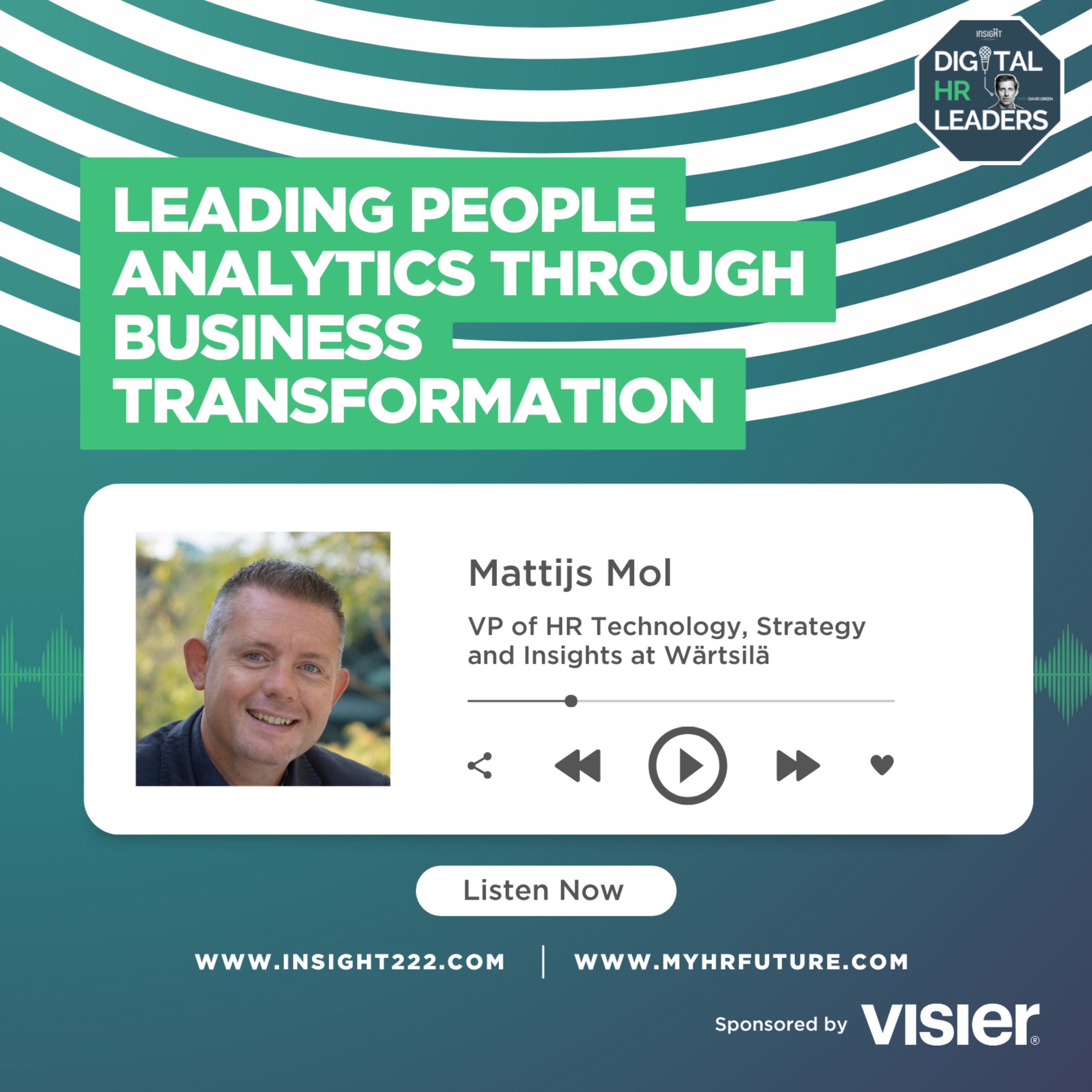
Leading People Analytics Through Business Transformation
May 5, 2026
Unknown duration
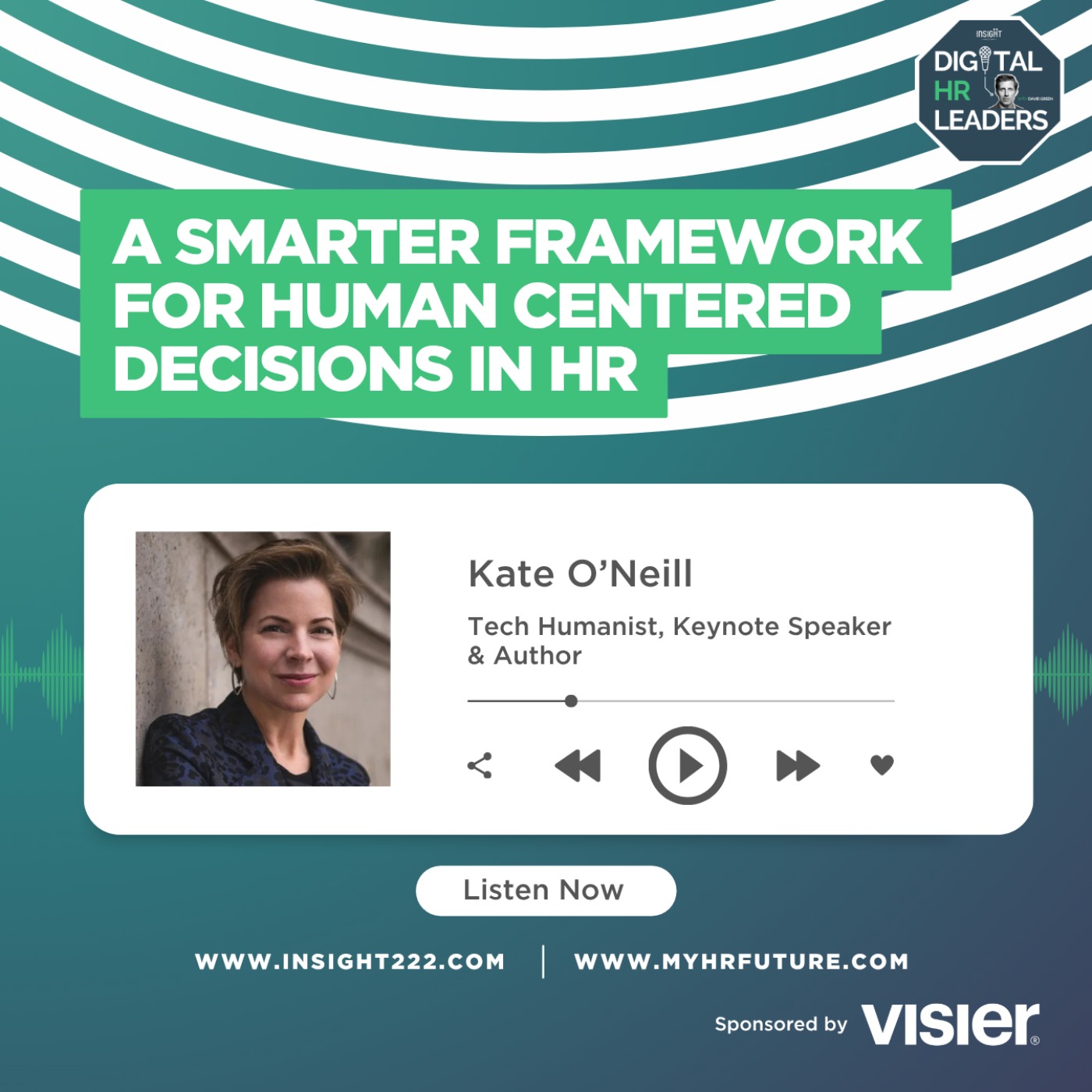
A Smarter Framework for Human Centered Decisions in HR
Apr 28, 2026
54m 00s
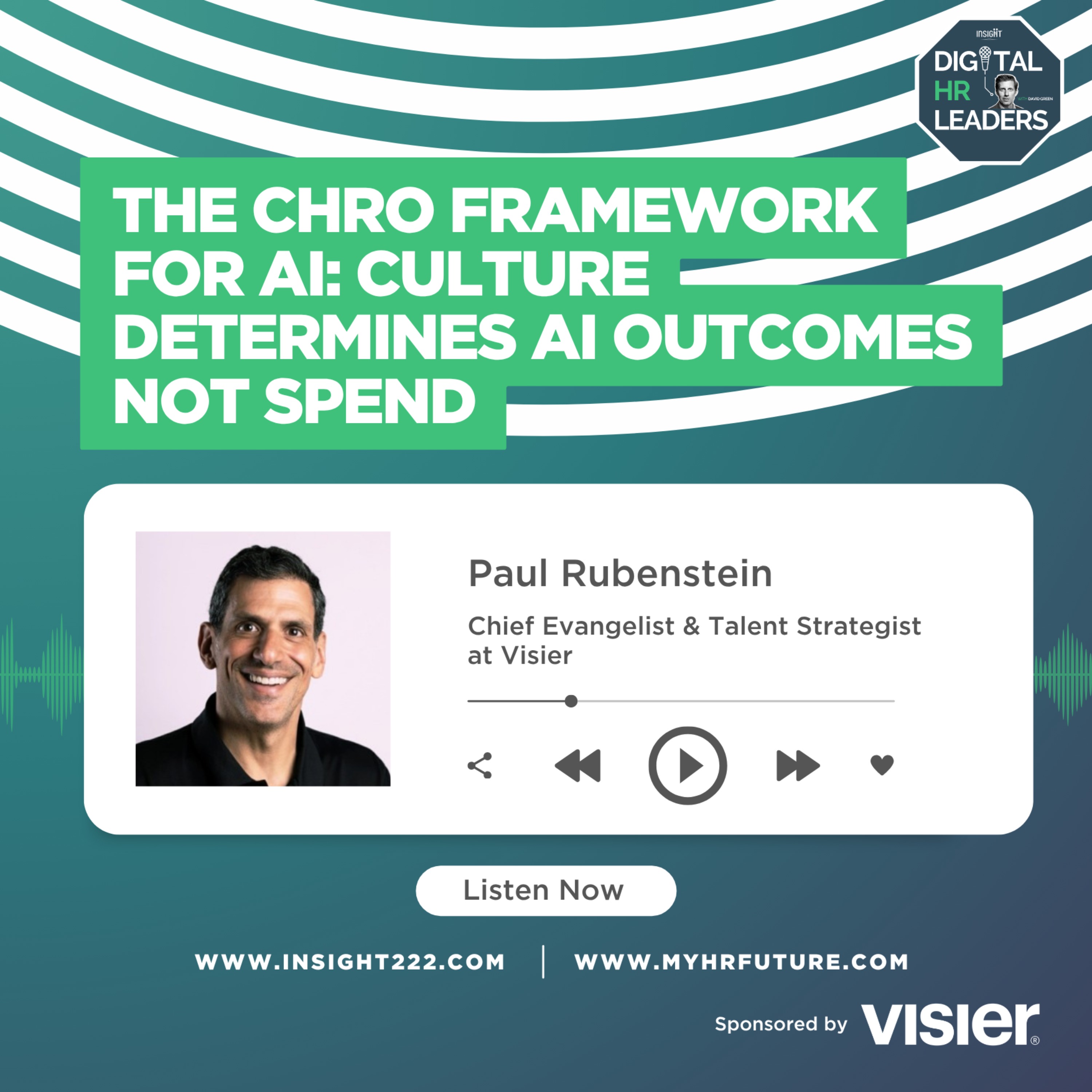
The CHRO Framework for AI: Culture Determines AI Outcomes Not Spend
Apr 21, 2026
Unknown duration
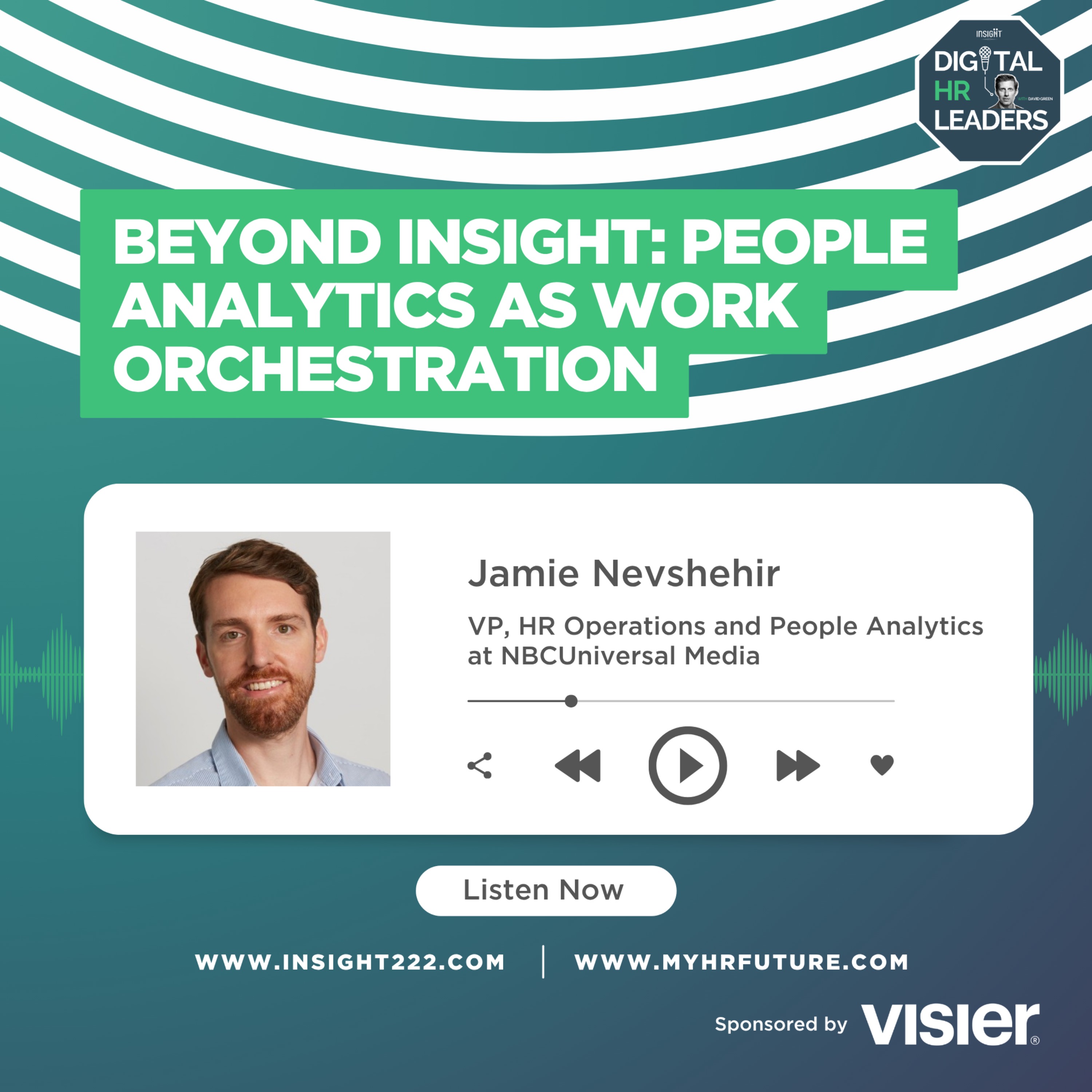
Beyond Insight: People Analytics as Work Orchestration
Apr 14, 2026
Unknown duration
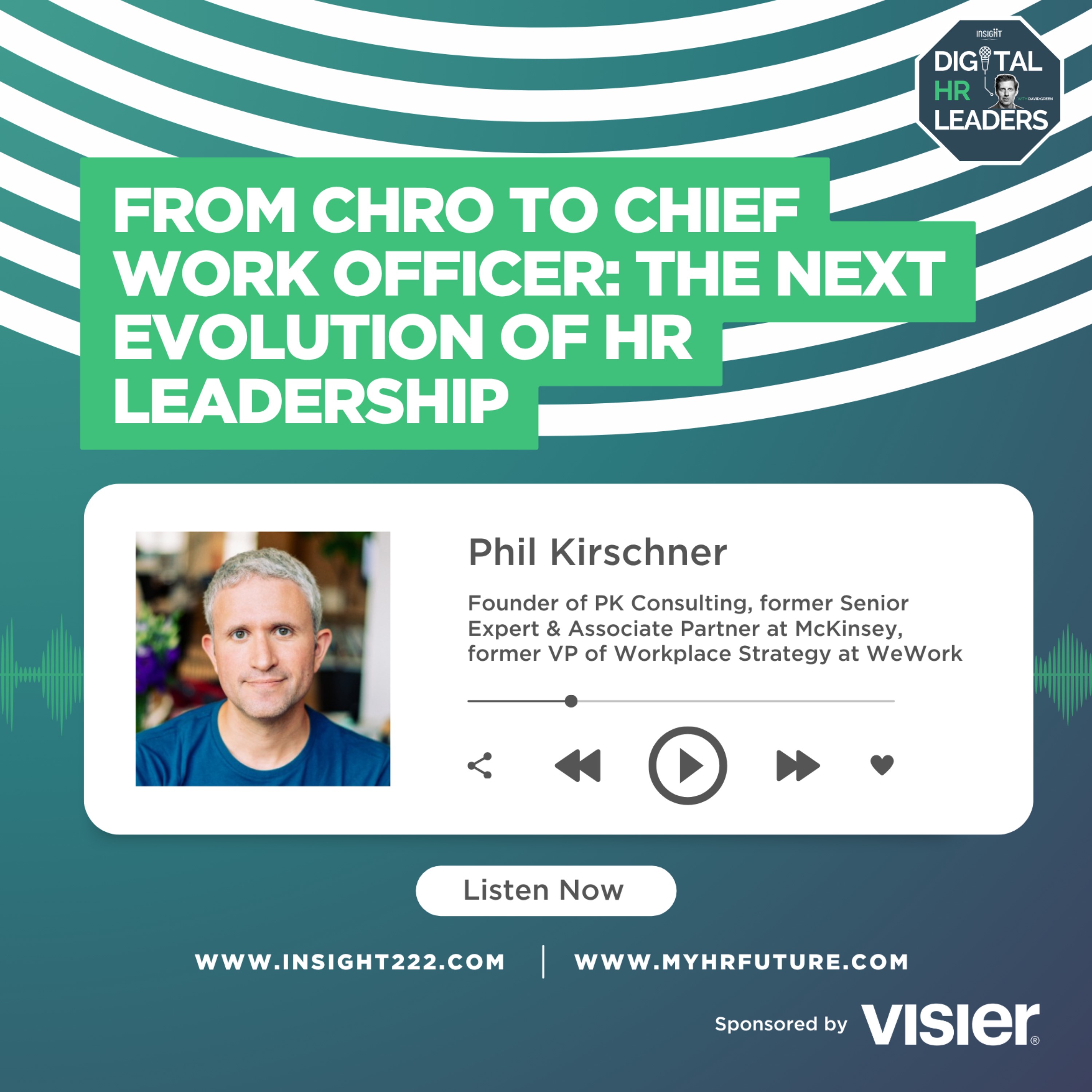
From CHRO to Chief Work Officer: The Next Evolution of HR Leadership
Apr 7, 2026
Unknown duration
Social Links & Contact
Official channels & resources
Official Website
Login
RSS Feed
Login
| Date | Episode | Topics | Guests | Brands | Places | Keywords | Sponsor | Length | |
|---|---|---|---|---|---|---|---|---|---|
| 5/5/26 | ![]() Leading People Analytics Through Business Transformation | When your business is transforming, how do you make sure your people strategy is part of leading that change? In this episode of the Digital HR Leaders podcast, David Green is joined by Mattijs Mol, VP of HR Technology, Strategy and Insights at Wärtsilä, to explore what it really takes to run a people analytics function inside a business undergoing fundamental change. Join them, as they discuss: Why transformation creates new demands on people analytics and how to meet themWhat capabilities matter most when bringing workforce data sources togetherHow to make wellbeing land with the business by connecting it directly to performanceHow AI is reshaping the people analytics function and the wider workforceWhere the boundaries should be when AI starts influencing real workforce decisionsWhat the people analytics function could look like in five years This episode is sponsored by Visier. Visier Workforce AI is your GPS for workforce decisions. Spot attrition risk, uncover pay gaps, measure leadership impact, and track skills shortages before they slow growth. Then act. Align talent to real business outcomes. Across industries, HR and business leaders are using Visier Workforce AI to navigate the biggest workforce shifts of our time. Move from knowing to doing, faster. See it in action at visier.com Also, make sure to read to explore Visier’s latest research on strategic workforce planning in the AI era. Hosted on Acast. See acast.com/privacy for more information. | — | ||||||
| 4/28/26 | ![]() A Smarter Framework for Human Centered Decisions in HR✨ | human centered decisionsAI in HR+4 | Kate O’Neill | What Matters Next | — | AIlayoffs+6 | Visier | 54m 00s | |
| 4/21/26 | ![]() The CHRO Framework for AI: Culture Determines AI Outcomes Not Spend | What if HR is still thinking too small about AI? In this episode of the Digital HR Leaders podcast, David Green is joined by Paul, Chief Evangelist and Talent Strategist at Visier, to explore why traditional transformation approaches may no longer be fit for purpose, and what HR needs to do differently to keep pace. Join them, as they tackle some of the biggest questions facing the function today: Is the current framing of AI in HR too narrow? Does HR need to operate more like finance to remain relevant? What does it take to move from pilots to real, enterprise-wide impact? And as AI becomes embedded across the business, does people analytics become less visible… or more critical than ever? This episode is sponsored by Visier. Visier Workforce AI is your GPS for workforce decisions. Spot attrition risk, uncover pay gaps, measure leadership impact, and track skills shortages before they slow growth. Then act. Align talent to real business outcomes. Across industries, HR and business leaders are using Visier Workforce AI to navigate the biggest workforce shifts of our time. Move from knowing to doing, faster. See it in action at visier.com Also, make sure to read to explore Visier’s latest research on strategic workforce planning in the AI era. Hosted on Acast. See acast.com/privacy for more information. | — | ||||||
| 4/14/26 | ![]() Beyond Insight: People Analytics as Work Orchestration | What does the next evolution of people analytics actually look like? As AI reshapes how organisations operate, people analytics is increasingly being drawn into more consultative, business-facing work - helping leaders think through decisions, guide adoption, and play a more active role in how work actually gets done. In this episode of the Digital HR Leaders podcast, host David Green is joined by Jamie Nevshehir, VP of HR Operations and People Analytics at NBCUniversal, to explore what that looks like in practice. So, hit play to learn more about: How to build a people analytics function from scratch and establish credibility earlyWhy strong data foundations still matter more than advanced analyticsHow to introduce a more consultative, business-facing approachThe role of people analytics in guiding and governing AI adoptionWhy dashboards are no longer enough on their ownHow the function is evolving toward influencing decisionsThis episode is sponsored by Visier. Visier Workforce AI is your GPS for workforce decisions. Spot attrition risk, uncover pay gaps, measure leadership impact, and track skills shortages before they slow growth. Then act. Align talent to real business outcomes. Across industries, HR and business leaders are using Visier Workforce AI to navigate the biggest workforce shifts of our time. Move from knowing to doing, faster. See it in action at visier.com Also, make sure to read to explore Visier’s latest research on strategic workforce planning in the AI era. Hosted on Acast. See acast.com/privacy for more information. | — | ||||||
| 4/7/26 | ![]() From CHRO to Chief Work Officer: The Next Evolution of HR Leadership | Are organisations overlooking one of the most important drivers of employee experience and performance? For many, the workplace is still treated as a fixed asset - something to manage for cost and capacity, rather than something to actively design around how work actually happens. In this episode of the Digital HR Leaders podcast, host David Green is joined by Phil Kirschner, Workforce Experience Consultant and author of the famous newsletter, The Workline, to explore why workplace strategy continues to sit outside of core HR and people analytics conversations - and why that needs to change. Drawing on his experience across Credit Suisse, JLL, WeWork, and McKinsey, Phil shares a more practical view of what organisations are missing - from the lack of basic workplace data, to the assumptions that still shape many workplace decisions today. So, hit play to learn more about: Why workplace strategy is still disconnected from workforce strategyThe key data points organisations should be trackingHow leading organisations are starting to think differently about the purpose of the officeWhat the “Chief Work Officer” role looks like in practiceWhy AI is increasing - not reducing - the importance of workplace and experience designThis episode is sponsored by Visier. Visier Workforce AI is your GPS for workforce decisions. Spot attrition risk, uncover pay gaps, measure leadership impact, and track skills shortages before they slow growth. Then act. Align talent to real business outcomes. Across industries, HR and business leaders are using Visier Workforce AI to navigate the biggest workforce shifts of our time. Move from knowing to doing, faster. See it in action at visier.com Also, make sure to read to explore Visier’s latest research on strategic workforce planning in the AI era. Resources: The Workline newsletter Hosted on Acast. See acast.com/privacy for more information. | — | ||||||
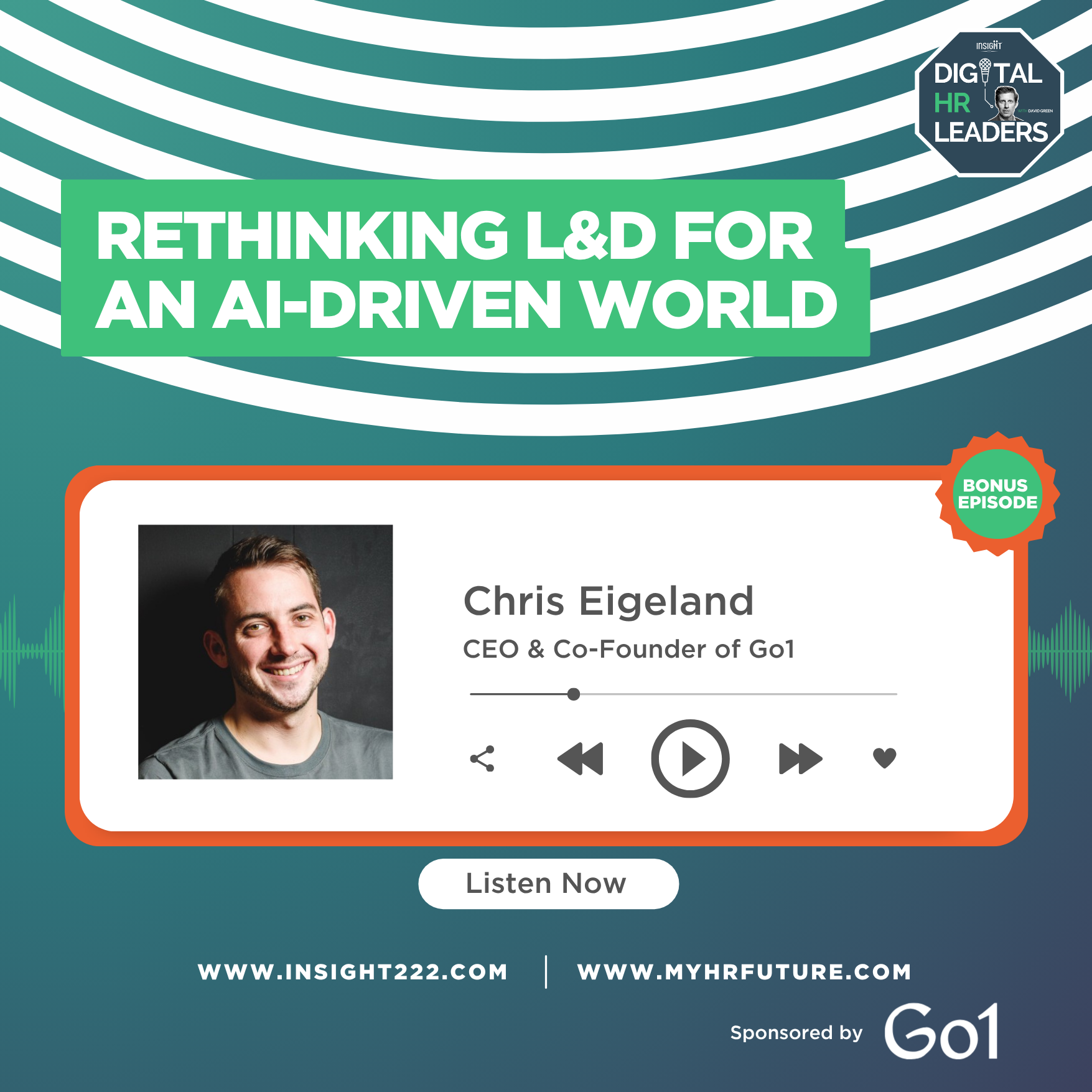
| 3/31/26 | ![]() Rethinking L&D for an AI-Driven World | Are we finally at a point where the way we’ve approached workplace learning no longer works? For years, organisations have invested heavily in learning platforms, content libraries and structured programmes. But if we’re honest, much of it still feels disconnected from how people actually learn today - especially in a world where employees can pick up new skills instantly using AI tools. So what does effective learning look like now? And how do organisations build an AI-ready workforce without falling back on outdated models? In this episode of the Digital HR Leaders podcast, host David Green is joined by Chris Eigeland, Founder and CEO of Go1, to explore how workplace learning is evolving - and what HR and L&D leaders need to do differently. Drawing on his experience working with L&D practitioners across the globe, Chris shares practical insights on: Why traditional approaches to learning are struggling to keep up How AI is changing not just what we learn, but how we learnWhere organisations are making real progress with AI upskilling - and where they’re falling shortWhether technology can finally reduce the compliance burden on HR teamsWhat HR and L&D leaders should prioritise over the next 12–18 months This episode is sponsored by Go1. Go1 partners with L&D leaders around the world to turn AI into a workforce advantage, combining trusted learning expertise with an AI toolkit designed for organisational assessment and skills strategy, ready to deploy when teams need it. "With a learning delivery suite designed to deliver expert-led content through AI functionality, Go1 helps people build the skills to work confidently alongside AI" Learn more at go1.com/ai-with-go1 Hosted on Acast. See acast.com/privacy for more information. | — | ||||||
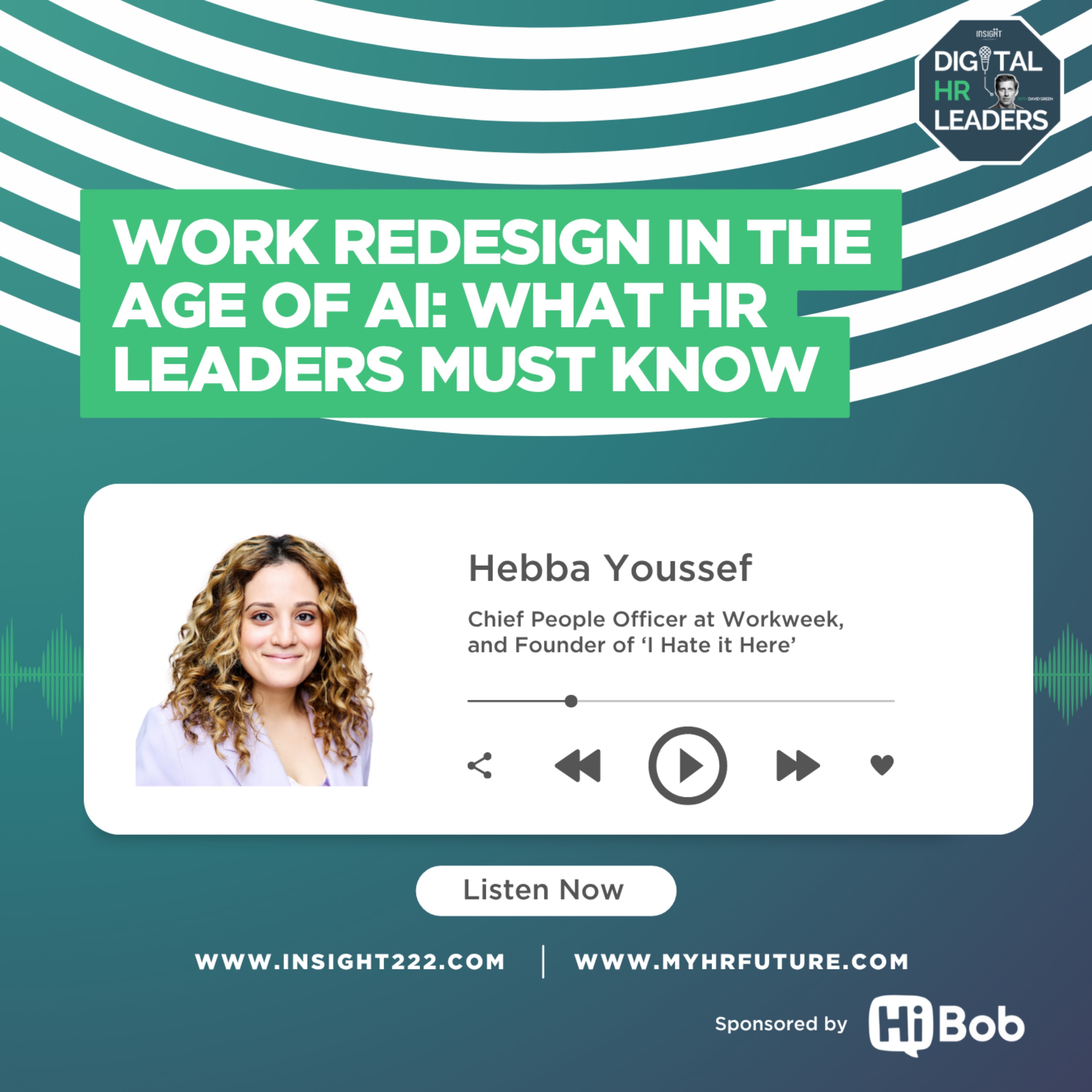
| 3/24/26 | ![]() Work Redesign In The Age of Age: What HR Leaders Must Know | If parts of a role can be automated or augmented overnight, what does that mean for job design, career development, and the way organisations build the next generation of talent? In this episode of the Digital HR Leaders podcast, host David Green is joined by Hebba Youssef, Chief People Officer at Workweek and the Founder and creator of the widely followed newsletter I Hate It Here. Drawing on her experience building and leading HR teams, Hebba shares how she is approaching AI adoption inside her own organisation and what the rise of AI-powered teams means for the future of work. So, tune in to learn: Why the traditional job description model may no longer reflect how work actually gets done How AI-powered teams are beginning to reshape HR operating models What the rise of AI means for managers, entry-level talent and early career development How HR leaders can evaluate and prioritise AI investments Where HR teams can begin automating parts of their function Why governance and organisational design must evolve alongside AI adoption This episode is sponsored by Hibob. HiBob brings HR, Payroll, and Finance together into a single platform that employees actually use. With AI throughout, you move faster, work smarter, and empower your people to power your business. Sapient Insights recognizes HiBob’s AI vision, citing the Bob AI Companion for making everyday work faster and easier. Fosway Group also names HiBob a 2025 9-Grid™ Core Leader, recognizing the strongest AI vision among Core Leaders. HiBob. All-in-one HCM for HR, Payroll, and Finance.Learn all about HiBob’s modern HR platform here Resources: I Hate it Here Newsletter Hosted on Acast. See acast.com/privacy for more information. | — | ||||||
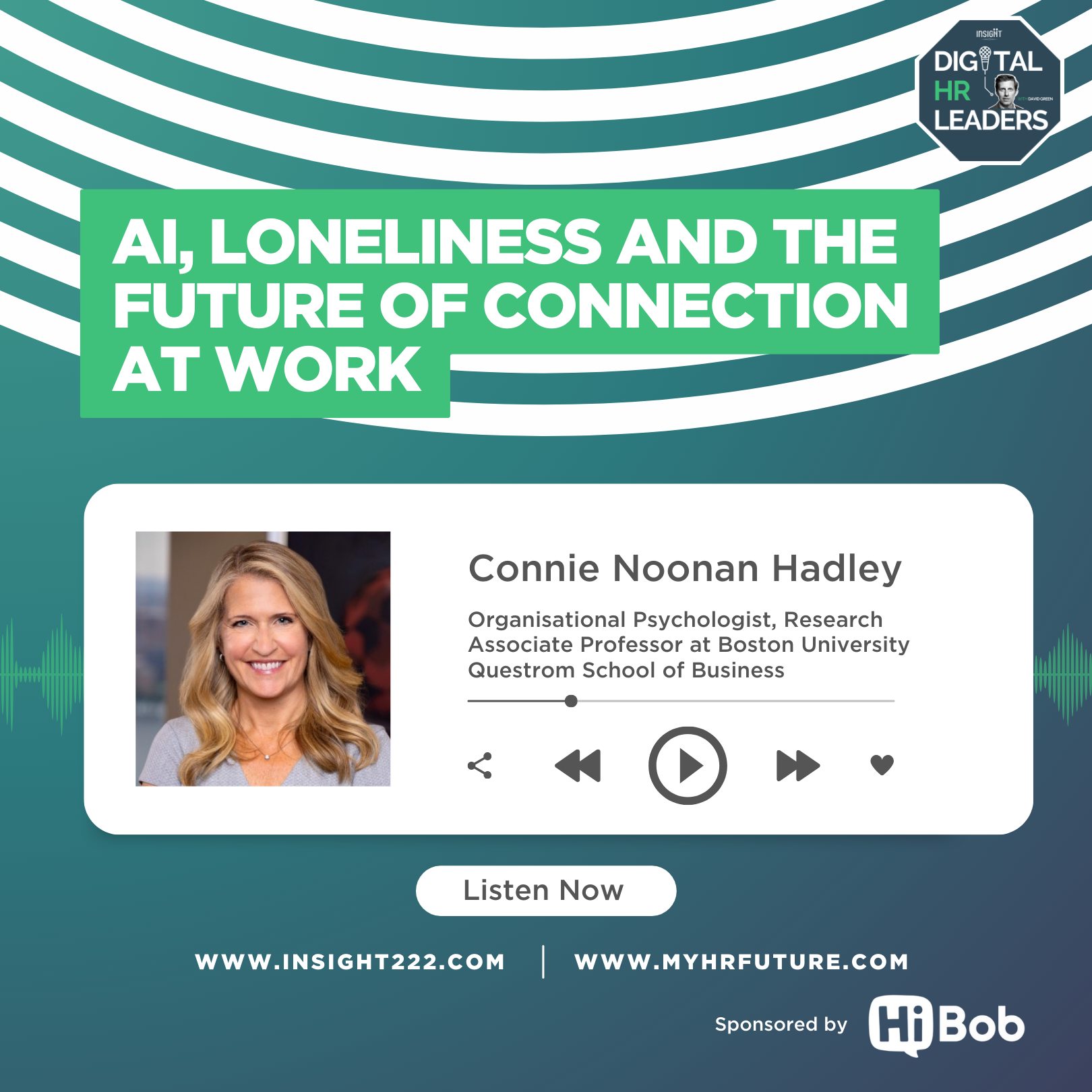
| 3/17/26 | ![]() AI, Loneliness and the Future of Connection at Work | Are we overlooking one of the biggest human consequences of AI at work? As organisations race to adopt AI, much of the conversation has focused on productivity, efficiency, and redesigning work. But far less attention has been given to how these technologies may reshape something just as important: the relationships people rely on at work. To unpack this, in this episode of the Digital HR Leaders podcast, host David Green speaks with Connie Noonan Hadley, organisational psychologist, Thinkers50 Radar thinker, and Research Associate Professor at Boston University’s Questrom School of Business. Connie has spent decades studying the social experience of work, including the growing challenge of loneliness in organisations. And drawing on her latest research and conversations with senior HR leaders, Connie shares insights on how AI is beginning to influence not just how work gets done, but how people connect, collaborate, and seek support at work. So, tune in to learn: Why loneliness at work remains such a persistent challenge - even in organisations investing heavily in cultureWhat CHROs are prioritising right now as they navigate AI adoption, organisational redesign, and a rapidly shifting external environmentHow employees are already using AI for things they once relied on colleagues for - from career advice to coaching and problem-solvingWhy return-to-office mandates may not solve loneliness in the way many leaders expectPractical ways HR leaders can protect human connection while embracing AI-driven transformation This episode is sponsored by Hibob. HiBob brings HR, Payroll, and Finance together into a single platform that employees actually use. With AI throughout, you move faster, work smarter, and empower your people to power your business. Sapient Insights recognizes HiBob’s AI vision, citing the Bob AI Companion for making everyday work faster and easier. Fosway Group also names HiBob a 2025 9-Grid™ Core Leader, recognizing the strongest AI vision among Core Leaders. HiBob. All-in-one HCM for HR, Payroll, and Finance. Learn all about HiBob’s modern HR platform here Resources: We’re Still Lonely at Work The Surprising Power of Team Rituals Institute for Leadership & Work at Boston University Questrom School of Business Institute for Life at Work, research think tank and laboratory Hosted on Acast. See acast.com/privacy for more information. | — | ||||||
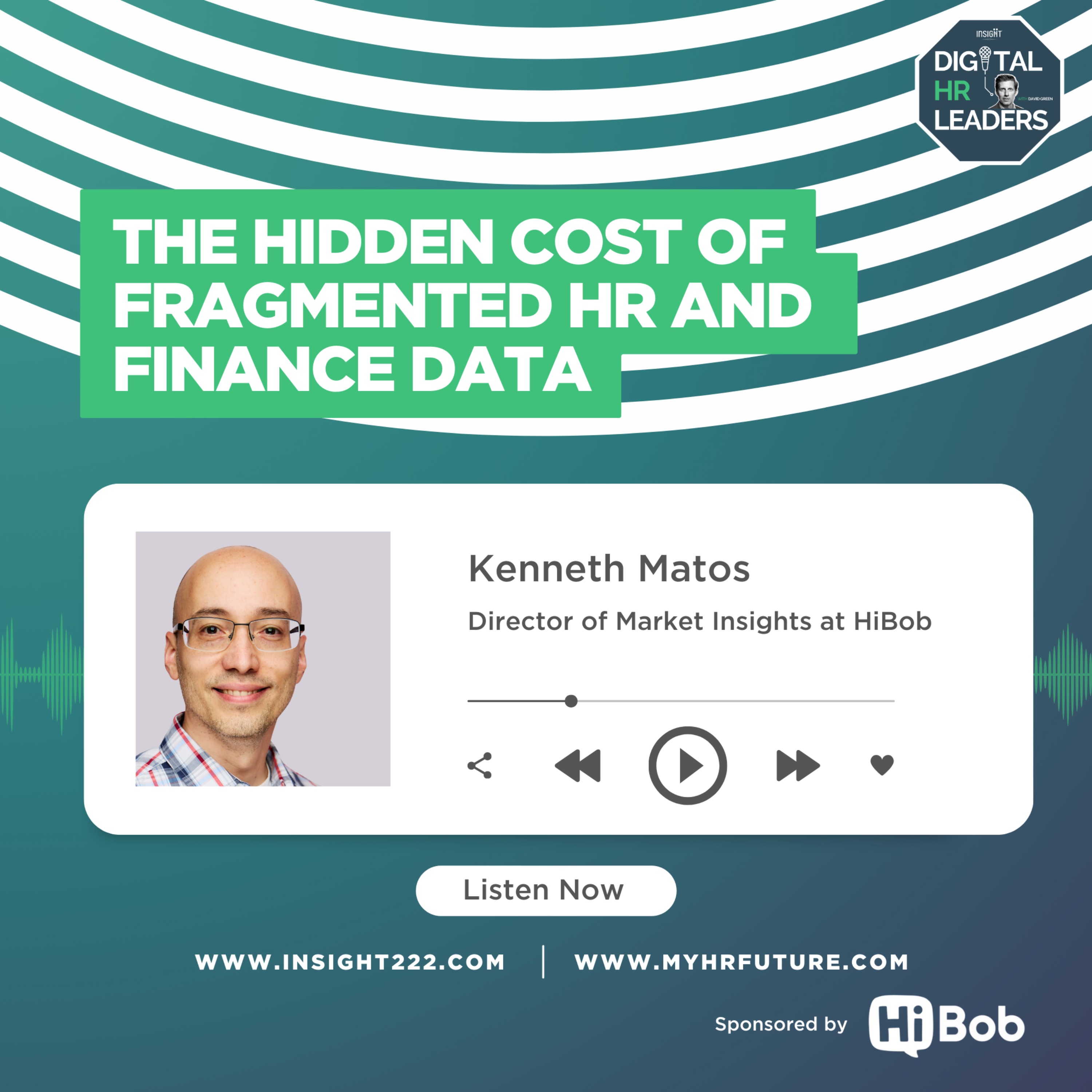
| 3/10/26 | ![]() The Hidden Cost of Fragmented HR and Finance Data | Have we made the manager’s role more complex without making it easier to make good decisions? Over the past decade, expectations on managers have grown significantly. They’re expected to make decisions that are fair, data-informed, and financially responsible - often in real time and under increasing scrutiny. Yet in many organisations, the systems designed to support those decisions haven’t evolved at the same pace. So, in this episode of the Digital HR Leaders podcast, host David Green speaks with Kenneth Matos, Director of Market Insights at HiBob, to explore what it takes to design better decision environments for modern organisations. Drawing on new global research involving 4,700 people managers, Ken shares why the time spent stitching together data and the lack of a unified HR–Finance view are undermining decision quality - and what leaders must do to enable managers to balance people fairness with financial discipline. Tune in to learn more about: Why decision friction is emerging as a hidden barrier to organisational agility How fragmented data undermines fairness, consistency, and trust in people decisions What changes when HR and Finance operate from a shared contextWhy defensibility is becoming critical in an era of pay transparency and scrutinyHow AI can reduce decision friction when implemented with the right guardrailsWhy designing better decision environments is becoming a core leadership priority This episode is sponsored by Hibob. HiBob brings HR, Payroll, and Finance together into a single platform that employees actually use. With AI throughout, you move faster, work smarter, and empower your people to power your business. Sapient Insights recognises HiBob’s AI vision, citing the Bob AI Companion for making everyday work faster and easier. Fosway Group also names HiBob a 2025 9-Grid™ Core Leader, recognising the strongest AI vision among Core Leaders. HiBob. All-in-one HCM for HR, Payroll, and Finance. Learn all about HiBob’s modern HR platform hereResources: Better Together: Budget-Smart People-Fair How Managers Decide with Data Report Hosted on Acast. See acast.com/privacy for more information. | — | ||||||
| 3/3/26 | ![]() The CHRO Playbook for Employee Experience in an AI Era | Is employee experience due for a reset? For much of the past decade, employee experience has been framed as a competitive advantage - a way to attract talent, boost engagement, and strengthen culture. Yet in today’s environment, shaped by economic pressure, evolving workforce expectations, and the rapid rise of AI, many organisations are re-examining whether their approach is still sustainable - or whether, in trying to improve employee experience, they may have inadvertently diluted it. So, in this episode of the Digital HR Leaders podcast, host David Green speaks with Jacob Morgan - author, keynote speaker, and Founder of The Future of Work Leaders - to explore what an employee experience reset looks like in 2026 and beyond. Drawing on insights from interviews with 100 CHROs, Jacob shares why this moment may mark a turning point for accountability at work, and what leaders must do to balance empathy with performance without undermining either. Tune in to learn more about: Why 2026 may be a turning point for accountability in employee experience Whether wellbeing programmes have diluted performance expectations How leaders can balance empathy and high performance standards without appearing anti-employee What the evolving power dynamic between employers and employees means in practice How AI is redefining how work is measured, managed, and valued Why HR must lead - not just manage - the responsible and ethical adoption of AI This episode is sponsored by Hibob. HiBob brings HR, Payroll, and Finance together into a single platform that employees actually use. With AI throughout, you move faster, work smarter, and empower your people to power your business. Sapient Insights recognises HiBob’s AI vision, citing the Bob AI Companion for making everyday work faster and easier. Fosway Group also names HiBob a 2025 9-Grid™ Core Leader, recognising the strongest AI vision among Core Leaders. HiBob. All-in-one HCM for HR, Payroll, and Finance. Learn all about HiBob’s modern HR platform here Resources: The Eight Laws of Employee Experience Hosted on Acast. See acast.com/privacy for more information. | — | ||||||
Want analysis for the episodes below?Free for Pro Submit a request, we'll have your selected episodes analyzed within an hour. Free, at no cost to you, for Pro users. | |||||||||
| 2/24/26 | ![]() What HR Can Learn from Private Equity About Driving Business Value | What can HR learn from private equity, where talent, culture, and leadership are part of the deal thesis from day one? In many organisations, the connection between people strategy and business outcomes is still taking shape. In private equity, however, that connection is immediate and unmistakable, with leadership quality, organisational design, workforce capability, and culture being central to the value-creation plan, with clear timelines, defined expectations, and measurable results. So, in this episode of the Digital HR Leaders podcast, host David Green speaks with Angela Geffre, Head of Human Capital at GrowthCurve Capital, to discuss what this looks like on the ground. Together, they explore what it really means to run HR in a private equity environment, and what the broader HR profession can learn from it. So tune in, and learn more about: The key people questions to ask when assessing a new portfolio companyHow HR contributes to value creation during a 3–5 year investment horizonWhat truly drives performance and retention across industries and organisation sizesHow HR must adapt when moving from large enterprises to fast-moving portfolio businessesHow AI is reshaping products, operating models, and early-career pathwaysWhy HR must lead the responsible and ethical adoption of AI, not just manage its impact This episode is sponsored by HiBob. HiBob brings HR, Payroll, and Finance together into a single platform that employees actually use. With AI throughout, you move faster, work smarter, and empower your people to power your business. Sapient Insights recognises HiBob’s AI vision, citing the Bob AI Companion for making everyday work faster and easier. Fosway Group also names HiBob a 2025 9-Grid™ Core Leader, recognising the strongest AI vision among Core Leaders. HiBob. All-in-one HCM for HR, Payroll, and Finance. Learn all about HiBob’s modern HR platform here Hosted on Acast. See acast.com/privacy for more information. | — | ||||||
| 2/17/26 | ![]() How to Connect Strategic Workforce Planning to Business Outcomes | Most organisations say Strategic Workforce Planning is a priority. Far fewer are prepared for what that actually requires. Because the challenge isn’t just predicting how many people you’ll need. It’s understanding how work itself is changing, how skills are shifting beneath stable job titles, and how today’s hiring, reskilling, and entry-level decisions are quietly shaping capability and leadership risk years into the future. In this episode of the Digital HR Leaders podcast, David Green is joined by Vincent Barat, Founder and CEO of Albert, to explore whether organisations are thinking about Strategic Workforce Planning at the right level - and what it really means to make workforce planning truly strategic in today’s environment. Drawing on Vincent’s experience working at the intersection of business strategy, skills, and workforce dynamics, this conversation explores: Why SWP is shifting from a planning exercise to a capability and risk discipline What truly puts the “strategic” in Strategic Workforce Planning beyond headcount and budgeting Where organisations most often struggle when trying to move from SWP theory to execution How AI is reshaping skills and tasks beneath job titles, and the implications for reskilling and redeployment Why reduced entry-level hiring today could create leadership and succession challenges tomorrow The practical priorities HR and people analytics leaders should focus on right now This episode is sponsored by Albert. Albert is your strategic workforce planning co-pilot, built for global HR leaders who are done with Excel, chaos, and finance-led headcount cuts. Albert helps you decode complex people data, anticipate change, and make confident, cost-saving decisions on skills and hiring without hiring a single analyst. Discover how to handle the people side of your long-range plan with zero guesswork at albertapp.com/davidgreen Links to resources: The SWP Cookbook Hosted on Acast. See acast.com/privacy for more information. | — | ||||||
| 2/10/26 | ![]() Why People Analytics Needs a Product Mindset to Thrive with AI | People analytics has spent years building credibility through data. Now the pressure is different. Business leaders aren’t just asking for insight - they’re expecting direction. Where should we invest? What should we stop doing? What risks are we not seeing yet? But many teams still find themselves pulled back into reporting cycles, ad-hoc requests, and an overemphasis on metrics that don’t always lead to better decisions. So what shifts when people analytics starts operating more like a product and less like a project function? In this episode, David Green is joined by Ashar Khan, Head of People Insights and Solution Design at Autodesk, to explore how the function evolves from delivering data to shaping choices at scale. Join this conversation as they discuss: The skills and mindsets modern people analytics teams need beyond technical expertiseWhat an effective people analytics operating model looks like in practice The core capabilities required to bridge HR technology and HR strategy Where “metric fixation” leads organisations toward false confidence and poor decisions Why the assumption that AI automatically means “fewer people” misses the bigger picture Practical advice for CHROs building or redesigning a people analytics function today This episode is sponsored by Worklytics. How productive is your organisation, really? Worklytics makes it clear - with privacy-first insights from everyday work data. See how meeting volume, manager effectiveness, collaboration health, and AI adoption are impacting your team’s focus, efficiency, and outcomes - so you can make smarter decisions, faster. No surveys. No assumptions. Just clear insight into work. Right now, Worklytics is offering podcast listeners a free 30-day trial of their productivity analytics dashboard. Learn more at worklytics.co/productivity Link to resources: The Strategic Workforce Planning Handbook David Edwards’ Dark Artistry Newsletter Hosted on Acast. See acast.com/privacy for more information. | — | ||||||
| 2/3/26 | ![]() Rethinking Strategic Workforce Planning in the Age of AI and Skills Disruption | AI is changing tasks. Skills strategies are evolving. And yet visibility into capability, cost, and risk across the workforce often remains fragmented. So how do organisations move from reacting to workforce change, to planning for it in a way that actually shapes business outcomes? In this episode of the Digital HR Leaders podcast, host David Green is joined by David Edwards, strategic workforce planning practitioner, advisor, and author of The Strategic Workforce Planning Handbook, to explore what it really takes to make strategic workforce planning work in practice. Join this conversation as they discuss: Why workforce planning can feel “deceptively threatening” inside an organisation What changes when leaders shift from thinking about headcount to thinking about capability, capacity, cost, and risk over time What goes wrong when people analytics and workforce planning operate in parallel Why looking beyond permanent employees reveals hidden workforce risk How AI is forcing organisations to rethink work design, not just skills strategies The stakeholders' strategic workforce planning really needs This episode is sponsored by Worklytics. How productive is your organisation, really? Worklytics makes it clear - with privacy-first insights from everyday work data. See how meeting volume, manager effectiveness, collaboration health, and AI adoption are impacting your team’s focus, efficiency, and outcomes - so you can make smarter decisions, faster. No surveys. No assumptions. Just clear insight into work. Right now, Worklytics is offering podcast listeners a free 30-day trial of their productivity analytics dashboard. Learn more at worklytics.co/productivity . Link to resources: The Strategic Workforce Planning Handbook David Edwards’ Dark Artistry Newsletter Hosted on Acast. See acast.com/privacy for more information. | — | ||||||
| 1/27/26 | ![]() The Data-Driven Reality of How Work Is Evolving in 2026 | AI was supposed to make work more efficient. So why are people busier than ever? As organisations move into 2026, many leaders are realising that while technology has changed quickly, the fundamentals of how work gets done haven’t kept up. Activity is increasing, output is accelerating in places - yet coordination, focus, and decision-making often feel harder than before. So what’s actually going on? In this episode of the Digital HR Leaders podcast, David Green is joined by Philip Arkcoll, Founder and CEO of Worklytics, to unpack this very question. Join this dynamic duo, as they discuss: What the data reveals around where organisations were getting stuck in 2025, and how the way we work is changing in 2026 What collaboration and activity data reveals that traditional HR metrics often miss Why decision-making, not output, is becoming the primary bottleneck in AI-enabled organisations How increasing spans of control are reshaping the role, and load, of managers The emerging divide between teams and individuals who are benefiting from AI and those who aren’t What HR and people analytics leaders can do to measure, diagnose, and redesign how work actually happens This episode is sponsored by Worklytics. Worklytics helps leaders understand how work actually happens with data-driven insights into collaboration, productivity and AI adoption. By analysing real work patterns - from meetings to tool usage - they empower teams to work = Learn more at worklytics.co/ai Link to resources: 5 Ways Work Will Change in 2026 Hosted on Acast. See acast.com/privacy for more information. | — | ||||||
| 1/20/26 | ![]() What Tesla Taught One HR Leader About Courage, Power, and Agency | Why are so many HR leaders experiencing “what just happened?” moments at work - and what does it really take to respond to authoritarian leadership with courage instead of fear? That’s the question Kristen Kavanaugh, Leadership Strategist, former Head of DEI and Talent Management at Tesla, explores in this episode of the Digital HR Leaders podcast. In this episode, host David Green sits down with Kristen to unpack what happens when fear quietly becomes the operating system inside organisations, why authoritarian leadership styles are becoming increasingly normalised, and how HR leaders can reclaim their agency in environments shaped by power, pressure, and public leadership behaviour. Tune in and learn: Why fear-based leadership creates short-term gains but long-term damage Why HR leaders often underestimate the agency they actually have How Kristen’s Agency Loop framework helps leaders navigate tension, misalignment, and difficult decisions What courageous leadership looks like as AI reshapes roles, skills, and power at work Why HR has a once-in-a-generation opportunity to shape a more humane future of work This episode is sponsored by Worklytics. Worklytics helps leaders understand how work actually happens with data-driven insights into collaboration, productivity and AI adoption. By analysing real work patterns - from meetings to tool usage - they empower teams to work = Learn more at worklytics.co/ai Link to resources: Courage over Fear: Harness the Power of Agency to Lead in Uncertain Times Hosted on Acast. See acast.com/privacy for more information. | — | ||||||
| 1/13/26 | ![]() The Real Reason Hybrid, AI, and Change Initiatives Keep Failing | Why do organisations keep repeating the same mistakes when it comes to hybrid work - and are they now doing the same with AI? That’s the question Brian Elliott, one of the most respected voices on the future of work, explores in this episode of the Digital HR Leaders podcast. In this episode, host David Green sits down with Brian to unpack why the hybrid and return-to-office debate continues to create tension between leaders and employees, despite years of data and experience, and the striking parallels between how organisations handled hybrid work and how many are now approaching AI adoption. Tune in and learn: Why the hybrid and return-to-office debate continues to divide leaders and employees What the evidence says about making hybrid work effective for both people and the business The similarities between hybrid work decisions and today’s AI adoption challenges How AI is changing entry-level roles and long-term talent pipelines The biggest barriers organisations face when trying to change long-established ways of working Why leadership behaviour ultimately determines whether change sticks This episode is sponsored by Worklytics. Worklytics helps leaders understand how work actually happens with data-driven insights into collaboration, productivity and AI adoption. By analysing real work patterns - from meetings to tool usage - they empower teams to work = Learn more at worklytics.co/ai Link to resources: Five leadership lessons for "tough" CEOs The burnout age The job market and AI Hosted on Acast. See acast.com/privacy for more information. | — | ||||||
| 1/6/26 | ![]() The Agentic Organisation: How AI–Human Collaboration Is Redefining Work, Leadership, and Performance. | As we begin a new year, it’s natural to reflect on what’s changed - and what’s quietly no longer fit for purpose. AI investment is accelerating at pace, and autonomous and semi-autonomous agents are moving from experimentation to everyday work. And yet, many organisations are still operating with leadership models, workforce structures, and planning assumptions designed for a world where humans were the only actors in the system. In this episode of the Digital HR Leaders podcast, David Green is joined by Sandra Durth, Partner at McKinsey & Company, to explore what happens when work is no longer just human-to-human, but human-to-agent - and what that means for the future of organisations. Drawing on McKinsey’s latest research, Sandra shares her perspective on: How AI-human symbiosis is reshaping the very definition of work Why traditional hierarchies and leadership models are starting to break down What “agentic leadership” really looks like in practice The implications for performance, management capability, and strategic workforce planning The biggest opportunities - and the biggest risks - HR leaders need to be paying attention to right now Links to research: The agentic organization: Contours of the next paradigm for the AI era Six shifts to build the agentic organization of the future Rethink management and talent for agentic AI Hosted on Acast. See acast.com/privacy for more information. | — | ||||||
| 12/16/25 | ![]() How UPS Is Using AI to Prepare Its Workforce for the Next Chapter of Work | Can AI fuel a people-first transformation at global scale? At UPS, the answer is a resounding yes. While many companies view AI through the lens of automation and efficiency, UPS is taking a radically different approach: treating AI as an enabler of human growth, not a replacement for it. In this episode of the Digital HR Leaders podcast, host David Green is joined by Danelle McCusker, Senior Vice President and Global Head of Talent, Learning and Culture at UPS, to explore how the company is redefining what workforce transformation looks like in the age of AI. With over half a million employees and a deeply rooted culture of promotion from within, UPS faces a unique challenge: how to prepare its people for a future defined by emerging technologies - while preserving trust, purpose, and opportunity. Join them as Danelle and David explore: Why UPS is designing AI implementations to relieve frontline burdens and elevate the value of human work - not eliminate it. How a pilot with Valence’s AI coach Nadia is creating access to consistent, personalised development for employees well beyond the executive tier. The role of psychological safety and experimentation in successful AI adoption How HR and technology teams are partnering to drive cultural and capability transformation What other HR leaders can learn from UPS’s intentional, business-first approach to AI Whether you're in the early stages of your AI journey or looking for practical ways to align tech with talent strategy, this conversation offers both inspiration and actionable insights from the front lines of change. This episode is sponsored by Valence. Imagine if every employee had a world-class coach in their pocket. That’s exactly what Valence has created with Nadia - the AI-powered coach helping Fortune 500 companies scale development, boost performance, and support leaders at every level. Learn more at valence.co/insight222 Hosted on Acast. See acast.com/privacy for more information. | — | ||||||
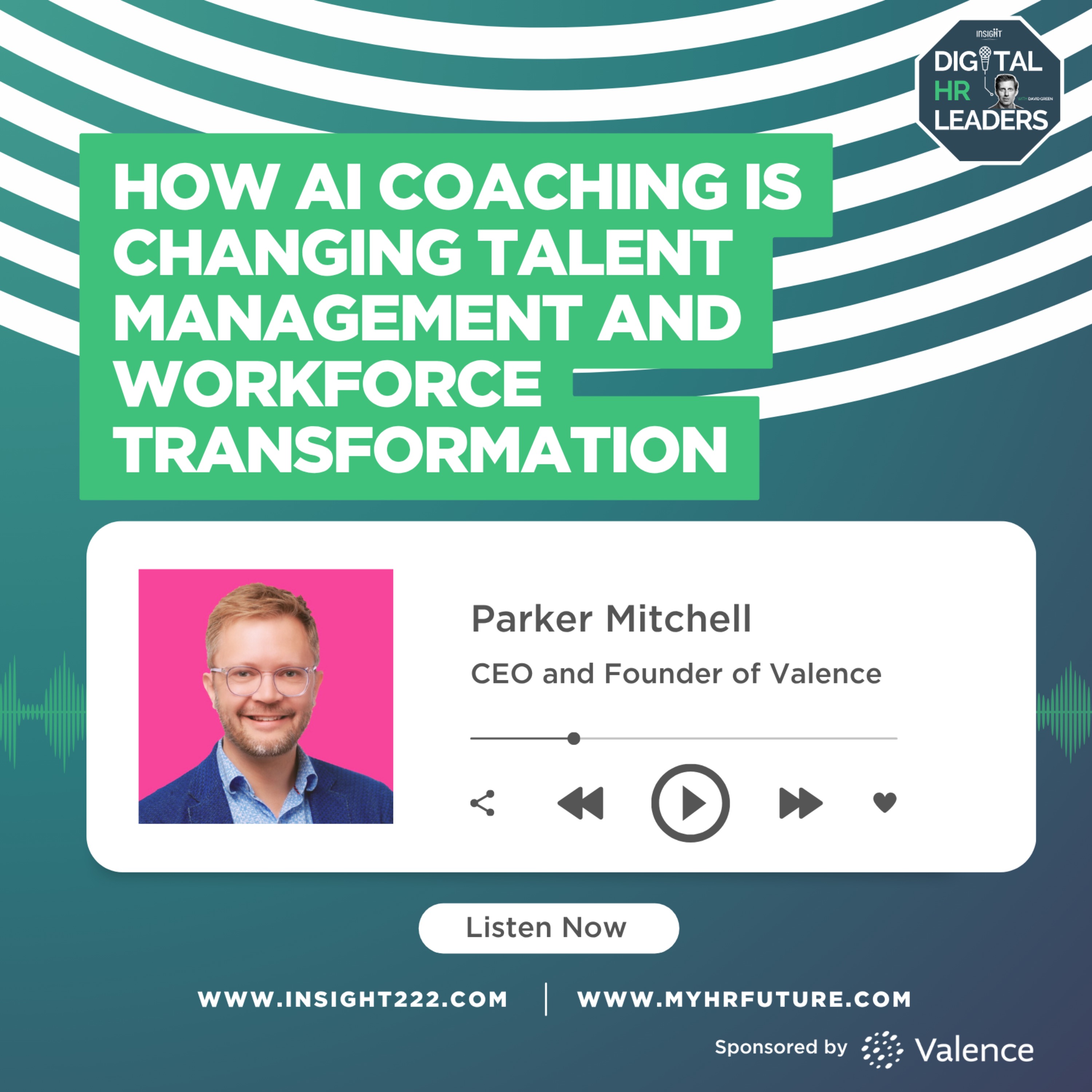
| 12/9/25 | ![]() What Happens When Every Employee Has an AI Coach? | Performance expectations are rising - but the systems designed to support people haven’t kept up. In this episode of the Digital HR Leaders Podcast, host David Green is joined by Parker Mitchell, CEO and Founder of Valence, to explore how AI is transforming the way organisations think about performance. Tune is as they explore: Why traditional performance management still feels broken How AI coaching can support real-time performance improvement at scale How trust, context, and timing make the difference in effective AI tools What changes when every employee has access to a personal coach The signals that show AI coaching is driving real performance impact How HR leaders can start small - but smart - when exploring AI coaching This episode is sponsored by Valence. Imagine if every employee had a world-class coach in their pocket. That’s exactly what Valence has created with Nadia - the AI-powered coach helping Fortune 500 companies scale development, boost performance, and support leaders at every level. Learn more at valence.co/insight222 Hosted on Acast. See acast.com/privacy for more information. | — | ||||||
| 12/2/25 | ![]() The New CHRO-CEO Partnership: Leading With Insight and Humanity | In this episode of the Digital HR Leaders podcast, Katarina Berg - CHRO at On, former CHRO at Spotify, and author of Bold: A New Era of Strategic HR - joins David Green to explore what modern, strategic HR leadership truly requires. Together, they dive into the evolving partnership between the CHRO and CEO - a relationship that has never been more critical as organisations navigate AI, workforce transformation, culture, and business growth. Katarina shares how HR leaders can bring both insight and humanity to the executive table, shape decisions that drive business outcomes, and intentionally design a culture that empowers people to perform. The conversation covers:What a genuinely strategic CHRO-CEO relationship looks like - and how to build itHow Katarina approached her first 100 days as CHRO at On, and the lessons she’s bringing into the next phase of growthWhy “putting the H back in HR” is essential in the AI eraHow people analytics teams can evolve into true insight and decision-driving partnersWhy intentional leadership - not just tools or trends - will define the next era of HR This is a must-listen for HR leaders who want to elevate their strategic influence and lead with courage, clarity, and humanity. This episode is sponsored by Valence.Imagine if every employee had a world-class coach in their pocket. That’s exactly what Valence has created with Nadia - the AI-powered coach helping Fortune 500 companies scale development, boost performance, and support leaders at every level. Learn more at valence.co/insight222 Links referenced in the conversation:Bold: A New Era of Strategic HR2025 HR Predictions: Looking Into the Crystal Ball Hosted on Acast. See acast.com/privacy for more information. | — | ||||||
| 11/25/25 | ![]() The Science Behind High-Performing Teams | Why do some teams click while others struggle, despite having top talent? That’s exactly what our host David Green explores in this episode of the Digital HR Leaders podcast, with guest Dr. Colin Fisher - PhD Programme Director at UCL School of Management and author of The Collective Edge. With a background in organisational behaviour, Colin brings a fresh lens to one of the most critical - and misunderstood - aspects of modern work: how teams are structured, and how that structure shapes everything from communication to creativity to performance. Join them and learn more about: Why the seeds of team success - or failure - are planted before Day One The 60-30-10 rule for high-performing teams (and why most leaders focus on the wrong 10%) How to design work that kills free-riding and boosts engagement Why psychological safety is a non-negotiable - and how to build it fast How AI and team design intersect, and what leaders need to do right now This episode is sponsored by Valence. Imagine if every employee had a world-class coach in their pocket. That’s exactly what Valence has created with Nadia - the AI-powered coach helping Fortune 500 companies scale development, boost performance, and support leaders at every level. Learn more at valence.co/insight222 Hosted on Acast. See acast.com/privacy for more information. | — | ||||||
| 11/18/25 | ![]() Why Authenticity Is Overrated - and What Great Leaders Do Instead | “Be yourself.” “Bring your whole self to work.” It sounds empowering - but what if it’s actually bad advice? That’s exactly what our host David Green explores in this episode of the Digital HR Leaders podcast, with returning guest Tomas Chamorro-Premuzic - Professor of Business Psychology at UCL and Columbia, and author of Don’t Be Yourself: Why Authenticity is Overrated (and What to Do Instead). Together, they challenge popular leadership tropes and explore why being real doesn’t always lead to being effective - especially in today’s fast-changing, AI-driven world. So, join them as they explore: Why authenticity is misunderstood, and when it becomes a liability The leadership traits that actually build trust and influence How AI is transforming the employee experience The risks of eliminating early-career jobs in pursuit of productivity What inclusion really requires beyond buzzwords and optics The three ingredients every AI strategy needs to succeed This episode is sponsored by Valence. Imagine if every employee had a world-class coach in their pocket. That’s exactly what Valence has created with Nadia - the AI-powered coach helping Fortune 500 companies scale development, boost performance, and support leaders at every level. Learn more at valence.co/insight222 Hosted on Acast. See acast.com/privacy for more information. | — | ||||||
| 11/11/25 | ![]() AI in HR Tech: What Investors and Leaders Need to Know | The HR technology market is booming - but with so much innovation (and noise), how can HR leaders and investors tell what’s truly transformative from what’s just trendy? In this episode of the Digital HR Leaders Podcast, host David Green sits down with Thomas Otter, General Partner and Venture Capitalist at Acadian Ventures - a firm dedicated to investing in groundbreaking companies that make work better. With decades of experience spanning SAP, Gartner, and now venture capital, Thomas brings a rare 360-degree view of the HR tech ecosystem - from building and leading product teams to backing the next generation of innovators. Together, David and Thomas explore: Whether HR tech is going through a true transformation or simply evolving Where AI is actually making a difference, and where the hype is getting ahead of reality Why AI adoption remains slow for many organisations, and what leaders can do about it The traits and technologies that make HR tech startups stand out to investors The trends and breakthroughs shaping the next five years of HR technology and the future of work If you’re an HR or people analytics leader, tech founder, or investor looking to cut through the noise and understand where HR tech is really headed, this is a conversation you won’t want to miss. This episode is sponsored by TechWolf. TechWolf helps enterprises get fast, accurate, and actionable skills data—without surveys. From identifying the skills your workforce has to mapping what they need, TechWolf’s AI integrates seamlessly with your existing systems to turn messy data into strategic advantage. Learn more at techwolf.com Hosted on Acast. See acast.com/privacy for more information. | — | ||||||
| 11/4/25 | ![]() What Every People Analytics Leader Can Learn from HSBC’s Transformation | The future of work won’t wait - and neither can your people analytics strategy. On today’s episode of the Digital HR Leaders Podcast, Rob Etheridge, Global Head of Workforce Strategy and Insights at HSBC, joins the Digital HR Leaders podcast with host David Green to reveal how the bank is building a forward-looking people analytics function - grounded in skills, AI, and trust. Join them, as they explore: The evolution of people analytics at HSBC and across the industry How to design and scale an operating model that delivers business value Why skills are a strategic priority - and how HSBC is addressing them Building governance frameworks for AI in people analytics The leadership behaviours that embed analytics into decision-making This episode is sponsored by TechWolf. TechWolf helps enterprises get fast, accurate, and actionable skills data—without surveys. From identifying the skills your workforce has to mapping what they need, TechWolf’s AI integrates seamlessly with your existing systems to turn messy data into strategic advantage. Learn more at techwolf.com Hosted on Acast. See acast.com/privacy for more information. | — | ||||||
Showing 25 of 295
Sponsor Intelligence
Sign in to see which brands sponsor this podcast, their ad offers, and promo codes.
Chart Positions
19 placements across 19 markets.
Chart Positions
19 placements across 19 markets.